1 free read left. Create a free account for unlimited reading + AI research.
Create free account
Why the post-app ecosystem offers a bigger market than the App Store
Key insights
6 takeaways- 01The post-app ecosystem bypasses traditional App Store friction by embedding games directly into platforms like Facebook Messenger or Rakuten, eliminating the need for lengthy downloads.
- 02Large-scale collaborative multiplayer mechanics, such as boss raids supporting up to 200 participants, are highly effective for driving long-term retention.
- 03Instant games require a design philosophy focused on hooking players within 15 seconds, followed by 30-second gameplay loops that provide immediate gratification.
- 04Developers must prioritize technical agility and robust, scalable backend infrastructure to handle the massive, rapid influx of users characteristic of this distribution model.
- 05Success depends on aligning game content with the specific user intent of the host platform, ensuring the game feels like a natural extension of the host's core service.
- 06The strategy for this ecosystem prioritizes selecting platforms that offer a symbiotic relationship between the host environment and the gaming experience over broad, indiscriminate distribution.
Ask AI about this video
Transcript
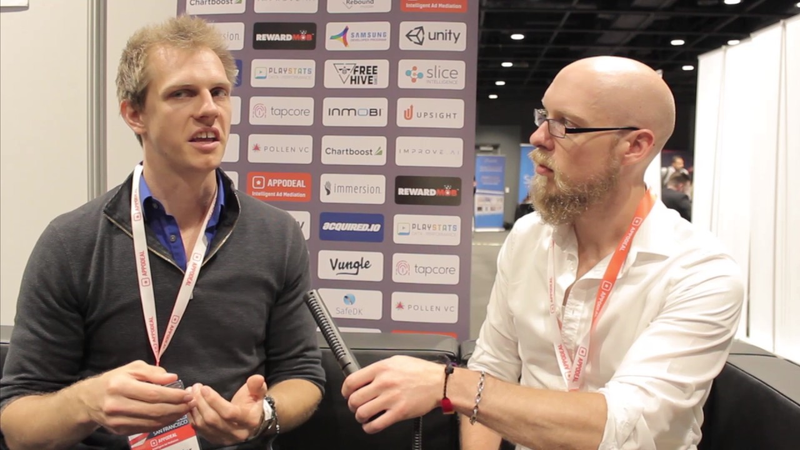
hello again we are here from Pocket Gamer connect San Francisco I am being joined by Michael from black storm Michael you've just come out from one of the talks that you did in one of our tracks and you're discussing something which sounds a bit grand and almost a bit scary for some people I'd imagine which is a post hat eco person what do you mean by that and how it's black storm involved well what I mean is that there's a new channel for creating and distributing games and it's much larger than the App Store and it's much faster growing and a lot of people don't realize it yet but the idea is that you create a game that exists inside of another app so Facebook Messenger is a great example we recently launched a Facebook Messenger and and we've seen tens of millions of players in a very short amount of time in our game and the way it works is that a bunch of people are already chatting with each other inside of a chat conversation and instead of having them separately say oh now I'm gonna go to the App Store and
download a game very sterile process instead they're all there together they say hey let's play a game together and then we deliver that game right there in the chat and there's no friction there's no downloading it's just instant and so the name of that platform is instant game and you can see why and so every wing is pretty much the flagship of that platform we actually took a run at some of those games as I work on a spy and we sat down and played all of the games that were released and with varying results I think some of them work better than others but most notably a lot of them were single-player you could communicate with your friends through the messenger and you can kind of compete in terms of hey I give high score and you be that but they weren't actually real time are you working towards something that would actually be directly competitive multiplayer yeah so when the Facebook platform launched they've been very good the messenger team has been very good about just getting something out and iterating and learning and building and so they've actually gone through many many product releases and so the day I launched there weren't all of the social graph they
because you needed three multiplayer and so they came out with those later on like maybe early this year and so we followed up with a big multiplayer feature set and what we did is we decided not to make it directly competitive it is a competitive play but it's actually collaborative and so we launched a feature called boss raids where groups of 2 to 200 people and we have very large groups you know it could also just be you and your buddy but you get together and you try to achieve this very big goal of fighting this monster this huge monster and you do tiny little snippets of damage so you might fight them a hundred times and your buddies place 100 times it together you might find a thousand you finally whittle down the health and kill him sorry but the interesting thing about it is it's in very short bursts to keep played for thirty to sixty seconds and then it posts your damage back to the group and so you have this live simultaneous feels like we're all like working on this big goal together we're all making progress and you can kind of compare and strategize and decide when to attack on how to do it and then you succeed as a
group and they all claim treasures perfect and we found this model works really well because you know if people join halfway through they just kind of join the melee and if they leave halfway through it's fine you just kind of have fewer resources to fight the boss with but the game keeps going do you find many limitations working within the kind of platform versus the ability to create your own app and not have to for example deal with any of the terms that Facebook might throw at you or any of the restrictions that working for example through live messenger traps it has to work within that system do you ever feel restricted by it or do you define that the restriction is kind of helped to focus me yeah so I mean I think every platform has constraints and the the biggest constraint here is that you have to understand your users mindset and the mindset isn't like they're going to go on to the App Store I think like they definitely want to play a game they're going to spend you know 20 minutes downloading like a 200-acre byte game and if they do all of that then your first-time user experience like your
tutorial you know it can be a little bit sloppy like you have 5 or 10 minutes of their attention because they've invested so much in getting there inside is an instant game it's like they were just having a chat and cellular in a game and like oh wow this is interesting but they give you about 15 seconds of their time to hook them and so you've got to really engage them like right away and then you've got it you got to give them a sense of instantaneous sort of instantaneous fun and then you got a layer on top of that some kind of progression so the first 15 seconds for us are getting the user understanding like how to control the game and make sure they feel like they're running something interesting then they're playing something interesting then give them these 30-second loops where they're getting like better where they get more like more powerful they're getting higher scores and then after that we run them through maybe like four of those so two minutes in you know and we're only halfway to like what a native app would do we're already two minutes for us which is huge we then put a social layer on top say oh actually here with your friends and so getting from that instant like the instant open all the way to like you're an engaged player with
friends it's probably the most difficult thing and then the one other thing I'd say is that the scaling mechanics here are crazy like you go from zero she's like 10 to millions of people in a very short amount of time and so you have to be ready with their servers and you know give a multiplayer game you know we had our server shut off by a cloud provider like five times to launch because they didn't it's not there must be some error here because we just don't see things scale up to test and so it's kind of a technical and mindset you know ship kind of a welcome problem by the sounds of it so apart from working with Facebook are you now looking at other networks you can integrate your games into or are you striking out on your own so we recently launched a game portal in Japan partner with racket and it's called rackets and games and we provide the technology for the platform and then we have content from all across Japan we have a lot of major Japanese IPS publishing on that platform and it's a post app store platform as well it sort of exists inside of rackets and ecosystem and loads directly outside of an app store beyond that we look at each sort of
potential html5 game platform eight each post App Store platform on a case-by-case basis I think eventually they'll be doesn't there'll be lots of different choices but for us it's very important what the users mindset is when they get into the game because imagine you come from like an uber app and they launch a game platform the mindset it's like I'm on a car ride for 20 minutes want to play a game imagine you put in a dating app it's like it's more of like okay I match with this person I'm dating app oh sorry a one-on-one experience and and it's more like getting to know someone if you launched inside messenger it's like okay this is a group of my friends or some club or something and so understanding that mindset it's really important to us so I think we'll be very selective about who we work with for the next year to make sure there's a really good match between our content in the platform
Summary
The post-app ecosystem represents a significant shift in mobile gaming, moving away from the traditional, high-friction App Store model toward instant, platform-integrated experiences. By embedding games directly within existing communication or service applications—such as Facebook Messenger or Rakuten—developers can bypass the lengthy download and installation processes that characterize native apps. This model leverages the existing social graph and user intent of the host platform, allowing for rapid scaling that can reach tens of millions of players in a very short timeframe.
The primary challenge of this ecosystem is the necessity for immediate engagement. Unlike native apps, where users invest significant time downloading and expect a lengthy tutorial, instant games must hook players within approximately 15 seconds. Successful development requires a design philosophy centered on short, 30-second gameplay loops that provide instantaneous gratification, followed by a gradual introduction of progression and social layers. Collaborative multiplayer mechanics, such as large-scale boss raids involving up to 200 participants, have proven effective in maintaining long-term engagement by fostering collective goals rather than purely competitive play.
Technical and strategic agility is essential for success in this space. The rapid, massive influx of users can overwhelm standard server infrastructure, requiring robust, scalable backend solutions. Furthermore, developers must carefully align their content with the specific mindset of the host platform’s user base. Whether integrated into a ride-sharing app, a dating service, or a messaging platform, the game must feel like a natural extension of the user’s current activity. As the market matures, the focus remains on selecting platforms that offer a symbiotic relationship between the host environment and the gaming experience, prioritizing user context over broad distribution.

















Comments