Global reports and market data
Documents
BioShock Infinite: Scoring in the Sky, a Postmortem
The musical direction for BioShock Infinite represents a deliberate departure from the grand, large-scale orchestral scores characteristic of the series' predecessors.
- The score moved away from traditional large-scale orchestral arrangements in favor of a minimalist ten-piece string ensemble to emphasize emotional intimacy and character-driven narrative.
- The composition utilized aleatoric writing and unquantized performances to create organic, visceral textures that reflect the game's 1912 setting and its underlying dystopian themes.
- A recurring open-fifth motif was implemented as a foundational anchor to symbolically represent the core narrative themes of infinity and time.

Persona 5 and Jungian Psychology - Masks, Major Arcana, and Meaning - Extra Credits
Persona 5 serves as a practical application of Carl Jung’s analytical psychology, utilizing his foundational theories to build the game’s narrative structure, character development, and symbolic language.
- Persona 5 utilizes Carl Jung’s analytical psychology as a structural framework for its narrative, character development, and symbolic world-building.
- The game mechanics operationalize the 'persona' as a social mask and the 'shadow' as repressed psychological elements that must be integrated to prevent collapse.
- Major Arcana Tarot cards are used to map universal archetypes onto social links, reinforcing the concept that personality is built upon shared, primordial structures.
Seven Years in Alpha: The Thumper Postmortem
The development of Thumper represents a seven-year journey by a two-person team to redefine the rhythm genre through a concept termed rhythm violence.
- Building a custom engine allowed the two-person team to achieve native 4K resolution at 60 frames per second on PS4 Pro while meeting the strict performance requirements of virtual reality.
- The developers bypassed the overhead of object-oriented abstractions and garbage collection by utilizing lean technical architecture, specifically stack and pool allocators.
- Custom tools, including bespoke vertex shaders for track deformation and URL-based object linking, proved more effective for the game's specific aesthetic than general-purpose engines.

GLS Conference Proceedings 2017
The GLS Conference Proceedings 2017 compiles 62 research papers exploring the intersection of games and learning, with a central thesis that well-designed games can significantly enhance educational outcomes, foster critical thinking, and promote social-emotional development across diverse populations and subject areas.
- The GLS 12 (2017) proceedings, published by ETC Press at Carnegie Mellon University, mark the final year of the GLS conference series and gather research and design work on game-based learning across settings from U.S. classrooms to Nigeria, Taiwan, and Guatemala.
- A fifth-grade block-coding game study linked challenge-approach behaviors to posttest learning, while girls showed greater persistence without corresponding gains in test scores.
- RumbleBlocks research found that contrast-case designs produced out-of-game transfer that a standard version did not, suggesting in-game metrics like level success can overstate real learning.
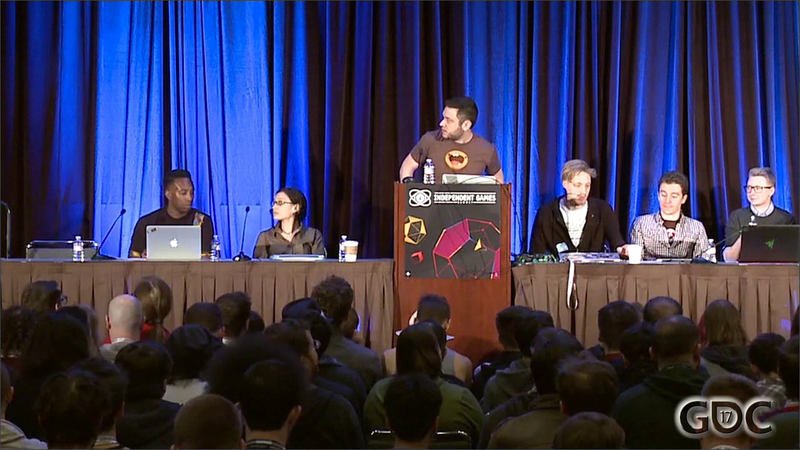
The 2017 GDC Tech Toolbox
Custom tool development serves as a critical catalyst for modern game production, enabling studios to overcome technical constraints while fostering creative iteration.
- Custom internal tool development is essential for overcoming technical constraints and enabling small teams to achieve high-fidelity results that off-the-shelf software cannot support.
- Procedural pipelines, as seen in titles like No Man's Sky, utilize modular texture layers, XML metadata, and shader-based processing to increase visual variety while maintaining memory efficiency.
- Development productivity is significantly improved by tools like Dark Config, which allow for the hotloading of configuration files to accelerate the design iteration cycle.
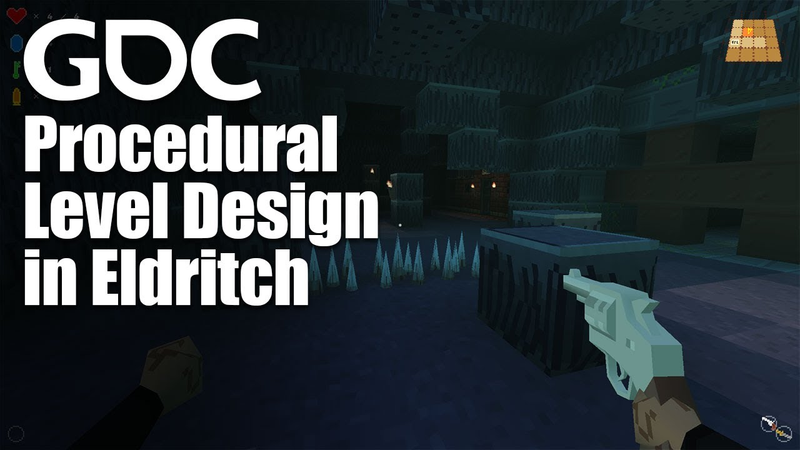
Procedural Level Design in Eldritch
Procedural level generation serves as the foundational architecture for Eldritch, enabling a solo developer to overcome the constraints of an eight-month production cycle while delivering the high replayability essential to the roguelike genre.
- Procedural generation is best utilized when game design requires perennial discovery, preventing players from memorizing space and forcing them to learn systems instead.
- To generate Eldritch's levels, the developer used Prim's algorithm to create a 3D maze, then populated it with 12m x 12m x 8m modular chunks built in a voxel engine.
- By utilizing rotation and mirroring of modular assets, the developer reduced the required number of unique module configurations from 64 down to 24.
The 2016 GDC Animation Microtalks
Professional game animation requires a shift from isolated asset creation toward a deep, integrated understanding of gameplay mechanics and character performance.
- Game animation success requires shifting focus from isolated asset creation to a deep integration with gameplay mechanics and authentic, real-world movement.
- Bridging the gap between artistic vision and technical implementation is best achieved through a symbiotic, collaborative relationship between animators and programmers.
- Animators should prioritize context and emotional resonance over purely technical execution to increase player immersion and character relatability.
Storytelling Tools to Boost Your Indie Game's Narrative and Gameplay
Integrating traditional narrative structures with flow theory serves as a powerful strategy for indie game developers to deepen player engagement and refine mechanical progression.
- Integrate narrative structures with flow theory to align mechanical progression with emotional development, ensuring that gameplay challenges feel earned and meaningful.
- Structure the player's emotional journey using a narrative arc that includes an inciting incident, a low midpoint, a critical black moment, and a decisive conclusion.
- Establish a baseline of normality before introducing conflict to provide the necessary context and empathy required for players to engage with subsequent challenges.
Games You Might Not Have Tried - ep 12 - Find New Console Games - Extra Credits
The primary purpose of this analysis is to highlight a selection of console games that offer unique design philosophies, novel storytelling, or ambitious mechanics, even if they are not universally polished or widely recognized.
- Creative risk-taking and thematic depth often provide more long-term value to the industry than traditional technical polish.
- Let It Die demonstrates that roguelike games can successfully implement fair, arcade-style microtransaction models.
- Yakuza 0 serves as a benchmark for dense, activity-rich open-world design that maximizes player engagement within a confined map.

Practical Contract Law 201 for Indie Developers: Moderately Scary Edition
Contracts function as the foundational rulebooks for independent game studios, providing the necessary clarity and predictability to navigate business relationships and mitigate risks associated with both failure and unexpected success.
- Prioritize robust work-for-hire agreements that explicitly transfer all project-related intellectual property to the studio, avoiding fragmented 'Franken-contracts' that jeopardize ownership.
- Secure leverage in development agreements by withholding the formal transfer of intellectual property rights until all final payments are successfully processed.
- Mitigate financial risk from scope creep by implementing rigorous scope-of-work documentation, formal change-order processes, and mandatory kill fees.
Breaking Marginalized Character Narrative Molds to Write Better, Richer Characters
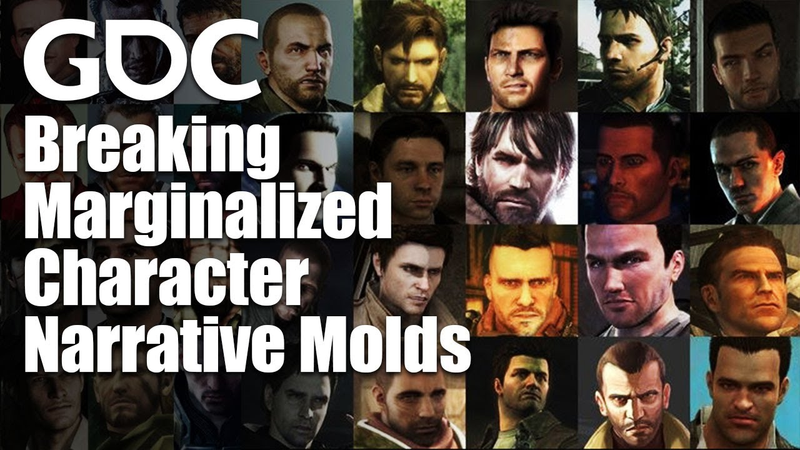
The prevailing reliance on the cisgender, able-bodied white male as the default protagonist in video games frequently results in generic, imperialist archetypes that lack genuine relatability.
- Developers must move beyond the default cisgender, able-bodied white male protagonist to avoid generic, imperialist archetypes and foster deeper character relatability.
- Authentic representation requires grounding protagonists in specific, deliberate cultural and personal histories, as demonstrated in the narrative approach of Treachery in Beatdown City.
- Writers should avoid reducing marginalized characters to one-dimensional stereotypes or trauma-based plot devices, a failure observed in titles like Mafia III and Watch Dogs 2.
The State & Future of Board Game Design
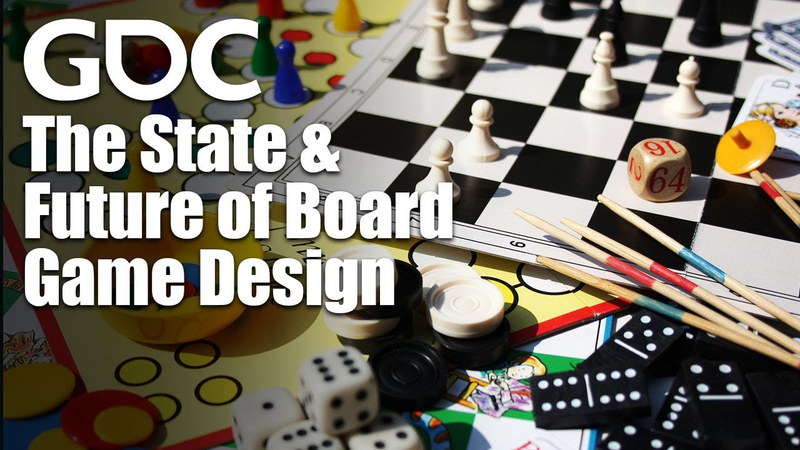
The board game industry is currently undergoing a period of rapid expansion, characterized by a 10 to 20 percent annual increase in new titles and a increasingly sophisticated player base.
- The board game industry is experiencing rapid growth with a 10 to 20 percent annual increase in new titles, leading to a hyper-competitive market where high-quality design alone no longer guarantees commercial success.
- Designers are increasingly shifting away from self-publishing via crowdfunding toward traditional publishing models to better manage the financial and operational risks of global manufacturing and marketing.
- To remain viable amid low royalty margins, designers must adopt multi-disciplinary, iterative workflows and treat their work with an entrepreneurial mindset rather than focusing solely on creative expression.