Global reports and market data
Documents
Rayman Legends: The Design Process Within the UbiArt Framework
The development of Rayman Legends centers on the implementation of the UbiArt Framework, an engine architecture designed to democratize the creative process by empowering level designers and artists to prototype independently.
- The UbiArt Framework enables rapid prototyping by allowing designers to combine 'white box' assets, movement tweens, and Lua scripting to prove gameplay concepts in as little as half a day.
- The development philosophy prioritizes frequent failure—up to 40 times a day—to quickly discard ineffective ideas and identify viable mechanics without becoming overly attached to early concepts.
- The engine utilizes a template-and-instance system that enforces core gameplay behaviors while allowing designers to tweak specific parameters, preventing the need for constant programmer intervention.
Lead the Way! A Practical Guide to Team Leadership
The transition from individual contributor to team lead in the game industry represents a fundamental shift in professional identity, requiring a move away from technical execution toward the cultivation of team morale and strategic direction.
- New team leads must treat management tasks like mentoring and conflict resolution as core responsibilities, dedicating 20% to 50% of their daily schedule to these duties.
- Effective leadership requires shifting from authoritative control to a supportive, mission-driven approach that utilizes active listening and Socratic questioning to foster team buy-in.
- One-on-one meetings should be prioritized for career development and long-term growth rather than being used for simple status updates.
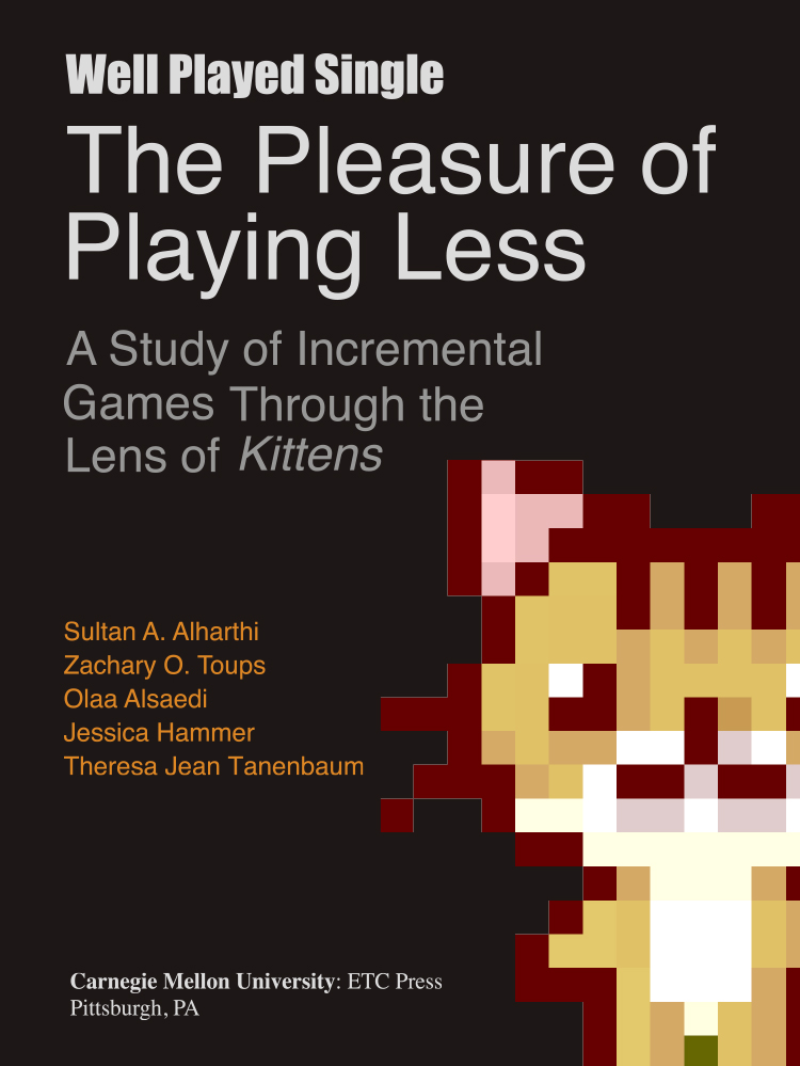
Well Played Single: The Pleasure of Playing Less
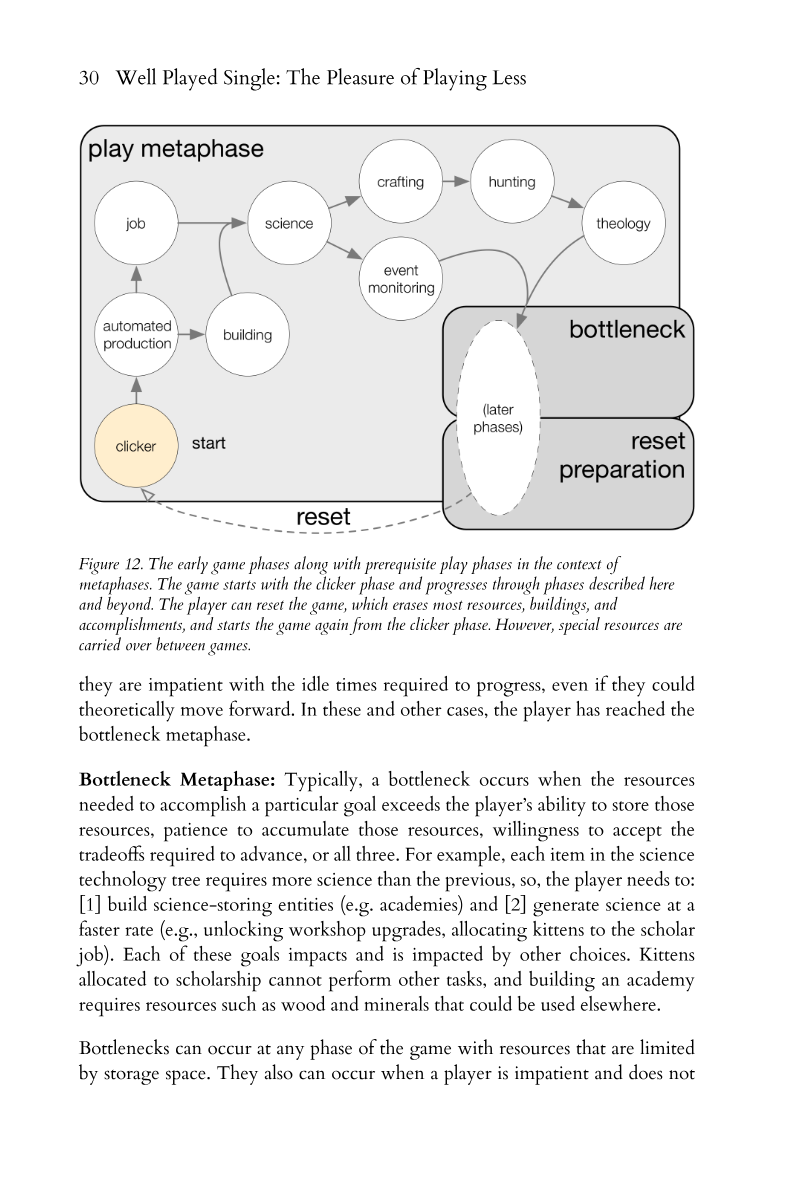
The authors present a close reading of Bloodrizer's incremental game Kittens, a text-based browser and mobile game with over 400,000 Kongregate play sessions.
- The authors argue that a central poetics of incremental games is incentivizing players to play less and plan more as they progress through each game's growth curve.
- Because the price ratio makes each additional building costlier, the authors describe a marked decrease in clicks during the automated production phase, as letting resources accumulate while idle becomes more valuable.
- The catnip field price ratio of 1.12 with an initial cost of 10 catnip means the 100th field costs 745,734.5 catnip, illustrating how costs escalate.
Huddle up! Making the [SPOILER] of INSIDE
The Huddle, the central entity in the game INSIDE, represents a six-year evolution in procedural character design, moving away from traditional animation toward a complex, physics-driven architecture.
- The Huddle in INSIDE is a physics-driven entity composed of 26 independent bodies bound to a single skinned mesh, replacing traditional pre-baked animation.
- Movement is generated through a spine-based macro-motion system using spring-like edges, which allows for fluid transitions and structural integrity without common procedural artifacts.
- The creature achieves autonomous-looking movement by mapping secondary limbs and heads to the physics core using velocity and raycasting data to minimize computational overhead.

Be Authentic - The Only Way! (My Opinion)
The concept of authenticity is often misunderstood as a singular, static state of being, when in reality, human interaction is defined by the performance of various roles.
- Authenticity is defined by the absence of deception rather than the maintenance of a singular, static personality.
- Adapting behavior, energy, and communication styles across different social environments is a functional mechanism for navigating diverse contexts, not a sign of dishonesty.
- Deception occurs only when an individual intentionally misrepresents their core beliefs or values to manipulate the perceptions of others.
Making it Matter: Lessons from Real Sports
Video games frequently struggle to generate the same level of emotional investment and cultural significance found in traditional athletics.
- Modern game design often diminishes emotional investment by prioritizing player comfort through features like quick-saving and infinite retries, which eliminate the stakes and finality found in traditional sports.
- Developers should implement high-stakes failure states that force players to confront the consequences of their actions to foster a deeper sense of accomplishment.
- To increase the perceived value of achievements, the industry must move away from pay-to-win systems and mindless grinding, which undermine the legitimacy of player performance.

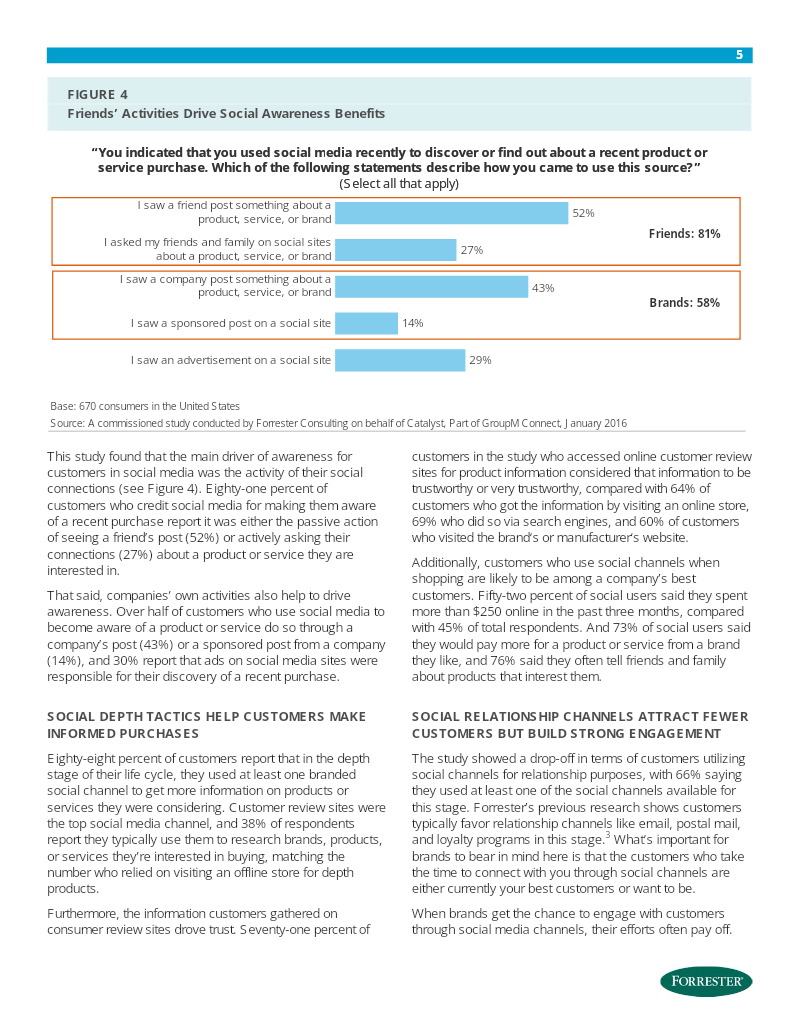

Why Search + Social = Success for Brands: The Role of Search and Social in the Customer Life Cycle
This Forrester Consulting study, commissioned by Catalyst, part of GroupM Connect, examines the complementary roles of search and social media channels across the customer life cycle for online consumers.
- Over 90% of consumers utilize search engines or retailer sites at every stage of the customer journey, establishing search as the primary driver for volume and trust.
- 58% of shoppers use both search and social channels for a single purchase, representing a high-value demographic that is 9% more likely to act as a brand advocate than the average consumer.
- Peer activity is the primary social influence, with 81% of consumers who discovered a product via social media citing friends' posts as a factor, compared to 43% influenced by company-generated content.
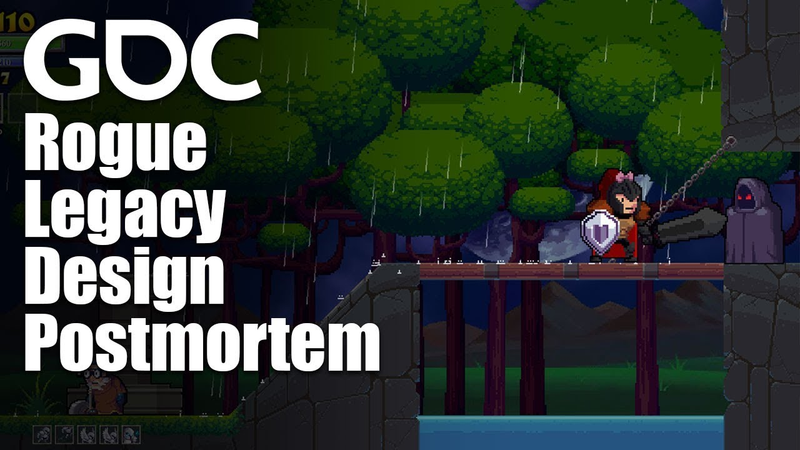
Rogue Legacy Design Postmortem: Budget Development
The development of the indie title Rogue Legacy serves as a case study in budget-conscious game design.
- Cellar Door Games developed Rogue Legacy over 18 months with a total production cost of less than $15,000, recouping all development expenses within one hour of launch.
- The team achieved rapid development by prioritizing 'good, not perfect' solutions, focusing on gameplay mechanics over high-fidelity assets and reusing systems from previous projects.
- To increase accessibility, the developers removed traditional roguelike 'floor clearing' and 'obscurity' mechanics, replacing them with a persistent lineage system that allows players to spend gold on character upgrades after every death.
Fake 3D Game Art Style in 1 Day: Robots!
The development process for implementing a fake 3D art style in a 2D strategy game centers on the use of normal maps to simulate depth and dynamic lighting.
- Developers can simulate 3D depth in 2D strategy games by using normal maps generated from 3D models to enable dynamic lighting on 2D sprites.
- By rendering 3D models with a custom shader that outputs surface orientation instead of color, sprites can react to light sources correctly regardless of their rotation.
- This workflow allows for the use of high-polygon 3D models for pre-rendered sprites without incurring real-time performance costs, as the engine only processes the normal map shading during gameplay.
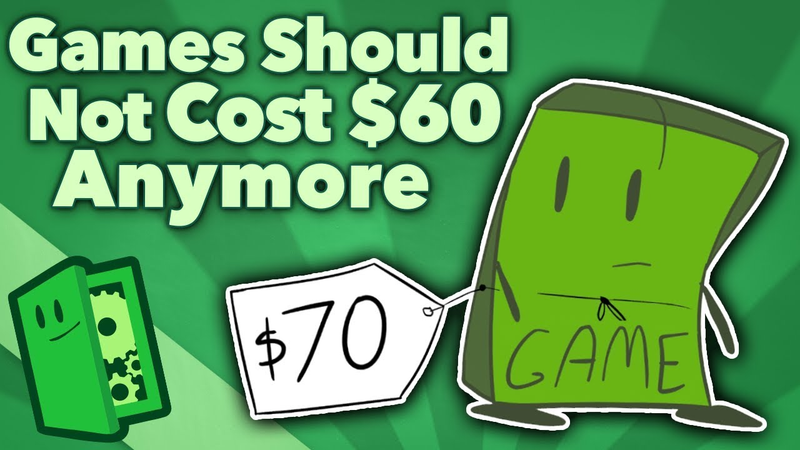
Games Should Not Cost $60 Anymore - Inflation, Microtransactions, and Publishing - Extra Credits
The standard $60 retail price for AAA video games has become economically unsustainable, driving the industry toward aggressive monetization strategies like microtransactions, loot boxes, and day-one DLC.
- The $60 AAA price point, established in 2005 with the Xbox 360 and PlayStation 3, has failed to keep pace with inflation, which alone would necessitate a $75 base price today.
- Escalating development costs driven by a graphical arms race have tripled or quadrupled since 2005, suggesting a required retail price of $85 to $90 for standalone products.
- Publishers have adopted aggressive monetization strategies like microtransactions, loot boxes, and day-one DLC as a direct response to the widening gap between static retail pricing and rising production costs.
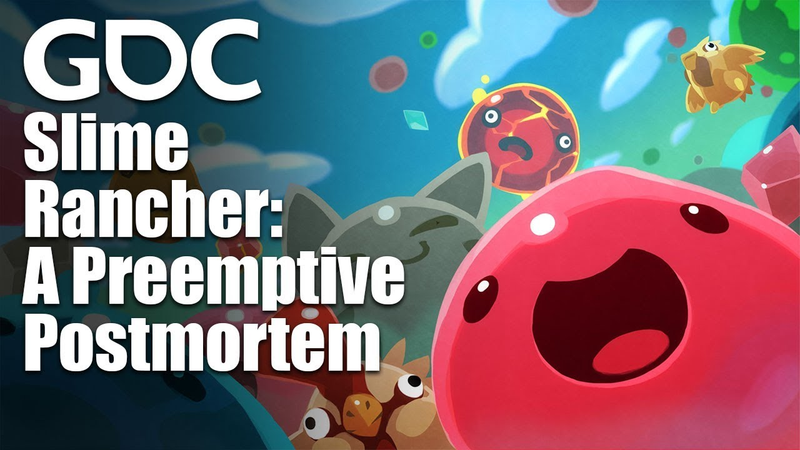
Slime Rancher: A Preemptive Postmortem
The success of Slime Rancher stems from a development philosophy that prioritizes a highly polished, satisfying core gameplay loop over speculative features or complex systems.
- Treat Early Access as a live service product rather than a development phase, focusing on major, feature-based content updates that generate hype rather than minor patch notes.
- Design games to be 'YouTube-friendly' by prioritizing emergent, unpredictable character behaviors and satisfying core gameplay loops that are visually engaging for spectators.
- Leverage organic growth on YouTube by distributing keys to smaller creators first, allowing the game to naturally climb the 'food chain' to larger influencers like Markiplier and Jacksepticeye without direct outreach.

Precision of Emotion: A New Kind of "Fun" Approach in Educational Games
The Sophia model redefines the concept of fun in educational gaming by framing it as a sophisticated psychological transformation where fear is converted into happiness through the acquisition of insight and mastery.
- The Sophia model defines educational 'fun' as the psychological transformation of fear into happiness through the achievement of mastery and insight.
- Effective game design should prioritize the player's emotional arc over simple performance-based tasks to foster deeper engagement and more durable learning outcomes.
- Designers should utilize the 'pain of absence' framework, which treats gaps in a player’s mastery or social efficacy as opportunities to build interconnected emotional loops.
Writers
Games and companies
Games