1 free read left. Create a free account for unlimited reading + AI research.
Create free account
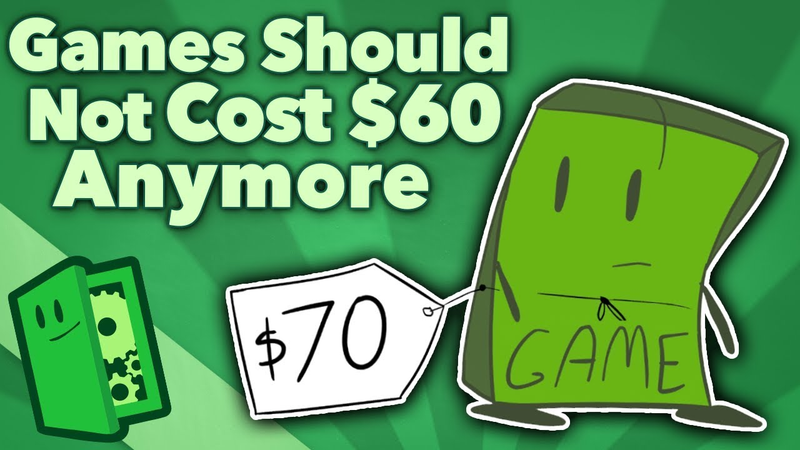
Games Should Not Cost $60 Anymore - Inflation, Microtransactions, and Publishing - Extra Credits
Key insights
6 takeaways- 01The $60 AAA price point, established in 2005 with the Xbox 360 and PlayStation 3, has failed to keep pace with inflation, which alone would necessitate a $75 base price today.
- 02Escalating development costs driven by a graphical arms race have tripled or quadrupled since 2005, suggesting a required retail price of $85 to $90 for standalone products.
- 03While the gaming audience has grown since 2005, this expansion has increased financial risk, making commercial failures potentially catastrophic for modern studios.
- 04Consumer expectations for lower prices, fueled by the mobile market and frequent digital sales, create significant psychological resistance to raising the base retail price.
- 05Publishers have adopted aggressive monetization strategies like microtransactions, loot boxes, and day-one DLC as a direct response to the widening gap between static retail pricing and rising production costs.
- 06The industry faces a binary choice: either consumers accept higher upfront retail prices or they must accept the continued integration of supplementary monetization systems.
Ask AI about this video
Transcript
Why are all of these $60 games trying to sell me loot boxes? Why are all these $60 games selling me season passes for their DLC? Why are all of these $60 games including microtransactions? Why are all of these $60 games trying to sell me DLC on day one? There are many variations, but the fundamental question being asked is the same. Why are they trying to make me pay more than $60 for this game? Today, we are going to answer that question. AAA games should not cost $60 anymore. And I'm going to spend the rest of this video explaining why. The price for a AAA game was set at $60 right around the launch of HD consoles, the Xbox 360 and the PS3. That was around 2005, and the price hasn't shifted again since, but the value of the US dollar certainly has. The rate of inflation over the last
decade has averaged out to roughly 2% per year. According to the best figures I can find, that means that the value of goods has inflated 25.34% since we started selling games for $60. And let's just round that down to a flat 25% to keep the math simple. So, due to inflation alone, AAA games should be selling for $75 right now. But obviously, inflation isn't the only factor in play here. AAA games are all competing to have the best looking game on the market, and that graphical arms race gets way more expensive with each new console generation. And sure, we have found a lot of clever efficiencies along the way to reduce costs. I mean, heck, we treat third-party game engines like middleware now, and that saves tons. But even with those savings, I would estimate that AAA games cost somewhere between three and four times as much to make as they did back in 2005. So, does that mean games should actually be costing somewhere between 225 and $300?
Fortunately, no. Things aren't quite that dire. It's pretty hard to pin down exact numbers on this, but the game-playing audience is a lot bigger than it was in 2005, too. Like, several times bigger. And that means that there's a lot more customers to sell to, which helps to make up for that higher production cost, and can result in even bigger profits if you manage to make a huge hit. Unfortunately, when you're counting on that higher number of sales to make a profit, if your game flops, well, you're going to be losing an impossibly large, possibly studio-sinking amount of money. But, since we're just focusing on what the average retail price of a game should be, let's just ignore that increased risk factor for now. Based on what we've seen firsthand working in this industry, much of which is under NDA, unfortunately, if I had to make a gut estimate, and understand this really is just a rough guess, I would say that the actual retail price modern AAA game without any additional ongoing revenue sources to support it should probably be
as high as 85 to $90 new. Now, understandably, that number freaks the industry out. Who outside of Australia is going to pay $90 for a video game? I mean, we all saw what happened to the Neo Geo. And this fear has been compounded by the success of the mobile game market, which has sort of trained consumers to think that games should be astonishingly cheap. I mean, for a tablet game, $10 is considered expensive, even if that same game would cost $30 on the DS or $40 on Steam. And for that matter, Steam sales have been training us to expect cheaper games, too. And so, the industry has kept that $60 price right where it is. And, I mean, maybe they're right to do so. A lot of people got pretty bent out of shape when the price got bumped up to $60 back in 2005, and there is something about the number 70 that just feels like Yikes, a lot of money. Industry wisdom really may be right here. Maybe raising that standard price any higher than $60
would lead to a drop in sales. But by not raising prices, we've sort of put ourselves in a tough spot. If we are going to cover our development costs, reduce the risk of catastrophic losses, and show our shareholders the return percentages they're expecting, we've got to do something to increase revenue. And we've tried to do that in a lot of different ways to varying degrees of success. First, we tried increasing revenue by selling DLC, but fans got upset if we sold that DLC at launch and they didn't buy it if we released the DLC later. Next, we tried designing games to be perpetual experiences, games that you would play all year long because then we could sell map packs and expansions over that game's longer lifespan. But supporting those games long-term turned out to be pretty expensive, too, and it didn't really work for every kind of game. Besides, players can only actively keep up with so many perpetual games at once. So all of those perpetual games have to compete for attention, and the audience just gets locked down. It's like the MMORPG
flood all over again. And so now we are trying the next thing, loot boxes. We'll come back to the specific topic of loot boxes in a couple of weeks, but this is basically where we're at. And now we as an audience have to decide what we want. Are we okay with paying more for these games at retail? $70? $80? Maybe even more? The data suggests that the answer is no, but if that's the case, well, we're going to have to learn to live with loot boxes or microtransactions or whatever other model the industry attempts next. And by learn to live with, I don't mean put up with predatory crap. I mean we're going to have to find a way to reward developers for making good supplementary income systems that aren't overly aggressive or in any way required to play competitively. Monetization systems that leave you satisfied and actually increase your enjoyment of the game you're spending dozens of hours on, even if you choose to spend very little. But, make no mistake, those really are our only two options right now because, like I said
at the beginning, AAA games just should not cost $60 anymore. See you next week.
Summary
The standard $60 retail price for AAA video games has become economically unsustainable, driving the industry toward aggressive monetization strategies like microtransactions, loot boxes, and day-one DLC. Established around 2005 with the launch of the Xbox 360 and PlayStation 3, this price point has remained stagnant despite significant inflation. Accounting for approximately 25% inflation alone, the base price of a game should theoretically be $75 today. When factoring in the escalating costs of the graphical arms race—where development budgets have tripled or quadrupled since 2005—the necessary retail price for a standalone product is estimated to be between $85 and $90.
While the gaming audience has expanded significantly since 2005, providing a larger customer base to offset these costs, this growth has introduced higher financial risks; a commercial failure today can result in catastrophic, studio-sinking losses. Furthermore, the industry faces psychological resistance to price hikes, as well as downward pressure from the mobile market and frequent digital sales, which have conditioned consumers to expect lower prices.
Because raising the base retail price is perceived as a high-risk move that could alienate consumers, publishers have turned to alternative revenue streams to satisfy shareholder demands and cover development expenses. These efforts, ranging from long-term service models to loot boxes, represent a reaction to the widening gap between static retail pricing and rising production costs. Ultimately, the industry faces a binary choice: either consumers must accept a higher upfront retail price, or they must accept the continued integration of supplementary monetization systems. The challenge lies in developing non-predatory, value-added models that enhance the player experience rather than exploiting it.























Comments