Global reports and market data
Documents

Well Played: A Special Issue on Meaningful Play and Games for Social and Emotional Learning
This is a special issue of the journal Well Played, published by Carnegie Mellon University's ETC Press in 2018 and edited by Susan E. Rivers and Heidi McDonald.
- Dunlap and Rivers report that Tracking Ida met the most criteria on their Game-Based SEL Framework, while the evidence-based teen intervention Ripple Effects met the fewest.
- The authors state that the Butterfly Lovers VR design is focused on a platform for two-player interaction rather than structured gameplay at this stage.
- Gottlieb and Schreiber estimate that a 20 dinarim communal cost split across five players is only four dinarim per player, compared with an average of about 10 dinarim for family responsibilities.

Landing Page Review: Accelebot (Indie Game Marketing)
This analysis evaluates the landing page and promotional trailer for Accelebot, a 2D mobile platformer for iOS.
- The trailer fails to demonstrate the game's core unique selling point, which is the specific control scheme involving device tilting and tapping to jump.
- Marketing copy should avoid sarcastic or self-deprecating humor, as it risks undermining the professional credibility of the project.
- Email lists for mobile games often see conversion rates below 20%, making the quality of initial community outreach more important than raw subscriber volume.

Well Played: A Special Issue on Analog Games
This is the Well Played journal's special issue on analog games, edited by Ira Fay and published by Carnegie Mellon University's ETC Press, volume 7 number 1.
- The introduction credits a renaissance in the board game world over the last decade, fueled at least in part by funding platforms like Kickstarter.
- The editor argues that game design as a field is still young, and that beginners can now more easily learn basic skills and access prototyping software and components.
- The issue's essays span a wide range of analog games, from Magic: The Gathering to the Finnish board-game-turned-drinking-game Kimble.
Designing Location-Based Augmented Reality Games for Urban Tourism: A Conceptual Framework
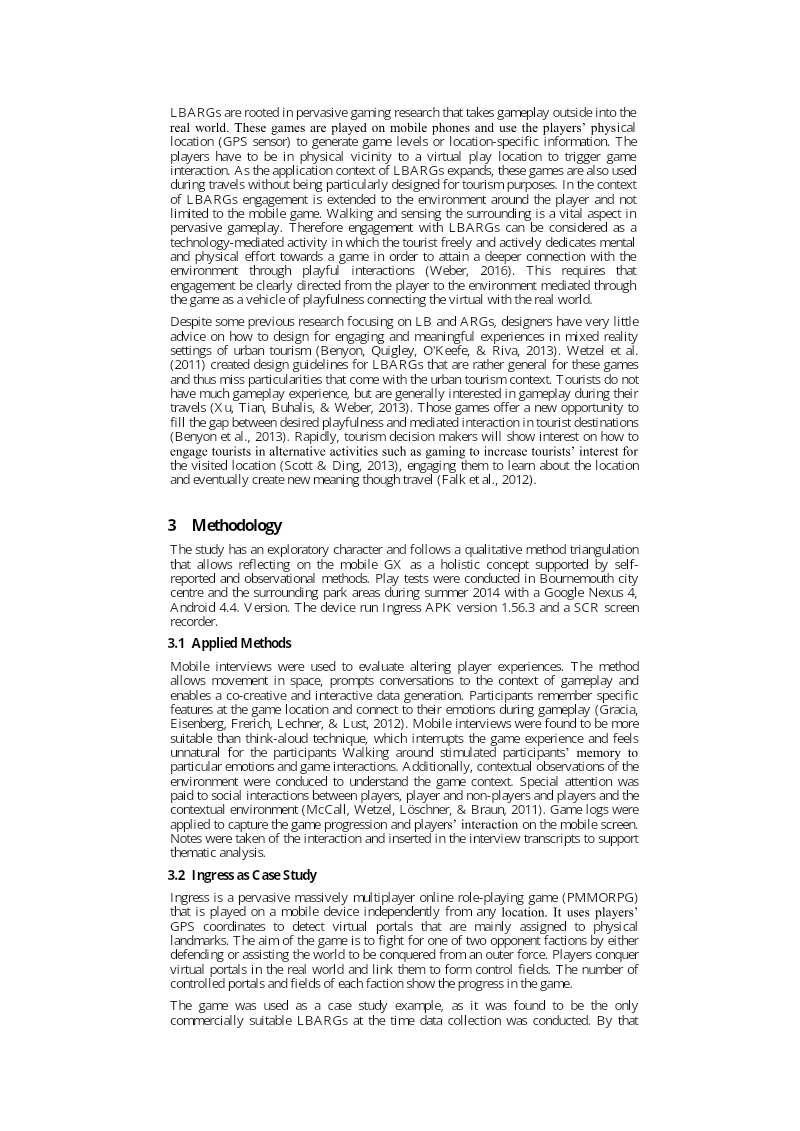
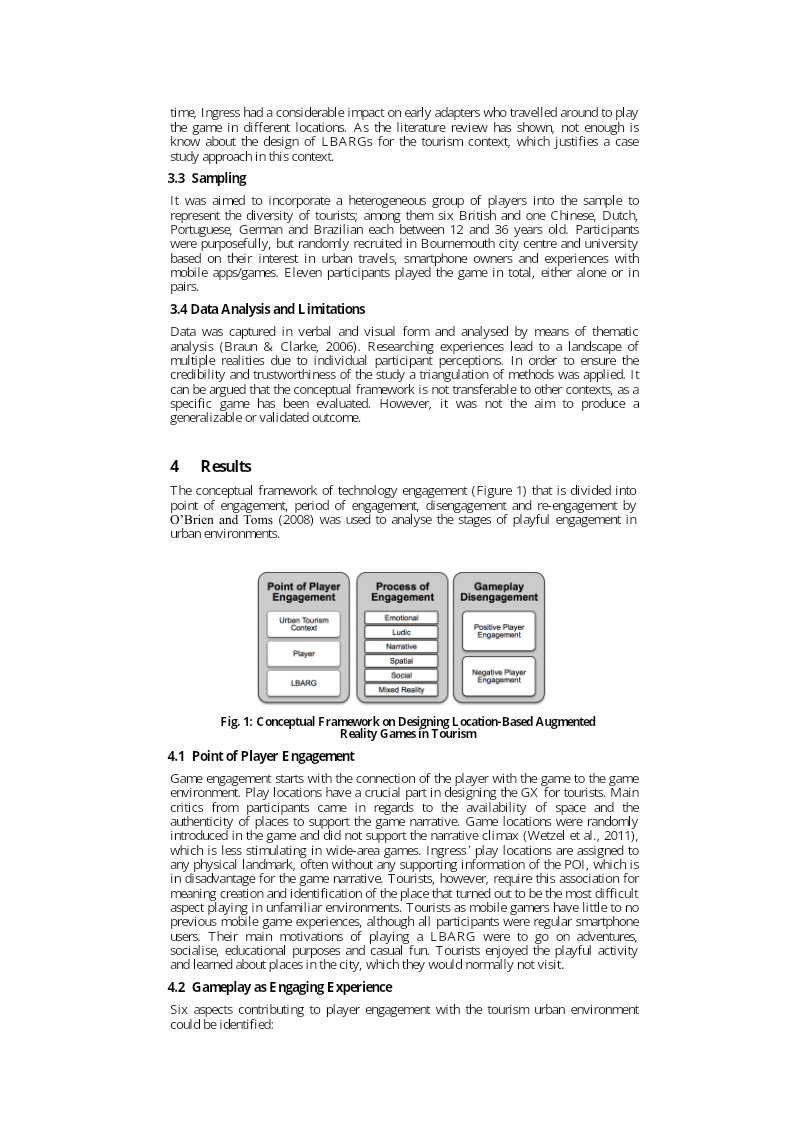
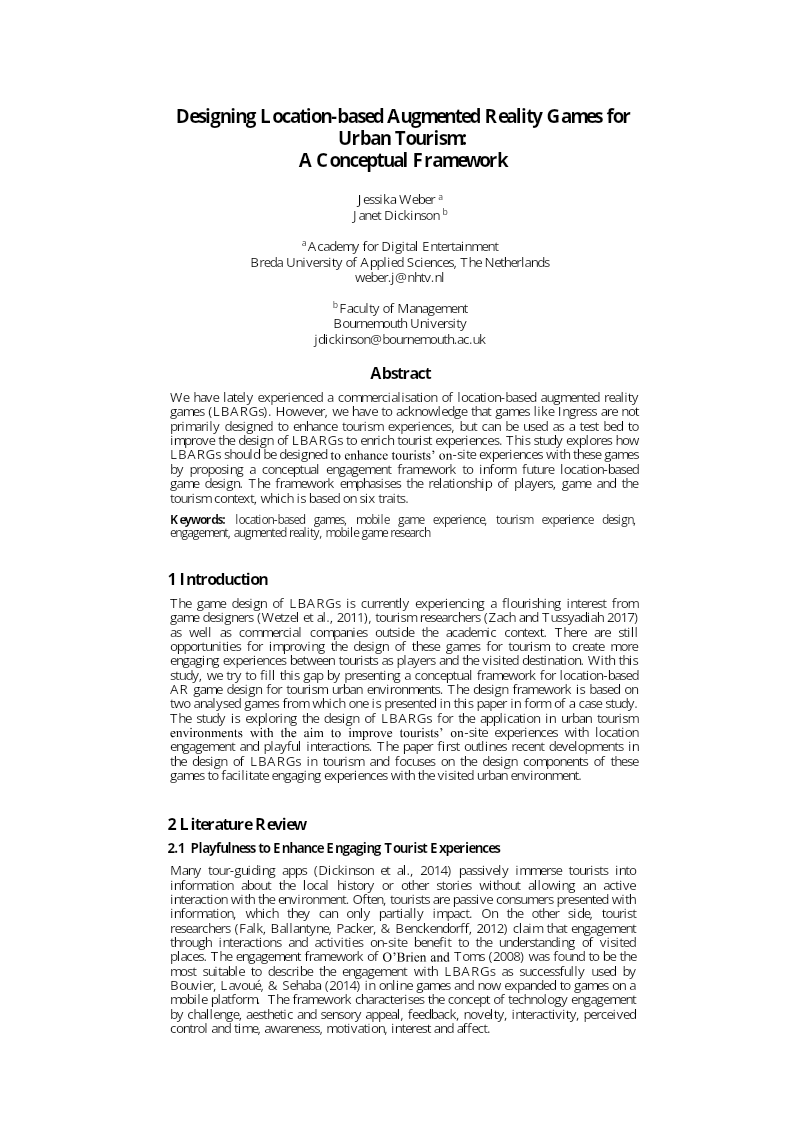
This study proposes a conceptual framework for designing location-based augmented reality games (LBARGs) specifically to enhance urban tourism experiences.
- The study proposes a six-trait engagement framework (emotional, ludic, narrative, spatial, social, and mixed reality) for location-based augmented reality games in urban tourism, built on O'Brien and Toms' (2008) engagement model.
- The framework was developed by testing Ingress, a commercial game not designed for tourism, in a qualitative exploratory study with 11 participants aged 12 to 36 of varied nationalities, playing on Android devices in Bournemouth city centre and surrounding parks in summer 2014.
- Players showed strong excitement during discovery and challenge completion, and spatial exploration heightened their awareness of unfamiliar locations.
The Bane of All Development Postmortems: Communication is Hard So Give Up Now
Communication remains the most persistent and critical failure point in game development, frequently cited as the primary cause of project instability in industry postmortems.
- Project instability in game development is primarily driven by communication failures, necessitating a shift from infrequent status updates to proactive, continuous feedback loops.
- Leadership must foster a culture of psychological safety where team members are empowered to admit knowledge gaps, allowing for the early identification of risks before projects devolve into death marches.
- Structural information flow should be managed by establishing clear feature ownership and defining internal customer relationships between departments to prevent the formation of silos.

The Art of Reanimating Plants vs. Zombies 2
This presentation outlines the artistic development process for Plants vs. Zombies 2, focusing on the challenges of creating a sequel to a highly acclaimed, genre-defining title.
- Successful sequels must prioritize protecting the core identity and mechanics of the original title rather than attempting to replace them.
- The development team transitioned from hand-drawn art to a vector-based aesthetic using Flash to improve animation efficiency and visual readability on smaller mobile screens.
- The narrative shift to a time-travel theme allowed for the introduction of new environments and mechanics while maintaining the franchise's established visual language.
Riftwalker: Jonas Plays Your Game #001
Riftwalker functions as a fast-paced 2D rogue-like shooter developed in GameMaker Studio, characterized by a highly addictive core gameplay loop and satisfying mechanical feedback.
- The game must transition from its current 30 FPS frame rate to a 60 FPS standard to ensure the fluid movement and responsiveness required for a competitive 2D rogue-like shooter.
- User interface design requires immediate improvement, specifically by adding numerical values for stat upgrades and clearer visual indicators for ability cooldowns, weapon accuracy, and fuel status.
- Boss encounters currently suffer from unfair damage spikes during level transitions that require rebalancing to improve player experience.
Maximizing Artistic Critique: Improving Communication for Everyone Involved in Critical Feedback
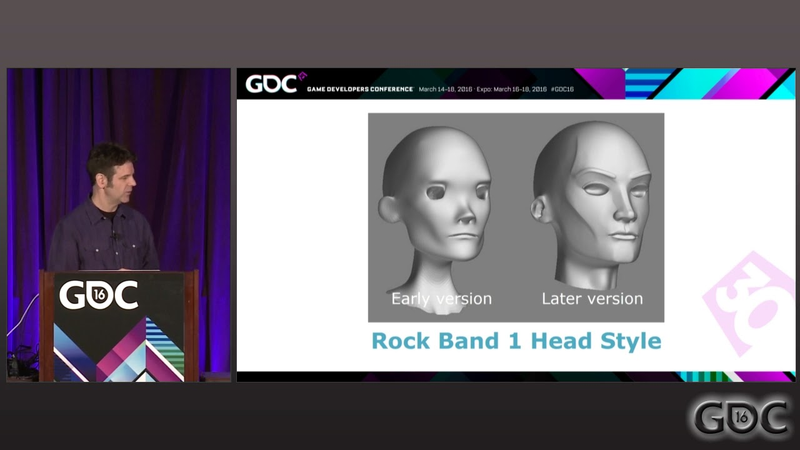
Effective artistic critique in game development functions as a collaborative, two-way dialogue designed to elevate product quality, team cohesion, and operational efficiency.
- Artistic critique should function as a collaborative, two-way dialogue focused on elevating product quality and team cohesion rather than serving as a subjective evaluation.
- Feedback must shift from personal opinion to an analytical process that identifies specific problems and describes the underlying user experience.
- Critique sessions are most effective when they focus on articulating the intent behind a reaction rather than prescribing specific creative solutions.

5 "Facts" I Believe In. (Do You?)
This analysis outlines five core philosophical beliefs regarding human behavior, the nature of play, and the structure of social systems.
- Systemic design flaws are the primary cause of exploitative behavior, meaning rule-makers—whether in game design, parenting, or social structures—are responsible for the outcomes their systems incentivize.
- Play is defined as an activity occurring within a 'safe zone' where outcomes lack real-world consequences while providing clear feedback and defined goals.
- Human selfishness is the fundamental driver of all behavior, as even altruistic actions are motivated by the pursuit of personal satisfaction or the avoidance of negative emotional states.

How Facebook supports developers in getting their games discovered
Facebook serves as a critical infrastructure for game developers seeking to scale their titles by leveraging a massive, data-rich ecosystem.
- Facebook leverages its massive user base, including 2 billion monthly active users on Facebook and 800 million on Instagram, to help developers target players based on specific interests and platform engagement data.
- The Facebook SDK allows developers to track in-app events such as tutorial completion, level progression, and purchase history to optimize user acquisition.
- The 'Value Optimization' method, introduced in August 2016, enables developers to create custom audiences from high-value players and use them as seed audiences to find similar users globally.
The Role of Mobile in Esports: The State and Future of Mobile Esports in Asia and the West
The analysis examines the current state and future trajectory of mobile esports, specifically contrasting its development in Asian and Western markets.
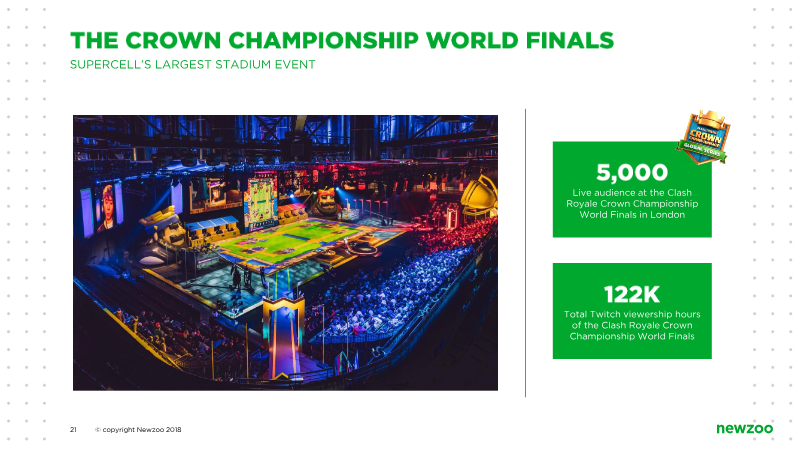
- Asia has successfully mirrored professional PC esports through large-scale stadium events and structured leagues, while the Western market continues to treat mobile competition primarily as a grassroots and amateur-focused endeavor.
- India is projected to become the world’s fourth-largest mobile gaming market by 2020, representing a significant geographic shift in the competitive mobile landscape.
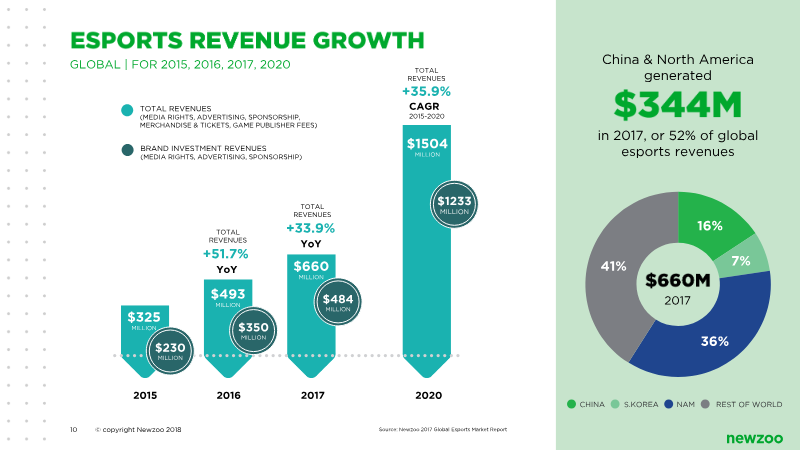
- China currently serves as the primary engine for global mobile esports growth, though the industry is increasingly expanding into emerging markets.
Why Do Games Cost So Much To Make? - AAA Game Budgets - Extra Credits
The high cost of AAA game development is driven by a complex interplay of operational overhead, technical requirements, and market pressures.
- Total investment for a single AAA title typically ranges from $75 million to $100 million, driven by the necessity of marketing budgets that often match or exceed development costs.
- Personnel costs are the primary expense, with an average monthly cost of $10,000 per employee; a 200-person team working for two years incurs $40 million in salary, benefits, and tax expenses alone.
- Operational overhead beyond salaries includes significant expenditures for office space, high-end software and engine licensing, middleware, equipment, and professional localization and voice acting services.
Writers
Games and companies
Games