1 free read left. Create a free account for unlimited reading + AI research.
Create free accountWhitepaper ETC Press
1 free read left. Create a free account for unlimited reading + AI research.
Create free accountWhitepaperETC Press
Distilling the key insights…
Video games serve as powerful, multimodal active-learning tools capable of translating complex academic content into engaging, narrative-driven experiences. By leveraging interactive mechanics, simulations, and distributed networks, games facilitate learning across diverse fields, including the hard sciences, moral philosophy, and clinical psychology. The core thesis posits that while games offer unique cognitive environments for knowledge acquisition, their effectiveness as pedagogical instruments relies heavily on intentional design, structured integration into curricula, and the ability of learners to navigate the intersection of gaming mechanics and scientific or conceptual frameworks.
Research across various educational contexts demonstrates that games can significantly improve knowledge retention and critical thinking. In scientific education, titles like Medulla and Quantum Dreams show that forced engagement with technical content and the ability to oscillate between gaming and scientific frames lead to measurable academic gains. Similarly, simulations such as Plague, Inc.: Evolved foster probabilistic reasoning, while narrative-heavy experiences like The Walking Dead provide a risk-free environment for exploring complex ethical dilemmas. However, these successes are not universal; studies involving empathy-driven games for mental health professionals highlight that usability barriers and a lack of game literacy can impede learning, necessitating the inclusion of explicit reflection mechanics to bridge the gap between embodied experience and cognitive understanding.
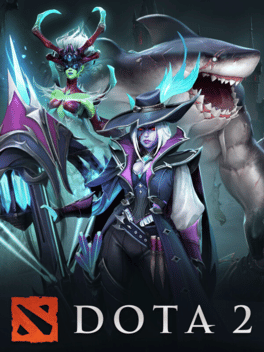
Beyond individual titles, the industry is evolving toward ecological models of education. Dota 2 exemplifies a distributed teaching system where learning occurs across a network of formal tutorials and emergent, community-driven resources. This shift suggests that modern education can be reimagined as a collaborative, learner-centered process that transcends traditional institutional boundaries. Ultimately, the integration of games into formal learning requires a balanced approach where educators provide the necessary scaffolding and debriefing to ensure that gameplay translates into meaningful, transferable knowledge. This synthesis of entertainment technology and pedagogy represents a significant advancement in 21st-century knowledge acquisition.
ETC Press · 2022
ETC Press · 2018