1 free read left. Create a free account for unlimited reading + AI research.
Create free accountWhitepaper Press Start
1 free read left. Create a free account for unlimited reading + AI research.
Create free accountWhitepaperPress Start
Body self-esteem is the primary predictor for how closely a player chooses to mirror their real-world identity in their virtual counterpart.
Like an artist painting a self-portrait, players craft avatars that reflect their desired image.
Key finding. Players project their physical self-conceptions into the game space to bridge the gap between their actual and desired identities.
The investigation into avatar creation and gameplay behavior within The Elder Scrolls Online reveals that digital self-presentation is fundamentally driven by the psychological interplay between a player’s self-esteem and their real-world identity. By analyzing how individuals construct their virtual counterparts, the research establishes that body self-esteem serves as a primary predictor for the perceived similarity between a player and their avatar. This suggests that the virtual environment functions as a canvas for the ideal self, where users project their physical self-conceptions into the game space to bridge the gap between their actual and desired identities.
Gender remains a defining variable in how players engage with game mechanics, specifically regarding role selection. Data indicates that female participants gravitate toward supportive roles, such as the Templar, while male participants demonstrate a preference for damage-focused classes like the Dragonknight. These patterns align with established societal gender stereotypes, suggesting that virtual environments often reinforce traditional behavioral norms rather than providing a space for complete identity experimentation. Furthermore, the degree of avatar personalization correlates with increased physiological arousal and aggressive tendencies during violent gameplay, highlighting the psychological intensity of the player-avatar bond.
While these findings provide valuable insights into the mechanics of online identity, the scope is constrained by a limited sample size, a narrow age demographic, and a disproportionate gender distribution. Technical interface frustrations encountered by participants may have also influenced the consistency of the data. Future research must expand across diverse age groups and cultural contexts to determine if these behavioral trends persist globally. By distinguishing between the impacts of physical versus general self-esteem, subsequent studies can further clarify how digital avatars serve as conduits for human expression and psychological projection in increasingly immersive virtual worlds.
Each row is a game or company this document names, each column a document, oldest first. A mark means that document names it. Select a row to see those documents.



Press Start · 2026
Press Start · 2026
Press Start · 2026
Press Start · 2026
Press Start · 2026
Press Start · 2026
Press Start · 2026
Press Start · 2026
Press Start · 2025
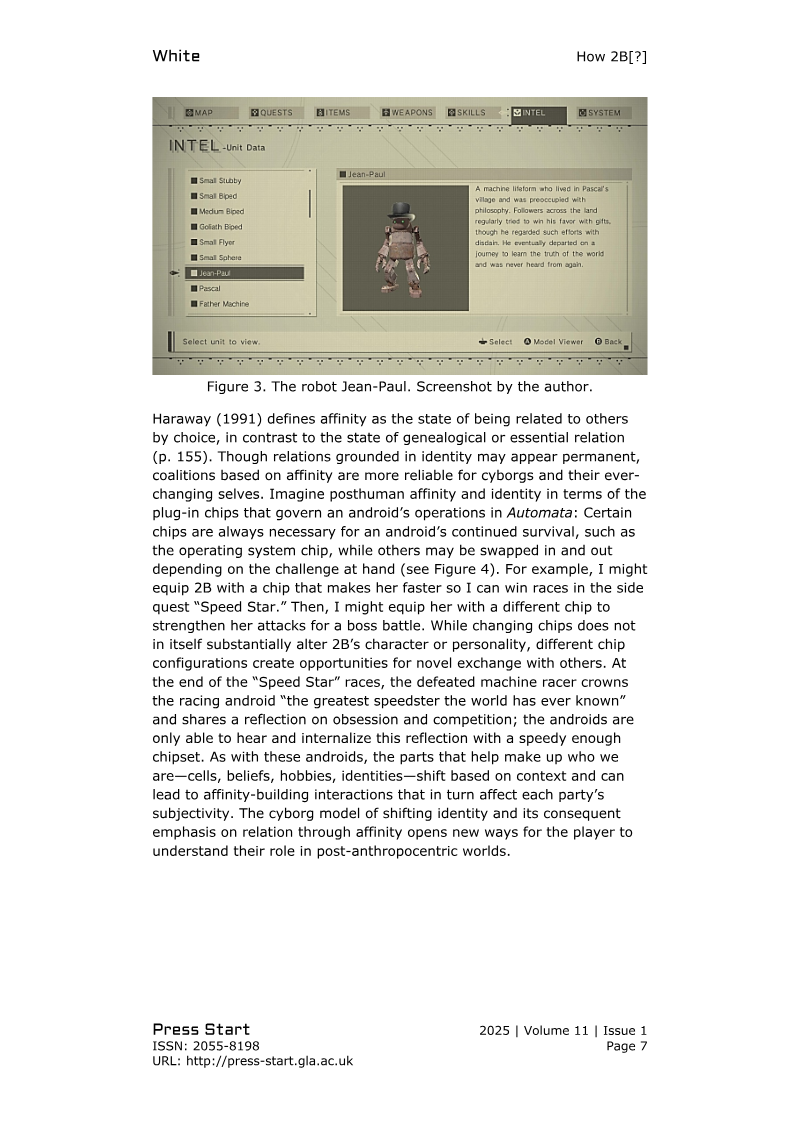
Press Start · 2025
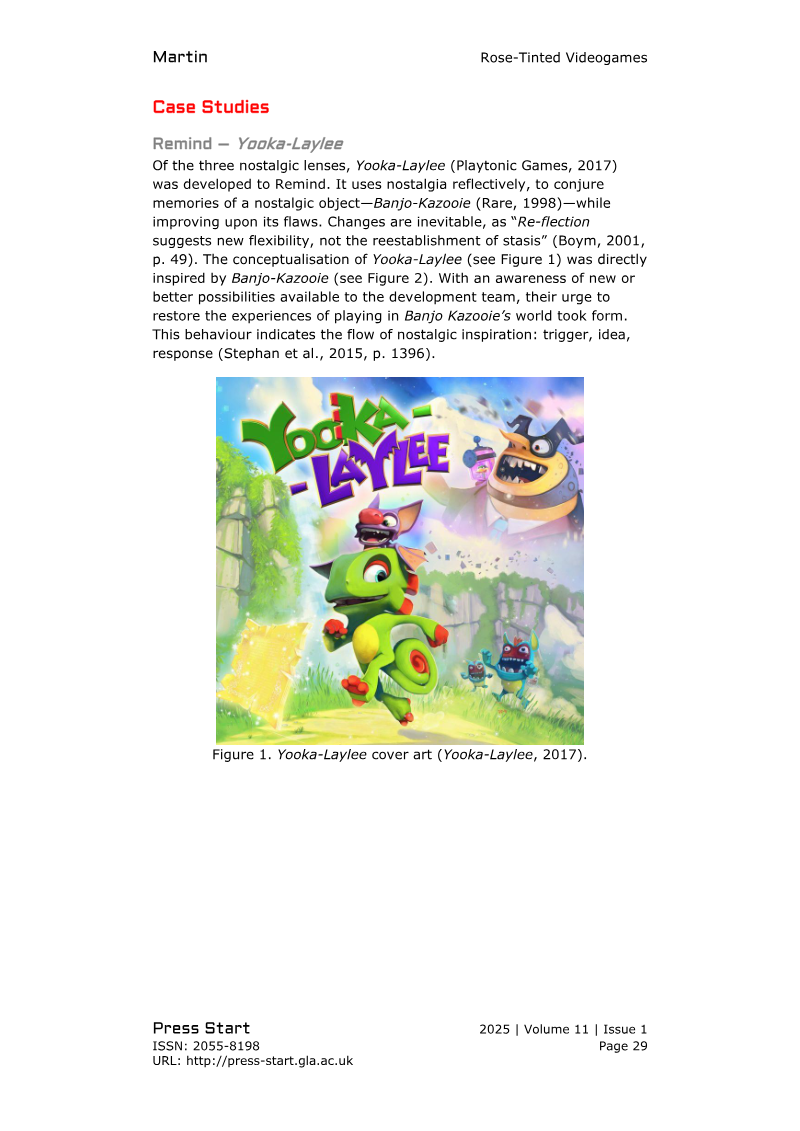
Press Start · 2025
Press Start · 2024
Kinephanos · 2026