1 free read left. Create a free account for unlimited reading + AI research.
Create free accountWhitepaper Press Start
1 free read left. Create a free account for unlimited reading + AI research.
Create free accountWhitepaperPress Start
Phenomenological correspondence measures the relationship between the complexity of a simulated action and the physical input required by the player.
Key insight. Control schemes can be categorized into three models based on phenomenological correspondence: reductionist, completionist, and antisimulation.
This analysis establishes a framework for evaluating videogame control schemes through the lens of phenomenological correspondence, which measures the relationship between the complexity of a simulated action and the physical input required by the player. By examining how games translate real-world motions into digital inputs, the study categorizes control schemes into three distinct models: reductionist, completionist, and antisimulation.
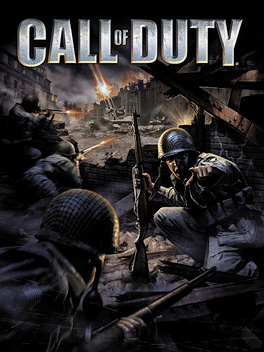
Reductionist correspondence, commonly found in arcade-style games like Canabalt or Call of Duty 4, simplifies complex real-world actions into intuitive, singular button presses. This approach prioritizes player empowerment and ease of use, effectively building expertise into the interface itself. Conversely, completionist correspondence, exemplified by simulators like Flight Simulator X or the gun-mechanic focus of Receiver, seeks a direct, high-fidelity mapping between the player’s physical input and the simulated action. These games demand that the player learn and execute the full complexity of the task, mirroring the phenomenological experience of the real-world activity.
The study introduces a third category, antisimulation, which involves an excessive phenomenological correspondence. In games such as QWOP, Surgeon Simulator 2013, and Octodad: Dadliest Catch, the control schemes are intentionally designed to be more difficult and complex than the actions they represent. By requiring multiple player inputs to manage a single simulated limb or task, these games actively withhold expertise and disrupt the player's ability to treat their own body as a unified system. Rather than representing a failure of design, antisimulation highlights the diverse ways games can manipulate the relationship between human agency and digital representation, ultimately providing a clearer perspective on how all control schemes function.
Each row is a game or company this document names, each column a document, oldest first. A mark means that document names it. Select a row to see those documents.
Press Start · 2026
Journal of Games Criticism



Serious Games Society · 2026
European Conference on Games Based Learning (ECGBL) · 2026
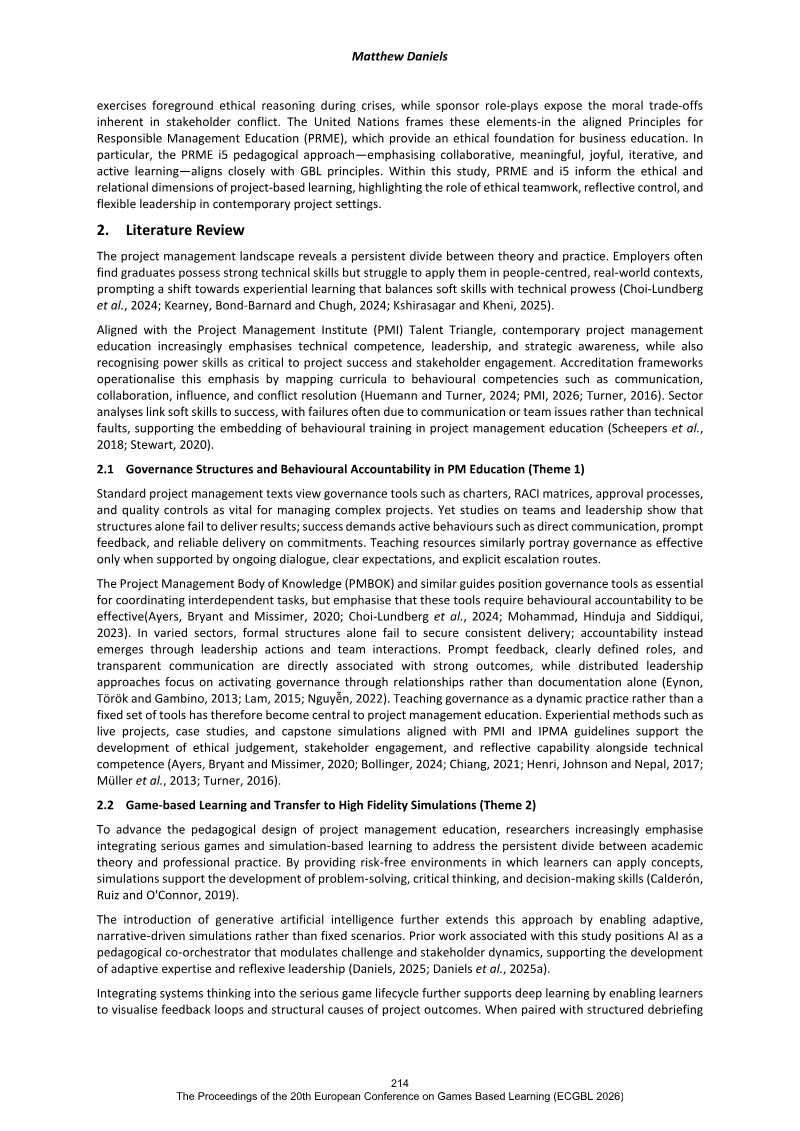
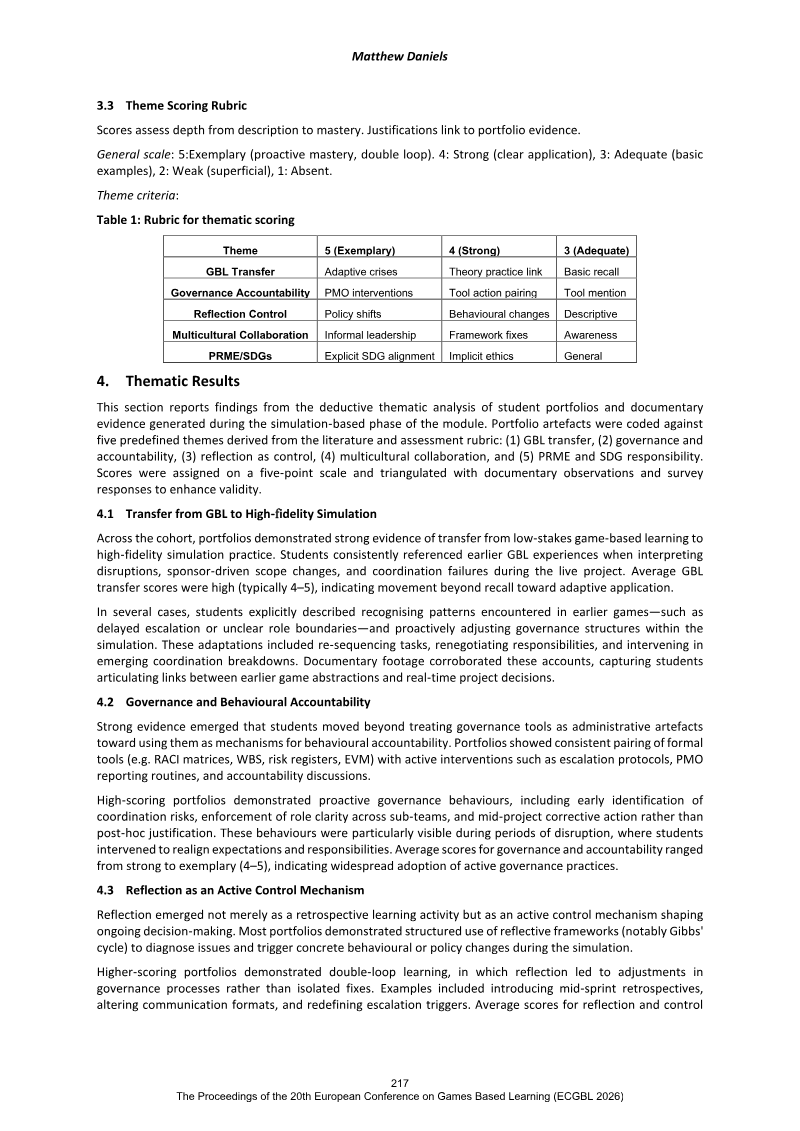
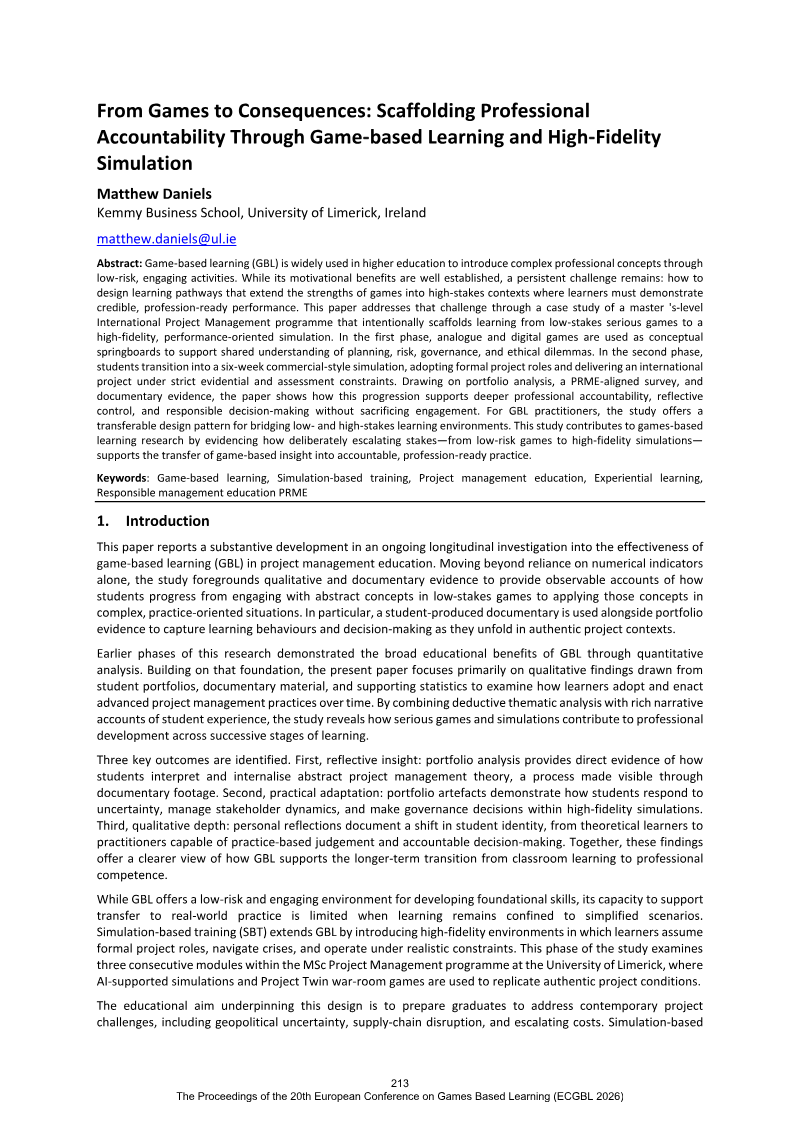
European Conference on Games Based Learning (ECGBL) · 2026



European Conference on Games Based Learning (ECGBL) · 2026
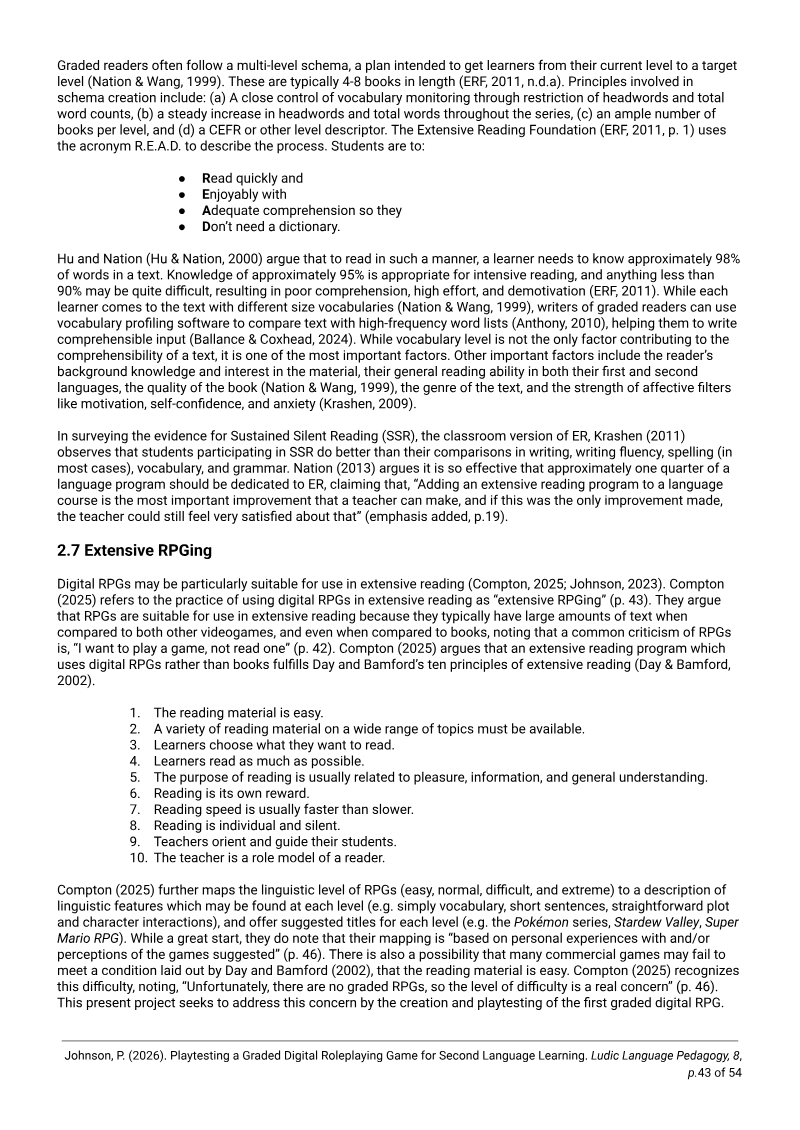
Ludic Language Pedagogy · 2026



Ludic Language Pedagogy · 2026



International Journal of Role-Playing · 2026
International Journal of Role-Playing · 2026



DiGRA · 2026
DiGRA · 2026
DiGRA · 2026