Game Studies reports and market data
Documents

Language-GAME-Players: Articulating the Pleasures of 'Violent' Game Texts
The prevailing discourse surrounding violent video games frequently relies on a media effects framework that fails to account for the nuanced perspectives of the gaming community.
- A two-year qualitative study of 61 students indicates that players view violent game content as a functional component of rule-based systems rather than a catalyst for real-world aggression.
- Players consistently distinguish between virtual obstacles and real-world morality, prioritizing strategic agency and the mastery of complex game mechanics over the content's violent nature.
- First-person shooter engagement is primarily driven by performance challenges, aesthetic appreciation, and the desire to master structured, competitive frameworks.

Authoring the Intimate Self: Identity, Expression and Role-playing within a Pioneering Virtual Community
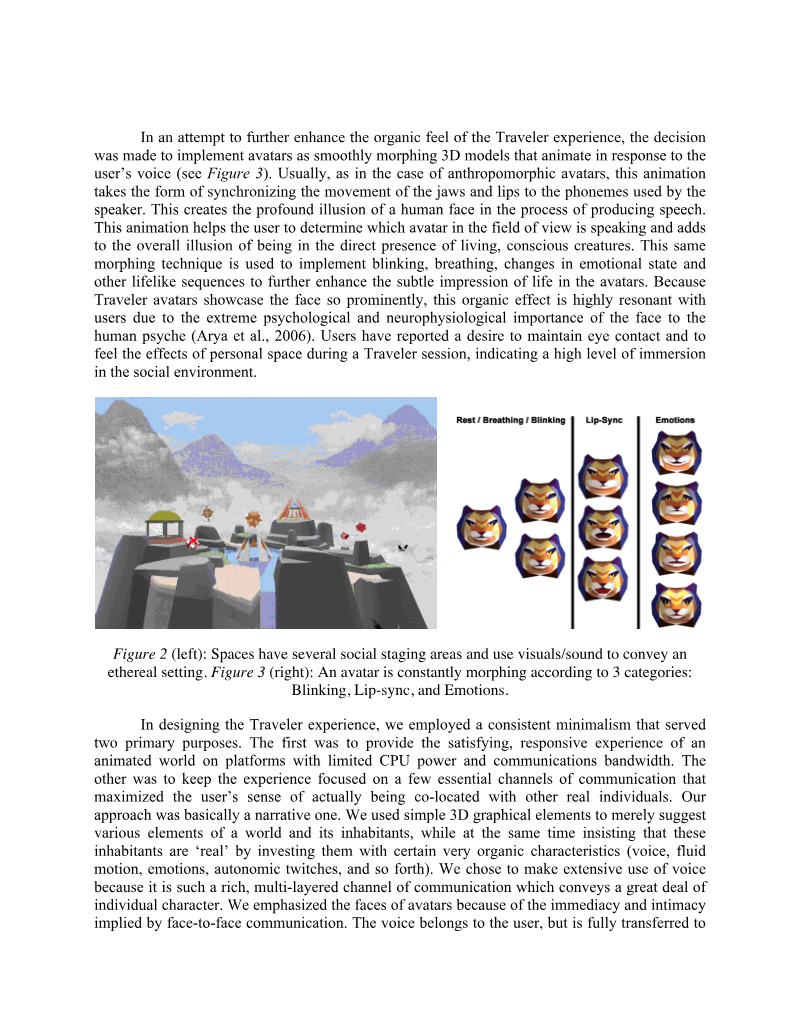
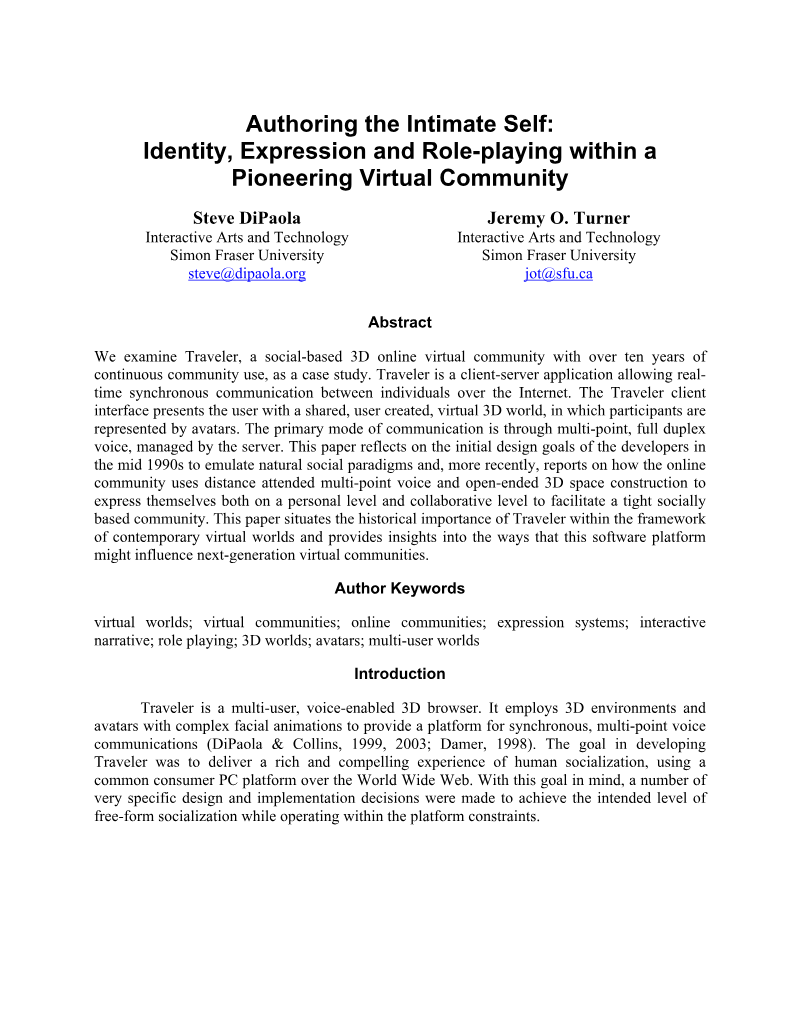
Traveler represents a foundational shift in digital interaction by prioritizing spatialized, multi-point voice communication and lip-synced avatars to foster genuine social presence.
- Long-term user engagement in virtual environments is primarily driven by the user's desire to project their intimate self and personal narrative into the platform's architecture.
- Spatialized, multi-point voice communication and lip-synced avatars are foundational technologies for fostering genuine social presence and intuitive, non-superficial interaction.
- Users naturally transform digital spaces and avatars into permanent, collaborative monuments to memorialize social experiences and build indigenous community mythologies.
The Relationship Between Perceptions of Video Game Flow and Structure
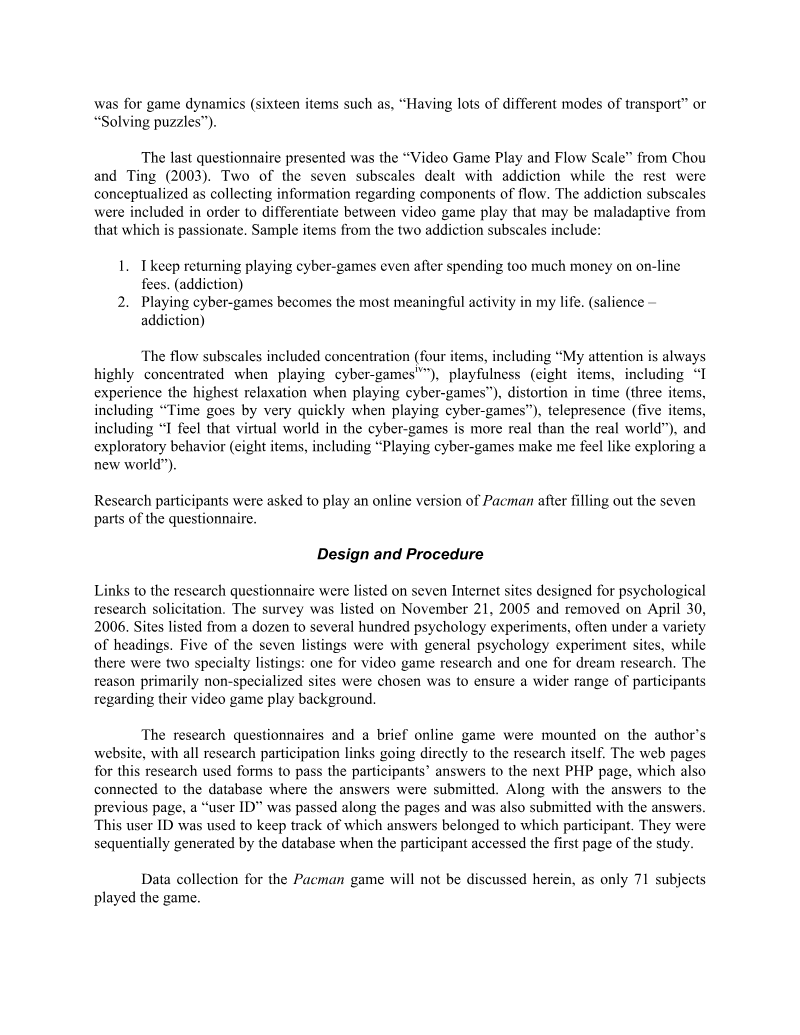
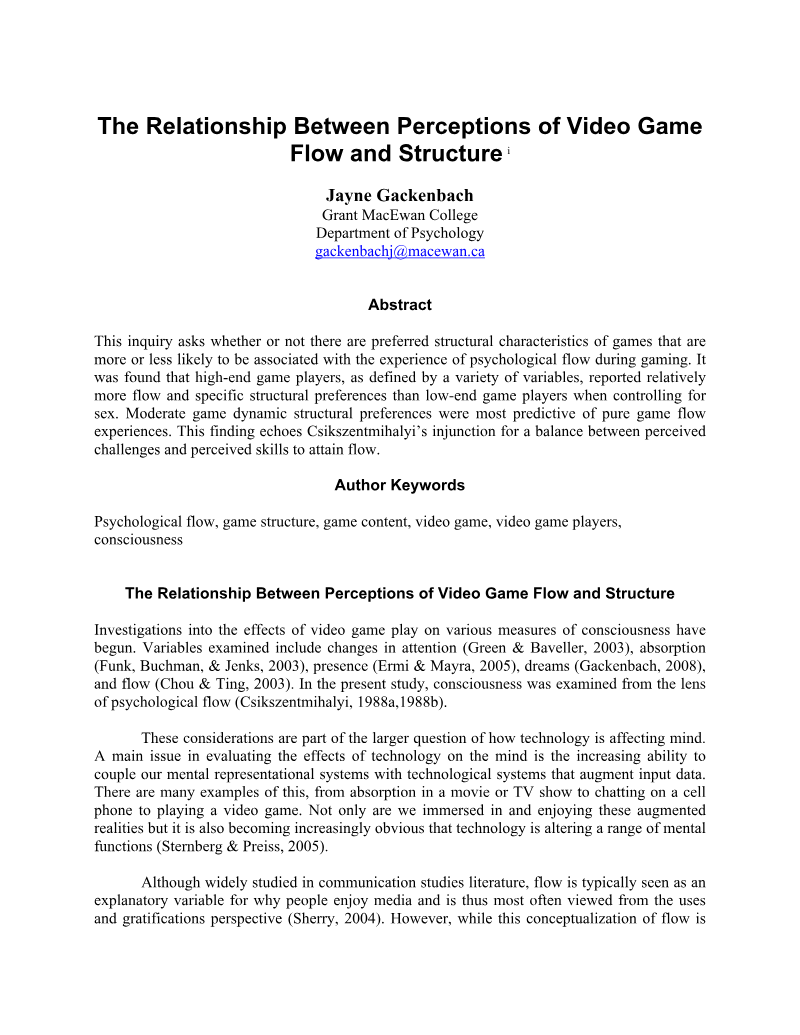
The psychological state of flow in video games is fundamentally linked to the interplay between a player’s skill level and the structural design of the gaming experience.
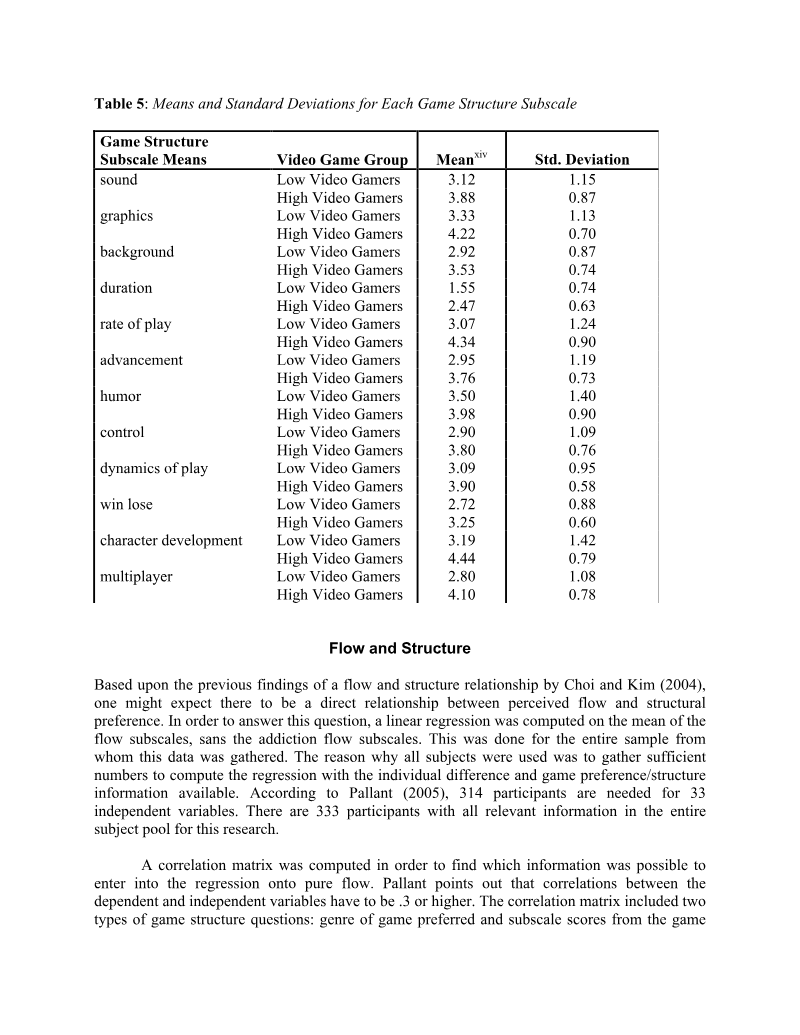
- Game structure is the primary driver of flow, with moderate game dynamics serving as the most reliable predictor for balancing player challenge and skill.
- Hardcore gamers consistently achieve higher levels of flow compared to casual players, indicating that experience and dedication correlate with deeper immersion.
- Effective game design must prioritize pacing and mechanical complexity to facilitate the equilibrium required for a state of flow.


Toward an Understanding of Flow in Video Games
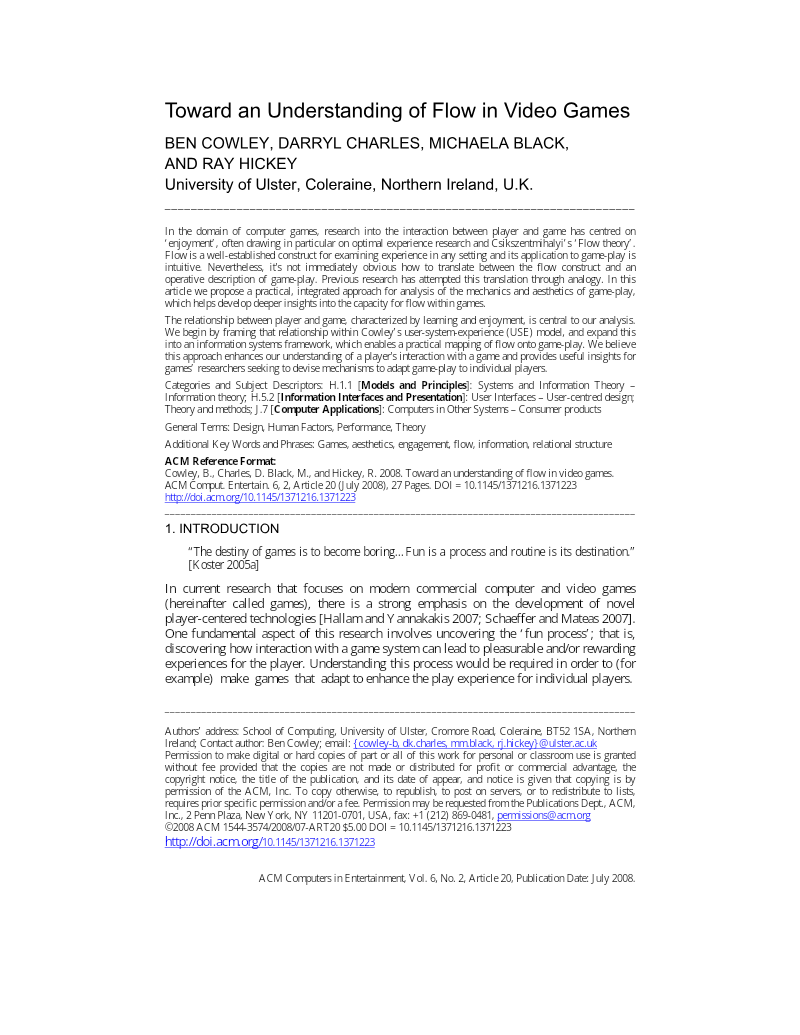
Video games function as sophisticated information systems that facilitate optimal player engagement by balancing environmental complexity with individual cognitive capacity.
- Optimal player engagement is achieved by balancing environmental complexity with individual cognitive capacity to resolve psychic entropy.
- Flow states are triggered when game mechanics—defined by hierarchical loops of verbs and nouns—are precisely calibrated to match a player’s current skill level.
- Designers should move away from one-size-fits-all strategies by utilizing player typologies, such as the Demographic Game Design model, to account for individual motivations.

Buttons, Simplicity, and Natural Interfaces
The push button has served as the primary interface for video games since the industry's inception, primarily due to its low cost and simplicity as an electrical switch.
- Traditional button-based interfaces create a cognitive disconnect by forcing players to memorize arbitrary mappings that lack logical connections to in-game actions.
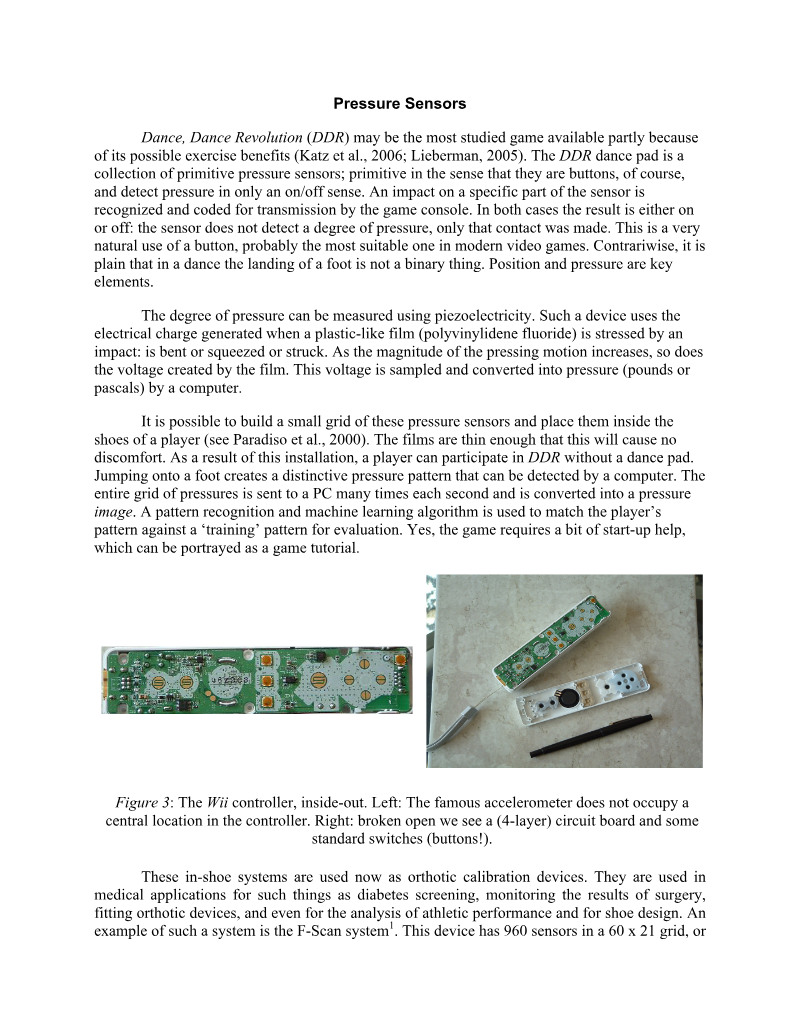
- The industry is shifting toward natural interfaces that utilize software-intensive technologies like speech recognition, gesture tracking, and pressure sensing to mirror real-world human movement.
- Natural interfaces replace binary mechanical inputs with context-aware systems, using computer vision and accelerometers to translate physical actions like swinging or running directly into gameplay.


Guitar Hero: "Not Like Playing Guitar at All"?
The Guitar Hero franchise is often criticized for its lack of simulational fidelity compared to playing a real guitar.
- Guitar Hero functions as a valid simulation by prioritizing breadth of musical experience over the deep technical accuracy required for real instrument mastery.
- The game’s interface uses a five-button controller to represent melodic and harmonic structures as a system of differential pitch intervals, making music accessible to non-musicians.
- Simulation in gaming can be achieved through two distinct strategies: modeling a wide range of experience facets or focusing on a few parameters with high precision.

Theorizing Gender and Digital Gameplay: Oversights, Accidents and Surprises
Jenson and de Castell's chapter examines why research on gender and digital gameplay has repeatedly produced the same conclusions, and argues that these conclusions are often artifacts of researchers' assumptions rather than stable features of players.
- The chapter argues that recurring findings in gender-and-games research, such as girls preferring cooperation and boys preferring competition, are artifacts of researchers' assumptions and socially constructed categories rather than stable features of players.
- Drawing on Butler's theory of gender performativity, the authors contend that repeated framings in the field limit analysis and reinforce stereotypes, and they call for critical theorization of core concepts such as competition.
- In a longitudinal study of more than 100 children aged 12 to 15, many girls enjoyed competitive play, and what was labeled 'benevolent competition' appeared to reflect a shift from novice to expert roles rather than a distinct gendered trait.
In-Depth Observation of Video Gamers
The study investigates the intersection of gamer behavior, in-game character actions, and physiological responses to better understand player engagement and interaction design.
- Male players of Halo 3 on Xbox exhibit a direct, frontal engagement style in high-risk scenarios, while female players favor a more cautious, defensive, and strategic approach.
- Despite divergent behavioral styles between genders, all subjects aged 20 to 30 successfully completed assigned tasks, indicating the game’s interaction design is intuitive for diverse users.
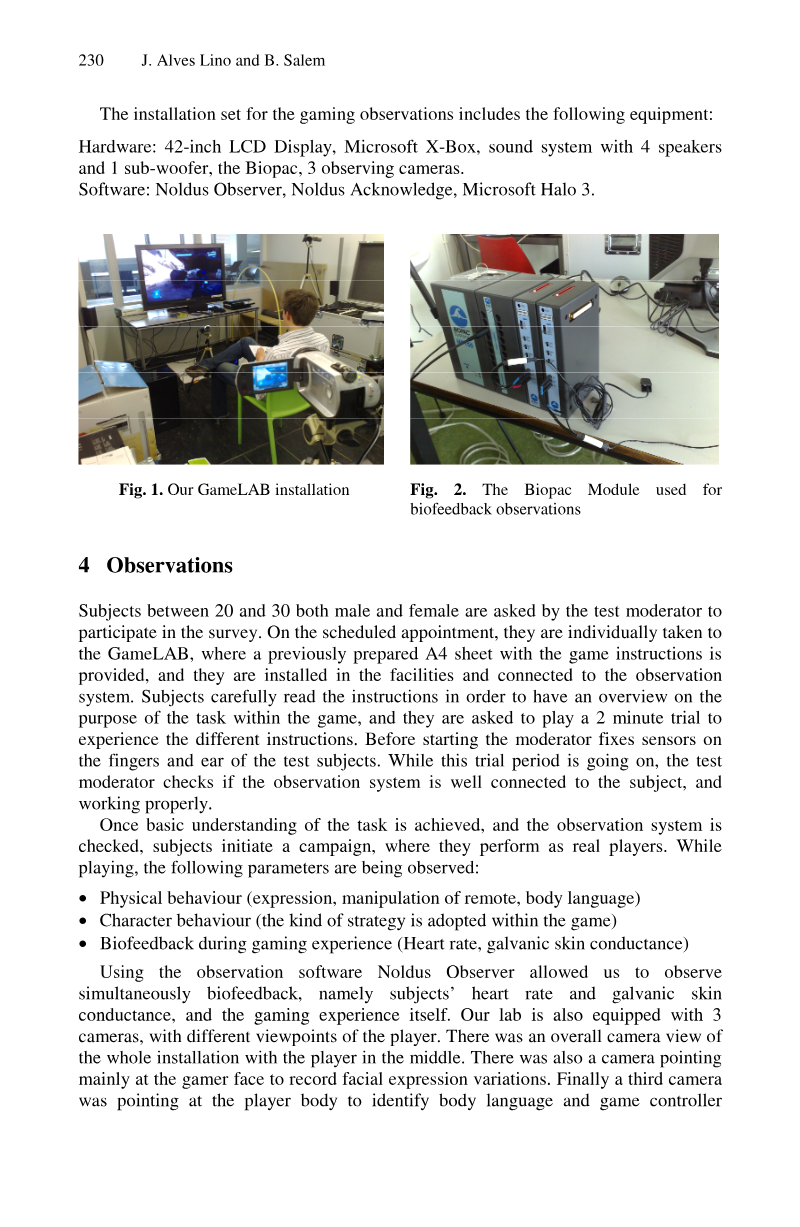
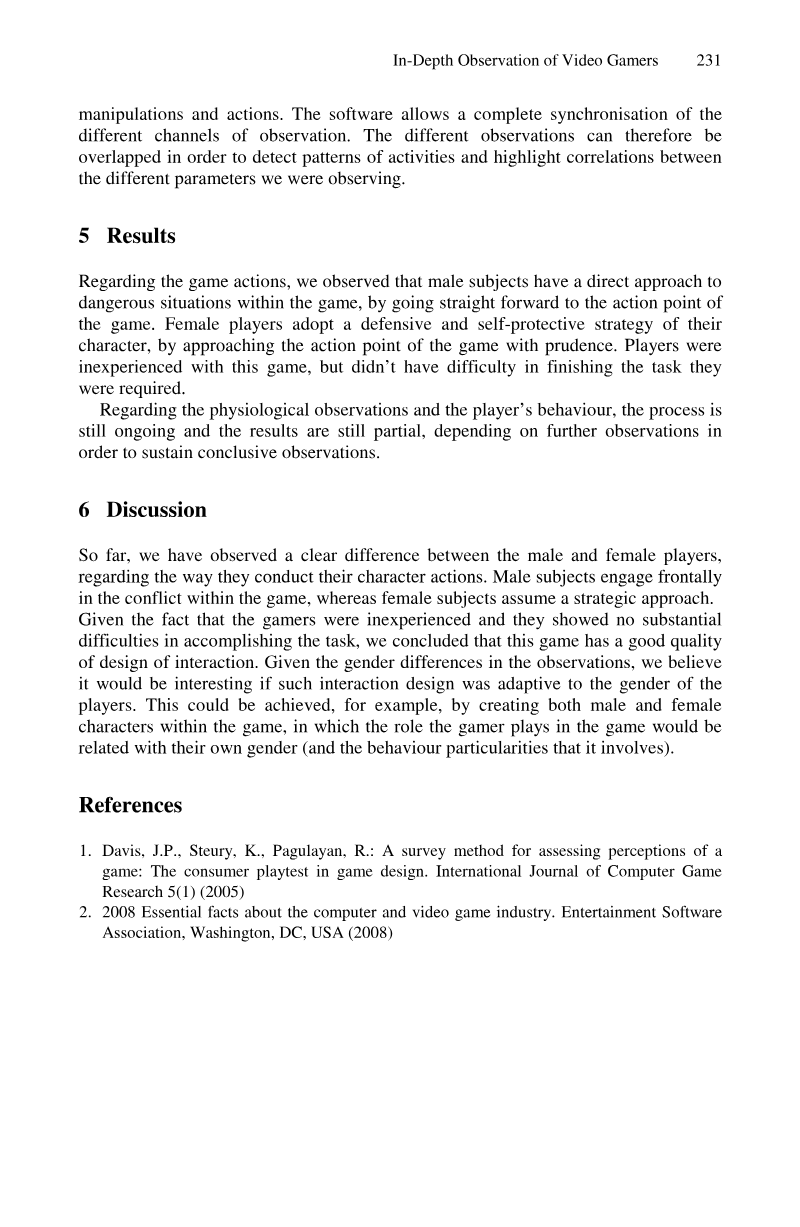
- Researchers utilized a multi-modal observation system integrating synchronized cameras and real-time biofeedback to map physiological arousal—specifically heart rate and galvanic skin conductance—against in-game events.
When Items Become Victims: Brand Memory in Violent and Nonviolent Games
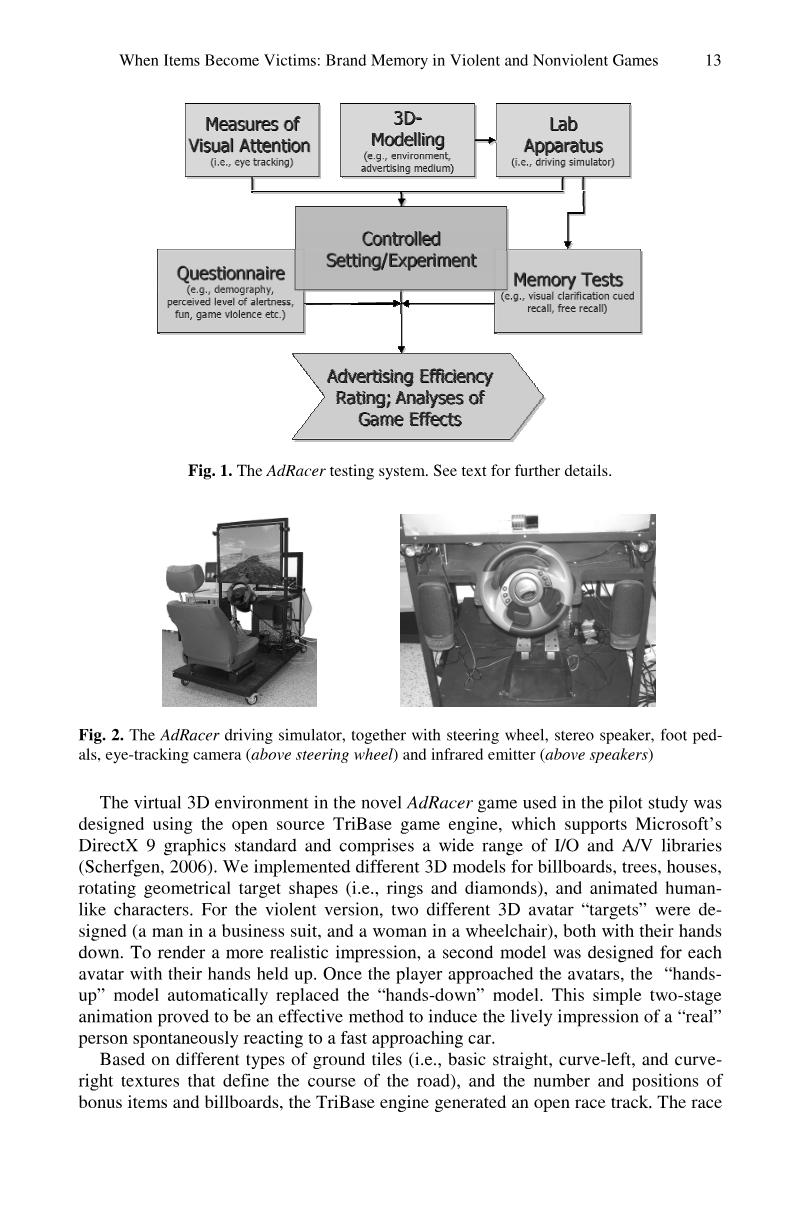
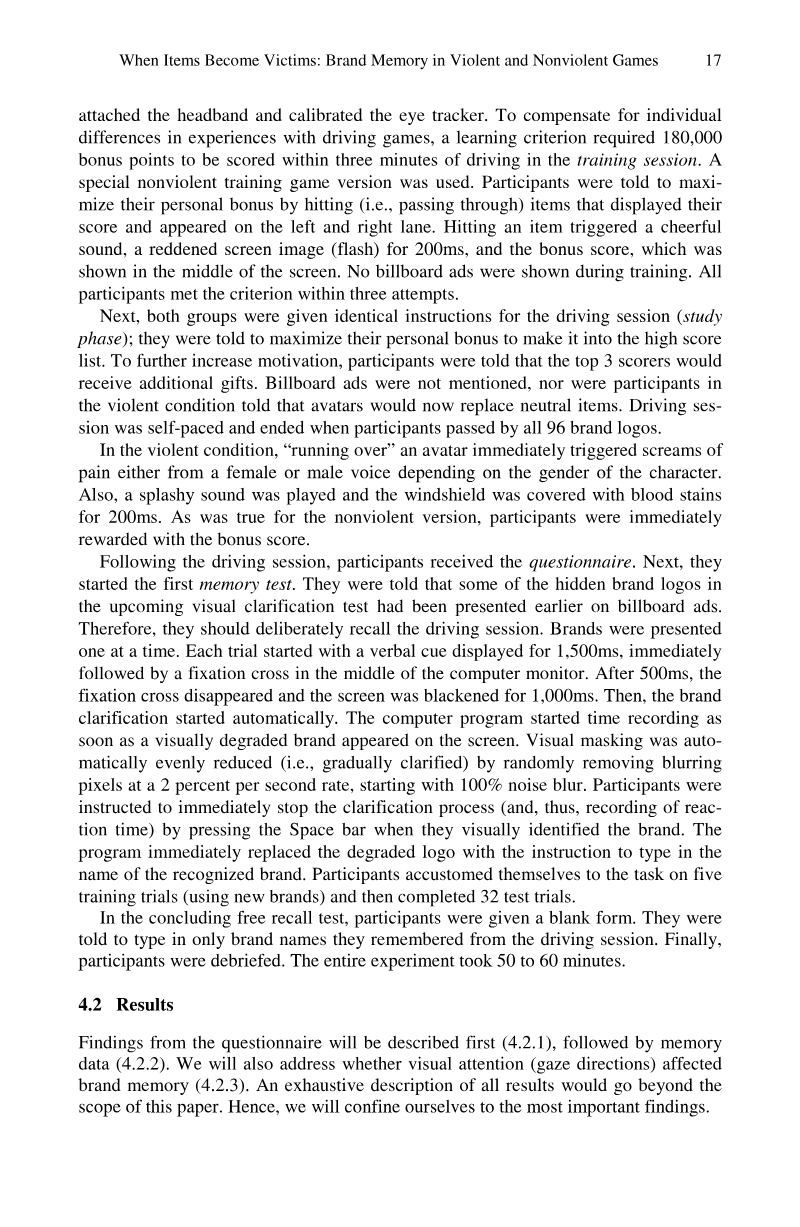
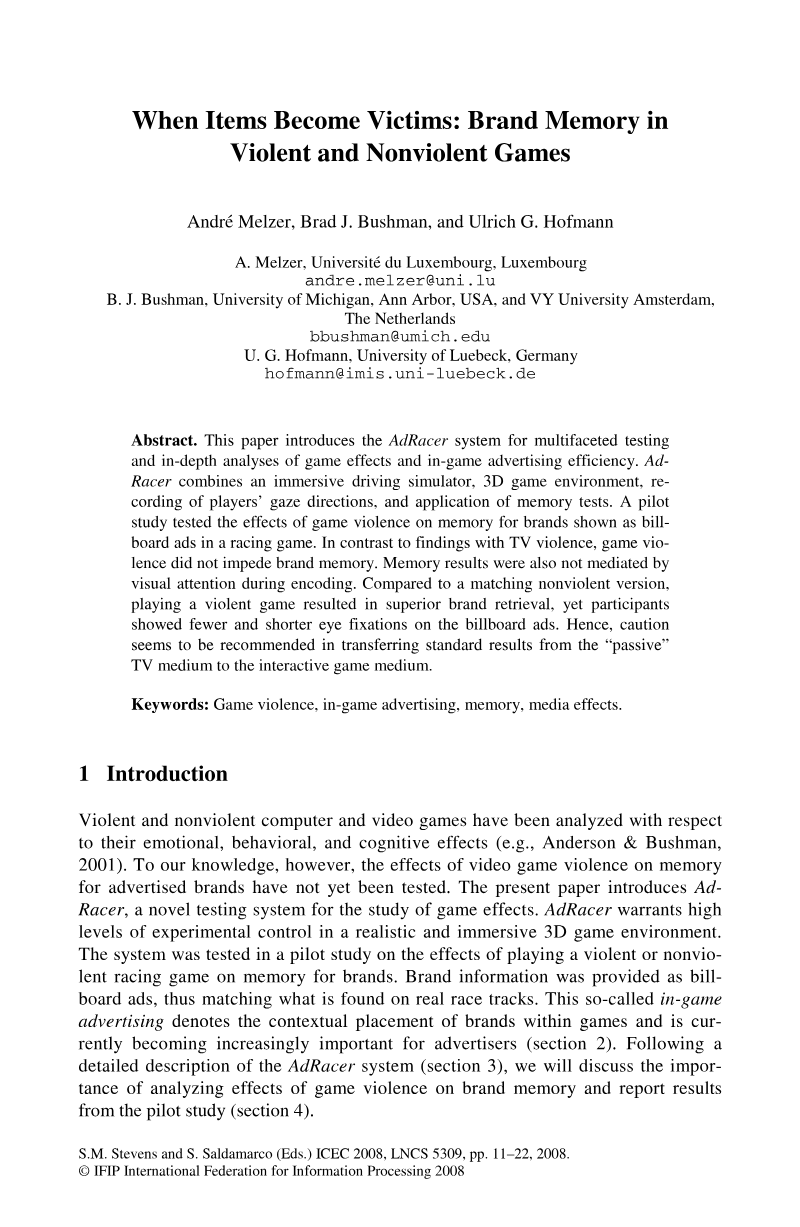
The AdRacer system serves as a specialized research tool for evaluating the efficacy of in-game advertising, specifically examining how interactive environments influence consumer brand memory.
- Violent game content does not impair brand recall and may actually lead to superior memory performance compared to nonviolent gaming environments.
- Players in violent gaming scenarios demonstrated better brand memory despite having fewer and shorter eye fixations on in-game advertisements.
- The cognitive processing of advertisements in interactive digital media operates through different mechanisms than those observed in passive, linear media like television.
BCI for Games: A State of the Art Survey
Brain-Computer Interfacing (BCI) is transitioning from strictly medical applications to the gaming and entertainment sectors, where it serves as an additional control modality for able-bodied users.
- The primary goal of BCI in gaming is to enhance user experience by dynamically adjusting game difficulty based on a player's affective states, such as frustration, engagement, or boredom.
- BCI systems utilize motor imagery or event-related potentials triggered by external stimuli to provide direct command input for game control.
- Successful commercial adoption requires transitioning from high-density, cumbersome medical electrode caps to unobtrusive, user-friendly 'dry-cap' hardware.
How I Learned to Love the Bomb: Defcon and the Ethics of Computer Games
This analysis explores the ethics of computer games by applying the framework of Information Ethics, specifically utilizing Luciano Floridi’s Method of Abstraction.
- Computer games function as complex informational environments, or 'infospheres,' that require players to act as active moral agents rather than passive users of mechanical systems.
- The 'Method of Abstraction' framework categorizes game interaction into a procedural gradient (rule-based mechanics) and a semantic gradient (cultural and aesthetic meaning).
- Ethical concerns like desensitization to violence often arise from an over-focus on the procedural layer, ignoring how players use their own cultural knowledge to interpret the semantic layer.
Using a Camera Phone as a Mixed-Reality Laser Cannon
This research explores the development of Mobilazer, a location-independent, mixed-reality first-person shooter designed for standard camera-equipped mobile phones.
- Mobilazer demonstrates that standard camera-equipped mobile phones can deliver immersive, mixed-reality first-person shooter experiences without requiring specialized hardware.
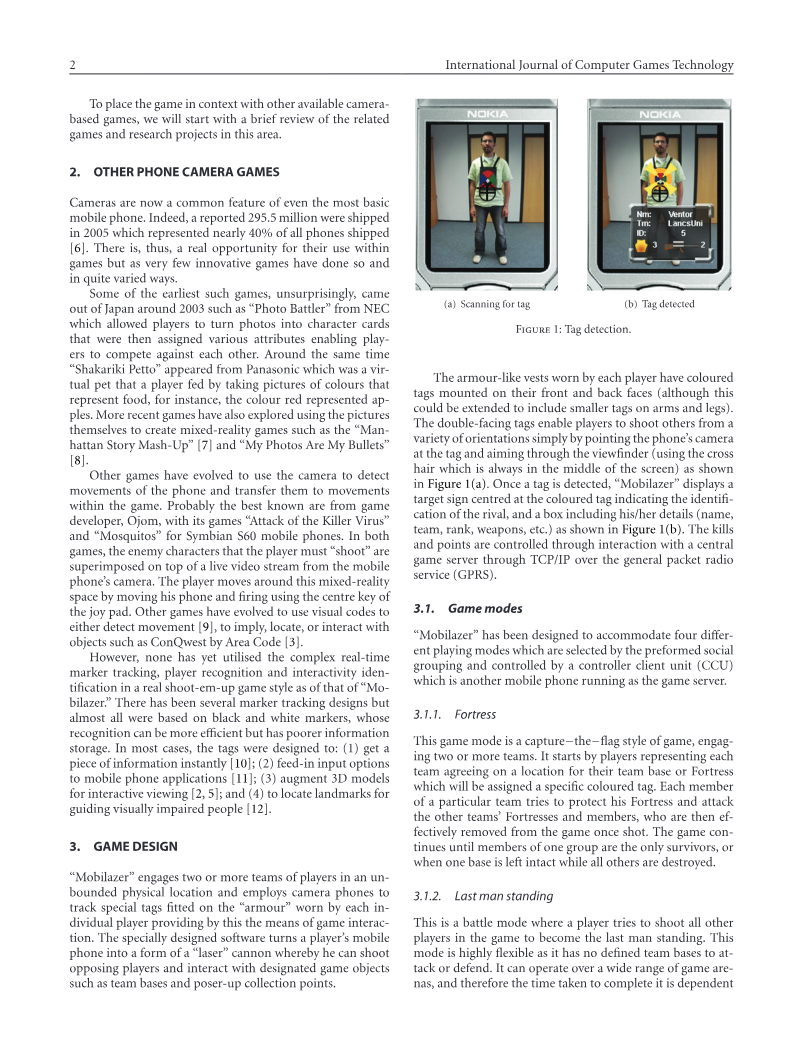
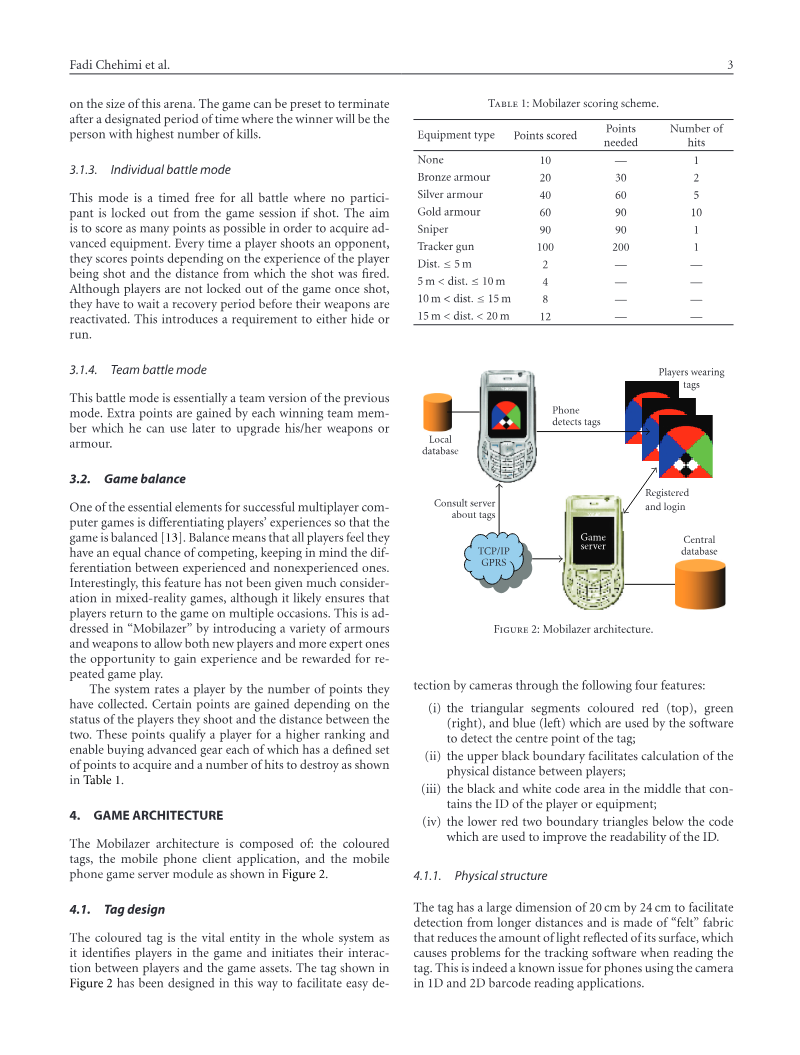
- The system utilizes real-time image processing and physical, color-coded tags worn by players to enable distance measurement, target identification, and simulated combat.
- The game architecture employs a client-server model where a central mobile device coordinates player data and status updates via TCP/IP over GPRS.
Writers
Games and companies
Games