Loading the document
Key insights
5 slides
The old assumption
Traditional theories suggest violent content hinders brand recall in media.
They assume violent content inherently impairs a viewer’s ability to recall advertised brands.
Challenging norms. Traditional psychological theories suggesting violent content hinders brand recall are challenged by active player engagement.
1 / 5
- 01Violent game content does not impair brand recall and may actually lead to superior memory performance compared to nonviolent gaming environments.See it on page 1
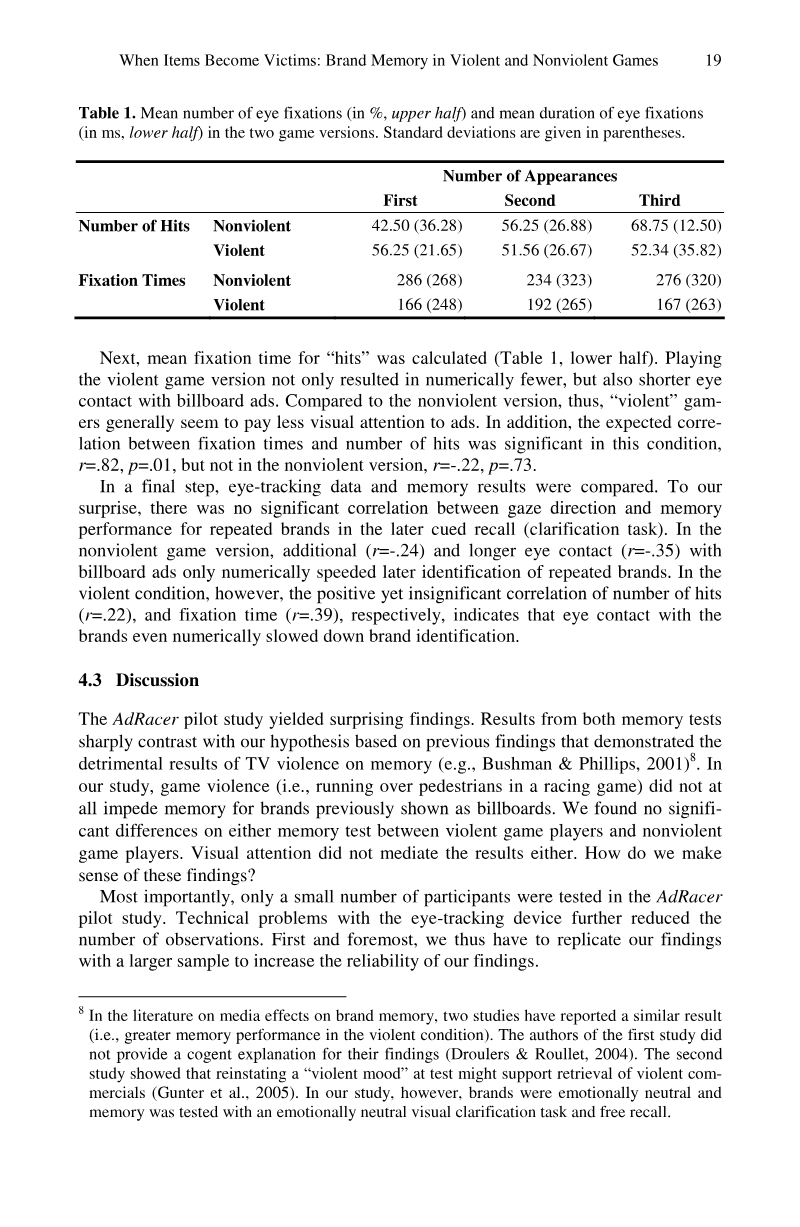
- 02Players in violent gaming scenarios demonstrated better brand memory despite having fewer and shorter eye fixations on in-game advertisements.See it on page 9
- 03The cognitive processing of advertisements in interactive digital media operates through different mechanisms than those observed in passive, linear media like television.See it on page 2
- 04Traditional psychological theories suggesting that violent content inherently hinders brand recall are challenged by the divergence between active player engagement and passive media consumption.See it on page 11
- 05The study's findings are preliminary due to a small sample size and potential technical variables, such as a visual masking effect in the nonviolent condition.See it on page 9
- 06Future research is required to isolate the specific impact of game violence on brand recall and to refine advertising metrics for immersive digital environments.See it on page 11
Ask AI about this report
Summary
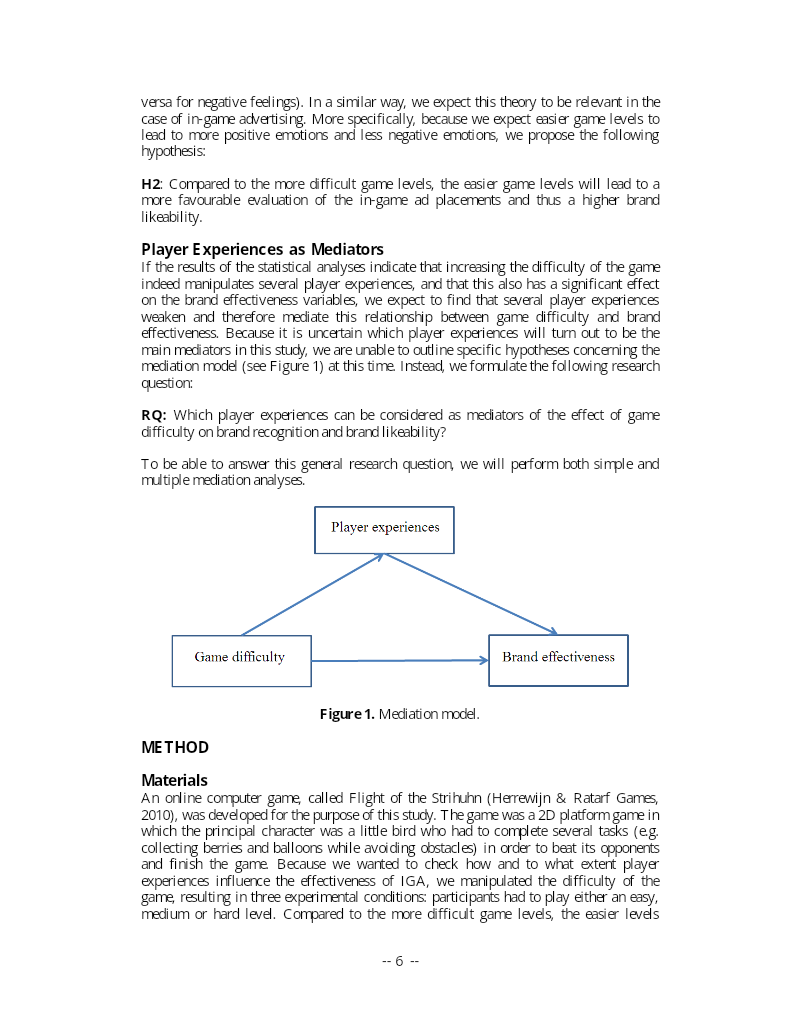
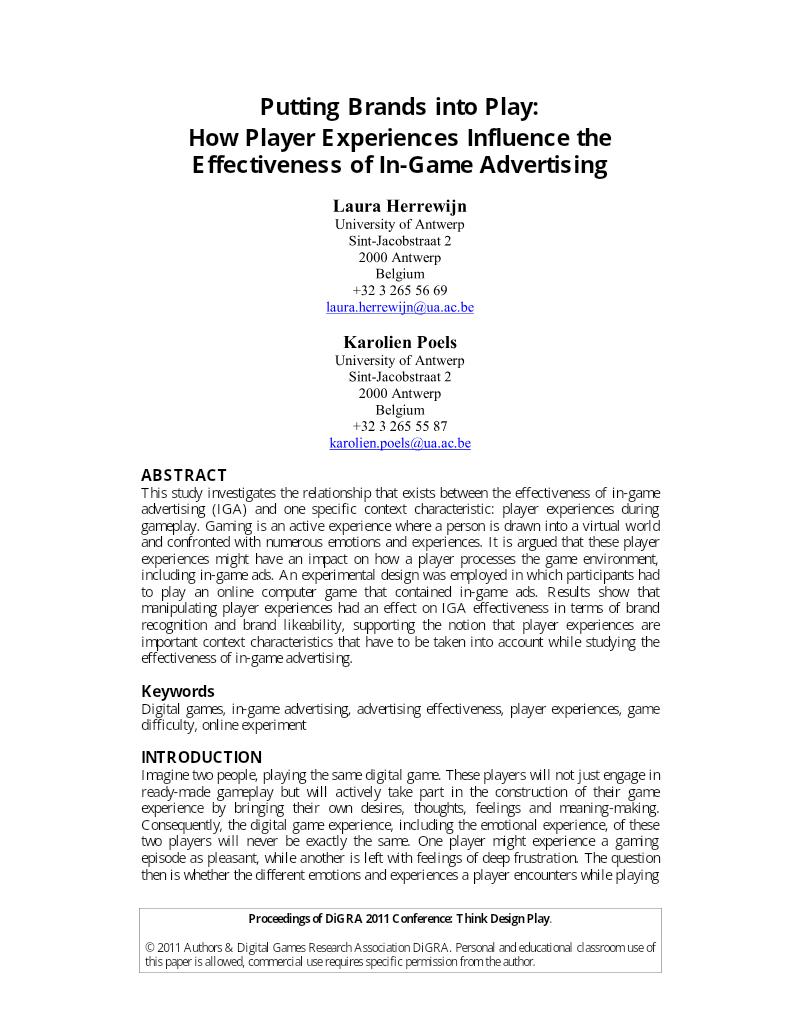
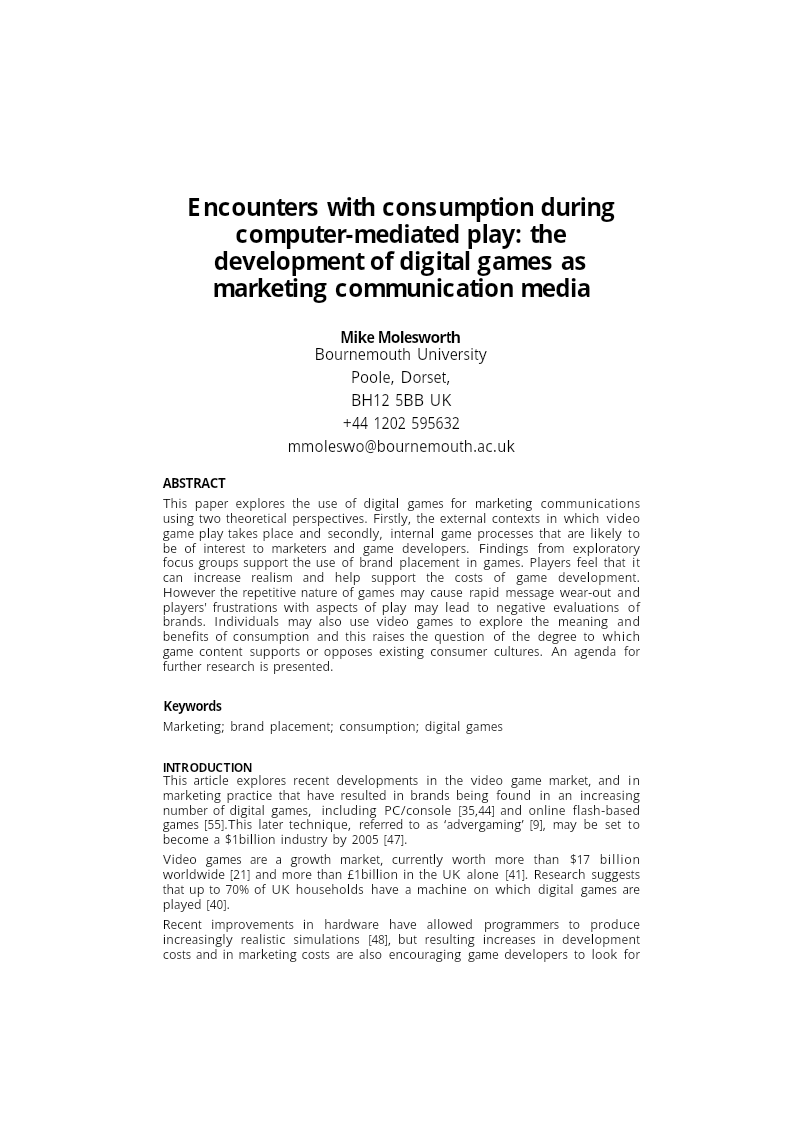
The AdRacer system serves as a specialized research tool for evaluating the efficacy of in-game advertising, specifically examining how interactive environments influence consumer brand memory. The primary thesis challenges the long-standing assumption, derived from traditional television media studies, that violent content inherently impairs a viewer’s ability to recall advertised brands. By contrasting player performance in violent versus nonviolent racing game scenarios, the research highlights a critical divergence between passive media consumption and active digital engagement.
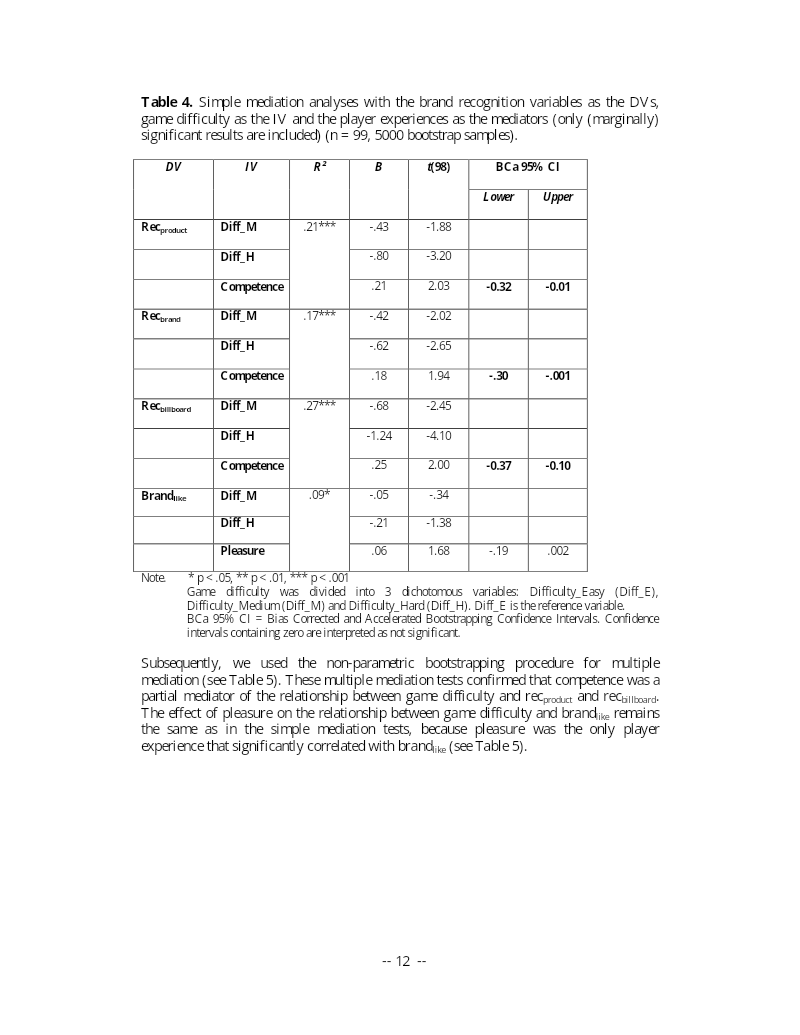
Findings indicate that violent game content does not necessarily impede brand retrieval. In fact, participants exposed to violent gaming conditions demonstrated superior brand memory despite exhibiting fewer and shorter eye fixations on in-game advertisements compared to their counterparts in nonviolent settings. These results suggest that the cognitive processing of advertisements within interactive media operates under different mechanisms than those observed in linear media, necessitating a reevaluation of established psychological theories regarding media violence and memory.
While the study provides compelling evidence, the scope remains limited by a small sample size and potential technical variables, such as a visual masking effect that may have influenced data in the nonviolent condition. Consequently, the findings serve as a preliminary investigation rather than a definitive conclusion. Future research is required to isolate the specific impact of game violence on brand recall and to refine the application of advertising metrics within the gaming industry. By grounding these observations in foundational theories of consumer behavior and cognitive processing, the analysis underscores the complexity of measuring advertising effectiveness in increasingly immersive and interactive digital environments.