Game Publishing reports and market data
Documents

CEO of Aeria Games Europe Pascal Zuta explains why mobile is important
Aeria Games is strategically pivoting from its established foundation in client-based PC and browser gaming toward a robust expansion into the mobile market.
- Aeria Games is shifting its strategic focus from client-based PC and browser gaming to mobile expansion to overcome market saturation and stagnant revenue growth in the traditional PC sector.
- The company leverages a global workforce of over 600 employees across five international offices, supported by a merger with Japanese firm Gamepot to facilitate its mobile transition.
- Aeria Games maintains a competitive advantage by applying its expertise in localizing Asian-developed titles for Western markets, focusing on specific adjustments to artwork, in-game events, and item economies.

Head of mobile Manuel Figeac explains the Aeria Games' philosophy
Aeria Games Europe is prioritizing a localized live operations strategy to expand its mobile gaming footprint across European territories throughout 2013.
- Aeria Games Europe is prioritizing a localized live operations strategy throughout 2013, treating each regional version as a unique product rather than relying on simple linguistic translation.
- The company maintains separate teams for different languages to tailor in-game events, schedules, and community management to specific cultural preferences in markets like France and Germany.
- The card game 'Monster Paradise' achieved top 20 grossing status in France by utilizing deep localization, outperforming its English-language counterpart in that region.
Demo Daze - Why Don't Creators Make Game Demos Anymore? - Extra Credits
The decline of game demos is primarily driven by unfavorable economic outcomes for developers, rooted in shifting consumer purchasing habits.
- Industry data indicates that releasing a game demo frequently results in decreased total sales, as demos often satisfy player curiosity enough to discourage a full-price purchase.
- Developing a demo is a poor business investment for most studios because it requires significant time, money, and certification resources that could otherwise be used to improve the core game.
- An analysis of nine potential outcomes for demo releases shows that only two scenarios result in a net positive for developers, highlighting the high risk of negative financial impact.

Digital Rentals and the Online Arcade - How Will We Buy Games in the Future? - Extra Credits
The gaming industry is currently undergoing a significant transition as traditional retail models, centered on sixty-dollar boxed products, give way to digital distribution and diverse monetization strategies.
- Monetization strategies must be integrated into the game design process from the start, as payment structures fundamentally dictate mechanical requirements and the overall player experience.
- The industry is shifting away from the traditional $60 boxed-product model toward diverse digital distribution methods that move beyond a one-size-fits-all approach.
- The 'online arcade' model, which charges per life or session, is best suited for short, skill-based genres like fighting games or platformers.
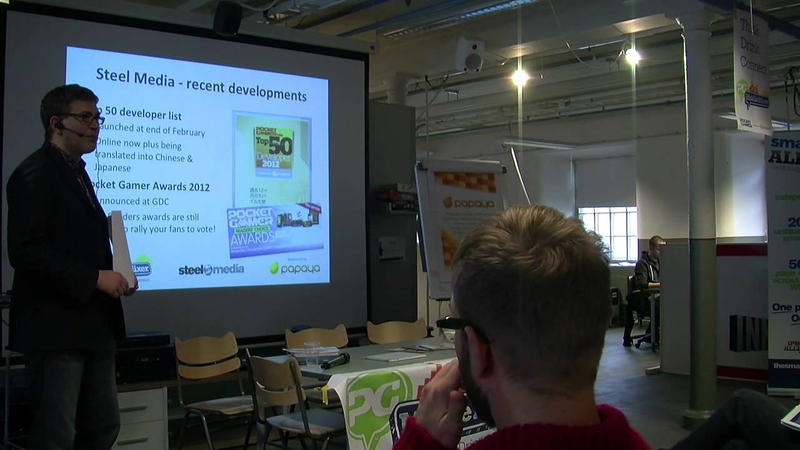
Pocket Gamer's Mobile Mixer 2012 - Welcome to Tampere
The 2012 Pocket Gamer Mobile Mixer in Tampere, Finland, served as a strategic networking and knowledge-sharing platform for the regional and international mobile gaming industry.
- The 2012 mobile gaming landscape emphasized a shift toward data-driven development, utilizing review aggregation services and developer ranking lists to track market performance and critical reception.
- Global expansion strategies in 2012 necessitated that mobile developers prioritize partnerships within Asian markets, specifically targeting growth opportunities in China and Korea.
- The Finnish gaming sector, supported by organizations like Manse Games and major players such as Rovio and Nokia, served as a primary hub for regional industry scaling and professional networking.
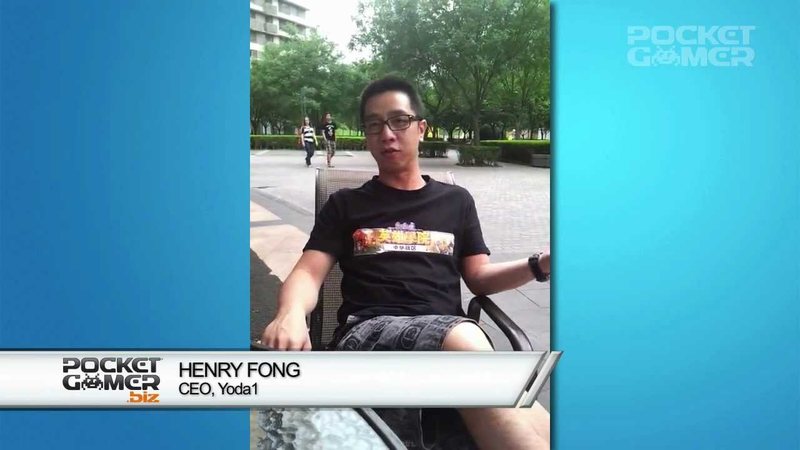
Pocket Gamer Biz interview Henry Fong, CEO of Yodo1
Yodo1 serves as a specialized gateway for Western mobile game developers seeking to navigate the complex Chinese market.
- Yodo1 provides a service that enables Western mobile game developers to distribute and monetize their titles in the Chinese market in under seven days.
- The Chinese mobile market is experiencing rapid growth, with an estimated 200 million smartphones in use and a penetration rate of less than 20%, signaling significant long-term potential.
- Yodo1 differentiates itself by aggregating and federating access to China's fragmented ecosystem of top ad networks, payment methods, and distribution channels rather than forcing developers into a proprietary network.
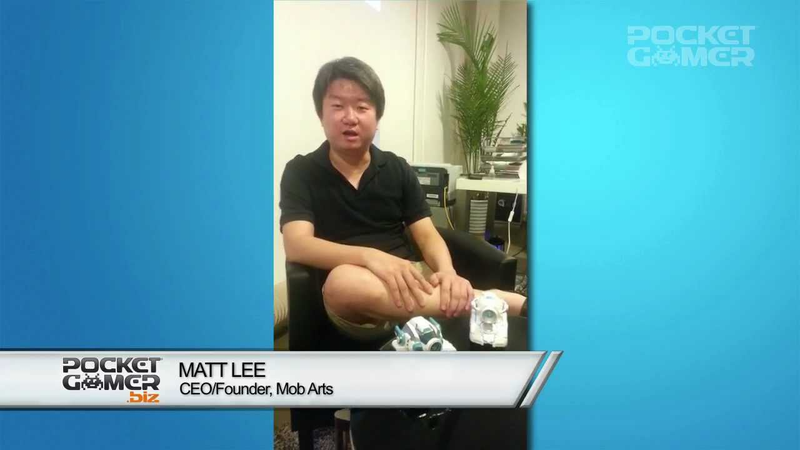
Pocket Gamer Biz interview Matt Lee, CEO of Mob Arts
Mob Arts, a Beijing-based mobile entertainment developer, distinguishes itself within the Chinese gaming landscape by prioritizing original intellectual property and innovative design over the common industry practice of cloning existing titles.
- Mob Arts differentiates itself in the Chinese market by prioritizing original IP and 3D-rendered console-style mechanics over the industry-standard practice of cloning existing titles.
- The studio’s flagship title, Space Tank, achieved strong international validation in the Korean market by securing nearly 7,000 five-star reviews within its first week of launch.
- Success for international developers in China requires high-quality game design, effective localization, and a commitment to providing consistent, compelling content updates for user retention.

Digital Resale - Can You Borrow a Friend's Steam Games? - Extra Credits
The digital distribution landscape is approaching a significant shift as legal precedents, particularly within the European Union, begin to classify digital goods as property rather than licensed services.
- Legal precedents in the European Union are shifting the classification of digital goods from licensed services to property, which mandates that consumers eventually gain traditional ownership rights like resale and transfer.
- Digital storefronts are under pressure to develop infrastructure for digital resale to comply with evolving laws that bridge the gap between physical property rights and modern digital distribution.
- A centralized trade-in model, where distributors offer store credit for returned games, is identified as a viable strategy to retain customer loyalty and keep capital within a platform's ecosystem.

EC Fund Update - Indie Game Publishing - Extra Credits
The initiative to establish an indie game publishing entity, funded through community crowdfunding, was launched to test the viability of a more equitable publisher-developer relationship.
- The initiative to establish a community-funded indie publishing entity was ultimately discontinued due to the operational complexities of balancing legal requirements, professional commitments, and high project failure rates.
- The project aimed to test a sustainable, equitable publishing model by focusing on small-scale game development with budgets ranging from $20,000 to $30,000.
- To mitigate risk, the selection process mandated a functional demo as a prerequisite, prioritizing tangible proof of concept over abstract creative pitches.

Crowdfunding - How Kickstarter Helps Games Innovate - Extra Credits
Crowdfunding has emerged as a transformative alternative to traditional game development funding, enabling developers to bypass publishers and investors to bring niche or experimental projects to market.
- Crowdfunding platforms like Kickstarter and Rocket Hub allow developers to bypass traditional publishers and venture investors, shifting the power dynamic toward direct consumer funding.
- This funding model enables studios to prioritize creative quality and niche appeal over the mass-market profit-maximization strategies typically required by traditional financial backers.
- Traditional publishing agreements often force developers to sacrifice intellectual property rights and adhere to rigid milestones that risk project cancellation.
Mailbag 4 - Questions About the Game Industry - Extra Credits
This discussion addresses a variety of inquiries regarding the game industry, ranging from professional development and design resources to market trends and corporate analysis.
- Professional success in the game industry is driven by tangible output and functional prototypes rather than abstract concepts or academic degrees in fields like psychology or economics.
- Aspiring designers should prioritize practical skill development and portfolio building, supplemented by foundational texts such as Jesse Shell’s 'The Art of Game Design: A Book of Lenses' and Don Norman’s 'The Design of Everyday Things'.
- Digital distribution platforms like EA’s Origin are essential business model pivots necessitated by the ongoing decline of physical game sales.
SOPA & PIPA - 2011 Legislation that Threatens Digital Freedoms - Extra Credits
The Stop Online Piracy Act (SOPA) and the PROTECT IP Act (PIPA) represent significant legislative threats to digital freedom and internet infrastructure.
- SOPA and PIPA threaten the integrity of the Domain Name System (DNS) by proposing government-mandated interference that experts from the Department of Homeland Security and Sandia National Laboratories warn would undermine global cybersecurity.
- The legislation grants internet service providers (ISPs) blanket immunity for voluntary content blocking, creating a conflict of interest for ISPs that simultaneously own large copyrighted media portfolios.
- The bills utilize overly broad language that risks suppressing legitimate online activity and eroding net neutrality standards.