1 free read left. Create a free account for unlimited reading + AI research.
Create free account
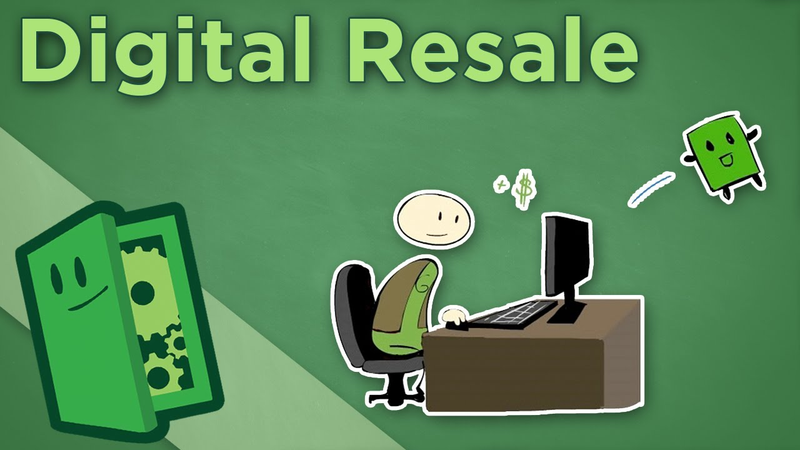
Digital Resale - Can You Borrow a Friend's Steam Games? - Extra Credits
Key insights
6 takeaways- 01Legal precedents in the European Union are shifting the classification of digital goods from licensed services to property, which mandates that consumers eventually gain traditional ownership rights like resale and transfer.
- 02Digital storefronts are under pressure to develop infrastructure for digital resale to comply with evolving laws that bridge the gap between physical property rights and modern digital distribution.
- 03To ensure sustainability, any secondary market framework must incorporate revenue-sharing agreements that protect the financial interests of developers and publishers.
- 04Concerns regarding piracy and the disruption of promotional sales models can be mitigated through the implementation of robust digital rights management and comprehensive transaction logging.
- 05A centralized trade-in model, where distributors offer store credit for returned games, is identified as a viable strategy to retain customer loyalty and keep capital within a platform's ecosystem.
- 06Peer-to-peer digital marketplaces pose significant risks to price stability and could lead to rapid market devaluation of new game titles shortly after launch.
Ask AI about this video
Transcript
[Music] a little while back European courts ruled that digital property is still property and therefore deserves all of the rights and protections that physical property deserves in almost every first world country one of the rights that consumers have regarding their property is the right to resale if you bought a thing you can sell it to anybody else and no company especially not the one that sold it to you in the first place has the right to tell you can't now the European ruling is a long way from the final word on the subject obviously it only affects the EU it can still be appealed it has debatable fine print etc etc but fundamentally this is the general direction that things are heading many companies are going to fight tooth and nail to slow the process but sometime over the next decade we're going to see digital Goods move out of the gray area they're in right now where technology has outpaced legislation firmly into the area of property what does it mean for games then well it could mean a ton first off there's the whole question of in-game items we've already seen things like the Diablo
Auction House attempt to embrace the idea that your property is your property even if it is just an assemblage of bits but we're not going to talk too much about in-game items today because who knows how this ruling is going to affect those my lawyer friends are all shaking their heads and muttering not very much because this ruling dealt with non-game software so there's still a lot of room for debate as to whether or not in-game items are legally really your property it's just as arguable that the game company retains the right to the property through Ula agreements especially when you consider the fact that those in-game items technically probably exist on the game company servers which they own rather than in the client side software you purchased my lawyer friends also tell me that this could lead to all sorts of other messy questions down the road like how do you handle shutting down Game servers if items within it are property owned by the players with an assignable real world value like I said lots of big tangly questions that no one knows the answers to yet so we're just going to dodge that one for the time being until we can get a better grasp on it instead we're going to talk about the other digital property which we all purchase and which is indubitably yours digital copies of games soon distribution services like steam origin and good old games will have to figure out a way to
allow you to resell your games heck Green Man games already does fundamentally there are two ways they could handle this either they could offer you the option to trade in your games much like GameStop does today or they could let you sell your games to your friends the first option the tradein option actually makes a lot of business sense it's pretty straightforward you buy a game from a digital distributor and then when you're done they give you some fraction of the initial purchase price back in credit for their service they probably won't give you any better return rate than the Dismal tradein values we get today at physical retailers but for the customer it's a heck of a lot better than nothing it would Garner a lot of positive sentiment and most importantly it would keep money in your steam wallet which is secretly a great hook for keeping you as a regular customer and it makes you much more likely to buy new products in the future most free-to-play game companies learned that long ago now there are some clear hurdles to overcome before you can Implement something like this when we brought this discussion up on Facebook people asked well what'll happen to steam sales and won't piracy be a big problem as to sales any digital distribution service will be keeping a log on their servers of the price you bought your Goods at so so long as they make it clear that they were giving you a percentage of your original purchase
price it wouldn't seem that strange if you and your friend got two different prices for trading in the same good they could even show you your original purchase price on the tradeing screen and piracy well at least so far as Steam is concerned it's remarkably hard to Pirate a steam game I think it's no more likely that people would be cracking their Steam games and then trading them in then that people would be copying their PS3 games and trading them in I'm sure it happens but uncommon now this is a valid concern for DRM free services but so long as they make up 30% profit and only give you 10% back in trade in credit it won't really be an issue for any of these Services you'll only be able to trade in things that you actually purchase directly from them so they'll have a record of it the biggest issue though in my opinion is how do you deal with developers and Publishers that part's tricky the current model the one where developers and Publishers get no part of used game sales is both terrible and totally untenable in a digital environment you can't really tell a developer you're not going to give them any money for a digital game purchased on your service because someone had traded that game in the only method I can really think of is that you agree to let developers and Publishers get the standard 7030 split on whatever the
customer actually ended up paying for their game rather than on the list price so if you bought a game at $60 and put $15 of credit you got from trading in your games toward it the developer would get 70% of the remaining $45 price still I don't know that might be a pretty hard sell the other option is to allow you to sell directly to other members of the digital distribution service you're using digital Distributors will probably want to delay the idea of you selling your games to other people through their service for real cash as long as possible so for now let's just assume that you can only sell to other users for store credit given that the implementation should be pretty simple a distributor could either let people simply sell to others on their friends list through a system akin to steam trades but for used games or create an auction house or sale board similar to what we're used to in MMOs then the distributor could just take a percentage of the transaction delete the item from the sellers list of valid games and add it to the buyers this of course probably cuts into profits a bit more for the Distributors as it prevents them from setting a fixed price point and it isn't really solved by allowing users just to have a sell button on their goods which would put it up for sale at a fixed price with a corresponding bu used
button on the sales page I mean in the digital realm there's literally no downside to a used game this would arbitrarily lower the standard price of a game mere days after launch and make things like steam sales kind of untenable it'll be interesting to see how they end up resolving this issue and if Distributors even choose to facilitate peer-to-peer game sales after all the law most likely will say that it has to be possible to resell your goods not that they help to help you do so in any way and man that's not even all there are a ton of other interesting questions that this ruling opens up will I finally be able to lend my friends games out of my digital library will this mean more games keeping more stuff serers side and yet more project $10 style attempt to force you to buy new what does this mean for console digital distribution the questions go on and on but that's all we got time for today so I'll just leave that for you guys to ponder feel free to toss your thoughts our way on the forums via email or on Facebook we may come back to this issue as more hard information surfaces see you next week [Music] he
[Music]
Summary
The digital distribution landscape is approaching a significant shift as legal precedents, particularly within the European Union, begin to classify digital goods as property rather than licensed services. This transition challenges the current status quo, where consumers lack the traditional ownership rights associated with physical goods, such as the right to resell or transfer items. As legislation evolves to bridge the gap between outdated laws and modern technology, digital storefronts face the necessity of implementing systems for the resale and trade-in of digital game libraries.
The analysis identifies two primary models for facilitating digital resale: a centralized trade-in system managed by the distributor and a peer-to-peer marketplace. A trade-in model, where users receive store credit for returned games, offers a viable path for distributors to maintain customer loyalty and keep capital within their ecosystems. Conversely, peer-to-peer sales present more complex challenges, particularly regarding price stability and the potential for market devaluation shortly after a game's launch. To remain sustainable, any resale framework must address the financial interests of developers and publishers, potentially through revenue-sharing agreements on secondary market transactions.
While concerns regarding piracy and the impact on existing promotional sales models are prevalent, the analysis suggests that these risks are manageable through robust digital rights management and transaction logging. Ultimately, the industry must determine how to balance consumer property rights with the business models of digital platforms. Whether distributors proactively facilitate these exchanges or merely provide the minimum technical requirements to comply with emerging law remains a critical point of uncertainty for the future of digital game ownership.














Comments