1 free read left. Create a free account for unlimited reading + AI research.
Create free account
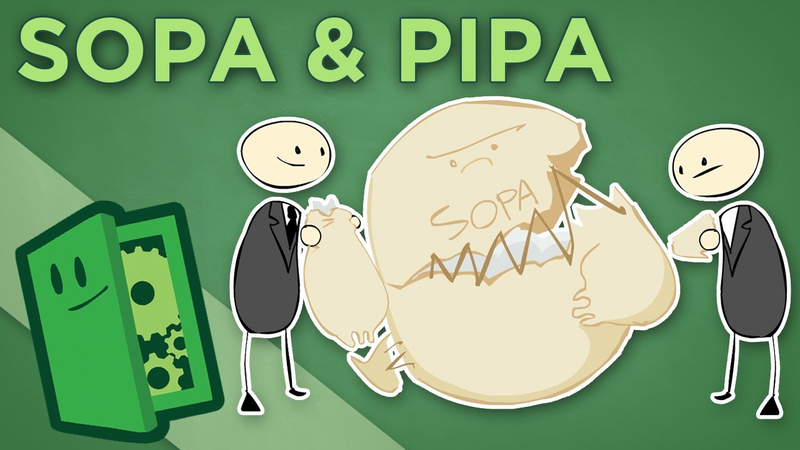
SOPA & PIPA - 2011 Legislation that Threatens Digital Freedoms - Extra Credits
Key insights
6 takeaways- 01SOPA and PIPA threaten the integrity of the Domain Name System (DNS) by proposing government-mandated interference that experts from the Department of Homeland Security and Sandia National Laboratories warn would undermine global cybersecurity.
- 02The proposed enforcement tactics mirror censorship methods typically employed by authoritarian regimes, posing a fundamental threat to digital freedoms and internet infrastructure.
- 03The legislation grants internet service providers (ISPs) blanket immunity for voluntary content blocking, creating a conflict of interest for ISPs that simultaneously own large copyrighted media portfolios.
- 04The bills utilize overly broad language that risks suppressing legitimate online activity and eroding net neutrality standards.
- 05Legislative hearings for these 2011 acts were characterized by a systemic failure to consult technical experts or address the specific technological ramifications of the proposed enforcement mechanisms.
- 06Active civic engagement is required to counter the legislative trend of prioritizing reactive, poorly constructed policy over evidence-based technological governance.
Ask AI about this video
Transcript
Hey guys, you can probably already guess this, but some of the information in this episode is going to be a little bit out of date. However, we decided to go ahead with it because even though SOPA may be done, the future is still a wide open question. Laws like ACTA still threaten open access to the internet in Europe, and even here in the states, the question of how to address piracy is far from settled. So, just getting that out there in front, let's do this. Hi everyone. Looks like it's public service day again here at EC. Last week you heard us lend our voice to a growing cry to ask the ESA to withdraw its support from SOPA, the Stop Online Piracy Act. This week we'll be discussing why this legislation is such a threat. Now, some of you may know that the vote on this legislation was delayed last week, and many hailed it as a victory in the battle against SOPA. And yeah, it is a victory, but I don't think the battle's quite as over as it looks. You see, while SOPA itself may have been delayed, there's a nearly identical bill called PIPA moving through the Senate as we speak. And there's nothing to say that SOPA won't come off that shelf at
some point so we can't be resting easy just yet. Now, we're going to be referring mostly to SOPA here today, but know that most everything we say applies to PIPA as well. Also, some of the particular parts of SOPA we're about to discuss have already been cut from the bill, and that's good. I I hope they stay cut, but we're still going to bring them up here because A, there's no guarantee those cut sections won't be put back in at some point, and B, I think it's important to know SOPA's full original intentions going forward. So, enough talk, let's get started. Talking. By now you've probably heard a lot about both of these bills. For those who haven't, the gist is that US companies need some recourse when dealing with foreign-based piracy on the internet. And this is a legitimate problem. Right now, if a website's located in China or some small Pacific island and it's distributing material that's owned by a US company, the US company really can't do a whole lot about it. Uh sure, you could sue the foreign company, but you really can't enforce the results of a US suit in these countries, and without being able to enforce the results, all you've done is wasted some money, and not really done anything to stop your works from being pirated. So, we really do need some solution for that. And that's where SOPA comes in. SOPA was
designed to allow copyright holders to essentially shut down a site's access to a US customer base, as well as to cut them off from many of their principal ways of receiving funds. Unfortunately, this approach to solving the problem is sort of like nuking an anthill. Yeah, you'll get rid of the ants, but you're probably going to create some bigger issues in the process. So, let's dive into the principal problems with this bill. First off, the bill is a complete mess, and I don't mean that from a value judgment perspective. I'm talking about the way it's organized. This bill is unbelievably broad and filled with conflicting language. From our reading of it, and from all the analysis we could find from legal scholars, many of the underlying issues in this bill can probably be attributed to how poorly it was put together. And it used to be much worse before it went through a few revisions. As it was originally written, SOPA more or less allowed for entire sites to be shut down if they didn't do enough to prevent users from uploading copyrighted material. Like, okay, say somebody uploaded a copy of Harry Potter to YouTube. Warner Brothers could have YouTube shut down by court order for failing to prevent the upload from happening, which is a logistical impossibility. Fortunately, the language of the bill was eventually changed, and
this specific flaw was greatly diminished. But make no mistake, this bill still had plenty of other serious problems. Up until recently, SOPA had some pretty scary provisions regarding DNS redirecting. Thankfully, these were also some of the bits that got nixed recently, and permanently, I hope. But let's look into what these provisions were and what they were trying to do. It's a more complicated issue than we can probably do justice to here, but the ultra-short version is that the domain name system, or DNS, is sort of like a phone book for the internet. When you type in a web address in your browser, it goes and looks up that address in the domain name system, and that tells it what IP to connect you to. The original provisions of SOPA would require internet service providers to redirect DNS queries aimed at rogue sites, and would even require search engines to stop linking to infringing websites. A, that's deeply troubling from a civil liberty perspective, as this is the first time the United States has proposed giving the government these powers. The same powers, by the way, used by Syria and China to restrict free speech and repress dissent. And B, it also messes with the fundamental integrity of the domain name system. For years, the Department of Homeland Security has been trying to make this system increasingly sacrosanct. If
nothing's ever allowed to come between you and the domain name system, it makes it very hard to hijack and redirect your web query, and very easy to detect when it does happen. But SOPA's DNS provisions would have undone all that work. In fact, the ex-director of the Department of Homeland Security said that SOPA runs directly counter to the house's own cybersecurity efforts. And a study by the Sandia National Lab not only questioned SOPA's efficacy, but said that it will negatively impact US and global cybersecurity and internet functionality. So, again, good thing those provisions are gone. Let's hope they don't come back. One last major complaint about the bill's wording, and this bit hasn't been cut out yet. SOPA contains something called the voluntary measures provision, which grants blanket immunity to anyone who cuts off a suspected infringing party, meaning they can't be sued or prosecuted or anything, even if they use that power in a completely discriminatory way. So, let's say Comcast or some other ISP decided that they wanted to block all foreign-based BitTorrent links. According to SOPA, they might be immune from any net neutrality or antitrust challenges. This is even more troubling when you consider the fact that ISPs like Comcast have been buying up more
and more copyrighted content themselves lately. So, they have a lot of interest in protecting those properties. SOPA giving them the power to unilaterally police the internet is a problem. And like I said before, a lot of the problems we've laid out here, the rushed process of writing the bill, the DNS tampering, and such, are also big components of PIPA, which is actually a lot closer to passing right now. There's a lot more wrong with these bills in addition to what we've laid out here, and I encourage you to read them over yourself. But, we don't have a lot of time, and there's something I'd like to cover before we go. Even more than SOPA itself, what's disappointed me the most about this whole thing is watching how the process has been handled. Throughout the crafting of this bill, there's been a display of willful ignorance that has been jaw-dropping and frankly disgusting. Shortly before dismissing the expert claims that SOPA might do harm to the internet, Representative Mel Watt said, "As one who acknowledged in his opening statement that he was not a nerd and didn't understand a lot of this technological stuff, I'm not the person to argue about the technology part of this. And that sort of brazen display of ignorance was a running theme throughout the hearings. Statement after statement was made that included comments to the effect that neither the speaker nor the
companies they represented had any idea of the actual consequences of the bill, but they were certain it wouldn't be as bad as people were saying. In fact, during the hearings on the bill, only one witness for the opposition was allowed, Google's lawyer, and she was treated radically differently than any of the host of witnesses in favor of SOPA. Berated throughout her testimony, she was essentially dismissed as having only pirate-loving nerd concerns. In fact, the advocate for the AFL-CIO went so far as to say the First Amendment does not protect stealing goods off trucks during the hearing, which by the way is madness. If you're a member of the AFL-CIO, please write them. There is no way the AFL-CIO of all groups should be in favor of SOPA. This is not how democracy is supposed to work. We as citizens, as members of a democratic society, are supposed to be informed, but the entire reason for having a representative democracy, where we elect senators and congressmen rather than voting on everything ourselves, is to have people whose job it is to do nothing but study policy and understand its ramifications inside and out. That's their entire job. And right now, many of our representatives have failed us. So,
write them. Let them know that this is not okay. Let them know that your vote, or if you're too young, the votes of everyone you can possibly make listen, depends on their desire to really understand the issues they're voting on. Issues that affect your life. When every group that was willing to spend time to actually think about this bill, from the ACLU to the Heritage Foundation, from Ron Wyden to Ron Paul, from the Cato Institute to the Department of Homeland Security, has come out against this bill, the least we can ask from our representatives is that they do the same. Thanks for watching. Spread the word. We will see you next week.
Oh.
Summary
The Stop Online Piracy Act (SOPA) and the PROTECT IP Act (PIPA) represent significant legislative threats to digital freedom and internet infrastructure. While the primary objective of these bills is to provide U.S. companies with legal recourse against foreign-based copyright infringement, the proposed mechanisms for enforcement are fundamentally flawed. The legislation is characterized by overly broad language and a lack of technical understanding, which could lead to the suppression of legitimate online activity and the erosion of net neutrality.
Key concerns center on the potential for government-mandated interference with the Domain Name System (DNS). Experts, including those from the Department of Homeland Security and Sandia National Laboratories, have warned that such measures would undermine global cybersecurity and mirror censorship tactics used by authoritarian regimes. Furthermore, the bills include provisions for voluntary measures that grant internet service providers blanket immunity, potentially allowing them to engage in discriminatory blocking of content without legal accountability. This is particularly concerning given the increasing vertical integration of ISPs that also own significant copyrighted media portfolios.
The legislative process surrounding these bills has been marked by a concerning lack of expert consultation and a dismissive attitude toward technical warnings. Despite widespread opposition from diverse groups—ranging from civil liberties organizations to cybersecurity experts—the hearings were characterized by a refusal to engage with the actual technological ramifications of the proposed laws. The analysis concludes that these bills, in their original and revised forms, pose a systemic risk to the integrity of the internet. The author advocates for active civic engagement, urging citizens to pressure representatives to prioritize informed, evidence-based policymaking over reactive and poorly constructed legislation.






















Comments