1 free read left. Create a free account for unlimited reading + AI research.
Create free account
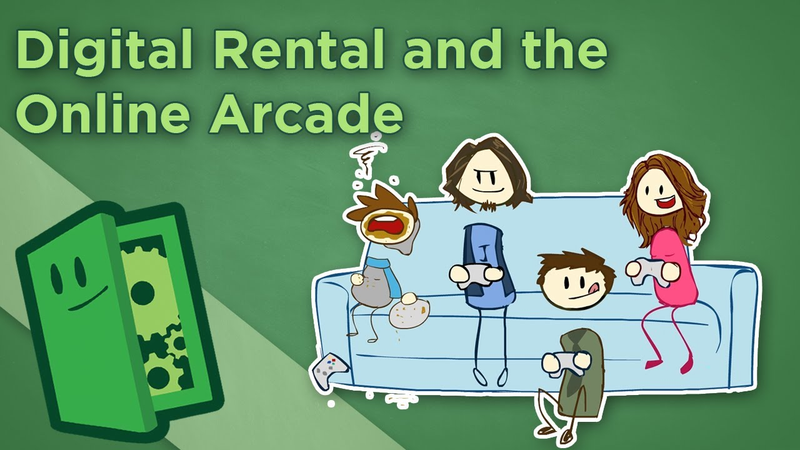
Digital Rentals and the Online Arcade - How Will We Buy Games in the Future? - Extra Credits
Key insights
6 takeaways- 01The industry is shifting away from the traditional $60 boxed-product model toward diverse digital distribution methods that move beyond a one-size-fits-all approach.
- 02To avoid predatory design, developers utilizing an online arcade model must balance revenue extraction with fair progression, avoiding the historical pitfall of artificially increasing difficulty to force losses.
- 03The 'online arcade' model, which charges per life or session, is best suited for short, skill-based genres like fighting games or platformers.
- 04Digital rentals provide a viable monetization path for casual titles, such as racing or party games, that do not justify the cost of a full retail purchase.
- 05Monetization strategies must be integrated into the game design process from the start, as payment structures fundamentally dictate mechanical requirements and the overall player experience.
- 06Rental models can function as an improved alternative to traditional demos by allowing players to apply rental fees toward the eventual full purchase price of the game.
Ask AI about this video
Transcript
[Music] I know we keep saying it over and over again but our industry is changing in 5 years buying a boxed game from a store will be less common than downloading a piece of software or playing something on the Internet in 5 years the $60 price point will no longer be the standard and a lot of games won't even make you pay UPF front but right now we're in a period of transition it's not too hard to predict what won't still be around in 5 years but as the old paradigms collapse we're still struggling to figure out what to replace them with so as this is a shockingly common Topic in the industry and seems to be of great interest to many of you we're are just going to periodically do some episodes about the new ways in which games will monetize because right now everyone seems to be stuck thinking in the same free-to-play box and that's not only limiting but for many games it's really the wrong way to go so today let's go over two alternate possible methods of monetizing a game these methods won't be the right model for every kind of game but they'll hopefully be a good way to start us thinking outside the box these two alternate models are digital rentals and the online arcade let's talk about
the arcade idea first imagine a game that functions just like the old school arcades did you pay 25 cents per Life the only difference is that this is something that you play in your living room or on your computer screen think about how many games that would be kind of awesome for think about how cool it would be to be able to sort of wager on your own skill and if you're good enough get through a title on just a single life of course before we go any further with that there's a pretty obvious downside as well consider what this type of monetization did to arcades the way it pushed so many games toward ridiculous difficulty just to milk you out of quarters many old arcade machines were designed to straight up cheat I mean under the hood many old racing games had a switch that arcade owners could set to determine not how difficult the game was but flat out how often it would allow the player to win so you can see why it's so important to choose the right monetization method for your game it's an integral part of your design and as a designer you have to view it that way this is the reason why you can't just slap any monetization method onto any game as some companies seem to think these days imagine taking a Final Fantasy game and giving it the arcade treatment think about what that would do you'd either end up with horribly difficult fights that relied more on
wild randomization than anything else or the developers simply wouldn't make any money off of their product because no one was dying so what type of game is the arcade model good for well any reasonably short session skill-based game it's great for Platformers fighting games aerial combat games even Shooters but as you're building out these types of games if you adopt this monetization method you got to build your game around it you got to make sure that you're tuning it so the average player gives you the amount of money you need to make a profit but you've also got to tune your game away from the Modern Standard of learning through failure or at least failure that loses the player some of their purchased lives you got to give your players a way to experiment and grow as players without extracting too much payment so they get to the point where they're really enjoying the challenge of your game and are willing to pay more for it all right so what about digital rental well I usually don't buy racing games myself but every once in a while when I got some buddies over it would be fun to be able to racee a few laps together now that's not quite enough for me to justify spending $60 on a game but if the developers gave me the option to pay $5 to have access to the game for just a few hours I'd totally do that from time to time that is the essence of digital rental as more Things
become available streaming or through clients that connect to a remote server it would offer the ability to pay to unlock the full game for a period of time for a small fee this type of monetization is great for party games but it's also good for any game with a strong opening and lots of content that ensures players are going to want to keep coming back any type of game that you periodically want to binge on also works well with this method additionally it answers the problem of the demo if your game has solid enough play to Warrant a demo why not charge a few dollars for a few hours of play and let the players decide where they want the demo to end with this type of monetization you can also put a portion of the player's rental fee toward buying the game each time they rent it so let's say you're charging $5 to rent a game for 4 hours well each time the player does that at the end of The Experience you can tell them that they could buy the game for $55 and then $50 and so on down to say half of the retail price thereby hopefully converting them to a full price customer over time but regardless of what method you choose just make sure that it's right for your game I can't stress it enough monetization is part of game design it's an inescapable fact of the future how you pay for something affects how you play it and if you don't incorporate
that into your design your game's going to be worse off and if you can't find a method that's just right for your game think past the things that we've already experimented with there are hundreds of untried methods of monetization out there as an industry we can't be content with the one siiz fits-all approach see you next time [Music] [Music] w [Music]
Summary
The gaming industry is currently undergoing a significant transition as traditional retail models, centered on sixty-dollar boxed products, give way to digital distribution and diverse monetization strategies. This shift necessitates a move away from a one-size-fits-all approach, such as the currently dominant free-to-play model, toward methods that are intrinsically linked to game design. Effective monetization must be considered an integral component of the development process, as the chosen payment structure fundamentally alters the player experience and the game's mechanical requirements.
Two alternative models proposed for this evolving landscape are the online arcade and digital rentals. The online arcade model mirrors classic coin-operated machines by charging players per life or session. While this approach is well-suited for short, skill-based titles like platformers or fighting games, it risks compromising design integrity if developers prioritize difficulty to extract revenue, as seen in historical arcade machines that utilized unfair mechanics to force losses. To succeed, developers must balance revenue generation with player progression, ensuring that the challenge remains fair and engaging rather than predatory.
Digital rentals offer a flexible alternative for games that do not warrant a full retail purchase, such as party or racing games. By allowing users to pay a small fee for temporary access, developers can capture revenue from casual players while simultaneously addressing the limitations of traditional demos. This model also provides a pathway to full ownership, as rental fees can be applied toward the eventual purchase price of the game. Ultimately, the industry must move beyond standardized pricing and explore varied, design-specific monetization methods to remain sustainable and responsive to diverse player behaviors in an increasingly digital marketplace.