1 free read left. Create a free account for unlimited reading + AI research.
Create free account
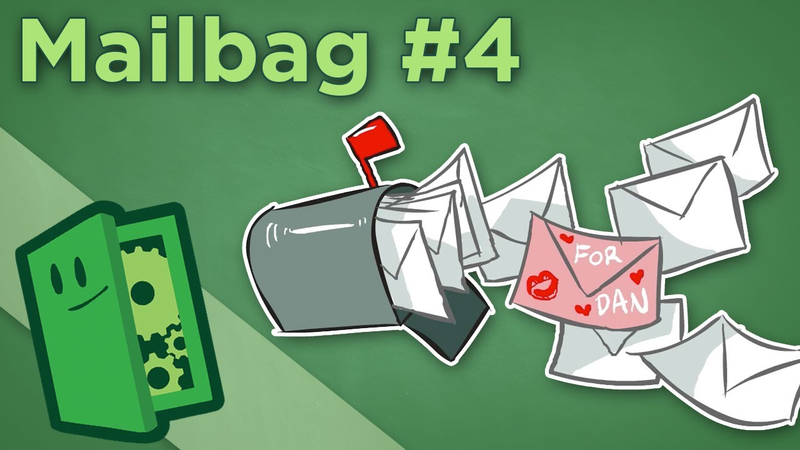
Mailbag 4 - Questions About the Game Industry - Extra Credits
Key insights
6 takeaways- 01Professional success in the game industry is driven by tangible output and functional prototypes rather than abstract concepts or academic degrees in fields like psychology or economics.
- 02Aspiring designers should prioritize practical skill development and portfolio building, supplemented by foundational texts such as Jesse Shell’s 'The Art of Game Design: A Book of Lenses' and Don Norman’s 'The Design of Everyday Things'.
- 03The industry currently lacks high-quality, unbiased research to establish a definitive causal link between video games and violence.
- 04Digital distribution platforms like EA’s Origin are essential business model pivots necessitated by the ongoing decline of physical game sales.
- 05Latin America is identified as a high-potential emerging market for the gaming industry.
- 06Economic indicators, specifically the Big Mac Index, serve as a practical heuristic for assessing the purchasing power parity and regional viability of new gaming markets.
Ask AI about this video
Transcript
[Music] as promised here's that follow-up mailbag episode and wouldn't you know it our good friend Aaron seagull is back to help us out with some more awesome drawings while Allison catches a breather we still got a lot left to squeeze in so let's get right to it are you ever going to do that episode you mentioned about voice acting putting role play back in RPGs or genres or any of those other ones we will probably get to all the episodes we've put in the future topic category at some point because James spends most of his time running a consulting company and holding a full professorship extra credits episodes tend to get written as they overlap with problems he's thinking about in his work life but like I said all these things will probably come up sooner or later I don't actually need help with the research project itself but my topic is similar to what you guys covered in an episode once where do you guys find your research sources hm that's tough we don't actually keep a list of footnotes for the episodes and some of the information can't really be shared anyway because James gathered it from industry people he works with other than that though all the information we
use is publicly available on the Internet or through the US Library System we try very hard to keep things that are speculative in a speculative voice like the possibilities of tangential learning for example we also try to always call out when we're making a logical leap in an episode and suggest other valid possibilities but we're going to miss this one sometimes so fact check us and dig deeper wherever you can that's actually something I'd love to see come out of the show I got so many cool game ideas is there any way I could pitch them to a studio well here's the thing everybody's got ideas in fact people in game studios usually have a lot more ideas they want to work on than they'll ever be able to produce unfortunately this means nobody's really going to be interested in your game ideas however prototypes are a different matter if you can put together a prototype that really shows off what you're trying to deliver that's something that Publishers will potentially look at there are thousands of ways to make connections and get people to notice your prototype but conventions are usually a good place to start next question is there any place I can apply my psychology or economics or whatever degree in the game industry most designers and producers I know came from disparate backgrounds James for example took his undergrad in Classics but if you're looking for an industry
job more directly relevant to your field that may be a pretty tough sell only giant companies like Microsoft devote resources to Dedicated psychologists and only companies who build their entire game around some non-game related discipline like economics and Eve online hire those fields specifically it could happen but it's a long shot how do you get into game localization there's a small number of companies that handle a lot of the localization work for the game industry just Google game localization and you'll find most of them see if they have any openings or even just send them a resume with your skills just be prepared you'll have to have a strong grasp of the language you're translating from and an impeccable command of the grammar and idioms of the language you're translating into are there any game designed books you would recommend first and foremost James recommends Jesse Shell's book of lenses after that he also suggests rules of play designing Virtual Worlds and another book called on game design if you're already a professional designer and have those already you might also check out game feel it's got an interesting and different take on the art of game design but other books like the Design of Everyday Things understanding comics and flow are also an essential part of the
game designer Library don't strictly limit yourself to books specifically about game design to learn how to be a better game designer is there a reason you haven't done a video games and violence episode we've toyed with this one a lot the problem is there's just not enough good data regarding the real effect for us to say anything definitive you've heard us complain a few times about the fact that most of the studies done in this regard are funded by groups with highly biased political agendas regarding games and that goes for both sides at the debate from within the industry as well as from without we touched on it a little in the non-combat gaming episode but we could do an episode on why violence is such a common theme in video games from a design perspective if that sounds interesting to any of you just email tweet or Facebook us and say so we'll add it to the stack next what do you think about EA's origin service thus far well the EULA bugged James enough to not buy Battlefield 3 on the PC and I can think of plenty of things we don't like about origin but lots of other people have already made those complaints and we seem to do a lot of EA bashing on this show so instead I'm going to list off some of the things we do like about it most importantly it's a sign that EA realizes that physical product sales won't carry them through the next decade
which is a positive change EA is a big player in this industry and it would do a lot of damage if they were to collapse if you look at all their Studio Acquisitions over the last decade and how quickly they've shut down many of the companies they've acquired you'll see that they've been groping for some answer as to why they're simply no longer profitable the way they used to be origin may be the first step towards a real answer to that question and a sincere acknowledgement that the Market's changing besides even though steam's been a fantastic digital platform a little competition can only mean good things for digital distribution but all of that said they need to fix their dumbass Eola do do you see a way for Latin America or Africa or other seemingly absent markets to become more relevant in the realm of games Latin America certainly will and soon James does a lot of work there in fact if you Google the words video games Brazil or CNN Argentina video games his work will probably be the first thing that comes up Latin America might even be a future topic down the road we'll see as far as other regions go we have less experience there India is probably going to be viable in the next decade Turkey already has a pretty good MMO Market going but these things really go on a case-by Case basis we'd like to use the Big Mac index it look it up it's a
thing as an off-the-cuff indicator of whether or not a country will be a reasonable market for video games in the next decade if it takes the average person in a country more than an hour of work to afford a big Mach there's probably a lot of other things that need to be done before they're really ready to be a thriving video game scene is there a way we could get the show close captioned or translated we're all pretty slammed beneath our current workload but we would love to see the show be accessible to more people I'm not 100% sure what would need doing through blip or patv but if anybody out there is willing to volunteer we'd be happy to look into a closed caption Edition as far as translation goes it's something we're working on but could use some help with we'd like to put the show up on major gaming sites in other countries so more people can find it but our progress has been pretty slow if any of you happen to work for that kind of major site or simply want to tell us who's the best source for gaming information in your country please email us that would be amazing and that is all we got time for I'll plan on scheduling these mailbag episodes a little more often from now on and we're going to try to organize occasional live stream Q&A so we can answer more of you guys questions but for now thanks again for all the questions thank you aarin for helping us out once again we'll see you next week a
[Applause] [Music] [Applause] [Music] [Applause] [Music] [Applause] [Music] [Applause]
Summary
This discussion addresses a variety of inquiries regarding the game industry, ranging from professional development and design resources to market trends and corporate analysis. The primary thesis emphasizes that while the industry is highly competitive and often opaque, success is driven by tangible output—such as functional prototypes—rather than abstract concepts. The contributors stress that aspiring professionals should focus on building practical skills and portfolios, as academic backgrounds in psychology or economics have limited direct application outside of specialized roles at major corporations.
Key findings highlight the importance of diverse reading for designers, recommending foundational texts like Jesse Shell’s The Art of Game Design: A Book of Lenses alongside broader works on systems and human behavior, such as The Design of Everyday Things and Flow. Regarding market evolution, the analysis suggests that digital distribution platforms like EA’s Origin represent a necessary shift in business models as physical sales decline, noting that competition in this space is ultimately beneficial for the industry. Furthermore, the discussion identifies Latin America as an emerging market with significant potential, while suggesting that economic indicators, such as the purchasing power parity reflected in the Big Mac Index, serve as a useful heuristic for predicting the viability of new gaming regions.
The methodology relies on professional experience and industry observation rather than formal surveys. The contributors acknowledge the difficulty of providing definitive data on contentious topics like the link between video games and violence, citing a lack of unbiased, high-quality research. The discussion concludes by encouraging community engagement to improve accessibility through translation and closed-captioning, reflecting a broader commitment to expanding the global reach of gaming discourse.



















Comments