Game Development reports and market data
Documents
Roll 20 for a Successful Compile: A Game Development RPG
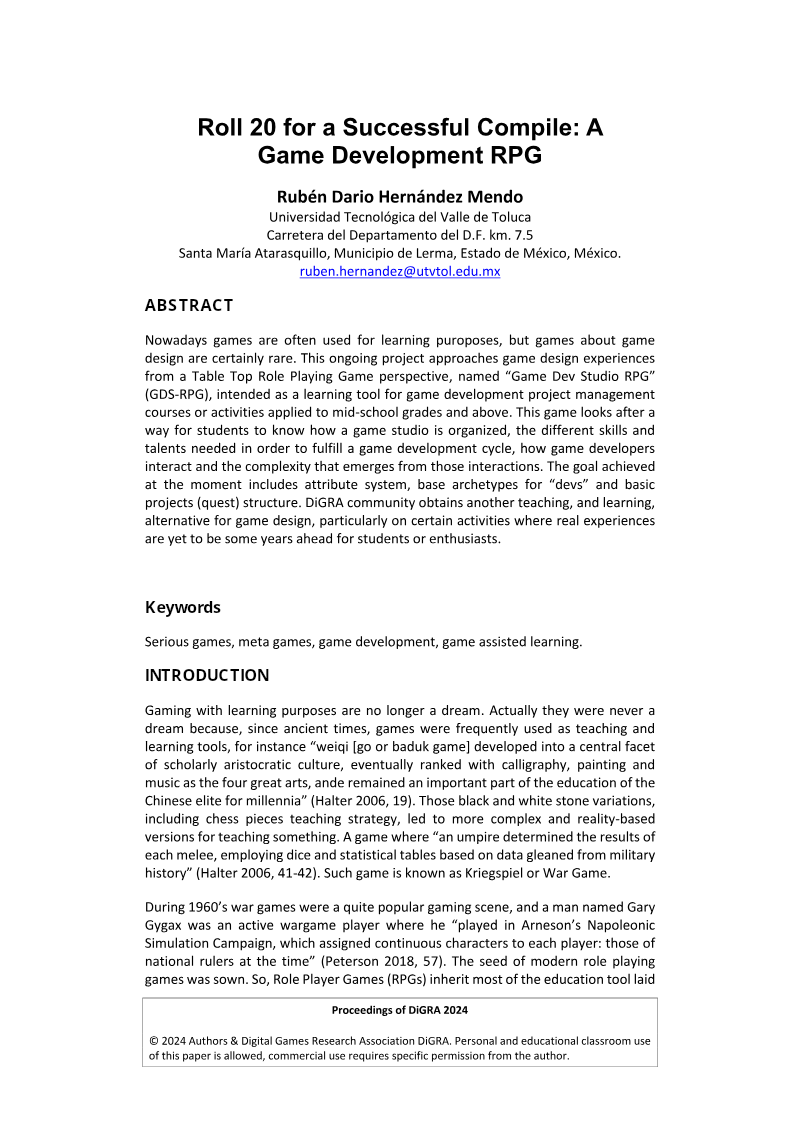
The document outlines the design and purpose of "Game Dev Studio RPG" (GDS-RPG), a tabletop role-playing game intended as a serious game for teaching game development project management.
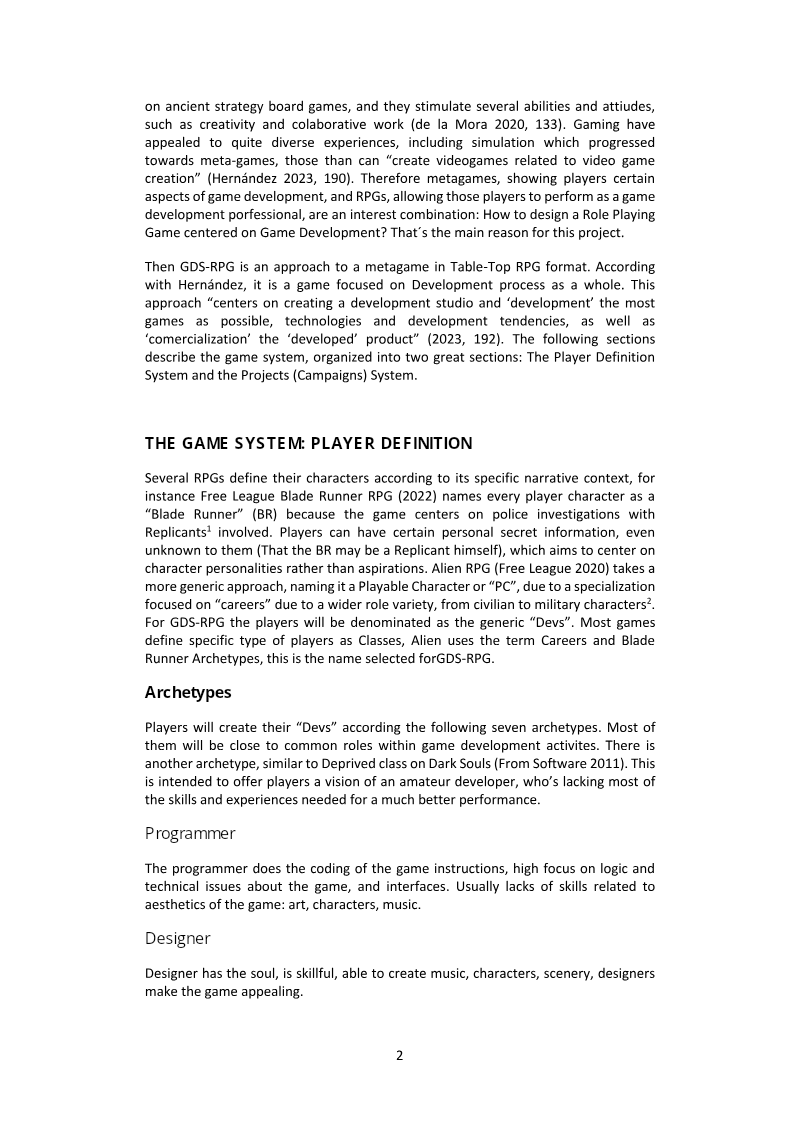
- GDS-RPG is a tabletop role-playing game that uses a metagame (a game about making games) to teach how game studios are organized, which skills span a development cycle, and how complexity emerges from developer interactions.
- The system is built around two components: player definition, where Devs are created from seven archetypes (Programmer, Designer, Market Specialist, Manager, Ludologist, Tester, Enthusiast) with affinity tables, and project mechanics tracking budget, deadline, and an Investor Board.
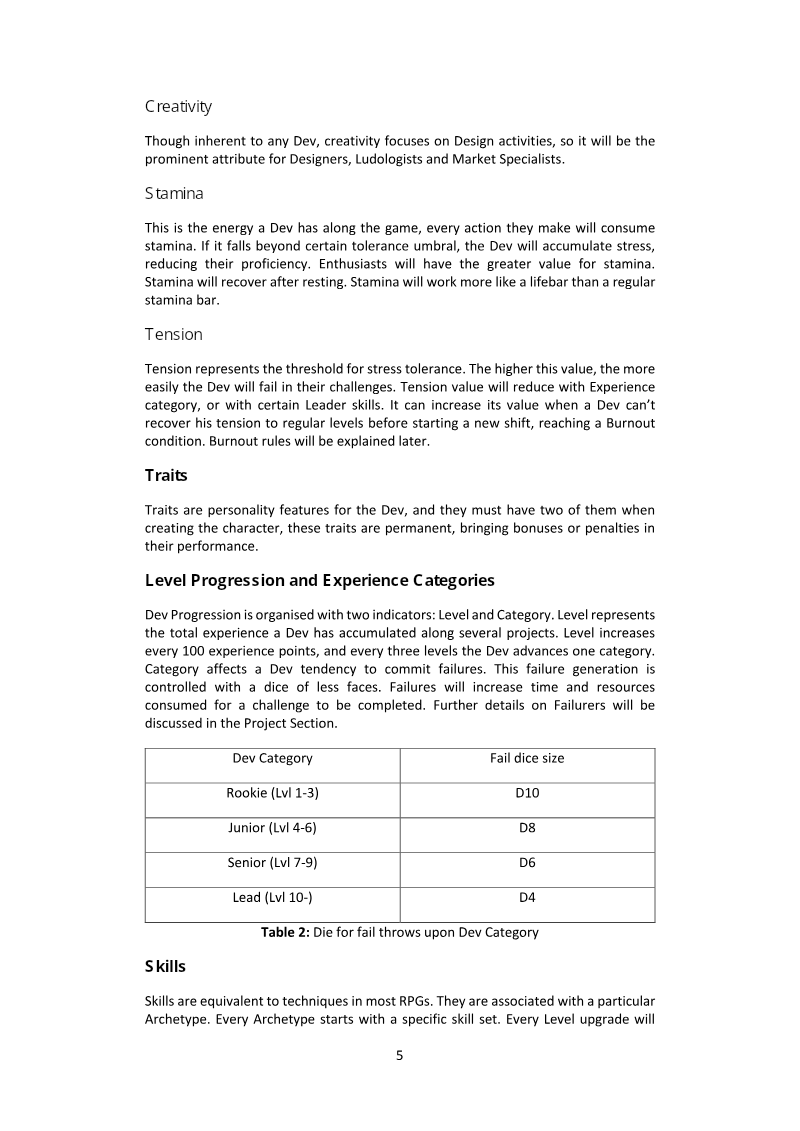
- Devs have five attributes (Logic, Sociability, Creativity, Stamina, Tension), and failure dice shrink as they progress from Rookie to Lead.
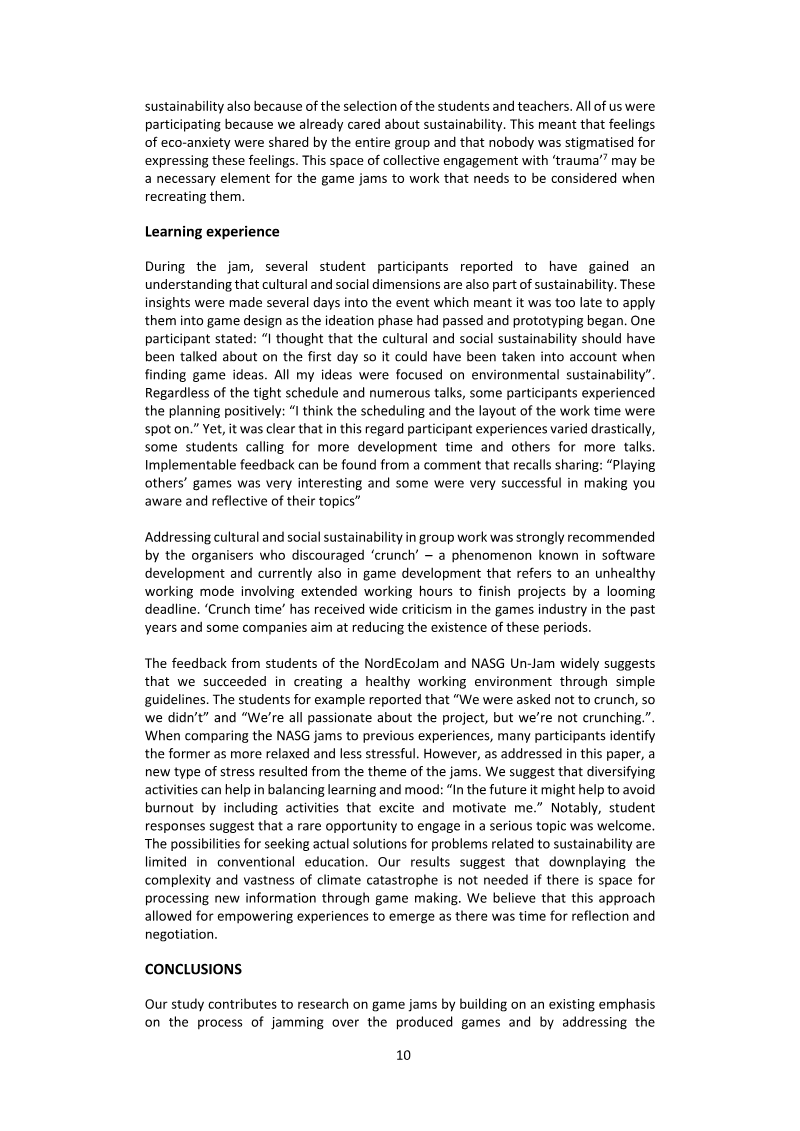
Game Jams and 'Heavy' Topics: Navigating Anxiety Through Game Creation
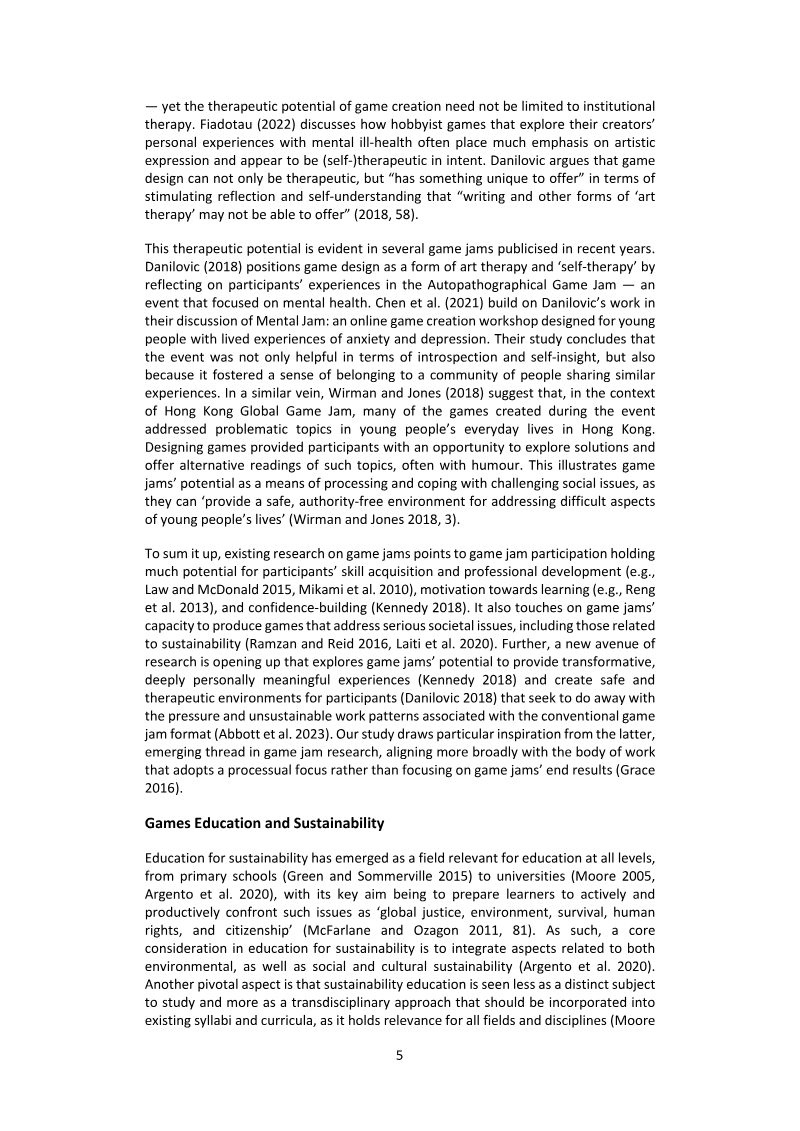
The paper, by authors from several Nordic and other universities and published in the Proceedings of DiGRA 2024, examines whether game jams can be used to teach sustainability to game development students.
- Participants' moods shifted over the jam as the balance between optimistic and pessimistic feelings changed, though the mixed feelings persisted.
- After the first day, several participants felt pessimistic and anxious, and the negative mood largely stemmed from the topic rather than from social anxiety about teammates.
- The authors report that a participant felt less alone when working in a team on sustainability goals.

Creating Accountability: 4 Simple Steps for Managers
Accountability functions best as a collaborative, two-way process rather than a punitive mechanism for blame.
- Accountability should be managed as a collaborative, two-way process rather than a punitive mechanism for assigning blame.
- The four-step framework for accountability consists of articulating clear expectations, negotiating goals for feasibility, securing formal commitments, and conducting consistent evaluations.
- Managers must treat accountability as an iterative process by using regular check-ins to adjust expectations based on real-time project realities.

TWIG #301 $1B Company Emerges From the Shadows
The global gaming industry is currently navigating a period of maturation defined by incremental innovation and a strategic pivot toward established intellectual property.
- Major industry players are prioritizing the acquisition of proven assets over internal R&D, evidenced by Playtika’s recent purchase of Superplay to secure high lifetime value models.
- Developers are increasingly applying social casino monetization mechanics to classic board game franchises to decouple revenue from traditional time-gated progression.
- The gaming sector is experiencing a decline in creative risk-taking, with developers favoring the refinement of existing genres and hybridization over the creation of entirely new gameplay experiences.

Game Tech: The Hidden Force Behind Gaming’s Challenges and Opportunities
The gaming industry is currently undergoing a critical transition as traditional development models struggle to meet the demands of modern live-service environments.
- Legacy monolithic architectures designed for static releases are creating systemic dependencies that force unsustainable headcount expansion to maintain production velocity.
- High-performing studios are transitioning to modular, loosely coupled architectures and DevOps practices to achieve the iterative workflows necessary for live-service stability.
- Investors are increasingly prioritizing studios that utilize microservice backends and automated testing to mitigate bug-related costs and improve profitability.

Indie Publishing and Growth Strategies with Sebastian Forsström, Head of Paradox ARC
Paradox ARC functions as a specialized publishing division designed to recapture the agility of early-stage game development by supporting high-potential indie projects that fall outside the scope of larger, franchise-driven titles.
- Paradox ARC prioritizes 'endlessly replayable' titles based on the ALICE pillars: emergent narrative, living worlds, inviting gameplay, cerebral challenges, and long-term engagement.
- The publishing model utilizes two tracks: a prototype track where the publisher retains IP ownership, and a co-publishing track based on revenue sharing and minimum guarantees.
- Success is measured by qualitative metrics such as community growth and responsiveness to iterative updates rather than rigid milestone schedules or short-term sales spikes.

TWIG #300 🎉🎉🎉 SPECIAL EPISODE 🎉🎉🎉
The contemporary games industry is currently navigating a painful structural contraction, driven by the end of zero-interest-rate policies and a post-pandemic decline in user engagement.
- The games industry is undergoing a structural contraction caused by the end of zero-interest-rate policies and a post-pandemic decline in user engagement, leading to widespread studio closures and layoffs.
- Electronic Arts is facing criticism for prioritizing AI and user-generated content over the revitalization of core franchises like Battlefield and The Sims, a strategy some analysts attribute to management consultants rather than creative leadership.
- Mobile gaming success is currently defined by Monopoly GO!, which illustrates that combining social casino mechanics with developer creative autonomy remains a highly effective monetization model.
6 Game Design Mistakes You MUST Avoid
Effective game design relies on specific principles that prioritize player engagement while streamlining development to avoid feature creep.
- Present problems before solutions to ensure players feel a sense of accomplishment when overcoming obstacles.
- Simplify early-game levels to account for the gap between the creator's full context and the player's initial lack of understanding, thereby reducing abandonment rates.
- Prioritize mechanical choices like movement options and weapon upgrades over world-navigation choices to provide greater long-term value and gameplay experimentation.

Dream Sports and the Future of Cricket
Dream Sports operates as a mission-driven conglomerate designed to provide a comprehensive, 360-degree sports experience through a portfolio of specialized business units.
- Dream Sports leverages a corporate startup model to manage a 250-million-user ecosystem, aiming to capture a share of the $20 billion global sports video game market.
- Dream Game Studios is targeting the 2.5 billion global cricket fan base by filling the market gap for AAA-quality, realistic mobile experiences instead of traditional arcade-style titles.
- The flagship title, Dream Cricket, has achieved over 6 million organic downloads by focusing on hyper-realistic visuals, high-performance technology, and custom roster-building meta-games.
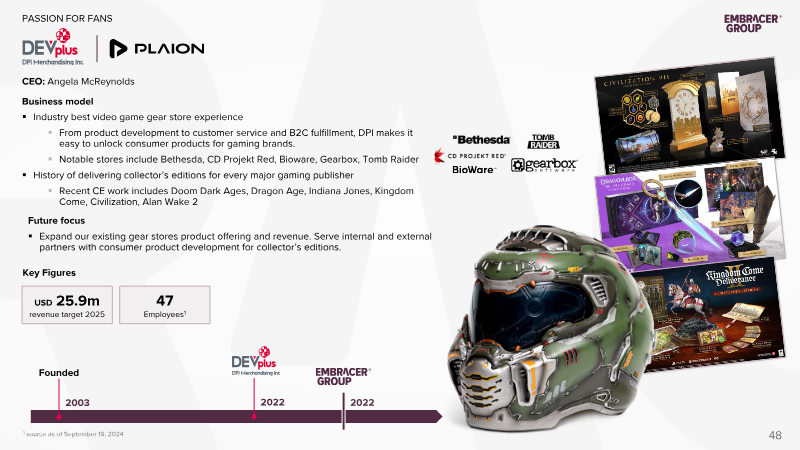
Embracer Group Annual General Meeting 2024: Presentation
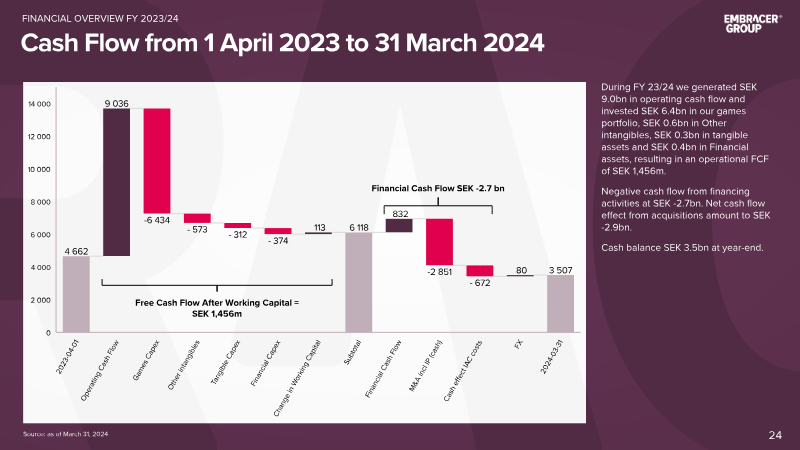
This is the presentation slide deck for the Embracer Group Annual General Meeting held September 19th, 2024, covering the annual operations overview for FY 2023/24 (1 April 2023 to 31 March 2024).
- Group net sales rose 12% year on year to SEK 42,206m, while organic growth was 1%.
- Adjusted EBIT reached SEK 7,063m, up 11%, and adjusted EPS after full dilution was SEK 3.65 versus SEK 4.06 the prior year.
- The company generated SEK 9.0bn in operating cash flow and reported an operational free cash flow of SEK 1,456m for the year.

Game Career Seminar: Co-Managing: Building an Effective Manager/Direct Relationship
The professional relationship between managers and direct reports serves as the primary driver of employee satisfaction and long-term career progression within the gaming industry.
- Career advancement is most effective when managers and reports work backward from specific promotion targets to identify and bridge critical skill gaps.
- One-on-one meetings should move beyond routine status updates to prioritize growth-oriented discussions that align individual aspirations with organizational objectives.
- Employees must take ownership of their career trajectory by consistently documenting their specific contributions and engaging in regular self-reflection.

Surviving Your First Steps into the Management Journey
The transition from a specialized individual contributor to a management role represents one of the most challenging career pivots in the game industry.
- The transition to management is a major industry challenge, evidenced by 47% of middle managers considering quitting in 2023 due to stress.
- Organizations often incorrectly assume high-performing specialists are naturally suited for leadership, leading to burnout and the loss of creative output.
- New managers frequently fail by attempting to maintain their previous technical output while managing, an unsustainable 'two hats' approach that leads to being overwhelmed.
Writers
Games and companies
Games