VideoDeconstructor of Fun
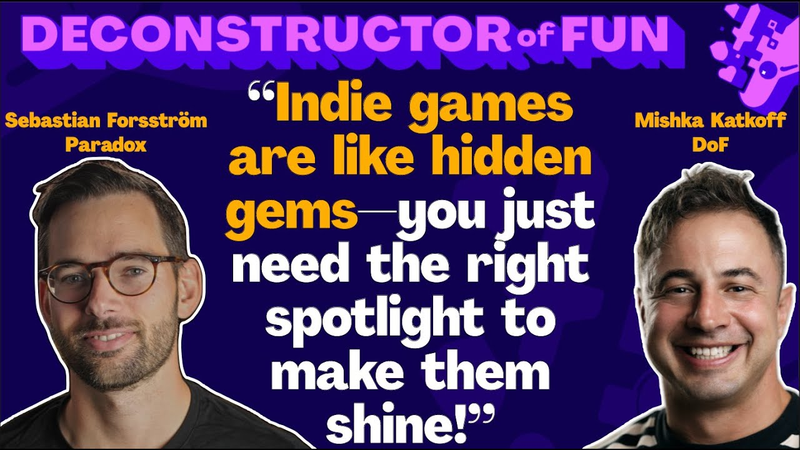
Indie Publishing and Growth Strategies with Sebastian Forsström, Head of Paradox ARC
23 Sept 202464 min video
you've heard of heroic Labs by now and we keep talking about them because in today's mature Market you need every Edge to be successful rather than spending those precious company dollars on building game Tech focus on building your game and shipping it get into your players hands faster and grow your community heroic Labs is Battle tested partner and friend of the podcast their Tech enables you to be flexible creative and scale for success heroic Labs has your Tech stack covered whether you're looking for a worldclass back-end game server an amazing game development framework Fantastic live Ops tooling or reliable Mass scalability heroic Labs has solutions for all of these challenges and it's not just us a deconstructor of fun praising heroic Labs the company works with some of the world's biggest Publishers on many of the Beloved games focus on your game save a big chunk of cheese and avoid Tech risks with heroic labs [Music]
welcome to the podcast thank you so much with deer so Sebastian can you talk about who are you and what do you do so I started out my career in advertising decided I didn't want to sell beer and corus anymore asked myself what do I really want to do well I've been playing Paradox games since I was 10 I've understood the Paradox games since I was probably 16 but I've been playing them for very long time I want to take a shot got into Paradox after a long process started out as a product marketing manager I think the first games that I worked on were pillars ofter console edition surviving mors was my first big kind of sim ship release for for all platforms um went on to become part of something at Paradox called the new games team this was a few years ago when we were reevaluating how we do everything seems from third party to
green light process all these things Shan geani the current CEO of Arrowhead he was my boss he was the one who recruit me into that Team part of that challenge was how do we B this kind of big third party projects out a little bit can we do small games and that's kind of how where Arc was born so now I'm running Parx orc it's a sublabel of paradox interactive a subel that is primarily for focused on finding up and cominging de developers of smaller teams they've released you know maybe no games maybe one game we even have soul developers making games for us and we sign those games in order to find the kind of next big thing for Paradox over time the finding of the next big thing for those who are not familiar with Paradox so Paradox is Stockholm based publicly listed game publisher can you talk a little bit more about like what is paradox before we start talking about Paradox Arc and why the world needs it
Paradox interactive is a games publisher that like you said yourself bed the stock on Sweden one of the I would say major players in Sweden also one of the major players in terms of strategy management and and simulation games I would say in general especially our Ste were famous for creating the gr strategy genre our CEO friendly likes to say that Civilization call themselves a grand strategy now and that's what we call a cultural Victory that's not what it used to be it was started out small started out as a studio paru development and basically did Grand strategy games so crused Kings Europe universales of course stores horz vron imper Victoria this north of 25 games probably most of them in that genre so that's kind of where we started out and then at a later point we wanted to self-publish as we started up the publishing AR
and then start to publish other people's games and that part of paradox which is of course Paradox interactive Paradox interactive both publish our own games and that's not just Paradox development studio also have other studos like like Triumph in Holland who makes AG of Wonders 4 as well as ice flake in Finland we also have PlayOn but we also have a third party kind of publishing arm third party publishing arm have historic we list uh a number of titles that turned out to be big uh the first Mountain blade magika City skylines of course which is our most successful third party game so that's kind of what P of interactive is basically a a a publisher of endlessly replayable games primarily in strategy and management got it and with a with a market cap of about $ 1.5 billion doll you know even in down it's just good to give a context even in in the sort of a downturn of the gaming industry just to give the idea of
the size and how many people work at Paradox about 600 people okay so so it is a sizable not a gigantic publisher but it is a sizable over billion dollar publisher focused especially on PC and through PC the steam content so that's very interesting and so you talked about all the games that you're developing internally you talked about thirdparty development why is there a need for Paradox Arc why can't the third-party development teams handle what you're essentially doing you know we're not a massive company but certainly bigger than we used to be and a couple of years back we kind of realizing that we had stopped signing the kind of games that made us successful in the first place in a way so Aro interactive grew a lot and when you grow a lot you realize that the more you grow the more things become an opportunity cost right because if you have expectations on returns and growth right taking a chance on a really small
game at the cost of doing something much bigger becomes an actual cost right even though that that sounds kind of counterintuitive you always have to like decide what you do what don't you do right you know no step back DLC for hearts Baron 4 or you going to do a super high-risk small game with a with an unri studio right or are you going to do like a big third party game that has massive breakup potential right we kind of sat down and we realized that if somebody pitched US city skylines today would we have signed it right people forget that City skylines was really small projects as compared to you know most third party prods that we work with now and the answer is like I don't know and that's crazy right as a say because City skylines is our absolutely our biggest franchise so obviously we we're not doing something anymore that
we should probably do at the same time since we released C skylines in 2015 the expectations of what a paradox interactive game is has changed right I'm not sure if we released you know a game like that or you know ck2 or one of those games we released them today if they would have had the same resumption right expectations have changed on internally kind of what kind of games we need to make but also externally what is a paradox interactive game we figured that we need to have a different organization a different team basically that doesn't have all of the overhead that a big publisher has and we also need a different label that shows that this is a paradox game but it's not Cru Kings 3 that's why par needed in new Lego so that's kind of
the reason why Paradox Arc exists to be able to sign games that have more humble begin Beginnings basically but that we think share DNA with us there are UN number a large number of games that are not necessarily grass strategy games or city builders but that I think they could definitely have been out of interactive games because they serve the same CH of mid right got it so it's a sub brand for Paradox and it's clearly uh a signature brand because you're using the Paradox still as a as a name it's almost like a Pepsi Max of Co or a Coca-Cola diet Coca-Cola light so there's opportunity cost you're you know you're focused on franchises on big breakout hits and if you go for smaller uncertain you know indie games that's not the uh logical Choice and then there's the expectation both internal and external of what is a a paradox game
of today not of of before but at the same time like what has happened with a lot of companies is as they move up the sort of a value ladder of making bigger and better games they tend to leave the games behind that made them successful originally and that of course opens up new space for new companies to come in and start from the where that company started and in case if that company is unable to successfully move the value ladder their games are not you know returning as they were supposed to they kind of end up in the No Man's ground they're not you know making the big games they're not making the small games and they're just making mediocre games and that's the uh the most dangerous position in the in the crowded Market of today so the way I understood it is like you're still keeping that origin of paradox through this new label if you're the airline company this is the Budget Airline with a much cheaper costs to run because they otherwise it wouldn't be
able to to compete in the market so I would say that the main differences between Parx or in Parx interactive is where is the Focus right people kind of forget that Paradox interactive titles they start to Peak at like year three like year you know DLC 3 year three they're very seldom massively successful launch uh and we're kind of doing that but on smaller scale with smaller games so we are kind of doing the same thing that parado interactive was always kind of done it's just parado interative is kind of a different scale par Arc is sort of the origin story of P contractive like in the future it's kind of interesting yeah it's the new wave it's also interesting because you don't have the same type of uh expectations for these games so you can be much more liberal in the type of uh Studios you work with and type of games that you make and so the question is like how do you identif ify potential
games and developers giving this lack of restrictions that any established you know franchise would have so Paradox orc also exists I want to say so that we can explore kind of adjacent genres and stuff that paru interactive might not have been able to explore just because again the expectations of what a paru interactive game is but generally I don't like to talk about genre we talk a lot about game pillars we have five game pillars and the ration is very easy to remember it's Alice Alice in the Wonderland going deep into the rabbit hole right to De games so Alice basically is five game pillars a stands for a JY par TR has a tieline called we create the games you create the stories our games are not generally games where we tell the story they're games that are there for the player to tell their own story so emergent narrative our games are not about us and what we want to bring to the world it's about you right parts vir 4 is so interesting because
everyone wonders what would have happened if if Germany didn't invade Soviet Union right you create your own kind of alternative history with our games and that can kind of translate to a million different genres I think and then we have L which is Living World it can't be kind of a limited arcade experience where there needs to be some sort of dynamic simul going on around you it can't feel like you're alone it needs to feel like you're almost not playing a game it's like the game is playing you in a way I is inviting inviting basically a different word for compelling so we like to say that either the game is really accessible or they're so compelling as you're willing to put down the time to learn them right we like to say that history is a really really great IP
because everyone has feelings about it right it's relevant to almost everyone on the planet right I think Arrow had the creatives of Hell divers they have a really good uh saying which is a game for everyone as a game for No One H and it's just a different way of saying you know let's try to make compelling games so that's that's inviting and then we have C cerebral so you know we don't sof our players intelligence we think that our games are not about reactions and being fast our games are about thinking deeply thinking ahead challenging the mind you know if we made a shooter it wouldn't be counter- strike it would be Arma it would rather be the military simulation not the arcade team kind of thing last one I think e so endless experiences or endless replayability you could even say andless
basically so Paradox you don't stop playing Paradox games and this I would say is probably the most important pillar and the pillar that we are least likely to disregard while we're looking at a game and it's because it's so important not only to what a paros game is and that whole player experience but also to the model that we have right we build games over decades that's what we do at par orc we're not looking for SE 3 we're looking for the next ck2 right ck2 had 2,000 CCU so concurrent users on Steam it's launch week C3 had 98,000 the Delta here is like what 12 years or something like that worth of Developmental relases right free content paid content they just building and building and building and building and building and building and you can only do that if you have a game with high attention I.E a game that people come
back to all the time and are willing to spend both time and money to keep playing to keep investing in in in DLC and and or what whatever it is they want to spend their money on so we can keep building in and keep paying people to to develop the games to go back to the kind of original question like how do we look at games we look at them through the lens of Alice it's our identity it's what we do it's the kind of game I like I like to play and most people that Paradox like so that's also like not completely unimportant but also it goes hand in hand with our entire idea the entire idea for Paradox as a business and how big of a team do you have analyzing whether a game that is being proposed to you that are often very small games actually fits these quite lofty pillars and like how well are these pillars defined because if you like you just told me what Alice means yeah I could play a lawyer and get a lot of different games into this uh and then
again there are a lot of different games that might not fit but actually grow into these pillars yeah yeah 100% so the team is not super big and the reason why is because we don't like generally created committees in essence it's five people that look at it um and Alice is not the schematic right like you can't because you can't go like e l i c e oh it's you know it's nine out of 10 on that and then seven out of 10 on that it's that you know it is it is a question of judgment you know yeah we will have games that you know wouldn't score super well on one of these pillars right that's okay we can be flexible within them it's not a it's not a rule book uh because honestly you can't make games according to a rule book I think everyone who's made one or worked with them knows that right uh but it is sort of a a lance if you will so
gut feeling of of three sweds is what made makes yeah at the end of the day what is it okay got it no that's uh you know there's different ways and this is creative industry so so that's uh that's that's that's a that's a way to put but you have these pillars that you kind of use as a as a reference point when it comes to these different signals when you look at a game that is in development early on like how do you know that it can have this long-term potential where you know after three dlc's it really starts reaching its Peaks and it actually has in what it takes to be a franchise so first of all obviously it always starts with the game and the the Prototype or the proof concept or whatever you want to call it depends on where in the process we are when we're going to sign the game how difficult or hard it is uh so it's going to look different from from from process to process right when you have a chance go
to steam database. info or steamdb doino and look at the HS fire force CCU growth it doesn't have big pics or or big valleys it's very slow buildup over time retention is kind of the name of the game for us if we believe that the game will have retention or not and that goes into to of course pillars do we want to play it does it have a staying Factor and Etc but also everything is just a theory or hypothesis before you actually launched the game right what we usually do is we agree with the developer we always do three scenarios great good bad based on how much we sell but either more importantly our retention so mechab Bellum is is kind of our latest kind of game that has a lot of potential we think yeah when we launch it it had 5,000 CCU so concurrent
users its first week which is like for an indie game it's pretty good by no means a runaway success right like it's not you know it's no manl Lords if you will yeah yeah yeah of course but it it had 5,000 and then on day 30 one month later it had gone down to I think a th000 then it never went down further just stayed there that's a pretty good indicator what then happened was okay the studio kid is working on the game we haven't stopped marketing the game obviously we keep marketing it but we kind of re see this scenario go okay we're basically saying that okay we're hitting a scenario here where we have the retention we want on day 30 and then day 60 it makes us think that if we keep investing in this game more than what you know any normal publisher would do over time this is going to hit critical mass we
think in March last year I think it was and this is very e to just look at steam TV as well look what happened with mechab balum in beginning of April this year that's when we started turn on the machine again we kind of analyzed what the what the players wanted what they did it we rebalanced the game uh the studio has introduced a few new features to improve roten further and every time we have a marketing bits says down you can see like CCU curve going going like that and then just bun just bunk small bumps it just responds perfectly every time we push it it responds that's how you know you have a winner I think we still haven't resisted the game I mean in in 1.0 that's coming on September 26 I think we're going to have two scenarios we're going to have a breakout scenario or we're going to have like a well this is a it's a good scenario scario it's no breakout but it's good I
will keep investing in the game that's what you want you want that kind of responsiveness whenever you do something something happens right if nothing happens at all I think another game that we we have in our portfolio which is on the other end of the Spectrum in terms of size so it's called story use it's made by a fantastic solo developer Lan guy thas baras is developed entire game on Twitch wow he filmed himself line of codee and just has massive discipline and he's making a colon a Sim called called stus and it's a different scale but we pushed out a big update a month ago I think C you what you know immediate response right and it rests on a higher level than it was before that's the important part that it rests on higher level than it's started out with right because that means that
you can keep going you can do this for a decade right there's no reason to believe that you can't be doing this for a decade and those are the kind of games that we won I don't know how big stardos is going to be but I'm pretty sure it's going to be bigger in three four years than it is today so when you're signing games you're looking at sustained user base yes and these are premium games they're not freeo playay games they're not freeo playay games they're premium games most of them yeah I think I'm getting into your territory now a little bit because we do haveing s currency store for meab balum but it is also a premium game so it has it's kind of a hybrid thing we do have skins and and stuff like that so it's a bit of we do experiment with this model but most of them are premium yes they are interesting the question is like how do you then differ from other publishers in this in the space like you have these
pillars you're Swedish you have good reputation you focus on specific Grand strategy genre you want to see sustained player bases but what set you apart from the competition from the coffee stain Games Etc so I think the thing that sets of support I'm goingon to allude to what we were talking about before we have a 10-year perspective on our games given that they hit a certain scenario the people are part of orc are the same people who put out many of AR contractive games in the past so we have built franchises many times before over a very long period of time you we're not going to say no to a hit obviously nobody says no to a hit but we don't have to have a hit today right we have to have a sustainable business that's what we need to have so when we make decisions for games given that they do show a promising sense of you know sustained player base and then slowly growing
player base there's no end date and we're willing to keep investing in something it's not about us getting you know a huge payday tomorrow that's not what we're talking about we're talking about trying to get something that will be really really big over time I want to find the next ck2 I don't expect to find the next tk3 and I think just personal I think if your entire thing is based on only getting the hit you're going to make other types of decisions I think I like to say that baros and dtive we're not the biggest publish AR team by any means but we are the biggest publish on team with this audience there is no other publisher that has the type of players that we're talking about you know players who typically invest a ton more time into their games than the average player buys way more games than the average player we have a lot of those that's not to say that we are an
automatic you know all of our games are successful because they're not right that we are a really powerful modifier for the right game MH right if we have something that actually resonates with our audience and we believe of course that the games that we sign We Believe will resonate with our audience because we believe our audience wants games that are you know in some way adhere to like Alex the player experience those come together as I mean it's very clear for me when I announced so we signed a game called I little space they have been out on Ste since 2019 I think something like that five years four or five years you know it's a store Page you can't buy it and we signed it and we ramed it and we repackaged it to fit more with what we think the experience is and we put out one trailer on the produ interactive YouTube channel and it went from something like 10
15,000 wish lists to I think with today we hit 50,000 and that's because the problem is resonate with the audience that we actually have I don't want to sign a game where if I invest $100 in marketing I get 101 back I want games that if I put down 100 I get 150 back just because of the audience that we have and when we hit it right that's what kind of happens got it so what they get is basically cross promotion yeah that's one of the main things you also do get everyone says that they're full of veterans so it's not necessarily the the thing that I put put forward the fastest but we have some of the most senior people that's Paradox are working with Arc in terms of putting out new yearses to the market so you get expert Service as well yeah okay like how does this publishing work like what else do I get like let's say I'm an indie developer I have a game I have like thousand people
always playing it I don't have the resources to Market it I don't have any access to VCS nor what they give me money I don't really have anything to do other than to pray that people will suddenly find this and this becomes new hit I sign with you I assume I give you all kinds of Rights and a shares of the revenue and my youngest child and everything that goes with with signing a deal for the publisher you know but what else like what do I get back and the back what I get is is like I get cross promotion to a relevant audience that has provenly increased the pre- signups basically the wish listing of a game but you know in my experience what I've in in the short time understood how the wish list works is it's kind of a crap like most there's a small percentage it's definitely not predictive in terms of exactly if you have 10 you're going to sell three like yes so so in that sense I'm like wish
list okay cool I don't care because it's unpredictable and nothing comes and then you say well we're also going to like we have great people working at the company which is 100% true but many great companies with great people who have very little time because they're so great people and so in high demand that you may not get access to them at all or very little and so that kind of doesn't come through like what what is the sort of a tangible like why am I making this deal as an indie developer with Paradox Arc um that's a very good way to put it I think I mean wish list so same as with everything else on Steam like sales are the only thing that really really matters right they like if we're not able to sell enough nobody's going to be happy we can well followers on Steam and then wish list are the only other kind of measurements you have you also have of course like store traffic YouTube it's the same thing it's like
okay 100,000 people watch your YouTube trailer but did they care yeah like you know you're not going to be able to to guarantee that so apart from the fact that you demonstrably you reach very relevant audience given that you think that your game is relevant to our audience of course there needs to be like a belief that that's true so it comes down to the game and the match right if you have a game that matches with our audience then I would say there's no other publisher that has the r that we have to that audience from a track record perspective our first game that we signed was across Obelisk they had been out in Early Access for a year a year and a half or something like that MH I think they had sold some like 40 45,000 copies something like that we took it over we signed it took over the management of the game we realized that the X Factor of the game was something else than what they were marketing themselves basically it's a card battler kind of
RPG adventure story sort of thing people will think slave is fire right that's kind of how it was marketed like oh this is a really good car batt okay there's also griftlands there a million car batters this is right what actually makes this special at that time it was the only one that had clean Co-op that actually really worked so we repositioned it as the co-op deck builder that's what we call it if you look at the reviews today that's how people talk about it too it went to launch week we had 14,000 CCU to this state I think we have sold 400 plus thousand copies I mean that's a really clear example of what happens when when the game the audience and the publisher lines up this is also a very clear before Paradox Arc and after Paradox Arc in terms of P say of course that result is not
necessarily something you can translate one to one to every game every game is and that's kind of the hard part about our our our business right regardless if you're in Mobile or if you're stud or console like games are so complex like they're not just they're pieces of software they're engineering feeds but they're also cultural things right they need to be relevant to people from a you know they make need to make you feel something and at the same time you need to sell it in a way that that conveys that but also doesn't overpromise it like there's so many factors that it's impossible to say you're going to get this exact result just by going with Parx or the answer is no you're not going to get exactly the same result for all of our games regardless of it's both when they have been on the market before we assigned them or games that they had a store pitch or whatnot so very clear before and after for everyone I thank
you step into the future of game monetization with exola the premier partner for game developers seeking to expand their reach in Revenue exola provides a robust Suite of tools designed to enhance user acquisition maned subscriptions and streamlined Payment Solutions worldwide unlock new markets and maximize profitability through their customized secure payment architecture and dedicated support team exola powering game developers to achieve Global [Music] success this podcast is brought to you by apps flyer in today's Digital World understanding your apps Journey from Discovery to download is more than just insightful it's essential enter apps lier the leader in Mobile attribution and marketing analytics that allows you to measure the full potential of your marketing efforts making every ad dollar
work smarter with apps flyer that's your new reality dive deep into Data driven insights that reveal exactly where your users come from and how they'll interact with your app apps sler where your app's potential meets performance on mobile the way the Publishers work typically is is that Publishers take a percentage of the revenue uh significant percentage but at the same time when you do sign a publishing deal they often at least the good ones pay for the development fees and then there's usually a certain type of an exit clause whether that is an asset purchase or the acquisition of the entire Studio that is kind of like the goal for that third- party Studio to be working with a publisher do these type of elements also come in with PC or publishing like do you pay for the development and of course you take the
revenue share but is the end goal for the Indie publisher to sell the game for you or sell themselves to you like how does it work the short answer is yes so basically we have two types of projects if you will we have projects where we pay for everything not only publishing but also development and we basically own the studios's burn rate right so you know there's a delay we pay for that delay right this is what we call the Prototype track so obviously these are way higher risk for us in this case we will own the game we will own the IP and we will also try to drisk it as quickly as possible so what we will do in this in this situation is we'll go to an you know we will agree with the Indie we'll sign the Prototype agreement where we say okay you get I don't know six seven eight nine months to to make a prototype to kind of prove out XY Z that you want to prove out the most important part
here is not that it looks good I really don't give a about Graphics this is 100% about systems game play core Loop this be fun I need to be able to not put it down right that's the most important part but if it goes poorly and by poorly it can be everything from oh it was kind of cool it didn't really hit it though or you know the cooperation didn't work as we had hoped or it wasn't cool you know like there's a million different reasons why it can't be cool we will end it there we'll say okay we paid for everything you can actually have the Prototype back and if you want to go and finish this project even with someone else you can do that you own the rights now the only thing we want back is the initial investment that we did in the form of royalties once the game releases if it releases when that some which know relative to the entire project is fairly
modest and it's been paid back we're gone like there's no hooks or or or anything left where is clean we're gone and the principle here is we never want to stand in the way of a team who wants to make a game and if they're successful then we'll say okay we're going to take this to Early Access or we're going to take it to straight to 1.0 there's a new agreement this is more kind of akin to a classic kind of a work for hire agreement I suppose what makes us different here to some others is that we don't necessarily sign the contract based on a milestone schedule That's a classic thing that people do work for ey contracts they go Milestone number one I need to deliver this and this and this Milestone number two and it's deliver this and this and this feature we don't do that the reason why is because people start to try to deliver what's in the contract not a great experience because you have this kind of relationship where well if I don't deliver exactly
according to contract I'm not going to get paid you lose track of what's important in a prodject what's important so deliver a sick player experience and that you show progress towards that that's what's important right so we don't do Milestone schedules if the developer wants to use them that's another thing right be free to do that if you if you want we're not going to base it on that what we do then is we basically here every month we expect to build a month where we can just follow the progress basically so that's sort of the Prototype part where we pay for everything but we own everything MH uh the other part is the co-publishing agreements so those are usually you know the project will have come quite a way already we have definitely have something very playable sometimes a developer needs a bit of money sometimes they're just looking for a publishing partner here we usually work with an a minimum guarantee and rev share then we have another thing
that is important to us our goal like we talked about before is to build something over a very long period of time we don't want to build something that we're not going to be part of in two years right what we want to have is a buyout clause in the contract not the studio the goal for us is not to buy the Studio but it is to buy the IP the intention with that is not to shut the studio away from the project because honestly if you have a project that someone created it's very difficult to replace a studio and on any sort of sort of game product I think the intention them is that the relationship would turn into more of the former so more like a work for higher relationship on that particular game but that we have the ability to you know I I want to be able to go to my board and say I want to keep investing
in this game for six years and then we going to go like why the publishing agreement Runs Out in six years yeah that's true like I want to be able to do that uh it's not non-negotiable but it is very important for us that we have a stay over a very long period of time we work with MGS which can you know of course help the developer to get to the finish line but in that is it's a classic mg it's a minimum guarantee it's not I mean the mechanic is what that is right so what do you mean by MGS so who pays an mg so we pay mg so minimum guarantee is basically you give money to the studio it depends on the type of agreement because they are always like flexible like when we get that back who gets back which money first and you know how that's going to be different but basically it's it's money up front got it okay yeah because usually on mobile we pay MGS to the license holders right
and that is the chunk sum that may or may not be reduced for the usage of the IP so that's very clear is your approach different than other Indie Publishers in the market I would say that our motivations are different it's a different model if you're hit driven right if you're driven by I need a hit that sells 600,000 copes this year next year next year next year next year because you know then you're going to work in a different way right you're going to look much more for games that are already tracking you're going to need to have quite different terms very different risks and you're not going to be able to do an mg that is higher than x right because you need to protect your downside at every turn I think that's a super viable thing to do and I think there are many games that work for that right um that's not a bad model in that sense but it's not our model our model is the ck2 to ck3 model where we find
something that we invest over a very long period of time so the decisions that make along the way are going to be very different to someone who goes great we have a hit okay go next which is the one it also doesn't suit everyone right so in that sense we're difference I think we're a very very good alternative for the types of games that we want to sign because the game pillars are there to guide which kind of game experiences we want to make but also the times of games we want to make mechanically from also a business perspective right if they weren't there we would sign all these games that were maybe much more shortlived but if our games were much more shortlived we would have a completely different perspective on while we sign a game right so that's where we are different I mean everything links into to that like we want to be there in 10 years we want to have 100,000 concurrent users in 10 years and we want to be there for that right M
all right so you've announced nine games and six of them have been released to my knowledge titles like across the Obelisk stardos mechab belum that is coming out soonish September we're recording this in September so this month can you share insights on the development and the release process of these games they're all of course vastly from so so we talked a little bit about mechab Bellum before so maybe we don't need to cover that too much but basically the process for mechab Bellum is very much the kind of process that I would like to see it we have a game that's promising we have a marketing budget that Al also I also want to add I think our marketing budgets are slightly more significant than a tical in the publisher we have we do everything that we can in order to take that successfully to the market we do it happens we see retention and that's when the work starts especially as we look at player feedback and we try to adjust our game according to player feedback and Etc but that is where that kind of starts we saw the retention we
wanted we prepared for 1.0 and then once we hit a certain date which is in this Chase March or April this year I think it was April I want to say April we do a relaunch we up everything and then we have a very clear Target for how many players we want before we go into 1.0 and then of course the hope and belief is that once we do that and find more players the same same relative amount of players will keep sticking around in the game after launch uh and know we will keep building upon on that basically I think the same thing has been true for story use it's in a much just smaller scale smaller game but they you know we launched it you know for an indie again like it had a great launch it's not significant for Paradox but we see retention so and Thomas comes back to us and says you know been working very hard
on this big update can we do something the answer is yes of course we can do something we do kind of a small relaunch with the new update we update the key the logo a little bit we take some new screenshots we do an influencer campaign on primarily YouTube and twitch it adds on Reddit and and and Etc and we see if okay does it hit that number that we think it the hit answer is yes MH okay so everything like that provokes a new decision all the time I think you know once you hit release or you hit the next Milestone that's always a result it's not one decision you make it's like 83 decisions and hopefully more than half of them are good rather than bad right and that really is what the process looks like for us what we don't do and I want to say this because it's really important to us we don't tell our developers how to make their game and
it's not because we don't have opinions we definitely have them but when it comes to creative opinions about games we don't give them we try to really hard to limit them to a minimum and sometimes that can be frustrating for a developer sometimes the developer really wants input on a mechanic or a design decision the problem that we have with that is that if one has the money and the other one is dependent on that money whatever the one with the money says can be interpreted in different ways right and it's the same reason why we don't have Milestone schedules because the second we start to provide that sort of input like the risk that the game project turns into pleasing us instead of creating the player experience that they set out to create that kills games in my experience we definitely provide feedback in the sense of like you know players are turning
here because the UI is the UI and you need to look at the UI probably you'll go okay how should I make my UI we have experts we have UI experts that we can connect you with and you can work together with them teams that that can help you do certain things with your game but you need to drive that decision you need to drive the creative decisions we only want to work with Studios who really have a crystal clear Creative Vision and you want to keep in control of that Creative Vision and it doesn't matter if it's a co-publishing deal or if it's uh you know we pay for everything we owe for own everything you need to drive every creative decision and it can even come to to a point where like you know we're going to sign a game and the studio goes what do you think we should do with this that's a clear sign for us that maybe this is not the kind of relationship that we want to have if you're not clearly in the driver seat of your own Creative Vision and you're
looking for like a co-pilot we're not that co-pilot so that's important for it I think and and how do you ensure that that games like let's say like mechab Bellum that is going to launch or or other ones like how do you ensure it has what it needs for long-term success because you are talking about building essentially cohort on cohort but coming in from freeto playay world we release updates on at least weekly basis sometimes even a short time and you're talking about DLCs how many DLCs are coming a year one two like how do you build on top of that yeah a good question so it depends right so so mechum I would say is more again to what you are used to it is more of a life service model right and the idea there is to have I'm not going to say exactly the amount the weeks on the cycle but it is close to what you mentioned and there is definitely cycle upon cycle upon on cycle right and the person on our side who is lead on that from P Arc has
released something like 40 life service games or something so it's definitely something that we're familiar with in that sense in terms of DLC the interesting part of the DLC model to look at our grass strategy games is that the big DLCs are the ones that drive player numbers the thing that drives retension is our 20 $25 big expansions you can see that very very clearly if you look at our grass strategy games um and it's counterintuitive because you think a DLC will only target players who already on the base gam right the fact is that DLC the big ones are the ones that drive new player acquisition for par I think it's because our big deals is or usually obviously they all introduce new systems and new gameplay and all that they usually center around new player fantasies as well because most of our
games are sort of you know they soundbox boxy games right I think that's what drives it for those kinds of games and it works very differently for what I think is kind of the mobile or the live service model that the hard part about having our model and our types of games is of course that our games are very systems heavy and very very complex so making this big ones it does take a lot of time I think it's a rare occasion when we have managed to put out two per year usually we have two small ones that we call content packs or something like that which are usually more Cosmetics focused and then we have a midsize one which is when I worked in stor we call the story packs it sounds absurd compared to Mobile gaming where you're you're saying essentially like we're going to release One update a year which for mobile would be a death blow like it's the same as as having an inactive
game so definitely the pace is different and stacking audiences is probably like a lot harder because you're at the same time competing against so many new games they're launched on Steam it's not like you're going to be playing the same game over and over again because it's essentially the same game where nothing happens except once a year there will be a DLC like I I know I play some PC games where I'm like oh my God I like Total War there's new characters that I can play with yeah and so I'm to go back to a total war and now play with Persia or Babylon or whatnot and of course when we're talking about paid games paid games are also the type of games that you can restart and part of the fun is restarting it's almost the best thing is when you restart your XCOM your civilization yeah your Crusader Kings whatever you name it like the best thing is now that you know what's going to come in in mid game or maybe even late game let's start again and play it knowing what will happen in the future and you feel much better and they're made in way they are exciting to restart and exciting to kind of start with a
maybe a new character a new country or or whatnot so that really drives the retention eventually is like how replayable these games are because they're not persistent and so that's why they the business model now I I wanted to kind of zoom out and and really talk about like what's going on with the industry uh especially with Indie Games because we've seen the rise of Indie Games we've seen the challenges of AAA games of these plus hundred million budgets sometimes even more the game comes out and just flops and of course at that point you know man are Lords is of course a great example of a one person they sold the other concurrent users on Steam of that game compared to this other game made by a gigantic publisher that spent you know years in development and now launched and is is just abysmal compared to it and so there's almost like a new found interest towards indie games there's new found interest towards PC especially with PC doing so so well with the Chinese consumers being able to access team how
do you see these these Trends evolving and how are you positioning Arc against these favorable PC Trends yeah the trends are favorable but I also think that steam is full of games these days I think last year 16,000 games came out I think the average revenue of a game on Steam last year was something like $4,000 somewhere of course it's going to be like you know 80% of those games are going to be like you know banana it's going to be like nothing just because the platform is so accessible right so most people can put it out but the the competition is still murder and I think this happens Simplicity as well this exciting Trend but I think at the end of the day the trends there are always going to be Trends up and down I think a mistake is to try to control them because I think it's like anything that is so complex is impossible to control and you have to kind of swim with it my insight is that we have to keep Focus only on the player experience that's the only thing that matters my whole pitch
for Paradox Arc which was you know started something like three three and a half years ago something like that was like you know valheim was made by four Dudes but Minecraft was made by one Manor Lords you know they have a te have a te now but like essentially the pre product was made by one guy a r world made by one guy from the start you know T and Sylvester and for that matter you know PDS games par development Ser games they were not big from the start they were very small very small teams the pig inside that I think especially people who have tried to get into the industry in terms of like VCS and Etc is that investment does not correlate with outcome at all especially not in a industry that is so driven by if you have something culturally relevant or not like if you have someone who says they know what's going to be the next big thing I would call them out nobody knew that thisal company was going to be
big yeah company had something I don't know 150,000 CCU or something on his launch week and it's made by as far as I understand it a guy who has made exactly the same game a couple of times before that didn't make it big they're like okay but you can't do the program for that right so you have to program for things not being a hit because most of them want right so in terms of Trends I think the reason why some in the games are successful is because they are able to take risks they're able to think about risk in a completely different way than company like activis can because they're not making their games primarily to make money I think and that's kind of the key they really want to make those games and the only way you can make them is if you really want to make them I I talked to Thomas ver because who's making
stardos which is an extremely complex game to make like so systems heavy it's basically real world in space mhm right and he did all the systems it did all the art it did all the music it did all the writing everything all the game design by himself you can't do that thinking like the risk is is obviously huge for someone who what at least when you start out you know before you have a compact with P orc or someone else like the risk is massive right but that is also the key to why they are successful right because they don't compromise on anything I think you know that's where why I think that what we do is so meaningful and that is also why I think that we will continue to have the attitude that we we have is because we don't want to sign IND this and turn them into something that they're not
either right we want to sign them you know you want to sign R world because real world so I think Indies are successful because they can take creative risks that others can't that's a main main reason why I think that they are successful and then there's a million things that an indie will not be able to do well yeah marketing their game is usually one of those things because you know you don't want to have to think about the top 50 influencers I'm going to try to reach while I'm coding my system for a dog like you just you don't want to mix those things together right they also probably need money because they need to eat and they need to be able to to make it right there's a bunch of other things and that's where I want to be to allate that and help them like for me it's like it's I want arox orc to be the Catalyst and to be the difference between being you know a pet project to something that can be a sustainable big thing over time I want to be that
stepping stone for them I don't want to be the person who thinks that I know how to make the game that they're making themselves and tell them how to do it that's not the that's not who who I want to be in that equation probably not looking at that I think that's how then you can you remove the whole uh X Factor Last Thing Before I Let You Go like what is your advice for for Indie developers to get in contact with Paradox Arc like how do you get signed by by Paradox so getting in contact with us is really easy you know uh go to our website and the post your page there's a page for that and we read everything we have two game business developers game Scouts who look at everything I think in order to get signed there are two things that are more important than anything else number one what is your game promise why should like you asked me in
the beginning of of of the podcast like why does the world need paros orc yeah why does the world need this game right say that you're making a game um I don't know you're making a military Ci or you're making a team based shooter game like why should I play that and not Counter Strike to cuz I have have Counter Strike 2 I've invested a lot of money why should you want me to stop playing that and play that why and the answer answer can't be a list of 25 features that are cool so I like to tell people that think about your steam page so in the top right corner you have a little capsule and then below that you have a short description of your game and it's like two sentences maybe three write that like really write that right why is harwi 4 cool harwi 4 is cool
because you can depose Hitler and take charge of Germany and change the course of history you can be France and become a syndicalist Anarchy and fight against the UK in an alternate timeline it's super easy to explain why it's cool right all of the ones that you've played and that you love you can explain very quickly why you love them and I think there are many games that have it but they just aren't able to express it and it defines your reason of being in the world and expressing that in a way that's compelling number two if you want to get signed by paradons Arc the more playable your game is at this stage the lower the risk is going to be because we're going to be able to judge it basically like help us judge the game basically by making it as playable as possible that will increase your chances a lot right if you have something I think that's already kind of cool that makes it very easy for us to argue the
more theoretic the more on paper a product is the more certain we have to be about your ability right you know how many cool paper products you and I have both sit through the years right I don't trust any of them no like games are about executive ability can you make it can you not proof is in the pudding and it's the same way as when we judge all our builds it's like yeah we know what they want to do but what have they done that's the only thing that matters right and that's the only thing we can judge so the more playable your thing is the the easier it's going to be to get signed I think all right get crazy get playable and Pitch that's the way to uh separate yourself from the pack yeah and get get those pre-sign UPS yeah exactly on on the what list but no in in all see this is a very interesting area of gaming indie gaming that has been overlooked for quite some time yeah and um it is
driving a lot of innovation it is driving a lot of the news it's hit and miss like anything but it's amazing when it hits and when when it's developed by just one person or just few people and it creates such a such a wave and so it's understandable why Publishers are looking at that segment specifically these Indies because they they in many ways also evolve how we view games like they bring in the start of new genre sometimes they can't quite make it into a new genre but others pick it up but they have that Innovation because it's kind of you know the costs are so small you know it's it's what made paradox paradox from the start like people didn't want to sign our games like this is for real like they didn't want to sign Paradox development Studio games because it didn't understand if it was an RTS or if it was turn based and the truth is it wasn't either right it was a grand strategy game so you know they carved out their own part with the p and created something completely new that's what makes it cool
right well Sebastian thank you for your time thank you for the cool stories yeah for having this awesome yeah well thank you you're welcome to come back anytime when you have more traction on the Paradox Arc and talking about the other success cases whether that's meab Bellum or something that is totally unexpected that blows up after DLC number five yeah into into something totally unique and I have them yeah all right thanks everybody for listening and you'll find Sebastian on LinkedIn that's the probably the best way to to reach out so thank you everybody you did it you made it to the end of the episode as a fan of the show it would help us out if you subscribe and leave us a review on the podcast service of your choice more importantly are you a member of the deconstructor fund slack group if you have 5 years or more of games industry EXP experience go to deconstructor of fund.com slack and apply to join join the games industry's
best professional Community filled with peers always willing to lend a hand or subscribe to our newsletter to get all the latest insights from the deconstructor of fund content creators thanks for listening
Auto-generated captions from YouTube — names and numbers may be misheard.
Paradox ARC functions as a specialized publishing division designed to recapture the agility of early-stage game development by supporting high-potential indie projects that fall outside the scope of larger, franchise-driven titles. By focusing on the ALICE pillars—emergent narrative, living worlds, inviting gameplay, cerebral challenges, and long-term engagement—the division targets titles capable of sustaining player interest over decades. This strategy prioritizes the cultivation of "endlessly replayable" experiences, allowing the organization to explore adjacent genres while mitigating the opportunity costs typically associated with high-budget, short-term hit chasing.
The publishing model centers on two distinct tracks: a prototype track where the publisher retains IP ownership to ensure quality, and a co-publishing track based on revenue sharing and minimum guarantees. Unlike traditional publishers that rely on rigid milestone schedules and quantitative metrics, this approach emphasizes qualitative judgment and developer autonomy. By providing expertise in marketing, UI, and live-service operations without imposing creative interference, the publisher acts as a catalyst for growth. Success is measured by a title’s responsiveness to iterative updates and its ability to foster a dedicated, long-term community, as evidenced by the sustained growth of titles like Across the Obelisk.
Ultimately, the industry’s shift toward indie-led innovation highlights the necessity of low-cost environments for fostering new genres. Developers seeking partnerships are encouraged to move beyond theoretical pitches, as the primary metric for risk assessment is a highly playable, tangible build. By clearly articulating a unique value proposition and demonstrating a proven, engaging experience, studios can secure the support needed to scale. This model underscores a broader industry trend where long-term retention and community-driven development are increasingly prioritized over the volatility of immediate, high-volume sales spikes.

Deconstructor of Fun · 2026

Deconstructor of Fun · 2026

Deconstructor of Fun · 2026

Deconstructor of Fun · 2026

Deconstructor of Fun · 2026

Deconstructor of Fun · 2026

Deconstructor of Fun · 2026

Deconstructor of Fun · 2026

Deconstructor of Fun · 2026

Deconstructor of Fun · 2026

Deconstructor of Fun · 2026

Deconstructor of Fun · 2026
Deconstructor of Fun · 2025
PlayWay · 2022
Deconstructor of Fun · 2026

Deconstructor of Fun · 2026

Deconstructor of Fun · 2026

Deconstructor of Fun · 2026

Deconstructor of Fun · 2026

Deconstructor of Fun · 2026
Paradox Interactive · 2026

Deconstructor of Fun · 2026

Deconstructor of Fun · 2026
NEXON Co. · 2026
Comments