VideoDeconstructor of Fun
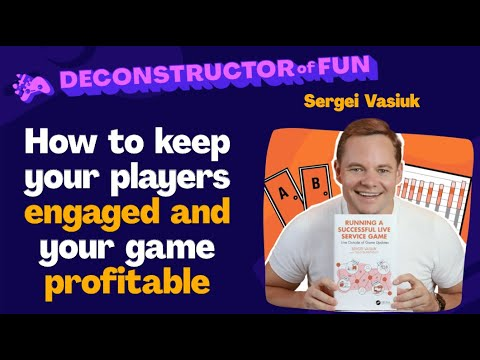
Running a Successful Live Service Game with Sergei Vasiuk
4 Dec 202483 min video
Transcript
hey folks and welcome to the deconstructor of fun podcast I'm your host Mishka katkov and in this episode I'm joined by Sergey vuk Sergey is live Ops director at wargaming and he recently released his first book called Running a successful life service game it's a fantastic book with a lot of uh very practical insights in how to develop uh live operations at your studio and um and in this episode we're going talk about this book but also about the the concepts presented in this book in a very uh hopefully practical way with giving a lot of examples from war gaming and other companies now I think this episode is very relevant because live operations is more important now than it has ever been and live operations have been you know quite important even before before before this date now the reason being is the market as we very well known is very matured when we're looking at PC or mobile and mobile uh we're essentially talking
about games that are over five years that are dominating the market making you know about 70% of all the revenues in the market so in this episode we talk about the evolution of the gaming models going from paid to live service to games as a platform we talk about things like transitioning from traditional game development to live operations model uh we talked about datadriven development player Centric design and retention monetization without sacrificing player experience the importance of community engagement uh challenges of global operations and a little bit of about future of live service games so I hope you enjoyed this podcast uh I hope you consider getting this book for your studio I think it's a it offers a very good mental model because oftentimes in live operations you're trying to solve something really big like how do we get our attention to this how we get monetization to that and in this book it actually gives you a very create
stepbystep processes and and almost like mental models on how to solve bigger problems breaking them down in smaller ones and executing against each individual rather than tackling big uh big problem at ones but yes uh fascinating episode and uh I'm hope you enjoy this this conversation uh and if you do enjoy uh I have a one small ask for you and that is subscribe to our newsletter uh subscribe to whatever Channel you are are using to get this content from uh we got a lot of great content coming in your way and the thing is the bigger the audience the bigger the guests really hope you enjoyed the episode so without further Ado Sergey wuk and running a successful live [Music] service kickass live Ops need kickass tools that's where heroic Labs comes in they just released a massive update to
their sator liveops platform and having done my research I can say with confidence that it's second to none in a single product you get everything you need including event capture player segmentation feature Flags remote configuration AB testing experimentation live events calendar messaging retention grafing analytics and so much more if you're serious about running live services in a game get serious about the tools you use connect with heroy laabs and make some serious cheese with your live Ops sge wuk welcome to the podcast thank you very much good morning Mishka good morning so uh a little bit about Sergey about you so you're uh first and foremost your first time author of a book Running a successful life service game so thank you for sending the uh the copy in advance and congratulations on being published author thank you very much it was quite a journey for me
literally it took almost four years if if if considering the day where I when I decided okay let's just put my thoughts into more structured way so and then and then and then it end up with with the small videos internally and then life op scores for our uh War gaming Force like kind of internal University and then I uh transform into the entire book God yeah so so we're going to talk about this podcast is going to be purely about the book but just for the audience to know you're also a live operations director at War gaming working on the World of Tanks franchise and you've been at War gaming for dozen of years 12 years probably like from the early days of the company yes 12 12 years on the November the 1st 20124 is going to be 12 years when I join when I join war gaming I join it uh when when the whole the whole team was
in in one building like uh only two three four floors no more than three 300 peoples and right now we are like almost 3,500 so more than time times more yeah yeah the company's massive and and a lot of different different games in the same sphere of war and then other important information about you of course you're LinkedIn top voice so that's that's a that's an important achievement uh and if people are not following you on LinkedIn you have actually a really high production value videos that you share on on uh on very work related stuff and I did not know that the fourth thing about you that this is your first podcast because looking at the videos that you've shared on LinkedIn I was sure that that you you know you produce a lot of high quality content and I just realized that this is your first podcast so so welcome on on the first of that as well thank thank you thank you very much
yeah I mean that's true uh I have a small trick for my videos for for for LinkedIn because I just U utilize the the the course that we have inter produced internally but uh technically yeah this is the first uh big podcast for me because you know all internal all all internal streams uh do not count yeah it's it's a big I'll I'll let you on a last tidbit about like me and wargaming before we continue it's uh when when this podcast was starting and I was like we're just playing around with like it would be really cool to get ads and I asked wargaming can I do ads for you for free uh just to kind of because I really like playing World of uh warships and I was like hey can I just you know produce ads and talk about uh because you were hiring a lot at that point you're building the mobile Division and I was like hey let me just do ads for free you don't have to pay it and we'll get sort of like a benchmark
client and technically War gaming was our first uh ad Advertiser although you did not pay for that but anyways so see I mean there are so many the first occasion today yeah yeah so anyways enough of that and let's talk about your your book so I have like you know I went through it it's a fantastic book on live operations and live operations probably has never been as important as it is today uh to you know as companies are launching less games and and focus focusing more on sustaining their franchises so uh I I crafted kind of like a 10 10 different questions about about about the book so let's just start going through them there're a little bit of a high level but I wanted them to be high level so we can you know dive into the conversation and the first one is in the book you you described this interesting shift so the first shift is from a game as a product to games as a service and of course everybody
listening to this understand that's perfectly but then you describe the third shift which is from games as a service to game as a platform so can you elaborate how especially the last two stages of have impacted the game development the game Operation especially when looking at live services so game as a platform right right and me I I just want to start with this small uh disclaimer because in the sake of of clarity I will be an advocate of live service games today especially since I've been working only with the freet topl games on PC console and mobile for the last uh 12 years and back to a question about this shift I always uh use the following for framework so the shift the shift happens uh whether one of the three key areas evolves technology content or distribution so a bit of the
history so game is a product when CS came alone games could hold more uh data which means they could be bigger look better and tell Rich story so this was the era of the physical media game sold in box so for developers the focus was on creating a polished game release it and and then move on to the next title for operations it was all about getting these games into the stores and into players hand then with the internet everything changed games didn't need to be sold physically anymore they could be updated online so developers could keep adding new content and operation started focusing on engaging players to the uh for the long term and monetize them see through battle passes or mic transactions so the
technology allowed to shift from one time product to something that could leave on and evolve over time and then another one technology popped up live streaming which changed uh everything again twitch and YouTube have turned games into a new gener of entertainment content now games are platforms players canot only consume content but also create developers focus on not just making the game but also supporting ugc uh distribution is instance uh and the content is Con constantly refreshed so not by only developers but also by community and for marketing operations it also changed uh the way how we work uh now we are trying more more to build relationships with
influencers and bridging uh the connection between creators and even uh give them Revenue share programs uh or like engagement uh events like Battle of bloggers so this shift this shift has turned games into ecosystem where players can play create watch and connect oh that's a that's an interesting way to put it yeah that that makes total sense and but what what are the ways for companies like like cuz wargaming or you know World of Tanks did not designed this from the get-go yes you designed a game as a free-to-play game with updates from the get-go but you didn't didn't design platform because there was no twitch when you started there was no probably was no YouTube when when you started yes correct how how do you make this switch from a life service game to a platform um yeah like like what's what are the steps is it is it intentional
it's like what do you you know uh the reality that I mean I described it in the book in the book is the is the like out my personal outlook for the foreseeable future uh in war gaming we're still in the the early stage of of uh you know this I wouldn't even say transformation but uh like thinking about it yes we we we we we use a lot of uh influencer management and uh big big uh part of our new meu structure uh and and the players uh come from from our interactions with the streamers and influencers and and the content creators but we are not still in in the same uh stage of maturity as let's say
uh Roblox Minecraft or or fortnite because literally especially for fortnite they change their strategy completely and during the last GDC epic announced that they paid 3002 20 Millions to creators MH so literally with their uh Unreal Engine for fortnite they changed their way of operating life service game and and shift content production uh more toward uh external uh content creators or even small dedicated Studios which everybody read this uh a lot of news that uh uh like every week or every month uh a new studio start their operations as a a game make maker for uh epic so en gaming we still at the beginning of this of
this journey yes for in world of tank we have modes uh we give our players an ability to create the otes and and uh twile in a bit World of Tanks uh but uh still uh we we have a long way way in front of us yeah yeah it's it's interesting case with the with World of Tanks or even War gaming games like I mean most of your games barring Master of Orion and they're very much tied to the historical facts and trying to be as authentic as possible correct um and and so the way why we we even have a option in in the client where you can just switch off all not historically related content yeah yeah exactly so so the sort of a leeway to to go to a fully user generated content I mean you do all kinds of like funny events and and all allp type of stuff that that that are
you know uh quite sci-fi or imaginatory but nevertheless the it's very tied into to the historical fact so it feels like like that's even more of a challenge to make it into a fully user generated because of the constraints that the uh the setting sets so U that's why I'm kind of asking like how you're thinking but i' I've watched your streams like every time because it's those games are so complicated and so um um competitive you're incentivized to go online and see how to play best against different tiers uh and like now I'm tier six now I'm tier s what should I be doing with the Japanese tanks with the American tanks with the Soviet tanks and so forth so so it is like that part I think is is very much uh helpful for the platform creation because it's competitive because it's complicated and you want more information you want to you want to find a ways to win and that's when you go online and so that that probably kind of helps yeah yes and actually this is this is one of the one of of the reason
why uh we uh you know had this transformation from game as a product to game as a service is because there are I have like a four uh my personal four CES for wise successful life service games actually succeed the number one is social because players want to play with with friends another one like like you said skill players want to master the game and be able to dominate which gives you the the the third C status because players want to to gain a rank and you know all of these three C's uh leads you to the sun cost when you spend so much time emotions and money you don't want to leave so then this is this is the reason why we see uh last year the New Zoo they released their uh research that the for PC games the average year on the market is around 10 years yeah yeah they oh actually funny enough
I have it open here according to newu like when when you look at the top top 10 biggest games in terms of ma um you know the the the only new ones are the the latest iteration of FIFA or you know Counter Strike 2 but pretty much everything else is like Grand Theft Auto five Minecraft Call of um fortnite you know the latest Call of Duty but then it's robloxs rocket League Counterstrike Sims Apex Legends so the games that have been launched for at least 5 years ago are still on the top of ma and that that kind of creates a difficult setting for new games to enter that's true this podcast is brought to you by apps flyer in today's Digital World understanding your apps Journey from Discovery to download is more than just insightful it's essential enter apps flyer the leader in Mobile attribution and marketing Analytics that allows you
to measure the full potential of your marketing efforts making every ad dollar work smarter with apps fer that's your new reality dive deep into Data driven insights that reveal exactly where your users come from and how they interact with your app Apper where your app's potential meets performance now well well let's I have uh many questions that but that was that was interesting kind of like from the live service to platform what you mean by that that makes total sense um but how about like you know transitioning so since you worked at at War gaming for entire of entirety of your career so you kind of never had to tr TR transition from traditional game development to the live operations I'm sure the live operations has tremendously evolved and looks totally different today than it looked back in the days uh but nevertheless that we've seen especially during the peak covid years when the traditional big Publishers
were investing heavily into games as a service and making that that trans that incredibly expensive transition from their typical uh box products to um what they you know ended up usually going is either full games as a service or uh a paid game with microtransactions followed through it like what advice would you give to these these type of developers that that are making this type of a shift when the studio has previously known for top tier box products and now they're you know turning their franchise to a live service one right uh look um uh when you when you said that uh my entire career was was with with were gaming which is true I remember that uh when World of Tanks was released in uh 200 10 uh we probably was the the
pioneer of uh freet to-play games and fortunately or unfortunately for us we we started uh creating all of these tool sets uh I remember I joined I joined web Department which was responsible for for developing all of this tool set we we even did call it platform the word the word life Ops uh appeared only in 20 16 17 so we started even before this this this word even existed so uh but you're right uh uh I've been working with only with the life service game entire career so I can give like the in in my book I have like a seven seven points uh or or guiding principles how I call them uh that that help uh that that that help uh students not only uh
to to go from box products to life service game but also if you want to start uh a studio uh which uh which will develop a life service game there are seven of them so and and and the first one is that uh life service game never really ends it's always involving it's mentally tough and I've seen so many brilliant folks uh joined wargaming who were not ready for the constant content production trade Mill and ended up quitting so that's why number one guiding principles is life service game evolves continuously so you you have to embrace change and stay agile because players engagement want always follow your intend and design number two flexib in game system designs make sure your system let the
life hops team and other operational teams and even internal development team teams make changes easily like adding events or updating your uh storefront without needing deps to jump in constantly so number three is commitment Beyond launch real work begins after launch Keep creating content to keep player engaged so devs and Ops need to work closely together here number four of course data let's player data Guide you you won't get uh it right from from from at first for sure but uh keep an eye on both feedback and the hard number to improve decision making uh number five Revenue follows engagement so if players are having fun your uh first time user experience is
smooth The Meta game adds dep and your progression system keeps players coming back the money will follow and number six is one of my favorite because quality perception is subjective what one group of players love another might hate so you can't please everyone so focus on on decision that push the business and your game forward and number seven which is uh very uh you know um related today is manage cost smartly because life Ops is ongoing so optimize your content Pipeline and keeping cost and check so again in the end in life Hops and life service games it's all about the loan game not Marathon uh so the marathon not the Sprint so keep evolving and keep players engaged and you will do great yeah it's
a lot easier said than done it's like uh I think the few points that you raised like commitment Beyond launch being data driven and keeping costs and check that has the combination of that in my opinion has proven to be the most difficult hurdle hurdle to the traditional box product developers what I mean by that is like you create a certain type of a DNA when you are used to launching these big games once in you know three five years and cashing in hundreds of millions at a launch and that DNA is hey let's push really hard let's create an incredible narrative uh really push the boundaries of the of the hardware deliver something get the Metascore up really really high and get the initial sales incredibly high and then ride that long tail to profitability and the checks and the bonuses and and so that type of approach when you change it the other way around is very diff we've seen a lot of these
Publishers basically cut their live service games at the moment when they enter the market because they're not seeing incredible return day one and they're like oh my God this is a piece of we need to cut it it's a turd this is done we've seen games being cut in soft launch we've seen games being cut right after the launch where where they've spent so much money before launching the game thinking that the launch is going to you know or banking on it that the launch is going to bring in the massive amounts of money back even when you look at the games like fortnite that really started making money years and years after the game had been launched they find fin finally found their tride right uh it's it's somehow the the they they still very much live because the whole organization is built around that type of a process that type of a planning the marketing team the finance team everything is built around around you know projecting the revenue from the launch and then going forward so so I think um I think that's
that's a big part and the other one is like being data driven a lot of these Publishers are in my opinion are very sensitive to any kind of negative feedback from the players incredibly sensitive and sensitive to a point like of course you need to listen to your player base but they are sensitive to a point where they can't really filter of What's the magnitude of the problem you know few bad feedbacks like even had a early days in roio like we would have few bad feedbacks on a on like an app store Page and people would freak out and panic that this is horrible and you're like guys we had like hundreds of thousands of messages and reviews and you're looking at 10 like let's let's have like some kind of a perspective and that's the other part of like being very data driven is understanding different data sources putting things into perspective and right and and approaching everything in a very measured way and I feel like all those elements like the commitment beyond the launch being data driven and keeping
costs at check both during the development and especially during the U the the you know launch the postlaunch phase the live service live operations phase without that like it's it's the DNA that that only companies that have been operating in free to play have and others really can't copy even if they read this book am I right yeah that's true I like I like your analogy with with DNA because uh literally and I I don't want to say that it's it's easy I've been working for 12 years and World of Tanks will turn 15 next year and the core of the development team and the operations team uh also with us for what 10 plus years it's another mindset so we always we always at the age of of chasing uh our players in in a way to please them so and uh as I said literally it's it's it's mentally very
hard it's our road map it's not like a three four years road map to release one box uh game have a big party uh you know celebrate success no Everybody's scared release day because this is only the beginning of this Marathon for the next I don't know 12 15 20 years yeah yeah it's uh it's it's it's really fascinating I've been been following and and kind of like working with with both type of companies even even now it's uh it's do do you think the other way around would be easier like let's say wargaming would release a box product uh this narrative game by this female protagonist who joins the second world war and she becomes a tank commander in the biggest battles and you kind of go through with her like like would that be possible like would you fail at that or would you just release too early and be like you know what we'll just update it
in the next one and we'll figure it out and we'll listen to the community but like are you able to to launch a Perfection or is it more like you you launch and figure out yeah the the very very interesting you know idea and believe me there were so many conversation about you know box games in war gaming but again back back to the back to the point about uh transition to game as a platform so in world of thingss we already have these box games because we have a big events for Halloween or for a so-called waffin trer or uh we have a collaboration with Star Trek so it's literally like a small box game inside the game so it's event for two uh weeks with the pretty clear narrative so you have to follow follow the the the pass you know uh progress through the through the through the uh progression system uh we already start started adding a lot of narrative to
this so literally technically we already release a lot of box games inside World of Tanks and this is I believe this is the future for for the life of service so I mean fortnite literally it it it's it will be it will be like a App Store uh for the small games for the small fortnite games or SM Islands inside fortnite in the future yeah yeah that's that's their vision for sure they're pretty far away from that Vision in practice but uh you know like uh I've talked to from a few ufn developers so it takes a little bit more than a vision to get that to get the other platform 300 plus million sounds very fascina yeah yeah yeah well hope hope it evolves uh to be much larger what it is right now um kind of switching back to your to your book um you wrote about liveops in modern gaming and I'm going to quote you you said by creating a connection with the game and fostering strong Community more players are motivated to participate in the
in-game economy so you definitely emphasized the importance of live Ops and maintaining player engagement generating Revenue but how do you see the role of liveops or do you call it live Ops or live Services which one do you call it actually internally We call we call it liveops yeah okay the role of liveops like evolving over the next few years particularly with what you said the rise of user generated content and this Community Driven game ecosystem so so what's the uh what's the evolution that you're seeing uh yeah I like I like word uh people I will elaborate a it uh so the the internet has always thrived on on the content on the U content made by everyday people so with the platform like uh wkipedia uh showing how powerful group contributions can be like life hops is evolving and I see the future of it as a we call it
people's life hops where the community has way more control over the game's Direction so as I said we already see this with the games like Minecraft Roblox or or fortnite where players are not just consuming content they they are creating it so and in the next few years Studios will need to fully Embrace this cber with creators and even sharing Revenue to keep their games uh involving through community-driven system and it's all about attention and and to keep players uh attention we need to create interesting content and the modern way uh involves engaging dedicated fans and give them opportunity to earn a living through their passion uh as you said that the future of gaming lies in serving as a bridge between creators and
players so in my book I call it attention ecosystem because it opens the door to creating value from the attention that creators generate for the uh audience there are three main groups in these ecosystems players games and creators and you ask me how do I see the role of Life Hops and the answer in the answer that life hops should uh facilitate this interaction and there are three key factors play a role in the growth of this attention focus uh ecosystem Factor number one time because this is the most valuable think a players can spend in return this attention ecosystems should propose Rewards or even meaning that builds virtual identity and Factor number two loyalty and this is the most valuable thing that a Creator can
provide in return ecosystem should offer a wide variety of experiences powered by Creator who earn a living by bringing them to life and the number three three uh the audience and because this is the most valuable thing a game can have and in return the ecosystem should facilitate attention out their players Thea professional Gaming Community including content creators H this is interesting and in practice like I was thinking about when you were talking about this uh like 12 years ago like in 2013 on Clash of Clans team so in the earliest days of live Ops and mobile I remember the uh the updates were you know like three three elements of like what the update has to hit and in the beginning of a Sprint which was about a one month uh at that point was like okay so what are we doing for revenue and you would put in like you know some new piece of this new piece of that or maybe a new unit or something and we know that it will drive Revenue
what are you doing for retention and he might have been some kind of a fix um something that is bothering the people or or added content maybe towards the end but that's usually a retention piece and then the the third part even back then was what are we doing for the community and and and that was that was like like you know it could have been a very small piece it was like additions of different flags or something but it was that information came from the uh the community manager and it was um a lot and then later on through the interviews with the um with the most engaged guilds and so forth so something that was always catering specifically to the need of the most engaged players who are in many ways an opinion leaders and this was 12 years ago so I can only imagine how much it has involved since since since those early points and and so in practice like how do you cater to to uh to you know to the ugc part to the community part like how do you structure your live
Ops I would say that you know we have a a couple of uh directions or categories of uh usual Genera content so uh the number one is obviously uh our main content creators who are streaming on on uh twitch so because this is the the the most recognizable players with a very broad uh exposure uh on on the platform so and uh we we have a lot we even have a dedicated team which uh day by day uh collaborate with with the guys so we are and the main um goal for for this uh team is to find this balance uh between what what is good for uh creators and what is good for for the game so the for us as for the game developers uh the the
main uh the main focus should be on entertaining our players give them more content outside of uh World of Tanks because literally we are fighting for the two hours per day because there are only 24 hours at all so we have to eight hours to sleep eight hours for work family blah blah blah so we literally have two hours and there are so many competitors Here YouTube Netflix so gaming is on literally in the the red ocean so for us it's it's very important uh that our players have a uh opportunity to be within the World of Tanks University while they outside of of uh game client so that is why uh this content for us is very very important we support our creators not only with the with the drops uh which gives more incentives to our players to watch their their streams but we also listen to them so twice per year we even have a offline
uh Community Gathering um events the previous one uh was in in the bonington museum uh tank Museum in the UK when we celebrated the 18th anniversary of Normandy Landing huge event I mean literally huge we we even donated 20K uh to restore the unique British anti-tank uh vehicle and we also gather our our uh uh content creators and share with them the the plans for for the road map of 2025 and gather feedback and understand what they when they uh want to see what they want uh do not want to see so and U another one was during the recent uh twitch Co in in the US so this is it's literally like a building relationship with the with the people man management so this is one thing another one thing
is uh in world of thanks we have mode mode portal so when we support uh creators who are you know literally developers who create these modes and uh even with in collaboration with other uh big streamers especially before in CIS uh they had a lot of uh internal events without any uh support from the development team I mean uh world of thanks development team uh who just uh these creators helps other streamers to organize their uh internal uh events for for for Their audience so this is another one thing and yes we're always trying to uh find a way how to uh incentivize uh Flesh Blood to join uh this uh uh this party uh so yeah I would say that this is these are the the three main uh directions got it well that's that's a a
lot a lot more work than than back in the day so uh definitely tying into the real live events and keeping the game relevant as well as connected with the uh with the community um the the other interesting part so kind of jumping into the question four is is about being data driven in development step into the future of game monetization with exola the premier partner for game developers seeking to expand their reach in Revenue exola provides a robust Suite of tools designed to enhance user acquisition maned subscriptions and streamline Payment Solutions worldwide unlock new markets and maximize profitability through their customize secure payment architecture and dedicated support team exola powering game developers to achieve Global [Music] success this something you mentioned already with what the traditional
Publishers perhaps have a challenges with is being data driven and um and I'm going to quote you you wrote in your book saying liveops is a practice of inducing frequent and data driven events to players without involvement of the game development team aiming to maximize player lifetime value so this is an interesting uh definition of live Ops because quite often like I've I've heard both live Ops and live service being used with with liveops is something small you do on the server side something that the uh that the product Community team can do basically with the help of perhaps an artist or two with with some custom images but you can use your Central Tool Set to to drive those changes basically create an event where you know everybody has one Health Point for example and now you have a one shot one kill event that is running for this weekend and you essentially created a new type of gameplay and you can quickly from the uh from your Central Tool Set also give specific prizes and by adding Uh custom images you can promote it
through social media with the with the community etc etc and that's quite easy for you to run without any help of of the developers and and kind of leaving them to work on the the upcoming bigger bigger features so um going back on that like data analytics play a big role in in your approach in live Ops um could you could you help to discuss like like could you basically discuss on how it shapes the decision- making in game operation and how it helps you to predict player behavior and enhance retention and monetization basically like how do you use data in a strategic way ah this this is this is very very very complex question I know what I what I what I like in your question is that you put uh very very good emphasis on on the word of decision making because look in in 2024 uh you you you won't surprise
anybody on the planet s and especially in the gaming industry that uh data is live blood of of uh game development or or life Ops and there are so many uh platforms that already help you to to collect uh data and and and then work with this that's why let me uh talk here about about uh the the key point of your question about decision making because it's not just zero1 it's a framework and then life service game constant uh optimization is the key and that data help us stay on a track and and in my book I outline um three parts of this framework uh the first one obviously ask why before you start uh so every time when you launch an event or feature or or releasing new content uh we ask why are we doing this
so This helped to set the clear goals and challenged assumptions then check did it work so uh when when you finished uh with with the event or uh I mean the the time pass uh for your uh new content in our in our case let's say I don't know new tanks three so uh did it heat our goal if not we learn from it and adjust and again it's back to to your uh point at the beginning uh every time we are not like if if we do not see the result that we expected doesn't mean that uh we uh should throw it away and do not repurpose and think how can we uh make it better in the future and my favorite saying uh here and this is kind of another one guiding principles uh
torture the data and it will confess to everything so when when when data is complex it can be uh misused to please shareholders or stakeholders or whatever yes and that is why it's so important to uh have peer review so getting another analyst uh to validate the uh methods or uh findings as a key uh to keep decision making honest but let me give you one example so and back to your point about the the uh pred predicting player Behavior and the role of Life Forks while predicting Predictive Analytics is fascinating we will leave it uh aside for for the sake of Simplicity of this discussion it's crucial to view it in combination with business object Ives offers and the tool sets let's take CH prediction as an
example MH so an analyst might do a fascinating job accurately identifying which players are expected to leave let's say in two weeks however this only half the job of chor prevention for it to be effective the life hope team needs to create multiple offers addressing various assumptions or reason for CH work with localization QA implementation execute this campaign then run analysis on the experiments only to find out that in the good case we've managed to retain just a small proportion of players so if the organization is not prepared for experimentation at the scale it's it's drive us back to the life
service game mentality Predictive Analytics won't be able to uh achieve its full full potential H it's a this is an interesting point with with the data it's like people sometimes I you know felt that the companies that the data was put in on a some sort of a pedestal that every answer can be found through this vast dat poll that we have here if only you can understand these encrypted messages and these numbers and make decision through them and only the true Wizards are those who can understand the data scientists as they've being called and then there's nothing wrong but but the way of uh the way I've personally I'm curious what do you think about this but the way I've personally thought about it is when we're talking about data and decision-making there are three very important sources of data and one is something that you know we're discussing now which is the analytics it's what's happening in the game it's all the predictions all the analysis it's what
you know it's it's the mirror of the of the actions and that that can be broken down and analyzed in a million hundred in 100 million different ways through never ending AB tests um and and that's all good but then there's other two so one that we've discussed is is the uh the feedback that you get from the community which also affects significantly your decision- making that sometimes is visible in the actual analytics but sometimes isn't because it's a qualitative data and it could be signals of something that is happening in the future it could be it could be signals of something that you need to move towards or or investigate or signals that you shouldn't be doing and then the third piece which is very important and we always emphasize it in the beginning and tend to not talk about it towards you know later phases is the variable which is your team's gut feeling how good of a developers how good of an experts they are in what they are doing how they understand the market their competitive products and their own product and often times like the
combination of these three data sources Community analytics and the team's gut feeling as experts in what they're doing result in the best possible live Services throughout the time what do you think to to To Tot totally agree and I I I even call it you know the the face of maturity of any organization and at some point it can be be uh on the over data driven mentality so I joined War gaming when when we even didn't have any data stores in place everything was in in the spreadsheet and then uh slowly slowly we got to the point when we collect all data you know create all of these dashboards visualiz visualized uh you know the the data and it it looked perfect and yeah we started thinking all
right now we have all data possible and we can you know Drive our our products and and the campaigns and and the life opes into into the right direction but this is literally like NeverEnding uh rout race I would say mm because uh at the end of the day like you said uh it it will be be a point when if you want to sell any idea that you feel I mean my my gut feelings or my team feelings or I mean I read it on on on redit or or or saw it on on during the twitch stream I have to prove with data that it will bring some value but how can I do this if it's a new idea yeah and you know when when you have like 10 ideas with with the with the an analytically proven data and 10 with the gut feelings I mean we were at the point when when the competition was uh 10
Z so and and then we literally we decided even in my team I mean I in my team I have a dedicated life hops analytics team which right now uh fully uh allocated not to like a historically reporting but find the way they they they drift our personalized uh offering system and and recommendation system and um the way how we help our players navigate through through the game so I ask them look there is data you can you can fight whatever you want but if you feel that you know this particular experiments will bring in the best case scenario uh good good good result but uh in the in the good case scenario uh provoke us to to to think about any other directions it's also good so take this I don't know 10K uh players and check your idea you need to bring me uh justification of data so
yeah you're right and and again this is all about the decision making and and the and the mindset data is good but but if you over datadriven you you will end up with with the very very slow uh pace of uh Innovation and you know we are all smart people I can I can I can justify any my ideas with data Again by squeezing them but what what the point so completely agree uh if if you if you do not add this uh gut feelings or Community feedback to your uh very binary uh data results uh it it won't work yeah yeah and a lot of Studios like there was there was this sort of a you know I worked at Zinga and and Zinga was sort of a spearheading this very datadriven approach uh that was of course coming from back from the Facebook days of Java Games and the times you were really fast at iterating and everything was AB tested there were
so many AB tests running at the same time and every PM if you would ask them could say well this one increases this by 14% And this one increases by 28% and and all you know everything was measured but nevertheless like I'm curious to hear what you think about AB tests overall uh what what I noticed and from my own experience as well like most of the ab tests didn't result in the same type results when you know when you first AB test you prove that a is x amount times better or x amount of percentages better than b and then when you put it actually in the game you're like okay so where's the uplift like this was supposed to be 28% better 32% better and there's practically no uplift when when you integrate like I've had AB tests that were significant uh and had significant Improvement but they were you know they they were were quite game changing like in one of the games we we AB tested whether we should have
fog of war or not so that quite significantly changed the gameplay and that had an effect in in the uh in the long-term retention as hyped but most of these sort of a smaller tests never kind of really came back with anything better even even I'll give you one one more like longitudinal AB tests where we tested throughout years of whether sales actually increase the revenue of a game or not this has happened in at least two different companies that I worked with in both of these companies it was proven through AB tests that sales do not increase the overall revenue of the game they simply change the purchasing patterns so people pay at different stages more and less on the next week nevertheless both of these organizations continue to run sales despite having proven that that sales do not change the overall revenue of the game so what's your take on AB tests uh you mentioned very very very good point that that's uh
you know when when you have a lot of data you want to AB test everything and it's it's uh bring you to the point at least it was our case I mean World of Tanks uh has a huge audience mainly in in uh in in you North America China and and and Asia but if you run a lot of ab test and the essence of ab test is is to compare A and B and uh you have to have control group otherwise how can you how can you uh compare all of this stuff and and we realize at one day even with the with the amount of players that World of Tanks has that we cannot launch more AB test because literally we ate all the audience and all of them are was was in the in the control groups cool down buckets so uh that's why we are using yeah we're
using AB test uh especially when we have uh some hypotheses let's say I don't know we we see that uh this is a good trigger to to to send a offer let's say I don't know if if a player uh uh level up uh level up some specific tank and we have uh I don't know 3D styles to to to offer but uh nobody knows where these 3D Styles uh are in in in in the client so this good good trigger to to to make a offer and there are a lot of such a stuff so we launch uh run some some AB test and if we see that uh for uh this 10 20K uh uh cohort there is a statistically significant result I mean the the target group uh is better than the control group we just put it into the bucket of all our campaigns and there is one uh big methodology which uh
measure the output of any personalized offers or campaigns and if you take a look on the on the dynamic during the year there is spikes even even sometimes it spikes when we have a big sale for for the overall cluster then as you as you mentioned yes if we oversaturate our players with the content with the sales then next months it's it's uh you know less I don't know 50% 100% whatever uh than than than the previous months but it doesn't mean that we have to switch it off so if it's proed that that uh there is there is a there is a uh uh difference or its Trigger or its software works we just leave it for for for one year at least and then and then like once per year we uh arrange some some uh um you know review of our our campaigns and offers aligned this
aligned with the new pricing policies or new available content but yeah we are not anym uh measure uh each campaign through the ABT ab AB testing lens and uh waiting that this particular compan will bring us the million this is the big bucket of of everything okay got it yeah yeah that's a that's a good context to it um kind of moving forward talking about something that that we when we talk often about live Ops we talk about money but the most important part is is as you mentioned in the beginning like you know the revenue comes through player engagement and player engagement means player retention over time and that that it leads to that successful business pattern so uh you wrote in the your book um quoting player engagement has become an aspect of the gaming industry as it significantly impacts how long and
deeply players immerse themselves in games this is not just a passing Trend increased engagement leads to player purchases demonstrating its power in enh in in enhancing the gaming experience so as we all know like retention is the key pillar of live Ops um what are the most you know this is what everybody's asking but what's the most effective strategies for the developers to ensure that players stay engaged in their games over a longer period of time I mean everybody's trying to answer this there's many magical figures in Mobile I think it's been given that D30 at 20% is the magical number like when once you get 20% of your players playing on the 30th day then you're good to go that looks like a hit so so what's what's kind of like what's what's your take on this like how do you approach retention by the way thank you thank you for this question because when I uh Was preparing to to to to this podcast I even uh published my uh post
yesterday with a hashtag uh retention and yeah you're right I I I don't want to speculate about this 20 30 whatever numbers because it's always depend on the on the game it always depends on the on the way how particular Studio measure this this uh uplift uh compare what's with with others uh events so and because I uh created some some uh list or stepbystep uh guidance if you want to boost your retention let me just uh share this 10 um tips uh that I would I would suggest all uh Studios or or games who want to boost their uh retention to use so number one do not mislead so align your game play with what's
shown in the ad number two interesting improve the tutorial make sure first time user experience is simple number three hook players early get players excited uh from the very beginning of of of your game playay because game play is is the essence of the game so if you don't have a fun game play so you don't need to move forward with other uh seven seven uh tips so next uh number four set clear goals ensure player know what to do how to progress and and how your your uh leveling system uh Works number five always adjust difficulty so constantly balance the game plan because sometimes uh especially when you see that that the some cohorts of players uh became more skilled you have to balance your game play because because otherwise for them it won't be it won't be so challenging
for us it won't be it will be very challenging so uh number six this is where uh data came to the stage fix uh CH points so use data to fix and uh to find and fix uh drop drop off uh areas number seven try to work with the progression so at progression System including leveling upgrading unlocks because this is this gives your players you know the meaning to uh to stay in your game number eight it's all about uh the content because you have to keep it fresh so introducing new mechanics uh then regularly uh release uh new new new content for for the players rewards is very is very important so number nine make rewards valuable not just uh use useless uh you know and not very very appealing skills and number 10
back to our uh community-driven um you know systems enable social features let players interact through Clans platoons leader boards uh and and and in a different uh PVP uh b battle modes so yeah these are 10 um areas that I would say everybody should should work if they want to boost retention in their games H really really good list I would um I would contest one I I agree with everything but number two is tutorial so I've done some AB tests going back to it where I've removed tutorial all right yeah and this was from a from a combat PVP games and notice practically no changes between having a tutorial or even not having a tutorial and I've had the similar type of experience with with uh with multiple different was was it mobile game or PC yeah mobile mobile yeah yeah and um and
it was just a you know it's just a may be test it's a show basically it was it was around um the reason being for those type of test was to show how much effort should be placed on the new tutorial because as you know working on tutorial or firsttime user flow as we call them or first-time user experiences is a lot of work work a lot of work testing etc etc and so I wanted to have a number of like okay so here's what's no tutorial here's you know with the tutorial how much better are we going to get and and that was my my attempt to just just to gouge the number and the number was practically close to zero all right okay very very very very interesting I mean in in our case it's it's uh the opposite I mean yeah because you mentioned you played uh wargaming title and they are literally very very complex especially for for nubis when you go to
to hungar uh there are so many buttons and and and the tech trees and the regimes and and you know elements of of uh of the interface literally players get get lost easily so uh that's why for us uh and and we and we saw the the uh up lift in terms of uh we have a a couple of metrics which we use to uh check the the onb boarding process so because world of thingss is a heavy game I mean you have to download it and uh it's it's also the the point when where we uh lost uh players uh because sometimes you know you just don't have enough space on your on your laptop or or or PC so that's why we have we have a uh uh metrix during this onboarding
phase which is first login and first btle I mean real real btle uh not not uh not uh tutorial btle so and when we extended uh the not not extended uh renewed the tutorial and uh included more kind of uh you know like also story-driven stuff so not just okay take your tank go go there go there so we saw that that the the uh conversion from first login to the first bottle with the appropriate uh tutorial uh better than than than the even with the previous one I'm not saying about without without any tutorials so again I can I can believe that for for some games uh probably for mobile I I I have never I have never worked with with the with the mobile titles a part of world of things bed which is yeah technically mobile but back then it was uh uh literally the
transition of of PC World of things to mobile with with all pro with all of system prog progress system and and and and so on uh I would says that for PC and the console games uh the the tutorial uh make this different yeah got it makes sense makes sense I would just say test it and you will know what's the difference and that will give you uh a certain gouge of how much you should invest into improving your Fatu because that is a never- ending process um in in my experience so um kind of a like just a couple of more questions about one is like monetization without sacrificing player experience so this is an interesting you know approach because often times when we talk about monetization especially people who are not very familiar with life services or uh have a very you know anti- free-play attitudes are are you know referring to this predatory mization tactics and uh
I'm going to quote you in your book he wrote engagement in gaming mirrors the Dynamics of real real life relationships where ongoing positive inter interactions result in outcomes such as loyalty cross- purchasing and active selling and co-creation so the sort of a the challenge for live service games is balancing monetization with maintaining that positive player experience how do you Ensure monetization strategies um like you know the inup or microtransactions uh and battle passes don't alienate your player base and cater only to the whales while leaving you know the uh the 80% of the player Base outside of of um you know 80% who are never converted outside of the uh the fund yeah good good good point and yeah Balan and monetization uh without turning uh the game into pay to win is tricky and uh you're right about the whales uh and this is the first thing
that I want want to uh share my opinion is don't just focus on your top 1% of Big Spenders Wells yes they they bring a lot of money but designing the game for them uh can lead to play for pay for power stuff and uh that's where uh things go go go go wrong once the the game started the player players in the game start feeling like pay to win VIP where pending cash bit skill you will end up uh losing a lot of your uh regular players so it's it's a it's a bad Loop uh that's uh will just shrink your audience so instead and actually uh most of the big life service uh games in the industry uh do go for
Cosmetics reward think like skin cool avatars or customization they uh let players make the game their own without giving anyone an unfair age so that's way uh whether someone pent or or not everyone feels like uh they're on the level of uh playing field so yes keep it fair focus on on the Cosmetic and and you will keep players engaged without driving away those who just uh want to play and and have fun yeah yeah that's a that's a good point and and it's especially because you need that broader audience for for the people who pay as well to enjoy the game because they won't be enjoying if there's yeah exactly exactly there's a there's a reason for them to uh to seek that
status inside of the game if it's if it's large enough um I know you have to go uh to some but I want to ask you like one sort of a last question and there's the game the book is really excellent and and I recommend everybody to get it we We'll add a link in the description as well um but like one of the things that that you're working as a war gaming and and in war gaming and and writing this book is is the challenges of having these global operations having a game that is catering for the entire world from from Japan to the US from from Eastern Europe to Western Europe and uh like you have players all around the world and um how do you how do you set up the operations to run live Services games globally uh and especially tailoring the experiences to different regions like you talked about the uh the D-Day event you you have similar type of events probably in in in Asia in North America Etc and and what have been the sort of the biggest challenges face in adopting these liveop
strategies to meet the diverse countries or cultures and Market demands that's right the INF famous uh Regional relevance how we call it uh yeah yeah and let's put it this way when especially when you're doing uh well well there's there's both type of games like some of these things that might be big from our perspective are like not interesting at all for for Asian audience like what like for example we might be super in other games we might be super excited about Vikings and if you're somebody in Japan you're like what are you talking about like that I will give you I will I will give you example from from World of Tanks and youis I I promise so and and yeah we definitely got got caught in in in in the Trap I mean the Trap of regional relevance when we first started we spent
uh we you know spent a lot of time recreating visual designs for different regions uh or using uh you know super specific cultural visuals that couldn't work anywhere else and it made the production proc is crazy and uh the cost Skyrock our assumption was that players would prefer Regional uh content over global events but that wasn't entirely right for example uh we had the 18th anniversary of Normandy Landing this year a huge historical event for for Europe and and the us but surprisingly players from China were really active during that event too on the flip side we uh thought that Lunar New Year would mainly uh appeal to Chinese and Asia players but everyone globally love it so the word uh
the the world our you know the reality uh became more Global and the players are into that I'm not saying you should ignore Regional moments like uh the force of July which is huge for for our na players but if you can make events more Global with the local wipes you can use them everywhere take uh Us Independence Day for example we launched an event uh which we called highway rock where players leveled up uh four four um classic cars from uh from the 16s no us Flags no heavy original visuals it works because it had that local vibe us players appreciate it but was still familiar to Global
audience of course you've got to be careful with regional uh relevance during Global celebration uh you won't surprise anyone uh with the green hat for um St Patrick uh in the US or or or you but in China wearing the green hat is uh slang for a women cheating on her partner so yes definitely do not use that as a game asset and it's all about finding that sweet spot between Global and uh local flavors H yeah so think think globally at locally is that the uh I mean classic classic yeah well well the world is it eventually the world is quite globalized in many other things but it's kind of like the understand and then and when running these Global Services like do you suggest
employing like like how do you keep tabs on different countries like do you have sort of a country Community managers or like how do you understand what resonates to different geographies yes we we we have we have a different Community managers and even in in Asia we we have them more local oriented I mean the the the dedicated uh I'm not saying the team but one two guys for Japan for Korea obviously for China uh you know better than me that you cannot go to Chinese market without local Partners so we we have our local partner who every time guide us with this green hats and and and everything so yeah you you have to uh uh incorporate this uh local local uh wisdom from from the uh people uh on the
field but uh do not hesitate uh to think that uh Regional event won't be uh interested globally and again uh and right now it's it's even more important it's all about content production so we cannot anymore uh create a uh special Regional event for for each region if to create one adopt it make it more like uh uh with local VIP but uh globally recognized and then transform into the into the sequel back to highway rock so first year it was highway rock with with the cars then it was with the bikes so and it was like a sequel of events and yeah this is like American americ style but uh everybody all started to recognize it so and and there are so many sources of uh inspiration globally
that you can embed it in into your game on one hand uh with the right timing you will uh please local audience that you do not forget them but on the other hand you literally educate uh the global audience with what's going on with with uh with with their friends and and the peers uh in in other regions hm that's fantastic and yeah did we did we not cover something you wanted to cover during this I know we have a very limited amount of time but did did we not cover something about your book that you want to talk specifically or uh no I just I just want to probably uh explain why you know my this this this book uh you know has four Heroes uh you know the the players creators games and and and platform uh
because literally it's it's it's all about uh this four four four four four guys uh folks and and uh in the industry right now so and I see the future of life service game as a platform where players creators uh games and and Brands coexist support each other and uh generate uh value for everyone fun content for players uh earnings for creators brand awarness and and promotion and bright future for game game Studio that the you know this kind of magic uh mix that makes everyone happy including uh uh devs and their families fantastic Sergey I I want to I want to encourage everybody to to get this book for their studio so running a successful life service game by Sergey vuk I mean it it's full of these very practical lists of of uh almost like
mental models that you have to dive in and so when you're going through your live operations it's just a it's a it's a very practical tool that helps you to structuralize your thinking process which is very important because oftentimes we're solving these big problems and in live Services It's always important to break down the problem to much smaller subsets and solve those individually One update one push at a time but it's hard because we think about that big problem that we have to solve right now with the next big feature and so this type of a book is is in my opinion excellent and something that I would have liked to have about uh 14 years ago when I started or 15 years ago when I started as a PM that would have helped me tremendously so if you're in this position not even starting but just just anybody working at a studio either you are in Live service mode or you were thinking about um building a studio or transforming to live Services I really
suggest this and serge with you having 12 years of experience from live from live Ops from wargaming which kind of like you know in many ways invented it on PC and then brought it also to consoles and mobile um I think it's a it's a fantastic read full of insights and full of very practical uh mental models to to use in your day-to-day work so thank you for writing this thank you Mishka for uh kind words uh and you know uh I also want to share that the Constructor of fun probably was the first uh uh community that I joined and read it you know every time when you when you send it and when we met in person at Gamescom this year and you said look let's do podcast I mean come on really the guy who actually came to my uh inbox with all of this uh
interesting stuff around around the gaming industry propos me to have a podcast and it literally my first po podcast so again thank you for you for for invited me to your podcast for being here and again thank you for kind words oh thank you and and thank you everybody for listening again Link in the description uh highly recommend this book for everybody in gaming even Indie Games just get it so uh so thank you everybody and uh have a great day thank you byebye
Auto-generated captions from YouTube — names and numbers may be misheard.




















Comments