VideoDeconstructor of Fun
From Casual to Complex: Trends that Shaped Gaming in 2024
2 Dec 202467 min video
Transcript
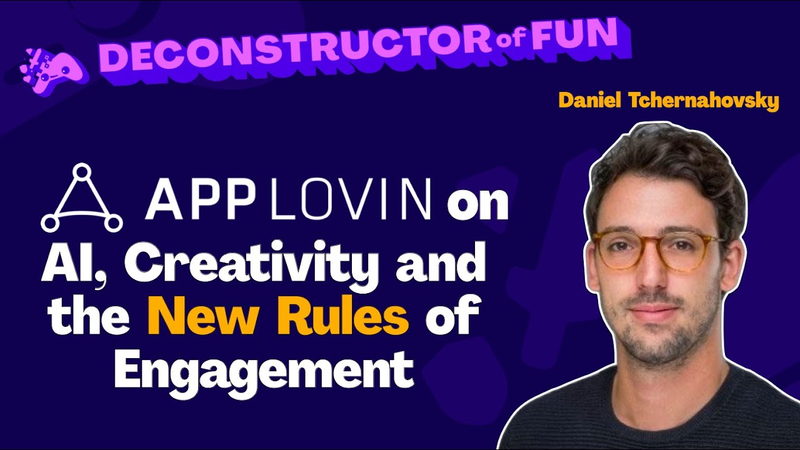
[Applause] elevate your game development with heroic Labs The Cutting Edge platform for building multiplayer games and you need an edge to be successful in today's gaming landscape their scalable Nama server empowers you to create compelling real-time multiplayer experiences effortlessly benefit from features like in-game chat leaderboards matchmaking and more all designed to enhance engagement and retention whether you're developing for mobile console or PC heroic Labs gives you the tools to bring your community together unleash the full potential of your game with heroic Labs where every developer is a hero chovsky VP BD of app Lovin welcome to the podcast thanks so much for having me it's good to be here yes you're our first guest from App Lov and you're you're an app OG nine years a little bit yeah yeah it's been a while uh it's been a while been an interesting right um
yeah nine years coming on to 10 awesome awesome to have somebody from app because you guys are kind of killing it and but there have been ups and there have been Downs yeah and so it's a super interesting company for sure uh look it's been uh it's been really fascinating going through all of it uh obviously the industry has changed quite a bit since my first days like when I started off we were negotiating first fil ecpm deals and it was a bit of a bizaar you know it's like somebody said 25 I'm going to say 26 like uh industry has changed a lot it's grown up a lot um and yeah it's been it's been interesting to kind of be part of that and see how it all developed yeah I mean nine years at upov how has appin changed from when you came in to where you're now leading a a you know significant Organization for sure I it's interesting so like from an external perspective you could say look when I when I first started off um I would write five code like five email reach out and Hope that
somebody somehow one day would respond to me uh obviously like that has changed right we we have conquered pre position the market um and it obviously changes relationships also changes impact that you'll have um and we can talk about that for sure but I think one of the things that made me stick around for so long is actually that regardless of the number of people the culture kind of stayed the same right I think there's always a thing that people that are drawn to startups are kind of afraid of you know you like the zero to one but not the one to 10 yeah um yeah we're a huge company but the the mindset is still the same like everyone still hustles hard everyone has ownership like these things kind of haven't changed um so it was for me it was a good marriage it's like the things that I always looked for in the company or I thought that I'd look for I kind of found them here because it's still a Founder Leed you know Adam is in charge so it's very much a Founder in in sort of a you know startup mode if you will like despite being how how many people work at uploading so I think it depends dep on
what how you look at it right cuz like the company has a history of doing some m&a so I think if you look into all the studios that we acquired Etc we're over 1.5k I believe um but yeah the the core teams on that are focused on the ad Network side and the the mediation side are very very lean and I'm kind of asking more questions so so there's this uh this was interesting Artic article or column on um H the person who started why combin he was talking about this uh Graham I forgot but nevertheless he was talking about the founder mode and and the uh the app uh the CEO of Airbnb was talking about how he you know went from a Founder to like professional manager to back to being like in the founder mode and that how that helped the uh the company I assume that you were constantly in the uh the founder mode so so tell me a little bit about the uh the culture then of the organization for sure so I mean look the my personal
experience has been like I started off it was my second third job out of uni i' done a few startups before um started off and um very quickly realized that I think we were like 90 people back then right um and I quickly realized that hierarchy isn't much of a thing there is no reporting lines there if you have an idea you're going to share it um I think pretty quickly the Adam the founder and I like I could ping him any day on anything on campaigns um to be fair like now 10 years in we still every now in 10 discuss a campaign right so like the the mentality has very much been maintained that there's this notion of ownership there is I don't know how to best explain like what I generally tell people when they first start working and they ask me you know what success like I think the the way I always think about it is six months after starting I want you to have opinions I don't actually care if they're right or wrong as long as you can have data to back your opinions up that it means that you're developing that muscle of ownership they developing that muscle of thinking on your own feet
um that's kind of the mentality that I think we have developed here um I think that's something that's been pretty crucial to Our Success so keeping that alive is a pretty big part of it and I think being found aled but also empowering other people to operate in a similar way has really helped with that and I understood like this is something that I've heard is the uh the people that you hire tend to be mostly on like a junior level so you kind of grow them to be the leadership of app rather than you know grabbing directors from other companies is that true yes uh so um in my for example I think we hired one director level person over the last 5 years we had a few more or one more come in Via an acquisition two more um but that was effectively every other hire is Junior Senior analyst level um thought behind is pretty simple I think if you come from SAS businesses there's a Playbook you know like everyone's read the Salesforce book and everyone has learned how to build these companies um and we we don't really adhere to that
Playbook uh we don't necessarily believe in it at least in our application um so when you hire people that are more senior they come in they have a value ad right like one of the conversations I often had or sometimes have with people that came in from other companies was look here the things that I'm good at I'm not sure if these things matter here right and I think it's context is really important um so for us the skill sets that we're looking for this entrepreneu hunger but also it's being very very very data driven um these things in other companies people as they get promoted might disappear a bit become because you become more of a people manager let's say right um and you move away from expertise um and that's something that historically hasn't worked out really well here so we decided to just focus on bringing young hungry people and developing um that that tells a lot and so you want people to be very much in the sort of a like doer execution mode rather than a people manager and that is throughout the organiz so even as you you know go up to
a VP you're still very much into details like you said Adam is still looking at some of the campaign sometimes look I spent I think I spent a good 30% of my time looking into campaigns and waterfalls and doing all that stuff because at the end of the day that's a bit of how we provide value right like I think um obviously it's our job to help people develop and uh grow them as let say their professional skill set but at the same time our job is to provide value like if if I'm talking to a client and I'm pitching them something that has no value to them then I'm not doing a particularly good job like the the expectation is that through conversation we provide ideas or products that allow people to grow right like that's at the end of the day that's that's our value at is if you work with us and we do our job well then your business grows that that's the premise of it um and across all levels you have to be able to do that so like the thing that I for example learned from Adam and learned from others in the company as well rap many is um like we
would go in and then you have you think you have like a COO tocoo conversation you think you have like uh strategic Mambo Jambo it's none of that like we'll open the dashboard and we'll look into campaigns and we'll say do these three things and then this is the outcome that you're going to have um it's I don't know it's it's just a philosophy that really has worked out well for us awesome founder mode through and through all right so so let's talk a little bit about the uh the industry Trends uh actually that's that's might be a reason why you guys are crushing it with that uh with that focus on on the execution anyways industry Trends so what are the sort of a most significant shifts that that you've seen in Mobile gaming and overall like let's just let's not even talk about Mobile gaming let's talk about apps uh over the past year for sure um there are a few things so prior to the prior to us having the conversation I actually looked into I just looked at let's say Max which our is our supply side platform I looked at y over your growth um and I think there's been this recurring Narrative of
mobile stagnating there's no growth coming in uh the numbers show a very different picture like obviously as a public company I'm not going to reveal them now but you'll see them soon for for Q3 um there's continuous growth year-over-year uh not just in let's say apple of and Sh void but like I'm looking at the entire cake right um I think what's changing what's interesting is that the amount of newcomers uh like I I looked for example at the top 20 accounts uh a year ago versus today and there's much more change than there used to be um which again indicates that new creative ideas can still yield success I think we had a bit of a let's say consolidation through m&a at Parts but also just because the big companies knew all the tricks they had leverage and they just maintained their power position um now we see that the industry has become very product driven more so than maybe ever before because um I guess we'll talk about it later like automation Ai and automations have changed a few things when it com to UA
monetization um but the reality of if you build an awesome product you're going to have a lot of success that is now trer than ever I think um and you see it in in a few different ways like I think there are overall what's kind of happening like I think of it is you had two somewhat let's say divided camps you had the high quality IP products of the world right the the players games the king games all of that um Forex games out of China like all of that exists and then you had the hyper casual world which uh was sometimes laughed upon a bit but had billions and billions of installs yeah um and I think these move these worlds are kind of moving closer together like on the one hand you see a casualization let's say of the IP World on the other hand you see all these hyper casual businesses or former hyper casual business trying to create more complex level design retention mechanisms to basically building IP Loops um so hybrid as a as a notion is pretty big um and hybrid can come from both ways right like uh hybrid can be
games like cany Crush integrating reward ads to monetize nonay hybrid can be a game like screw Jam that was a hyper like very much a casual game uh becoming majority IP driven like hybrid can come from both directions um but that's a pretty big one um and yeah like what I mentioned with casualization like you see it a lot like the I think the the IP Market you had like the female oriented match and merge and all these games and you had a very male oriented business that for x g games the a of the world Etc that are coming out of particularly out of China and you see how these games are becoming more and more casual in nature like last war for me is a great example of that like if I don't know if you've played last war um like the game effectively started with like they used the creative that was running well and they build a game around it right like it's become much more casual and you see that in many of the successes that you you create easier Loops that then as the user is engaged um become more addictive I mean Machin only used like used to do
back in the day first playable exactly exactly but now the playable turned into like the onboarding experience of the game oh yes yeah into a mini games precisely yeah exactly um I think that's a pretty big one um otherwise there are mechanics that are coming up more and more I'd say somewhat it's not saturated yet but the tole mechanic is very popular right now uh merch games obviously had like for the last couple years already coming up the idea of these tile match games where you know like match the match Factory like those are becoming bigger and bigger so these new mechanics are also kind of starting to take a piece of the match rep pip okay let me let me go through some of these you said so number one year-over-year growth that's still there so the sort of like the uh the notion that that Doom and Gloom we're done the industry is dead that couldn't be more wrong we are growing um you mentioned that new creative ideas whether we're talking about marketing or product yield success and so the uh could we say that
the market is very saturated very concentrated so you need Innovation to stand out and The Innovation should come both on the product but also on the uh the marketing side yeah I mean the cost of making a copy of a relatively simple game are minuscule and it's becoming quicker and quicker developed so if you don't stand out uh you'll have five coffee cats behind your tail right away um so yes for sure uh um this was interesting said if you like if you build an awesome product there's going to be more success than ever that's interesting because uh from from this is the notion almost of an indie developer it's like we're just going to make an awesome game and everybody will play it but there's kind of one thing around this is that in in especially in the current market like if you build it they won't come they they it's it's such a saturated Market whether we're even talking about a piece or mobile yeah uh
but then the other part that that I've kind of been hearing from UA people is like we're living the Renaissance of value optimization era which means that those products that really have King C like King CPI that's a wrong thing yeah uh amazing cpis let's put it this way um and amazing metrics yeah they are able to take a larger share of the market but it is a little bit of a away from others but because they have such a strong product because they have such strong creatives or Market positioning they're able to grow almost at an expense of others uh would you disagree agree a bit of both um I think it's overall a bit hard to really quantify how much you take away from other sure you could go in sensor Tower and look at overall IP spend right I can look at Max data and see uh how much over ad monetization has improved um but the no of saying hey company X scaled in company B dropped and that's perfect correlations it's a
bit hard to say but of course there is some level of cannibalization happening um the reason why I said that like I think new products are more important than ever is that as let's say the world becomes both on UA and mization becomes more automated some of your levers disappear so what I mean by that is historically you could have just been a company that's 10 times better than everyone else at UA and because of that edge you would be able to maybe out compete titles that would have lower ltvs this was maybe true five six seven eight years ago today the levels that you have are limited because algorithms on the growth side on network side have taken over right effectively you type in what you want your goal your uh your event whatever it is that you Target and the Alo will do your job so to give you an easy example if somebody has a product that has such a great day 360 retention that they can afford 5% day7 and somebody else has the same looking product but they need 10% day7 guess which one's going to win right if
they look the same um so that's why I'm saying it all comes down to product because I think the growth hacking Edge is disappearing this podcast is brought to you by apps flyer in today's Digital World understanding your apps Journey from Discovery to download is more than just insightful it's essential enter apps flyer the leader in Mobile attribution and marketing analytics that allows you to measure the full potential of your marketing efforts making every ad dollar work smart with apps flyer that's your new reality dive deep into Data driven insights that reveal exactly where your users come from and how they interact with your app app sler where your app's potential meets performance so UA is not perhaps the lasting competitive advantage or emote like it was perhaps before like there are many companies due to the automation tools maybe the use of AI that can reach the same level optimization so you
really need to stand apart with a product yes so I mean like let's put this way UA the choices in UA have been outsourced right like back in the day I mean I did the same thing like you sit there and you go Source a should be $5 CPI Source B should be $3 CPI based on historic data like as smart as any of us might be an algorithm that is processing gazillion data point today will obviously be better suited to be successful at that assessment right what the CPI every single user should be um so from that perspective if you're gaming company today the choices that you're effectively making once the product is done is right it's one is what's my creative strategy that can be an edge very much so the second thing is how good is your data inbi world like how well capable are you of predicting long-term growth rates because obviously as you build more complex products your break evens also expand right you don't longer break even in seven days but maybe after half a year after a year so having good predictions having sound B
like those things are becoming more of an edge uh because they will Define the confidence with which you can operate um but saying hey I know a great trick how I can scale my campaigns better than some you run the same IP Ross campaign and somebody else is going to run the question is just how successful is it going to be got it LTV prediction incredibly important in the current environment for sure um hybrid monetization so yeah overall like this is this has been a topic since I would say 2019 like when our terot first came but it really kind of kicked off post privacy changes where a lot of these hybrid casual powerhouses whether we're talking about the wodoo or or the qualis or the ma games or you name it kind of Rolex kind of started shifting into hybrid monetization and now we're seeing also with a casual uh gaming companies kind of as well pushing towards ad monetization not being afraid of it anymore um the way I was seeing this is
because there was such a pressure on on the CPI so you had to push your LTV up and the kind of easiest way to do that or more straightforward in addition to product improvements is to add is to monetize the audiences that are not paying essentially through ads um is this is this what's happening or like like why is this you know why is everybody constantly talking about hybrid monetization now well honestly it's a cocktail of a few things so let's start let's start let's say at Le obviously this is only my opinion but like the way I've kind of seen it is if we take the game companies perspective right let's talk about the hyper casual Studios inherently as more competition came on the market like the basic rules of Economics that we learned in school started applying your margins went down um hyper casual at some point was no longer necessarily a super high margin business and it became super competitive and I think there was a bit of fatigue own mechanics um so all that led to
obviously these companies also build expertise and they collect more data and they become more knowledgeable you you know much more about let's say level design after having published 100 games than after having published one right so these things came together it was a need and there was an increase in expertise um which obviously pushed these companies to say from hyper casual world into building more complex mechanics using that expertise that they acquired to really figure out how to retain users more to create more complex engagements um at the same hand on the other hand really you have uh IP businesses that as they grow I think understood that you see more and more success cases right like today supercell has ads King has ads um these companies Zinger has a bunch of games with ads right like I think the bad notion of it has disappeared like ads are no longer a terrible thing that is going to ruin user quality and users are going to hate you for it because in all these games ANS a rewarded mechanis Mech isms it's ways to engage your users to spend time
in the product without having to pay it so new value exchange it's not like you're playing all a sudden you have an intertial in your face that nobody expected nor was part of the let's say the inherent contract between you and the player um that obviously also exists but for the most part it's um it's value exchange that you provide and that people choose to take or not to take and that works really well like a good good game will have 60 70% of users watch rewarded every day right like that's uh that means it's a value ex change that people want um so that's the product side I think oh sorry the the the gaming company side at the same time networks also Chang so what I mean by that is especially for IAA you historically were always driven by SDK networks right um and Frankly Speaking for us for example before we released axon we just weren't good at it like the vast majority of our business was IIA games because if you think about like the LTV spread in IIA game it might be somebody's 60 cents in the US somebody's 40 cents in the US IP game somebody might be worth $500 and
somebody might be worth 5 cents so the spread is so huge that really being able to identify the right user that's going to convert to a purchase that's going to spend money and time in the game is much more complex um and algorithms just got better at it um I think because our industry is so driven by UA like most companies you'll talk to their biggest single business expense is user acquisition right it's like 60 70% of their business expenses are UA so they're effectively very much impacted by what happens to a network like what privacy does or what new algorithms do um and we've seen on our end like um since we released axon our ability to Target payers has gotten much better now you have the ability to run a variety of campaigns right you can have in the same game you have a campaign that targets ad viewers you can have a campaign that targets whales you can have a campaign that targets a mix of the two now having the ability you can segment your games towards right you could say hey you know what for this campaign people are going to start seeing ads right way for this campaign people are going to uh we're
going to have more aggressive offer price you can start segmenting a little bit um I think that's the marriage of let's say product and marketing tools yeah and then with the live Ops platforms you can also optimize by having the attribution data and based on that basically put them in different cohorts um and then show them more ads or less ads or different types that's I mean like the idea of hybrid is I I think there are two worlds I don't know how you think of it uh but to me there are two RS of hybrid there are hybrid where you have a game where people will like a decent Chun of people will spend money and watch ads you know like idle games back in the day for example and then you have hybrid games where you effectively have two different paths there's going to be an IA path and there's going to be an IP path and people are going to you know like I see hybrid games that have IP campaigns with a CPI of 50 bucks and IIA campaigns with a CPI of a dollar like those will be very very different user behaviors as if they're two games in one like that's kind of what we seeing I don't know if
you agree with interesting interest so I I don't see them from from this side when I'm looking at uh from the product perspective um like I don't know what your definition of hybrid casual is the way I've defined it is kind of like four different pillars so number one I start off with the design so usually with a hybrid casual game they tend to have almost like a hyper casual core so very simplistic something that that very is very accessible you can get it through a one video you can get it through a play like I know that that Forex games use that type of AE in their Min but it is something that that proves to be working but then you have that sort of a almost like a hyper casual core sometimes even a hyper casual core but then you have a typically stats based progression and then that allows you to have live Ops and that allows you to have more increased retention and monetization per se so there's the so on design side I see it as a hybrid hyper casual game with stats based progress that allows then on the marketing side
it's the same thing it's like you're acquiring sort of a price of a hyper casual game so your Ras uh and then your Rass is a casual game Ras so you're kind of combining that that you know tiny CP with a with a better uh LTV and of course that makes makes a good business case and then uh on the monetization side of course this is not a surprise it's we're talking about roughly it could be 5050 divide but it can also be 7030 to either directions and then finally on the production side it's not as fast to produce as a hyper casual game so you're not just throwing it out there uh oftentimes it is significantly faster to produce than a than a a traditional casual game because it misses a lot of elements and it's not as polished and that kind of is part of the Allure of of it being downloaded because it looks simplistic um but yeah so so high speed development a lot of early testing a lot of testing especially on the CPI because that makes the uh the the business case and um and yeah and then the difference
between H hyper casual is you actually have a team operating it once it goes live so that's kind of like on the high level but it has changed when I'm looking at the products like your product hexas sord my favorite hybrid casual game like that is a puzzle game that is a hybrid so there's no stat based progression there's a lot of cool elements to it and the way you've added ads to it is it's such an awesome value proposition because like if people haven't played hex aord you're welcome now you heard it now you download it but but um basically you open up space in your puzzle board by watching video ads and that that space is open only for that specific try so if you fail that level you want you play again and as you play further you kind of open up that's not stats based progression per se but it is such a good value offering for for that 30 second last war video that you have to watch yeah for sure no I I yeah yeah how how do you
see hybrid casual like so I think what you're describing is the concept of hybrid casual as it comes from like you describ the progression really well right like how you go go from hyper into hybrid I think that exists to me hybrid casual is also a merge game that's 8020 towards IP and has $2 average CPI like that's also hybrid to me in the nation in in the idea of in a that you've created additional Loops like I think the the interesting thing that I always see or not always but often see is you talk to somebody and say well yeah I think my business like 6040 and then you look under the hood a little bit and you see you actually don't have a single campaign or a single marketing channel that buy 6040 you have some to buy 8020 one way and some to buy 8020 the other way right so there are in truthfully these games like hexa swort I think there's also the woodlock puzzle guys and the the the guys out of Vietnam done a really good job these are like puzzle
games that are inherently hybrid but often times it's creating different loops and different experiences in the same game um because I I don't know if you agree with this but to me it always seems like if you if you think of IA games the notion historically was I want as much engagement as possible I want as much session length I want as much retention because the more time user spend in the app the more ads I can show them and that's why I make money on IP it's actually a bit different you want to hook a person but you want to create blockers in their progression because really why do you spend money you spend money to unblock something that okay I I only have so many lives to get through this level I only I don't have the tower anymore in HEX like you have these mechanics that effectively block progress and make it hard so you have complexity versus ease in a way which is why let's say there's never going to be a hybrid sodoko right there's never going to be a hybrid solitary game like unless you talk about TR Don't Say Never but you get my point right like the idea of these games is to
effectively get you to relax and spend as much time as possible in them and I P is in some ways not the polar option obviously you still want engagement and retention but you also have to create these blockers so that's why think you can't just turn anything into hybrid you have to find the right Mechanics for it right um which is why there are actually not that many success cases in the world where you took a hybrid game and you turn it hybrid like there's screw gim there is woodness there is uh Mob control and a few of those but many of the success are actually built from scratch right it's like new mechanics that are designed towards hybrid from the beginning well yeah exactly so I I couldn't agree more that they're built from the start to be hybrid casual games and and that's uh and that's why I was kind of like looking a lot on the product pillars of what it needs to because like sometimes you talk to a company and they are building a hybrid casual game and they're like we're going to build let's say an RPG Style game because we see a lot of Market potential
there you know a RPGs are making good money and so forth but then their approach to building that game is like steering to such a traditional way of making that really they're just adding an ad monetization component and then the question is like is it is it at that point hybrid casual game when the production values are so much higher when their time to Market is significantly longer when the ability to create live operations and so forth like like everything is becoming almost like Ina purchase modelbased game yeah but just with ads so it's kind of I don't know this is I don't think there's there's clear lines but to me hybrid casual has always been around also a little bit of a cheaper production values that time to Market that that focus on marketing that is an essential part of the product yeah I understand that I I will say I think at this point there isn't a business out there that is created look there are some idealists in world as in as any part of the world
there are idealists at heart but I think the industry as a whole has become very aware of the dependency on growth um so I do think that you're building towards growth like frankly You could argue that one of the reasons why hybrid casual was born is because scan came around and all of a sudden people needed to get their purchases in as early as possible because back then people were unsure about probalistic right and they said scan I have a distribution M of 24 hours at the beginning that's where I need to get my purchase in because that's the only way for for me to know like I think that philosophy actually probably impacted things as well um but yeah from that perspective I think you're right that those games are probably more hyper casual than a $5 million production CA match 3D game that has a few rewards in like that's that's the case for sure and and one thing that I wanted to ask you is like a lot of the like many companies are still in the phase where they have the studios creating the product yeah and marketers marketing the product that
has been created rather than doing kind of together and so what I'm already Hearing in this conversation is like you're immediately thinking about your campaign and like okay 820 here 820 then you can ask CPI there and so so you're approaching this problem from from your expertise which is marketing and so which is crucial for for the survival and the growth of that product so my question is more like how can companies that are making modern games with hybrid monetization yeah how can they align their marketing and product teams together because you're looking at the problem from totally different perspective but the you know the success scenario is the one where both marketers and product people you know are doing the same things so so I I'll add actually to it I think you have to line marketing uh you have to line marketing you have to line producer and you have to line bi those three things are actually uh if you don't have like if any one of them is dancing on their
own it's not really going to work out right like easy example is you just release a great feature to the game that is going to increase your day 30 to day 60 progression by X the LTV projects are not taking it into account and the game doesn't scale up because you know it's going to take 60 days till you see um so I think it starts with let's say even if you talk about ideation and when you talk about understanding success like one of the conversations that we these days have the most is here's here look I've done some testing here my here are my metrics for day seven day 30 here's my return just good or bad right so already the feedback luk exists often times through the marketing people because the marketing people will bring you in the benchmarks they'll tell you whether something has scale potential or not and then you iterate based on that but it's um it's just taking them close like there's um one of the biggest companies in the world they call it their marketing people marketing producers uh in gaming which I really really like um playx playx definitely does that exactly so the notion of a
marketing producer having not just responsibility but also a requirement of expertise across all of these uh different let's say areas is going to drive success so I think that's exactly the way to do it um if you keep them separated you're just going to have information symmetry like somebody's going to think it's a hit but then the other company the other guys will not understand why it's not what it is and and how can these signals be delivered as early as possible for the teams making the products well I think look luckily the I again I'm curious to hear your take on it being on the other side of things but um some extent on the other side of things but I think we used to be on the other side of things now I'm in the middle of things exactly you're kind of in the middle of things but I I always love the transparency in our industry um like there's um if you're going to build a merch game between your marketing channels your friends you're going to figure out benchmarks pretty quickly right like it's not like it's it's a hidden secret
because I think people understood like it's um it's not the result that's the secret B path to get there like I can tell you that you need for match three game you need a if you have a day seven R go over 15% you're just not going to make it that information in a nutshell is valuable but the real question is how do I get to a Ross that high right how do I get that much conversion early on uh and I think that's the Crux but uh getting the benchmarks early on I think is not hard and that's something to focus on and that's going to provide the loop um that's going to give you feedback on whether you going towards the right direction or not and the other thing honestly is this idea of I'm gonna develop a game in my chamber for a year I'm not going to show it to anyone I'm not going to test it and then when I think right it's like when I think it feels right then we're going to spend $200 on marketing and then the go yeah but like that that that's just not not the reality anymore I think people are testing much more I also think by the way that there is an
increased understanding of golden corts right I think there was a like there was a time where it's like look I spent $200 on Facebook and I break even in two hours like this game is going to be a huge hit like obviously the these days have also changed a little bit um but yeah I think it's just more like there's no secret SCE per se it's just understanding benchmarks and communicating yeah and well well that is already a lot because so so uh being in the middle meaning working with a lot of different companies especially on their their organization how can they set up their processes to succeed is one of the things is like as as you're going through green light process or new game pitches like yeah with like the standard is that there's no marketing involved at that point there's a maybe a little bit of a product marketing management kind of like how do we position on this arbitrary either it could be XY it could be XYZ axle but it's more like you know we're we're more than this but less than that but there's none of no no
conversations about this type of a breakdowns like what kind of a campaigns would be running how do we advertise it and what do we have to focus on what can be what our sort of a roas targets what our LTB and CAC targets and and so forth and I think I think having UA as a part of already a green light process sharing that understanding of once the rubber starts hitting the road once we need to start scaling this these are the type of things that you should be thinking about because it's enough for them to understand of what it means to 2080 add 2080 in a purchase having ability to Target different cohorts meaning that different type of audience meaning you have now broader audience you can Target meaning you have less volatility uh in your in your CPI like all these type of understandings like what's the best way to bring that early on so that it it becomes a part of the product and of course the the hybrid casual Publishers the voodoo the qualities of the World understand this better but then again
when you talk to them yes they do understand it but they understand on the publishing side and their approach is just to get a ton of input like ton of different games that they kind of test out and then they figure out what works but these people who make the games don't actually know exactly what they're going for other than like is this fun so anyway a lot of things throwing out your way I'm just like there's no right or wrong answer I'm I'm just trying to understand like what's the best process to get that hybrid gation to get that Ro in early on so like do you think for example it comes down to team size as well so this is the thing that I often wonder like you see that smaller teams are just more agile and you build these pods right we have like marketing producer you have five people in that work on the game obviously the more complex the game is the the harder it is to do with five people but do you think it's a factor where you can create these small pots that just develop test and do everything combined or I I don't I don't I haven't se like yes of course smaller teams are more agile that that there's nothing to it but sometimes you need a little bit of a bigger teams and
sometimes even for a relatively simple game uh like um Blockbuster was it Blockbuster or the other one from uh from China the uhu oh block blast block blast like yeah they have a pretty gigantic team even though the product doesn't maybe reflect it in terms of the visuals so yeah in terms of the visuals that's true so my my point is more like do they share the same type of understanding me being on the studio side most of the times being on the product side like we had vague understanding of UA at best yeah and and so what would happen is once the product gets to the market the UI comes in says you know what guys the LTV is not enough here's CAC here's here's your LTV curve you see the LTV curve you see the trend of the curve like now it tapers off it doesn't continue growing so we can't invest for longer paybacks so guys you're losing your your monetizing users or like you need to retain your payers better or you
uh you need to make sure that they do repeat purchase like they give this type of advice but at that point you're in you're in a crisis mode you're trying to fix something rather than if you were early on understanding that there's two path monetization how can we ensure that the LTV continues because making repeat purchases versus watching repeat ads is you know two different things uh having both them come together you're more likely to have a much more growing LTV curve than if it's just focus on purchases I mean it's funny we sometimes have this conversation where because obviously people people stick to buzzword everyone knowes right like you and I going to be talking about AI it's it's normal people are going to um people are coming up and say hey I have this hybrid product should I run IP campaigns and then we look under the hood and I see well your only IP product that actually or IP that's actually working is no ads that's never going to be a repe purchaser right like it's just that one thing yeah uh so for sure you have to you have to build together like um I
don't think there's a secret Source what I will say is I am positively surprised by how few poor launches we see I think what we see much more and I think this is also a function of there being more new companies on the market um what we see quite a bit is somebody launches they have something that they believe is a hit they start slowly scaling up you know they break even day 14 we did the same thing with hexa I think we started Break Even day 14 then you get a few more cords and you go break even day 30 Break Even day 45 you just expand knowing that the product is developing but you also get more certainty as these cohorts mature that that launch approach we see a lot this notion of I've been in soft launch for two years I'm going to start now on a two-year Break Even uh and I'm just going to blast 100K a day on this I barely see yeah barely ever like I think the amount of companies that have launched something it's scale to 20 30 40K a day in spend and been really far
of profitability over the last year I could maybe count on a hat yeah um so I think we see more conservative like more conservative approaches than super aggressive ones step into the future of game monetization with exola the premier partner for game developers seeking to expand their reach in Revenue exola provides a robust Suite of tools designed to enhance user acquisition manded subscriptions and streamlined Payment Solutions worldwide unlock new markets and maximize profitability through their customized secure payment architecture and dedicated support team exola powering game developers to achieve Global [Music] success there's a there's also like you you mentioned this one thing of like how do you track LTV like predictive predictive LTV um how important that is
I I've been surprised like you know having now regularly talking to a lot of different companies helping out I've been surprised how um I don't want to use sophistication the RO uh I want to I was surprised how uh inefficiently they visualize cohorts and LTV and CAC and still like on the studio level they're like hey our day 14 is XY and if we can get it to you know 2% here I'm like what is it like this this doesn't matter at all like you need to look at the curve and how it how it evolves you need to have the cack line over here and you need to be by monthly cohorts and only then we can start talking like it doesn't matter what your D14 is to be honest it does not matter or D30 like it's all they all have to come in together and so that has been quite interesting of this this like the how it's like I don't know if it's modern visualization but like a lot of a lot of
companies the you know the best companies in in the uh in the business are still in this very old way of visualizing at least on the studio side they might be visualizing correctly in the data teams in the UI teams but the studio teams are fixed on like arbitrary numbers like what does the day 30 retention has to be what does it matter that's really interesting that's how but that's how they operate they're like what can features do we have to do to improve this arbitrary number by X percentages and there's so many variables and I'm like thinking I'm that go insane it's like what kind of users are we acquiring like which CHS we're using like like none of this really matters until we start visualizing cohorts the LTV and CAC so it's two things to it first of all I think it's funny that you talk about CAC because it's a thing that it's it's like it's the thing that we care about the least on the marketing side cuz and cuz what I mean what I mean by that is this like we this is a I
wouldn't call it Antiquated but this is still a debate that we sometimes have with people where they say look I don't want to scale this game because the CPI is too high yeah oh sorry we need to say CAC customer acquisition cost CPI exactly uh cost per install inst LTB lifetime value all right everybody's ex so um people will say you know what uh look these RWS look great the growth curves look great but uh I can't uh I can't spend on a $40 CPI the CPI doesn't really matter the reason why I'm saying that is the only thing that matters is exactly what you said which is what is the growth curve how people progressing and um the flip side of it is that the job has become significantly more complicated because you used to run one campaign maybe that campaign was focused on one number and all the users that came from that campaign behaved in a similar way OB unle you're great now you're going to run a CP campaign on engagement or level progression you're going to run an IP Ross campaign that's focused on day seven you're going to run an IP R campaign that's focused on day
28 performance you're going to run an ad Revenue campaign you're going to run a blended campaign the one thing that these guys have not in common is growth rates like the growth rates in every single caign are going to be different so if you go in and say I wanted a seven raws Target of 14% And you say that across all five campaigns you're already failing because one should be at 7% the other one should be at 20 because retention Behavior everything's going to be different and where it now becomes difficult is when you think of LTV project ction modeling is you need data right you can't model of a cohort of 20 purchases so it becomes this chicken and egg situation where you build more complex games that have longer break evens so you're more dependent on having good projection but at the same time your data is more spread out right and if you now Loop that back into the product side let me give you an example there was this game out of Vietnam that came to Market and it was 7030 I AP like it was the most successful like we were the biggest Channel as as we often are and the most
successful way of buying was IP Ross and Blended draws right it was like 70% IP and then four months later 80% of the buying is focused on ads so you could say on a product side you look at this like what happened how is my OTV a fifth of what it was before well it's not really right you're just acquiring different types of users so that complexity makes the job harder but the upside bigger W fascinating see this is the type of things that people don't think when they're developing the games and it's very hard to focus on this when you're in a doom Loop and that's actually something that I I just wrote myself Doom loop I want to talk about bu loop I don't know if this is a concept that exists but let me explain you a lot of the conversations that I've been having with different Studios and it starts with app Loven I mean I figured out that their app Loven is here so it's 2023 they launch a game we're talking about Q4 Q3 everything is looking hunky dory so these are casual games puzzle games like something with that relatively big audience paybacks coming in quick month two month Cort looking
nice and then the games start coming under the payback terms like the each cohort is doing under and under so what every Studio would do is they start reducing their ad spend yeah and they're like apple oven is not delivering like it used to deliver before all right well it used to be great not now for these particular games you know may maybe there was I didn't look at it but probably Monopoly go launched so so anyways surprise your traffic went elsewhere um nevertheless so they're seeing worst cohorts at that at that period of time probably higher CPM U cost per thousand impression so what they're what they're trying to do is that uh they're lowering their bid and lowering the amount of users they're acquiring and some of these companies even switched away from app like it took us a while uh we went deep into the data to looking at their channels because like the traffic quality starts decreasing and so they're removing they're changing their channels they're
putting a lower bit and they're saying hey we're not going to spend this much on marketing because we're Roi negative return investment negative uh and we want to improve the product which makes sense to improve the kpis which makes sense keep performance indicators H in order to start again uh we get sometimes for using acronyms uh in order for for us to scale back marketing like once we've improved the product we can spend more so this sense hypothetically I think it worked sometimes but what happens is they go into a doom Loop so they reduce their ad spend sometimes even changed to channels I'm not going to name any channels here that are maybe not as performing as App 11 used to be for them um they tank their metrics at the same time while they're trying to improve the product and so they're improving the product against decreasing quality of user base so their air their Roi goes further and further away as they put in more months into develop and they never can catch up with the product
improvements the the the uh the ROI and that's what I call a doom loop it's like yeah it feels like in the current market if you don't have a product that stands out that you can start scaling you can't take your pedal off the metal because once you do you end up in this if you're in a competitive uh genre you end up in this Loop where it doesn't matter what you do with your product it can be significantly better you know let's say tangibly better not significantly ibly better product but by by reducing your ad spend by changing up the channels by not using the premier channels but maybe the the secondary sources yeah you end up in a scenario where your game will be dead because the ROI will just slip away right I look I would never advise somebody to burn cash on UA uh just to maintain metric right like uh you everyone that we talk to have a business to run and their primary objective is to entertain people and make money while doing so so burning money for stability
is never a good idea um we quite actively communicate a lot with our clients actually you will you'll be surprised often we actually tell people to increase their goals um it's it's not insignificant part of I think what I feel is our responsibility to do as well um but yes I think what your doom Loop to me is the flip side of the golden Cort yeah right like I think I think it's not necessarily always apparent and I'll be honest like I I I've made the same mistake like I remember sitting with a client who showed me their spend day they spend maybe let's say half a million right and the numbers looked incredible and I was like you guys going to be spending 500k a day on this I guarant like not guarantee but like I'll bet you're going to be spending at these numbers you're going to spend 500k a day on this and then a month later these course just didn't start working as well because the the audience that would actually behave in that way was smaller than anticip right so that can happen um I don't
think and I'm not saying this out of a self-protective mode of Apple but the reality is if you don't perform well on the best channels then any performance you'll get on the worst one is temporary in nature right like it's it's it's impossible that you don't work on Facebook Google and us but you're going to work really well on affiliate Network 27 like that that's just in the long run that's unlikely um so stability is important for sure but at at the same time some products as I say they don't make it out but again from the experience that we see the number is smaller than one would think like I see much more cases of companies having build products that have scale potential and that are being more conservative about their spending then companies that have to significantly roll back because performance isn't there like the amount of companies that I've talked to that have explained to me that they had unprofitable buys uh in the long run over the last couple years actually pretty minimal uh surprisingly so okay a couple of yeah uh well they
don't come talk they they talk to me yeah I guess so so so I have a biased view because it's like it's like hey we have a issue with the product it's like and that's when it come to you yeah exactly yeah they come to me when they say hey we have a great product yeah how can we spend more um okay so let me ask you then this like how do you do the sizing for a golden cohort like how do you know so look I had so there's there's a company was a dear friend of mine who have uh I made the mistake same mistake again I actually have a bet going on with them how much they're going to be spending in too much time um but I I've been a bit more conservative this time but um so I literally I had a conversation with the with their um head of bi and a few people in the last couple days because the question was hey this looks incredible this thing could you know like we can assess how much a campaign could spend based on its spanning Behavior like this thing could spend 300K a day every single day now and it's breaking even quickly right so you go
this is incredible but how do you handle this now and the truth that i' like I kind of figured out for myself at least through through experience is simply you don't try to predict everything you just you you're stepping at it conservatively you increase budgets by 10 15K every day or sorry uh every week you once you stop capping you lower it goes a little bit by 10% relatively every week you just keep keep doing that till you have enough data to do LTV predictions well right um so you go from I'm making numbers up day seven to day 14 you stay there for a couple weeks then you go to day 30 you stay there for a couple weeks and you just do it one step at a time um and you'll see the degradation of the golden cords as long as you look into growth rates right so the most of the conversation I have with people are more about what's the day seven to day 28 growth rate than the actual day seven number right um if you look at growth rates and you grad ually increase rather than just going at it all at once um I
think you'll be on the safer side of things okay good conservative scaling until you have the LTV predictions done and then look at the growth rates between day seven to day 14 and so forth that's a that's a good one and then the third one probably that that you mentioned is like you have to be outperforming from the start in in uh in the channels that you're using like they need to be great you can't start off with like the you know we're not even close to Payback no you shouldn't I mean again if it depends on the game right if you if you launch a match 3 game and you want to start buying by being break even in seven days you're just not like the the campaigns are just not going to have any scale all right so obviously it depends on what type of product you're launching but if you're launching something hybrid in nature yeah you'll have pretty quick break evens initially and they they'll expand over time and and again for for folks listening like there's there's way I think we're gonna I'm thinking to doing an episode with with one of the LTV platforms or UA platforms just to show what visually we mean by by the
shape of the curve I was surprised how how few of the studios are visualizing this but it's very very clear once you start looking at monthly cohorts and the shapes you don't have to be a data scientist to understand whether you're doing good or whether you're in deep uh so so uh those are those are the uh ways um just maybe as a last of mind because this this is one of uh the gospels that I'm preaching like if you're managing UA or if you're owning a company and you run a couple different channels and a couple different campaign types and you have the same goals in every campaign you're not maximizing your profits straight up there's no question about it like every one of these channels will have slightly different curves the goal should be reflection of those curves if you're running the same everywhere you're probably making too much somewhere and too little somewhere else MH got it um one more question before I let you go and one more important question before I let you go apps versus games so there are multiple different graphs and and I've been I've
been proponent of this one um half reluctantly I've been invited to speak at at all these like big Tech conferences on behalf of apps I'm no I'm no an ambassador of apps all I did was show thank for your service sure these they're like come here and talk to these people no no all I've been is just showing the graph of the of the growth of apps in terms of in a purchase Bend uh and the growth of gaming in terms of not purchased spend so gaming kind of stalled it's going up a little bit again but apps have been just going up and to the right like without a stop so is this you know I only have one data source but is is this the reality are we seeing the the the growth of apps is it coming at an expense of games or is it coming as an adjacent to games like what's the situation between apps versus games it's really interesting so the I'd call let's start with with your last question first so I'd call more adjacent because at the
end of the day it's a loop right like you monetize users and the CPM is a function of also campaign diversity uh obviously having different campaigns in the Target uses in a good ways are going to be beneficial to CPM like think about it this way you've probably seen install rate numbers right install rate is the percentage of Impressions that lead to an install we're not talking in the high 10 or 15s or 20s like usually they're like a couple percent so in other words the 90 x% of Impressions that you show do not yield an install so they're mistargeted in a way right yeah so the more variety in demand you get in the more you increase the likelihood that you're going to find the right an show to user so I do think it's in the in the biggest scheme of things it's very beneficial um rather than competitive in nature um now why they're growing so much I think there isn't a simple answer to it obviously there isn't um I also I think we should separate between like uber is also an app right but it's not
really what we mean here because we're talking about products that have its primary monetization Loop in the app itself right so yeah we're talking about health and fitness apps fasting all these things so dual lingo that's what peopleo exactly so I think there are a few things that happened there so they were already on the uprise before these were naturally quite heavy on user acquisition on Sans right on on Facebook and Google and then obvious see um scan scan came in and that particular on on meta back in Day made buying a bit harder and I remember working with some of these companies and there raw and profitability just went down right um now there on the one hand you have channels like ourselves that have improved a lot on the algorithm side and are now a very viable way of growing these businesses um so we work with a bunch of apps now um on the other hand you also have new approaches so one of the things for example that I see a lot in the app Ro is app to web to app if that makes sense so or so basically you
run somewhere you run a campaign that will Target the website you'll sign up on the website you will make the subscription on the website and then they'll direct you back to the app right so the advantage of that is you don't have to play store fees what games can't do D yes I mean I'll put it this way I wouldn't be surprised if in a few like you'll see games doing the same thing you I think the the different part is the value exchange right like if you're going to download a match three game why would I spend money before playing the game whereas if you download epic epic triy they got kicked out of the App Store yeah exactly so I think it helps in the in the apps world that the value exchange is exchange is there from the beginning you know I'm downloading your s because I want to get in shape I want to learn the language I want to do whatever kind of self-improving I want to find out why my plans are dying right like there's like very specific purpose that can be extracted early on so I think that helps um but also it's really interesting to see to me right now in
like I I don't know how much you had to do with these AI based chat support help apps like it's it's a pretty big vertical that's growing and to me it's a bit like um the next hyper casual so you have you have really low development cost because they're often overlays over chat GPT you have a very quick return fun right because like when you have subscription based apps they have to make yeah 50 60% of their LTV in the first day or first seven days whenever your trial is over um you have low cost and easy mechanics right so all these things kind of come together and we're seeing these businesses come up that have a variety of different chat apps that have support apps that have um boyfriend girlfriend app that that's that's a different part less less of Alba but that exists as well um so there are just a bunch more coming to Market and it's become super aggressive marketers and yeah like I'm seeing patterns of the of the hyper casual world again and their LTV is growing like I I remember this last week I tried
to get rid of blinkist cuz it just automatically uh rolled me and I've been for a couple of years so it rolled me again and I emailed them like guys this is not cool that you roll me without any any information you know any warning and they were like hey sorry sorry sorry uh do you want to still keep it for half price I was like I was like and so that was 40 bucks boom of course so yeah they're like yeah no sure we can take it off but or just you know just keep it for for 50% off there was this do you remember there was this friendly I think five six years ago where were all these coloring apps with subscriptions yeah yeah yeah similar ex like I remember talking to one of them they told me Apple at one point released an update where if you delete an app it would show up a popup that would say you still have a running subscription for the app would you like to cancel it that lowered ltvs by 25% just that one just that one thing so uh yeah subscription is an interesting business um but no
overall I think the the outro is there's so much variety out there and I think it was also under service I think the world wasn't as aggressive a marketer as gaming was right like gaming has always been super ruthless operators I think in apps this is coming you also see honestly like a bunch of these app companies the backgrounds are in gaming right uh like you can see some of these founders of former gaming people so I think you apply the same Playbook to different mechanics and it's just becoming really successful exactly gamification of of app world that's why I'm like hey guys like you know I know there's layoffs happening and so for but apps is booming like your skill set is unrivaled in this in this side of the industry and and we all use apps and so forth so kind of like you know a positive spin towards it um of course Daniel I had only one hour of your time thank you so much and how can people get in contact with you or your team and what do you offer for
people who get in contact with you cookies uh first of all thanks so much for for having me on this was really fun uh for like you know we're just having a chat which I really enjoyed um as for how to get in touch look uh myself I have the advantage of having a terrible last name so I'm very easy to find if you know that's easy super easy easy I mean it's I mean it spells like it sounds uh so if you manage to find me on LinkedIn just reach out uh for my team uh same applies um I think we have support Emos but also I think we're we're very active in in the gaming and non-gaming community so I think if you don't know one of us your closest friend in the industry will uh just feel free to reach out feel free to ask an introduction we're trust me we're also looking for you guys you know it's not a oneway street um but as for the value ad I think it's a great question um I don't want to go on too long of a tangent here but I think it's really changing as we become more automated right like my job
or my our team job is no longer to go in and say hey these three hacks if you do those you're going be successful um it's much more about giving feedback giving best practices seeing what performs like inherently we have a bit of information as symmetry what I mean by that is like your account manager will see 10 different campaigns or 10 different companies or 20 different companies they work with right so that information symmetry their job is to use that to your benefit to teach you ideally or to share with you what they've learned elsewhere combine obviously in a nonm we're not we'd never you know uh but using learnings and best practice to help you develop better games and to uh help you grow your games like that's that's really the the mission statement I think for us now to provide value the your client success is your success that's how SAS really works exactly um again thank you so much this was very insightful we'll continue the conversation in the upcoming episodes and folks reach out to Daniel
Link in the description below so you'll you'll find him or his team and um thank you so much for all the insights thanks so much you did it you made it to the end of the episode as a fan of the show it would help us out if you subscribe and leave us a review on the podcast service of your choice more importantly are you a member of the deconstructor fund slack group if you have 5 years or more of games industry experience go to deconstructor of fund.com slack and apply to join join the games industry's best professional Community filled with peers always willing to lend a hand or subscribe to our newsletter to get all the latest insights from the deconstructor of fund content creators thanks for listening [Music]
Auto-generated captions from YouTube — names and numbers may be misheard.























Comments