VideoPocketGamer.biz
Curated Panel: International Collaboration – Success Comes With a Global Perspective.
7 Feb 202535 min video
Transcript
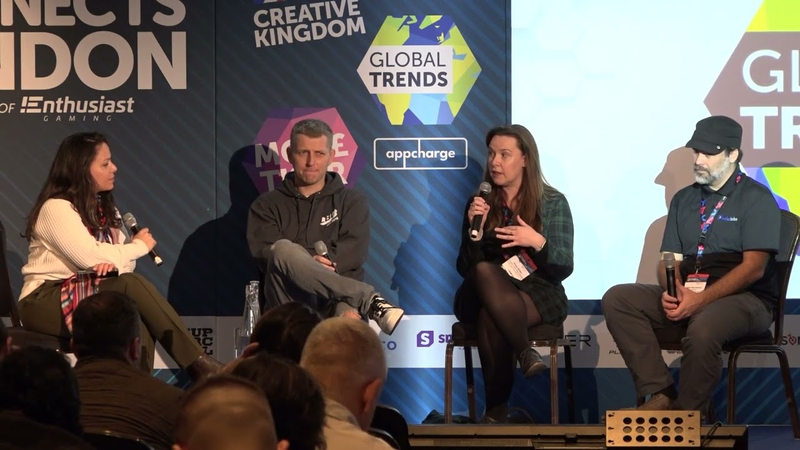
[Music] hello everybody um I'm Daisy I'm the host rest I'm going to host the rest of this track today um so now we're going going to have a panel discussion on um International collaboration and success comes from Global Perspective from these lovely lady lovely people here next to me thank you Daisy thank you hi everyone so um really delighted to have you all here especially because the panel that we have today are veterans of the industry um I won't say how many combined years but um we're really
hoping to share the international perspective that they all have and also the experience that they have over a long period of time as the international games industry has developed My Hope Is that what you take away from this is some little nuggets of what you you know what might give you some inspiration and some confidence for running your own Studios or making your own decisions or as a developer what you might want to achieve but also at the end of this to want to talk to any of them uh to find out more about their experience their Rich experience so I'm going to hand it over to each of them let them uh introduce themselves and tell you a little bit about how they started when they started and what they're doing right now Dennis hi my name is Dennis I'm co-founder of Night Market Games first of all I want to thank everyone for being here at this time I know it's lunchtime so I appreciate everyone being
here at this time um I co-founded Night Market games in 2017 after previously having worked at nerdc entertainment and dhx media building games for cartoon and Entertainment Properties so over the years we've gone more Global and now we license games or sorry license IPS and Brands to make games uh collaborating with a lot of international companies for some diverse Brands ni thank you Den James sure let me see if I is that oh it is working yeah hi everybody uh James H house um I moved to Vancouver in 2010 uh so actually I can tell the story around BC and all of that from the perspective of moving there to actually start a game studio uh my career in game started about 10 years earlier than that around 2000 uh I was in Japan and uh sort of sidestepped into the industry although I'd always been a gamer but uh I ended up teaching the at the time the
CEO of Nexon English every morning and from that ended up doing International Business Development for Nexon and GDC 2003 was my first conference uh first talk ever was 10 reasons you should never make an MMO and I guess I've been trying to do that ever since um so two yeah 2010 moved to Canada started a company called Roadhouse interactive and we grew that to about 180 people so you know we have the experience of growing a large studio in BC um and uh structured that in 2016 and since then I've sort of been doing independent loan Ranger Consulting for a bunch of different things uh a lot of infrastructure games as a service a lot of content uh most recently web 3 and blockchain and uh right now I have a little independent consultancy called greenstone and uh we're basically just putting deals together uh again across that whole kind of spectrum of infrastructure technology content uh primarily games but some other stuff digital Healthcare and things like that
hi everybody thanks for being here this working yeah it's working um so I'm John Johnson I've been in the industry longer than this guy uh since I think 96 I started at EA Canada when I think EA was there one of three studios in Vancouver at the time I think there's hundreds now I thought you were going to say the stock pric I um uh I moved on to Relic entertainment after that uh and I was uh started there fairly early in the in the company and worked on three titles the last game I worked on there was a Company of Heroes we successfully um had a good exit with that company um I can't remember the year but with THQ and after that I moved on to start smoking gun and I was uh developed that and ran it for uh 17 and a half years and we did a successful exit of that company in 2022 with keyword
Studios and I've recently retired from there semi retired and um and I'm uh we developed a game there that we kind of moved out of the company called phobes and it's doing really well and uh so I'm running that company now and we're I'm just in the process of building that into a a kind of new studio and I've left Smoking Gun in the hands of this guy here as well go from there so I'm Jacob Aros uh I'm the executive producer at SGI or Smoking Gun interactive and uh I started in the games industry in 2007 ea uh also worked at Ubisoft mostly did kind of AAA uh console games um and uh then moved into the mobile market because that's where a lot of the money was going uh worked I've been working at SGI for seven years and uh yeah we've been kind of building great games for partners like m Microsoft and Netflix
and uh a bunch of others so how big are you guys are uh we're about 65 65 this yeah okay so what I really like about this panel is that there's um it there shows a lot of courageousness within the industry uh to go it on your own when you've run big teams to move across platforms to start Studios um and I really would like to understand uh and maybe start with h John um what do you think when you started in 1996 games were made by a studio in a studio what do you think has created this uh in this move to to have to utilize inter International collaborations like what has been driving that uh to where it is now that's a good question I think it a lot of it is just you know where games went from then to now your team sizes were were fairly small back then you
know 20 30 40 people I think FIFA was the biggest team I was ever on that was maybe 70 people at the time which was an anomaly but you know um but you know team like the games just continue to grow and the content that's needed continues to grow and you know look at Ubisoft look at how many people work on you know on those titles it's it would be insane to have a studio in one place that would have two 3,000 people working on one tit um so I I think that's probably a big part of it I think Co helped push everything into remote work and then I think I think that that's changed the industry forever I think there's a lot of you know you don't have to hire everybody in one place anymore and uh and I think that model is is working and yeah I think that's that's going to continue yeah yeah yeah Canna continue um Jacob you've got a team of like you
said about 60 people um just help us understand first of all like how you guys are spread out um and and what are you looking for when you are working with different people different aspects of the game developments and different customers or clients across the world like why is having an international spread so important for the success of the studio yeah so there's a a to that question yeah but I would say that one of the kind of key things for us with uh working with groups across borders um is just really about having the right setup and we've kind of learned this over time uh as we have worked with more Outsourcing or you know co-development Etc um that really you know key to having success there is having the right people in place and together and looking looking at more of um that additional
support that we're getting internationally or those groups that we're working with uh they're we're looking at more of the scale of work uh versus um maybe more of the uh leadership anding uh out the actual uh work that we want to create so uh along that lines I think again it's it's key to have a core group that can collaborate and work together um and set the standards and then from there work with your partners to uh essentially make sure that you have uh very clear goals clear definition of what you're trying to do together um and how you're doing that so that helps us kind of have a successful uh delivery yeah on that side um now working with clients internationally as well because there's multiple Parts here um the big thing
about having that diversity of of people so we have some people who are over in um Spain uh and things like that and we have you know people who who are in Vancouver on um our our main group there uh it allows us to support clients across the world because of that so sometimes they'll have uh concerns about you know we need to keep our servers up at all the time at all times so what can we do there well we can have our Vancouver group look after the servers During certain time range then we have another group in um in Spain who can look over the servers after that point and be there to make sure that we can sustain those uh Services across uh all the time zones as well so yeah so what so what I'm hearing is is that stability comes from having a core team and then the internationalization just adds to that you know the capabilities of that whether it be taking advantage of time
zones um but also people's capacity and and really building on the strengths of a core team yeah I mean a lot of it's costing too right like as we've talked about the team sizes have really increased right um and when you look at the package good uh product world the the prices of games are not really going up so as your costs go up and the you know the price point of game stays kind of flat you need something to kind of give in the industry right so that's where you know some of that spreading across the world is just also the need to um still be able to create the experiences that people expect but at a price point that's also reasonable and profitable so yeah thank you um Dennis your um your studio deals with a lot of Ip International IP um it would be helpful to understand when you are assessing IP
to develop games how important is it the international View and then how do you actually make that happen because there an international market and games are Global so I don't know did I ask that question clear no that's that's perfect thanks for teeing that up for me uh yeah they experience is working with IPS and and Brands and a big reason why we left our parent company to go independent with so you can't just work with a single company or single region for IPs and Brands it's it's so Global now like tell me what are the odds that in a pre- Netflix world that one of the most watched genres on TV in North America would be South Korean dramas right right you you have that International expansion now so often times uh you need to have that Global Perspective working with IPS and Brands because not only are you trying to build off of their
existing brand efforts you're also helping them build their brand in a different Market that they're not already in or not famili familiar with so having the understanding of how your Market works too when building uh a game for say a western audience that's based on um a brand that originated in China or IP that originated in Japan it's very important to know the international language and how you work with them to understand and our space while we work with them to to build out their brand in a way that seems um I guess you would say could be accepted more acceptable and more uh mainstream in the western space so follow-up question to that is how have you built up that the you know how's your experience give your clients that confidence you know like how have you done that like what makes your clients confident to work with you often times it's showing that you know the
mobile space better A lot of ips and Brands they work in the physical uh space and we we our experience with those companies is that they aren't familiar with the rapid iteration times in games um they're used to approving say product language that goes onto a toy box or some other label that is forever and we have to educate them into how we need to run AB tests on uh App Store descriptions and improve optimization so they come to value our expertise in that space and they see as as a value ad because we're bringing them understanding of the space that they don't normally have when they're working with other brand merchandise is not always digital for them right it's going to be physical product most of the time okay thank you that's really helpful that I think confidence is a massive space uh James when it comes to to I mean your part you your expertise
kind of falls into different spaces and I know that's a lot to do with your curious nature one thing that's really would be interesting to understand is when you're dealing with International partners and you're creating collaborations how do you create the confidence for the risk in finance uh with investment investors you know how are you you how are you mitigating that those concerns yeah I mean I think that's an interesting question because in many ways a kind of network of international partners that you've either used before or they come very highly recommended uh is in many ways a good way to offset the risk Financial risks um you know again you know going back to when we had Roadhouse with 180 people you know you take a slight misstep that's a very big payroll right whereas now I think you know it's feasible to make a game if you're a team of three five C folks right um and what
I think is interesting is you know we just talked about this earlier with Christian um the number of shops that are around now who specialize in engineering or art and so depending on what phase you're at in the game you can go and find the best talent in the world for specific discipline right use that team ideally because you've used them before and then in terms of the pipeline once that sort of core engineering piece is done the pressure to find the next gig find the next gig find in the next gig isn't necessarily there right so for me I think it's an interesting time now because you know again if you've had that track record of working with these Partners I think the reliability there and obviously there's benefits to having the integrated Studio as well but to me you know there's pluses and minuses um and I think part of it is just simply that over the last like if you think about it like in Vancouver I think it was 1981 that Dom matrick took you know Evolution to Tony Williams Senior and that was when the games industry started
so it's still only what 40 years and we've come an amazingly long way but you know 20 years ago sort of the talent around the world wasn't necessarily there but it is now but I think Dennis's point about you know best practices and just this cross pollination of working together is meant that the rising tide has floated all boats and so it is easier now I think to have that minded matter and then just hand select these partners that actually offset risk in many ways because they just do that job in every day you know in and out um yeah so I mean it's just I guess a fact of Modern Life where we want to be uh using these resources because they're proven right yeah so actually that's really helpful in say there's a studio out here that's doing work for a hire or um looking to co-develop something or collaboration how do they position themselves they can compete you know and ask this to anyone
here like what you know what is going to give them that that edge to say A you know we're we're ready we're good as an international partnership because it is a global industry now let me just do sort of two more seconds on that I mean there are companies out there now that are specializing on very very Niche components right okay and I think so specialization would be my answer because then I think you will have a you know a line of customers waiting for that specialization I would agree I think it you know I think when we started smoking gun we were focused on strategy because we had come from company Heroes we came from a strategy studio and I think that's you know having a specialized Talent is is definitely key um I mean if you're just going to be a studio that's Jack of all trades and you don't really have anything out there that that you it's it's harder to sell yourself right so having a you know being specialized I think is is is important for sure okay so then on a follow-up question because
I'm really believe that's people do business so considering anybody's here they're all at an international game developers conference they're meeting people you have a niche Studio you have a niche skill how do you create business as a person creating business internationally like how do you make those connections is it at conferences like this uh I mean if you think about an international scaling up of business and connections what are the skills that people would really need to home in on a personal level and how I mean you guys all do international business what are you finding your personal skills are and how they grown in order to do International work you got to be good at sales sorry you got to be good at sales you got Sal you be passionate you have to show your passion to your clients I mean that that's that's for sure number one yeah there's a lot of there's a lot
of KN door knocking I'm sure everybody here is experiencing that there's a lot of uh a lot of money's gone from the industry in the last couple years it's been tough yeah you got to lock on a lot of doors sometimes and it's it's tough but if you're not passionate and you don't you know I think people see that and that's that's what sells yeah yeah I mean I guess that's what gives you the confidence to start up a new St studio right and why everyone keeps going Jacob you're running a studio um how like how do you keep developing business from a strategic point of view as opposed to just a personal point of view so as a studio yeah I mean a lot of like what once you kind of have uh good Partnerships in place you you utilize a lot of those right you're looking at how you can expand those out um what your partner's needs are are knowing knowing
your partner's business as well is just pivotal right um because that's going to give you the opportunity to expand those opportunities um by being ahead of what they're going to be asking for starting those conversations off again that a lot of things come down to confidence building with your partners right and when your partners feel that you know their business at maybe as well as they do or or somewhere close uh they they feel a lot better about uh putting those pieces in your hands right because they know that uh that you're on it you know what they need and you're going to be able to deliver it because at the end of the day like that's one of the other key things is that you've delivered right that's what we're they that's what all partners are looking for that they can rely on this relationship that you're going to give them what they need right so yeah past history of delivering is important okay so I I know that there's a lot of
people here from an international Arena um James how does how what support creates that level of being able to interact create an indust the industry interactions I mean because you guys are all veterans you have those Partnerships you have those experience you're building on that Foundation but what support is there and how or rather what should people look at for the support in order to make these inter International connections to continuing to compete to continuing their Studios to not so that they're not threatened by using a global Arena well of course you know provincial and federal government support is always amazing thanks Roa um and actually it is true though I mean you know when I moved to Canada uh 2010 certainly compared with Japan although at the time South Korea had really started to you know move out ahead in terms of its support
for its games industry and you can see what happened in Korea as a result of that government support so I mean I think there's definitely a component there where um you know fueling the network and I think the most forward-looking jurisdictions were the ones that said okay actually video games really are you know fertile breeding ground for innovation in general and you know some places have taken that on more successfully than others um you know I continue to really fully support that idea that without a healthy video game cluster it's difficult to have a really true Innovation cluster in your jurisdiction so um you know jur still out as to whether British Columbia uh maintained its uh position in the world I guess but uh we'll see you know so yeah but I think just to go back to the question I think that that network of support from governments who have recognized the value of our industry is really really key and uh fortunately ours continues to do that which is why we're all here to meet you guys right so thanks for that um Dennis what would be
helpful from you because you run a studio you're a founder of the studio um help me understand what's really next for you guys like where are you going to next and how are you navigating you know that growth and or that stability like what stability adaptability adaptability well well I think we're we're in the same boat as everyone else uh in the mobile industry uh in the gaming industry um what I'm looking towards is how can we continue playing the game uh staying afloat is the most important part not even like praying for the next hit like get as many swings at the plate as you can oh that's a baseball analogy here in the UK we get it okay you get it right good yeah so so that that's that's what we we're trying to do is to to create a
stable base for us to continue developing our talents um trying to build see what's happening in the International Space as well and also looking at new distribution models for games because I think the mobile Industries pretty mature right now uh there are a lot of other places to explore where you maybe may not make a whole lot of money right now but there was a time when freeo play was not what it is now right so can we get on that sooner and can we draw from other places that have succeeded um you look at something like freeo play has taken over the Western Market in in the mobile space and that really built off of foundations that were in the East before that okay so 2004 yeah so that's right like 2004 in Korea in China so where else can we look we can't just look at the industry we have now uh we have to see where uh where people are playing games in other places because as they grow and as their
spending um capacities grow we got to be ready to adapt to that yeah yeah um Jacob following exactly from that where is uh Smoking Gun looking at to keep I saw a little side Mark yeah so where are you guys moving into what trends are you following and what is inspiring you for the next steps as Studio the size that you are yeah so um I would say that that really I don't know we're our our business because we really do kind of work for hire right so we're we're not really kind of um going and growing new models at the moment but what we do do what we do try to do is we again try to expand our our business um our relationships build new ones um and
kind of build out on what we are specialized in which is really kind of mobile end end game development um so we're not really looking at expanding out to like VR or things like that but we're always open to to things but um so it's sort of like keep in your lane and do Lane it's more of yeah we have we have an area that we're really great at and we want to create really great experiences in those so that's what we focus on is creating more of those growing those and uh getting new opportunities to have bigger mandates bigger games make bigger impacts in uh in different uh genres so yeah amazing yeah so it's more of focusing on especially I think quality is important like I think that's what we're saying is is you know the focus for Smoking Gun was always to make the highest quality products and and making sure you're hitting those and that's that's what brings that's what opens the
doors that's what makes it easier to go out and sell and yeah is is just focusing on if you're gonna do this particular game just make it the best it can possibly be make it shine and and and then hopefully good things come from that so because you're you've moved from Smoking Gun you have your own game you're developing it into publishing how are you taking a big team moving to a small team and still having that ethos of quality but being retired semi-retired semi retired um it's it's tough I I I you know I I wasn't a big fan of moving to a remote model myself we didn't do that at smoking G until Co happened I a big believer in in everybody being in the same room and I think for me that's still important like I think the key people like James was saying the key people have to be I think together and it's really hard especially if you're overseas it's it's like you know you
know if you can collaborate only one hour a day and I don't know if anybody's done creative brainstorming sessions on teams or Zoom but it sucks just you can't feel the energy in the room you can't get you know you can't get the vibe of everybody and and that's I think what creates amazing things is is that so um so I you know for fobes I I I think I I have the core people that I need in order to do that still in Vancouver and when I'm looking to you know the rest of the world um you know just to help you know make the business work and to help meet the margins and stuff you know collaborating with some people in Vietnam or collaborating with people in South America or even people over you know in Europe it's um it's kind of you know using that to augment but but you know for me I I I still need that Court team in one place because that's just me I'm sure there's people out here who have remote Studios that only ever do everything remotely and I
know that they're successful it's just that's just not me yeah yeah um James you like I said you you kind of experiment in many different ways uh how do you see like what sort of Trends are we looking at that we're drawing from different International markets that we can kind of keep an eye out and that can give some people either the edge or the adaptability to stay in this business yeah I think you know that's a great question and actually it ties back to sort of this the previous one about you know what's next and things like that and uh you know Dennis made the comment about freeo play back in you know 2004 and how much vitriolic hatred there was against it from Western Developers for a period of time which you know personally speaking I'm very bullish on web 3 uh gaming and actually web 3 in general um you know way back in 2007 I was a contributing author to this thing called the metaverse road map and we identifi true digital ownership as kind of a key pillar of the future um so the parallel
I think with uh with freetop playay actually coming from the East you know if you go look at uh companies like we made and the way that they introduced web 3 components into more traditional gaming Styles um and then you look at the retention the effect of that uh on retention for things like night crows and and meia the numbers are astounding because what they're doing is just legitimizing that time oned trait The Gamers wanted to do whether we were investing in a character and and then in the old days you have to take the risk of you know selling it on the gray Market potentially getting ripped off right so it's a very different approach around web 3 and digital assets I think and in the same way that you know freeto play came east to west I think that that adoption of web 3 will also come east to west so that's an interesting one uh but then you know last year I spent a lot of time working uh with a company called Aether on a deepin uh GPU infrastructure play so basically GPU as a service and what I've noticed from that is if you can communiti something as boring as Cloud computer which ather successfully has so every one of those 3 million
owners feels like a vested interest in the success of the network and so if you take that idea of having a vested success in a vested ownership stake in something if that's a game or if it's music publishing whatever it is um I think that this sort of intersection of asset ownership and you know am I a fan and you know I was very skeptical at the beginning because I thought that you know the the defi investors wouldn't really give a about the games but actually it's the same audience which is you know again as an old guy very interesting to see so to me I think you know I really am bullish on blockchain web3 if it's correctly implemented for all these different reasons but uh it creates this amazing kind of virtuous cycle of Interest ownership interest ownership interest ownership which is you know you can't really escape from it so um and I think you know a lot of that influence is coming from other markets right probably have a slightly more relaxed attitude to regulation but who knows what's happen happening in the US right now so yeah yeah I think you know
today is quite an important day for uh quite a lot of uh different you know regulations around things like blockchain so yeah so kind of to summarize a little bit from what I'm hearing from you guys is that intern internationalization and collaboration is a necessity both for business models and capacity um but it's driven and it's based on a strong core uh the value of quality and expertise and Niche and then you you can kind of go from there uh experience is always going to give that that you know start small and then build out um feel inspired by International markets and International Teams but keep to your core or develop your core uh we have a couple of minutes does anybody have any comments or questions that they really want to tap into any of our uh experienced game developers here okay great thank you
Daisy thank you [Applause]
Auto-generated captions from YouTube — names and numbers may be misheard.
Key insights
6 takeaways · ~2 min read- 01Modern game development requires a distributed model, as the scale of content demands—often requiring thousands of developers for a single title—makes single-location studios unsustainable.
- 02International collaboration mitigates financial risk by allowing studios to leverage proven, specialized partners rather than maintaining large, expensive internal teams.
- 03Successful international expansion requires a core group of local, high-level talent to set standards and maintain quality, while outsourcing specific work to global partners.
- 04Studios should monitor emerging international trends, such as the historical adoption of free-to-play models in Asian markets (circa 2004), to identify future distribution and monetization shifts before they reach the Western mainstream.
- 05The industry has shifted toward smaller, agile teams; whereas studios previously required 180+ staff, modern projects can be executed by core teams of 3–5 people supported by a global network of partners.
- 06Government support for gaming clusters, such as those seen in South Korea and British Columbia, is a critical driver of innovation and provides a stable foundation for studios to develop talent and compete globally.
Ask AI about this video
Cite this video
Citation
Generating citation…



















Comments