VideoThomas Brush
How He Sold 2,000,000 Copies Of His Games (Dave Gilbert) — Full Time Game Dev Podcast Ep. 039
25 Mar 202569 min video
Transcript
I had a phenomenal conversation with the indie game legend Dave Gilbert, the creator of Unavoued, the Blackwell series, and his latest project, Old Skies, which is still in production after five long years. Dave's story is so relatable. He started similar to perhaps yourself, not really knowing how to make games or where to begin. We talk about his journey, why staying small was so important to him when he first started. Why having a thick skin is well so important when the rest of the world seems to dislike your games. Uh we talk about overcoming fear of failure as a game dev. Perhaps you can relate. We talk about the future of the game industry and a ton more. Oh, and really quickly, by the way, this video is sponsored by myself. I sponsor my own videos sometimes. Uh it's sponsored by Fulltime GameDev. If making indie games full-time is a dream of yours in 2025, I could teach you what I've done. I've signed three publishing deals for my commercial indie games along with getting funded multiple times on Kickstarter. I've also hit the Steamfront page multiple times. So, I
want to show you how I've done this and ultimately make games in Unity, GDAU, Unreal, 2D or 3D. You can honestly take your pick. In the course, you also learn how to market your game so it brings in actual money and so much more. For the next 7 days, full-time gamedev is 40% off for the massive spring sale, and this only happens once a year. This is a big one. Join 4,500 students worldwide. And I'll also throw in my 2D and 3D art programs completely free, but only for this sale event. And also, there's only 100 seats available. These will sell out, so be sure to check it out below if you're interested. We start out this conversation with his origin story as a game dev. September 11th when the Twin Towers fell near his apartment in New York City, the towers went down and I was in no frame of mind to be like looking for a new job right away. I just didn't even want to leave my apartment. Uh so I was looking for a way to kind of
creatively vent and just do something. Yeah. with like, well, if I'm if I'm not gonna like push myself to like get out there and find a new job, I want to do something like worthwhile. Uh, so I found I discovered Adventure Games Studio and I made a little game in a weekend just for fun and people seemed to like it and I just kept making them. And eventually I did find another job, but I just kept making the games for fun. And I made about four or five freeear games over the next like four or five years. And then I just decided I didn't want to do anything else. And I managed to somehow make it work. I uh I had I was laid off again. Not laid off. Actually, I left my job. Um I was I was I had left my job to teach English in Korea for a year. Yeah. And when I came
back, I I had money saved up for my time away. And I didn't want to get a real job right away. So to to put it off, I just started making I just started writing another game because I'm like, what else am I going to do with my time? And then when that was done, I decided to try selling it to see where it would lead me. And uh I've been doing that ever since. Where did you sell it? Um, well, back then, God, this was 2006, so Steam didn't exist. Um, my brother-in-law made this little uh payment site for me and it was it was so janky. Um, and back then, it's quaint to remember like no one put the it was scary to put your credit card on the internet. No one would do it, right? And so, I didn't get a lot of sales. um people would like it the the ser the website he created for me um allowed people to pay through PayPal which people did what they were beginning to trusted yeah and so I would get paid through PayPal um and uh people would
send me like currency they send me the cash in the mail but sometimes in like other currencies and wait in the mail they would send it in the mail cash yeah and like weird foreign currency season. I shouldn't say weird, but like I didn't even know like what kind of money it was. I would just like go across town to get it changed and the game cost $5. I don't know why I even bothered cuz by the time I like it barely paid for the subway right over there. That's crazy. It was just whatever it took to get it done and I just um it was a weird time because I honestly did not expect it to go anywhere. I thought I was just putting off the inevitable like oh I'm going to have to like get a real job soon. and I'm going to have to go back to the, you know, get some boring corporate job and, you know, hate myself again. Y um but I managed to just like keep going. I managed to keep it going, you know, and um things just I managed to get another game out and another and things just eventually snowballed until
I was able to do it until I I wasn't faking it anymore. I was like, "Okay, this is this is something real. This is a legit business. I'm I'm just going to keep going." And I've been doing that ever since. So, you know, for me it was the story is a little bit different. Um, and I want to ask you about this. The moment you got where you realized, okay, I can do this full-time. For me, it wasn't gradual or slow. It was like bang, $100,000 available to me to go full-time. So, that was Kickstarter. So, I did a Kickstarter campaign for one of my games. Right. Right. And at the time I think 2009 is when I started making games and it was new through Newgrounds. So you you were sort of I guess moving into getting checks in the mail in that was 2006, right? Yeah. 2009 I wasn't on Steam yet, but I was I was selling the games through um I discovered a I
guess I guess it was the equivalent of like Humble. There was a service called BMT Micro where you could put your game on there. It was a payment provider. That's the term. And so people would would would put their card they they would buy the game through them. And so that's uh how I would I would sell the games back then through BMT Micro. Gotcha. So yeah. So, for me, it was in like it wasn't without a ton of like hard work and stuff to be able to go full-time, but it was it was doing flash games, but it was this big final moment where $100,000 came in and I knew I knew, oh, I can do this full-time. So, I quit my job. What What was it like for you? What was the process like for you? Bless you. When you went full-time, was it this moment when you realized it? you're very lucky or or very and you're probably very smart because like get for a lot of people getting all that money all at once when they never had that before suddenly seems like infinity and then they blow it all. They just because
they don't know how to they don't know how to it just seems like infinity. So they're like, "Oh yeah, I'm going to get this. I'm going to get this. I'm going to spend all this money on this. I'm going to get the best artist, the best this license all this music, you know, and then they spend it all and it's gone." And um that is that's very very common. And so I I didn't have that. So I had to like with every game it sold a little bit more and I think it helped that my first few games were very very small. Um the first game I sold commercially um the Shiva was tiny. It takes maybe an hour tops to play through. It's small really. Um yeah it's amazing. I love it. It looks awesome. Thank you. Um, and then I did that, I think the Blackwell Legacy took no time to make money with I hired people to work for ludicrously low amounts of money, but I could like I'm like enthusiastic. I'm like, "Yeah, this is awesome." But like there's only there's only Well, not not
just that. There's only so long that can last. Yes. there's only so long, you know, if you're working on for on dragging something on for two years, three years, like that enthusiasm is going to wayne like that that can't be sustained. So, I knew I had very little money um a I had little money in the bank account, little money to make the games, and little money to pay people. So, I had to keep the development times very very short. Yes. And um Oh, whoops. that this is uh that that was my reminder that we were going to have an interview here. Um cuz we started a bit early. So that was like oh yeah what was I going to say? Yeah. So I kept I kept the time frame, the budgets and the scopes extremely small and I I can't say this was intentionally smart. It was just all I could do cuz I I was pretty I say I was I was just putting off the inevitable, but I really wanted to make it work. I really wanted to like get games out and get people talking about them. I wanted I wanted that like
feedback. I wanted that back and forth with with the players and um like I I knew people I people knew me from the freeware scene. Uh and so I was able to kind of uh work the networks I had there to get people to to help me. Um and I mean I did pay them a little bit. I didn't pay much and God bless them all for being willing to to work with me for what little I could pay back then because I could not pay very much. Um, but no one knew who I was. So, I wouldn't do that now. Um, but back then it was like whatever it took to get it done. The games were small, they were janky, but they got done. And I was able to kind of grow organically. Like each game was progressively, you know, more complex, a little bit bigger, took more time, you know, it just kind of it just organically grew, right? Like I could probably go to Kickstarter and get like a hundred grand for a project. Most likely you probably. But would I be able to go back? You know, if that first game doesn't work, will I be able to go back
again for another 100 grand or another 100 grand? I don't know if that's possible. And that that uncertainty kind of makes me hesitate from trying it myself. Um, one of the developers we published went to Kickstarter and it succeeded. Um, but I don't know if I'd want to do that myself. Yeah. But I I like being at a position where it's like we just grew very organically and so I feel like I have a very at this point almost 20 years in I have a very strong foundation. Yeah. Um and so because people know our whole back catalog and because the early games are very small and manageable. Um I was able to learn from them a little bit faster. Like I didn't blow all my time and all my money and all my energy on one project lasting several years. And so all the mistakes I made, I could figure out what they were very quickly. Yeah. And I was able to just apply all that to the next game. And so I was able to iterate faster while earning money, while building a reputation, while you know, it was it
was the scene was so different back then because the whole I don't even know if the term indie developer existed. It was still very much in its infancy, you know, like braid was still the hot new thing. Yeah. And um you know, World of Goo was like this this new hotness. Um but like there were so few of these games being made that even though no one was paying attention to them, the people who did pay attention would notice. Yes. cuz like and especially having um working in New York, doing them out of New York, I I didn't realize at the time, but since like all the journalists and all the the folks I met were other New Yorkers, I became like it was like a small it was a tiny pond, but it was one like that everyone was looking at cuz it's New York, right? And I think that helped me as well. Little little things help me. So there's so much luck that goes into play. Um I I I would never say that it was all due to my genius. Never. Oh, so
many like the dice rolled in just the right way so many times, right? Um, but I I'm I'm kind of glad that I started that way and I didn't start with someone giving me, you know, a huge check. Yeah. So, you started to do with it. I would have blown it all. I would have It was scary for me, too. I mean, I fortunately I w I I am I was I was and am married, but we were newly weds and so I I was supporting her through school and so I was very paranoid with the money and I didn't dude I didn't hire anybody. I was just super frugal. You want to keep as much of it as you can. Yeah. And I made I made it last and that that I think Yeah, you're right. I think most most game developers they're they're probably not thinking that way. Um unless they have like a family to support and you know having that especially if you're not used to having that kind of money. Um it seems must seem like infinity. I can't even imagine like the first time I got I was published by someone and the budget felt like infinity like oh my god you're paying me this much to make this
game. They didn't give it to me all at once. It was all parcelled out by milestones. And thank God for that because I realized like as I was like doing the math and making Excel sheets and like trying to work out like how much I personally would be getting from this budget, I realized it wasn't very much and I'm like I got to I got to cut down the scope of this thing because that's right like I' I've completely gone out of scope here and I I had to because it was parcelled out. I I really did have to budget it. I mean that was that was smart of them. Um, but yeah, like it it's that's a danger. But, um, I feel like it's really funny how should be very proud that you didn't fall into that trap. Yeah. You know, it's it's funny because every single publishing deal I've signed, when I sign the deal, I feel like I'm stealing money from the publisher. Like, I feel this I feel this sense of like this is too much. I feel like they're giving me too much money. Um, I'm nervous that, you know, I'm not going to deliver like what they expect. Then a year later, I'll look back and
say, "No, it wasn't enough." You know, you've just described every publisher developer relationship. That's right. That's right. I mean, as a publisher, like I give it I basically I don't I I as a publisher, I'm a little unusual because I don't I don't give money most of the time. Support. I I do a lot of other things that traditional publishers don't do, but I can't really afford to give money. Like I'll give a lot of personal time and like experience and like I'll do like the voice acting and and help in a lot of areas and do all the marketing and sales stuff and kind of take care of it once it's done. Yeah. But I I can't give you money. I wish that was like that's the one thing you usually want a publisher for and that's the one thing I normally can't give. No, I mean here's the thing though. You've built you've built this amazing brand and I want to talk about this and sort of shift gears discuss universe building and brand building and back cataloges like I look at I look at
your what you've built. Do you think you've built something? You know, this whole time I'm just going to say I've been trying to find a position so the light doesn't reflect off my glasses. I'm just going to own it. So everyone watching this, you're just going to deal with this. I'm sorry. I can't I can't. I'm still I love how you're still thinking about that. Like I'm just trying to find the position. Forget it. Y'all just deal with it. It's great. Sorry. I can't. You will not see my eyes. I'm sorry. I Sorry to interrupt. It's been driving me crazy this whole time. That's hilarious. I think I I haven't even Dude, Dave, I haven't even noticed. Seriously, I think it's fine. Yeah, it's something I noticed every single time I do an interview or I'm in a meeting. I'm like, what's stupid window? Go away. Maybe I can do that with you. There we go. There we go. Solidarity. Thank you. There we go. Um, hey, so I want to talk about this this idea of building a a brand um or like a universe. Like I feel like I was talking to um Thomas Salah and he he makes he made a game called The Bullwwork Chronicles
and also a game called The Falconer. And heard of them? I haven't played them. Both of these games are incredibly uh they're well defined and precise in his brand. Like they're part of the same universe. They look the same. They're different genres, but they're they're part of the same universe. And his thought process is, I want to build a brand and slowly and a universe and slowly acquire an audience with every game so that every game is well delivering what a previous game delivered so that the audience sort of sticks around. And I'm looking at your portfolio and I'm thinking that's got to be happening with you, right? You get returning players. Yeah. Mhm. Well, at first like I um like I said, it was very gradual. Um when I like it was really hard to sell my first game, you know, and I would like I would be pushing it constantly because like back then how I cuz mainstream um websites and press wouldn't write about me. They would they would hardly
write about indie games in general, let alone like an indie point andclick like what I was doing. And so what I would do was I would approach any um blogger, you know, when those existed or YouTuber that was beginning to be a thing. Anyone who showed any interest in reviewing or talking about any indie game, I would write them and be like, "Here's a copy of my game. Would you, you know, you're welcome to review it." And so I um and I I just kept pushing it. You know, I would write press and distributors or whatever. I would just constantly be pushing this little game and I would only see the numbers tick up a little bit. You know, it was very very frustrating seeing the needle only move like a little bit like 20 maybe I get like 10 sales this month or 20 this next month or whatever. It was like it was like you know it was just a little bit but then I would release the next game and then suddenly it's like oh all these people that are coming back you know that gradual you know all those all those folks who like slowly yes the trickle of people who all bought the game over like the period of one year they all came back for the next one and
so I got all of that at once and that was really gratifying. Yeah. Sure. And so like rinse and repeat for several more games because back then like I said short development times because uh and if the games took longer than a year to make um I was in trouble. I needed to get stuff out pretty quickly really. Um and that that that sort of accounts for why uh how prolific we were in the first like half of Wagi's existence versus the latter half. But I yeah, so it was it was um yeah, like I said, it was just a slow organic, you know, rise of of Would would you recommend Would you recommend that approach? Cuz everyone listening right now, I think probably 90% of the people listening right now are probably they're they see what you're doing and they they see what I am doing and it's like this it's like this dream. The ability to make games and do it full-time from your home and just come up with crazy ideas and put them into a game. It's a dream come true for people and so they're probably if I were
listening to you I'd want to know what is your advice take if if you were trying to teach Do you have kids by the way? I have one daughter. Yeah. Um if you were to teach your daughter and give her a road map to like how to get where you are. How do they how how do people do that nowadays? It's different, right? It's so different. And this is like I I love and hate this question because my like I love talking about the early days like I it's it was this kind of very um I had no money but it was this very you know I was single living alone in this little apartment but I was in the East Village of New York City and I was like working in cafes all day living this bohemian lifestyle. Um but at the same time I don't know if you could do that now. Things are so different. It's like, like I said, back then the trick was getting people to just notice indie games in general. Yeah. Now they're just so damn many. There's so many. And so it's even now I find myself, you know,
um, back then if like a little blogger wrote about my game, I felt like, oh yeah, like that felt like I reached someone. Now I'd like shout on to Twitter or or Blue Sky or any of those places and I I feel like I'm shouting into a freaking black hole. I just don't I feel like I you know like one person comments you know on on a some dinky website you know back in 2006 that was great that felt great now that's that feels like nothing and it's just it's so hard to like reconcile the two like how I started I could tell you a lot of ways to to get started in 2006 um how you start now I just I don't know because every step I take now um is based on the fact that I've been doing it for 20 years. So you have that built-in audience uh the credibility in the press. I do think that starting small is important because I I think like you you have to start somewhere and you got to you don't want
to sap all of your energy. Yeah. And if I like I think of this this game I'm releasing um in a few months is um has taken what's it called? 12 years. Uh Old Skies. Old Skies. And it's uh it's taken me years I know I mean admittedly a chunk of that was taken up by lockdown and the pandemic but still it's a long time I I but I did publish some other games in the interim. Uh so there was that but it's a long time to be to be on any project and if this was my first game and like and if it if it's a if it's a colossal failure if it was my first game that's it like I would be I would be done. I had nothing left in the tank. But now I mean I you know knock on wood hopefully I don't expect it to bomb but if it does I have like a back catalog in my experience to fall back on I won't be completely finished. I'll be able to keep going. I mean it'll suck and I'll be sad but I'll be able to keep going. So that's always like I I
you can't start with like your big epic dream game that is just Yeah. you that's just asking for trouble. Um, like my first game was tiny and it didn't it was a game that was talked about more than played and that's fine. Like it it was like you have to start somewhere. You get a few people talking and then you just do something else and then I I think that is a um I'm sorry. One second, sweetie. Eevee. Eevee. Okay. Okay. If you keep doing that, you're going to have to go watch upstairs. Okay. All right. Cuz I'm in a meeting. All right. No. Do you Do you understand? Okay. Sorry about that. You're That's adorable. No, I won't. I think it's adorable. I love it. President's Day. She's She's off from from school. Isn't that funny? I I was talking to my wife. We were like, "Oh, we have a friend." Hello. Oh, hello. What's his name? His name is Oliver. Oliver. Good to meet you, Oliver. Yeah. I was just Dave. I was
just talking to my wife about how my daughter's home from school as well. It's like they get so many days off from school. Like my daughter, she gets off like every other feels like it. So anyway, yeah. Hey, so what were we talking about? We were talking about um Old Skies and Okay, so I'm looking at it right now and I was looking at it before we recorded. It's freaking gorgeous. Like it's so good. And I want to ask you cuz I know how it feels to work on a game for five years. By the way, I worked on a game for 5 years and it did great. Um, it I think it it definitely brought in like a couple years of full-time income afterwards and it was great. You know, it's called Pinstripe and it was very narrative heavy. Um, but I dude I just felt I felt this strange sense of guilt when I was making on it. Like why am I still working on this thing? It feel the time just slips away, doesn't it? I know. You wonder like did I am I losing it? Like am I losing that creative energy or the
productivity I've had? How do you feel to say that because it's Yeah. No. No. Yeah. Cuz like I always think of it as um like you're everyone's got their favorite movie. Um but if you watched it on repeat for years, you will hate it. That's right. And that's what any like if you're working on like any kind of project, you're always thinking about it. And it's basically like having that movie on repeat forever and you will hate it and it's just it feels, you know, it can really do a number on your brain. That's right. Um if if you let it you like you'll the longer something sits with you, the more you'll begin to doubt that it's any good. um because you're so familiar with it and you're so sick of it, you don't think that anyone else is going to like it because you don't you you can't approach it fresh anymore and there are
and yeah, especially since like I was so prolific at the beginning of my career where I'd have a game out in four months. I mean, I I killed nearly killed myself to do it. Yeah. Um, and it was, you know, a small game, but I still my first, um, I remember the Blackwell Legacy towards the last week of production, stumbling out of my apartment at 2 a.m. for like some to get some pizza or something cuz I had eaten all day and thinking, well, I know I'm not going to sleep tonight. I don't think I I know I didn't sleep last night. Did I sleep the night before? I can't remember. And that's not a good way to live. No. No. I mean, maybe in short bursts, but not you can't sustain that. And in your 20s, in your 20s, right? Like I was 30. Oh, you were I started late. Were you married at the time? No. No. No. No. Okay. So, you got you could get away with it. Um Yeah. Um I uh Yeah. Well, that the technology I keep wondering like, oh, it would have been great if I started this when I was Sorry, I got my tackling my chair. Um it
would have been great if I started this, you know, in my early 20s, but the technology just didn't exist um back then. Uh, and so I I'm I'm okay with that. Like I I'll just accept that that I I brought some experience to the projects. Yeah. So, how are you feeling right now? Like I'm I'm looking at Old Skies and I'm like, "This is your best looking game. It's so It looks expensive." Um um the the illustration is just rock solid. I mean, it's just a matter of I mean, the the budget is just about it's about the burn time because I have an artist who just uh I say I have I I work with an artist. I shouldn't say I he's not my artist. No, I I I hired. His name is Ben Chandler. Amazing guy. He's done um all the art from most of our games over the last like 11 years or so. Um and he is he's brilliant. And so he wanted to do a higher resolution game. Yeah. And so I said, "Okay." And
so he is just it it it's just took it just takes longer. It just took longer to to do it. So I can't The budget like the the expense is mostly in the extra time that it took. But also, it took me a long time to design the whole thing. Like I I since it took longer to do the art, I maybe took that extra time to spend like perfecting the design and it also like did it was time travel. I wouldn't recommend doing a time travel story to anyone. It break it can break your brain and it hurt many times. And so I was grateful for the uh for the extra time it took to do the art because then I could take the extra time and and polish the story and the design and make sure it was fun. Like get it tested a lot. Like anytime I made a bit of incremental progress, uh I would prototype it, get it in front of testers, get feedback, incorporate it. I just wanted to make sure it was fun uh and people got it and enjoyed it before
before moving on. And so uh that was what took so long is the the iteration and the testing and all Uh, you know, I look at your I look at your portfolio and I don't think you've have you ever launched a bad game. Uh, I know that's a really I know that's a really blunt question, but I'm looking at your portfolio, I'm like, I don't think there's any games here that are less than very positive. I mean, there's some which normally people haven't heard of because they didn't do well. So, don't bring them up now, Thomas. Uh, I mean, there games that have like well, fortunately, it's like I've always willing to take a risk on something. most of the time. Yeah. And so I well like it depends. Well, it depends on my situation. Like if I am feeling flush from a recent success and someone I someone approaches me with a project that where I don't have where there's not a lot of like financial or time investment. Yeah, I'll I'll okay. Let's let's go for it. Why not? Um that was Primordia. That was uh Primordia.
That was Gemini Rue. That was um Strange Land. Golden Wake was one of those. Um, there was a game called The New Guys, which was one of those. Um, and some of them did better than others. Uh, but I I'm would never say I regret publishing any game. Um, because I like them for a reason and so I'm happy I'm happy to have all of them. Well, the reason I bring it up, you know, this you've got this really strong track record. And by the way, I'm when I'm looking this way, I'm I'm listening. I'm looking at your portfolio. I I Yeah. And I'm looking I'm like, where are the bad reviews? And there's not I I see very positive. There's one with mixed or mostly. No, there's one with mostly, but everyone else is very to overwhelmingly positive on Steam, which is just like that is so hard to pull off. That's amazing. But thank you. This makes me think about your next game. It's five years down the
road, right? It's it's been five years since your last big release, right? Yeah. Um, what's your biggest fear? Oh gosh. My biggest Well, my biggest fear um Well, I say it has been 5 years since my my personal big release, but we have published two other games in the interim. There was Strange Land in 2021 and then there was the excavation of Hobs Barrow in 2023 which did incredibly well. Um so like we haven't been completely idle but my personal project has taken a long time and also been working on Nighthawks. Sometimes I have to okay take time off time off from Old Skies to pivot on to the pivot onto Nighthawks. But um would you would you say that Old Skies is it's the deepest representation of who you are as an artist right now? I don't know. I mean, I feel like yes. Um because I feel like sometimes when you're creating something, and this is how I feel about any creative work or anyone doing any creative work at all,
is that it always has to come from somewhere. And you don't you might not realize what it is you're saying or what this thing is about or why you're driven to make this specific thing. You might not know what it is, but it's there. There is a reason why you're driven to do something or make something. Like, I was driven. I had this idea to make a time travel story. I really wanted to make a time travel story. And it took me a while before I realized what I wanted to do with time travel, like why it appealed to me. And um I think that once I finally nailed that, that's when it became really personal. And that's when it became something that like I found myself putting a lot of myself into. Yeah. And I think the false starts I had at the beginning um a it was it was 2020 and so I wasn't thinking clearly. Um and I got I spent all of 2020 trying to make
this idea work, not getting anywhere. Yeah. And then finally just re just accepting this is crap. I'm gonna start over. Was this your 3D Unity game, Dave? No, no. Okay, that's a different one. Sorry. That Well, Unity, we we working in Unity for maybe two months. People always bring this up. It's like we spent two years trying, two weeks trying. I see. We hated every minute of it and we gave up. Um cuz it's like it turned out there were all there's a lot more like to to making a 3D game than we thought. And at least at the level we wanted to make it. Yeah. No, this is um this was just standard 2D um AGS adventure game. Um but just the story wasn't working. The characters weren't working. nothing was working. And then I I as I I decided, you know what? I'm going to scrap this idea. I still want to do time travel. I like the the character. Um what I need to either figure out why I want to do this or do something else entirely. And so I I just took a week
off completely and then sat down and just started hashing out what it was I liked about the project. And I I I kind of nailed it. I fig I finally figured it out. Like I realized it was about I um I I was very like the story beats that I was able to like um uh like when I was trying to design the game and trying to make this like big epic story work, what I kept the theme I kept coming back to was legacy characters who like were worried about what they were going to leave behind, what their mark was on the world and that kind of thing. And when I when I realized that, I would look at my notes and I'm like, you know what, maybe I should make that the theme of the game. and explore that with time travel. And that is kind of where I landed. And and so it's like that's just it. It's like I'm also at that age. I'm not that old, but it's like you start to wonder. You start thinking about that stuff, you know, is like was was you know, was my life worthwhile? And you know, what am I leaving? What am I leaving behind? Will people remember me? Does it even matter?
You know, like could you if you could go back and change it, would you? You know, what if you suddenly had no legacy? that kind of thing. Is that okay? You know, is is it important? Is, you know, whatever. And so I I kind of was playing with those ideas and I think um Old Skies is sort of episodic in that it's like it tells seven different stories of time travel and each one is pretty standalone, but there is an arc that kind of um that kind of pervades through all of them. But that sort of enabled me to kind of tell different versions of the story. And I I found myself really enjoying doing that when it was coming from a personal place. And I think when if you manage to do that, um I think the audience will um will will sense that cuz it creates a sincerity that cannot be faked. I got it. And I like when I because if I am not connected to what
I'm making, I it's basically I'm phoning it in. Yeah. And that lack of sincerity is is pretty obvious and often the like reviews and the sales reflect that in the end. So a lot of my um a lot of my effort is put into trying to make that connection trying to create that emotional connection in myself. I I believe very strongly about uh in that at the but at the same time I don't think my next game can take five years. It's just like I it's just it's too long. Way too long. Especially like when you know now I'm worried okay this game like if it like I said it'll be okay if it doesn't sell but at the same time it's like I really want it to cuz otherwise was this worth it you know. I know you it makes you feel like you went through a portal and you have to do it all over again. People are going to like play it and regardless of all the time and effort and emotional angst I put into it people are still going to tell me it sucks. People there are people who are still going to hate it. You know I released a demo last week and I've gotten some comments. you know, they're
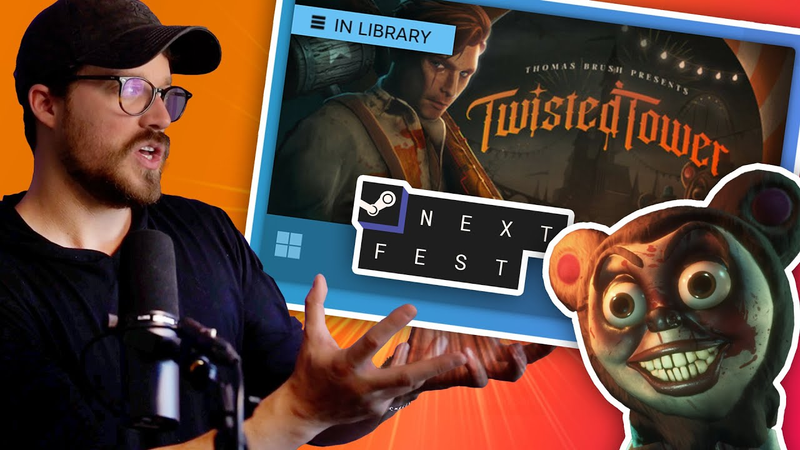
like, "I don't like the interface. I don't like this. Like, the character walks too slow." I'm like, you know, and that like I I was unprepared. I'm like, "I forgot what it was like." You could get like a hundred glowing comments that praise your stuff to the high heels, but it's that one that one negative comment that'll stick in your brain all day and make you hate yourself. And um yeah, and I guess like, oh, wow. Like, I forgot what that was like. All right. Welcome back. So, you released the demo last week. What day did you release? Um, was it Wednesday or Wednesday? Yeah. The Yeah, that's when I that's when I launched my game or my demo. Yeah. Yes. And so, um, Twisted Tower has been in development for three years. Mh. And I'm I just want to reflect how you're feeling because, you know, I'm three years in the hole. Like, it's it's a hole right now in the sense that it's like I haven't made any money off this thing. Uh, I've only spent hundreds of thousands of dollars. My publisher, you
know, they've they've spent money on it. Um, we've had five or six different people working on this thing. And all it is is a hole right now. There's no there's no profit. That's what it feels like. There's no profit. There's nothing. And so when you launch the demo, it's like this moment of this actually really matters because if they don't like the demo, why would they want to play the rest of the game? And it's terrifying. And so when I launched it last week, um we had a lot of people like it and this was like the first two hours, but then we had a ton of people pissed off because the controls were messed up. And I we had we we did like two months of QA and well you know it's about it's about a month to two months. I can't really remember. It might have been like six weeks. Anyway, we did all this QA. This
problem about the controls never came up once. Mhm. And then we launch it and it's all I see and it's like how how did I miss this? You know, there was something we did in the old skies demo. The very first puzzle which I it's barely even a puzzle. like you you think, right? Well, yeah, because it's like there's this locked you're you you land in the 1870s and you're in this like alleyway with a like the um with a locked fence and you're with this woman who's like this like, you know, brrawy boxer type. The door is locked and it's locked from the outside. You're inside the alley and so you you talk to her, you know, you like, "Can you boost me over?" She's like, "I got a better idea." She just kicks the door open. And it's it's a parallel to an earlier puzzle in the game where you need to like get boosted over and unlock it from the outside. And so like you there's a a character there's like your your handler, you know, in the future who you can talk to and he's basically a hint system. And if you ask him like ah, you know, I'm like I'm stuck in this alley
and he says, "Oh, didn't didn't you have this like uh didn't weren't you in the situation before? What did you do then?" And but the demo starts, you know, in at this point. And I it didn't even occur to me to like test the hint system. Yeah. Because it had always worked before. So like people like they're trying to figure out how to get out get out of the alley. They activate they ask him for a hint and he says, "What did it do before?" And and the testers are like, "I don't know, man." Oh my god. You could just go through, you know, it's this one stupid thing you just don't think about and it kicking myself. But, you know, I uh I had somebody um speaking of comments that just are that stick out. The negative ones are always the ones that are in my head, none of the positive ones. Someone commented on my YouTube I did a YouTube video about how the demo launch went and I said it started it started rough, but it it ended up amazing and it's actually doing incredible right now. Um, and one of the comments somebody said, um, I don't want to put them on blast, but what they said was something
like Thomas is so full of it, or he's so wrong, he doesn't even know how to release a game with proper controls. Shouldn't you have figured this out during the QA phase? And I I I'm sitting there going, if you've released a game, you know exactly what it's like to release it. one bug everybody finds and it's the one that you couldn't find. Yeah. It's I always say if the te if if none of the testers find it, it'll be like like a prominent some like prominent it'll be the f the first journalist to play it. We'll find it. The first like reviewer will find that bug. Yeah. And if not, it's always like going to be a really like prominent voice. I think Rihanna Patchet of all people, who I adore and admire, you know, she's great. She found like a like the game bugged out on her, unavowed, bugged out on her and the opening menu and I'm like, "Of all people, I'm so
sorry." Like, and um I know exactly why it happened, but it's just Yeah, it just happens. And it's like you at that point, but people like I often hear like, "Oh, like I can I'm free to express my opinion on stuff." like, "Yeah, you're free to express your opinion, but I'm also free not to engage." And it's like I I think this happened with with Ron Gilbert when he um announced the return of Monkey Island. Uh no relation by the way. I was going to ask. Nope. Uh and a lot of people were really like just just laying into the art style and he disabled comments on his own website and I do not blame him one bit. Yep. Because it's like he doesn't have to engage with that. I don't think people realize it's like even if it's a well-meaning bit of feedback, it could be innocuous. Like there there was um like when you're deep in the trenches, when you're stressed out, right? Making a game is hard. It's so stressful, dude. It it's like um like
anything like people could comment on a misplaced apostrophe and it sounds like a personal attack. Like there was someone I think who was like uh he criticized the font, you know, something so stupid. And I had like this angry response ready to go and I'm like no, like whatever. He can criticize the font, whatever. Like it's no big deal. I'm just going to let this go. You have like it's easy to say get a thick skin, but that doesn't mean it's impervious. You need to take like measures to protect your own mental health. And often that just means do not engage, you know. I totally agree, man. It's uh I have a public facing thick skin. Mhm. Where I can just say, "Well, thank you for w Thank you for playing. Thanks for the review. I love you and I'll do like a little heart emoji. But when I go to bed and I'm I'm staring at the fan at the ceiling, I'm like these mother I'm
just pissed off. How could you critique my baby? You know, I've been working on this thing for three years and you're mad about the texture. What about the characters and the writing and the plots and the puzzles? Freaking talking about like this. Come on. Like I don't see you like Yeah. Yeah. I know exactly what you mean. Like you want to know like if the writing is reaching people, if it's like resonating with people and they're focused on like, you know, the character walking a little slow or something like that and it's like, "Oh, come on. What about the rest of it?" I know. But thank God for that. Can't blame them. Can't blame them. I know. And and thank God for the Steam review system cuz I think it's pretty solid. Like even though you get some real nasty comments, um you can just all I look at is that is it very positive? Is it overwhelmingly positive? And that's all I care about, you know, for me. Some people read every single review. No. No. I don't touch it, dude. I think I like seeing the number go up and that's it. I'll look at the I'll look at the
original reviews like for the demo um and I noticed there's two ways to launch a demo on Steam um that people should be aware of. There's the way you did it and also the way that David Why did it I don't know if you know David why he made a game called uh We Harvest Shadows. The way that you guys have launched your demos is it's attached to the main application and there's no subpage. Oh, I see. So, is that you can people can leave reviews? Yes. Okay. So, and I say it like that. I say it in that voice because it's terrifying because I I released my demo last week with a se a secondary child page. And there's reviews on the demo, public facing reviews. And I didn't know this. Oh. And so I launched the demo last week and I could show you how to do it if you want to do it. I don't know if you want to do I probably don't. I probably don't to be honest. But anyway, then you have to get
them to you have to encourage them to write make write a review a second time when the game launches. Yeah. Yeah. So anyway, uh for me, I launched my demo and I started getting reviews and I didn't expect to get reviews and it was at it was at 90% and then it went down to 83% in an hour and I was like, "Oh no, please God." And so I went to bed that night stressed because the the velocity of the review or the ratings of the reviews were going like this. And so I took a couple shots of vodka, went to went to sleep and I woke up and I prayed to the Lord. I said, "Please God." And I opened up Steam and I looked at the reviews and it was 94% positive. Nice. And it was and and people were playing it. So now it's like almost at 500 reviews. Yeah. Wow. It's almost at 5. I'm just reading. It's doing good. Yeah, it's doing 45. Awesome. And today we had
two mega streamers play it. Um I can't remember their names. They're big though. They got like 4 million subscribers. So it's it's going really well. But I bring all that up because I didn't know that launching a demo was supposed to be as anxietyinducing as a standard launch. Wow. So you said you've been working on it for 3 years, right? Yeah, I know. When I when I released the Old Skies demo, I released a um another demo in 2022. So, I had been working on it for about 2 years at that point. Um but it was a different section of the game. Um, and I it was the first time, you know, like for a long time demos were like out, you know, and like like I I so I never bothered doing demos, but then suddenly Steam NextFest is a thing and everyone's doing demos and it's like, "All right, I guess I'll I'll I'll join NextFest and and do this demo." And um yeah, because it's suddenly it's it's like launching it cuz suddenly your work is out there. And that's like there's
something very vulnerable about, you know, this is why a lot of art and creative projects never get finished is because people are scared. They will like it's not perfect yet. It's got to be perfect. And they they'll let perfect be the enemy of done. Exactly. And they need they that that stress of actually being vulnerable. There's it's something very scary about that. It's terrifying. And uh I'm I'm still not used to it, especially now that like um this game has taken so long. It just feels like there's just more of my soul ready to be critiqued. And it's uh it's not the best feeling, but at the same time, I wouldn't trade it for anything. like when it works out, it's thus far I've been my instincts have been more good than bad and I'm forever grateful, you know, like I I'm just happy that people resonate with my work that they it means something to them and you know they
continue to come back. It means it means the world. Do you feel like um but your original question was what was my biggest fear? Yes. I want to know what that is by the way. My biggest fear is is having to stop cuz I love doing it. having to stop cuz like I I think I told you at the start of this that I I hated the jobs I had um and I don't want to ever go back to that. I've seen a version of myself without this. I've seen a version of myself where I'm not a game developer and I don't like that version of myself and it terrifies me that one day if if everything just you know dissolves or if everything just implodes somehow like if I don't know changes in technology changes in whatever I don't know um that like the fact that social media is kind of imploding that that's scary because suddenly it's like that's how I did all my marketing right and so like and the biggest worry is not so much that I'll the games won't sell as well, but that
I'll have to stop making them. That's all I ever want to do. I want to do this for the rest of my life. I concur. I I agree that that's probably my biggest fear. Um I think my first and foremost biggest fear is to be found out. Found out. Imposter syndrome kind of thing. Yeah. It's this weird feeling of Thomas, you really are just lying through your teeth. Nobody likes you. Nobody knows what they're doing. No, absolutely nobody. No, I found No, seriously. It's this inner Gollum though that's like you are such a liar. I found on on YouTube once, like on my YouTube channel, I found this video that had been made private. It was from like 2008 and it was just like this dev log I did where I just talked about like my games and how I felt like uh you know like how I was selling them, what I was doing. And it I I at the time I'm I'm listening to myself. I'm watching
myself. And I'm like, "All right, you might have less gray hair, but you are an idiot." Cuz I I everything I said was wrong goes against everything that I know now. But I was so positive back then. I had been in business two years and I thought I knew like I cracked the code. This is how this is how things need to be done. And I I guess that's why I I don't know if I ever made it public or what, but I was so positive of myself back then. Yeah. And I I pity anyone who might have taken my advice cuz I didn't know what I was doing. I still don't know what I'm doing. Like I've just because I've been lucky a lot of the time and I am grateful for that. I'm grateful every day. Yeah. And for me, for me, you know, uh part of my brand is I sort of basically just give I've been doing YouTube for seven years, I think. And part of my brand is just I I say what I'm learning and I just I teach it and I But it's so
true what you're saying. I mean, I'll look back on videos I did and I'm like, "Bro, what are you talking about?" And people are still watching it. So, I'm like, maybe I need to take him down or something. But, you know, it's it's hard because I and I've heard people say you you're an imposttor. You you have imposter syndrome because you're you're kind you just kind of are like you are an imposttor in the sense that you're you're not going to know everything. And the version of you that wakes up tomorrow knows more than the version that you are now. Yeah. And at the end of every project often you'll think gh I I would do everything differently. Of course you would because you learned so much while you were making that while you were doing the thing. Of course you would do everything differently. Um you're always learning. You're always you know if you if you stop learning then what are you? Yeah. And I feel like uh and that's probably why each each subsequent game takes so much longer cuz I I think about this I I think about the
the subject of um instinct versus experience a lot and how when I first started I didn't have any experience. I had good instincts but I just sort of went with you go with your gut. you don't know what you're doing. And I would just make stuff and it was messy and I just threw things together and I'm like, "Yeah, this kind of works. Let's just go with it." And, you know, for the most part it worked out okay. People like those games, but I didn't know what I was doing. But as I did more of them, I kind of developed a little mental checklist of, okay, here are the things I need to do. Yeah. And now when I make anything, I go through that checklist and I think, well, you know, like I I know like this doesn't work because I I've learned that this doesn't work because of X X Game did this and people didn't like it. So, I'm going to I'm going to try to adjust this and make this work and I'll spend weeks thinking about it and then go back. And um you know I spend so much time thinking about
every little bit and bob of it uh because I have that experience kind of getting in the way and I in a way I think it's good to have that experience. I think it it makes the final product much better but it can also prevent the product from getting done because I just think too damn much. Yep. And I it takes that's why this game has taken almost five years because I think so deeply and carefully about every single part of the process and people are going to say it sucks anyway. Like there people who are going to not like it anyway. So like is I sometimes wonder like is it worth it? Well, you know, but I think I think that that deep thought is what brings people back. Yeah. I think it's not so much that people will play this game. Like there are a lot of other adventure games out there and they they're just based on the numbers that they release or just the numbers on Steam. They don't sell any better or worse than any of my games do typically. But I think what I try to
do like I don't just want you to play this game. I want you to come back. I want you to play the next one as well. And so I I I want you to to leave whatever game I create. I want you to leave with good feelings so you remember to come back for the next one. That's that's good. That's what I always try to do. You know, I side note or just to comment on what you said earlier about becoming less and less instinctive and more wisdomoriented or it's like experience versus instinct. I think that's brilliant. Uh yeah, I think about people like Kanye West, you know, it's like being impulsive in your 20s work worked out for him. But I don't know if you saw what happened last week on Twitter, but like being impulsive when you're in your 50s or however old he is. It's like, bro, you don't you don't have that instinct anymore. It's vanished. You're that you only have that when you're in your 20s and 30s. Once you hit 40 and 50 or like I'm in my mid-30s and I'm already feeling this like my my my radar or my Spidey sense is just sort of
dulling down a little bit. I don't fully have that courageous in impulsive instinctive drive that I used to have when I was younger. But it should be I think to your point it should be replaced by wisdom and experience. Right. Um it should be it should be. Yes. Yeah. So I I people in their 50s do not have that instinct and they just I don't know like I I know sometimes like I know that especially in 2020 um there was a brief period of time where I was very angry on social media and just because of the the political climate and everything going on. Yes. And I I realized quickly that a I'm pissing people off who like potentially would buy my stuff. Y and B, it did not make me any happier or make me feel any better. I felt terrible and it didn't solve anything, you know? It just it was
it would never end. And so I stopped. And I think that was I think that was like the smartest thing I could do. Like if like I'm I feel like I do have a platform and occasionally if something does move me, I will say something. But there's no need to just unless I'm helping somebody. Yeah. Venting on social media is pointless. Yeah. And I try to remember that even when people like don't like my stuff. Sure. Sure. You know, there's there's different people there's there's different people who have different roles in the world and in social media. Like sometimes some people should use their voice on social media. There's certain people who and that might not even be their job, but they should use their voice on social media and people can learn and grow from it. But there's other people who they're better suited telling their opinions through a game,
for example, right? This was I was talking to Ken Lavine about this. He was we were talking about politics and on social media. I said, "How come how come?" I said, "How come you're so confident in your opinions when you express them through your characters?" but you don't want to get opinionated on social media yourself. And he was like, "Well, it's just because number one, my opinion's changed. I don't even trust myself." But number two, I think he said something like his his characters are more effective at telling his opinion than he is. You know, let the work speak for you. No, I I totally can get that. Totally get that. Well, that brings me to my last question for you, if you don't mind. Um, so you've you've you've created a a a name for yourself. You've created a a brand and a type of game that you you basically make uh sort of boware type um narrative games, right? Well, one of them was bowarish. Only Unavowed was like that. Oh, okay. Okay. Point being though, you've you've uh you've sort of
stuck with this and I know you don't like this because I watched an interview, this classic type of game making, right? I I get why people say it. I I don't like to call myself that, but um I I it's fine. Like if you want to call my stuff like I don't like the term of throwback or like golden age or whatever. Throwback. It's classic. I think I could go with retro. It's because it does it most of the games do use pixel art and that's fine, you know, like that's the aesthetic that it was like something that we could it it was an art style that we could um make cheaply and quickly and with with an artist like Ben, he could make it sing. So, I'm fine with that moniker cuz like there like it's not even pixel art isn't even retro anymore. It's I mean this I mean I mean the the the pixel art resurgence is retro. It's like it's been retro for 20 years. Yeah. Exactly. Exactly. It's not Yeah. I don't
even know what you'd call it anymore. It's just a style. Well, what you know, the reason I bring all that up is because you you have grounded yourself in a in my opinion a classic way of making games. But what does the future of the indie game industry look like in your opinion? Oh my god. Is there a place for you? And this is it's a sincere question and it's the reason I ask is not because of you. I asked because of me. You know, people are people are saying Thomas's next they say Twisted Tower looks like a mid2000s game and they're actually giving it a compliment. But it's that same sort of hey Thomas is making a throwback and I'm like no I'm just making the games I want to play. Yeah. Yeah. And I'm like is there not a place for me? Am I not modernized enough? M you know that's the interesting thing cuz I um I do even though I don't like like the the retro throwback moniker you know yeah it is a point and click style adventure game it uses those mechanics it uses that kind of style it's familiar and so there's this reputation that these games are
only played by like middle-aged nostalgics and I'm always amazed when I end up chatting with folks who are like really young um you know they're like early 20s or like they're even teenagers occasionally like they are and they discover games like this and they want to make them or they like my stuff. Um I I think that the fact that you're making the game you want to play is the most important thing because again it it it it's got to be sincere. if you're just if you're chasing what's popular. Um, a it won't be sincere. Two, that there's easier ways to earn a living, and three, like companies with millions of dollars to burn spend like they have whole teams of staff trying to figure out what's popular and gauging the market and even they get it wrong. Yeah. So, it's like I don't have a prayer um in trying to like gauge or like foresee what's going to be popular.
Um it's just I just don't I don't have that crystal ball. Nobody and all I can do is focus on what makes me happy because and this is a little esoteric, you know, like some people at the end of the day, you got to be it is a business at the end of the day, you know, but there are easier ways to uh easier businesses to run. I wouldn't be doing this unless I enjoyed it, right? I wouldn't have been doing it for so long if there wasn't a market for it. I don't think it's going to magically dry up. Um, but that said, I do wonder just like the way games are consumed, the way they're bought and consumed is changing. um just even in the the six seven years or so since unavoued. Mhm. The um I'm keeping a close eye on like stuff like game pass because like if if if like uh streaming services for games become the way people play games, then I'm going to have to change how I do
everything. I know. And because if like I don't like the idea of being paid once for my game and that's all the money it's ever going to earn. Even if it's a big m big even if it's a large amount I know that large amount is going to go be is going to go down over time. The but the game pass deals suck. Do they? I don't I don't know the next part. They do. They used to They used Well, it depends on what you're looking for, but I I I know they went from I'll speak I'll speak super generic here so I don't get in trouble. Whether it's Apple Game Pass or PlayStation Plus or whatever, it used to be like you'd get a half a million bucks. Yeah. You know. Oh yeah. The deals. That's what I'm talking about. The deals that for the developers. Yeah. That number has gone down. And then it's gone down to sometimes 50 grand. Oh my god. Which people listening right now, that's like that's infinite money. No, it's not. No, it's not. It gets you spend it on your
team and it's gone. That's like that doesn't even cover most budgets. Like even mine, it wouldn't cover my budgets. No. Like that's um like I like our most of our budget goes to burn time, you know? It just uh that that Wow, that's nothing. I'll go out on I'll go out on a limb and say that just just just to comment on what you said and and then I'll shut up, but the I actually I'm going to go out on a limb and say that I don't think the subscription model is going to be for the games industry. Okay, that's I've heard that the Xbox and PlayStation hoping you're right. Don't really like it. Like I don't think it's I don't know. I don't think it's serving their business model right now. Interesting. Okay. Why would they be paying less? I guess maybe they'd be paying less because there's too many. Probably because there's too many. So, I don't know. I don't know. I'm just My gut is is that it's dude, remember when you said like demos are back for some reason? Yes. It makes me wonder is it all going back to like the mid 2000s where it's like you
sell your games for 15 20 bucks and you put it on a a shelf of a storefront, not like physical, but like on Steam and that's how you make your money, you know? There's no weird tricks. There's no spa uh um whatever you call it, the subscription model. That's that's gone. I hope so, dude. I don't want it to become the Spotify of games. Like that would be horrible. I also was worried that like mobile would completely take over. Um like everything is going to be on phones and iPads and no, people still buy stuff on Steam. Um and that's that's great you know that like uh but yeah like I I for now like things seems to be working but it's like will things change you know and that usually just depends on you know how you know just how the technology changes and just the way people buy games and stuff that's always um that's always my worry that like it'll be if if things do implode it'll be through like no fault of my own. Yeah, it'll just be, you know, Gabe and retires sells Valve to
someone who just doesn't care and we'll just gut the place, you know, and just like wreck everything up, you know, that's the end of me because like and of a lot of people. Yeah, it is. It is. So, we all we all we all live through that fear. I I I love to sort of wrap up here, Dave. I I I love what you've done in the sense that one of my one of the things that I learned last year was I had all these people telling me, Thomas, you need to add skill trees or add extra mechanics to your game or you need to make it more dynamic or do all this modern stuff. And I I eventually told everybody, I'm just going to focus on story. Yeah. And it's worked out for me. And so I I I admire what you've done where story seems to be your focus, your character. Well, that's all that point and clicks have really. It's like what else? Why else would you play one? You know, there's I mean maybe the puzzles, but I find if I don't have like a a motivation or a reason to like push forward. Um I played a game. Oh
god. I And I I'm not going to mention the name because I do like the game. It's beautiful game. It's so much fun. It's a platformer kind of thing and it's um beautiful, gorgeous pixel art. It's just amazing. But the story was incomprehensible. It was like t like proper noun after proper noun, like fantasyish name after fan. I'm like I have no idea what the crap is going on. But the game was fun. It kept me going, but I'm like every time a cut scene happened, I'm like like I just I I felt like it would have been so much more engaging if that backstory and and all like the actual story was streamlined and made a little bit more accessible because the game was so much fun, but I think like the actual story was so muddled and like someone was just too enamored of like Yeah. You know, they obviously made like a family tree of their fantasy world and by God they were going to use the whole thing. That's right. That's right. It was one of those. But the game itself was a lot of
fun. Uh but yeah, it's just um the story is what keeps you invested. Would you agree that Dave, would you agree that less is more in storytelling? Me too. Meanwhile, Old Skies is the longest game I ever made. Well, I'm looking forward to it, man. And I want to let everybody know to wish to play the demo, wish list the game. It's uh so the link is in the description for that demo. Um and I hope everybody listening goes it goes down there and plays it. I think it's going to be awesome. Yeah, Thomas, this is a lot of fun. Thank you. Yeah, dude. I appreciate your time. Take it easy. Oh, and really quickly, by the way, this video is sponsored by myself. I sponsor my own videos sometimes. Uh it's sponsored by Fulltime GameDev. If making indie games full-time is a dream of yours in 2025, I can teach you what I've done. I've signed three publishing deals for my commercial indie games along with getting funded multiple times on Kickstarter. I've also hit the Steamfront page multiple times. So, I want to show you how I've done this and ultimately make games in Unity, GDAU,
Unreal, 2D or 3D. You can honestly take your pick in the course. You also learn how to market your game so it brings in actual money and so much more. For the next 7 days, full-time gamedev is 40% off for the massive spring sale. And this only happens once a year. This is a big one. Join 4,500 students worldwide. And I'll also throw in my 2D and 3D art programs completely free, but only for this sale event. And also, there's only 100 seats available. These will sell out, so be sure to check it out below if you're interested.
Auto-generated captions from YouTube — names and numbers may be misheard.
Key insights
6 takeaways · ~2 min read- 01Building a sustainable game development career is best achieved by starting with small, manageable projects that allow for rapid iteration and learning rather than risking all resources on a single long-term title.
- 02Developing a consistent brand and universe across multiple titles helps cultivate a loyal audience of returning players, which provides a financial safety net for future, more ambitious projects.
- 03Managing the psychological toll of public feedback requires a 'thick skin' that prioritizes mental health by choosing not to engage with negative criticism, even when it feels like a personal attack.
- 04The transition to full-time game development can be accelerated by leveraging platforms like Kickstarter, which provided the speaker with $100,000 in funding to transition away from part-time work.
- 05Creative projects often suffer from 'perfect being the enemy of done,' making the release of demos a critical but vulnerable milestone for gauging audience interest and identifying technical issues before full launch.
- 06Long-term development cycles, such as the 12-year span for the project 'Old Skies,' require a developer to have a back catalog of experience and previous successes to mitigate the risk of a potential commercial failure.
Ask AI about this video
Cite this video
Citation
Generating citation…















Comments