Transcript
[Music] Welcome to the Navit Gaming Podcast, where it is our mission to explore the business and future of video games. We bring together the industry's brightest builders, investors, and thinkers to keep a pulse on current events, dissect emerging trends and games, share lessons learned, and have a great time. This podcast is also part of Navik's growing ecosystem which ranges from free and premium research to consulting and advisory services. For more information, visit [Music] www.navic.co. This episode is brought to you by AWS for games. AWS for games aligns purpose-built game development capabilities, including AWS services like Amazon GameLift, as well as solutions from AWS partners to help game developers build, run, and grow their games. These solutions simplify how you use AWS, making it easier to select the
right tools for your desired use case. This reduces the time and investment required for game developers to adopt the cloud, leaving more time to innovate and achieve faster time to value. AWS brings over 15 years of experience supporting transformation for game developers including Riot Games, Scoply, Second Dinner, Behavior Interactive, and Nintendo. With hundreds of millions playing games built on AWS for games, thousands of AWS partners, and teams of AWS solutions architects around the world, your game is in good hands within the AWS community. For more information, visit aws.amazon.com/gametech or simply check out the link in the show notes. Now, let's jump into the episode. What's up everyone and uh welcome to the Novak Gaming Podcast. I'm your host, Alex, and this is our interview and insight
segment. Um, but if we sound a little bit different today, it's because today's conversation is extra special. Um, we are, my guests and I and several amazing audience members are here live in San Francisco um, in March of 2025. Yeah. Um, casting in from the Hathora Hub. Um, shout out to those guys, to Gabby specifically. Um, thank you so much for organizing all the logistics, the mic crew, um, the cameras. It's honestly been a tremendous amount of effort and an amazing opportunity for us at Novvic to do our first ever live audience show. And thank you to the audience for being here. I know GDC is a very busy schedule. We have lots of conflicts and so I'm honored that you decided to join um, Nick and I today. Uh, we're going to drink straight from the fire hose. So, I'm looking kind of nervous to be honest. Um, I've never done a live show before, but um, my guest Nick has spoken at GDC multiple times and so Nick, how are you feeling this uh, lovely afternoon? Uh, this this
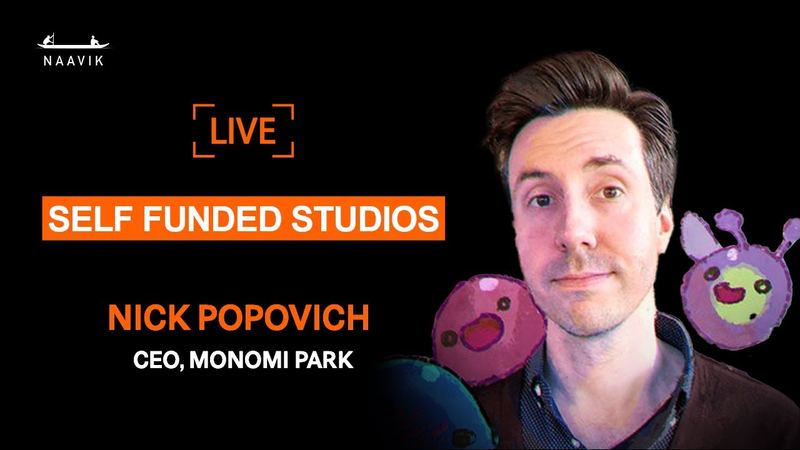
would be a great time for me to like stammer and not know how to speak in public after that intro. Um, I'm doing I'm doing great. Uh, thank you very much. It's it's always great to to come down to GDC and, you know, have these conversations with the same group of people that happen once a year or twice a year. Um it almost feels like you're like writing letters to people um back in the old days. Uh so yeah, it's a lot of fun. Yeah, that's terrific. Yeah, I think GDC is such a great place for the industry to come together. Um and you're so seasoned at GDC and so I kind of feel privileged to be sitting with you here today. Um and I'm exuberant to have a conversation about what I think people think is the epitome of studio foundership. Um and to set some context, uh Nick is a founder of a very successful indie studio. He's spoken at GDC multiple times. He founded Manomi Park in 2014. Um, and their debut IP, Slime Rancher, um, sold 10 million units on Steam. Um, woo. Uh, Slime Rancher 2,
which came out in 2022, sold around 1.6 million units, and the franchise has over 20 million players. Wow. We should give that definitely a furra. Most of this entirely DIY. Um, no external financing from Venture. Um, no publishers, no VC, no crowd financing, no marketing support, and very few or to none peripheral external development. I think you said at some point you had some support on physical disc distribution. Um, yeah. Yeah, we we partnered with uh Skybound for Xbox One and and PS4 distribution. Yeah. Yeah. But in in suff in suffice to say um you know in a market today where funding is retreating as VCs realize that the asset class might not be worth the squeeze and publishers are kind of recalcitrant to bet on anything new. I find our conversation to be pretty timely and topical. Um and so we're going to get right into it. Um we're going to be doing around a 45minut conversation and fireside style and then we're going to
open it up to audience Q&A. So start thinking about some questions that you might want to ask Nick. Um and let's roll. So, the first thing I'd like to do is we're going to go through a brief history of Manomi Park. Um, take me back to 2014. Who Who are you then and why did you start a video game studio? Um, well, the person I was at that time was was very tired. Um, I had worked for about 10 years making MMOs um at a company called Three Rings Design. Um, they are wonderful and uh I owe my entire career to to those folks. um and uh one of the OG indie developers like making indie games uh at a at a a a bigger scale um in 2000, you know, when there was like four people doing that. So, it was a it was a real privilege to be a part of that. And uh I got to see, you know, kind of how the sausage was made. And uh I'm one of those um like space aliens that knew what they
wanted to do when they were five and like stuck with it. And so it was always in my head that I was going to start a game company. And so I I I'm led development of a game called Spiral Nights there. Uh Sega was going to publish us. Then they bought us. And uh then I knew it was time to to to go when it was time to make another game. And so it was just that that was it. It was like a foregone conclusion. It wasn't uh really a confluence of things. I just um I just left uh the company and started my own thing. Yeah. And uh so you said you were you were you were very you were very stressed then um and you but you knew what you wanted to do. You wanted to start a game studio since you were five. Um I'm curious, did you start it with Founders and who did you start Monomi Park with? Yeah. So, uh, what first happened was I watched Netflix for 2 weeks cuz I hadn't taken a vacation in 10 years. Um, and, uh, and then I really Googled how to make a game in Unity. Um,
what what we had been doing at Three Rings was all in-house tools. And so, um, I didn't I I knew how to make games and I had a taste that I had developed. Um, but I, uh, I did not know how to code. I come from an art background. Um, so I just cobbled some scripts together and got the idea for Slime Rancher and presented it to the other co-founder of uh, Monami Park, uh, Mike Thomas, who I, uh, coerced into joining me and, uh, then we began the company that summer officially. Yeah. Um, and, uh, what what was his background? Uh, he's an engineer. Uh, so you guys were a good duo together. Yeah, we we worked alongside each other for almost 10 years, but not really ever together. But we uh walked to and from the train, Cal Train, uh right down the street. We walked to and from there for like 9 or 10 years, so I got to know him really well, you know, as a person. Got it. Yeah. Yeah. And I think actually one of the most interesting things that you shared with me um when we were chatting
and prospecting and seeing whether or not this episode could come together um was your slow growth model to scaling this studio. So over the course of 10 years you grew from two people you and that co-founder to 45. Most studios do this sometimes today in three months. Um walk me through your approach to growth. um specifically how did you know uh growing the team was necessary and how did it change over time? Yeah. Uh so a note about the 45 people even uh you know a a lot of that is fairly recent. So we shipped Slime Rancher 2 in 2022 uh with like probably around 22 23 people. So we've we've grown a little bit since then. Um, but really uh I at Three Rings I learned how you just grow slowly and you you like we we made an MMO that Spiral Nights game I mentioned was like a team of like seven at its core and you know we were competing for like MMO of the year and everything else
like like the best of them. So you can do it. Um but in terms of how we grew slowly, um it was basically a commitment to stay as small as possible for as long as possible and uh reach a I call it kind of like a requisite pain threshold before you're willing to hire for something. So you're doing that thing and you want to stop doing that thing or you want to be able to delegate it and you just keep doing that thing until it's so painful you say, "All right, no, this is definitely there's there's a job here for that." Yeah. I I kind of want to dig a little bit deeper there because there's this phrase that says like, you know, you want a staff, you want a staff to trough, not staff to peak. Um, and you want your team to flex to peak. Um, when you say, and it's so painful, what is describe a little bit more about what that might mean? Because I think that for maybe a lot of people who want to start their own studio here or currently entrepreneurs, you know, that what is the appropriate level of pain threshold? How long that should that be going on for? because you know for some people it
just might be like oh my god I've been so overwhelmed for a month or two definitely need an extra headcount. So what was that for you guys? Yeah. So I I think there's a difference between um something being painful in your work and something that's like bleeding you out. You know if you're spending half of the time doing your social media or whatever uh then that that that is a job that should be done. If if it is just something that is annoying, um you know, bringing someone on board, at least in the old days, uh having them move across the country potentially and like change their life for this job that you've carved out. Um that's a huge responsibility for you, the person who's hiring them. Like at Monami Park, we always say like this is going to sound a little creepy, but we don't mean it this way, is that we hire for life. um we're we don't um expect anyone to stay with us forever, but on our end, it is our responsibility to make sure that they have a job forever so long as they're
doing their job and everyone's happy. Um, so that's one of the reasons for the slow growth is like you have to figure out how this person fits forever. And then additionally, you have to adapt to all of the sudden there's new appendage on this monster. And so you don't want to have too many of those at once. You know, you have to you have to go slowly and integrate them into your company culture and make them ultimately like an advocate for your company. So when you bring on the next person, that process is smoother. That's really interesting. Um, and I guess like you know to that point of this is a job. Monomi Park is a job forever. Um, and you actually mentioned this example of I'm spending 50% of my time doing social media. That might be a job that someone else should do. Um, you know, you're a team of around 45 now. I'm curious what percent of the team today are direct developers. Um, and how especially did you know when was the right time to spend capital on a non-development head? um when a lot of
times at a studio that stuff that so social media or finance or partnerships might just get distributed amongst the developers themselves. Um well uh I think we have a perspective at our studio um and perhaps this is being ignorant but like everyone's a developer like as far as I'm concerned everybody at the studio is a developer. Everyone gets in the credits like everyone's doing something that is allowing in our case Slime Rancher to exist. So um a job is a job if there if if it's necessary for the company to run that office management is a thing or uh you know customer service folks or or it doesn't whatever uh that is necessary for us to function as a studio so they're part of it. Um there is no sort of separation at at our studio anyway. Um, so it it it becomes um that's not even like really to make a point so much as like it becomes much easier to think about adding people to your company in that
way. Um versus uh trying to determine like how how much um of a force multiplier they're going to be at at the end of the day how many commits are made or something like that. Like that that's that you're I feel like that's that's almost like a little too clinical. You have to you have to think that anybody that you're bringing on board is solving a problem for you because it was painful a moment ago. You know, there's that pain threshold. So, they're they're they're doing their part and they're they're part of what makes this ship keep going. So, I see. Okay. So, for you, I mean, obviously a lot of big gaming companies, you very much think of it as like your game development team and then you have SGNA. Um, and for you guys, you don't think about it that way at all. Everybody is core to the product. Um, and I really like that vision. I think it's um also, you know, probably lends itself to building a very strong studio culture. And so, can you tell me a little bit about actually how the studio worked together every day? You know, you told me that you're you launched Slime Rancher one with around like maybe somewhere like 23 people or something like that. Slime Rancher one.
Yeah. Oh, no. Slime Rancher one we launched with two people. Slime Rancher one you launched with two people. Okay, never mind. Um and then Slime Rancher 2 you launched with 23 people, right? um for the development process of this game. Um how can you tell me a little bit about how the studio worked together? Um one of the things you mentioned to me was that you guys never crunched and I think that's a pretty rare thing in game development to never crunch. Um how did you guys successfully avoid crunch? Um well so crunch being this like you know sustained over time and it's enforced and that sort of thing like yes we've we've never done anything like that. Um, and I think one of the reasons is we never did from the beginning. So when Mike and I founded the company, we were getting some art support from our friend who was our first hire after we shipped. Um, we didn't crunch either. We worked we shipped Slime Rancher in 18 months uh, from the beginning working 9 to5 or or 10 to 6 really. Um, and uh, he
would just show up at my apartment and we'd go in the spare bedroom and work and we'd take lunch together and like watch Netflix and we'd get back to work and we just had a very normal life. Um, and so my point is that it's really hard to change once you've created some muscle memory in your company. So, I think it's pretty normal to say we're going to be a scrappy startup and for now we're just going to hire all our friends who look like us and then later once we have money then then we'll diversify and uh right now we're going to work our asses off. But it's just till the product ships and then suddenly we're going to stop behaving the way that we've been behaving for 2 or 3 years. You know like that's really difficult to do. It's ingrained in your culture at that point. So, we wanted to make sure that the expectation at our studio is, you know, there is no overlord telling you this has to get done. Figure it out. Like, we'll figure that out. Um, it makes it very difficult though because you have exactly like one dial that you can turn when things aren't working out after you've like cut down to phone and that's just to delay
and that's it. That's all you can do. Like development almost becomes kind of boring in that way from like a strategic standpoint because there's very little that you can do overall. I see. That's definitely an interesting and very different approach I would say than because I think a lot of times you there is that strategic forcing function. We need to ship in Q3 of 2020X because if we don't make that date then perilous things will happen afterwards or if we're too early perilous things will happen in the beginning. Um and so it's an interesting approach of the preservation of your guys' culture which is how you were how you started that kind of creates that environment such that you're never going to bend that rule because that's just the way that you started. Um, I found it really interesting that you kind of mentioned that malleability about only till then and then we'll change. Um, definitely something to think about from the from the game development side and if you're ever starting a studio, um, the foundation that you kind of start with. Um, but I kind of want to shift gears a little bit. Um, thank you for sharing a little bit about Monomi Parks Foundation. Um, the team, the studio, the culture. Um, but I want to talk
about launching your very first game. So, Slime Rancher 1, I believe, launched in 2016. Um, it's your first title and you're sitting there in 2016 and this entire time you've been doing stuff on your own and I'm curious, did you ever think about finding a partner for distribution? Um, no. Uh, we knew that we had enough to, you know, ship it comfortably. um we had uh both of us um had savings and we um felt like if we were going to do something I think partly because we had come from a company that was independent for you know a very long time um we felt like it would be most valuable if we owned everything whatever art that we're creating that that's ours. Um it wasn't until after we had it that we then started looking at like games with gold stuff and the sort of opportunities that you get once you have a game. But um we were pretty uh pretty fixed on the idea
of um you know just doing ourselves. And I think partly is um for almost all of my career I never had that experience. So I I didn't even know how to work with a publisher. I still don't. But uh uh so it it just seemed very foreign to me like that that uh you would do that and I totally understand why folks do that. But at the same reason that like I was originally using the Mac or the PC that I was using. It's just what you were used to, you know. So um I think that's that's where all of that came from and we wanted to stay independent. Yeah. And you also mentioned something pretty funny the other day when you said I think quote I had never worked with a partner that was a force multiplier. Um end quote uh which I think obviously also kind of sets your it sets your expectations for what you're what you might be getting out of partner. Um and you know so okay so you decided you don't want to work with anybody and in 2019 at GDC you did a talk called um making games that stand out and survive
and your punchline of that talk was something like getting people to notice your game buy it and play it repeatedly. Um and so in a few maybe brief words uh can you give the highlevel points that you made um in that talk that for teams that want to accomplish this and how you applied that to Slime Rancher one especially given that you were independent. Yeah, sure. So I think um obviously things change rapidly and so I don't even know how much of of those talks are relevant but I know that some of it still is. Uh certainly um the idea that uh I know it seems very basic, but like that someone sees your game and wants to play it at the end of the day and like uh to unpack that a little bit. Uh they're seeing something that that catches their attention in some form, but most importantly, they feel like there is more to it than what they are seeing there and they want to engage with it to find that out. So I think a
lot of times I see and in in this talk it was about like basically think about your game as a GIF. Um which is not giving audio its due but just assume someone's looking at it on social and they don't have audio on. Um it's seeing can you encapsulate your game in a such a short form that it does those things and someone still wants to engage with it. And I should say and I should have said this at the top of everything. This is specifically how I make games. This is not like how everyone makes games. I have some very successful friends that would never follow my any of my advice because their games just don't function that way. That's awesome. I only have my own experience to offer up here. But I tend to make games that are kind of Nintendo. Um I like to think we make at Monami Park Nintendo-like things on PC um as a starting point. And so having something that uh teases the the viewer and demands more is great. Um I was
saying earlier like I see a lot of uh really wonderful uh indie games all the time that you you you go oh my gosh that's such an inventive mechanic and then you watch like 10 seconds of it and you're like what else is there to it? And that's so unfair but that's what everyone's doing you know like so you have to there has to be something about it. It couldn't even be the presentation of it. It's this thing that is interesting and it's got unexpectedly a gothic horror presentation or something. You go, "Well, I need to know what that's all about." Like, if you remember seeing Inscription for the first time, if that was presented as like a a cold sort of deck of cards in front of you and had none of that backdrop, you'd go, "Okay, well, it's a some sort of deck builder game or something like that." But there was just so much more immediately. it it created a mythology to the viewer and I think that's that's what made it such a hit or one of the reasons anyway. Yeah, I think you had mentioned like trying to get your game into a 50 to 30 second gif um to kind of capture and and
bring in the player, right? And then after that, you know, there's this phase. Okay, I've noticed the game, but how do I get them to play it? Um and so sorry, I skipped I skipped a beat. How do you get them to buy it? And then how do you get them to play it repeatedly? Um, can you walk us through some of your thought process around those two pillars? Yeah, I mean, how how you get them to buy it? Uh, you know, that's tough. Uh, um, I think I think, uh, I don't even know if I I outlined so much of of that in the talk of um, you know, the the how you then get them to transact. Um, but obviously point them towards the the store that it's on. Um, or point them towards a wish list. My god. Like, uh, Indies have links to a wish list in a store page in the like tweet or whatever it was that's like doing the numbers, the follow-up reply that's like, "Oh, by the way, if you could be so kind, please wishlist it." Like, no one sees that. So, like give
them uh an action item. Um, but how you get them to keep playing it? And again, not every game is going to do this, but can you uh have an environment in your game? I don't, it doesn't even need to be literally an environment, but some sort of platform within it where you can kind of rest and re-engage with the game at a higher level. So, like you're you're returning I call it home. Um, but you're returning back to this sort of lower stakes but still rewarding aspect of the game. Um, and there's a bunch of different examples across a bunch of different games that do that. But it's if you think about a player like oscillating their experience between high risk and high investment and then relax and then high risk and high investment and then relax. It could be the boss fight. It whatever it is. Um, you have to like dump them back into some place that isn't Netflix or their phone or something. Um, you have to let
them stay in the game. Uh, and this isn't anything creepy like you're this isn't so they can do microtransactions and everything. This is just so they're still playing your game and they might finish it and they might review it positively because people that do that tend to review it more positively. So you're just trying to foster um a more emotionally positive relationship with your customer by doing that. Okay. So you talked about these couple of principles. Um for Slime Rancher one specifically um how did you tie up these tactics um like kind of operationally, right? So like for Slime Rancher one, what was the 15 to 30 second gift for Slime Rancher one? What was the team needs a pulse to survive? What was the unique home friction kills? Yeah, so the um the gift was easy. Uh nothing at the time looked like Slime Rancher. Um and the other decision that we made. So with Slime Rancher, part of the fun of the design was um every time I like to make a game,
it's stuff that I've never done before. Um I never made a first-p person shooter, never made a farming game. I don't really like farming games that much. Uh never done anything weird with physics, all that. So, it was like it was a fun challenge, but we knew that social was a thing, streaming was a thing, all of that. So, um, Slime Rancher is an inverse first person shooter. Um, in a in a first-person shooter, you're looking at a subset of the screen as information travels away from the viewplane and you're tracking that information. Uh, Slime Rancher, it's in reverse. So, information is traveling towards the screen and it's getting bigger and brighter and more friendly to things like social. Um and so then uh uh the next part was um uh keeping them in the game. Uh Slime Rancher never really stops. You just it's just a platform for which you can continue to do the thing at at your your your leisure. Um, and so, uh, one of the
reasons that was fun was I had just come from MMOs where you're trying to hold on to customers in very specific ways and you're trying to get them to always reach for the next thing and the next thing and the next thing. And in Slime Rancher, we just put all the things out there in front of you and said, "Go get them. We're not really particularly going to stop you from doing it. There's no like invisible walls or anything like that." It was like completely liberating to do that. Um, and then what was the last part? I'm sorry. Ah, the the friction kills. You need a home. Yeah. Yeah. So, Slime Rancher is almost like pure home. Um, anytime you want, you can stop doing what you're doing. The game will not punish you and you can just go do something else. And I love that. Um, so anymore, for me at least, it's um the highest level of friction in games is for me is when agency is taken away from me. Um, so I don't like I don't like cut scenes that all of a sudden happen out of nowhere and everything. Like I I don't like tutorials that are telling me like I can only do this limited subset
of of actions right now. So um, Slime Ranchers tutorial Ser's tutorial is like 15 seconds long or something like that. Suffice to say, you're not playing any JRPGs. Yeah, I used to love them. Uh, and I every time I try and play one now, I I can't I can't take it, unfortunately. Um, and it's it has everything to do with my lack of patience uh as uh the person I am and nothing to do with the quality of those games, but I'm just a different person now. Um, so yeah, like Slime Rancher basically lets you uh exist in its world and just be and things will keep happening. So it it doesn't like the world doesn't revolve around you. Um the world just keeps happening. So even if you do stop, um stuff will pop out of the environment and little dramas will play out and that's really important um because we've found especially with two people just like to be in the world and we've invested a lot in features that support that particular behavior. I see.
Yeah. These like small tidbits of delight of walking around the world and something just exciting happens. Um but okay, so Slime Rancher, you've done all these things, you know, to get people to buy it, to get people to notice it. Um, you know, it's you said it's visually nothing ever looked like it. It was an inverse shooter. Um, you created a place of home where people can just relax and be themselves uh and explore. And the game sold 10 million units, right? It's a kind of a a huge indie darling success. Um, but when was the Beacon moment that you knew it was working? Um, you know, you sold 10 million units over a period of time. Was there a point in time when you had first released it? Was it a month after, 6 months after, a year after where you were like, "This is working. We have something really special here." Um, so I I knew that uh obviously I didn't know the success of it, but I knew we had something in the prototyping phase because um the way that we prototype stuff at Monami Park is we it's not a vertical slice and it's not um like all the features but gray
boxed or whatever. we uh make a simplified version of the game that we're trying to make like the core loop and um and then we package it almost as a as a game. there's like a a title screen and there's a an end point and you can play it again. And once we had our version of that for Slime Rancher very early on and it was fun and people wanted to keep playing it and they give you feedback of like I just wish there was more slimes or I wish there was more places to explore, you know, like from here you're building on bedrock and any features you add to it, you know, like um I everyone makes games differently. So this is not judgment. This is my own terrible fears about development. I never want to be in the situation of saying, "I bet you when we add crafting it gets fun. I bet you when you know or finding the fun," which is a very common gamedev thing. Super fine to do in my opinion when you're prototyping uh when there's 12 people working on it and collecting paychecks and you're still like finding the fun. To me, that's like nightmare scenario. So, like I never
want to be in that position. I know plenty of successful games have come out and will come out this year that did just that. I've just I I can't do that. Um because of the way that we run our studio, it's like every night I go to bed and I think of there's 45 families. Well, technically 44 because I'm one of them, but but mine included. 45 families like tethered to Monami Park. Um and they're their own families, by the way. We are not a family as a studio. That's creepy. Uh so I I don't like that there's not 46 families. There's just strictly only 45. Yeah. I I always like to think of Monami Park as a uh as a town um where you know uh a town is is nothing. It's a it's a a charter right at the end of the day and then people show up and a bakery forms and there's like really good croissants there and then there's like a coffee shop and a library and a awesome park and like it becomes a more interesting place where people are moving about and doing things
but definitely not a family. Um so anyway, back to prototyping. Uh following that um after we released um that Beacon moment was I was having dinner with my wife and I was like looking at my new best friend of like Steam activations and purchases and I was going like I thought something was wrong like I was like I oh I think we you know I think it all just paid for itself and you know wow that's wonderful this is amazing. Yeah. So, um, it was we definitely like got in I feel like right at the end and I'm, you know, making gains is mostly luck and privilege and all of that other stuff. Um, and I feel like it was like Indiana Jones getting his hat at the very end because we got in like right as Steam Greenlight closed. And so I feel like we got extra attention from Steam as a whole as a result of being part of that process. And now it's just it's way harder, but also easier in some ways. So, yeah. And
I kind of want to I want to talk about that part specifically because a lot of the things that you shared in that talk um about, you know, getting people to notice your game and making games that stand out and survive. Um attention spans, um black hole games, right? Well, attention spans today are even shorter than they were in 2019. Black hole games are even more black holy, I guess. um more games come out on Steam every day than they did in 2019. And so, how are you guys thinking about your gaming strategy now? Um you know, versus then in 2019. Um how are you keeping Slime Rancher relevant? Yeah, that's a that's a great and somewhat spooky question. Uh it is hard. Um, I thought that once we did what we did, you would like you've arrived and then when you do your next game, you don't have to worry as much. And now, uh, things are so there's so much stuff out there that you have this fear just like before you ever released your first
game again, every time you're thinking about releasing another. Um, the good news though is that uh with that is more people than ever before playing games. Um, and you know, Valve says themselves like when someone comes out with a earthshattering hit on Steam, it it like creates a ton of customers and they're not going to play that game forever. Um, so you have that on your side. And I think when we're thinking about our strategy, we're trying to be as friendly and as respectful to the customers time as possible. So when we're structuring our early access, knowing that people have these shorter attention spans and only so much time for stuff, you know, um, we ensure that our content updates as we are going through like right now on Slime Rancher 2, uh, is still in early access. um we ensure that if you return to it after being away from it because a new content updates there that
there's nothing that disrupts your previous experience. So it's I always like to say like it's like coming back into like a warm bath, you know, like it it should never be like well um weapons don't work that way anymore or you lost your save file or whatever. Like maybe that's necessary but that's friction. That's a lot of friction. And the other thing is those black hole games that you mentioned. Um I don't know if anyone ever wants to go into a black hole. They just find themselves in them. At least they they do in movies. Uh and so similarly um I think with a lot of games and maybe this is my own experience and the experience of people that I talk to those games that almost forcibly demand your time through FOMO and other things, you eventually develop a negative emotional relationship with it. and you quit in anger, you know. Um, I've had that experience. Yeah. Yeah. So, uh, someone from I think it was from maybe Boware a long time ago. I've never forgot this. I just unfortunately cannot remember who said it. Um, said, "Let
them quit your game." Like that's and we we do that at Monami Park. We we want you to quit when you're done because otherwise you're going to play more. It's like eating too much candy. Like eventually it makes you sick and you start resenting the candy. And so, uh, we want you to leave a good Steam review and have a positive relationship with your game. We'll do our part that when you come back, it'll it'll be like you never left. And where you pick up is where like where the content ended is where it begins now. Um, and so we want you to just come back. And so if you have ways to let folks disengage for a while from your game and create opportunities for them to come back, you have customers over a much longer period of time uh, who leave more positive reviews. And we definitely see that with our metrics. Really interesting. Yeah, it's definitely a very different strategy from what I think a lot of gaming companies actually aspire to do, right? I think a lot of from the investing side, uh, everybody's concerned about retention upon launch. Retention, retention, retention. Keep
them in, keep them in there and keep them forever. Um, and kind of extract as much LTV as you can get out of them. and you're actually kind of saying that by giving someone the freedom to quit your game, you're actually going to have a larger LTV and a more loyal customer base, which I think is very different from maybe the approach of some other some other studios. Um, and I guess, you know, now you have two games, right? Slime Rancher 1 and Slime Rancher 2. Um, do you notice any of those patterns of play between the two games? Um, you know, you used to be a one catalog game studio and now you're two. Has that changed anything for for Manomi Park? Yeah, I think we did not expect how sticky the original would remain. I thought it would transition people over, but we've been in early access on the second one for a while, so we see shorter play times on the second one right now than the first, but every time we do updates, that play time increases. Like, we just did an update in December and it like doubled the size of the world. So, obviously added a bunch of, you know, uh time to that. Um, but I think once we leave early access, maybe
then it'll kind of carry the the torch. Um, but I think also like there's something about the original. Um, oftentimes also people are getting it for relatively cheap. So, uh, it's, uh, it just sort of remains like we um, we did a deep discount on it last November, Slime Rancher 1, and uh, it was the biggest revenue date ever for it, like 9 years after release or something. Wow. So, you know, like that's that's what I'm talking about earlier. Like, let them quit. let them tell their friends, "Hey, I don't even play that game anymore, but it's it's five bucks. You should totally get it or I'll buy it for you or something like that." Like, let them love your game forever. Even if they're not playing it, don't use them for anything else. Uh they, you know, the the the proposition was you made art, they consumed your art, and they should feel good about it, and you should feel good about it because you got something in return to let you keep making art. Um, if if it turns into even
though it is a transactional relationship to some degree, if you turn it into more and more and more of that, I think the customer feels that way and they're going to be less likely to to recommend it um because they don't feel like they were part of this kind of uh personal positive experience. they felt like they got used by a game in some form, you know, that told them they had to keep logging in and then they lost out on something important and now they're like, "Ah, screw it." You know, and they're gone. Yeah. Yeah. I guess um I guess let's talk about that a little bit. Um, a lot of the people feel like the industry, um, on the on the in-industry side and maybe from the perspective of players, right, where they feel like there's nothing new and this game is just trying to keep me forever that the industry is kind of in a state of existential change. Um, what is your perspective on where the industry is going and um, maybe at the macro level and also how does that specifically impact the indie market? So, um I'm worried uh but um to some degree
like the problems that our industry and Hollywood and other things are facing sort of isn't my problem and that is these big projects are getting so expensive that there's no possibility for a positive return on it and uh things are uh more people are working on bigger things that are wonderful pieces of art that a lot of people play and deemed failures and that makes no sense. Um, so I think at some point, um, because of prestige television and AAA games and Hollywood going bigger, we flipped to this model of it's only super super super big and the only thing that like that is something that dominates the summer or the holiday season or it's indie and it's like under $2 million and it's a movie from, you know, 84 or something
like that. Uh whereas like when you look back at games and movies, there used to be multiple price points and the customers sort of knew that when this game is like a PlayStation game is like $10 cheaper and it kind of looks like uh uh Metal Gear, but it's not. That it wasn't like a bad game. It was just a little bit like under like the budget for it was probably smaller and uh it's not maybe going to be as long. it's like a a great rental or something like that we used to say. Um but also if you look back a lot of developers got their start making projects like that and now they're much bigger or they've just simply been around for 30 years. You know if you think back to the '9s there used to be um a lot of Hollywood movies that had big stars in them but were like thrillers. They were like suspense movies that didn't demand massive budgets because it was just people
learing at each other or sleeping with each other and then there was like a kind of a car chase and someone gets stabbed at the end or something like that like and they they did gang busters and at some point we said nah nah there's got to be CG and all this other stuff and it's got to be so expensive. So um how this comes all the way back I think there needs to be a correction and unfortunately right now the people suffering that correction are the people who are making the games not the people who are making those decisions. So, um, at some point you shed all your talent or you push them out of the industry and you're still sitting there, you know, slamming your, uh, your the table and saying, "I demand a new big experience. There's no one there to make it." So, something's got to give. I'm I wish I had the answer to that, but uh, yeah, that that that it's got to change. Um, for us down here, uh, making smaller games, I don't know if that changes too
much other than unfortunately you were looking for funding from one of the people that carve out a small piece of their pie to give to indies every year and now that's one of the first things that they're going to cut as well, right? So, well, I think uh, well, thank you for sharing your your perspective. I think a lot of people um you know people in this room people at this conference are trying to figure out where the industry is going in 2025 and 2026. Um and I have one more question before we start moving to our conclusion which is do you think you could do what you did in 2014 and 2016 with Slime Rancher 1 today? Um well I'm pretty fortunate that there's still not a a a well-known like Slime Rancher clone. Um, so that's like a whole other talk of like make a game that's hard to copy. Um, but uh, no, I I I don't I mean that's like saying like um that time that we were all done shooting hoops and I threw the ball over my shoulder to get in back into the garage or whatever and and sunk it. Like
I don't think I can repeat that. Um, it would be a bunch of things would have to come together. Luck, the same privilege that I had back then and others to to do that. Um, I do think that it probably today would still stand out, but would it immediately fade away as a result of like other things coming out and all that? I don't know. It's really tough to say. You could only know what's happening now and with the game like we're making a new game right now. We haven't announced it yet and like um it's a new IP and I worry all the time about it. Like is anyone going to care about this thing when we finally are ready to show it? You know, it's hard to say. I see. All right, so we are about to do a little bit of our first ever live Q&A when I want to complete this fireside section with three final questions for you and you can kind of answer these in maybe a shorter format, but for a long time, Manomi Park has thrived without a large external influence, but given the market um getting more complex, do you
foresee a partnership that would benefit the long-term vision? Yes, no, maybe. And if so, if you had to pick one, who? Oh, um 100%. Yeah. uh I would never say no to money uh under the right terms uh you know and so I think it's any I don't know if I would pick a a particular partner right now so much as any partnership uh that benefits the studio in a way that um you know we get to continue making our art and the partner understands that and trusts us to do that and understands the way that we work and we trust them in return that they're going to be able to support us and they will will benefit from this relationship as well. I think 100%. I know that's very hand wavy, but I think that's very important that um you uh have a partner where you know you both have skin in the game and you and it's not a lopsided relationship and then
they get you. They're not they're not just buying your game. They're not just buying the team. They're not just buying, you know, they're buying a process. They're buying a culture, an identity. That's very, very important. Okay. Um, second one. If you were to give one piece of advice to studio founders today who are midproduct development and trying to grow sustainably, what is it? I mean, I think it's probably hold out. If you're mid product, like you haven't uh sorry, is mid-product like you've shipped or that you haven't shipped yet? You haven't shipped yet, but you're making something. Okay. I'm clearly very savvy with this stuff. Uh I would say hold out as long as you can um to be as small as you can. Um so that uh you don't come out on the other side with something you can't sustain. Um I I think that's really important and it's not really just headcount and salaries. Um it's managing the relationship that you have with those people, their emotions and their lives. Like that is all your
responsibility. And if you don't see it that way, you shouldn't be hiring anybody. So, uh, you know, if you've got friends and that you can read each other's minds and all of that and that's why you're you're fast right now, that's beautiful. Just know that the first person in the door does not speak your language. Like, and they're going to have to adapt to work well with you and that's on you because you're the majority at that point. So, okay. And final question. Um, if you were to give one piece of advice to someone considering starting a studio today, uh, what would you say? And the answer can be like don't do it. Um, um, so I I think still, uh, stay small and and and whatnot, but I think if you're starting a studio, you're probably starting a studio because you have a game that you want to make, and that's wonderful. Um, don't just make a game unless you're doing that on your own and you're putting it on Steam for
free and you just want feedback or on itch or something beautiful. If you are making a game with the intent of generating revenue and hiring people, then a large part of your responsibility as a founder is you're also starting a studio. That's also a project that you have. You cannot make any piece of that uh a lower priority than any other piece of it because you will fail at that later if you do um do all of the boring stuff. In in 2014 when Mike and I shook shook hands and said, "Yeah, we're starting a company." We just immediately went to like a CPA and a lawyer and uh like got everything squared away so that at least there was a good foundation for building whatever we were doing then. Um, you have to do the boring stuff and you have to be committed to the idea that you are building a studio alongside building your game or else, you know, it's going to be an afterthought and it will show in time. Awesome. Well, guys, wasn't Nick wonderful? Um, please give
him a round of [Applause] applause. Um, we are going to do our first ever live audience Q&A. So, if you have a question, I please raise your hand. Um, and I think what I'm going to do is I'm going to repeat the question into the mic after you ask it cuz this will also air on our show this coming Friday. So, you raise your hand first. Okay. So, the question is, you were working at Three Rings and they were one of the standout studios making commercially viable but standout indie games and how did you bring that experience from Three Rings to what you do today? Yeah. So, I think I I we brought a lot of it. Um we I mean we still Mike and I will talk about at three rings dot dot dot. Um no studio is is perfect, but um I was incredibly fortunate to to work there um around a bunch of folks who were willing to make those strange pieces of art and try things. Um, and like I said, I I owe
Daniel James, Mike Bane, Tom Chafield my career because they took a chance on me and let me um lead lead a game long before I should have uh you know, so um I think that uh the way that um Daniel was was very open with the studio about what they were going through to run the studio and that it dispelled um a lot of uh sort of the the mystery that is surrounding like starting a studio and and I benefited from that early on as well. Like I I grew up my parents were always like starting little small businesses like a snowplowing business and things like that. And you know when you're little and you're like how do you write a check and pay a water bill? Being an adult is impossible. And like I I mean that seriously like I would sit there and think like there's a government and I don't how do you do it? And like and so then even running a company or starting a company that was insane. But then I saw my parents just like you know you just do it. You you
you know you you write sign some papers and then you just do it. And so I I just had in my head like oh yeah you just start a game company. That's that's all you do. And like that's insane but you just did it. And so when I I was very fortunate to eventually land at three rings where I saw them figuring stuff out in real time. it didn't feel like the doors closed like in the Godfather and then a decision came out later. Um, so I saw them doing that. I was involved in some of that and so we're we're we try and be as transparent as possible with our team so that they feel like they're um looped in on what we're doing as a studio. Um, yeah. And then we try and do weird stuff, you know. I I think we're, you know, our game's pretty weird. Hopefully our next one is weird still, too, you know. Um, it's good to have strange DNA in your company. Some awesome. All right. Uh, oh my gosh. Okay. Um, you can go. Okay. So, the question is, um, you've made a lot of games. Um, based on what you like, uh,
do you think that that's basically the best philosophy of making games? It it's one way of doing it. So, when I write, uh, I write, I picture one person as the audience. Um, and that person could be made up. oftentimes it's not uh when you're making a game, picture this one per it could be your friend and like what what they like and and make that because the secret is you know you're not special. uh there are other people like you and as long as the person that you're making it for isn't like your bizarre friend that only plays, you know, uh uh I don't know, full motion video FMV games from the '9s or something like although I just saw um Jake Bquette is making it FMV style like solitary game and it looks badass. So, uh yeah, trust your weird friends I guess. But yeah, picture somebody like I said when I'm writing I'm like write when when you write be it dialogue because there's always like undertones to your the dialogue and messaging that you have. You want that to be directed
at one person that'll make it authentic. And so if you're designing something, if you're designing it for this idea of a age span who likes uh Ben 10 or whatever, like whatever demographic people invent um who is that that's like a robot or something grown in a petri dish, like you have you have to think about the human side of what it is that you're making um and direct it there and then that's a great starting point. Awesome. Uh you and the white sweater. All right. So the question is how do you maintain a healthy development culture? Um what's maybe specifically you do you talked about this a little bit to avoid crunch. Um but what other things do you guys do? Um yeah so on the subject of crunch like uh you you just take that off the table completely. You have to plan without it. Now that said if if we're doing a sprint or towards release and we find out oh somebody worked a couple hours of overtime this week or something the way that we handle that is you make it make it up immediately. So,
we know we're realists. Like, we know uh our office managers got to run payroll around Christmas time. Like, we we have the office shut down during that time. So, it's unreasonable to think that no one will ever work outside of our normal hours. Our social media marketing, they sometimes work weekends because they're running like an event or something. Um and what we do there is like, okay, well, you had to work a Saturday, next Friday you have off. Like, you just follow up immediately with it to make sure that it isn't something that's building, but it is not perfect. um you know we'll catch things here and there where we're like we need it's you need to be constantly evaluating your processes and I will say it is hard to make games and not have this you know dial that you can turn where you're just like oh people work harder and faster and then we're able to ship uh you know that that's tough um but that said not to uh uh immediately uh uh play devil's advocate there but that doesn't work anyway so you know I don't think crunch works and that's one of the main reasons that we don't do it. Um so yeah uh but
yeah, you have to be constantly evaluating what you're doing and uh talking to folks as much as you can and know that you're going to screw up and whatever you just did, there's going to be a little bit of a of somebody caught in the wake of that and you just have to try and do your best to not do it again. Um even the beige sweater in the back. back when your company was just two people, how did you decide payment between the two? So, um, we, uh, split the company when we started because I wanted someone who was, uh, equally as invested as I was. But crucially, it's slightly off from that. And that was so that if ever two guns are on the table, it isn't just a standstill. Um, that's a really aggressive way of thinking about like how you do business with your your co-founder. And it's never happened. And I think, you know, part of that is because of who we are and part of it is because we have the structure that we do and everything. Um, but early on there was no compensation. I mean, we just
worked those first 18 months like we we weren't collecting a paycheck or anything. Um I uh I think both of us like took very little few vacations over 10 years and we just saved and like you know I was I was I was going to into business with someone who was financially like-minded as you know for me um I think it's healthy to have if you have two founders that one is different from the other and that's that's true with us but uh you should be the same when it comes to things that could potentially screw you up and Money is definitely one of those. So, we're we're very like-minded there. I see. Um All right, Daniel. All right. So, the question is, when you were launching Slime Rancher 1, um what percent do you think of your Slime Rancher 1 audience and your community was built prior to launch versus post-launch on Steam? Um yeah, I I think we had a very small audience before because we were doing nothing. So, Slime Rancher One had no
marketing ever in its lifetime. Um, we only started doing marketing for Slime Rancher 2, I think, after launch or something like that. So, that was the other thing is like everything on with Slime Rancher was organic. Um, so going into the release of one, which was in like 2016 on Steam, uh, we had a small group of people who had gotten a hold of like a beta that we made and to just make it as old school as possible, they were exchanging it via email um, in a zip file. Um, so one of our friends and family people leaked it. Some great job there. Uh, and I I was finding videos of it on YouTube and it was one of those moments where it's like, do you see this? Do you see what's going on? It's going viral. Um, so I I was more mad than anything else because I was like, we said in the email, you shouldn't share this with people outside. So, I think there was already a bit of a demand because we had I I I wasn't paying attention to this at the time and we had like influencers reaching out to us and like, can you give me that game that I see other people playing? We're
like, it's was not ready. That was like a beta. So, technically the game sort of released like holiday 2015, but for real in 2016, and then it was Steam doing its thing. Uh, I think you know, uh, with with Steam and just like any platform, that little notification that pops up that says so and so is playing Slime Rancher in this case, like that's one of the best pieces of advertising that any platform has. And when your game's called Slime Rancher, you know, you're like, why is Brian doing that? And then we just keep because, oh, let's pull it all together. Because you've created home in your game and someone's repeatedly playing it, returning to it. it just keeps popping up and eventually you're like, "You've warned me down, Brian. I'm gonna check out what this game is." So, I I think there was a bit of that going on, but we didn't come into it with like some prior audience because one of us was like a Twitch personality or something like that. Not at all. All right, we can probably take one more question. Um, okay. Oh my gosh.
Okay, so the question is, um, a lot of success is derived from luck. Um, our question asker asks, "There's 50% dub luck and then there's 50% planned luck. Um, what do you do to prepare to seize that moment of planned luck?" Um, so again, personal experience, but I think you should learn to work hard at things. I don't mean like you could paint textures or code really fast. Like um, growing up I I worked a lot. I worked in like a warehouse and all of that. I I you know, you're pushing carts. you're learning the value of hard work and especially you're learning things that you'd rather not be doing when you're older. So you get in this this groove of like the things you do you do well and you are committed to them uh because it's a job that needs to get done. So that's what gets you your game. uh after you get that success, I think the way that you could prepare for that moment is you should be thinking about as
you're making your game because and you're working hard to do this. Uh why would it be successful? I think that's a that's an important question. Um and there's like probably a whole talk about this, but are you making a game that has the capacity for success? Um because if you if it doesn't then there's even more factors stacked against you. So what I sort of mean is like you know is there something really different about it um is it filling a niche that you think is currently underserved like what is it about your game that you see it fitting into the marketplace? Because once you have like you just imagine that scenario that it does like see this is where it would fit in. All these people grew up playing Sim Ant and no one's made an ant game until like, yeah, just recently. Like, come on. Uh, so you took that bet, you were correct, but because you understood that what you were doing, you know, a way of
responding to it as opposed to like you were walking down the street and now the ball's in your hand and you're like, what is this? you know. So, um I think it's really important to understand how your game could be successful in addition to like really hoping it does because if you're just making a a genre entry straight up, um you've got a lot stacked against you. That worked in like 2008. That was like there was a a bunch of indie games that came out over the years recently where you're like, damn, 10 years earlier and we'd be still talking about them. But that doesn't cut it anymore. You have to be doing something else. Um, in addition to just making a great game, putting in the hard work. You have to figure out like what is the shape of this game's success even look like. Um, you know, and you don't have to. Plenty of g people are successful and they go, "Oh my gosh, look what I got." Um but yeah, I think preparation is is uh is helpful in that scenario because you're just going to move more quickly uh to serve the influx
of people that you have and you know anyway that's all. Amazing. Fantastic. Well, thank you guys for coming. This is the end of our show. [Music] If you enjoyed today's episode, whether on YouTube or your favorite podcast app, make sure to like, subscribe, comment, or give a fivestar review. And if you want to reach out or provide feedback, shoot us a note at podcastnavic.co or find us on Twitter and LinkedIn. Plus, if you want to learn more about what Navic has to offer, make sure to check out our website, www.navic.co. There you can sign up for the number one games industry newsletter, Navic Digest, or contact us to learn about our wide-ranging consulting and advisory services. Again, that is www.navic.co. [Music] Thanks for listening and we'll catch you in the next episode.
Auto-generated captions from YouTube — names and numbers may be misheard.





















Comments