Transcript
[Music] welcome to the navic gaming podcast where it is our mission to explore the business and future of video games we bring together the industry's brightest Builders investors and thinkers to keep a pulse on current events dissect emerging Trends and games share Lessons Learned and have a great time this podcast is also part of novic growing ecosystem which ranges from free and premium research to Consulting and AD advisory services for more information visit [Music] www.nic.edu are nikama the open source backend game server hero the game development framework for all your live service game features including the complexity of managing offline mode Satori the
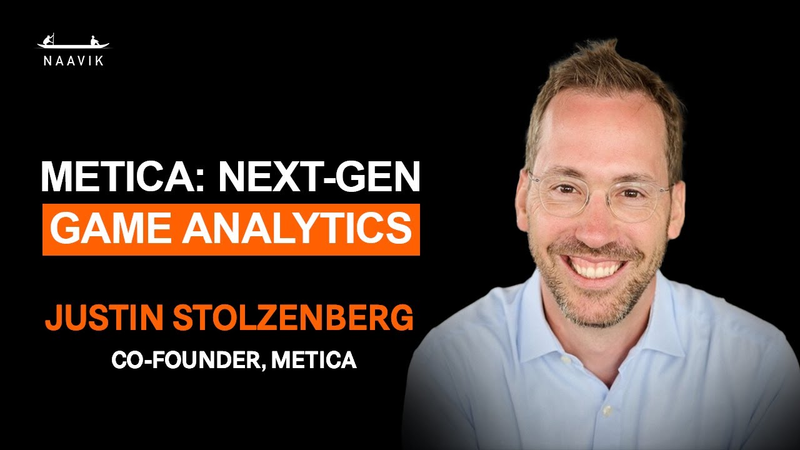
worldclass live Ops product for maximizing monetization and retention and lastly the heroic Cloud to provide massive scalability after nearly 10 years of operation thousands of Studios trust heroic labs to help them focus on their games and not worry about game Tech or scaling for success to learn more and reach out make sure to visit heroic labs.com or check out the link in the show notes now let's jump into the episode hello and welcome to the novic gaming podcast I'm your host Nick oori and today we are shining a light on Meda a startup that's looking to reshape how developers build analyze and grow their games Medica recently announced a 9 million seed Round And if you've only skimmed the headlines you might think great another Analytics tool but the medic team is positioning the company as something far more ambitious one that blends cuttingedge analytics Aid driven insights and developer friendly platforms and workflows into a unified platform in a world where data is
everything Med aims to help creators navigate the complexities of user acquisition monetization and retention while still living room for the creative spark that makes games truly great so today I am joined by Justin Stenberg one of meda's co-founders today's conversation we'll cover Justin's background how Meda came to be the origin story and why analytics needs a Next Generation approach in the age of AI so let's dive in Justin welcome to the Pod yeah thank you it's really nice to be here and looking forward to our conversation wonderful all right well with that let's dive straight in so we always start with the background of the founders and the founding team uh and the ha moment for the foundation of our company so why don't we start with your background Justin as well as your co-founders I know there some really interesting backgrounds from from Apple and King kind of blending a data driven approach with like this you know the Apple ethos of uh Beauty and and design um and then how Meda itself came to be yeah um so my own background is as a
game operator I get into the industry by complete coincidence that doesn't matter here uh in 2002 uh and then back in the day in Germany browser games were becoming a thing um we had a couple of re and I found my way through um monetization analytics Performance Marketing um into various uh publishing roles um I co-founded two companies um in the last 11 years I've been focused on mobile with companies like flare games and Phoenix games where I was a Founder as well now um metic I would say uh at its core uh has been around for probably 15 years plus because it's almost the same team um that uh created two prior startups and as you already mentioned U then transitioned through acquisition first into King and later um the second startup uh into Apple um but the core mission was uh always centered around creating grow both for game
developers um through messaging through personalization and um kind of more more and more modern takes on uh segmentation got it got it okay um and so when did uh Meda itself actually get founded it sounds like the team has been together you know for many years now um but how about the company itself when did you guys uh found the company I know you just announced the seed round but sometimes these things get announced much later than they actually happen that's right yeah uh two years ago um and the first pro probably one and a half years was built on uh was was focused on building the platform kind of creating the underlying engine and the vision um our approach is very much centered on um learning from customers and so while building out um our core team already LED with potential customers and uh really iterated a couple of times um and the last uh nine months we focused on first use cases in working uh on scaling
the platform scaling the customer base got it got it okay uh now I mentioned the in the intro as well I and I did not at all mean to be derogatory because analytics is the you know the lifeblood of of uh almost every startup these days uh you know without data you're nothing you don't know what you're you're you're you don't know what you don't know right so it's really critical um so but at the same time the analytics space in gaming in particular is is quite saturated has been quite saturated for a long time uh yes new startups pop up for example company we're using post hog for the first time we used amplitude in the past we've used uh um a mix panel like all kinds of things that going way back to Zinga when analytics tools actually weren't very common um early Zinga you know Zinga famously built their own stack called zra um uh but but today fast forward to today it's it's pretty well saturated uh lots of tools that track user funnels LTV you know retention engagement uh specifically for for gaming so what Gap are you guys going after here um you and your co-founders that's kind of positioning
Meda for a Next Level solution obviously youve raised 9 million seed round we're going to get to that in a second um so clearly your investors believe pretty heavily in what your vision is so tell us about what that vision is and what gaps are you filling in the market yeah F we look at um a different part of the analytics stack we don't want to be yet another dashboard because yeah n you're right there are many many really good solutions for that already um but if you're a product manager and as I said I work in that space for many years um it is then still quite a big task to take those insights and or take take that data take the pure observation generate actual insights and then uh take action and mea focuses on shortcutting that part of the equation uh we're basically taking the raw data game Feed we're enriching that with data that we can take from the networks and from the App Stores um to have additional information where user comes from Etc
um and then basically provide the game with segmentation on steroids so um really action oriented what a player should see an ad or an IP offer what level of difficulty should a player experience what what life operations events should be delivered um and all uh looking not at this this classical rule tree that many of us PMS have constructed our Al um but truly uh personalizing and most importantly learn learning on an ongoing basis um so it's a an action company uh more than analytics company I would say interesting okay and what kinds of developers are you targeting um with your solution what you're describing sounds amazing but you know a early stage games company that has a small number of users you know that's segmentation Overkill you know trying to figure out plus you need the features to say okay I'm going to serve you an ad and I'm going to serve you an iip offer that's 50% off and I'm going to serve you an off at this 100% like yes that's
the Holy Grail of personalization um every game company seeks that but usually when they get to scale um so is it fair to say you're targeting later stage um companies gaming gaming Studios or uh is your solution something that can scale down essentially I don't mean down but you know scale to an earlier Stage Company um without feeling like it's Overkill without feeling like it's too much I think you're hitting on a key point because um all things AI machine learning whatever you want to call it certainly need a certain number of Statistics um and if you're in soft launcher buying 500 users a day then let's not talk about personalization um I think the sweet spot for us of course we work with a couple of very large customers but the sweet spot for us a game is almost ready to scale um maybe has already 30 40,000 diu or so
but it's looking for a 10x 20x or so growth um what very often happens and probably you as well as I did many times is you you spent a lot of time in that time period to try and find the optimal treatments you set up many many AB tests and these rule based segmentations and you tweak everything but in reality if you 10x your traffic after all you would have to go back and retest everything um and there a lot of time is wasted a lot of energy is wasted on what we call um one siiz fits non treatments that come out of such AP test Cascades so what really looking to address is that when developers see a a fundamental product Market fit to help them uh accelerate through the so instead of setting up many many AB tests and then choosing one or two variants how about you instrument a machine that can deliver variance intelligently over
time um and so scale comes as a a kind of byproduct to some degree um it is a requirement for certain use cases we always recommend developers not to start with crazy late game iip personalization Theory because for that you need a lot of traffic but if you look at uh some of the use cases I mentioned earlier difficulty you have so many gameplay sessions uh you easily reach the statistics even with aame game that has 30 40 50k diu in a kind of early launch phase got him got him okay all right well let's talk about the AI and machine learning part here now obviously we we all know AI is everywhere and you know all you got to do is put AI in your pitch deck and you suddenly you've got yourself uh you know a nice seed round LED by andreon or you know some other top firm um and you know maybe 80% of that is is hype uh 20% is absolutely you know absolutely Cutting Edge stuff and it's going to you know
change our lives in many ways so let's talk about what you guys are doing specifically with AI um what are you doing with AI machine learning how does it work under the hood uh to deliver all this personalization and this kind of smart um learning uh I guess algorithms that are are helping to guide the the user into the right direction the right difficulty the right iip package the right ad at the right time yeah um it kind of goes back to the journey of our core team um I mentioned earlier that um our first um and that was in the when any was just taking off and after a few years there um it hit its peak was something like 250 million di um at that time uh heavily segmented the permutations multiplied to tens of thousands of different segments that in the end nobody could manage anymore nobody knew what delivered to anybody and probably at sing in your experience my oh my
yeah um what we learned there is how powerful but also how unscalable manual segmentation rule-based segmentation uh would be um and fortunately just a few years before that um on the advertising site uh Yahoo and um I believe two years later Google published papers um on a new approach to eventually recommendations or segmentation systems um um and that is the same approach we use as well it's a family of um of techniques called contextual multi-arm Bandits um that you could basically describe as an as an online learning system um so it uh takes into account not only kind of static inputs like what US acquisition Source a user comes from or how much memory their device has um but constantly retrains and constantly reacts to gameplay patterns of course purchase patterns is somebody actually watch ads or not what is the CPM that
you get for their head impression um that takes these many many many per permutations and then derives a personal preference uh from it now it's not something that we invented we we just apply it um and the team did this at uh incredible scale uh during the time at Apple um but it's a very very proven approach that um to our knowledge uh in gaming almost never uh almost nobody is using at the moment interesting interesting can you repeat that multiarm Bandit thing because that's a a phrase I'm going to try and remember for the rest of this episode yeah uh it's the contextual multi-armed Bandit contextual multi-armed Bandit all right that's that's a phrase I've never heard before I've heard of the one AR Bandit and I worked in Social Casino slots for a long time and you we actually had a company acquired there so I I know what a a one-armed Bandit is but I did not want to know what a contextual multi-armed uh B it is uh
yeah tell us a little bit more about what it actually does uh because I'm super curious about about that aspect if it's Unique to you know gaming and to segmentation definitely curious to hear a little bit more about that go under the hood one level deeper yeah um so we also have technical people in the team that are way better at explaining that than I am I'm just the the that's why I'm not technical either and I think most of our audience isn't super technical you know gaming Executives so so explain it like a 5-year-old right which is where my level probably is right now um it's basically um a system that can estimate probabilities uh of a certain variant achieving a certain outcome um and so that's the at its core uh purpose of a multi-armed bandit um so like in your slot machine that's I believe actually where the picture comes from it has multiple arms right yeah it has multiple arms yeah arms over time um and the piece that uh makes it really interesting for these
use cases here is the contextual aspect because it learns not one set of probabilities across its variant um but it learns this for every player context player context here as I said uh containing or is incorporating things that a player comes with if I install on my fancy new iPhone 16 then a lot of people and a lot of segmentation trees will place me into the high value bucket um but our contextual multi unbanded can then very quickly learn that um I'm super stingy or I'm just not interested in paying because I visit the shop 25 times and the only thing I ever do is claim the free packages um and human would really struggle to reflect that quickly enough in a rule based segmentation tree um but that's where machine learning excels if you have significant statistics um so fundamentally how it works is uh that each variant is assigned a ability in a certain
context and this machine retrains in our case uh once per day with all the latest data and can be quered uh in less than 200 milliseconds to return any form of decision that you want can be the difficulty can be the price of an offer be show show an ad show an offer um can be related to engagement and life obsess well I mean this honestly this sounds very exciting to me uh I'm gonna have to hit you up afterwards to see if if Meda is a good fit for for what I'm doing uh at this moment in time but I mean that's that's literally the the Holy Grail you know what game developers are trying to get to it's it's been like ever since my early Zinga days like it we talked about personalization we talked about segmentation we did a lot of AB testing obviously um and but it was very manual like you describe and I think it still is to this day fairly manual like yes there's more tools there's more analytics packages that can help you parse the data but you still need a human being to have a thesis around like okay I wonder what happened if x y andz person is put into this bucket or versus
that bucket um so this is this is very fascinating to me um at a kind of a not just an intellectual level or as a podcast host level but but as a actual developer myself um okay and if you may um because you're you're I think hitting on the key point a lot of energy for product managers is spent on kind of monkey work um and what we want is to elevate and kind of free up all that uh cognitive capability uh and focus on the actually interesting things like what are interesting variants um it I think is similar to how creative testing uh and the workflows of UA managers have changed and not by coincidence because Google and Facebook and all these other networks are using the same family of algorithms for their creative optimization that's where actually comes from as I mentioned
earlier um so instead of minuscule campaign setups nowadays you have a lot of free time that then as a UA manager you can spend on coming up with crazy new creative ideas completely different audience strategies Etc and that's basically what we envision for the in as well yeah fascinating really fascinating okay one of the things that I found really interesting about the background of the founding team is this you know King meets Apple culture um king of course famous for being you know hyper data driven obviously massive scale in terms of you know Gamers like Candy Crush what did you say quarter billion da at at Peak or was it even higher I can't even remember what those numbers like crazy numbers right um and varat rative and you know level after level after level like you know hyper optimized and then Apple yes they obviously have that as well these days but they're more famous for the high polish like we'll take our time like you know we know what the customer wants before the customer wants it like we will we will decide what the iPhone
looks like and you know not the market research or anything like that um so I'm curious to hear how how do those two cultures mesh at Meda um you know which obviously you're an analytics platform so yes I get the king part where does the Apple high polish High Vision High conviction um you know culture come in well I'd like to think that our platform is beautifully designed and quality standards as as well um and so far that's the customer feedback as well um but it's really probably important to differentiate between um Apple hardware and that's where the sh talk about comes from a little bit um and apple service for our team so I I don't think it's uh my place to speak about the differences very much so I'd rather kind of focus on on the similarity a little bit um because there's a very consistent learning from both of the these places and that's the
the building for scale aspect um and I I would really say that in in gaming uh because nobody even the most experienced game makers nobody can predict zit and know whether a game or not you kind of have to be ready um and that's fundamentally what we want to bring to game developers um instrumented in a way that if you hit 250 will we we will be capable of going all the way with you and delivering the same kind of real-time uh decision engine that that you have if you have 50kd when you start your journey with us um so engineering quality and Engineering for scale um is very much at the core and having solutions that um scale both in terms of processes uh and uh the underlying engine got it okay uh and I'm pretty sure my next question was was we heading into this I'm pretty sure sure that um you know raising a 9 million seed round
uh it helps to have King and apple and a prior acquisition prior Acquisitions under your belt but nonetheless you know 9 million seed round for you know what is and again I I mean this in the nicest possible way because I'm super fascinated SP yet another air quotes here if you're listening and not watching on YouTube um yet another Analytics tool or analytics platform must have been at at least a little bit challenging can you tell us a little bit about the kind of the fundraising Journey what are those funds going to um you know how are you going scale where you at right now as a company in terms of size and you know whatever you're comfortable sharing um so I think next to the technical approach that we take um that unlocks a lot of uh scalability and a lot of value previously achieved by in-house build Solutions um a second thing that is quite unique to us that we look at only in-game optimization but holistically at growth um today we have the inapp personalization site um and we
have a targetable signal that we give back to Facebook and Google on the same data feed um so we're already uh serving both us acquisition teams and monetization teams um and that allows us to have a very different footprint inside gaming organizations compared to kind of single purpose or more narrow uh analytics Suites or um I'm not ready to talk about just yet what we're going to to do beyond that but it basically doubles down on this thesis that growth needs totically um that you need to as we call it basically close the growth Loop the more you the higher your scale ability the better users you bring the better your kind of continuous optimization like um our ambition is not to be an Analytics tool but to to basically own the category of AI driven growth for gaming oh I like the sound of that growth growth is on my mind as well at
my own company here um so you've been in kind of stealth uh you're I'm almost certain you're not going to share the names of the companies that you're working with um but I'm G to ask anyway I wouldn't be doing my job otherwise um what are you doing right now in terms of testing right like you're you're clearly coming out here fairly confident you know want to make some news you you put out your press release in uh last month I think or just like a few weeks ago announcing the 9 million raise and of course you've been around for a couple of years um so typically as a Founder myself that that tells me that you're you're fairly confident you're ready to kind of come and do the next phase or the next step what have you been doing up until this point who have you been working with any names you can share scale of the the companies that you're working with that you can share and what have you learned during this period over the last couple years of testing the product um yeah we're still very careful in terms of not giving away too much because we feel it's um an extremely exciting opportunity and um we have a particular angle that we that we don't
feel ready to give away just yet um the majority of the time since founding the company was really uh focused scalability uh into the underlying engine um and then as I mentioned earlier the last nine months uh we spent on applying the technology there are a couple of challenges that I absolutely happily share um uh that we that we disc way and fortunately solve for the most part um and that's particularly related to kind of learning personalization to some degree um the the simplest thing uh as a product manager if you set up set up an test uh you have your high level monitoring and you look at it probably too frequently uh but in the end you [Music] you uh don't need to upfront uh think a lot about um constraining the metric set that you look at um you can do that
afterwards whereas if you want to use a real-time Learning System you need to be with the metric you put in um it's again like like in marketing if you tell Facebook you will get installs whereas if you tell it you want value you get value um and those users are completely different and so in the same way a contextual multiarm Bandit is a system that you need to think carefully what to uh what optimize for take one extreme example um one of our favorite use cases is personalizing the duration between interstitials because that's something has a very very large impact on retention engagement and monetization but at the same time is completely different depending on the type of player now if you optimize for playtime if you tell the machine go optimize for playtime um because you think that there will be predictable rate of add Revenue um if the user just plays more
then most likely uh the outcome you get is that few intials will be shown and that might hurt ad revenue and so you need to construct metrics that balance these things um and our system allows you to have primary um to take into account monetization and retention engagement so it sounds extremely simple but um you can go incredibly Wrong by uh defining the wrong success metric so it was one very big learning and we messed up a couple of times um another typical pattern that we learned about is around um wanting too much um because it it sounds so tempting um on once you have this machine to go Ultra granular um to something like fully bundles where every single offer that is shown has different pieces of content and completely different prices um but that has many many issues first of of all it requires quite a lot of
work to instrument your game in a way that it can actually deliver uh such content fully Dynamic second um that requires tons of users certainly more than 50 KD um and third it can also create a weird user experience if nothing is consistent anymore um and so what we learned is that it's much more useful to start step by step um don't expect that uh that your game is right away kind of personalization ready but take use cases ideally experiments that that you already ran in the past um we just with one of our pilot customers completed a uh reinstrumentation of something they tested um in a traditional way earlier where uh they had looked at the balance between I AP and rewarded video um and in their test healed a uh negative 15% Revenue effect now rerunning pretty much
the same setup but allowing the system to decide which of to display to which player um we now yielded a plus 12% and why is that nice not only because the revenue difference but most importantly the concept was already really well understood it was instrumented everywhere in the so it's a it's an easy thing to implement um so I think really the the category of personalization uh needs to be learned to some degree and that's the phase wherein want to uh spend a lot of time on understanding which use cases work and how do they work to then be able to help developers uh kind of phase in or or or ramp up uh into this experience uh and not be burned by wanting too much and then burning out quickly interesting are there uh I mean
to the extent that you can share and and again I I I'm getting the sense that I may not get the answer to this but uh you know how many uh pilot customers are you working with are there particular genres that are working particularly well um I mean you've obviously mentioned rewarded video IAP um ads it sounds to me if I'm reading between the lines this might be kind of casual puzzle is kind of games I may even surmise that given your king background maybe King might be might be a pilot customer again you're not going to confirm or deny and if you're watching on YouTube Justin is keeping a very still Poker Face here um but I'm just curious because one of the things that i' and the reason I bring this up is because from personal experience like there are certain genres of games like Zinga poker I was the GM of Zinga poker and I was the GM of frontierville two very different games one is a narrative driven kind of a story you know buildables game um you know invest Express is what we used to call it there and then Zing a poker is poker right like and and they're two very different
games they both had big scale they both made lots of money um and we both you know on both of them we ran lots and lots of ab tests but it was way easier to do it on Zinga poker because like the mechanics of Poker are really straightforward versus when you introduce a quest versus a buildable versus like a consumable versus a an aesthetic item in in frontierville like they all have very different behaviors right and so the reason I'm asking this question is because are there genres that are just working phenomenally well and then others where you're like oh we're not there yet and did you choose them by Design right so to the extent you can share I do think our our our listeners and our audience is you know they're quite sophisticated they're games professionals they're going to be really interested to know like is this for them or is this like a one siiz fits-all kind of thing um my guess is it's not the latter but my guess is that it could be more than just just a single category of of Gaming um so we spend a couple of
different we have clients in Social Casino we uh one client in the kind of strategy space um a couple of deeper puzzle games and the kind of merge merge type games um but then the majority of our use cases at the moment is on the Casual puzle puz spectrums so um sorting style y yes it's absolutely easier um because there is for example and you scale it up and down instead of having to personalize a complete loot which just requires more more effort um but to me it's really about uh gradually ramping up so we typically start with use cases that are straightforward for example if there are five different rewarded video placements in the game well toggle each one separately or allow each one of them separately to be toggled uh and that can have a double- digit impact on your
total uh Revenue because you reduce the cannibalization risk um and at the same time kind of allow players who really want to watch rewarded videos to watch more um and everything that touches economy and that the core gameplay experience requires additional design here matica is basically a platform that uh is as good as the use cases that you design on top of them um and I will be honest uh I think it takes a while for a game team to to get used to what is a useful kind of level of personalization um so I think monetization use cases are 90% of the time the right starting point with team that graduated uh starting with a difficulty use case but that was because they were instrumented already to scale difficulty with one parameter basically and that was really great um but everything else starts with
monetization and then goes further into engagement and uh truly personalizes The Experience fascinating fascinating okay and that sounds like the right place to start obviously intuitively let's like okay monetization you know price points you know how often you show ads things like that like sounds like again air quotes here an easier place to start than than gameplay um you've mentioned one developer that's kind of graduated from when you case to another um where do you see it going like can you see Meda being a part of your actual you know game design process you know beyond just like the monetization the pricing the intials and how frequently things happen um is it is it more of a it sounds like it's more of a revenue PM tool at the moment than a game designer tool but can you see it going in that direction or am I am I misreading um the the road map here no I can totally see it go in that direction I believe it will go there um with kind of enough
experience enough education um and enough trust and that trust we need to earn um I believe it's much much easier to earn it with kind of well understood monetization use cases um we as I mentioned have only been working with customers for the last approximately nine month um and so that graduation needs time but we go uh into that direction now with our first customers where um the the basic value proposition for a game designer is uh how much easier it is to to get experimentation right because you don't need to set up an AB test that wastes a lot of your traffic um you have much much quicker turnaround time so how about you design the boundaries and then throw in four different variants of for example a life operations event um so yeah absolutely I think there's opportunity for modern analytics minded designers to embrace this and uh uh multiply their ability to to get it
right for many different audiences inside their game yeah fascinating okay and similar question then it sounds like you're exclusively on mobile right now is that correct mobile games uh almost uh we also have a client who uses us on Roblox um because the integration in can also be done through the back end the rest API based uh data integration and use case integration um but the majority of use cases um resonates with mobile developers and that's also where happens so that's that that makes sense uh so follow on question to that then is is are you planning or are you thinking about the road map looking at like PC console VR AR web 3 like you know there's you know gaming happens in a lot of places and a lot of form factors a lot of devices um obviously mobile is huge and you know you've probably got a lot of a lot of potential customers there before you start to need to think about these other platforms but curious to hear whether that's part of the original Vision you know do you see yourselves going crossplatform
um and are there any things that might prevent you from doing so given you know how you guys are are set up I think culturally mobile and PC is closest to to our vision of how experimentation and personalization uh should be part of the game creation process um but most my experience of a transition from browser G to Mobile gaming uh a decade ago that is a lot that both sides of the aisle could learn in that time period And there are still browser games around and a lot of people are not talking about the kind of Return of browser games um and I believe in a very similar way the next generation of console developers um will look to embrace a lot of learnings from free toplay maybe from PC Mobile on how to build engage communities how to live operate games um and an approach to Analytics will be very much part of that and I think technically we're ready for that um the
biggest roadblock is really culture and what is acceptable for players um it could very well be that uh the backlash of hyper personalizing a PC game is much more drastic compared to because of the community aspect because people are more aware people are on Reddit on their second screen all the time um and that is beautiful um but that's not necessarily A Blocker in terms of experimentation yeah that makes sense I mean if if you're you know a Creator influencer you're streaming you know on on Twitch or whatever and you're having a very different experience to somebody else who's streaming at the same time like people like hey what's going on here like that thing cost me twice as much as it cost you like I mean even at Zing of days like even be pre- streaming like there was nothing like that but people would complain in the forums like hey I saw like you got that item for that much like I paid this much right so uh so yeah that's that's the risk and the challenge of course of personalization is is um you know you're seen as a greedy developer right and um you know
nobody wants to be seen as a greedy developer everybody wants to be seen as a great you know game creator um one of the one of the things that um that I've seen throughout my career and and I'm a before we started talking I I told you like I've been you know in in the space for a long time and I'm a datadriven PM from back in the day at Zinga and been an early adopter of new analytics tools and platforms along the way you know zra at Zinga before many of these tools existed you know mix panel at the next one then we were early consumers of amplitude um which of course grew really big and now we're on post hog um which again is a a relatively new anink tool and all of them have like different angles that they go for but what they all have in common is once they take off in the developer Community they really take off right it's it's hard to imagine a world where a Game Dev you know CA 2034 would have adopted anything other than amplitude like unless they were a mixed panel Legacy customer right so where I'm going with this is like you
need that developer Community right you need that word of mouth you need those developers to be telling each other like hey have you heard of Meda like oh my God like they're a GameChanger and then when you're a new developer and you're picking your your stack right and you're picking your analytics partner your your tools there like you're going to go with whatever everybody else is telling you to go with right so what are you doing in that space how are you building that developer Community how are you building that word of mouth how you building that trust that Meda is the next gen analytics platform when there are so many to choose from right um so curious to hear your thoughts on how you're tackling that side is one thing to build a great beautiful wonderful product that does really cool things um but it's another another to then build that developer trust and Community around it yeah definitely and I think that's the underlying motivation why we spend so much time in as you call it kind of stealth mode where we work with real life customers but don't speak very much about um outcomes yet um because we want to uh really make sure that we produce
great material for people to to follow in those foot tracks footsteps um I think fundamentally for the majority of the market um tools like what Meda enables are Out Of Reach and of course King and Zinga have built these kind of uh infrastructure platforms and the biggest players in the world have some of that um but if you look at where a lot of the growth comes from on the game creation side but very few companies are thinking about publishing infrastructure these kind of things um and so what we want to get right is to not only go out there and say hey look here is a platform that can do all of these things but also with uh how you apply it for certain types of games specific context um and that requires kind of building out yeah this repository of use cases not only one or two use cases um that work that we then uh publish in great detail our vision is then to basically do a world tour
and people and and level the playing field to some degree globally what are your next steps again going back to the fact that you know you you've just done some you're on this podcast you just did your you know press release uh around your seed round obviously you've been on the market for longer than that um where do you go next from here what's what's the next 12 24 months look like uh in terms of the road map yeah we're currently building out uh our core team um so scaling Talent is definitely the the biggest thread in uh 20125 um then there's a big initiative that we look to add on the user acquisition side U mid of the year which I'm not ready to announce today but we should announce that in early May probably um and I would say that the second half is uh when we switch into fully public mode U and really talk about uh other things that have worked and how have they worked what kind of
developers can benefit in what way um and yeah uh look for aggressive Market footprint all right well I'm excited to see that so I know we need to be respectful of your time you've got uh kids to get into bed um and so I want to make sure that um you do that I got kids of my own and I when they stay up late then the rest of the week sucks I I know where you're at um but we do have one final question we ask all of our guests which is uh what three games are you playing right now or are you most excited by um I think I will fall short because there are probably only two games that I play seriously at the moment uh one is civilization 7 because it's no way finally I cannot believe that I'm a massive civilization fan and that's literally the only thing that I'm like truly obsessed by right now is si7 and and and by the way I'm a little disappointed some aspects of it but sorry I I hate you're the first guest in the three years of doing this who like literally LED with civilization like H hello you're my favorite guest all right Sho so I think uh civilization is my
go-to game whenever I'm traveling I my laptop and uh we'll play fight until until the power gives out um and then I play colorwood sword which is one of these super casual super relaxing um uh puzzle games that in this this whole category but this one in particular by a company called Bernie games has reached equality level and it's balancing it's look and feel feel um it's really a different level of quality compared to uh what a lot of people called um inferior products and I think very much the market has uh shifted in such way that this kind of developer making smaller games that are incredibly polished and Incredibly well balanced and that's where a lot of growth happens at the moment yeah yeah couldn't agree with you more yeah I a very similar gaming pattern actually it's like I go super deep on Civ football managers another one of mine I grew up playing that since 1992 they didn't release one
this year which was super sad first time ever um and then on the flip side so like super hardcore strategy like spreadsheet kind of games you know um and then on the flip side like I pick up like random mobile games you know like super casual just like so I can mindlessly flip through them and then of course all the New York Times games so anyway um those those are my my kind of go-tos um all right well listen Justin it has been an absolute pleasure having you on the on the Pod it's been a really interesting genuinely interesting um I'm very interested in following up afterwards to see we're too early with our company for you know the scale that you're talking about but definitely very interested to to stay in touch and see if Medica is a solution um that we could lean into as well so thank you for coming on the pod great thank you for having me awesome and then uh as a final note here I have some personal news to share um this is my final episode as your host for novic it has been an incredible journey these past three years that I've been hosting this segment of the Pod uh I've Loved sharing all these insights from across the ever evolving landscape of gaming I've Loved
meeting so many ambitious Founders innovators uh who are working in the nooks and crannies of the industry trying to create new things trying to make the space better for for everyone uh and it's been a privilege to meet so many of you and share your stories on this podcast the reason I'm retiring my podcast mic uh and headphones is not because I don't love talking to all these amazing people but because I'm a Founder myself um and I'm at a point now where the day-to-day demands of my job have gotten to a point that I need to dedicate all of my time to them so I want to just say a quick heartfelt thanks to AR Aaron and Manu who are the founders of navic for giving me the opportunity and dressing me with the mic having no experience whatsoever three years ago uh huge gratitude as well to my co-host Alex and David my web three partner in crime Devon and to the entire production team that edits and produces the show week in week out you're the reason this podcast keeps spreading so smoothly and it has been a real joy to work with each and every single one of you and to all of you listening thank you for joining me on this ride thank
you for joining navic on this ride your feedback questions encouragement have fueled countless conversations on this podcast and have been the inspiration for many many episodes I'm excited to see where the navic gaming podcast Heads next so in true navic fashion stay curious keep on gaming and keep asking the tough questions it's been a genuine honor signing off one last time I'm Nick oori see you out there in the gaming Universe don't be a stranger if you enjoyed today's episode whether on YouTube or your favorite podcast app make sure to like subscribe comment or give a fstar review and if you want to reach out or provide feedback shoot us a note at podcast nov. or find us on Twitter and Linkedin plus if you want to learn more about what novic has to offer make sure to check out our website www.nic.edu and advisory Services again that is w ww. nov. thanks for listening
and we'll catch you in the next episode
Auto-generated captions from YouTube — names and numbers may be misheard.






















Comments