Game Development reports and market data
Documents

Wizards of the Coast will bet on new talent for future D&D and Magic video games
Wizards of the Coast is strategically pivoting toward becoming a major publisher of premium video games by leveraging its core intellectual properties, Dungeons & Dragons and Magic: The Gathering.
- Wizards of the Coast is pivoting to become a major publisher of premium video games by leveraging its Dungeons & Dragons and Magic: The Gathering intellectual properties.
- The company has partnered with the newly formed studio Giant Skull, led by industry veteran Stig Asmussen, to develop a new Dungeons & Dragons title.
- Wizards of the Coast is establishing a centralized content creation team to support studios with fantasy-focused art and world-building for projects developed in Unreal Engine 5.
Inside Gaming’s Deepening Labor Crisis with Amir Satvat
The global gaming industry is currently navigating a profound labor crisis, marked by 35,000 to 40,000 job losses over the past two years and a shrinking market for junior talent.
- The gaming industry is experiencing a structural shift toward hiring mid-career veterans, with the average open role now requiring three years more experience than it did three years ago while compensation remains stagnant.
- Remote work opportunities in the gaming sector have declined significantly from COVID-era peaks, stabilizing at approximately 15% of total roles, which restricts the job market for those unable to relocate to major industry hubs.
- The global gaming industry is relatively small, employing roughly 250,000 professionals, with only 15,000 to 20,000 roles available at any given time, creating a highly competitive environment for job seekers.
DTthons Summary
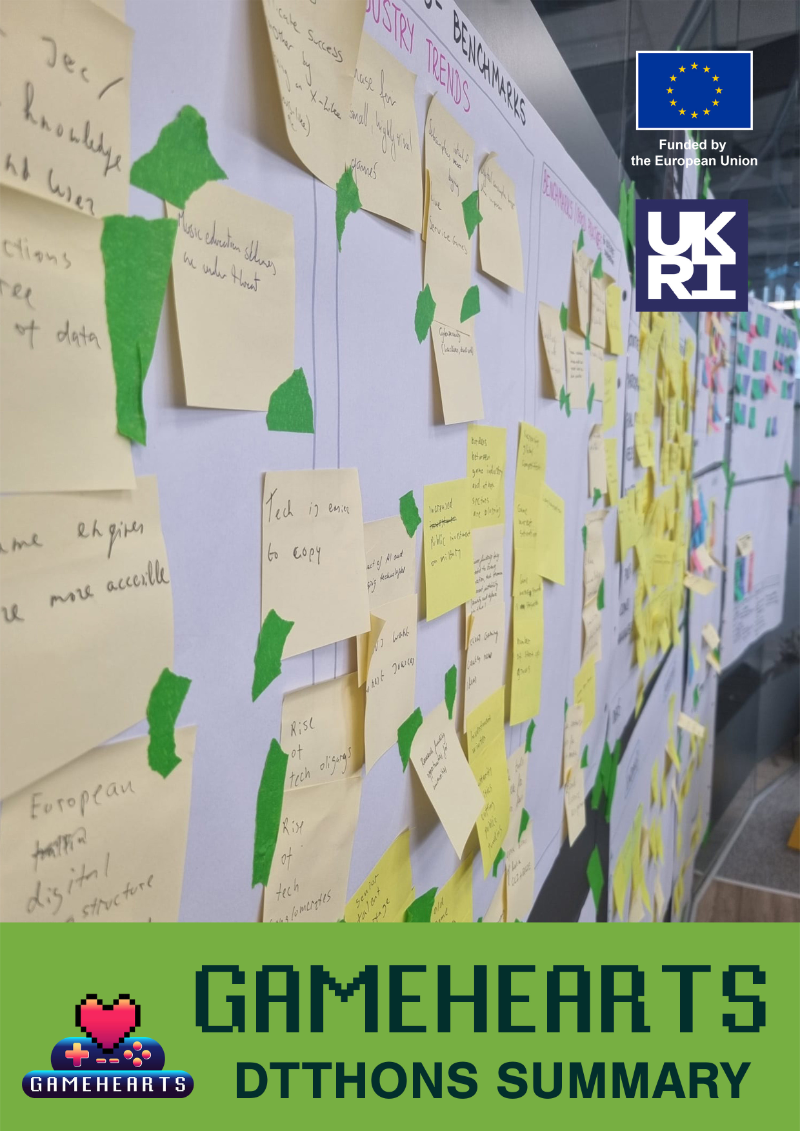
The document, "DTthons Summary," presents a comprehensive analysis of cross-industry cooperation between the European Video Game Industry Ecosystem (EVGIE) and Cultural and Creative Industries (CCI).
- The report's central finding is that cross-industry cooperation between the European video game industry ecosystem (EVGIE) and the wider cultural and creative industries (CCI) is "fragmented but fertile": creatively promising but largely conducted in parallel and structurally fragile.
- The Ending and especially the Endorsement phases of projects are almost entirely neglected, so pilots often close without evaluation, follow-up, promotion, or institutional learning and risk dissolving.
- Participants across teams identified recurring barriers including rigid public procurement, mismatched workflows and timelines, sector stereotypes, unclear intellectual property terms, and weak funding and onboarding mechanisms.

The Hiring Shift No One’s Talking About with an Executive Headhunter, Miklos Blasko
The executive hiring landscape is undergoing a fundamental transformation, moving away from traditional full-time employment toward a modular, fractional leadership model.
- The executive hiring market is shifting from permanent full-time roles toward a modular, fractional leadership model driven by remote work normalization and a scarcity of niche talent.
- Fractional executives function as 'insider-outsiders' who prioritize high-impact, results-oriented execution and objective problem-solving over long-term cultural integration.
- To ensure success, organizations must categorize engagements into three distinct tiers: low-commitment advisors, KPI-driven fractional leaders, or full-time interim executives.
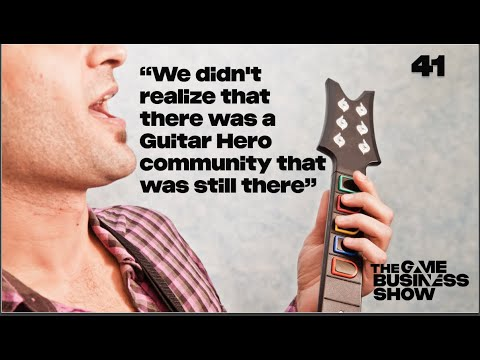
Are guitar games coming back? The story of RedOctane's return
The gaming industry is currently undergoing a period of significant structural transformation, characterized by both corporate consolidation and a strategic pivot toward sustainable, community-driven development models.
- Embracer Group is reviving the RedOctane brand by merging original staff with open-source rhythm game developers to move away from the annual release model that previously caused market oversaturation.
- The new rhythm game strategy shifts toward a 'forever game' model, prioritizing long-term content updates and direct-to-consumer engagement over traditional retail cycles.
- Publishers are increasingly utilizing game bundles as a strategic tool to extend the lifecycle and reach of titles after initial launch momentum declines.
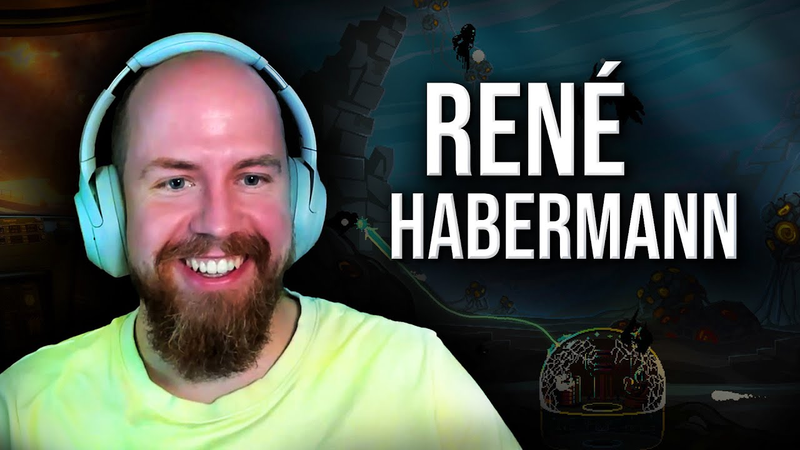
Test Your Game's Potential in Just 3 Days
The primary objective of modern indie game development is to mitigate financial and creative risk by prioritizing rapid validation over long-term production.
- Validate game concepts early by participating in game jams, which allow for the rapid development and testing of prototypes in as little as three days to gauge player interest.
- Use a 'core fancy' approach for game announcements, where a polished trailer showcasing the game's core loop serves as a primary validation point before committing to a full vertical slice.
- Maintain small, agile development teams to ensure projects remain within the team's specific skill set and to avoid the trap of transitioning from game design into full-time people management.
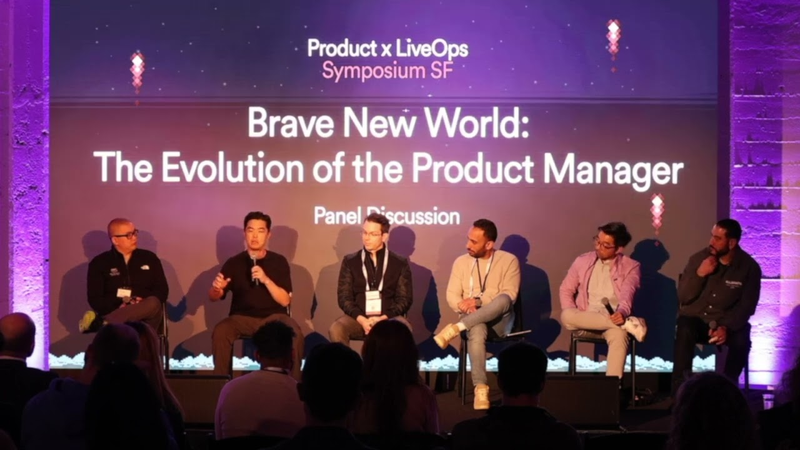
The End of Companies As We Know It: AI and the "Organizational Meta"
Artificial intelligence is fundamentally altering the landscape of corporate structure, necessitating a shift away from rigid, traditional hierarchies toward more fluid, adaptive models.
- Traditional organizational structures with rigid, vertical hierarchies and fixed roles will lose competitive advantage to more fluid, adaptive models.
- AI will subsume both low-level repetitive tasks and high-level complex functions, leading to the compression of traditional roles like product management, engineering, and art.
- The 'Organizational Meta' concept suggests that companies must constantly evolve their team structures, capabilities, and workflows to remain maximally effective, similar to how game metas shift.
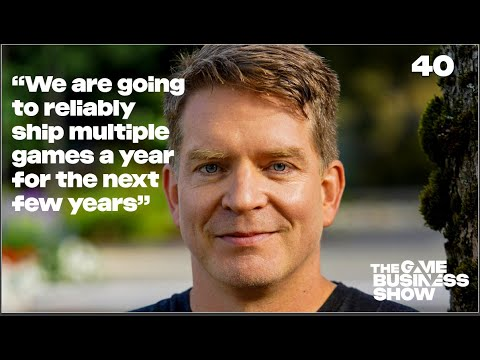
Major AAA start-up ProbablyMonsters has revealed its first games… and none of them are AAA
ProbablyMonsters is fundamentally restructuring its operations after nine years, moving away from a primary focus on AAA development to embrace a more agile, diversified business model.
- ProbablyMonsters is abandoning its original AAA-centric business model after nine years to pivot toward a more agile, diversified strategy.
- The company is shifting its development focus to a mix of short, mid, and long-term projects to mitigate the financial risks associated with long, high-budget development cycles.
- The studio's new portfolio includes a roguelike action game for Nintendo Switch and a psychological horror title for PC, marking a clear departure from large-scale AAA productions.
Mike Morhaime on Blizzard's Iteration Culture that Built Starcraft, Warcraft, and Diablo
The core philosophy driving long-term success in the gaming industry centers on an iterative development process that prioritizes execution and gameplay quality over rigid adherence to initial concepts.
- Blizzard’s success was driven by an iterative development culture where few games followed their original plan, proving that 90% of success relies on execution rather than initial concepts.
- The transition from Warcraft I to Warcraft II resulted in an order-of-magnitude increase in success, achieved by adding features like fog of war, naval units, and higher resolution graphics.
- Blizzard’s early growth was fueled by a $25,000 initial investment—$15,000 borrowed from a grandmother and $10,000 from a graduation gift—before the company was eventually acquired by Davidson and Associates.



Investigating Development Crunch in Games and its Impact on Creative Expression
Development crunch functions as a systemic failure within the global video game industry, characterized by excessive overtime and compressed production schedules that prioritize commercial deadlines over creative integrity.
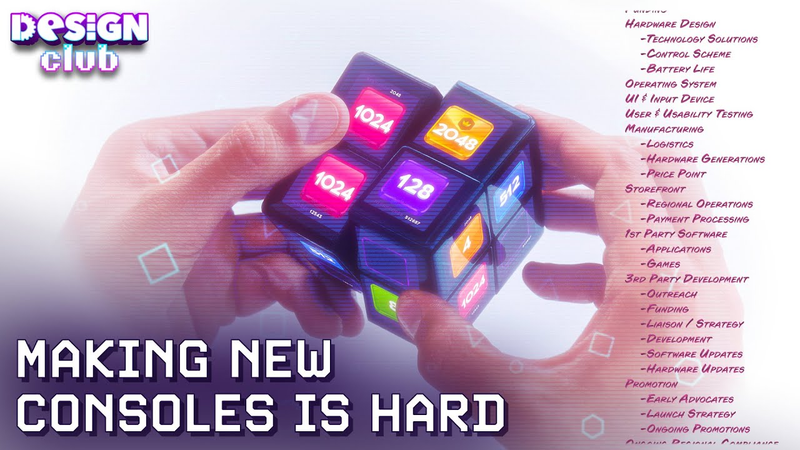
Making New Consoles is Hard - Just Ask VR | Design Club
Launching a new gaming console is an exceptionally high-stakes endeavor that requires far more than innovative hardware design.
- The 'hardware install base' problem is the primary barrier for new platforms; developers cannot recoup investments or achieve profitability unless the hardware reaches a critical mass of users to drive software sales.
- Launching new hardware requires simultaneous mastery of multiple complex domains, including custom operating system design, specialized user interface paradigms, and the creation of a fully functional global storefront.
- New hardware platforms face significant testing hurdles because they often lack standard input methods like keyboards or traditional controllers, making debugging and user experience validation difficult and prone to failure.


Enhancing the Digital Games Tax Credit (Section 481A)
This pre-budget submission from Imirt, the Irish Game Makers Association, argues that Ireland's Digital Games Tax Credit under Section 481A, introduced in November 2022, has signalled support for the video games sector but has not stimulated substantial domestic growth or foreign direct investment because of structural limits…
- Ireland's Digital Games Tax Credit under Section 481A, introduced in November 2022, has signalled support for the games sector but has not stimulated substantial domestic growth or foreign direct investment due to structural limits in its eligibility criteria.
- Imirt, the Irish Game Makers Association, is positioning Ireland as a candidate for a games hub, citing its storytelling and animation heritage, technical talent, English-speaking EU status, and links to US tech and entertainment markets.
- Imirt faces intense competition from other EU states and the UK in attracting games investment to Ireland.