Transcript
[Music] Welcome to the Navit Gaming Podcast, where it is our mission to explore the business and future of video games. We bring together the industry's brightest builders, investors, and thinkers to keep a pulse on current events, dissect emerging trends and games, share lessons learned, and have a great time. This podcast is also part of Navik's growing ecosystem which ranges from free and premium research to consulting and advisory services. For more information, visit www.navic.co. [Music] This episode is brought to you by Listo. Listo is an AI native play testing platform helping game studios capture unbiased player feedback and convert it into structured, actionable insights. Whether you're validating new features or catching us friction before launch, Listo empowers the entire game team to move faster with clear insights and less
guesswork. To learn more and get in touch, visit lysto.gg or check out the link in the show notes. This episode is brought to you by Heroic Labs, which powers some of the world's biggest games with its heroic game stack. Its composable products are Nakama, the open- source back-end game server, Hero, the game development framework for all your live service game features, including the complexity of managing offline mode, Sattorii, the worldclass live ops product for maximizing monetization and retention. And lastly, the Heroic Cloud to provide massive scalability. After nearly 10 years of operation, thousands of studios trust Heroic Labs to help them focus on their games and not worry about game tech or scaling for success. To learn more and reach out, make sure to visit heroiclabs.com or check out the link in the show notes. Now, let's jump into the episode. All right, what's up everyone and welcome to
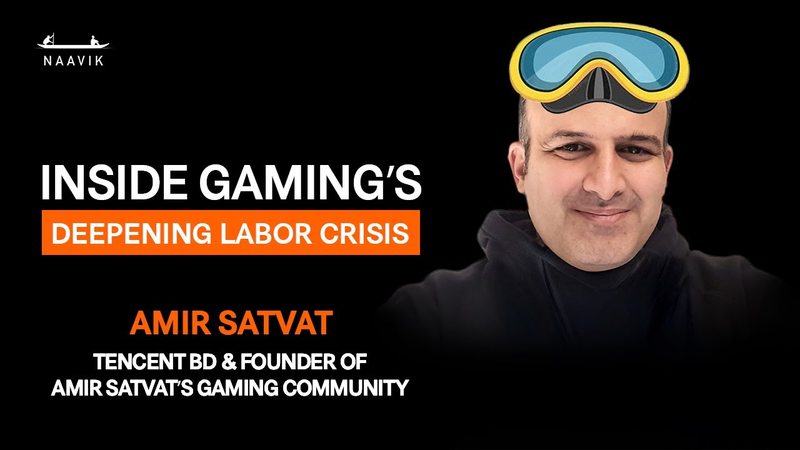
the Noviet Gaming Podcast. I'm your host, Alex, and this is the interview and insight segment. Today, we're delving into the seismic changes shaking the video game labor market. Over the past two years, the video game industry has seen an enormous number of job losses totaling somewhere between 35 to 40K with 2024 being one of the worst dates so far. It was a brutal hit mostly for juniors, QA, and studio level staff. Remote positions have shrunk to about 10% of listings. While agism and seniority biases shape who gets hired, the industry is migrating towards smaller and leaner teams or costefficient development geos for outsourcing or increasingly co-development of full-time teams. All of this has really big implications for skill pipelines and studio diversity. But amid this turbulence, there are people trying to help. Um, and my guest is Amir Saut, who I'm sure everyone listening is already familiar with. During the day, he's a business development director at Tencent. and on nights and weekends. He runs the largest grassroots games career community in the world. His volunteer-driven network has helped thousands of people find jobs through free resources on LinkedIn,
Discord, and other platforms. In 2024, he won the Game Changers inaugural award and recently won the inaugural Game Developer Heroes Industry Impact Award. This past July, he was also featured in Business Insider. And I am honored to have you on air with me today. Welcome to the pod. How does it go?
Thank you so much, Alex. No, it's great to be here and to talk about these important subjects and huge fan of the show.
Awesome. And so that said, um, you know, I told you we would unpack who you are and what your data tells us about the supply and demand shifts in games. You know, how to build a career and where people trends in the gaming industry are going. And this leads me to some guest intro questions. So, we're going to deviate a little bit from our typical process because I'm pretty confident that most people already know who you are, Amir. Um, and so instead I'm going to ask you some questions that are going to count as your intro.
Thank you.
And so my first question is going to be, as I said, you're a business development director at Tensson by day and you run this big gaming community by night. When
you go to a dinner party, how do you introduce yourself? Um, and I find this question fitting also because we ourselves met at a dinner party.
No, for sure. You know what's really fun is I I usually introduce myself with the community hat on because Tensson has been super super supportive of me just showing up at events as air and because of that I I know that by default most people probably know me with the community hat on and so I start with that. So it's a little bit more disarming and if it ends up that they want to have a business discussion maybe I mention that too. So, I have let that kind of maybe dominate a little bit my presence, but it it's just because it means so much to me and I'm really proud of what we've all done together.
Yeah. Yeah. And and that's good perspective, too, I think, actually. Um, and we talked about this a little bit at dinner, but the duality of having two different personas in the industry. Um, which, you know, from the Navic perspective, um, you know, a lot of people know of us through the show. Um,
and then, but that's not really my day job like your day job is at Tensson. Uh so it's interesting to see sort of like what you lead with. Um and my next question and that's regards to your community. Um is that your community as we've said is the largest grassroots support initiative in games. And we're going to talk about what those resources are and how it began and the beginning of the story and where it is today. But my question first is you've been like pretty adamant that you do this for free and I want to ask why do you do it for free?
It's a great question. I thought that it was really important for people to know that there was no ulterior motive to what I was doing. I knew that no matter what I did, there would be some naysayers who would say, "There must be some angle. I can't possibly believe this is true. He does it for notoriety. He does it for his name. He does it whatever." You know what? I can't stop that. But I know in my heart that it's
just about helping people. I feel like that makes more people volunteer. I feel like that makes more people engage because they feel safer. I just feel like from end to end, it's a choice that I think differentiates it from all other offerings at scale like this.
Yeah. And I think that's a really important premise and I think it's actually just very rare. So I remember us talking about this at dinner and I remember being like really surprised as to your answer. Um because also like it's a huge labor of love and it's a there's a ton of work that goes into this and so kind of scouting for pro bono workers is you well we we'll talk honestly we'll talk a little bit about it um in in our first topic. So let's kind of get get into and get into the meat of our show. You know building a grassroots hiring network kind of from scratch. And so we'll start at the beginning. um you started posting spreadsheets of job openings online and now your team of again yourself and other proono workers um monitors more than 3,000 companies. Uh how did this evolve from a spreadsheet to a
community? Take me back to like the very beginning.
It's a really great question. So when it first started, I think what I was channeling was, as you know, and many in the audience may know, I didn't actually get my start in games until I was 38. That was almost entirely because of geographic choices and because I wanted to stay on the East Coast, but nonetheless, it also took me a long time to meet other people. And so the genesis of the first two things we did, first the jobs as you mentioned, then after that the community coaching, it was always trying to think what would have I wanted when I was looking for that stuff to help me.
And then once we got into the community coaching, which was again a pretty obvious one for having help, everything became about community feedback. So everything that we added from tickets to events to the resource library we have of templates for all kinds of things to uh uh the posts that we do when a company has programmatic layoffs. This
is repeatedly polling and just asking people in the community if I was to pick what the next thing is that we do what would you want? And then from that I pick what I think is viable and reasonable.
Okay. Um, so but it started with just three a spreadsheet of 3,000 companies and their job openings, right? And then like what was like initially those services and so essentially the way that I would frame that is just is aggregation, right? Um, you know, like you're putting together all these GEDs and all of these job boards. Um, but plot to me kind of like the growth in product services. Um, and now you have a lot of 10 I think 10 plus or something professional development resources and like what are those and what was the second one? So the first one is job aggregation. What's like step two?
Oh, for sure, for sure. So first was getting the job aggregation up to scale. So it literally started with 50 companies and then I was like, I need to find a way to scale this. And so that was me figuring out this approach that I
have of of scraping down all those companies and making it into a soup where kind of I can do an apples to apples of all the roles by various categories. So one was scaling. Then two was the coaching. So people were like, "We want to have coaches." It started initially just with mentors and we had like 30 volunteers.
I grew that out and grew that and grew that out. Then we added CV and LinkedIn reviewers, mock interviewers, uh, interviewers and art portfolio reviewers. And now we have almost 2500 volunteers. Then people were like, well, we want to have free tickets to events and we want to have free uh, LinkedIn premium trials. So I added that. Then people were like, "Besides you, Amir, we would like to have other creators like you, but like specific like so here in five categories is what this creator does for games career support." And so I made a partner program. Then we did those support posts for organizations that have programmatic layoffs and so forth. And so to your uh to your point um we
have 13 resources but also very important this large resource library now that itself almost is like 25 resources within a resource of all kinds of other support. The one other thing I should note is um the LinkedIn grew a lot and now we have over 130,000 followers on LinkedIn and it's the top um top creator for games on LinkedIn for our community. But many were like air you need to add a Discord because that's really important too. And I'm proud to say we're the number one SEO for games careers games jobs on Discord also. And we have over 13,000 members now on Discord. And that's important for a lot of the real uh real-time interaction. And now we also have 50 dedicated coaches just on Discord for the Discord members too.
Okay. Yeah, there we go. That's so
that's a lot of services and um but it kind of it just you kind of did it in the same way that any like PM on a product would do. You say, "Hey, here's something useful. What would make this more useful? What would make this more useful?" And you just PM the crap out of it. and you found a bunch of proono people to help you out and here's where you've arrived at today. And so now you have this expansive catalog of a bunch of different services like even a Discord, a LinkedIn coaches that you said um what is your most engaged with service and like what is like the what is the thing that most people come to you for? Like if you had to kind of like plot your pillars.
Definitely. I should note that you actually raised that in a good way. I should also mention the website because it used to be if you can fathom this. I used to just run this all through LinkedIn posts, which is kind of wild to think back to. My good friend Desire Conn did amazing job helping us make a site. And so the first thing I'd say is of those three things, LinkedIn, the website, and the Discord. The one that gets the most like resource engagement
is just the website in general, I'm yoursbot.com. But within that, I would say the top two top three are one the job listings, two the community coaches, and three what's super interesting that we do is we actually go in reverse. So we actually have another workbook which is members of the community who are looking for work. They can sign up and put their name on a list with like 15 to 20 fields. And now we've done it for so long that we now have tens of thousands of hiring managers and recruiters who now know that as part of their hiring motion, they look on that list or download it when they're looking for their next candidate.
H okay. So now in addition to people that are unemployed seeking employment, you're also kind of deploying resources for recruiters to match the other way.
Yeah. And I think that a big part of this has been people often ask me Amir how many volunteers help you with the
community and I say to them well that's a complicated question. I can tell you how many people are discord mods like 10 to 15. I can tell you how many people are also like on my leadership team which is probably another five. But beyond that what I tell people which is very very true is I believe over our threeyear lifetime more than 10,000 people have helped in some way. And where that number comes from is all these recruiters and hiring managers to your point will be like, "Hey, Amir, here's a role I'm hiring for. Amir, add this to the workbook. Amir, I saw this candidate on this sheet." And so really, I think when we really started hitting impact is when it went from, oh, I have 10 to 15 people helping where like the whole community is needing.
I see. Okay, got it. Well, I was about to ask you about scouting for volunteers, and I think that I you've already kind of answered that question. It's been more of like a self- selected, you know, process of either a recruiter looking to get something done or someone
also very passionate about this, but I kind of want to go towards like you're running this big, you know, you said you may have 10 moderators or five leaderships people, but there's over 10,000 people who have participated in this. And how are you ensuring quality and avoiding burnout? Right? like that's a very large number of freelance people to be managing in quotes. But so how are you how are you architecting that to make sure that you know again like this is your baby and people are always doing things at a quality that you think is the best to represent the Amir Sat brand. I think that the trick that I found is when I have resources wherever possible I try to have them if you will speak for themselves. So, for example, for all the job listing stuff that we have, other than people being like, here's a company or a job you should add to the list, and I have a semi- audit made a way of doing that. Everything is controlled centrally, so it runs pretty cleanly on its own. Another example is for the
community coaching that we do, I have a very lightweight approach. Now, when I tell this to people, sometimes they're like that, I don't quite get it. And then they think about it. So when we did the community coaching, I was like, "Oh, should we have some really complex robust tool? People could log in and say,"I'm looking for coaching." The volunteers could indicate what kind of capacity they have. There could be like a green, yellow, and red so people could see who's available. I even actually tried some stuff like that. And then I was like, "That's a terrible idea. It's way too complicated. It's way too much work for people on each side." And so literally where we landed, which is what our community has done for almost two two three years, is for each group of volunteers that I mentioned by category, there's literally just a list of names and a LinkedIn profile and what they do and where they work in what category. You write anybody you want on the list and the people on the other end know they are going to field as many requests
as they can comfortably. And I tell them ideally politely say no to the others but even if they can't write back the community has just again we've set as a norm to just be understanding. So for example if someone is a big name who's like a VP at EA they might get 200 inbounds of people who want to have a mentoring conversation. Realistically maybe they could do five. And so what we tell people is reach out to a few people. If you don't get the conversation you want reach out to a few more. And basically that is has self-p policed itself. And so and so so that kind of good faith dynamic plus keeping things lightweight plus just running stuff myself centrally wherever possible has I think made the load niche.
I see. Interesting. Okay. Um one more question before we go on to trends in gaming employment. Um you are officially partnered with a number of other groups including Gamescom, GDC, Overwolf. um tell me about how those manifested for
you and where those kind of fold into those like 10 plus development resources that you spoke about.
Definitely. So I mean now that we do a lot of different things, people help in many different areas. So you know people will reach out all the time whether they're individuals or organizations and say how can I help? One way I solve this is we literally just have a again trying to make it lightweight. We have a page on our site that is how how can I help which is self-service but some are like I want to go deeper and so then when that happens is we just try to have a conversation so like GDC will be like we're super excited to help Amir what can we do and I'll say like well what what can you put on the table and so for example GDC very they were they were so awesome they would graciously were like we can do 240 free passes to GDC amazing right and they also put us on the logo for official partners. I just can't say enough about them. Similarly for Gamescom, they gave us, you know, hundreds of passes for the event for for
DevCom as well and put us on Gamescom cares. And so I met them where they were. For someone like um Overwolf, they wanted to do something to be supportive. Sometimes I have to balance forprofit interests with what our company does even though they're a great great partner. And so in that case, for example, we concluded a reasonable engagement was every year we do a fundraiser. the community does for chalk for the children's hospital and so they made a contribution to that event and like that's how they contributed or for example um someone will come I'll give one more example um someone who for example is at a company will be like like Seth Civac for example from proletariat and formerly Blizzard was like
also has been a guest on the show
awesome guy and so he was like I want to contribute I'm like well Seth what are you passionate about he was like well I think I could write a really cool guide on how to make a game startup. So he wrote a guide and we put it in our resource library. So I think like I I I try to kind of put people in two lanes
which is like if it feels like the better fit is a defined scalable way to contribute like being a coach or contributing to a resource I put them into that. But if they have a vision and passion for something that's bigger I try to meet them there if I can with the one caveat being that we can't really partner with someone that has a for-profit component to what we
Yeah. makes sense. Okay. Okay. Well, I was going to ask some questions about like how you do all this while having a day job, but we'll just skip that question. You're just super human. And we'll move on to sort of the another meat of our discussion, which is to talk about some of the data that you've collected and the trends in gaming employment today. Um, and what you've kind of distilled from it, I guess I would say. Um, well, I can give you I if you don't mind now, it's I'll give you one sentence on that and we can move on, which is I will say for those who wonder because people do ask a lot. I will say the good thing is because I have so much help, it's actually not too bad. It's probably about 10 to 15 hours a week and I do it in the evenings and the weekends after the family and the kids are asleep. A big trick for those of you
listening is I write 70 80% of the LinkedIn content in batches over the weekend and then schedule post it. That helps a lot.
All right, nice. Okay. Um All right. So, we have some very exciting questions coming up um in this section. And loosely, we're going to talk about three different groups of topics. Agism and games, aggregate supply and demand, and geographic shifts. Um and I just said that in that order, but we're not going to discuss them in that order. We're actually going to discuss them in the order of aggregate supply and demand, geographic shifts, and agism. Um so, for aggregate supply and demand, you've estimated that around 250k professionals work in gaming globally. And actually like I when as I was doing research for the show I was like really that's small. Um and that just like goes to show like how tiny this industry is. Like that's a small town like um but anyway there's 200 around 250k people working in gaming globally. And you've also estimated that around 10 to 15k roles exist at any time um with turnovers and new openings that maybe lands at like 15 to 20k rolls
annually. Um and so one might say like that's a big gap. No. Um, and like I guess I want to get your perspective. How lopsided do you believe the supply and demand in games is right now given the number of people that want to work in the industry and given the number of roles that are open?
Let me unpack a few pieces of that. So one thing I want to say first about that 250k number which you did completely correctly site is that is a very hard number to get one's hands around. I used to often estimate 250k. Sometimes people talk about a concept of direct employment and indirect employment of like are you in a development or publishing studio or in an ancillary job that is also related to games because of the work of games industry coffee chat and some folks there like Ken White. I went back and re-examined how those numbers are calculated and I've given and I know this is a big revision but I was willing to accept because of a lot of work they did that that number might
be as high as 500,000. And so I've been telling people that I feel more comfortable with that after two or three years of looking at it. So let's just call it 500K, but let's just say it's a very hard number to to nail down. Um you were totally right that open rolls are 10 to 15k. Um the supply demand problem, the biggest supply demand problem is in early career. There is an enormous number of candidates from college, art school, games programs, and just early career switchers who maybe have done something for a few years who want to work in gays. I estimate that depending upon when you look at it, 15 to one or 20 to1 as many people in a given 12-month period want a job in games as there are games. If you go to the other end, and we can talk about agism later, it actually starts getting that hard as well when you're over 50 years old.
For veterans in the industry, I would say that it's more like you have a 30 or 40% chance of placing back games over a 12-month period. And so, the bottom line is it's about 15% for everybody over 12 months. It is very hard. There simply aren't enough jobs for people in games who want them. And while I only have been doing this project for three years, as best as I can guess though, looking back on data, while those numbers were higher, it's not like they were astronomically higher in the past. My best guess is that at max, that 15% number that I quoted you for everybody over 12 months probably was never higher at max than 20 to 25% ever. And so it's always been a fairly
vocational industry that just doesn't have enough jobs. That's why I have tried to shift the focus from we all talk about how this is all so important,
but everyone puts 90 95% of their effort on finding games people jobs in games. We shouldn't be putting 90 to 95% of the effort on finding games people non-game jobs because we know 85% of them won't. And that's one of the big things I've been working.
Really interesting. Yeah, because I think that was actually one of my questions. You already answered it was like how do we get here and you know did supply increase? Did the industry become astronomically more popular which I would suspect perhaps it has? Or then did demand on the job side contract? And perhaps it's a mixture of both that have converged us towards this 15%. But you kind of mentioned actually like in the past it was kind of small and exclusive anyway um with the 20 to 25%. Um and you know my other question was kind of do you think that too many people are chasing too few jobs or do you think that companies need to create more opportunities and to some extent you also said yeah there are too many people chasing too few jobs and we need to
focus on potentially getting them jobs outside of the gaming industry but to the second question around do you think companies need to create more opportunities what's your perspective there
so the games industry has been growing in total jobs at a global level. I think the challenge is it really depends upon where you sit and we'll talk about that more later. But it also depends a lot upon function. So for example, tough to earn functions like writing and narrative can be 20 times more difficult than the easiest functions like engineering. Functions like game design can also be seven to times 10 times as hard. And so part of the problem I'm noticing is
a lot of games programs, for example, everybody wants to work in game design. And so they're sending kids to the harder jobs that also maybe have fewer analoges in non-game fields. And so I would say that the biggest thing that has changed is that 15% number is not a linear number.
If you continue looking for a gains job for two years, three years, five years, it's more of a parabolic function for most people. And so when that number was just a little bit higher, two times higher, three times higher, maybe you wouldn't find the jobs in games immediately, but if you really wanted it, you'd hang in there for three or five years and get there. Now that's a lot more difficult to do. I also think in general as jobs in the most adjacent industries, the closest of which is probably general tech, as those have had their own layoffs, right? Tech from 2024 to the end of this this year, many people estimate will have had 400 to 500,000 layoffs itself.
And so a lot of those kind of exit ramps have now become much harder. So that's why people just become more stuck.
I see. I see. Okay. Um, well, this is, I guess, is an opportunity to kind of go to geographical shifts. And you stated in some of your older pieces that 80% of
game development jobs are in five regions. Um, California, Washington, Vancouver, Montreal, and North Carolina, obviously driven by Epic, driven by Riot, driven by Ubisoft, um, bunch of other places, right? And in North America, we used to lead in game development roles, but now Asia dominates in number one. Um, and you've also pointed out a massive salary disparity, 50k in China versus around 150k in North America. And we've already seen this burgeoning gaming scene coming out of China. This is something I said in the intro, where there seems to be a interest in going to lowcost development regions with extremely talented developers, which may one might argue is 100% China. Um, and what do you think this means though for western developers and what do you think they should do? Everything you cited continues to hold and if anything what I'm observing is and I'll be publishing in the next few months the percentage of roles in North America continues to slightly contract
where the total number of global roles that we have in North America is only about a quarter of the total games roles everywhere. I think that it poses a tough question for companies about what are you trying to do and what is your priority. I think some companies have decided you know what for a whole variety of reasons it's really important for us to be still located in North America that is a perfectly reasonable healthy decision but then they have to figure out how to get around the cost challenges and how to make enough content that kind of gets them through with traditional highcost development. What seems to be happening for more developers is they continue to have a base of employment in North America and more of the heads move to those other places or move to code or external development firms that are continuing to do that work. And so I think from their perspective I think they continue to go through well we need to ship faster and we need to ship at lower cost for the
ones that are the most responsible and I think are doing things in the right way. how to create a balancing act with those things that are still responsible to the cities and geographies and places where we had kind of you know set up our roots and where we started. I can certainly tell you the easier part of the equation which is for the actual employee side of like what does it mean for candidates who are looking for work. I think it means that like the modern games employee just needs to be more agile and more flexible. I think for many they see this strongly as a negative. It's like the traditional like I'm going to go to a AAA place set up there in a big city for like 10 to 15 years and do this and that and the other or even for 5 to seven years. That's going to be a lot harder. And I think kind of going where the jobs are or even kind of flexing what you're doing within the larger games ecosystem is a reality I think a lot more of us are going to have to do to sustain
employment, if you even can, over a 30-year career in the industry.
I see. Interesting. Um a little bit of a sidetrack and then we'll get to agism. Have you noticed that tenure length on tenure lengths on average are changing?
Yes. So tenure lengths are decreasing slightly. Um what in terms of age and tenure the most interesting thing I've noticed is the industry on average is uh two to three years older in terms of the average opening. And so I think the most interesting thing is the average open role since I started tracking three years ago is now for someone three years experience higher but the average pay hasn't decreased. And so we can actually observe that companies are basically upleveling the experience while keeping the pay roughly similar. And I think a negative way that some people observe this, which I try to call out in a polite and constructive way, is having
waves of cuts and then seeing that more senior people get rehired for similar roles at basically the same level.
I see. Interesting. Okay. Yeah. I'd be curious to see what that perspective looks like as I think also it's a bit generational, right? because um you know my generation uh for example um it is very expected for someone to hold a role for 2 3 4 years um being whereas in my father's generation um you know it's like 15 years at a company and like you know many people can't imagine spending 15 years at a company because it's just not really also the generational psyche of the graduation between the evolution of like boomers to gen X to millennials to Gen Z. Um, so I was curious also whether or not that as a kind of a kind of cohort of generational is also impacting the industry which is a little bit agnostic from just industry.
It definitely is. I would say that it's becoming increasing unusual for someone to even have a fiveyear tenure. I would say several years is more normal. Absolutely.
Yeah, makes sense. Um, okay. So, one more thing on um on agism, right? And you know, you already called out some of the stats about the probabilities of getting a job at the younger side of the of the book ends of your years and the challenges of getting a job at the upper end of your book ends of your careers. And so, you know, gaming, you know, for and maybe this is this cache is fading, right? But it's just absolutely in love with the word veteran. Um, like dissimilar from Silicon Valley, which is a stronger, it has a way stronger attachment to years of experience similar to Hollywood. Um, and whether or not that's correct or is not correct is probably up to perspective, but is concerning obviously in the light of what we're talking about today. Um, and so veterans are the only ones that have the best chances of getting hired. Um, and the number of entry roles are going down. Uh, are we are we not starving the next generation of game developers? Um, to some extent,
it certainly is possible. I mean what's very tough is we do still seem to value we really value the middle. What the
data suggests is it's very tough as we've already talked about for the early career people with less than three years experience. But I would even say the sweet spot of if you were like who's been the biggest I hesitate to say winner but biggest preserver during this lifetime it's people with 10 to 15 years of experience. They seem to really like veterans in the middle not too much lighter experience but then also once you go over that further edge of 15 20 25 years it really just starts to get tough. those people are much more expensive. They often are in the geographies that have the higher costs. And yeah, you know, I I think um I think you would not be out of line to ask many healthy questions. I ask these all the time about both at the early end and at the later end, you know, what are we doing or what are we creating with these patterns over time? It's hard it's hard to say, but it's it's worrying. It
is.
H interesting. And I think like one of the things that I I often ask myself is, you know, I I would maybe tell myself the narrative that the best way for an early game developer to get experience is actually not to get a job or an internship or just to become a Roblox developer or solar indie dev, right? Like that is a proven success, right? We have Pug Lips, which is a 19-year-old guy. We had Grow a Gardens, like some extremely young sub 25-year-old person, I'm sure. Um, legal company. Um, and maybe that is the best and the now triedand-trude way is just to go out and build your own game and launch it because distribution costs have basically gone to zero. Um, and so I kind of wonder like do you actually believe that that's true? Um, as a as an initial premise is that is that the best thing that you can do as an early person in your career if you wanted to be involved in the games industry? And second, um, you said that there's an attraction to people to veterans, the people that are 10 to 15 years in their career. Are they going to be the best people to build content for Gen Z and Gen Alpha today?
Interesting. I would say for the first question, I think it really depends upon what your function is. Certainly, if you're like a designer or something like that, I could find that believable. If you're someone who's in a more traditional business role, I can beat your corporate like me, I'm not sure that much has changed. But I mean, look, I I believe in that. Like if I think about traditional pathways when I was coming out of high school and you know this it's like what were the things people did? They like did QA to go through production. Some of them even worked in retail. Some of them worked in journalism. That's certainly gone too. And so it's like I think the new pathways are what you described which is building your own projects, building your own games, building your own portfolio etc. I also think another one which I know is not easy and some people don't like it is frankly the type of stuff I know we are much further on in our careers but even like you and I do Alex of having a brand having something
that one does I'm a very big supporter of people posting on social doing blogs finding a voice I basically say in lie of the channels that used to exist for discovery of you you need to create discovery of you yourself
and what that is. You can figure it out, but people have to know you exist somehow. So that's my answer to the first one.
For the second one, you know, it's it's very interesting. A lot of developers, a lot of great developers used to say when they would make games, I want to make a game that I would want to play. And the truth is that all worked perfectly when their what they wanted to play matched up with the demographic they were making the games for. Now I think some developers have the skill and understanding to stay in touch with that either themselves or by having people on their teams that can stay in touch with them.
And so I don't think necessarily anybody at any experience level can do that. But I think the ones who are success uh successful at it have the self-awareness of either knowing where to look or having people on their team who can help them stay in touch with the audience. And I think it is certainly true that there have been many situations that I can see where that disconnect with the audience versus like the quality of the game ended up being the problem.
Yeah. Yeah. And I think I will admit it's extremely challenging. Um, you know, I myself was realizing that that's part of like I think maybe back in like 2017 when Roblox was 2017, 2018, 2019 when Roblox was starting to get really big and I was like, "Okay, I got to go figure out what these gamers are doing, right? And I'm like a Final Fantasy person and like a Fire Emblem person. I like Disco Allesium, right? I'm like, and then I go into Roblox and I built my own Roblox game and I like dropped into So I built my own Roblox game because I was first of all, I was like, I I want to understand this engine. I kind of want to understand Lua." And then I went to like some Roblox thing and there's a
gigantic tree. There's like a million people. Someone like whacked me with a sword and I was like, "Why is everybody so big?" And like why is this tree so big and like there's a bunch of polygons and I kind of like didn't get it. Um, you know, and I think it's just really hard to service that content when you don't like live and breathe that level, that type of fun. Um, and so I think that's what I was I was asking for the people that have been spending 10 to 15 years of their career building a certain type of fun. How can you um I guess future proof yourself to service a different kind of fun to another generation where they might be expecting something different? But
it's so different. It's so different. I mean like I grew up with you know Yeah. like King's Quest and Space Quest and it's like it's h it's cray and and even like when I was really little like muds on like the computer like it's so it's so different but in a way an exciting challenge because I feel like more than ever to your point the amount of content that you have to sample to keep yourself relevant and informed about what people want to play is broader than ever
broader than ever
yeah yeah all right so now that we've grounded ourselves in some of the trends I want to discuss some actionable advice for listeners who are looking to enter or remain in games. You know, discussing maybe I guess a little bit of a recipe for what it means to be successful in games today. And so you kind of talked a little bit about this already, but the first question is you've been tracking a number of applicants per role and churn rates. Um, and so what have you learned about which roles are actually high in demand and why? I always tell people I am not the dream crusher but you always need to have backup B and backup C and backup H. Um we started this conversation talking about how you know we track 3,000 plus companies and even if that's just games right if you add tech you know you could easily make a list of 5,000 10,000 places. Mhm.
The biggest challenge is no matter how many times I tell candidates,
um, don't just apply to the top 50, don't just apply to like your dream company. We know in the data and in terms of also qualitative catch-ups that I have with people, people put the most effort into the big places that they've heard of. And what I tell people is if I have a list of 3,000 companies, picking a number randomly, take the lower 2,000 and those are the ones where you're going to have the best chance. It is true that the jobs are concentrated in the top companies, but I literally have, and this is not an exaggeration, tons of the smaller companies who literally come even in this environment asking for help getting more applicants for some of the roles at the smaller places because that is not where more of the people are applying to. I would say the second thing is and this is a deeply personal decision. I of course famously
really believe location is important and in order to achieve that I've given up a lot. I gave up not working in the industry until I was almost 40. I've given up certainly title and pay increases I could have gotten beyond what I have. But I am totally at peace with that because I knew what the sacrifices were. I tell people all the time the number of remote roles in our industry has fallen from a COVID peak of like you know when it was all remote to then when I first started tracking them 30% 40% of roles to then 25 and now 15 where it seems to have basically stabilized for now. If you take the concentration that you and I talked about of the cities you named correctly in North America and then the number I named of the percentage of roles which are in North America versus global which is only a quarter and then you crosscut that by how many are remote versus not you have now crosscut yourself into a very small number of jobs. And so I think the
second one is um being as location flexible as possible. Huge percentages of the people I track started as they weren't remote. They remote only and then they became work flexible because they realized they had to. And the final final one quickly is you have to look at those adjacencies.
Make games the focus. No one's ever going to tell you to do that especially not me. But you have to also look at the tech jobs even in healthcare even in consumer companies etc etc. Do it from week one. Don't do it a year later when it gets hard because everyone comes back to me and expresses regret. They didn't have that wide aperture from day one.
Yeah. Yeah. It's interesting. I think that also gra with a concept that I often share with the people that I mentor from time to time, which is the concept of the double pivot. Like if you want to get into games, right? Um well, you might be, let's just say that you're a banker, right? And you work at Goldman
and you want to get into games. Um, well, you it's hard to do an industry pivot as well as a discipline pivot. So, if you want to be, if you're a banker working at JP Morgan and you want to be a PM in the video game industry, well, maybe you can kind of lateral there by going into the gaming industry in corp dev, you know, something more similar to banking and then you're in the gaming industry and then you try to get to PM or you go take a PM job at literally any software tech company and then from there you then try to get back into games. Um, because it's super hard to kind of get that dream job all one time. Um and so I think that that really resonates with um the similar advice but um that I've that I've also shared at times. Um
I love that talk. I love that.
Thank you. Thank you. Um
I've given that to a lot of MBAs um because a lot of MBAs are basically coming from the background of consulting or banking and they want to get into games and um you know there are very few roles for those kinds of people um in the gaming industry, right? Cuz business teams are small and um you know you need to be a larger company to even have a corp dev team to begin with. Um so okay
so you talked a little bit about the things that you're that you've ushered or sorry that you exhort young successful professionals to have in games being geoflexible you know opening your aperture um what about things like skills or portfolios and side projects and how do you advise people you know we talked a little bit about brand but how do you advise people to kind of build that up? you know what I do is to be very open about it is I know what things I have the most knowledge about and what things I don't and so for the specifics of like how do you actually build that portfolio or build games or stuff like that way outside my skill range and so I basically kind of note to them that that is important and then we have many many many volunteers in our community who are very good at those things and can help and can give them advice on that. What I advise them on at the same time as that
though is um a lot of other skills that I think are also important. For example, I tell people all the time that even if you're an artist, even if you're in whatever your function is, if you're an engineer, I c I tell people they should learn how to use Excel, they should learn how to be able to read like a basic financial statement. There's so many self-help courses for that type of stuff. I think it makes you more powerful if you have a reasonable level of kind of like business knowledge or being able to understand budgeting and these types of things. So that's one thing. But I also give a lot of coaching on the social media and branding portions that I feel like, you know, if you if you graduated from college or even if you're 18, you should be doing that every day, every week. So, I talked to them a lot about how do you present yourself? How often should you be engaging on social? Really
important for networking. have like a 12 to 36 month plan of people you're perpetually reaching out to and you're reaching out to have a coffee chat or get to know people rather than pinging them and being like can you help me get a job because if you do the can you get me a job reachout it's not going to go anywhere. If you build it up slowly over one or two or three years that's when someone might become inclined to help you. So those are some of the things I try to pair alongside.
Okay, got it. All right. And one more question about um you know the recipe for successful professional in games before we move on to some conclusionary topics. Um it could be obviously pretty you know grueling um or you know mentally arduous out there if you are you know applying to jobs over and over again and there's been an enormous number of job losses over the past two years. Um what advice do you give your guidance I'm sorry what do what guidance do you give your community members on mindset when it comes to dealing with that kind of hardship?
It's very very tough. Um I have two main tips for that. One is that I tell people they really should make sure that they have a support network and that they don't see challenges to their mental health and how they're feeling as being a form of weakness. I always say that at minimum try to identify five people in your life that you can check in with at least once a month, if not hopefully even more frequently, to tell them how you're feeling, to tell them what you're going through, and to have a sounding board. If none of those things are there, I always tell them they can step back and write me an email. And like people do that all the time. People write me people write me notes all the time. And I'm always here and so are many people in our community. So are you for many people. you know, there's a lot of good people out there who are there. So, don't be alone. That's number one. Number two is um
I'm really big on tracking everything. It seems really kind of minute and obsessive, but it's really not. And if I always, for example, when I apply to jobs, and we have templates for this on our site, I track down every opportunity I apply to. Even if it's 10 seconds, I try to write down a note every time something happens for each process of I got it, I didn't get it, what happened, do I have a guess of why I didn't get it? So in short, have some reflection time of learning from stuff rather than just doing doing.
And then the third one is allocate your time appropriately. So, I have a lot of empathy for this, but I don't think you're going to go where you want if you're like, I applied to 500 jobs. Why didn't I hear anything? I tell people always, and this is again only from what I found works, 80 85% of your effort should be going
into stuff that's not looking for and applying to jobs, branding, networking, skills development, portfolio development. And more often than not, I find that by correcting those ratios, people's odds improve. And then finally, I'll just say none of this is a magic switch. There still, as we've said, only rolls for 15% of people. So, it's like I think people often mishar me. What I'm not saying is do these things that I said and you're going to magically get a job in games, even though I wish you would. if you're also applying to all those other industries, my goal is that you have a roof roof over your head.
Yeah. And I think those are all like really good pieces of advice. Um and so I want to start talking about, you know, where we're headed and also how we can improve and sort of maybe what role um you know, your community has had in this. Um but there are a few core questions before we move on to how we can improve the system. But as we've mentioned, there's been a ton of layoffs. Um and do you think that they
are only a recalibration after pandemic overinvested investment or do you think they expose a deeper structural issue with how the industry has been run in the past?
I think it isn't I strongly believe that it is not just a postcoid recovery. I think the industry has a number of challenges of which I would say a few that are the biggest are. Um, in a way the industry is a victim of its own talent. We become better at making more content than ever before at lower cost. And that is not only a competitor for itself, but a competition against other forms of media, Tik Tok, other things like that. There's just like an everpresent battle for people's time. There's also what I like to call kind of like the reverse series problem, which is like if you release game name seven, people can buy game name five for $10 on Steam, often with five expansions and highly highly polished. So what people
expect for 60 or $70 is higher than ever. So there's the content and competition for time problem. I also believe in terms of how a lot of these businesses are constituted, they still even though actual literal retail and boxes has not been a big part of the industry for a long time, the mindset and capitalization of how the companies are set up and how the headcount is set up is of a different less agile model than it needs to be now.
Yeah, definitely. companies can still make big hits and a number of them can still do that successfully, maybe even as their core business model if you're like your Nintendo, but for like the majority of companies, they just have to find a path to making games quicker at lower cost, I know it is not easy. Um, and there was one more point I was going to say, which is Oh, yeah. Um, I think people just
need to realize live services was such a big thing for a long time. I think people really need to have more discipline that in most things that you want to do, there's going to be a few gorillas that eat up 80 85% of the demand and that's just always how it's been. Don't make the wow MMO problem of 20 years ago where you're chasing the truck because the numbers big. do something that is more importantly risk adjusted to what you think you can do well with your
Ste. Makes sense. Okay, perfect segue to studios are pivoting towards leaner and smaller teams with smaller budgets. Do you think AAA will shrink in the mid-tier indie space will grow? Um, and then I'm going to also ask you the AI question. Do you think that AI will exacerbate the posity of open roles? Um, and you just think that gaming will just fundamentally contract.
So, I'll take them in order. So for the indie one, I do believe indie will become bigger. What's interesting is if you
look back 20 years ago, and I know critical rating is not the same thing as revenue. Um, but of the top 25 games, 90% of them were AAA. Now 60 70% of them were indie. Now the challenge is many of those top hits are not like big studio made indie type game or big indie firm made game. It'll be like a small or a singleton team like with Bellatra or with Blueprints or something like that. So, uh and and and this could be God an hour discussion itself, you know, that's before you get into Roblox and Fortnite and the walled gardens and all the UGC stuff. But yes, I believe let's just leave it simple. NonA is going to become a bigger and bigger piece of the pie in terms of AI. What I can tell you is this. Uh if I look at roles, so I tag roles that I track
with kind of two tags. One which I've shared publicly is does the title literally have the name AI in the job title. The second which I haven't shared publicly because I'm still fine-tuning it is is there enough mentions of AI skills in the job description that I can infer that this role is asking that the person do AI type things. I still do not believe AI for now is a principal cause of cuts in firms beyond a few specific functions where I have enough data where I think that is true. I think it is true in writing and narrative. I think it's true in QA. I think it's true in aspects of recruiting. And there's maybe one or two that I'm forgetting off the top of my head.
Maybe like marketing like uh like asset creation and like stuff like that
perhaps. So for copywriting or things like that definitely.
So like I think it's happening.
I am always the perpetual realistic optimist. I don't think yet it's the kind of like big problem that everyone is saying it to be and in fact I make a point of saying this because I actually think for now the bigger challenges that most people feel in their individual situations is all the other factors we mention like the geographic shifting like the traditional structure of the companies like postcoid withdrawal and stuff like that but I think it's easier to put it all on AI still I am very concerned erned about AI and responsible use of AI and believe it could become a much bigger problem.
I see. Okay. All right. Last question on this. How do you see government policy, unionization or labor policy in games playing out in the future?
So, purely my personal opinion, I have always been a believer that more often than not, unions can be a positive influence that every person should
investigate and look into for themselves. I think everybody should look at it. I don't I also don't believe they're a panacea because there of course been many situations where there were unions and people were cut a lot anyway. But we know that in situations where there are unions the cuts are generally less severe and in terms of the things that unions can protect against well like how severance is negotiated like negotiation for wages like other worker protections that is much better than not. I do think it is a very personal decision though and I think each person has to make that choice. But I personally think unions are a good idea and I advocate that people at least investigate them and whether it makes sense for them in their situation and I do think there's evidence that it is helping in situations.
Okay. Got it. All right. Well, so far this conversation has been amazing. We talked about, you know, the building of a mere soft gaming community and some of the things that you're doing to help. And we talked about some of the problems and the data that we've seen and sort of like, you know, from that extrapolated
where we're headed. Um, you're obviously very passionate about fixing some of these problems. Um, and I wanted to ask you about a specific one that I found to be interesting. I know you have some interesting thoughts on it, which is project helping hands. Um, which you know, for as an example, was to help the long-term systematically unemployed. you know, some of the people that I had mentioned before, like my goodness, they've been applying to jobs for years and they have never felt successful. Um, why did you feel like this was necessary and what's been the impact of this project so far?
I'm really happy you asked about this because I think it provides a number of lessons, some of which might surprise the audience. So, so to add to what you said, you know, what we did with project hands tactically is I would allow people to sign up for an additional list if they have been out of work for a year or more and then I would select five people at a time and make a post highlighting them three times a week. Now, a big belief that I have for the community is, as you know, and as did I
hopefully people got a taste of during this discussion, I am very metrics driven. I don't do anything for like sunshines and moon beams. If I can't show that it's working, I don't do it. And so what happened over time when I was testing this data is I found that unfortunately while these posts were appreciated and were a I think a good idea and concept and we're always experimenting in the community which I think is good,
it was not leading to meaningful differentiable changes in those candidates getting interviews or getting job outcomes. And so then I went back and I thought about it further. And I decided that instead a more practical thing would be to take resources that I already had and kind of amp them up. So for example, I made an informal resource that is not on our site but I post about all the time called amir likes me which is if you're anybody doing a job post you can tag my name and I will put a like and comment on your job post so it gets more visible. Then
uh for the job support post that I do for companies that have had layoffs, I change the rule for that to say if you're for example company X and you sent me 40 people who were laid off in a programmatic layoff, I will allow you to get another one of those posts every 3 months. So now we can get that in the spotlight. And then third, I went back to that list I told you about where people can sign up themselves to be found. And now I post about that more frequently so that people know that it exists. So I think it's a really good example and to give confidence to the audience that like I don't do any of this stuff for my health. I do it because I hope that it helps gamers and if any minute we see that it's not working, we take it out. So you can have confidence that whatever what we're doing even though you may not be able to see it versus non-action, it is working.
I see. Okay. Well, actually this kind of sparked me. This is a impromptu conclusionary question, but I I and I I just I'm just curious. Um,
have you do you ever feel I guess maybe like a sense of challenge between the people that you've chosen to support perhaps, you know, for some of the people that were featured, they aren't um good at their job. let's just h how do you grapple with maybe the fact that some people just aren't good at their job and that's why they don't get hired versus you know you supporting them and making sure they get visibility sort of like how do you do that? Um do you play kind of like judge and jury in that regard or not at all? You know, I appreciate I appreciate your boldness in saying it because as you and I know, you know, these are the things people say in the community, so we should talk about them. And my view on this is um I I see us as a support organization. We are not a head hunter. We're not a recruiter. We're not a hiring firm.
Somebody may be a stronger candidate. somebody may be a weaker candidate, but the starting principle, it meant a lot to me. It meant a lot to me that you asked the question and highlighted the point of how we don't make any income and why that was important. If that's the mo one of the most important principles for the community, I would say the second is everybody in my eyes in the community is the same
as long as they don't treat anybody else in the community in a discriminatory, offensive, etc., etc. fashion. So my point is I'll give you the help, but to be honest with you, it all kinds of evens out anyway because I really believe this. Every time we have a milestone, like recently we had 4,000 people that our community was cited as being a major support or help on in finding a role. Some people will say, "Oh, Amir, you got 4,000 people jobs." I'm like, "No, that is not what I said. I don't get anybody anything."
candidates get jobs themselves and they get a 100% of the credit for getting those jobs. We support them and they get the jobs. And so anyway, the candidates that have qualifications or more effort or more hustle or whatever it is,
I believe that will sort itself out in terms of what they decide they want to do with.
Yeah. Yeah. But that's really and actually I think from the business model and incentive alignment perspective which is something I'm particularly passionate about if you were a for-profit organization it would be very difficult to do what you just described because there would be some sort of link to some sort of outcome oriented metric of placement or percentage jobs or high like how much salary you got certain people um that you'd probably have been building some sort of bonus compensation program around and you would never be able to do that. And so I guess it's very good that you know you see yourself it's like you know your values there also informs like your on the grounds decisions of what you choose to do every
day in your in your business. Um so I want to close with uh one kind of concluding question and that is uh if you could change three things about how gaming handles its workforce today what would those three things be and why?
Oh boy.
Absolutely anything. I could snap my fingers and it would happen.
Okay. Um the first one is I would make it so the relationship and deeply culturally embedded attitude of all leaders towards employees was the way it was in other c countries and situations that I believe are more progressive. So for example in Japan where the top executives make 40 times what the lowest paid person makes not 400 times and I think norms around firing people or laying them up are just
dramatically different. I wish we had a different culture around how we think about teams and staff and organizations at the highest level. Mhm.
The second thing is I would mandate that some percentage of employment in every organization uh had to be early career because I believe it is that critical to basically nurturing a future workforce and at least giving some chance to the people who are coming through the pipeline. Mhm. And the third thing that I would do is I would completely eliminate quarterly I would either through eliminating how financially rep financial reporting occurs or in how leadership is incentivized. I would make
the incentivation much more long-term. Like if magically you had a leader of a company and you told them they wouldn't be evaluated by what they did in three years or five years but like over 10 years, I think you would see very different long-term thinking or incentivization. I am sympathetic that that is much harder to do when you have people breathing down your neck every single quarter about whether you're hitting numbers or not.
Yeah. Okay. So you just want to up up upend the entire like SEC quarterly reporting system that we put as a safeguard to make sure that corporations like you know delivered value to their shareholders. Well, we well we have proof we have proof that if you look at contrast in Europe, I've seen a lot of very interesting evidence. This is a topic I was very passionate about for a while that in many cases they report only twice a year versus four times a year. There's a lot of data that even doing that leads to better behaviors or reporting once a year or whatever you like. But like my point is
people are always asking me Amir, what about the bigger picture stuff? Like talk more about the bigger picture stuff. And what I tell them is you're right, but other than literally joining a union, a lot of this other stuff that we're talking about really comes down to culture. It comes down to policy. It comes down to incentive structures. And they're all big thorny things that don't change unless you can either wave a magic wand because you gave me three wishes or you have very serious conversations about them over long periods of time and people care and want to see it change.
Got it. No, I I understood your point.
No, no, I was just I was just messing. All right.
Just just I was just I was just rhetorically filling it out. Yeah, I'm with you. Yeah.
All right. It was such a pleasure. Um thank you so much for coming on air today and discussing this with us at Navic. Um it's amazing the work that you've done for the industry and I'm so excited to see what you guys um and your community continues to do next. As a
final piece of parting um for for listeners, you know, what is the best way for people wanted to get involved? Um what do you encourage them to do?
Absolutely. Please simply go to our site. It's all my name all one word amyoursatv.com. There you will find the links to everything we've discussed today. our LinkedIn site, my profile, Discord, and of course the site itself. Engage with that, join our Discord, use the resources. There's a video on the site that tells you what to do. And if you ever have any doubts, you can ask one of our mods. And as a last resort, always ask.
Awesome. All right. Well, as always, friends, um that's the top of our episode. If you've got feedback or ideas, hit me up at alexanderav.co. I'm always open. And with that, um Amir, we're out. Um, see everybody next time. [Music]
If you enjoyed today's episode, whether on YouTube or your favorite podcast app, make sure to like, subscribe, comment, or give a fivestar review. And if you
want to reach out or provide feedback, shoot us a note at [email protected] or find us on Twitter and LinkedIn. Plus, if you want to learn more about what Navic has to offer, make sure to check out our website, www.navic.co. There you can sign up for the number one games industry newsletter, Navic Digest, or contact us to learn about our wide-ranging consulting and advisory services. Again, that is www.navic.co. [Music] Thanks for listening and we'll catch you in the next episode.
Auto-generated captions from YouTube — names and numbers may be misheard.


















Comments