1 free read left. Create a free account for unlimited reading + AI research.
Create free accountReport GAMEHEARTS
1 free read left. Create a free account for unlimited reading + AI research.
Create free accountReportGAMEHEARTS
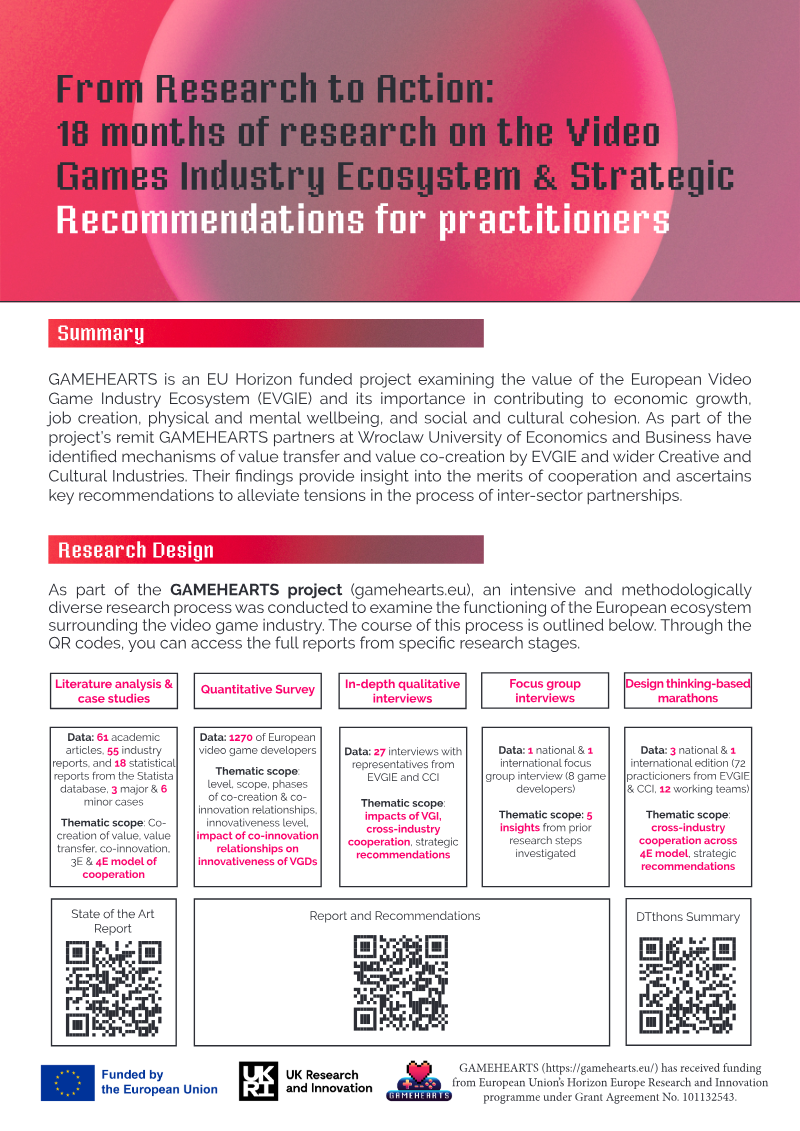
Between February and April 2025, four Design Thinking Marathons were held in Wrocław, Warsaw, Katowice, and an international edition in Wrocław. They gathered practitioners from the EVGIE and the wider CCI.
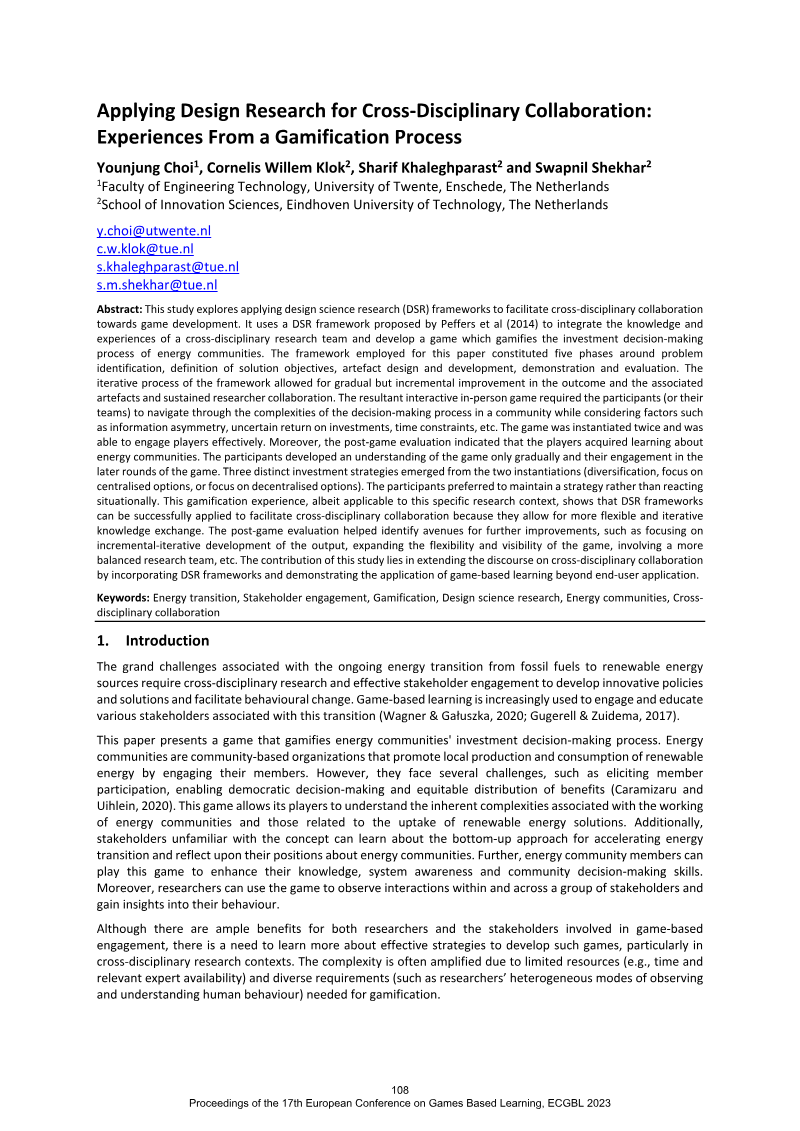
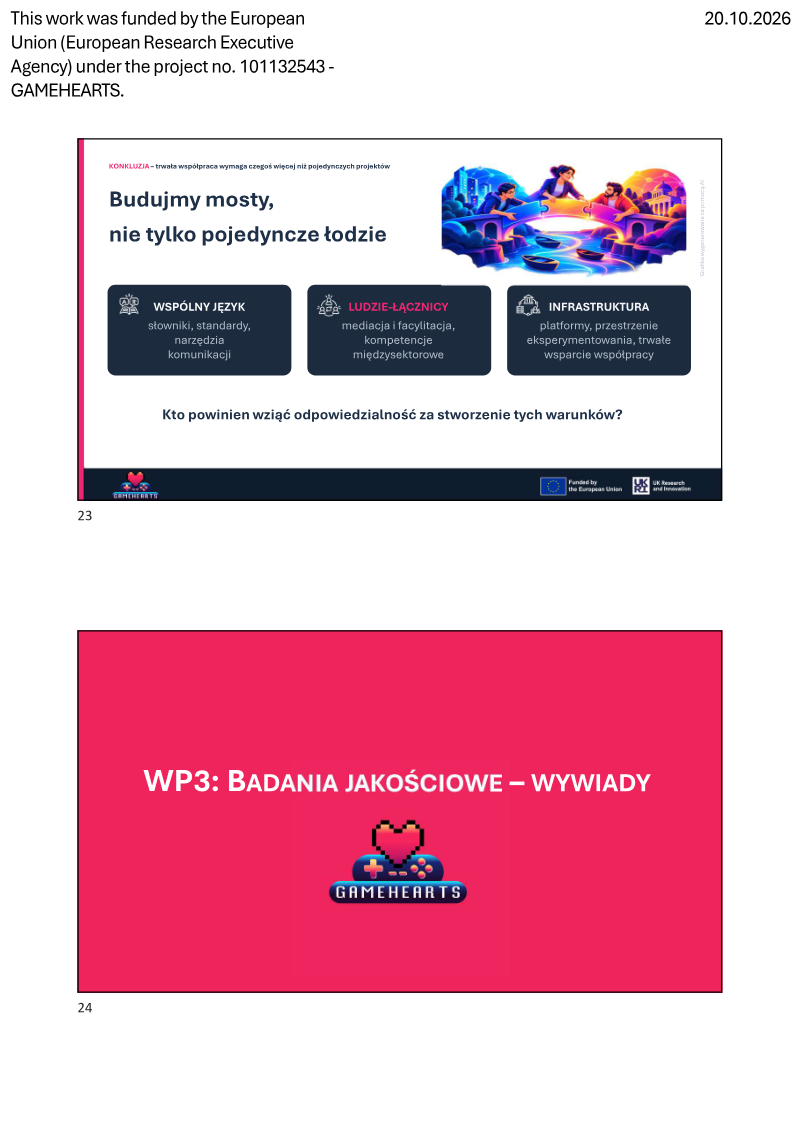
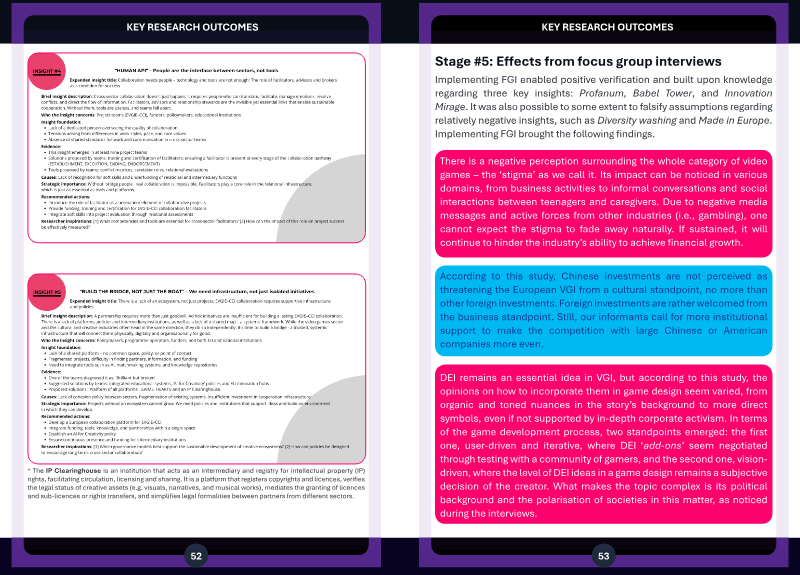
The GAMEHEARTS D3.2 "DTthons Summary" reports on four three-day Design Thinking Marathons (DTthons) held between February and April 2025 in Wrocław, Warsaw, Katowice, and an international edition in Wrocław, bringing together 72 practitioners from the European video game industry ecosystem (EVGIE) and the wider cultural and creative industries (CCI). Its central thesis is that cross-industry cooperation between these sectors is "fragmented but fertile": promising in creative potential, yet largely conducted in parallel and structurally fragile. The methodology combines design thinking with participatory action research and is structured around a four-phase 4E model of Establishment, Execution, Ending, and Endorsement.
The most consequential finding is that the Ending and especially the Endorsement phases are almost entirely neglected. Projects often conclude as isolated efforts without evaluation, follow-up, promotion, or institutional learning, leaving pilots at risk of dissolving. Across teams, participants identified recurring barriers including rigid public procurement, mismatched workflows and timelines, sector stereotypes, unclear intellectual property terms, and weak funding and onboarding mechanisms, alongside shared macro-trends such as AI adoption, digitalisation, demographic ageing, and rising production costs. Trust, shared vocabulary, and intermediary "translator" roles emerged as the most consistent success factors.
The report concludes that sustained collaboration requires deliberate investment rather than reliance on goodwill. Recommended measures include facilitation and bridge professionals, shared digital platforms and IP frameworks, dedicated cross-sector funding lines with longer timeframes, joint evaluation practices, and integration of the Endorsement phase into Horizon Europe and Creative Europe policy. The authors also present the DTthon format itself as a replicable research and policy instrument for building a more resilient European ecosystem.



GAMEHEARTS · 2026
GAMEHEARTS · 2026

GAMEHEARTS · 2026

GAMEHEARTS · 2026
GAMEHEARTS · 2026
GAMEHEARTS · 2026
GAMEHEARTS · 2025

GAMEHEARTS · 2025

GAMEHEARTS · 2025
GAMEHEARTS · 2025


GAMEHEARTS · 2025
GAMEHEARTS · 2025
Breda University of Applied Sciences · 2026