Game Development reports and market data
Documents

Game Data: Building vs Buying
The document analyzes the strategic decision for game studios and publishers regarding whether to build an in-house data pipeline or purchase a third-party solution.
- Building an in-house data pipeline for a studio with 5 million MAU costs approximately $50,000 per month, compared to $5,900 per month for a third-party solution like GameAnalytics’ PipelineIQ Pro.
- Human capital is the primary cost driver for both approaches, accounting for 89% of the budget for in-house builds and 78% for vendor-managed pipelines.
- Third-party solutions offer significantly faster deployment timelines, ranging from hours to days, whereas custom in-house pipelines typically require months to implement.
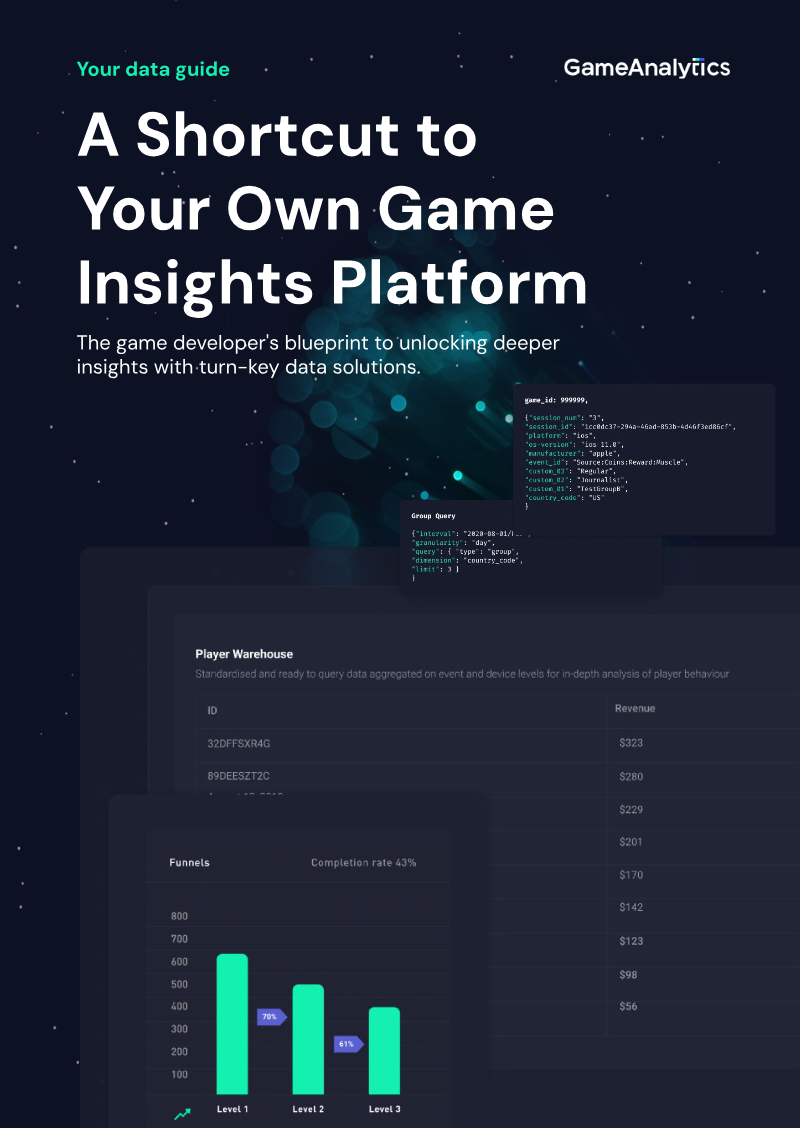
A Shortcut to Your Own Game Insights Platform
This document outlines GameAnalytics' turn-key data solutions, "Player Warehouse" and "Raw Export," designed to provide game developers with deeper, more flexible access to their game data.
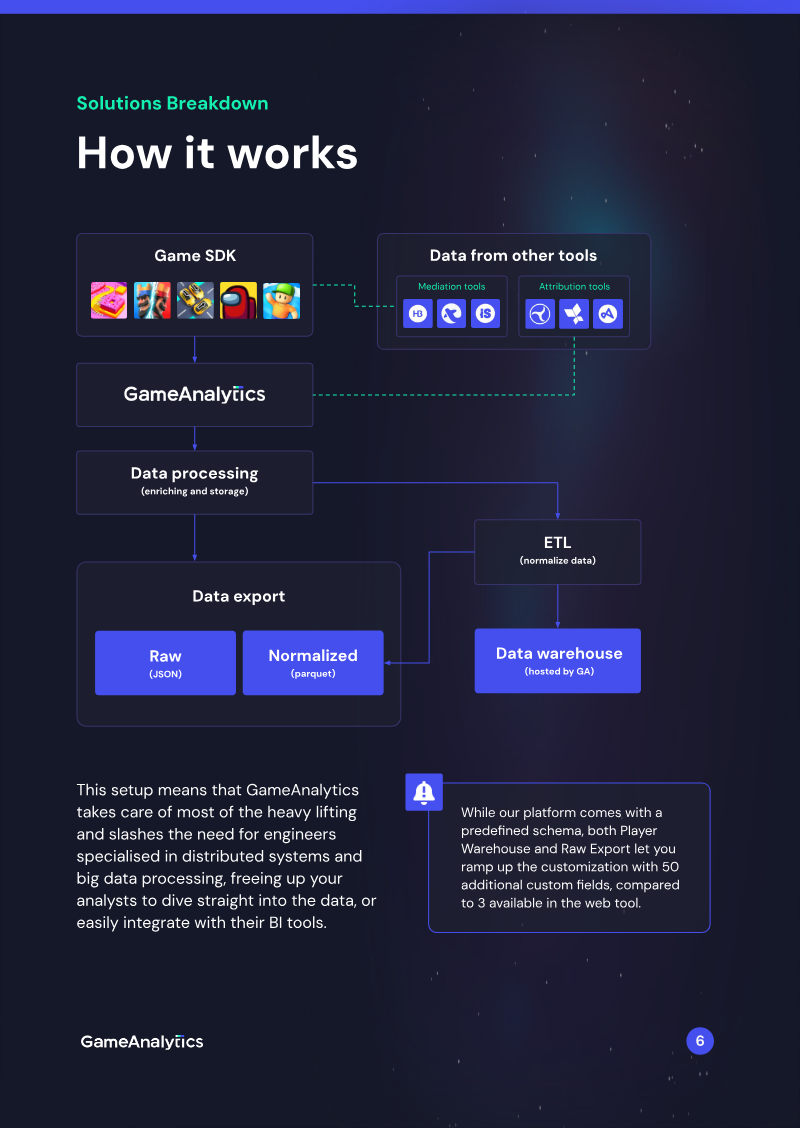
- GameAnalytics provides a turnkey data pipeline that eliminates the need for custom ETL development, proprietary SDKs, and ongoing infrastructure maintenance.
- The platform offers two primary data delivery methods: Player Warehouse for daily refreshed, SQL-ready event tables and Raw Export for real-time JSON streaming.
- A publisher utilizing Raw Export achieved a 50% increase in lifetime value (LTV) across 19 titles, while a VR MMO leveraged Player Warehouse to improve player engagement.

Your Data Tracking Plan: A Step-by-Step Guide for GameAnalytics
This guide outlines a five-step process for developing a robust data tracking plan within GameAnalytics, emphasizing the importance of a structured approach to ensure valuable and actionable data.
- Establish a structured tracking plan by aligning business objectives and player behavior questions with seven predefined event categories: Session, Business, Resource, Progression, Error, Ads, and Impression.
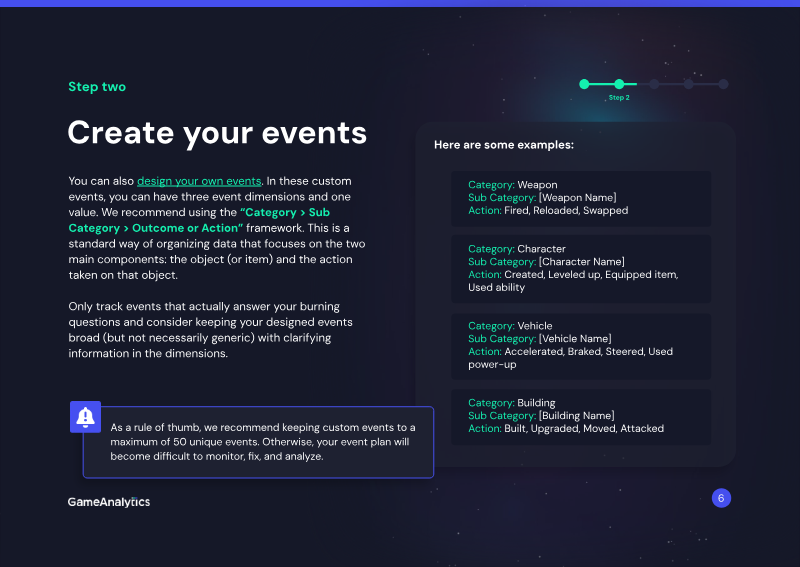
- Limit custom events to a maximum of 50 unique identifiers to maintain data integrity and prevent system clutter.
- Adopt a consistent Category > Sub-Action naming framework to ensure clarity and prevent redundant or misleading data collection.

Capital Markets Event 2025: Coffee Stain Group
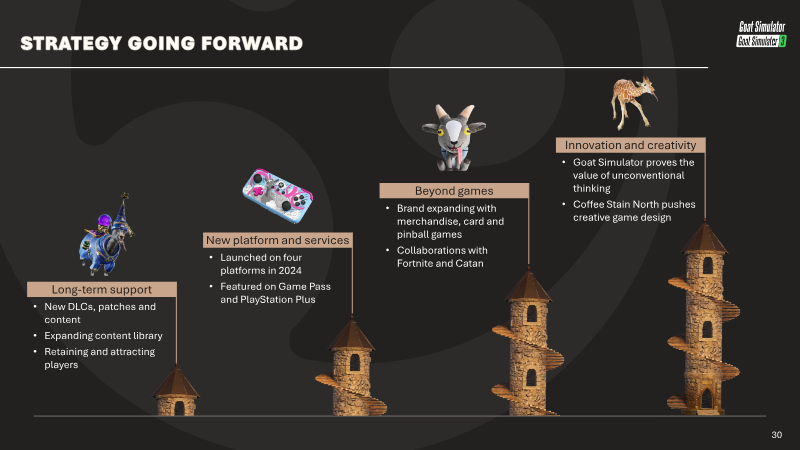
The Coffee Stain Group's Capital Markets Event 2025 document outlines a compelling investment thesis centered on a "gameplay first" development strategy, lean team structures, and deep community engagement to create enduring, high-quality games for global audiences.
- Coffee Stain Group maintains strong financial health with a 34% net-sales CAGR to SEK 1.2 bn, a 44% cash EBIT margin, and 120% cash conversion.
- The company holds SEK 472 m in cash reserves with zero external debt, providing significant flexibility for future M&A and capital allocation.
- Ninety percent of net sales are generated by a core portfolio of flagship titles—Goat Simulator, Deep Rock Galactic, and Satisfactory—which consistently maintain review scores above 96%.
The Rise and Reset of Sweden's $19B Gaming Capital Machine
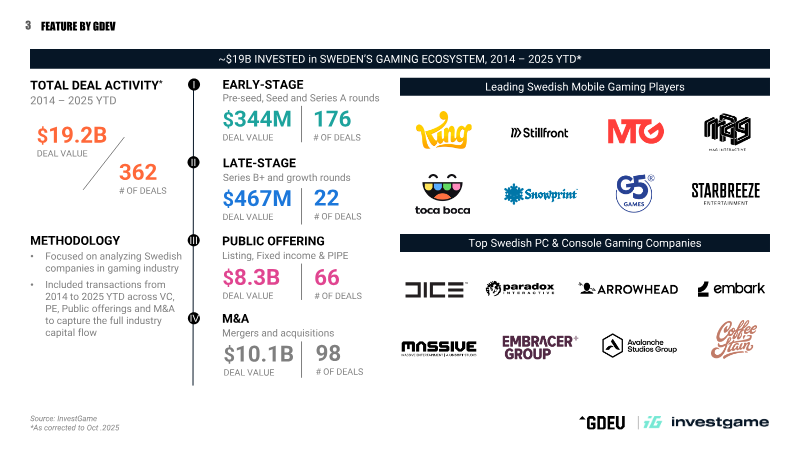
This document analyzes the capital flow and evolution of Sweden's gaming industry from 2014 to 2025 YTD, identifying it as a significant global gaming capital.
- Sweden’s gaming sector has matured into a $19 billion ecosystem comprising 1,100 companies, with Swedish developers producing five of Steam’s global top-10 bestsellers in 2024–25.
- Swedish studios contribute approximately 20% of Steam’s projected 2025 gross revenue, cementing the country's status as a dominant global gaming hub.
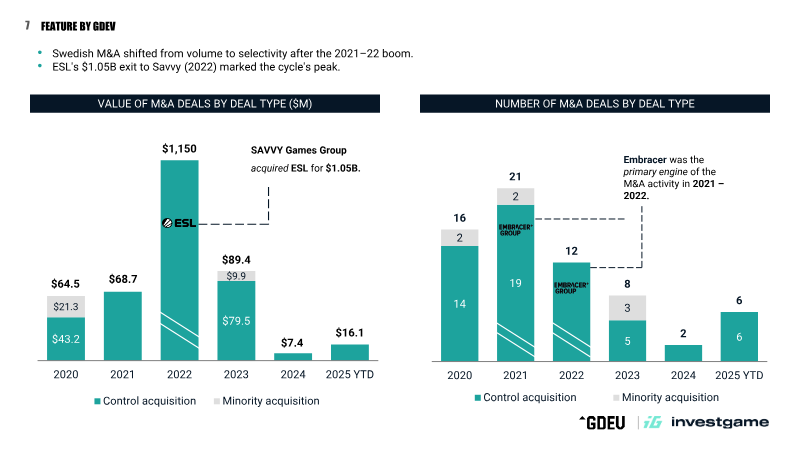
- M&A activity is highly concentrated, with three major deals—King ($5.9 billion), Mojang ($2.5 billion), and ESL ($1.05 billion)—accounting for 93% of the total transaction value.

What Good Are AI NPCs?: Lessons from a Large-scale Player Study
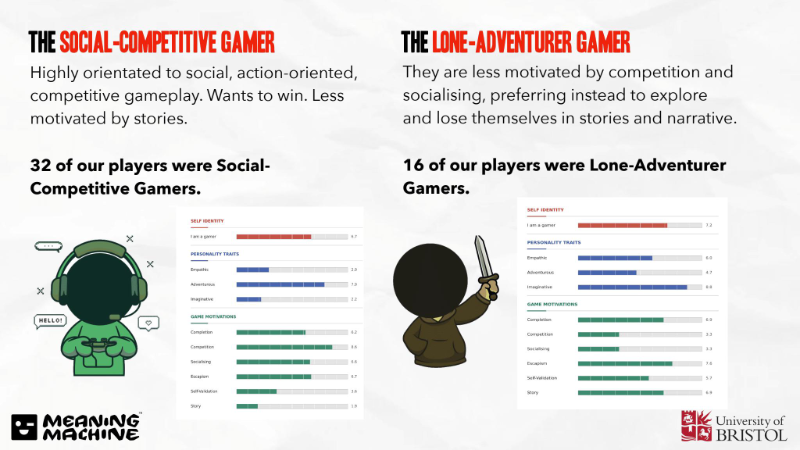
This study from the University of Bristol explores player perceptions of generative AI in games, specifically focusing on Meaning Machine's "Authored AI" technology within the "Dead Meat" demo.
- Generative AI NPCs drive high player engagement, with 97% of participants reporting high immersion and 96% rating their overall enjoyment as high.
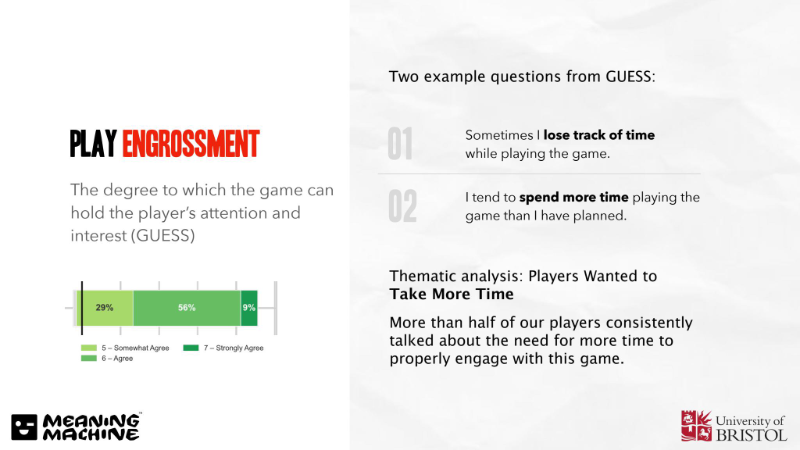
- The integration of AI NPCs maintains a balance between agency and guidance, as evidenced by 80% of players achieving top scores for play engrossment and 90% praising the creative freedom of the open-ended design.
- Cognitive load remains manageable during AI-driven interactions, with participants reporting NASA-TLX mental demand scores of 64.7 and performance scores of 52.7.

AI in MTG: Moving Beyond Theory
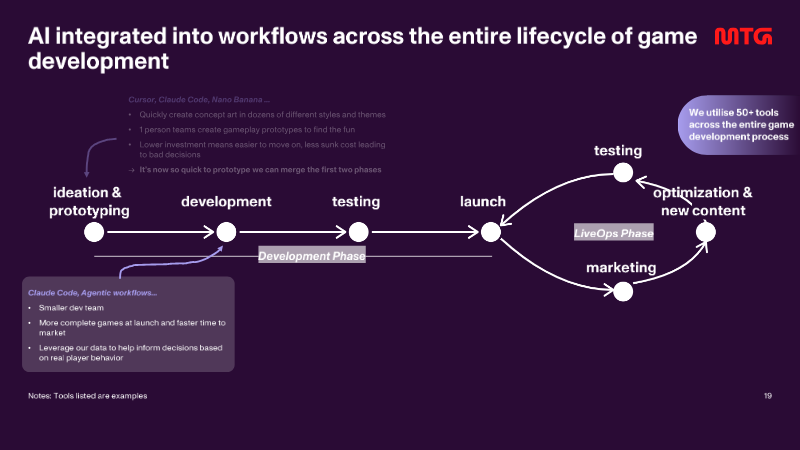
The document, "AI in MTG: Moving Beyond Theory," outlines a strategic integration of AI across the entire game development lifecycle, emphasizing its role in enhancing efficiency, reducing costs, and accelerating content delivery.
- Adopting an 'AI-first' development approach enabled the launch of five new mobile games in 2026, facilitating rapid iteration and simultaneous production of specialized content.
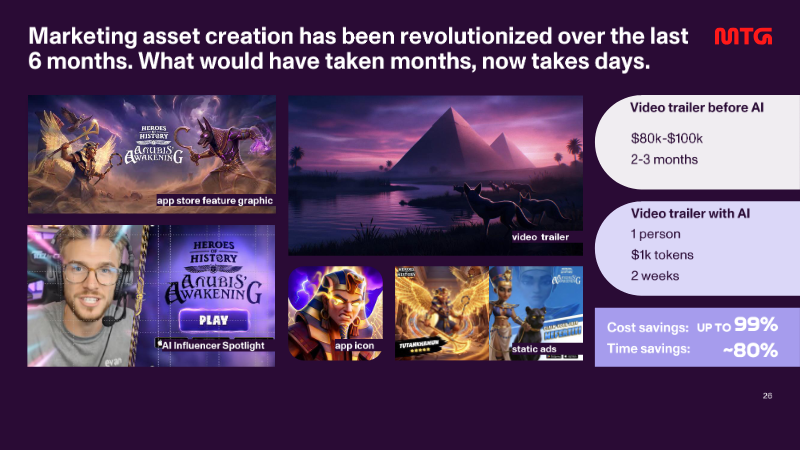
- AI integration has achieved significant operational efficiencies, including a 99% reduction in marketing asset costs and an 80% time saving on influencer spotlight production.
- Data analysis turnaround times have been reduced by 75% by utilizing AI agents to query large-scale datasets, allowing analysts to focus on high-level strategy.
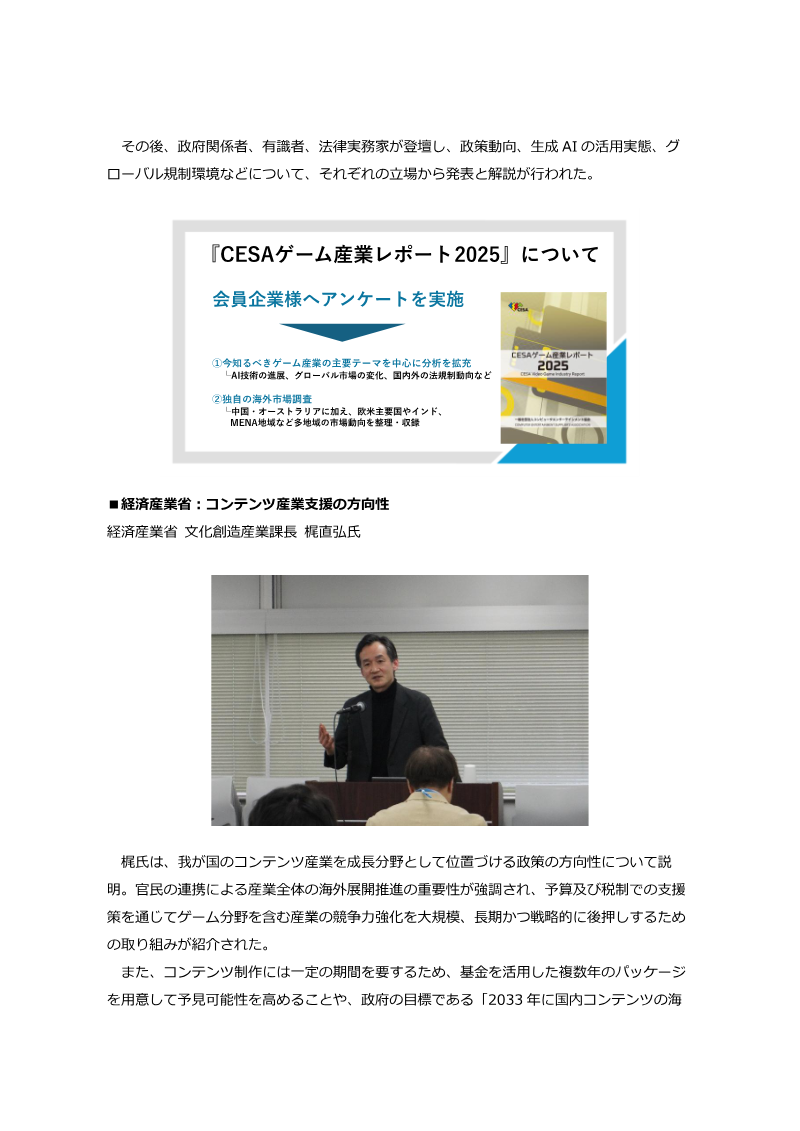
CESA Game Industry Report 2025: Launch Seminar Report
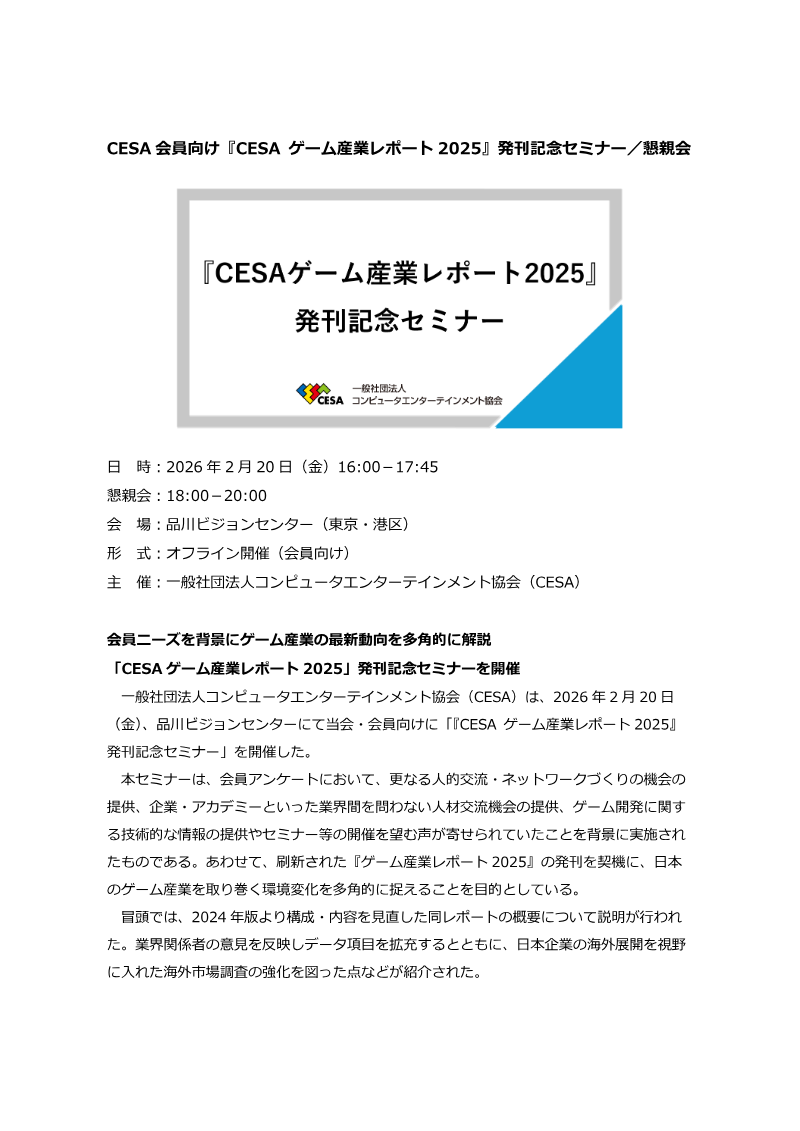
The CESA Game Industry Report 2025 Launch Seminar provided a multi-faceted analysis of the Japanese game industry, focusing on policy, technology, and human resources.
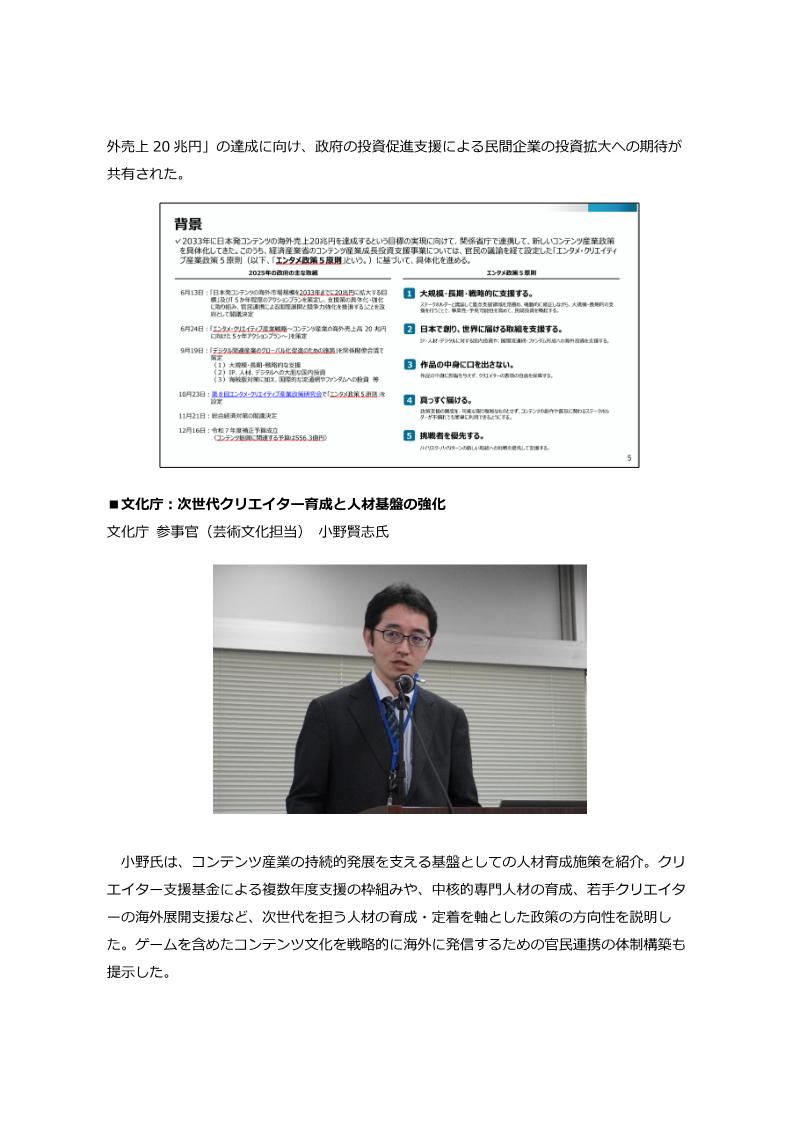
- The Japanese government has set a strategic target to reach 20 trillion yen in overseas content industry sales by 2033.
- Approximately 50% of domestic game companies have integrated generative AI into their internal development pipelines.
- Industry adoption of generative AI remains bifurcated, with high usage in production workflows but a cautious, risk-averse approach toward AI-generated content delivered to end-users.
Annual Financial Report: PCF Group 2024
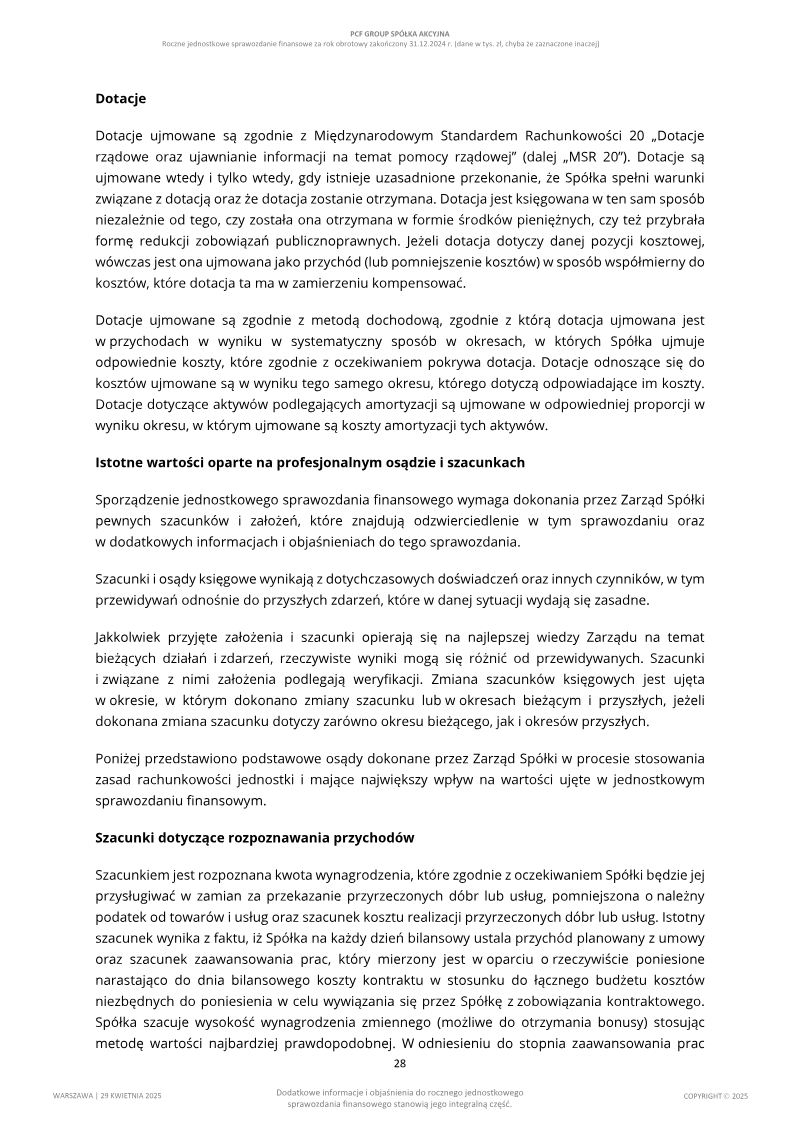
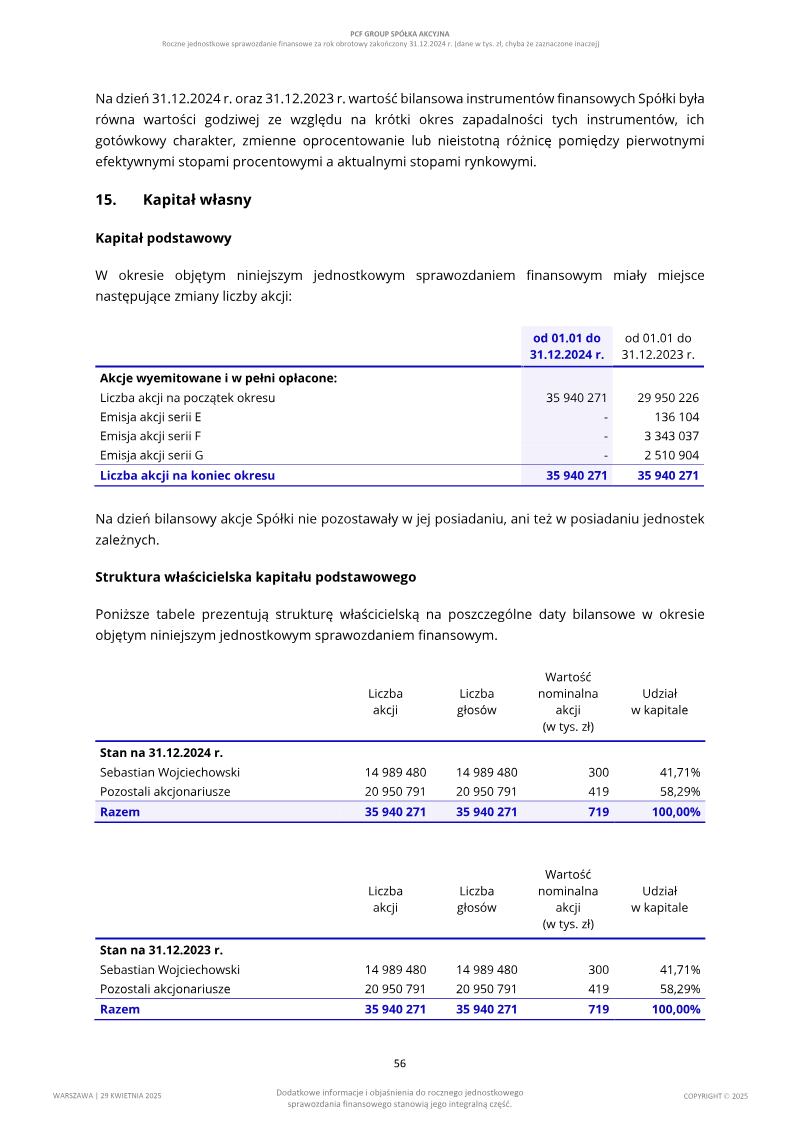
PCF Group's 2024 standalone results show a sharp financial deterioration, driven by the collapse of its self-publishing strategy after it failed to secure about PLN 350 million of new financing.
- PCF Group experienced a significant net loss of EUR 53,106 in 2024, worsening from a loss of EUR 14,277 in 2023.
- The company's operating loss also substantially increased to EUR 55,351 in 2024 from EUR 18,395 in 2023.
- Despite the losses, sales revenue grew from EUR 26,585 in 2023 to EUR 38,673 in 2024.