VideoThe Game Business
Major AAA start-up ProbablyMonsters has revealed its first games… and none of them are AAA
5 Aug 202533 min video
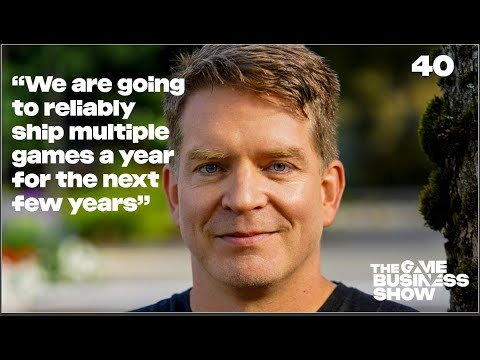
I believe we deserve as game developers stability, respect, but our business model's got to be sustainable or it's not a job. We built teams that were fully aligned with us culturally as far as building a respectful work environment and then you know coming to the point of not having roles for them was uh personally and for the company very painful.
Hello and welcome to the game business show. Today we are speaking to Harold Ryan, the CEO of Probably Monsters. You might have heard of Ryan. He was the former CEO of Bungie and oversaw the company during those heady Halo years and then the launch of Destiny. But you might not have heard of Probably Monsters. And that's because despite being 9 years old and featuring three different development studios, they've yet to actually release a game. Well, technically they haven't released a game. Probably Monsters started out as a collection of studios, including the likes of Cauldron, Battleb, and Hidden Grove. It also operated another studio called Firewalk, which it sold to Sony
in 2023. Firewalk is the studio that developed the ill- fated Concord game, which was released last year, but it famously failed to find an audience and was promptly cancelled. Firewalk has since been closed down. Now, at last, Probably Monsters is revealing two games, a roglike action game for Nintendo Switch and a psychological firstp person horror game for PC. Those games are all interesting. That's all fascinating. But the reason why I was so eager to speak to Harold Ryan is because Probably Monsters was born during an entirely different era for this industry. A time when AAA was the big focus and there was a huge amount of money going around. In fact, Probably Monsters attracted $250 million during its series A investment round. Back then, the vision for Property Monsters was to build AAA games in a new way with focus on building a positive workplace culture. It talked boldly about changing the environment in which big games are being made, upheaving the traditional publishing and development model and creating a sustainable future for all its employees. But that was a different
time. The industry has changed a lot. AAA is now super challenging. And as a result, probably Monsters has had to cancel projects, laid off employees, and had to bring its business closer together. That's not going to help build confidence in its vision for a positive culture and a sustainable future. So, I wanted to ask Ryan now, how has Probably Monsters adapted? Does any of the original visions still exist today? And how does this company full of AAA veterans a view of the state of the business in 2025? So, without further ado, here is my interview with Probably Monster CEO Harold Ryan. So, Harold, welcome to the show.
Yeah, thanks for having me. I'm I'm excited to share we've been building at Probably Monsters and really excited to talk about the company a little bit, but also to announce that we're shipping two games this fall.
Oh, which is this fall?
Yeah.
Wow. Wow. Wow. Well, dear, tell us about these games and let's get into it. What are you announcing?
Let me get a little preface into where we're at because there's been a bunch of news about what we were doing in the past as a company and I kind of want to,
you know, clear the air, set the stage as we think about it. You know, for us, um, it's an important moment as a company. Our our first two games are coming to market now as we do this. And you know when we started we had the had the vision of building a place that would be sustainable that would be a place that would you know provide by a better place for game developers to work. was the whole reason I, you know, started doing this. And and we were structured building a bunch of independent studios. And really, they were built and structured with the idea of building teams and games that would be signed to what you would consider a sort of old school AAA publishers. And while we still have the same goals for developers working in environment that, you know, feels respectful and is is predictable, you know, we're taking a very different path to it. And we've gone through a bunch of hard decisions getting here. We've had to cancel games. since we've transitioned teams and I think when the industry really kind of went through its a big evolution from kind of 2020 until you know a couple
years ago or today depending on how you count the clock uh we had to evolve too and so you know if we were talking back in 2020 uh I would have said hey we've got you know AAA publishing deal signed we're building you know big games and all of our games are built that way I would say today I think for the industry for us one sizefits-all isn't the way we're going. I think it's not the right way to go. And so, we're still building what I would call long-term games, but also building midterm and and short-term games. And the two games I want to talk about today a little, one of them is a short-term game. It's called Stormlancers. It's coming out on the Nintendo Switch. Oh, it's a fast action, super bright, fun to play, sidescrolling rogike that you get to run through, and it's bringing back Couch Co-op, which I'm really excited to see on the Switch. I love playing that with my friends and family just in one room. The game's really fun for that. The other game that's more of a mid what we would call a midterm game for us is called a prologue. We kind of think of it as maybe this is the pilot episode for what
we hope is a longer running franchise. It represents a little more time and investment into a game than a short-term game would to us. It's a psychological horror game uh where you're first person delving in to solve a mystery all while being hunted by this sinister monster as you go through it. It's first person coming to PC. You'll play it on Steam and Epic Game Store. And so those are the games as we get there.
So, excuse me if I'm being naive. What do you mean by short-term and midterm? I think a short-term game for us, I would say, first really is quantified by taking a a game idea you're inspired by and looking at the tools and tech that are available to today and going, what would this be if it was a game we shipped the next holiday? And so for us, for our our short-term games, they're really games where we're looking at, you know, less than 18 months of development time.
Wow. You know, and I think for both the games that are coming out this fall, they're very approachable, easy for consumers to play and hopefully love,
but you know, we have to wait for that part. And both at a $19 price point,
and both games we we think a skilled user in the genre can finish the first time through probably in in less than 10 hours. You know, we we think they're games where you can find more depth when you play. And certainly, we're talking the sides scrolling rogike. It's uh a very replayable, very fun round after round game as you as you go into it.
This seems to me quite the pivot from I was reading all the old press releases, all the old stories that we wrote about it. It was AAA big games AAA development veteran talent such as yourself obviously.
I know the market's changed. I know we can probably talk about that, but is that vision you've had to change all of that?
In our long-term games, you're still going to see games that have bigger investments, games that that probably have bigger teams. So I think today for us when we when we talk about the best path to market for a game in the old school AAA space it would be well build a studio right hire 75 100 or more uh
depending on what publisher you're building for and then you know train that team to ship the game you're going to ship and I think that takes a long time. There were a couple opeds I did when we announced back in the day about the pluses and minuses of AAA. And really the goal then was to start with AAA under the assumption that that was the safest path to take to get the company established. that bigger budgets would allow us to have good benefits and good quality of life and and more predictability and and certainly it's a space that I felt like I understood pretty well based on on on my background and have good relationships uh in the industry to help move that kind of thing forward. But yeah, I think you know the first few years of the company for sure and we had great success signing signing uh AAA deals and we have great great teams and great projects underway but the the market moved and I think today we'll still build long-term games and mid and short but I think the the world
today is one where you need you the best path to market is also identifying the best resources and those resources might literally be just about anywhere as you go through it and I think that's part of the you know the evolution in the industry since 2020. Game developers are working from all kinds of places they weren't working from before and tools and tap allowed us to you know connect in real time to people all over the world which has really opened the door to you know pulling the right talent into the to the games at the right time. Last time we spoke, this is quite a while ago now, it was the sale of Firewalk to PlayStation. And obviously that that's I I feel terrible for them, but it's become a um uh I guess the big warning sign for the industry what happened to Concord um last year. Were you already on this path before that happened or was that a warning to you as well?
You could see the environment shifting in the entire industry um even leading up to that terrible outcome.
Yeah. you know, the shift in consumer
behavior has has really changed. I think digital sales that, you know, spiked from from everyone being at home for a couple of years and other pieces have really changed,
you know, the power of of AAA publishing in some way. But, but yeah, I think we were definitely eyes open to it and thinking about it. back then we didn't we didn't recognize it as much and it and it it led to us um you know we had as I said we had great games great teams going and and lots of interest from publishers but not not the level of commitment we needed to to be able to bring the the games we had in development then to market worry a little bit in that you know this this trend and I think it's the you know I'm hearing about it all over the place all the time we're talking about the fact that you know I I had um recent the interview that we did last week was with pull-up entertainment They've got 50 games coming. Not a single one of them would they class as AAA.
One of their games is Space Marine 2, which isn't which is a cheap game, but it's obviously not the super highend AAA games. And they're talking about how, you know, you can do a game like that
that can do AAA numbers if you do something small and focused and very well and reach those audiences. And I think that's great and there's a lot of people adopting that approach. But I do worry a little bit that we're all assuming AAA can't work at all anymore when we've just had Assassin's Creed Shadows do well. Monster Hunter was I'm not saying that's what you're thinking. You've got a much you've got a big challenge in the set. You're you're new, right? I know you've been around for nearly 10 years now, but you're you're trying to launch new things and do new stuff, which is really is even harder. Add that on top of AAA and that's really difficult. But I do worry a little bit that we're um we're talking ourselves out of ever making those big budget games outside of the massive franchises. I hope that's not the case.
Yeah. I mean, I think games absolutely should come in in the right size for the game and with the right team to bring it to market. And I agree. I hope to see room in the market for small successful games and for big successful games as they go through. You know, I think the important thing for me, I've always believed that, you know, when you're as a team, like shipping games is an
important part of the learning cycle, whether you're the QA team or the IT team or the game development or the release manager, like it's all getting a game successfully into the hands of of a player in a way that works to their delight is is not a not a simple process. And it's also not one sizefits-all. sitting and learning that evolution as as how people are connected change as their medium changes for where they're playing and consuming is a constant like reinvention evolution challenge as you're going to market. And I think it's getting that muscle developed so that you you're doing that and and that cycle of game concept to in consumer's hands. Okay, what what would you do differently now when you look back is a really important cycle of learning as a team when you're shipping. And I had the benefit early in my career of being in a place where I shipped I don't know like over 30 games in 10 years. You know I think we shipped five Halo games in 10 years. That amazing isn't it?
I think a lot of our strength was we had been through the cycle so many times
that as a team we knew how to respect each other when we had to make hard decisions that got us to the point of successfully getting to a consumer. And it's not to say you don't have struggles along the way, but if you don't have that experience as a team, I think you're missing something that's a key part of getting there. And it's one of the real challenges, I think it's why we all have to chase sustainability is you have to be able to keep your team together to run through that learning cycle.
That's definitely a real focus for us is to get back to something that we we can believably, you know, look at teams and greenlight their games and see a real path to market for their games as they get there. I realize that we're taking a sort of slightly negative turn. Well, I am anyway with the questioning and obviously this is a good moment. It's a big moment because you are announcing games and it's been a long time coming to this point. I'll ask a bit about them though. What makes you confident in them that makes you think these games got something about them? These might resonate.
For one, I think you look at Stormlancers coming out on the Switch like it's fun. It's vibrant. It sounds
great. Like it's it's actually fun to sit and hear the sounds and the music as you go through. I think everything you look for in a '8s cartoon inspired like it's just it's bright, it's vibrant, it's great solo, but like to me that couch co-op experience when it's a game that manages that experience well of like is is really something that helps helps push through. And we do user research testing as well on top of just do I like the game is maybe not the the ultimate question for it, but the we're getting great feedback. we're, you know, moving our way through it, but it's also a game that we built it for a particular audience. It's got a very focused design for it. And the and the goal is for it to be delightful for that audience. And I think, you know, you'd love everyone to like everything you ever build. But I think it's one one of the core focuses for us in the shift is we're picking an experience and an audience and then building something that we think, you know, is approachable, consumable for them, something they're going to feel
like they get real value out of when they play it. And that audience having delight in the game is enough to keep the the game team moving on to the next game. and we're already in the point where we've green lit the next two uh short
development cycles for next holiday are green lit and then concept development. And so that you know that team's excited because they've got a game coming out and they know they've got another game to work on. And so I I think I believe part of that passion and excitement out of the creators to have a to be in some ways in the driver's seat of bringing delight to their audience, but being in the driver's seat of be able to learn and push that forward to the next game. Uh is a big part of why why I think they're going to continue to execute all the way up until, you know, the final handoff to the consumer as we go.
I love that because I I talked about this a little bit on the show recently. We sort of got into a situation where every game that we were making had to be like perfect and had to deliver everything all at once when you know you talk about those early Halo days. I'm
sure there were loads of things you wanted to go into Halo 1 or Halo 2 that's like you know what we've got another game 2 3 years away to save a lot of this stuff for the the next one we can ship this there's almost an iterative approach to game development which is actually really nice you know often I find the second game in any franchise is is is can be the peak game in that franchise because it has all the things they couldn't get into the first game and then also they tweak all the things that people you know didn't like quite so much or whatever and that ability to just to just feel like I've got another one coming around the corner rather than these five, six, sevenyear.
I agree. I think you have the constant question of like, well, what are what are they going to like when people are playing this game? What do they want more of? Where did we understand the game? And they're not quite there, and so we should move it a little bit for them. And then there's also, I think, a lot of times, uh, and this has been true for a lot of the games I've shipped, and it's true for for our games as well, where there's a lot more behind the game as you get there, you know, and so it it helps with continuity. It helps pull you through. It doesn't mean every game
we're doing is a sequel, but the the second game I or a prologue. Um, we think of a lot like a pilot for a TV series. And it's a full standalone polished game on its own, but the mythos behind it is a deeper lore. And so as you're in and and going through this psychological horror game and you're you're working through and solving all the mysteries put in front of you and and you know based on the way people play it getting uh getting scared a few times I think we highly recommend putting on some headphones and sitting in a dark room and and playing the game. But the hidden depth that sits behind a game when you when you think about it that way, when you think about the world that the game sits in, it adds little components of of clarity of continuity that you might not even realize when you're going through it.
But it's but it's a real opportunity to to pay that off for the consumer that really, you know, finds the game and loves the game as they go. And that one in particular, you you can never promise before the games are done they're going to ship. But we're already looking at,
you know, for lack of a better word, what the next chapter might be for for that story. Like, how does that how does that world unfold to the player? And in the model we're applying beyond these first two games, you know, we have long and mid and short-term games in development as well. We've got an open world RPG that's super fun and beautiful and uh can't wait till we can talk about that. We've got a co-op uh souls like that is is amazing and fun to play and an extraction base builder that's fun and fits in in the right space and I think is actually going to be I think all of the games have a really good chance of finding an audience where the games succeed and let us keep our teams moving forward on those games as they come to market. you hadn't broken cover back in 2016 but it's been nine years been a long time coming these titles and I guess Concord is sort of one of your own even though you know it stopped being at point but it feels to me like oh finally you know I don't mean that in a in a mean way but in like it's it must be a relief to actually be able to show
something rather than just be talking about what probably monsters is trying to do. Is that how it feels to you? Yeah, I mean I think for me I'm I'm the most relieved for our teams. For them, you know, the effort, the passion, the desire to build something that people are going to play is is left unfulfilled until that moment of of shipping the game. M and certainly for me, one of my predominant goals for starting Probably Monsters was in hopes that I could help, you know, fund, raise up, teach, train, whatever, whatever the right level of involvement was. but a new generation of developers cuz I think there's to me in 2016 2017. I felt like there was a new generation of of developers that could really use the opportunity to learn how to build new IP that could learn how to pick a focus for a player experience and and hold to it. and the challenges of staying on vision, of keeping your team together from conception all the way through launch of of navigating the
challenges of actually bringing a game to market. Those aren't simple challenges to go after. One of my goals has been to see, you know, as many people as possible successful at doing that in a way that, you know, is rewarding. I'm certainly I'm playing the games on a regular basis and I've been deeply involved in you know the concept reviews and other piece but these games are built by the teams that are building them and you know I'm I'm proud of what they've accomplished and I'm excited for for for me as the CEO but I'm more excited for the team members for everyone else working in the company to see two what I think are very focused but very polished and and great games come to market. I think learning from this release and hopefully using it to achieve sustainability for for all of our teams at Probably Monsters and helping us to grow and hopefully employ as many game developers as we can, you know, responsibly and successfully is certainly the I think should be the goal of every CEO.
Are you still set up the same? Is it three studios and essential organization in the middle or have you shifted that? I think a a part of our our shift, you know, when we early on were building for with the primate goal of of signing to publishers, we're very much built more so with a central hub of business and finance and IT and security and and all the all those sort of pieces, but really building the teams as uh standalone or potentially standalone studios. And I'd say today, our dev teams still have identities, but they're not they're not structured. Uh they're definitely much more integrated into our central teams. We have more direct development support than we did when we were doing independent games and a lot more um cross team integration for technology and creative support and others. We go through it. You know, when you're signing to a AAA publisher, they want to put walls around your team and your game, and they have their own rules for how they want things to go. And so I think today we're a much more integrated company.
Okay.
Our teams are sally smaller than they would would have nominally been back then and I'd say our partnerships are are deeper.
So are those different entities is all under probably monsters now cuz I didn't notice on the website now. Yeah. When we started they were actually subsidiary LLC's of the company in part because that was a cleaner structure. You know we had you know different major publishers. is we had deals signed at one point were signed or negotiated with several of the large traditional AAA publishers and uh they don't like their peanut butter mixing with the other person's
Yeah, of course. Yeah. But so what happened there then Harold? Like what I mean I know you don't want to go into all of the details but you've gone through this journey were born during a different time right in different industry and you've gone through co and you've gone through a boom and an absolute contraction. So, I understand why you've had to react and I think it's actually great that you have because there's others that just haven't and find themselves in difficult situations. But what's happened then where you had some of these games signed and things
and they thought fallen through. Is it just that publishers have got they scaled back as we've seen um across the whole business?
I think through that cycle publishers have scaled back their number of third party deals they do have gotten a lot lower. the funding commitments have gotten harder to to come by in that space. And there are two fewer AAA publishers today than there were in 2017 with, you know, the acquisitions at at Microsoft.
But I think overall, I think the the real driver of it without casting blame on them for pulling back on their business is the consumer behavior doesn't doesn't match a one-sizefits-all model. And I think the critical point there is to when you look at a game and look at an opportunity with an audience to pick the right path to get to that that experience to that audience which is a big reason why we're, you know, long, mid, and and short-term games for us.
It's interesting you use the word short. I've not heard that terms before, but a lot of the terms people use is like double A player. I actually don't like those terms because I find you play a
game like I mentioned Space Marine 2 earlier, but Expedition 33, you play a lot of these games. And it's not that they're any less quality than AAA games. It's just that they don't do everything right. They do a few things really well. And it's of that that experience in itself is a AAA experience. But because it doesn't do everything, it's not let's say cast in that, you know, it doesn't it didn't take six, seven years to make. It didn't require hundreds of employees to work on it. I do feel like those terms have become a little bit of a a noose in a way and probably set the expectations wrong.
What's the definition of a AAA game? Like is it budget? Is it spend? Is it size of team? Or or is it financial success after you're done? There are games I love in the market that didn't polish all their features, didn't you know, all all the things that go through it. And they're massively financially successful, too. And then you're like,
"What do you call a game that didn't attempt to polish all or what do you call a AAA game that launches that's got, you know, all kinds of visual
defects and other pieces that go in it?" And I think the um I think for for me, I I think it's it's really more appropriate to step back and go, well, what's the right focus for the consumer you want to build and what's the best path to get there? And
you know and I think the first good question to healthy question to ask in game development is well do I need to do R&D to bring this idea to market or can I do it with the existing tools and technology and you know can I bring this game vision to life on today's platform.
I'm dying to know how are you approaching publishing? Is it you're doing it yourself? Is that the way you're doing it? Uh, I think for, you know, we don't rule out the right partnerships for the right game, but I think we look at uh the games coming out this holiday, we're we're we're the ones floating them out. Yeah.
Yeah. Oh, okay. You working with agencies and partners on it or are you you've got some internal resource? I'm just interested
across the board from concept to market. We're we're looking for the right
support at the right time all over the world. And so we've got we have partners in just about every aspect of what we do and and a core team of of brilliant individuals that are that are driving everything forward as well.
Obviously, one of your visions front and center is about building a strong positive culture within your teams, trying to create a changing environment, how these video games are made. Obviously, you've had to realign your business. You've had to you've got smaller teams. You've had to make cuts. You have to make changes. Has that set back that goal? Yeah, I think the dealing with the realities of changing the size and scope of teams and even the targets for what they were building hasn't changed that goal. It is certainly put some heavy marks on the board against hey you haven't proven it yet. And when you transition team sizes, game types, development schedules, and even when we started, we were pretty geoloccated in, you know, in around Belleview for for all of our teams as we got started. And today when you look at the teams where you know we have we have
some geoloccated teams but we have a lot of people that are working from all over that just unfortunately meant we we didn't necessarily have the right job for everyone that we had employed back then. And that that was probably the hardest part of getting to that the realization that we had to drastically evolve to match where where we felt like the industry was going is we, you know, recognizing that to be meaningful as a game developer, we've got to build and ship video games. And as a pre-revenue company, our investor group is 100% behind our cultural goals. The first conversations I had with them before they invested was about culture. And so they're not leaning on us to, you know, get there. They want us to have a longunning sustainable business. They they want it to be profitable as well down the road, but they're fully supportive of the cultural goals, but we're in a such a different form today that it has it's has been painful. I mean, it's the it's hard to see hard to look at the at the people who deserve
the world. They're hardworking. They're they're we we built teams that were fully aligned with us culturally as far as building a respectful work environment and um and then you know coming to the point of not having roles for them was uh personally and for the company very painful. the and um you know I think that uh I think you get to that point of needing to evolve and needing to change because we've got two games coming because the other games coming under our new structure feel great they're moving well I think we're I think we're going to reliably ship multiple games a year for the next few years.
Oh wow. and learn as we go. And so that um you know if you get if you get knocked down do you get back up and and you know try to find a path the northstar is still there like I I I believe we deserve as game developers stability respect uh but our business
model's got to be sustainable or it's not a job
and getting to that sustainable model I think it's it's going to take learning and by shipping two games we're going to have the I think the right opportunity to learn.
Yeah, it's going to be really important. How big is the company now? Are you allowed to say?
Uh yeah, we're about 200 full-time employees in the company today.
Okay. And you work on quite a few multiple titles a year. It's quite a quite a uh that's quite a lofty Well, I don't know if it's a lofty goal. It's certainly it certainly is something I don't expect to hear from companies these days. There was a company that in the UK that I'm really fan of that told me their plan was to release a game every year. They did it for about two years. It's been about 5 years since they released one. But um but uh I guess you know these things happen.
I look forward to the day when all of the leaders we have at the company for games have the opportunity to ship their games. But, you know, there are people people coming through doing this that um have have a ton of experience in in
building and shipping and uh I think you'll see in the in the press release when you get it the Jim Bever's one of the we call the role general manager if they're if they're leading game development for us, but he's been in the industry a long time. He shipped a lot of a lot of games. uh he's lived in mobile for a couple of years and so the and he's one of the main ones you know looking at how do I ship a game every year the and I think his experience I think part of part of that looking at the goal and picking the right team to do it is is about you picking someone who has the expertise to to get in there and and go and you know and so we're we're very focused there the leadership side when you look at Um, Ira prologue coming out. The GM for that was the uh Matt Casease, he was he was the head of interactive at HBO for a few years and the the lead writer on it has written for me for I don't know 15
or more years. uh and uh head of story and he's just he's amazing and prolific and and that like I think you pair pair people who can execute and can lead in that way and and the other teams are in development have uh similar humans who we won't we won't name today but they're their goal which which I love is to be a core of a senior team and then to pull up a a new generation of developers with them as they bring their games to market. And and that's really how we're when we think about our long-term games, that's absolutely a big part of our focus is really lining that up to to teach and train as we as we move. And it's, you know, that's it's been super rewarding. And, you know, I think when you get to see those games, it's my hope is that, you know, two years from now, we're looking at uh a bunch of games in market
without giving it a hard number. uh and really establish something that's sustainable and uh and turns out games that delight their users.
I was going to ask one last question which was like what is the probably monsters vision now but I don't know if that did you just answer that question?
Yeah, I think unite guide and empower talented development teams and and I think ultimately to really find sustainability in game development in in today's today's world.
Well, thank you Harold. Thank you for your time and good luck with the announcement and for the launches. I didn't expect them so soon.
Thank you and I appreciate your time and and having me having me on.
Some really fascinating stuff there from Ryan. Clearly a challenging few years for the Probably Monsters team, but hopefully with these two games, we'll start seeing some positive results. That's it for today's episode of the Game Business Show. If you want to make sure you never miss an episode, head to the game.com and stick in your email and you'll receive an alert every single time we put something out. We'll be back later in the week with our usual news
and analysis show. Until then, thank you for tuning in. What is the greatest movie trilogy of all time?
I would say Star Wars.
Any particular Star Wars trilogy?
If you have to ask
the original trilogy, it PC or console?
Well, I have to say console.
Will game streaming ever become a mainstream proposition?
It will be a mainstream proposition, but you're always going to be able to do better with local compute. Will Nintendo Switch 2 out sell Switch One?
I think it will.
What's the first thing you do when you come into work in the morning?
The first thing I do when I come into work in the morning is walk around the building and say hello to everyone that's in.
And if you could be the CEO of any other video game company in the industry, which one would it be?
That's a tough question. Want to know how they're all actually working inside?
You can skip it if you want.
Okay, I'll skip it. Okay.
Auto-generated captions from YouTube — names and numbers may be misheard.
ProbablyMonsters is fundamentally restructuring its operations after nine years, moving away from a primary focus on AAA development to embrace a more agile, diversified business model. This strategic pivot is driven by the need for greater sustainability in an increasingly volatile market, where long, high-budget development cycles have become a liability. By shifting toward a mix of short, mid, and long-term projects, the company aims to mitigate risk and ensure a more consistent output of titles that better align with current industry demands.
The company’s new portfolio includes a roguelike action game for the Nintendo Switch and a psychological horror title for PC, signaling a clear departure from its original AAA-centric identity. This transition is supported by a move toward self-publishing and an integrated organizational structure, allowing for more focused audience targeting and shorter development timelines. Despite recent workforce reductions necessitated by broader industry contraction, the organization maintains a lean team of approximately 200 employees, positioning itself to ship multiple games annually.
Central to this evolution is a commitment to sustainable development practices that prioritize mentorship and long-term growth. By pairing industry veterans with emerging talent, the company seeks to foster a culture that empowers development teams to deliver high-quality, focused experiences rather than chasing the diminishing returns of massive, multi-year AAA productions. This "one size does not fit all" philosophy reflects a broader industry trend toward operational flexibility, ensuring that the studio remains resilient while maintaining its core creative vision in a rapidly changing global gaming landscape.

The Game Business · 2026

The Game Business · 2026

The Game Business · 2026

The Game Business · 2026

The Game Business · 2026

The Game Business · 2026

The Game Business · 2026

The Game Business · 2026

The Game Business · 2026

The Game Business · 2026

The Game Business · 2026

The Game Business · 2026
The Game Business · 2026
The Game Business · 2025
The Game Business · 2025

GungHo Online Entertainment

The Game Business · 2026

Deconstructor of Fun · 2026

CD Projekt · 2026

CD Projekt · 2026

The Game Business · 2026

The Game Business · 2026

The Game Business · 2026

The Game Business · 2026
Comments