1 free read left. Create a free account for unlimited reading + AI research.
Create free accountReport DiGRA
1 free read left. Create a free account for unlimited reading + AI research.
Create free accountReportDiGRA
The authors describe a considerable gap between student expectations and realistic outcomes.
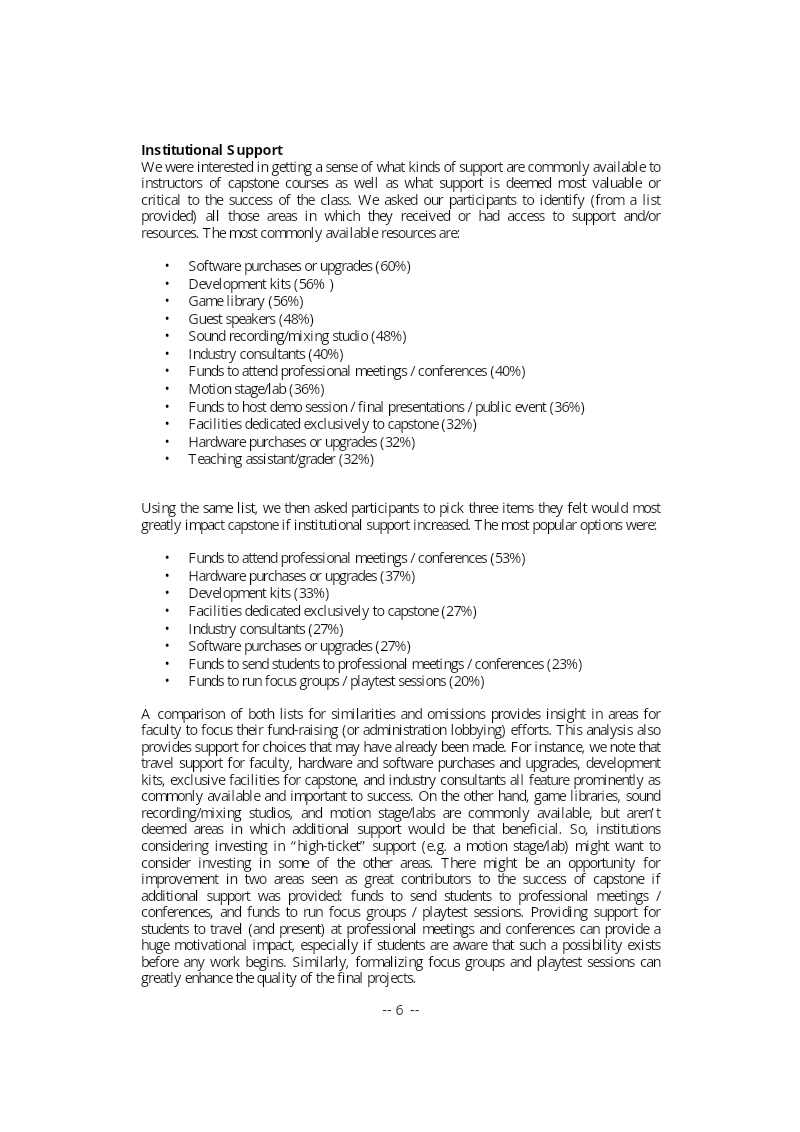
Zagal and Sharp's paper examines how game programs design and deliver capstone courses, aiming to give educators and administrators a clearer picture of current practice and the considerations that should shape capstone design. Drawing on a survey of 37 self-selected game educators, the study finds that capstones are typically taught by a single full-time faculty member working with about fifteen students over roughly twenty-one weeks. Educators most often prioritize developing students' soft skills, producing portfolio-quality projects, offering industry-like experiences, and granting students independence. Software, development kits, and game libraries are the most widely available resources, while instructors most often report wanting additional funding for professional conferences, hardware, and dedicated facilities.
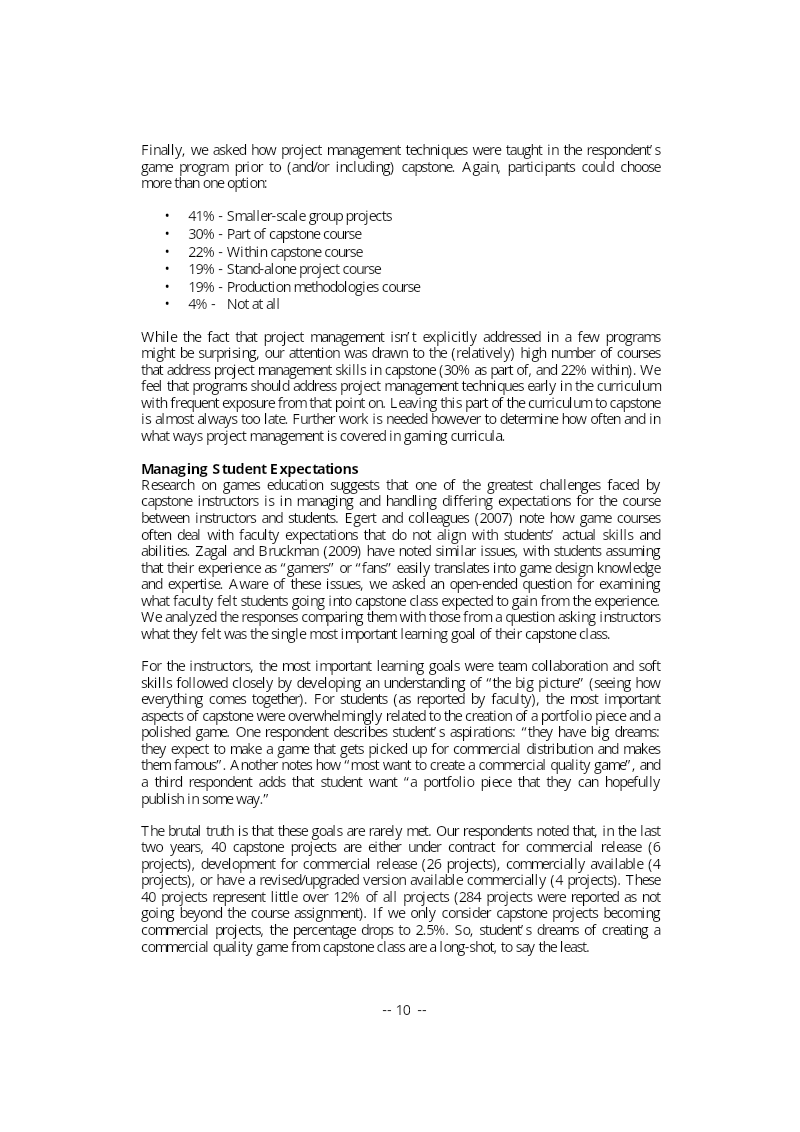
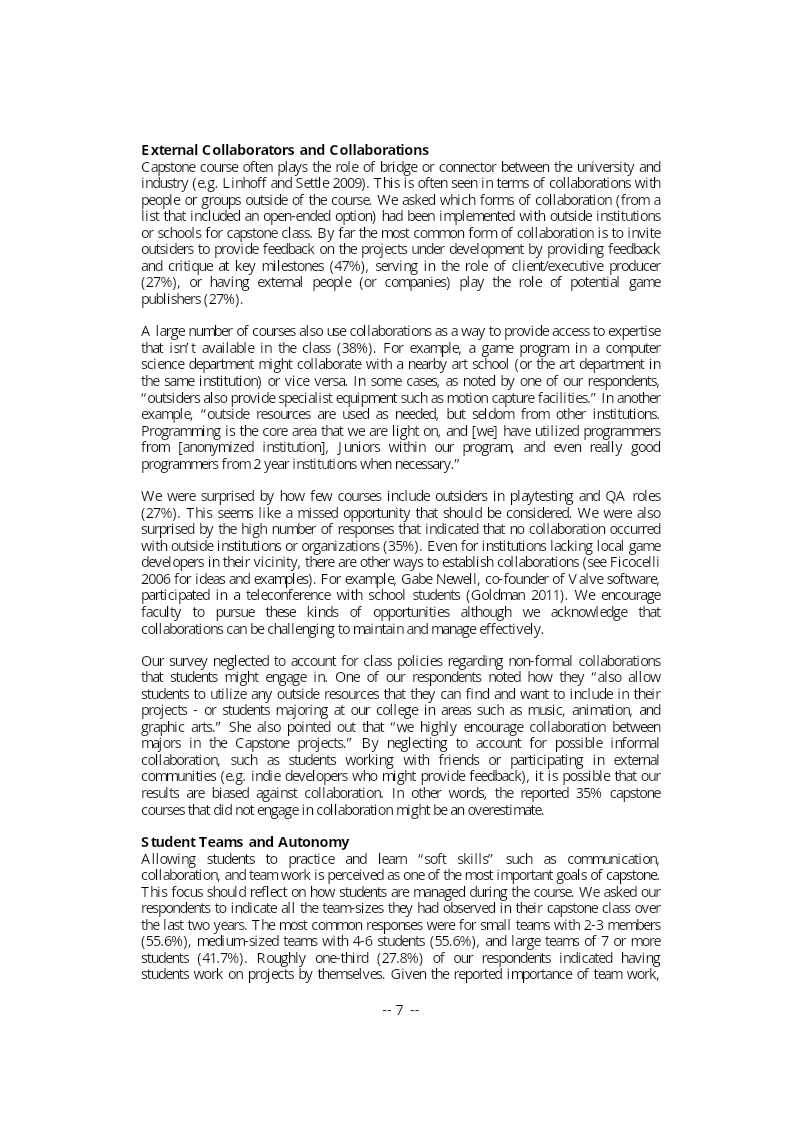
The findings highlight a set of notable gaps and tensions. Tools such as hardware, development kits, and industry consultants are both common and valued, whereas costly facilities like motion capture labs receive less emphasis. Roughly two-thirds of courses involve outside collaboration, though such partners are rarely engaged for playtesting or quality assurance, and the authors suspect the reported figure of 35 percent with no outside involvement may be overstated. A striking conclusion is that only about 2.5 percent of capstone projects become commercial products, pointing to a considerable disconnect between student expectations and realistic outcomes. The authors argue that effective capstone design must account for the preceding curriculum, program culture, and the characteristics of enrolled students.
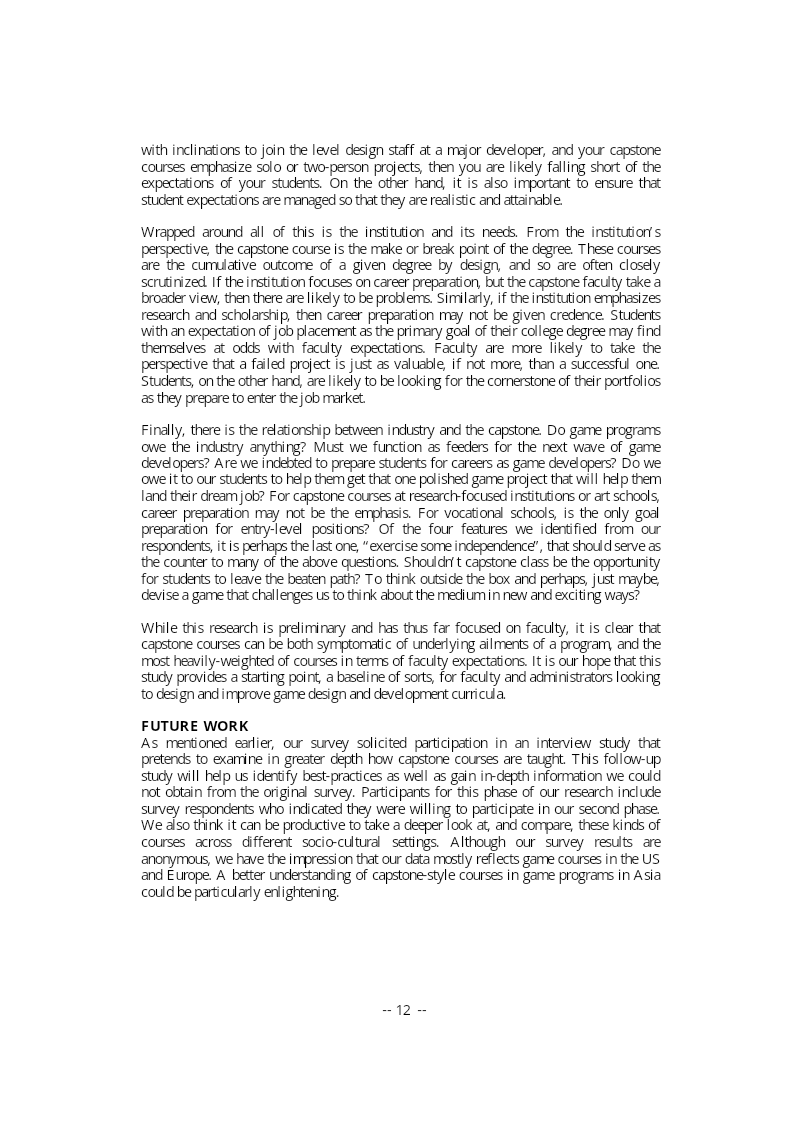
The paper's preliminary, faculty-focused final section frames capstones as high-stakes experiences that often expose broader program problems, since they carry substantial weight in faculty expectations and can conflict with students' goals of building portfolios and securing employment. It identifies competing pressures among career preparation, research and scholarship, and institutional priorities, and suggests that fostering student independence and experimentation may offset pressure to produce industry-ready games. The scope of the data is limited mainly to programs in the United States and Europe, and the authors call for follow-up interview studies on best practices and comparative research, particularly on capstone courses in Asia.

DiGRA · 2026

DiGRA · 2026



DiGRA · 2026



DiGRA · 2026



DiGRA · 2026



DiGRA · 2026



DiGRA · 2026



DiGRA · 2026



DiGRA · 2026

DiGRA · 2026



DiGRA · 2026



DiGRA · 2026
DiGRA · 2005