1 free read left. Create a free account for unlimited reading + AI research.
Create free accountWhitepaper DiGRA
1 free read left. Create a free account for unlimited reading + AI research.
Create free accountWhitepaperDiGRA
Pattern Recognition: Gameplay as Negotiating Procedural Form argues that pattern recognition, grounded in Gestalt psychology, is central to how players engage with games, and that this engagement is generated through procedural programming rather than simply perceived in fixed designs. Drawing on board games, computationally emergent systems such as Conway's Life, and Metzger's claim that Gestalt principles govern both perception and production, the paper contends that principles like figure-ground, proximity, and continuity drive player pattern production as much as passive perception. The argument is developed through qualitative examples across arcade, PC, and console titles, with the work's scope spanning roughly 1981 to 2011.
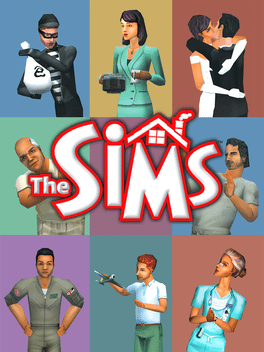
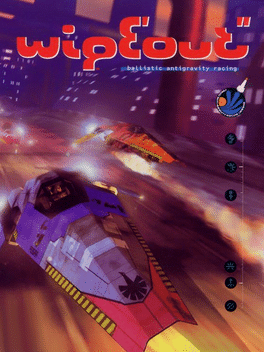
A central claim is that designers often apply Gestalt principles as a top-down layer over predefined structures, underutilizing their capacity to generate emergent gameplay. The author holds that procedurally generated and autonomous systems, including Minecraft, The Sims, and Burnout Paradise, foster greater player autonomy and adaptive pattern recognition than fixed, muscle-memory-based designs such as Wipeout. These assertions rest on illustrative game analysis rather than empirical measurement.
The paper's most distinctive contribution is the concept of "pattern immersion," a sub-linguistic, Gestalt-based engagement that develops through direct play and aligns closely with Csikszentmihalyi's notion of Flow. This is set against "narrative immersion," which depends on authored story and cultural convention. The paper proposes that procedural games distribute authorship among designer, system, and player. Support for these claims comes largely from interviews with developers Tarn Adams and Andrew Wilmott, together with theoretical framing, including Dwarf Fortress and Spore as key cases.
DiGRA · 2016



DiGRA · 2016

PocketGamer.biz · 2026