Updated Jun 1, 2026 by Coffee Stain Group AB
Presentation
Published by Coffee Stain Group AB
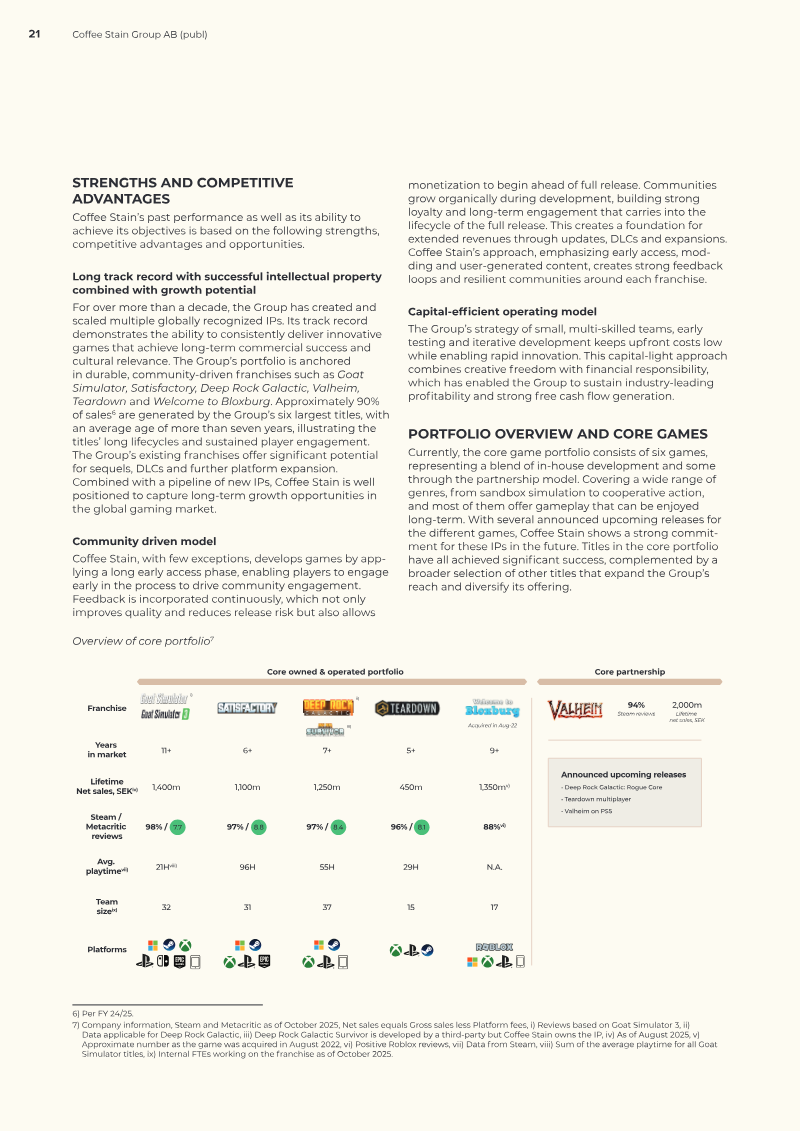
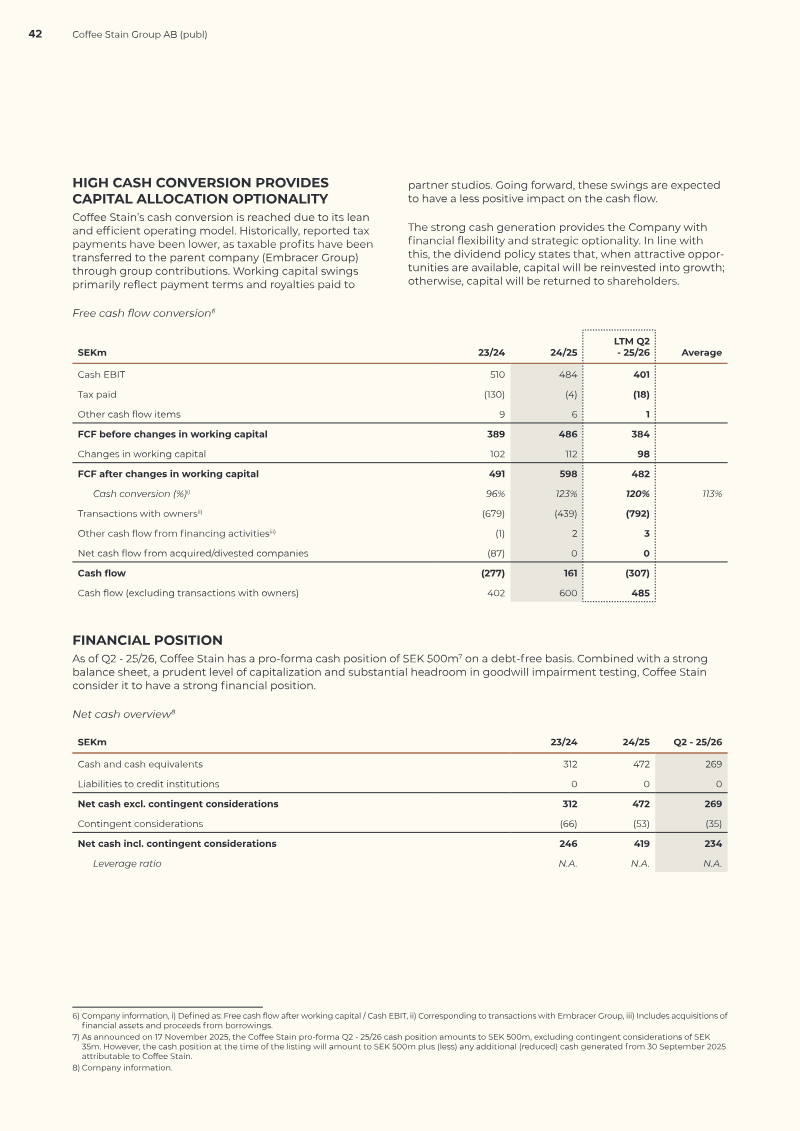
Capital Markets Event 2025 showcases the Coffee Stain Group’s strategy of building a portfolio around small, autonomous teams that prioritize gameplay quality and community engagement. Ninety percent of net sales derive from a handful of flagship titles—most notably Goat Simulator, Deep Rock Galactic and Satisfactory—which consistently achieve high review scores (above 96 %) and generate lifetime sales up to SEK 2 bn. The company’s partnership model, publishing and investing in niche‑focused games, sustains long‑term value through continuous content updates and a symbiotic developer‑player relationship. The global gaming market is projected to grow at 3 % CAGR across all platforms, driven by rising consumer spend and the expansion of Steam, mobile, Game Pass and PlayStation Plus. Despite saturation and increased competition for player attention, Coffee Stain maintains a strong presence; its titles enjoy high review counts (over 500 k for Goat Simulator) and retain players through regular updates, platform expansions and community‑driven development. Innovation, creative gameplay and long‑term support are core to the firm’s approach. Strategic collaborations reinforce this model. The partnership with Tuxedo Labs leverages the proprietary Teardown physics engine, producing a highly engaged community (10 000+ mods, 20 major updates) and peak concurrent users of 60 k for Deep Rock Galactic seasons. The studio’s headcount grew from six to 47 FTEs over five years, illustrating the scalability of open development and a “make happy decisions” culture that drives both critical acclaim (e.g., 9.5/10 reviews) and commercial success. Coffee Stain’s Roblox title, Welcome to Bloxburg, exemplifies a successful free‑to‑play transition. With 791 k daily active users and SEK 1.35 bn in lifetime net sales, the monetization mix of currency purchases, optional unlocks and a premium subscription maintains a non‑pay‑to‑win stance while rebuilding player trust. The company’s lean cost base and strong cash generation are amplified by launch‑driven sales spikes from new content releases and strategic stakes such as its 30 % share in Iron Gate’s Valheim publishing. Financially, the group reports a net‑sales CAGR of 34 % to SEK 1.2 bn and a cash EBIT margin of 44 %. Cash reserves reach SEK 472 m in 2025, with no external debt, providing flexibility for capital allocation and potential M&A. The lean, autonomous team model underpins low overheads, high cash conversion (≈120 %) and a focus on developing existing IPs while selectively pursuing new opportunities across platforms and partnerships.
01 02 03 AGENDA GAME PORTFOLIO GAME PORTFOLIO GAME PORTFOLIO INTRODUCTION GAMING MARKET GAME PORTFOLIO TO COFFEE STAIN DYNAMICS AND STUDIOS 04 05 06 FINANCIAL GROWTH CONCLUSION PROFILE AVENUES AND Q&A Q&A AVENUES AVENUES AND Q&A
TODAY’S SPEAKERS <thead> <th>ANTON WESTBERGH</th> <th>JACOB JONMYREN</th> <th>SEBASTIAN ERIKSSON</th> <th>ROBERT LAZIC</th> </thead> <tbody> <td>CEO & CO-FOUNDER</td> <td>CHAIR OF THE BOARD</td> <td>CEO & CO-FOUNDER</td> <td>STUDIO MANAGER</td> <td>COFFEE STAIN</td> <td>COFFEE STAIN</td> <td>COFFEE STAIN NORTH</td> <td>COFFEE STAIN STUDIOS</td> </tbody> SØREN LUNDGAARD MARCUS DAWSON MATT KENNEY ERIK SUNNERDAHL CEO & CO-FOUNDER CEO STUDIO MANAGER CFO GHOST SHIP TUXEDO LABS COFFEE STAIN GÖTEBORG COFFEE STAIN
“ Small Teams making Big Games for Huge Audiences” FICSYT 250 SEK1bn 44% +12.5m FTEs1) Net sales2) Cash EBIT Followers3) FTEs1) Net sales²) margin2) Followers³) margin²)
AND CREATIVITY Group Studios1) Publishing Key KPIs GHOST SHIP PUBLISHING PUBLISHING GÖTEBORG PUBLISHING 250 GAME STUDIOSNORTHG Ö TEBORGPUBLISHING . FTEs2) Majority owned studios INVISIBLE FRAME BREAK WALLS tuxedo labs PUBLISHING GHOST SHIP MALM Ö PUBLISHING ace Majority owned studios KAVALRI 2 Publishers Publishers
90% OF NET SALES 1) Goat Simulator SATISFACTORY DEEP ROCK Goat Simulater 3 GALA CTIC U Goat Simulater U DANGER. DARKNESS. DWARVES. <thead> <th>SEK 1,400m</th> <th>98%</th> <th>SEK 1,100m</th> <th>97%</th> <th>SEK 1,250m</th> <th>97%</th> </thead> <tbody> <td>Lifetime Net sales</td> <td>Positive reviews²)</td> <td>Lifetime Net sales</td> <td>Positive reviews</td> <td>Lifetime Net sales</td> <td>Positive reviews</td> </tbody> SEK 1,100m 97% SEK 98% 707 SEK 98% 1,400m CV1,400m 770/ ,. Lifetime Net sales Positive reviews2) Lifetime Net sales Positive reviews Lifetime Net sales Positive reviews2) TEARDOWN Welcome ALHEIM Bloxburg TEARDOWN L L SEK 450m 96% SEK 1,350m 88% SEK 2,000m 94% Lifetime Net sales Positive reviews Lifetime Net sales Positive reviews3) Lifetime Net sales Positive reviews
DRIVEN GAMES IEARDOWN Integration Integration Goat Simulater JALHEIM Release SATISFACTORY Release Bloxburg Release Acquisition DEEP ROCK GALACTIC DANGER. DARKNESS. DWARVES. Goat Simulator Release Release Coffe 2010 2014 2018 2019 2021 20221) 20252)
The FY23 financial results show a contraction in revenue to £104.6 million, an 8 % decline from the previous year, driven largely by lower sales of the F1® Manager series. Adjusted EBITDA swung from a £6.7 million profit in FY22 to a £4.6 million loss, while the IFRS operating loss widened to £26.6 million. Non‑cash intangible charges of £28.7 million—primarily the closure of Foundry (£13.7 m) and a £15 million impairment on the F1® Manager franchise—were key contributors to the loss. Cash reserves fell from £38.7 million to £28.3 million, reflecting higher operating expenses and capitalised development costs. The portfolio remains dominated by legacy titles, with 72 % of revenue generated from pre‑FY23 releases such as Jurassic World Evolution 2. New initiatives include the acquisition of Complex Games in November 2022 and the planned launch of Warhammer Age of Sigmar: Realms of Ruin, a real‑time strategy title slated for November 2023. The company has refocused on Creative Management Simulation games, closing Foundry and reallocating resources to two new CMS projects. Leadership reviews aim to improve return on investment. For FY24, market consensus expects revenue of £108 million and an adjusted EBITDA loss of £9 million. The company anticipates that the new RTS release, alongside continued support for existing titles and undisclosed revenue streams, will offset the F1® Manager shortfall. The strategy shift toward core CMS titles and tighter cost management underpins confidence in returning to profitable performance over the medium term.
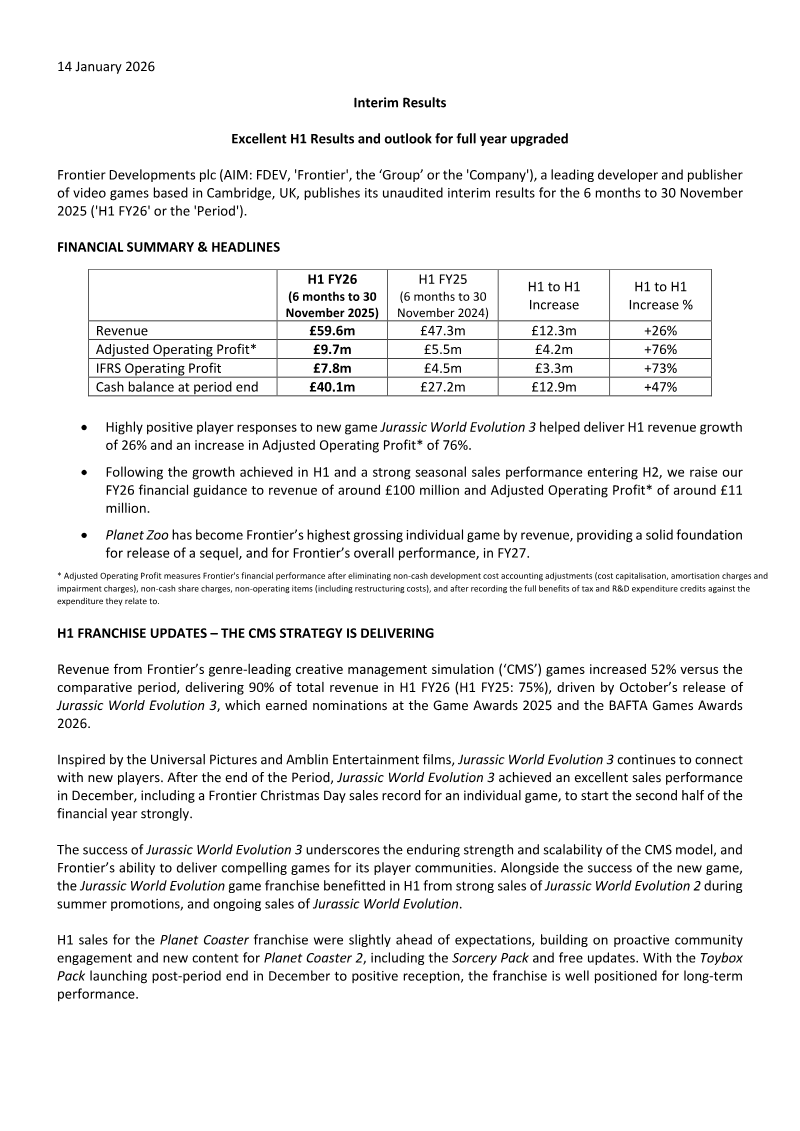
Frontier Developments plc reported unaudited interim results for the six months to 30 November 2025, showing a 26 % increase in revenue to £59.6 million and a 76 % rise in adjusted operating profit to £9.7 million compared with the same period in 2024. The growth was driven primarily by the launch of Jurassic World Evolution 3, which contributed 90 % of total revenue in H1 FY26 and earned nominations at the Game Awards 2025 and BAFTA Games Awards 2026. Other titles such as Planet Zoo, Planet Coaster 2 and Elite Dangerous also performed strongly, with Planet Zoo becoming the Group’s highest‑grossing individual game. Cash profitability improved markedly; adjusted operating profit, which excludes non‑cash development capitalisation and includes tax and R&D credits, grew to £9.7 million from £5.5 million year‑on‑year. IFRS operating profit rose 73 % to £7.8 million. Gross margin fell to 64 % from 70 %, reflecting higher royalty‑bearing IP revenue. The Group’s cash balance increased to £40.1 million, up 47 % from the prior year, after a £10 million share buy‑back that raised earnings per share to 21.4 p. The Board upgraded FY26 guidance, now targeting revenue of approximately £100 million and adjusted operating profit of around £11 million, citing strong seasonal sales momentum. CEO Jonny Watts stepped down on 1 January 2026, succeeded by Jo Cooke, with Watts remaining as Executive Director until 31 May 2026 to ensure a smooth transition. The Group remains debt‑free, with no significant liabilities beyond lease obligations, and maintains a robust pipeline of CMS titles slated for release in FY27–FY28.
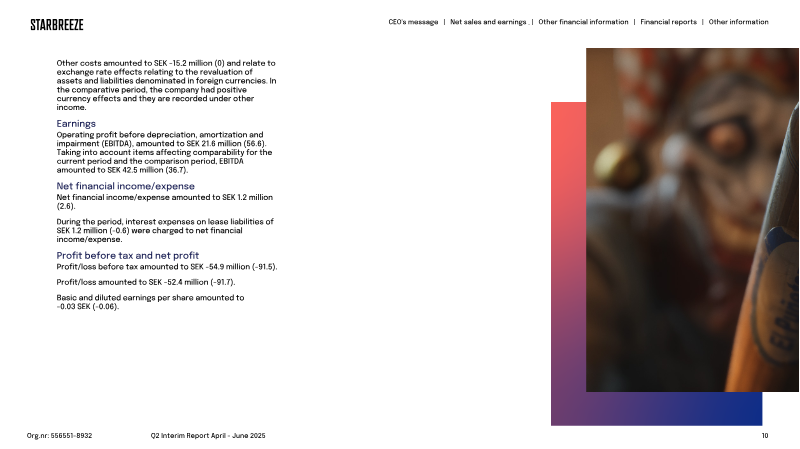
Starbreeze Entertainment’s latest interim results for the period ending December 2025 reveal a challenging quarter marked by declining net sales and significant impairment losses. Net sales fell 6.4 % to SEK 41.1 million, largely due to a 14.7 % drop in revenue from PAYDAY 3, while PAYDAY 2 and work‑for‑hire activities remained largely unchanged. EBITDA swung to a loss of SEK 12.0 million, and an impairment charge of SEK 261.9 million on the Baxter project pushed full‑year net sales to SEK 221.0 million and produced a pre‑tax loss of SEK 402.7 million. Despite the headline losses, operating EBITDA for the full year reached SEK 29 million, driven by strong sales of PAYDAY 3 (SEK 76.5 million) and other game titles totaling SEK 127 million. Net loss for the year stood at SEK 399 million, resulting in negative earnings per share of –0.25 SEK. Cash flow remained constrained: operating cash inflows were SEK 45 million against investing outflows of SEK 167 million, leaving cash and equivalents at approximately SEK 103 million. The company continues to focus on stabilising the PAYDAY franchise, rolling out free updates (Skills 2.0) and new DLC such as Shopping Spree, while maintaining strict cash discipline. Starbreeze remains an independent developer and publisher with a global distribution network for PC and console titles, including its flagship IP PAYDAY™. Shares trade on Nasdaq Stockholm under the tickers STAR A and STAR B, and the firm complies with EU Market Abuse Regulation reporting obligations.
The survey, conducted by Aream & Co., gauges executive optimism regarding consumer spending on gaming in 2025 across multiple channels and functional areas. Overall, 49 % of respondents view spending as “more optimistic,” another 49 % see it as unchanged, and only 2 % are less optimistic. When broken down by platform, mobile spending is perceived as more optimistic (49 %) while PC and console views are split between “more” (15–33 %) and “about the same.” In‑app purchases are viewed as more optimistic (80 %) versus in‑app advertising (41 %). Key challenges identified include content saturation and over‑supply, with 33 % citing these as concerns; marketing environment issues affect 49 %, and macro conditions are a worry for 17 %. Despite these, 54 % anticipate more new games in 2025, and 37 % expect higher average budgets. Marketing spend is expected to rise for 48 %, while engineering and game development are seen as more optimistic (71 % and 42 %). The survey also highlights a strong appetite for mergers and acquisitions, with 71 % expecting more M&A activity. Advanced integration across multiple functions is viewed as more optimistic (49 %) but limited implementation remains a concern. The data derive from a global sample of gaming CEOs, reflecting perspectives across mobile, PC, console, and various functional departments. The findings suggest a cautiously optimistic outlook for 2025, tempered by supply‑side pressures and marketing challenges.