Updated Apr 30, 2026 by CESA – Computer Entertainment Supplier's Association
Report
Published by CESA – Computer Entertainment Supplier's Association
The CESA Game Industry Report 2025 Launch Seminar, held in Tokyo on February 20, 2026, served as a platform to analyze the evolving landscape of the Japanese gaming sector. The event introduced the updated 2025 industry report, which features expanded data sets and enhanced international market research to better support the global expansion of Japanese firms. The seminar aimed to address industry needs for technical knowledge sharing, talent development, and cross-sector networking among corporate and academic stakeholders. Key findings highlight a significant shift toward the integration of generative AI, with approximately half of domestic game companies now utilizing these tools within their development pipelines. While internal production workflows show high adoption rates, industry experts noted a more cautious approach regarding AI-generated content visible to end-users. Legal discussions emphasized the importance of navigating copyright frameworks, specifically distinguishing between AI learning and generation phases, while balancing innovation with intellectual property risks. Government representatives from the Ministry of Economy, Trade and Industry and the Agency for Cultural Affairs outlined strategic support for the content industry, targeting 20 trillion yen in overseas sales by 2033. Policy initiatives focus on multi-year funding, tax incentives, and robust talent development programs to ensure long-term competitiveness. Furthermore, legal experts underscored the increasing complexity of global regulatory environments, noting that Japanese companies must proactively manage diverse international requirements regarding data privacy, monetization, and rating systems. By synthesizing perspectives from government, legal, and development sectors, the seminar emphasized that strategic investment and regulatory compliance are essential for the sustainable growth of Japan’s gaming industry in a globalized market.
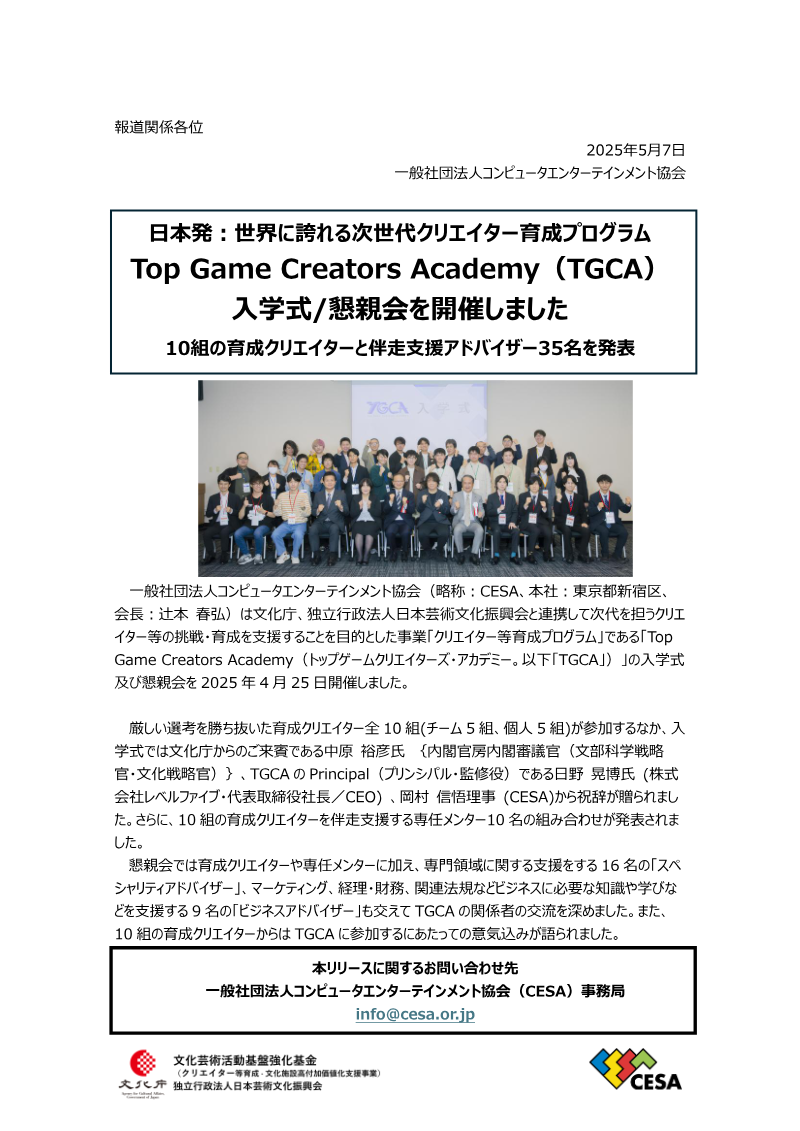
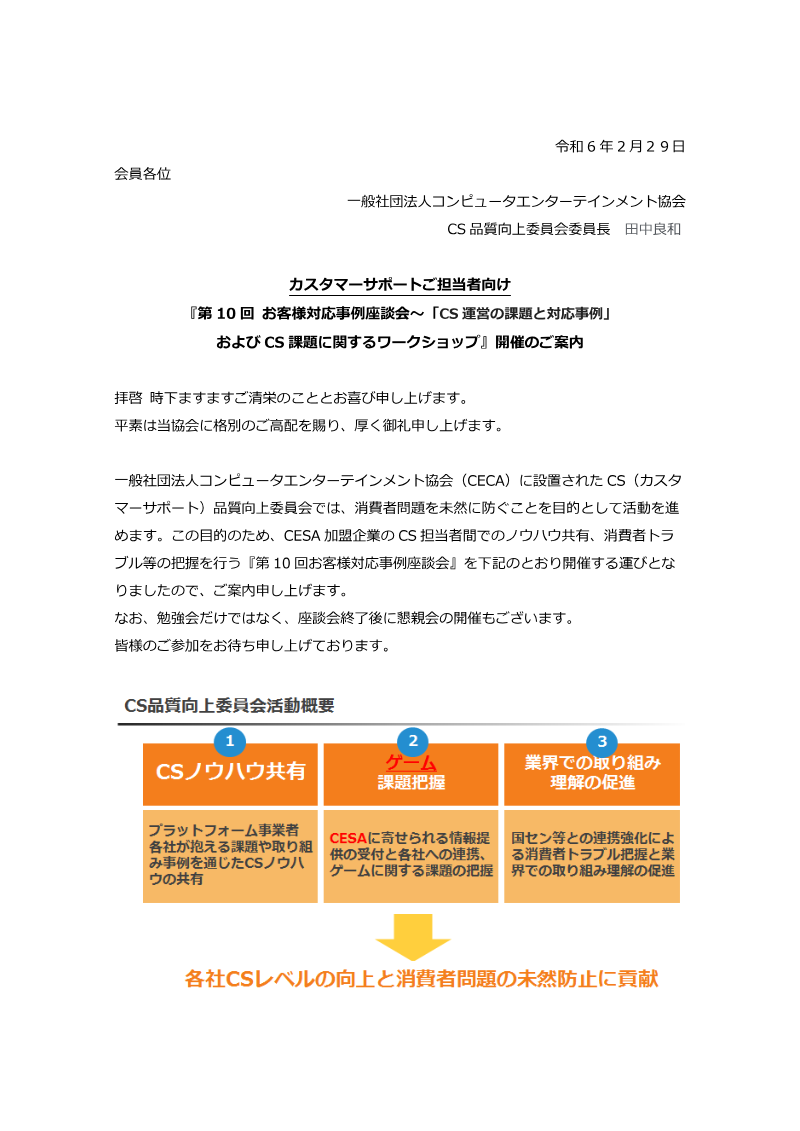
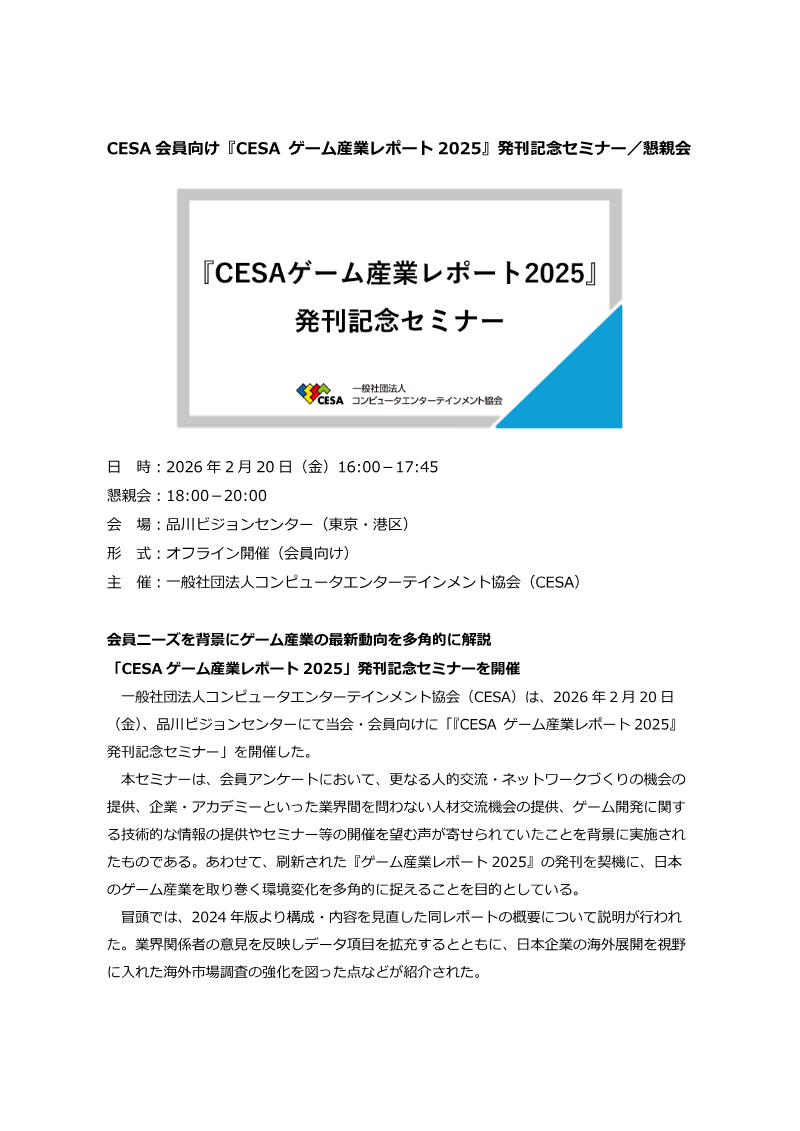
CESA 会員向け『CESA ゲーム産業レポート 2025』発刊記念セミナー/懇親会 CESA--2025 F -A CESA-I-UX 日 時:2026 年 2 月 20 日(金)16:00-17:45 懇親会:18:00-20:00 会 場:品川ビジョンセンター(東京・港区) 形 式:オフライン開催(会員向け) 主 催:一般社団法人コンピュータエンターテインメント協会(CESA) 会員ニーズを背景にゲーム産業の最新動向を多角的に解説 「CESA ゲーム産業レポート 2025」発刊記念セミナーを開催 一般社団法人コンピュータエンターテインメント協会(CESA)は、2026 年 2 月 20 日 (金)、品川ビジョンセンターにて当会・会員向けに「 『 CESA ゲーム産業レポート 2025』 発刊記念セミナー」を開催した。 本セミナーは、会員アンケートにおいて、更なる人的交流・ネットワークづくりの機会の 提供、企業・アカデミーといった業界間を問わない人材交流機会の提供、ゲーム開発に関す る技術的な情報の提供やセミナー等の開催を望む声が寄せられていたことを背景に実施され たものである。あわせて、刷新された ゲーム産業レポート 2025』の発刊を契機に、日本 のゲーム産業を取り巻く環境変化を多角的に捉えることを目的としている。 冒頭では、2024 年版より構成・内容を見直した同レポートの概要について説明が行われ た。業界関係者の意見を反映しデータ項目を拡充するとともに、日本企業の海外展開を視野 に入れた海外市場調査の強化を図った点などが紹介された。
その後、政府関係者、有識者、法律実務家が登壇し、政策動向、生成 AI の活用実態、グ ローバル規制環境などについて、それぞれの立場から発表と解説が行われた。 ■経済産業省:コンテンツ産業支援の方向性 経済産業省 文化創造産業課長 梶直弘氏 梶氏は、我が国のコンテンツ産業を成長分野として位置づける政策の方向性について説 明。官民の連携による産業全体の海外展開推進の重要性が強調され、予算及び税制での支援 策を通じてゲーム分野を含む産業の競争力強化を大規模、長期かつ戦略的に後押しするため の取り組みが紹介された。 また、コンテンツ制作には一定の期間を要するため、基金を活用した複数年のパッケージ を用意して予見可能性を高めることや、政府の目標である「2033 年に国内コンテンツの海
外売上 20 兆円」の達成に向け、政府の投資促進支援による民間企業の投資拡大への期待が 共有された。 203203 UEUI 5TI5. 2025# 95 613020203 UE -- W T#.EMRMIR. WICUTRE 624U20 . 5577~E IP.M:F9U93MEFA3-9A05H3. 919-00 BRE 3 (1- (IP 10#5X5.7UI19-0R308853. # 102388I9UI5 B E 4 112180M8 HOMEERMAOLUJTOBEPRCMD3-D - 12167 mm. (3(556.3) /UZ/UA->0FLWR#EA0#EW*SELT#3 ■文化庁:次世代クリエイター育成と人材基盤の強化 文化庁 参事官(芸術文化担当) 小野賢志氏 小野氏は、コンテンツ産業の持続的発展を支える基盤としての人材育成施策を紹介。クリ エイター支援基金による複数年度支援の枠組みや、中核的専門人材の育成、若手クリエイタ ーの海外展開支援など、次世代を担う人材の育成・定着を軸とした政策の方向性を説明し た。ゲームを含めたコンテンツ文化を戦略的に海外に発信するための官民連携の体制構築も 提示した。
また、学校現場へのクリエイター派遣など、将来世代への文化的体験の拡充に向けた直近 の取り組みも紹介され、コンテンツ分野を長期的に支える土壌づくりの重要性が強調され た。 37I1-#3 ($)#XUI1-X1#MM1 UUI-R $Ut #FUI 06959 JUI1A- U - AD HARNNO J0954.3- [-1877X$1 JUI1A- BAERM 7175 *i - (DU733-4 [F-] T-0 #(3DCGVFXAI#) ■ AI Frog Interactive の AI 利用とゲーム業界での生成 AI の実情 AI『Frog『Interactive『 代表取締役 CEO/デジタルハリウッド大学大学院教授 新清士氏 新氏は、生成 AI のゲーム業界への浸透状況について解説した。CESA 会員企業への調査で は、国内ゲーム企業の約半数が開発工程で生成 AI を活用していることが示されている。 一方で、海外との比較では、生成 AI を巡る社会的受容に地域差がある点を指摘。欧米で は労働問題と結びついた反発も見られるのに対し、中国では比較的受容が進み、AI 活用タイ トルの導入が広がっているという。
また、制作工程の内部領域での活用は受け入れられやすい一方、プレイヤーが直接目にす る創作物への利用には慎重な姿勢も見られると整理した。 さらに、生成 AI の法的整理についても言及があった。経済産業省が 2024 年 7 月に公表 した「コンテンツ制作のための生成 AI 利活用ガイドブック」では、AI の「学習段階」と 「生成段階」を区分し、「類似性」と「依拠性」の観点から著作権リスクを検討する枠組みが 示されている。新氏は、こうした整理を踏まえ、適切な理解と運用により生成 AI を合法的 に活用することは可能であるとの認識を示した。 また、生成 AI の導入は、単なる技術選択ではなく、企業の戦略判断でもあると述べた。 Al-Steam SteamAl# 2884530 Game SM8s7: (Art's Fantostic Adveoture) 2 months ago 2884010 Game Punch Kick Club 2 months ago 2025J'J-X:4,307 2883710 Game RollTale 2 months ago Steam20,021→ 21.5% 2882460 Game XE018=08 2 months ago 343320 Game StaudSoft's Synthetic Worid (Stoud.Soft's Synthetic Worla Beta) 2 months ago 2026)J-318 1456420 Game Manikineko Online 4 months ago 1033880 Game Press F to pay respects 5 months ago Steam1,034→ 30.8% 806400 Game Boss Arena 6 months ago Showing 1,901 to 2,000 of 2,000 entries 18 19 20 M SteamDB App Key Search "common aicontenttype LTLIZT-ZAHTLZ 202411 <-¥3"‡ 1A1 $$$4 MTZLOO-LI -411-+- 12< #H -3AI 27"1#30×L ■グローバル規制と向き合うゲーム産業と近時の課題について 西村あさひ法律事務所・外国法共同事業 パートナー弁護士 松本祐輝氏 松本氏は、ゲーム産業のグローバル展開に伴う規制対応の複雑化について解説した。プラ ットフォームを通じた海外販売は容易である一方、各国のレーティング制度、課金規制、個 人情報保護などへの対応は不可避であり、日本企業の法務負担は大きい。
韓国やブラジルでの制度整備の進展にも触れつつ、日本国内では法令を遵守する事業者が 多い一方、海外事業者との間で規制対応の差が生じている可能性を指摘。実効的な対応を検 討する方向性と、規制の在り方を再検証する視点の双方の方向性を提示した。 また、生成 AI については著作権法第 30 条の 4 の枠組みを整理し、利用範囲と権利保護の バランスの重要性を説明。加えて、海外 LLM の利用規約確認や、個人情報保護規制への対応 は、国際展開を前提とする企業にとって不可欠であると述べた。 HXAITLCSAICOPEAUA AIO AI TH UF IE - 1±) $PEBEI -- -A AIUU-AI L ) O U-(ECU) $ AIA# NISHIMURA 15 &ASAHI 本セミナーは、制度・技術・人材の各側面から、日本のゲーム産業の現在地を確認する機 会となった。セミナー終了後は懇親会も開催され、登壇者と参加者の間で活発な意見交換が 行われた。行政、法律実務、開発現場など異なる立場の関係者が直接対話する機会となり、 業界内の連携強化につながる場となった。
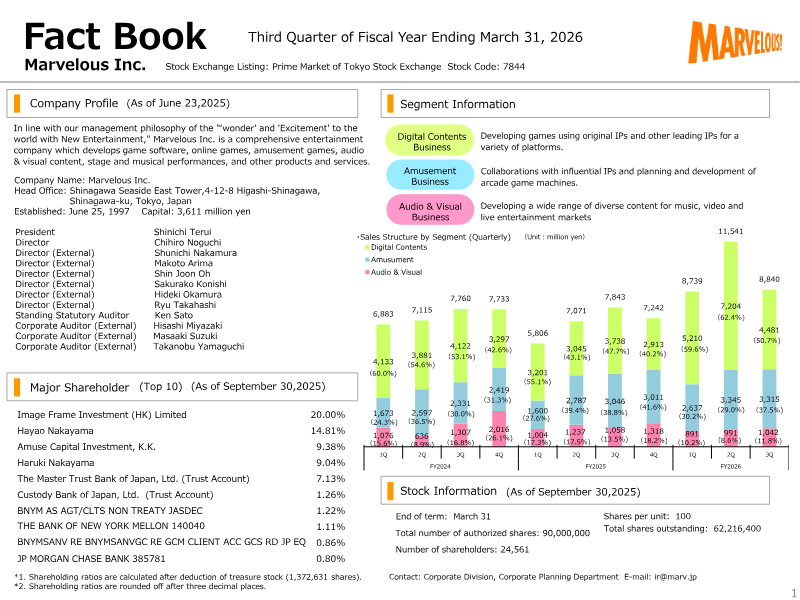
Marvelous Inc. provides a comprehensive financial overview of its performance through the third quarter of the fiscal year ending March 31, 2026. As a Tokyo-based entertainment company, its operations span three primary segments: Digital Contents, which develops games for various platforms; Amusement, focused on arcade game machines; and Audio & Visual, covering music, video, and live stage performances. The data reflects a multi-year trajectory of financial results, including consolidated balance sheets, income statements, and segment-specific sales and income. Financial results for the first nine months of the 2026 fiscal year show net sales of 29,121 million yen, surpassing the full-year totals of the previous two fiscal years. Despite this growth in top-line revenue, operating profit for the period stands at 1,776 million yen, reflecting a lower operating profit ratio of 6.1% compared to 17.9% in 2022. The Digital Contents segment remains the largest contributor to revenue, generating 16,896 million yen in the first three quarters, though it recorded a segment loss of 73 million yen. In contrast, the Amusement segment proved highly profitable, contributing 2,558 million yen in income on sales of 9,298 million yen. The company maintains a stable financial position with total assets of 35,669 million yen and an equity ratio of 76.4% as of December 2025. While net income per share has recovered to 25.56 yen from a loss in 2024, profitability metrics such as Return on Equity have fluctuated significantly over the reported periods. The shareholder structure is anchored by Image Frame Investment (HK) Limited, which holds a 20% stake, followed by founder-related holdings. These figures highlight a period of revenue expansion driven by diverse entertainment segments, tempered by rising costs of sales and shifting profitability within the core digital gaming business.
GungHo Online Entertainment is currently undergoing a fundamental strategic pivot, transitioning from a primary focus on the domestic Japanese mobile market toward a global, multi-platform distribution model. This evolution targets North America and Europe specifically through the development of action-oriented intellectual properties for console and PC. The success of this shift is evidenced by the dramatic rise in the overseas net sales ratio, which is projected to reach 66% in fiscal year 2025, up from just 11.4% in 2016. Key drivers for this international expansion include the upcoming launch of Let It Die: Inferno and the continued global scaling of the Ragnarok and Puzzle & Dragons franchises across more than 150 countries. Despite this aggressive geographic expansion, the company faces immediate financial headwinds characterized by a contraction in consolidated net sales and operating profit. Quarterly performance data reveals a downward trajectory over a four-year period, with peak values declining from over 16,000 to approximately 7,750 in the most recent quarter. This downturn is largely attributed to softening sales of legacy mobile titles and a reactional decrease in revenue from the subsidiary Gravity. To stabilize these core assets, the company is utilizing high-profile collaborations with major brands such as Sanrio and Digimon to maintain domestic user engagement while simultaneously preparing for the launch of Ragnarok Online 3 in major Asian markets. The long-term outlook centers on a diversified portfolio that balances established mobile revenue with new, high-scale global releases. While current financial indicators reflect a period of contraction and volatility, the commitment to 100-player raid mechanics in upcoming titles and the expansion of Ragnarok X: Next Generation into EMEA markets signal a move toward more technologically ambitious projects. Ultimately, the transition toward a global-first strategy represents a necessary adaptation to the maturing domestic mobile landscape, aiming to replace declining legacy revenue with sustainable growth from international console and PC audiences.
Square Enix’s recent performance review exposes a persistent decline in revenue growth and profitability over the past three years, with operating income falling 32 % and ROE dropping 61 %. The downturn is driven primarily by weak margins in both high‑definition (HD) and small‑dungeon (SD) game segments, excessive portfolio fragmentation, sub‑optimal product design and promotion, and escalating development costs. While the MMO licensing arm remains the sole growth driver (+11 %), overall gaming revenue has slipped, with HD and SD titles declining 4 % and 5 % respectively. Operating margins for these segments hover around 35–40 %, noticeably higher than the industry average of 28 % but still lagging behind competitors, indicating inefficiencies that are not being adequately addressed. The company’s medium‑term “Reboots” plan offers only high‑level directions without concrete key performance indicators or quantitative targets. Critical gaps include a lack of clear business‑portfolio strategy, insufficient disclosure on non‑core business rationales, and no defined mechanisms for monitoring progress or maximizing shareholder value. Capital allocation disclosures are similarly weak: cost‑of‑capital calculations, ROE and ROIC targets, and hurdle rates are absent, while share‑buyback authorization remains unused despite a sharp price decline. SG&A costs exceed peer norms by 5–6 ppt, driven largely by an oversized sales force, further eroding profit margins. Geographically, SD game revenue is almost entirely domestic; the Japanese market has contracted 2 % annually since 2020, and overseas growth remains only 3 %. The company’s global SD strategy is inert, with a 7 % overseas expansion rate falling short of projected growth and flagship titles such as *FFVII Ever Crisis* deriving 70 % of revenue from Japan. Non‑core Amusement and Publishing businesses are undervalued, with a significant conglomerate discount relative to peers and declining sales and margins. Limited cross‑synergy between game and publishing arms further hampers value creation. In summary, Square Enix faces a multifaceted challenge: declining core game performance, weak strategic direction and KPI setting, high SG&A costs, and an underperforming non‑core portfolio. Addressing these issues through tighter cost control, clearer performance metrics, aggressive overseas expansion, and potential portfolio optimization is essential to restore corporate value and achieve sustainable growth.
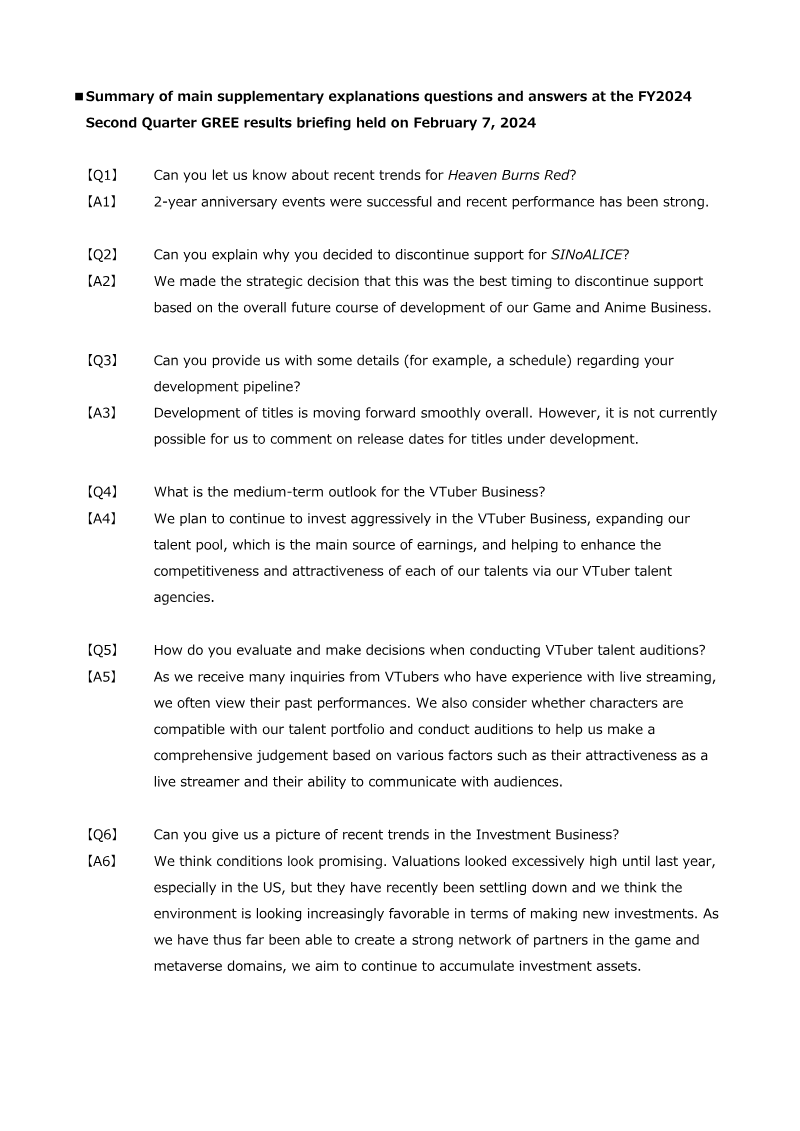
GREE’s financial performance and strategic outlook for the second quarter of fiscal year 2024 reflect a period of portfolio optimization and aggressive expansion into emerging digital entertainment sectors. The primary driver of recent operational success is the strong performance of Heaven Burns Red, which saw significant engagement following its second-anniversary events. This success is balanced against the strategic discontinuation of SINoALICE, a decision made to align the Game and Anime Business with long-term development goals. While several titles remain in the development pipeline, specific release schedules remain undisclosed as the company prioritizes smooth internal progress over immediate market entry. The VTuber Business represents a core pillar of future growth, with plans to invest aggressively in talent acquisition and agency support. Earnings in this segment are primarily driven by the talent pool, leading to a rigorous audition process that evaluates past streaming performance, character compatibility, and audience communication skills. Simultaneously, the Investment Business is entering a more favorable phase as global valuations, particularly in the United States, begin to stabilize after a period of excess. GREE intends to leverage its established network in the game and metaverse domains to accumulate new investment assets during this market correction. Financial projections for the remainder of the fiscal year indicate steady profitability. Excluding the volatile Investment Business, consolidated operating income is forecasted at approximately 1.5 billion yen for the third quarter and 5.0 billion yen for the full fiscal year 2024. These figures suggest a stable baseline for the company’s core operations as it navigates the transition between legacy titles and new growth initiatives in the virtual talent and investment sectors.