Game Development reports and market data
Documents
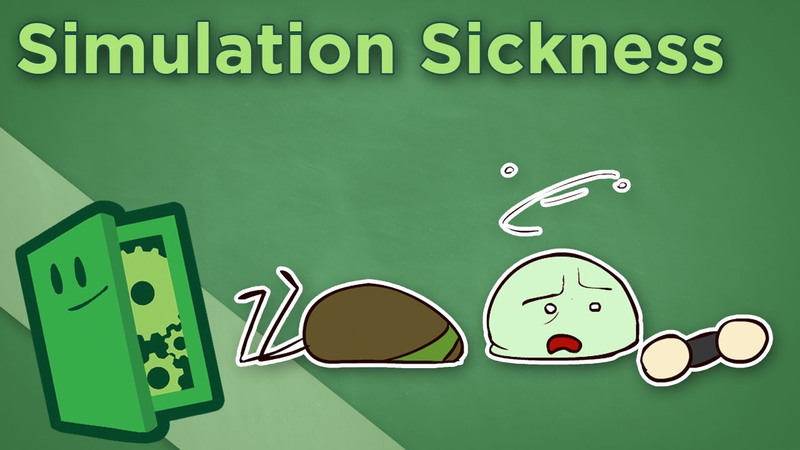
Simulation Sickness - Causes and Cures for Game Headaches - Extra Credits
Simulation sickness is a physiological phenomenon characterized by nausea and discomfort caused by a sensory mismatch between visual input and the vestibular system.
- Simulation sickness is caused by a sensory mismatch where visual input from on-screen action conflicts with the vestibular system's lack of physical motion.
- Developers should prioritize accessibility by implementing camera stabilization and movement mechanics, using titles like Journey as a benchmark for low-nausea design.
- Players can mitigate symptoms by disabling camera bobbing, adjusting the field of view, reducing screen brightness, and limiting gaming sessions to approximately 20-minute intervals.
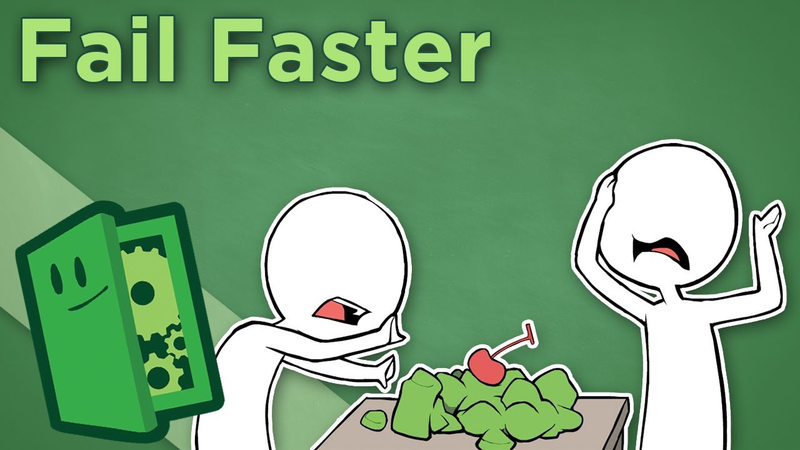
Fail Faster - A Mantra for Creative Thinkers - Extra Credits
The core philosophy of successful game design centers on the mantra of failing faster.
- The core of successful game design is 'failing faster,' which prioritizes rapid iteration and course correction over the pursuit of a flawless initial concept.
- Teams should avoid excessive time spent debating high-level concepts, as even successful games often begin as simple or absurd premises that only reach greatness through refinement.
- Designers must move beyond abstract planning by creating prototypes, paper mockups, or simple concepts as early as possible to test the viability of an idea.

Culturalisation and distribution are the challenges in Asia says Side-kick's Guy Bendov
The mobile gaming landscape requires extreme agility to navigate shifting business models, evolving player preferences, and rapid production cycles.
- Side-kick Games is targeting the release of 5 to 6 free-to-play mobile titles in 2014 through partnerships with publishers such as DeNA West and Majesco.
- Expanding into Asian markets is a primary strategic goal, with the company identifying cultural adaptation and distribution as the two most significant barriers to entry.
- The studio maintains a diversified development focus that includes not only mobile platforms but also emerging hardware trends like Smart TVs, motion control interfaces, and microconsoles such as Ouya.

Indie devs need more flexible UA channels says ChaseRace's Uffe Egekvist
The mobile gaming landscape has shifted away from reliance on organic viral marketing, necessitating a more sophisticated approach to user acquisition.
- Independent developers must shift from relying on organic viral growth to utilizing professional, paid user acquisition services to overcome visibility challenges on major app stores.
- The primary goal for indie studios should be transitioning from high-volume download metrics to cultivating a dedicated, monetizing player base.
- Effective user acquisition requires integrating free viral marketing methods with data-driven, paid channels to target and scale high-value player segments.

Versi.mobi's Laith Al-Janabi explains monetising in SE Asia
Monetizing mobile game traffic in emerging markets, particularly Southeast Asia and India, presents a unique set of challenges that require specialized strategies.
- Direct monetization via credit cards and bank accounts is ineffective in Southeast Asia and India, where penetration rates are only approximately 8% and 12% respectively.
- Mobile advertising is the most viable revenue model for high-traffic applications in emerging markets due to the lack of traditional financial infrastructure.
- Success in emerging markets requires localized ad sales teams that possess specific expertise in regional consumer behavior.

Keith Russell from Babel talks about TestMyApps.net
Babel, a long-standing provider of quality assurance and localization services, has launched TestMyApps.net to address the specific needs of the growing indie game development sector.
- Babel, a QA and localization firm operating since 1999, has launched TestMyApps.net to provide indie developers with self-service access to professional testing and localization tools previously reserved for major publishers like EA, Activision, and Ubisoft.
- The platform allows developers to upload games for testing across a wide range of mobile, tablet, and console hardware to ensure technical quality and rapid turnaround.
- Babel provides services in approximately 65 languages, focusing heavily on culturalization to adapt game mechanics, UI, and content for specific regional markets, particularly in Japan, Korea, and China.
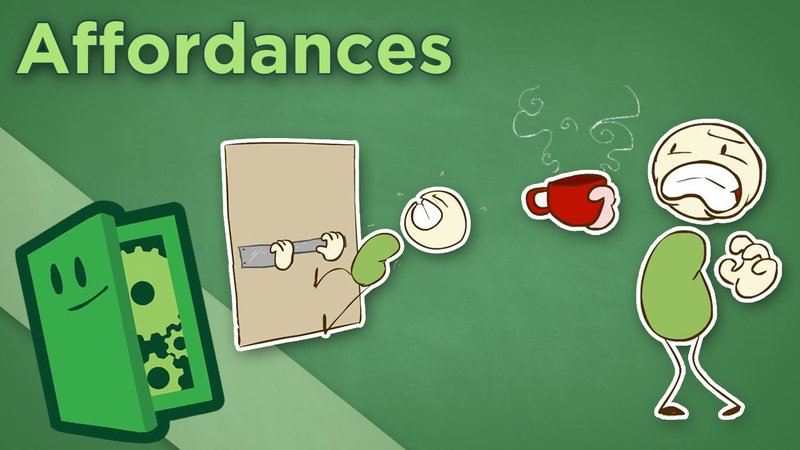
Affordances - How Design Teaches Us Without Words - Extra Credits
Affordance serves as a fundamental principle in design, describing how the physical or visual properties of an object intuitively communicate its function to a user without the need for explicit instruction.
- Affordance is the design principle of using an object's physical or visual properties to intuitively communicate its function to the user without explicit instruction.
- Designers bridge the gap between virtual and real-world experiences by leveraging existing physiological and cultural associations to make complex game systems feel natural.
- Effective use of affordance reduces player cognitive load, allowing for seamless interaction with game mechanics rather than requiring the memorization of abstract rules or mathematical formulas.

You have to get out there and network says Alistair Aitcheson
Independent game development requires a multifaceted approach where creators must balance coding, design, and business operations as a one-man operation.
- Independent developers must prioritize networking at industry conferences to secure press coverage, identify personal development gaps, and build long-term business relationships.
- The mobile gaming market suffers from poor discoverability, forcing developers to aggressively promote their titles because app stores provide limited visibility for independent projects.
- To overcome passive consumer discovery habits in mobile gaming, developers must proactively communicate a unique value proposition to differentiate their products in a saturated market.

2014 will be difficult for indies. We need to work together, says Adrian Adamiak
The mobile gaming market is undergoing a significant period of consolidation, creating a challenging environment for independent developers.
- The 2014 mobile gaming market is experiencing significant consolidation, where a small number of dominant publishers control the majority of revenue and consumer attention.
- Visibility has become the primary barrier for independent developers due to the high volume of daily game releases and a lack of resources to compete with major players.
- Independent studios must shift from solitary operations to strategic partnerships, investor backing, or publisher alignment to achieve the scale necessary for survival.

Get into HTML5 and WebGL now to solve distribution, says Goo's Sara Lempiäinen
HTML5 and WebGL represent a critical evolution for the gaming industry, offering a viable solution to the persistent challenge of game distribution.
- HTML5 and WebGL provide a strategic alternative to mobile app stores, allowing developers to bypass market saturation and reach users directly through browsers.
- Browser-based gaming functions as a viral distribution funnel, enabling the rapid sharing of game demos or levels to drive interest in full-title downloads.
- Industry-wide adoption of web standards is currently limited by developer skepticism regarding the maturity and reliability of these technologies.

Indie devs' passion is inflection, reckons Ten Foiled Hats' Matt Munson
The mobile gaming industry faces a critical inflection point regarding monetization models, driven by the unsustainable nature of aggressive freemium practices.
- The mobile gaming industry is approaching a market bubble caused by unsustainable, aggressive freemium monetization that prioritizes short-term revenue over long-term user value.
- Consumer fatigue and the destructive nature of pay-to-win mechanics are driving a necessary industry shift back toward premium pricing models that offer full content access for a flat fee.
- Regulatory intervention is becoming inevitable as government bodies increasingly view the psychological patterns of microtransactions in titles like Candy Crush as comparable to gambling.

How PG Connects' Indie track can make a real difference
The Pocket Gamer Connects 2014 indie track aims to provide independent developers with actionable insights to navigate an increasingly challenging industry landscape.
- The PG Connects 2014 indie track focuses on three core pillars: maintaining creative integrity, building sustainable business models, and implementing ethical monetization strategies.
- The curriculum is designed to help independent developers scale their concepts into long-term, viable enterprises without compromising their original creative vision.
- The program emphasizes the intersection of game design and revenue, advocating for monetization models that prioritize player experience and delight over simple value extraction.