Game Development reports and market data
Documents

Top recruiter at InnoGames explains its strategy for snatching up talent
InnoGames maintains a sustainable, steady growth strategy, hiring approximately 100 new employees annually to ensure that new personnel align with the company’s culture and technical requirements.
- InnoGames maintains a controlled growth strategy by hiring approximately 100 new employees annually to ensure cultural and technical alignment.
- The company receives roughly 1,000 job applications per month, making demonstrated passion and personal projects the primary differentiators for candidates over standard technical qualifications.
- To overcome the competitive Hamburg labor market, the company utilizes an international recruitment strategy involving global industry events, LinkedIn, and specialized headhunters based in the UK.

InnoGames CEO on growth, Asian markets and tax breaks
InnoGames maintains a strategy of sustainable, long-term growth by prioritizing high-quality talent acquisition and product iteration over rapid, speculative expansion.
- InnoGames prioritizes sustainable growth by ensuring revenue increases consistently outpace their annual headcount expansion of over 100 new employees.
- The company maintains a core focus on durable player-versus-player (PVP) strategy games, exemplified by the long-term performance of titles like Tribal Wars, which continues to see record results more than a decade after launch.
- InnoGames is actively diversifying its portfolio by incorporating role-playing and city-building mechanics into new titles to broaden its audience reach beyond traditional strategy games.

King's business performance director on creativity, analytics, and Henry Ford
The business performance director at King emphasizes the integration of data analytics and creative autonomy in the development of casual social games.
- King balances game development by keeping creative and narrative direction under the control of human teams while using data analytics to optimize engagement and retention.
- The company has launched over 180 games on its web platform over the last decade, using this high-volume testing environment to identify concepts with long-term viability.
- Data analytics are primarily used to refine execution, such as identifying specific levels where player attrition spikes to allow for adjustments to difficulty curves.

Why Games Do Cthulhu Wrong - The Problem with Horror Games - Extra Credits
The core conflict in adapting H.P. Lovecraft’s Cthulhu Mythos to video games lies in the fundamental incompatibility between the medium’s traditional empowerment fantasy and the existential horror of the source material.
- The fundamental conflict in Lovecraftian game design is the clash between the medium’s traditional empowerment fantasy and the source material's core theme of human insignificance.
- Treating cosmic entities like Cthulhu as defeatable bosses with health bars destroys the existential horror by making the threat mundane and manageable.
- Effective horror in this genre requires subverting player agency by ensuring that actions are ultimately inconsequential and survival is never guaranteed.



Libro Blanco del Desarrollo Español de Videojuegos 2014
The Spanish video game industry represents a burgeoning economic sector characterized by rapid expansion and a strong shift toward digital distribution.
- The Spanish video game industry is projected to grow its total turnover by 130 percent between 2014 and 2017.
- The sector expects an annual revenue growth rate of approximately 23.7 percent during the 2014–2017 period.
- As of 2014, the industry consists of 330 active companies employing 2,630 direct professionals.

The Game Industry of Finland: 2014
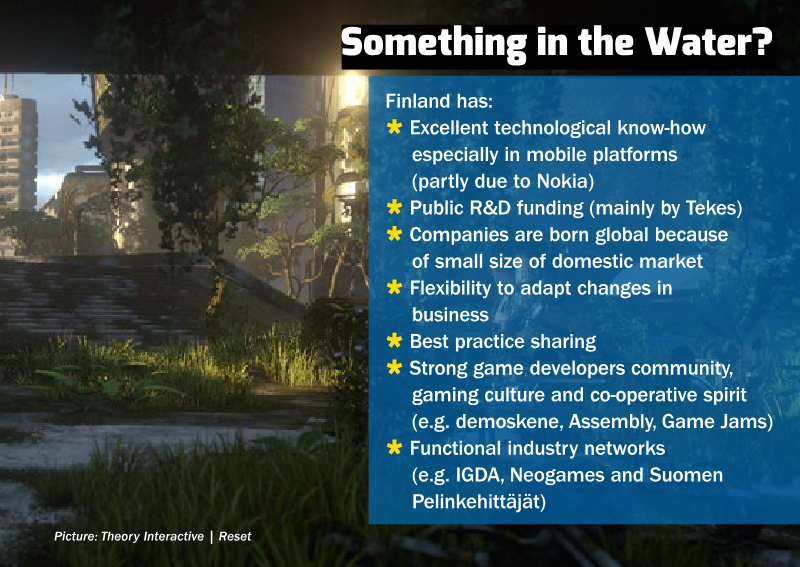
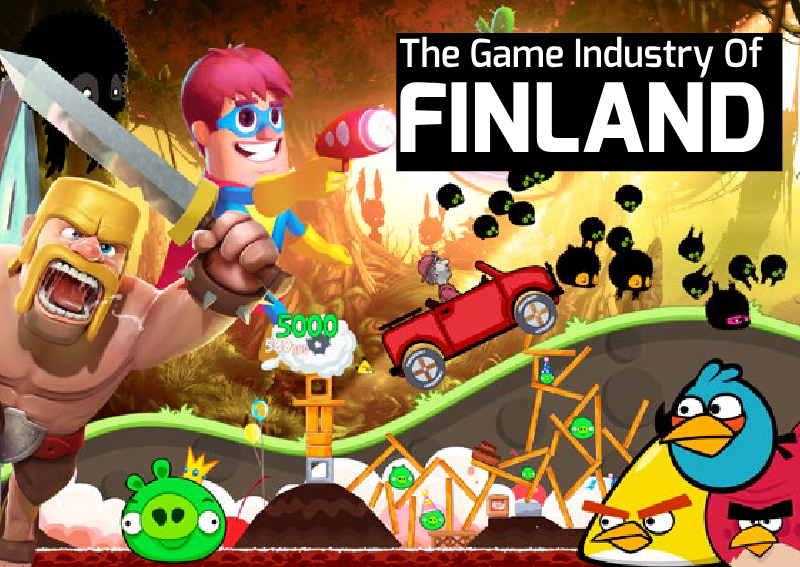
The Finnish game industry underwent a period of extraordinary expansion between 2008 and 2013, transforming into a cornerstone of the national economy.
- Between 2008 and 2013, the Finnish game industry's core development revenue grew from €87 million to an estimated €900 million, with a total economic impact exceeding €2 billion.
- Finland has established itself as a premier global hub for mobile game development, characterized by a highly scalable digital product ecosystem and a focus on high-growth export markets.
- The industry is supported by a network of over 200 companies, including major international players such as Rovio and Remedy alongside a robust community of independent studios.

Top Tips for the Big Indie Pitch
Successful participation in the Big Indie Pitch requires a disciplined approach to communication and presentation.
- Presentations must be limited to a strict three-minute window, requiring developers to prioritize the game's unique hook and playable core mechanics.
- Effective pitches focus exclusively on the project's most compelling aspects, avoiding extraneous details like studio history or internal technical debates.
- Preparation is essential to manage time and nervousness; developers should practice their delivery to ensure a focused, professional, and unified narrative.
PGC London: China Mobile Games Market Power Panel
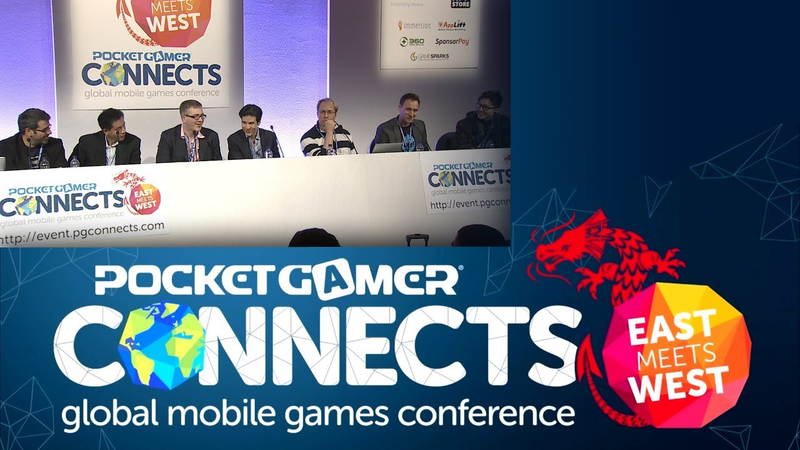
The Chinese mobile games market represents a highly fragmented, competitive, and rapidly evolving landscape that requires a strategic, localized approach for success.
- The Chinese mobile market is highly fragmented, requiring developers to implement payment systems for numerous individual channels, such as Alipay and the 360 store, to ensure effective monetization.
- Partnering with a local publisher is essential for navigating the market, as they provide critical services including game localization, server infrastructure management, and technical adaptation for over 100 different Android device configurations.
- Piracy in China poses significant risks beyond lost revenue, as unauthorized versions of games can be bundled with malware or malicious SDKs that may trigger government scrutiny and lead to the blocking of official traffic.
Trust is a big issue for Western developers in China
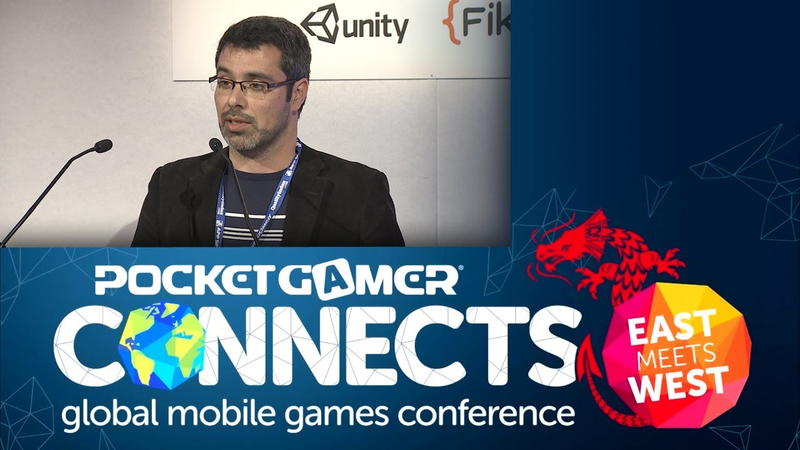
Western developers face significant structural and cultural hurdles when attempting to enter the Chinese mobile gaming market, primarily centered on the difficulty of establishing reliable business relationships.
- Building trust is the primary barrier to entry in the Chinese market, as Western developers often face communication breakdowns, sudden partner disappearances, and a lack of consistent feedback.
- Biodroid’s attempt to enter the Chinese market failed due to poor partner selection, whereas their efforts in Japan, Thailand, Indonesia, and Malaysia succeeded by securing partners who handled integration and device preloading.
- Western developers must be prepared to dedicate significant resources to support their Chinese partners, as slow delivery of marketing materials or code changes can terminate business relationships.
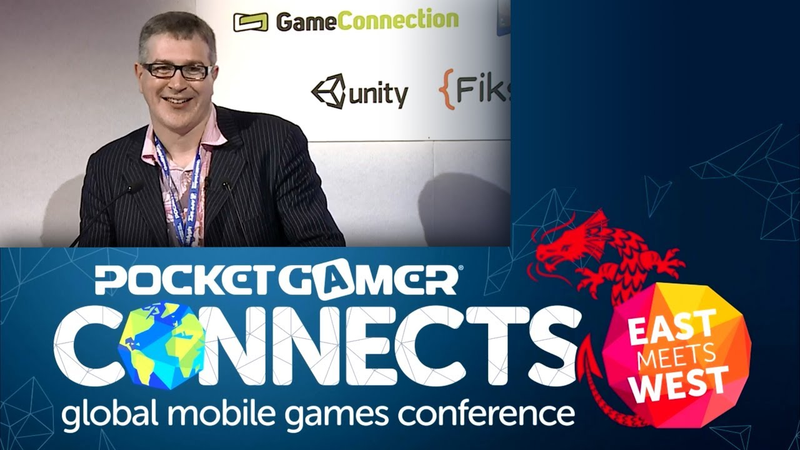
Chris James welcomes you to PG Connects London 2014
The mobile gaming industry has undergone a profound transformation over the past decade, evolving from a niche market focused on 2D Java games into a multi-billion dollar global powerhouse.
- The mobile gaming industry has transitioned from a niche market of 2D Java games into a multi-billion dollar global powerhouse.
- Business models have successfully shifted toward free-to-play mechanics, allowing for massive revenue generation despite the absence of upfront costs.
- Mobile hardware capabilities have evolved significantly, now offering performance levels comparable to traditional PCs and consoles.

Comedic Games - Can We Make More Funny Games? - Extra Credits
The primary challenge in creating comedic video games lies in the fundamental conflict between the rigid timing required for humor and the unpredictable nature of interactive player agency.
- The core challenge in game comedy is the conflict between the rigid timing required for humor and the unpredictable nature of player agency.
- Traditional scripted comedy, as seen in titles like Portal, fails to leverage the medium's potential because it relies on removing player control to preserve comedic pacing.
- Effective game comedy should shift toward 'comedy by choice,' where players generate humorous outcomes through their own actions rather than consuming passive, scripted content.

John Hanke on why location unlocks the next wave of mobile gaming
Location-based mobile gaming represents a significant frontier for digital entertainment, driven by the convergence of advanced mobile hardware, wearable technology, and health-focused applications.
- Location-based gaming is evolving from a niche experiment into a mainstream platform by integrating real-world movement with immersive, narrative-driven gameplay.
- The core value of location-based experiences lies in their ability to foster emergent social behaviors and collaborative community dynamics similar to traditional massively multiplayer online games.
- Global infrastructure is a prerequisite for success, as evidenced by Ingress, which has successfully established a presence across more than 200 countries.