Game Development reports and market data
Documents

Tree's Company: Systemic AI Design in Just Cause 3
The systemic design of artificial intelligence in Just Cause 3 relies on a modular architecture that balances emergent, open-world behavior with the precise requirements of scripted mission content.
- Avalanche Studios utilized a hybrid AI architecture for Just Cause 3 that combined behavior trees for high-level logic with utility functions to rank and select optimal positions or targets based on environmental variables.
- Content designers were empowered to customize AI behavior by filling out exposed parameters in the engine, which were then dynamically read and utilized by the behavior trees at runtime.
- The team implemented modular 'micro-behaviors' as external tree objects, allowing designers to inject specific tasks—such as flying a helicopter to a point—into the main AI logic without requiring custom programming for every scenario.
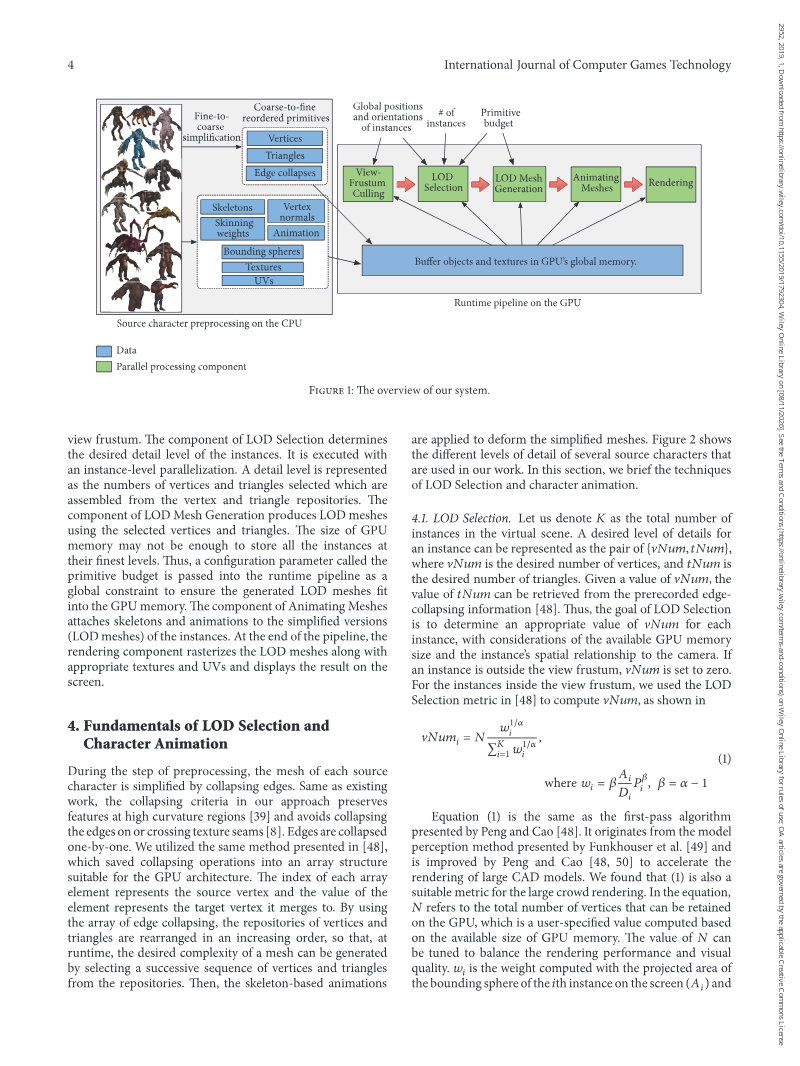


Real-Time Large Crowd Rendering with Efficient Character and Instance Management on GPU
International Journal of Computer Games Technology Volume 2019, Article ID 1792304, 15 pages https://doi.org/10.1155/2019/1792304 Real-Time Large Crowd Rendering with Efficient Character and Department of Computer Science, University of Alabama in Huntsville, Huntsville, AL 35899, USA Correspondence should be addressed to…



Action Plan to Strengthen Game Industry in Helsinki
This action plan, developed as part of the Baltic Game Industry Project, outlines strategies to strengthen Helsinki's game industry ecosystem.
- Helsinki serves as the primary hub for the Finnish game industry, hosting over 100 of the nation's 250 total game studios.
- The 2019–2020 action plan aims to transition the regional ecosystem from a phase of hyper-growth to a more sustainable, mature competitive model.
- The strategy addresses industry-wide talent shortages by leveraging public-private partnerships to attract global professionals and their families to the region.
Visual Effects Bootcamp: The Rise of Realtime
The rapid evolution of real-time visual effects is fundamentally reshaping the creative landscape, necessitating a shift in the professional profile of visual effects artists.
- Real-time visual effects are shifting from traditional particle simulations toward a multidisciplinary requirement for rigging, programming, and tool development skills.
- Artists are increasingly utilizing data-driven techniques like motion vector flipbooks and vertex animation textures to bake complex lighting and fluid dynamics into shaders for high-fidelity performance.
- Procedural tools and analytic simulations, such as spline-based trails and mesh-based particle systems, are replacing traditional physics-based approaches to provide greater artistic control and efficiency.
How We Made ISLANDERS - (Indie Game)
The development of the indie game Islanders serves as a case study in the effectiveness of rapid prototyping and iterative design within small, focused teams.
- A three-person team developed Islanders in just four months as part of a bachelor program, proving that small, focused teams can produce polished titles through rapid iteration.
- The development process relied on short-term prototypes lasting only one to two days to test mechanics, allowing the team to discard complex features like real-time resource management and meteors.
- Transitioning from a real-time model to a turn-based system was a pivotal design choice that removed player pressure and prevented late-game economic inflation.
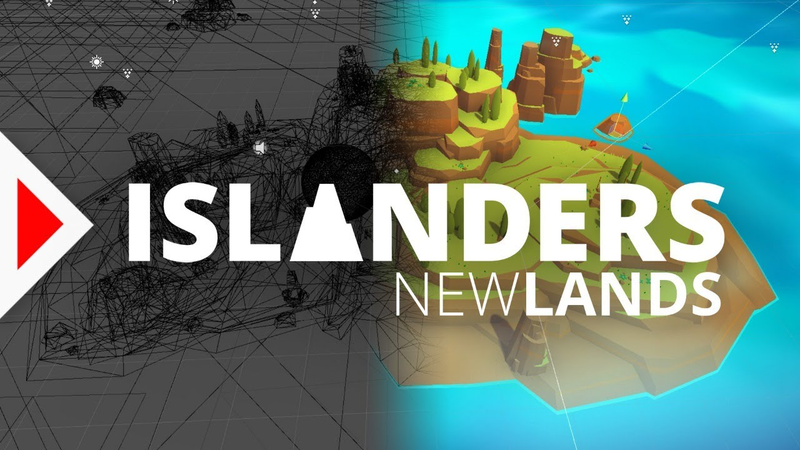
ISLANDERS - Making New Islands (Live)
The development of the strategy game Islanders centers on a sophisticated procedural generation system designed to produce infinite, aesthetically consistent island layouts.
- A three-person development team utilized a modular, step-by-step procedural generation system to create infinite, aesthetically consistent island layouts.
- The system employs specialized generators and heat maps to automate the placement of terrain, resources, and decorative elements while maintaining structural balance.
- Development focused on managing complex Unity engine variables, including mesh filtering, pivot points, and object clipping, to ensure visual coherence.

The Importance of Not Playing Games - A Balanced Game Design Education - Extra Credits
The primary thesis of this analysis is that an over-reliance on existing video games as a sole source of inspiration stifles innovation and leads to derivative design.
- Over-reliance on existing video games as a primary source of inspiration leads to derivative design and stagnant, formulaic mechanics.
- Designers who exclusively consume games often subconsciously replicate established genre conventions rather than innovating on original concepts.
- Influential titles like The Legend of Zelda, Pac-Man, and Papers, Please succeeded by drawing from real-world experiences such as childhood exploration and international travel rather than existing game templates.
ISLANDERS - All you need to know. (Devlog)
Islanders is a minimalist, casual strategy game designed to be accessible to a broad audience while offering significant depth for players seeking a challenge.
- Islanders is a minimalist strategy game developed by a three-person team over a four-month period as a university project at HTW Berlin.
- The core gameplay loop centers on procedural island generation and a deck-building mechanic where players strategically place buildings to maximize scores based on proximity bonuses.
- The game features 30 distinct building types, each with unique environmental constraints and range-based scoring requirements.

Unpopular Opinion: All Narrative is Linear
The core thesis of this analysis is that all narrative experiences, regardless of their level of interactivity or non-linearity, fundamentally adhere to a linear structure defined by the tracking of tension over time.
- All narrative experiences, regardless of interactivity or branching logic, fundamentally adhere to a linear structure defined by the tracking of tension over time.
- Technical frameworks like state machines and core loops constitute a possibility space, whereas the underlying emotional arc constitutes the actual narrative.
- Every player’s journey, even in open-ended sandbox environments like Minecraft or branching narratives like Life is Strange, maps to a traditional arc of introduction, inciting incident, rising action, climax, and resolution.
Animating an Agent of Mayhem
The development of Agents of Mayhem centers on a systematic approach to character animation that balances high-fidelity personality with technical efficiency.
- Volition utilized 'character one sheets' to define core traits, gameplay strengths, potential pitfalls, and character secrets, ensuring consistent animation performance without relying on lengthy documentation.
- The animation team categorized movements into 'ordinary' (standard mocap) and 'extraordinary' (exaggerated, stylized) to allocate time efficiently, applying snappy timing and held poses to the latter to match the game's 2D-inspired aesthetic.
- To manage limited resources, the team implemented procedural systems for jump landings and turns, which saved approximately 30% of animation production time by layering arm-only overrides onto existing idle or run animations.
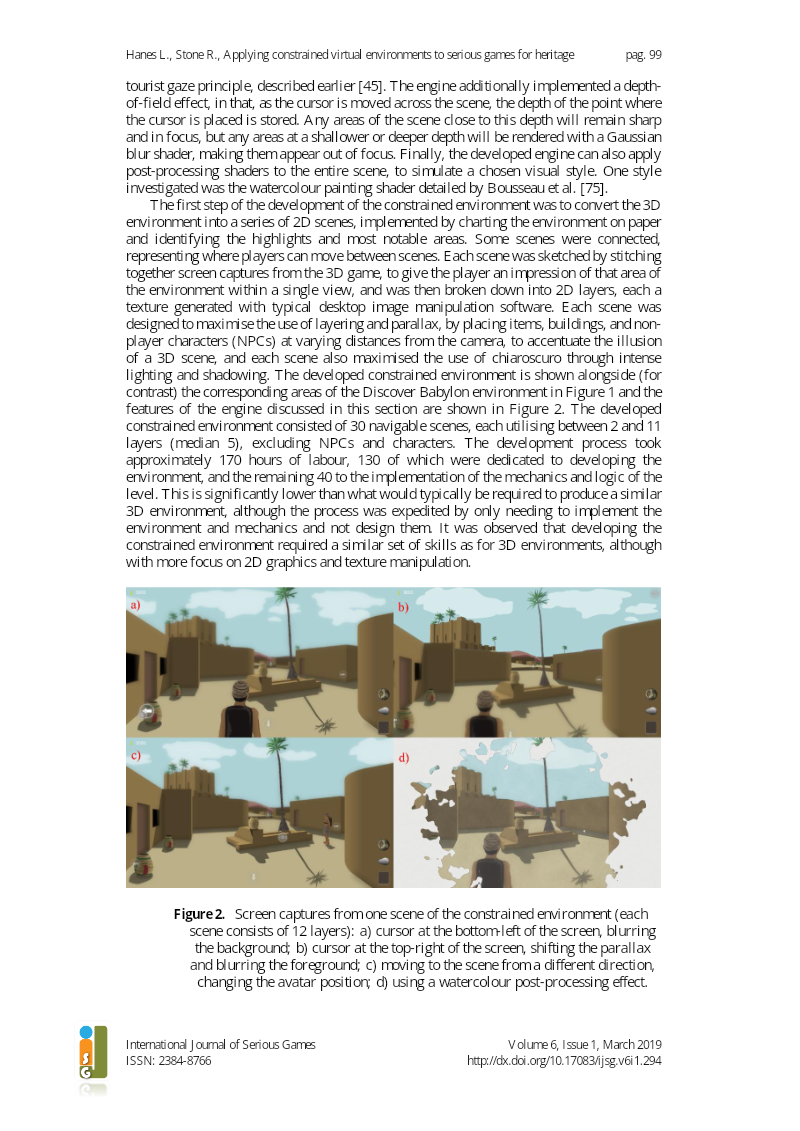
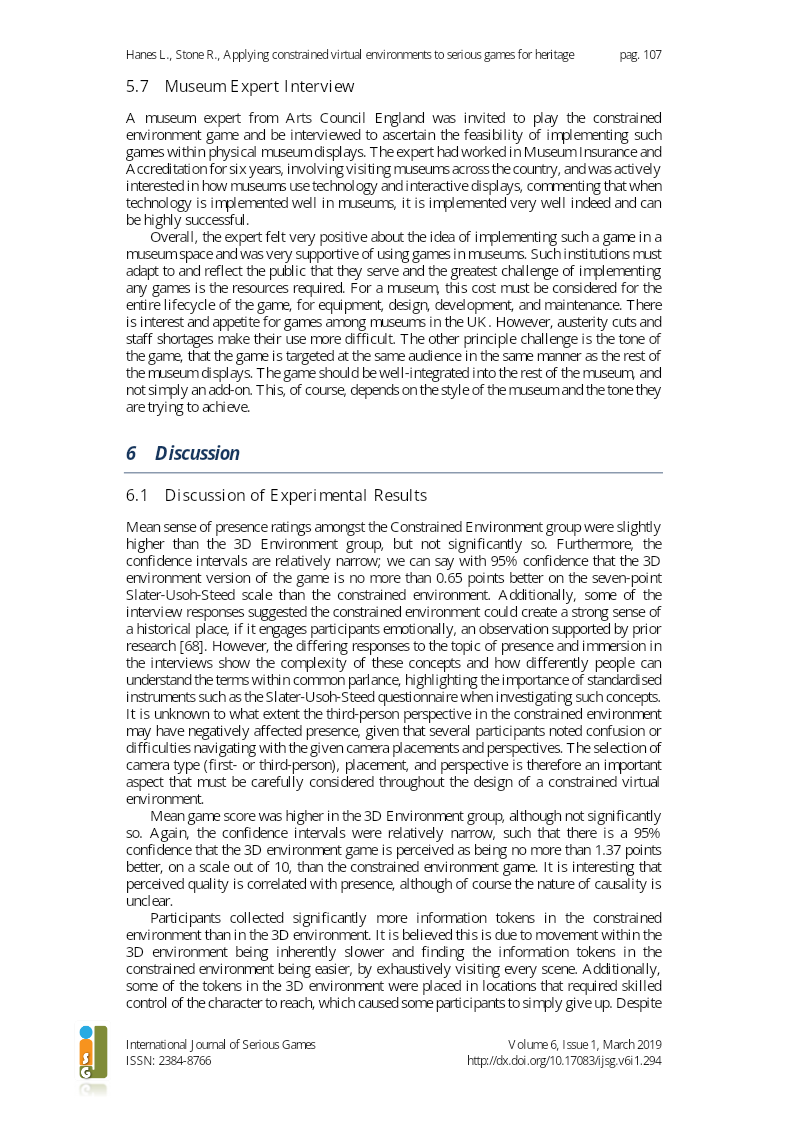
Applying Constrained Virtual Environments to Serious Games for Heritage
Constrained virtual environments, characterized by low-fidelity, 2D-layered scenes, represent a highly effective and resource-efficient alternative to traditional 3D serious games within the heritage sector.
- Constrained 2D-layered virtual environments serve as a cost-effective alternative to 3D serious games, significantly reducing the financial and technical barriers for heritage institutions.
- Empirical research with 34 participants shows that 2D constrained environments achieve user presence and perceived quality levels comparable to 3D alternatives.
- Users in 2D environments demonstrated superior information retention and navigation, collecting more information tokens than those in 3D versions due to reduced cognitive load.


Lessons Learned from Implementing Project Management Games
Project management serious games serve as a critical bridge between theoretical academic instruction and the multifaceted realities of professional practice.
- Effective project management simulations must move beyond oversimplification by integrating complex variables such as resource constraints, stakeholder management, ethical dilemmas, and non-linear project dependencies.
- To prevent non-strategic, gambling-like user behaviors, designers should incorporate professional performance indicators like client satisfaction and strategic role assignment alongside standard tools such as Gantt charts and resource histograms.
- Successful implementation requires a balance between technical realism and interface clarity, utilizing intuitive design, flexible difficulty settings, and immediate feedback mechanisms to support diverse learning needs.
Writers
Games and companies
Games