Game Development reports and market data
Documents

Mechanics Shaping Story - Re-examining the Core Gameplay Loop - Extra Credits
The core gameplay loop—the primary set of actions a player performs repeatedly—functions as a fundamental narrative tool that can either reinforce or contradict a game’s intended story.
- The core gameplay loop functions as a primary narrative tool that can either reinforce or contradict a game’s intended thematic goals.
- Mechanical dissonance occurs when a game's core actions—such as combat or resource management—undermine the stated narrative premise, as seen in the Pokémon franchise where combat-centric mechanics conflict with themes of friendship.
- Traditional JRPG and tabletop systems, inherited from Dungeons and Dragons, rely on a 'kill-loot-level' cycle that inherently frames the game world as a violent environment by incentivizing combat as the primary path to growth.

Vehicle Audio of Mafia III: Recreating a Classic Era in Automotive History
The audio production for Mafia III centers on the challenge of recreating the authentic mechanical soundscape of 1968 New Orleans within the constraints of a high-octane, open-world action game.
- The development team recorded 30 distinct vehicle archetypes from 20 cars, two trucks, seven boats, and one electric vehicle to populate an expansive 1968 New Orleans setting.
- To ensure high-fidelity audio without environmental interference, the team used a Dyno-pack hydraulic braking system for controlled, silent recording sessions.
- The production scaled 30 original recordings across 90 total in-game car models by utilizing a flexible audio architecture that adapts to real-time physics data.

Culture driving productivity
Effective team culture is a critical driver of productivity and success within the video game industry.
- A strong organizational culture is a strategic necessity, with 84% of employees identifying it as essential to success and 76% citing a clear business strategy as the foundation for building that culture.
- Leadership must transition from top-down mandates to collaborative goal-setting, ensuring every team member understands how their specific contributions align with the company's broader vision.
- Managers are responsible for reinforcing core values by consistently recognizing and celebrating behaviors that reflect the team's desired culture.

Lessons from Fusebox's Love Island: The Game
The development of Love Island: The Game serves as a case study for successfully adapting popular intellectual property (IP) into mobile, choice-based narrative games.
- Fusebox Games achieved top-grossing status on iOS and Android in summer 2018 by prioritizing a deep understanding of the source material's core appeal during the adaptation of Love Island: The Game.
- Developers should identify the 'brain, heart, and soul' of an IP and map these elements to specific narrative functions to ensure character authenticity while maintaining manageable production scope.
- Rigorous project management, including detailed state-tracking and modular episode outlines, enabled the team to cut 15 episodes of content late in development without compromising the integrity of the remaining plot.
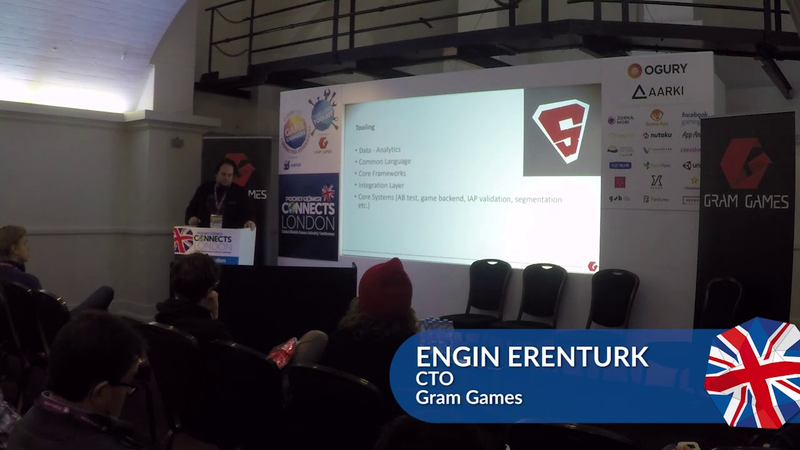
Gram Games on iterating your development pipeline as you grow
Gram Games utilizes an iterative development pipeline designed to scale effectively as a company grows from a small startup to a larger organization.
- Gram Games mandates a strict prototyping benchmark of 40% to 45% day-one retention to qualify a project for the soft-launch phase.
- Development teams are structured as lean, ad-hoc units consisting of one developer, one artist, and one product manager tasked with building a playable core loop in one week.
- The company utilizes a proprietary dependency management system to automate SDK and third-party tool integration, eliminating boilerplate tasks like A/B testing setup.
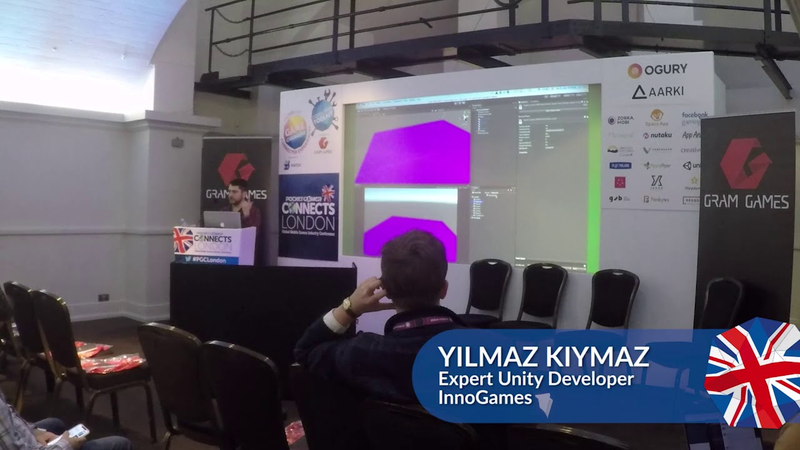
Optimising your mobile game using scriptable render pipelines
Scriptable Render Pipelines (SRP) represent a significant evolution in Unity’s rendering architecture, providing developers with granular control over the rendering process.
- Transitioning from the built-in pipeline to the Lightweight Render Pipeline (LWRP) with experimental batching can drastically reduce draw calls, as demonstrated by a decrease from 26 to eight in a sample scene.
- LWRP improves mobile performance and energy efficiency by utilizing constant buffers to group meshes sharing the same shader, which significantly lowers the overhead on device thermal limits and battery life.
- Developers must convert custom shaders from CG to HLSL and implement constant buffers to achieve compatibility with the SRP architecture and enable batching optimizations.
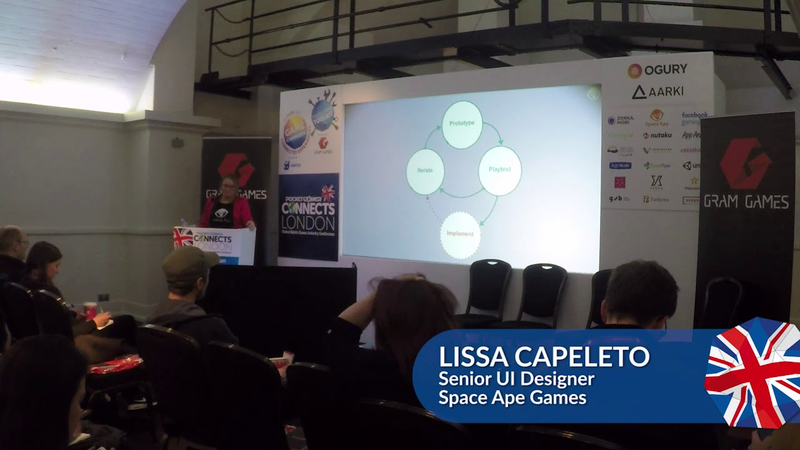
The pain and pleasure of free-to-play game UI design
Designing user interfaces for free-to-play mobile games presents a unique set of professional challenges characterized by constant iteration and the necessity of balancing player experience with business metrics.
- Free-to-play UI design requires balancing player experience with business metrics, necessitating a skill set that spans visual aesthetics, data analysis, and product economics.
- Designers must act as ethical advocates to prevent the use of dark patterns, prioritizing long-term player trust over short-term statistical gains.
- Usability issues should be treated as design failures rather than player incompetence, requiring designers to iterate based on objective playtesting feedback.
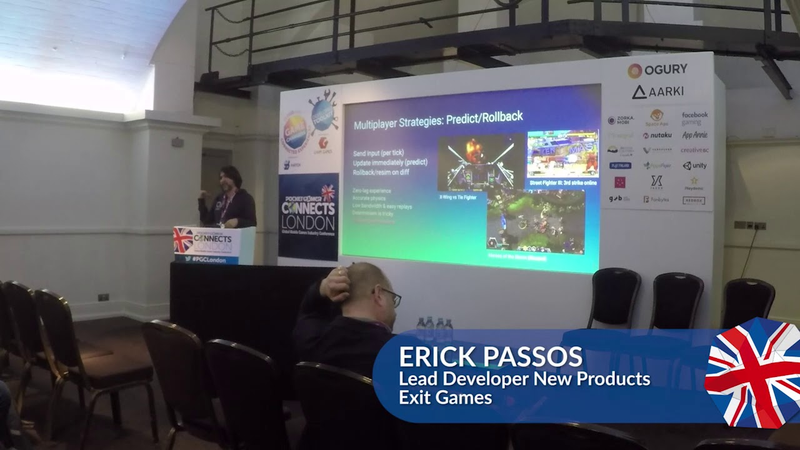
How predict rollback determinism will revolutionise real-time multiplayer game development
Predictive rollback determinism represents a highly efficient architecture for real-time multiplayer game development, particularly for action-oriented genres like fighting games and brawlers.
- Predictive rollback architecture achieves low-latency, local-feel gameplay by synchronizing only player inputs rather than full game states, significantly reducing bandwidth requirements compared to snapshot interpolation.
- To ensure cross-platform determinism, developers must replace floating-point math with fixed-point math, specifically utilizing 48-bit integer and 16-bit decimal formats.
- Engine performance must be optimized for rapid state rollbacks by using blittable structs and memory-aligned buffers instead of object-oriented classes to keep state data within the processor’s L2 cache.
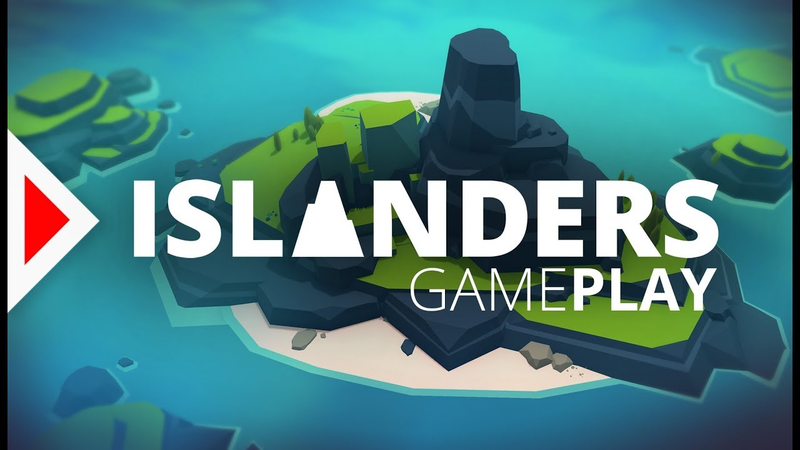
ISLANDERS Gameplay - (Developer Playing)
Islanders functions as a minimalist, procedurally generated strategy game that prioritizes accessible, high-score-driven city building over traditional resource management.
- Islanders is a minimalist, procedurally generated strategy game that replaces traditional resource management with a high-score-driven loop focused on spatial optimization and proximity bonuses.
- The game was developed by a three-person team over a five-month period, evolving from a university assignment into a commercial PC release.
- The technical architecture relies on the Unity engine for development and Blender for 3D asset creation, prioritizing a non-violent, aesthetic-focused gameplay experience.
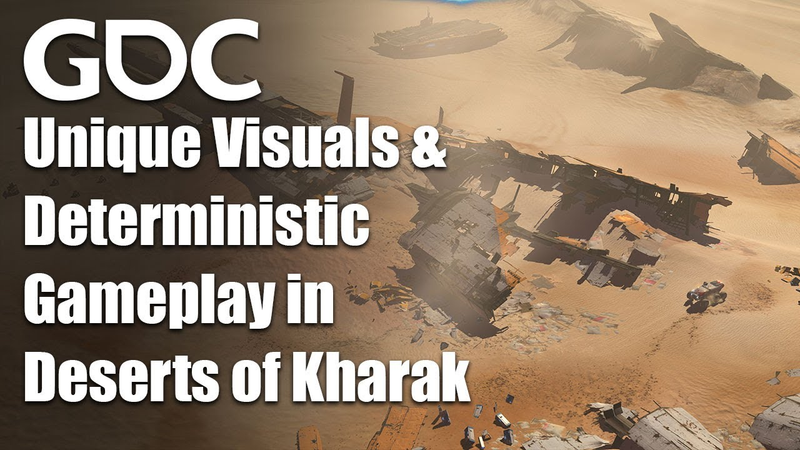
The Great Divide: Unique Visuals and Deterministic Gameplay in Deserts of Kharak
Homeworld: Deserts of Kharak demonstrates a sophisticated architectural approach to real-time strategy development by enforcing a strict separation between the deterministic simulation layer and the Unity-based visual presentation layer.
- To achieve deterministic gameplay for multiplayer RTS, Blackbird Interactive separated the simulation layer from the presentation layer, ensuring the simulation never calls Unity APIs and uses internal scope to prevent accidental cross-layer dependencies.
- The team implemented a custom entity system using structs that act as indices into pre-allocated arrays, allowing for up to 5,000 entities without triggering the .NET garbage collector during gameplay.
- To maintain visual fidelity while keeping the simulation lightweight, the game uses a 2D driving model for physics calculations, while the 3D presentation layer handles complex visual elements like vehicle suspension, jumping, and terrain interaction.
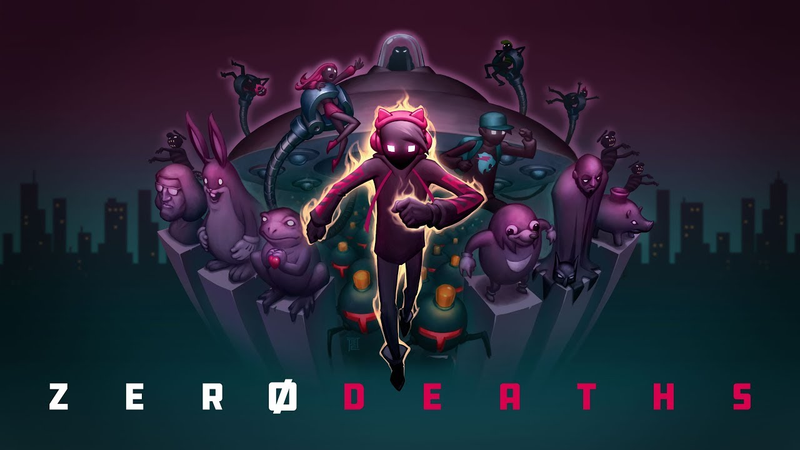
Zero Deaths Official Trailer (A Game-Jam Made In 14ish Days)
The development of the 2D platformer Zero Deaths serves as a case study in rapid game production and community-driven design.
- The 2D platformer Zero Deaths was successfully developed and released within a compressed 14-day timeframe.
- The project utilized real-time feedback loops by incorporating mechanics, narrative, and design concepts suggested by viewers during live-streamed development sessions.
- Rapid prototyping and game jams serve as viable alternatives to traditional long-term production cycles, allowing for the creation of functional software with minimal overhead.
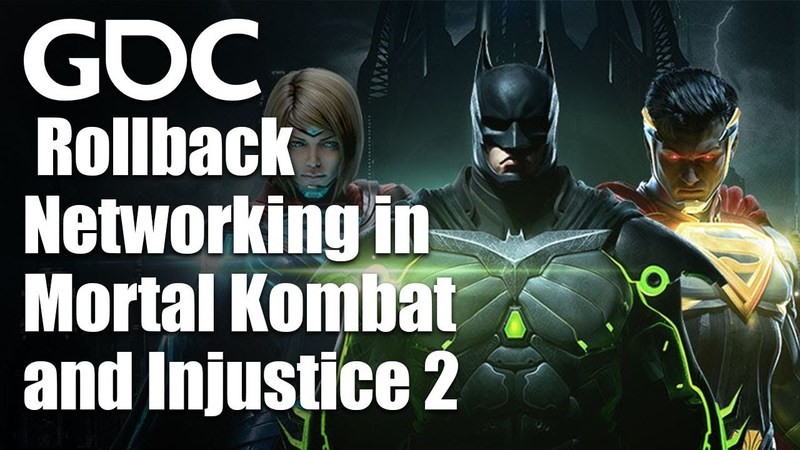
8 Frames in 16ms: Rollback Networking in Mortal Kombat and Injustice 2
NetherRealm Studios successfully transitioned from traditional lockstep networking to a rollback architecture to eliminate the input latency inherent in fighting games.
- NetherRealm Studios successfully implemented a rollback networking architecture that maintains a consistent three-frame input delay by simulating up to eight frames within a 16ms window.
- The system supports competitive-grade online play for round-trip times up to 333ms, covering over 99% of all online matches.
- To ensure performance, the engine maintains a compact state footprint of less than one megabyte per frame by using handles instead of pointers and excluding non-essential systems like audio and particles during re-simulation.
Writers
Games and companies
Games