Game Development reports and market data
Documents
Legal Battle Royale: Not Boring Edition
The gaming industry faces a complex web of legal challenges that scale alongside commercial success.
- Developers must conduct rigorous, asset-by-asset risk assessments for intellectual property, as there are no universal legal standards for creative assets like dance-move emotes.
- Regulatory bodies are actively monitoring influencer marketing, requiring developers to ensure all material connections are disclosed through clear and conspicuous labeling.
- Data privacy compliance, particularly under standards like GDPR, requires a shift from blanket consent models to transparent, specific data collection practices.
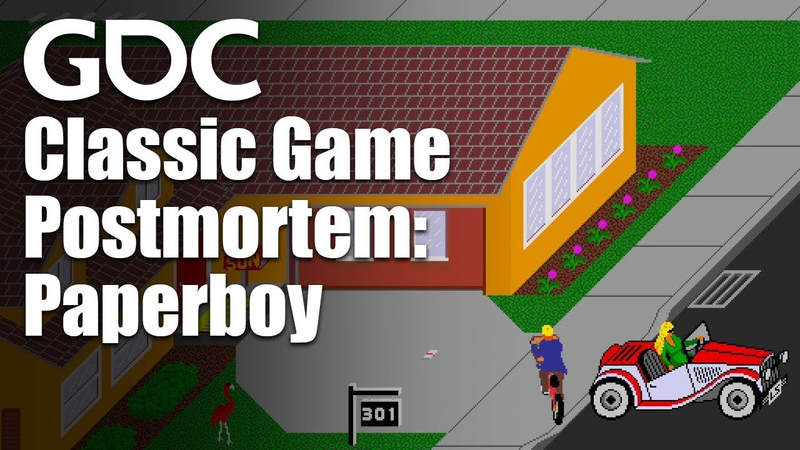
Classic Game Postmortem: Paperboy
The development of the 1985 arcade title Paperboy represents a pivotal shift in Atari’s design philosophy, moving away from traditional vector-based graphics toward a sophisticated, isometric raster-based experience.
- The NES home console port of Paperboy achieved significant commercial success with 2 million copies sold, far outpacing the 3,500 units sold for the original 1985 arcade version.
- Development of the arcade title utilized Atari’s System 2 hardware, featuring a 16-bit processor programmed in BLISS and a custom medium-resolution monitor to surpass the fidelity of 8-bit competitors.
- Gameplay was engineered around tight 30-to-90-second loops to maximize arcade player turnover, a strategy refined after initial focus group failures led to a shift toward a parallel horizontal layout.
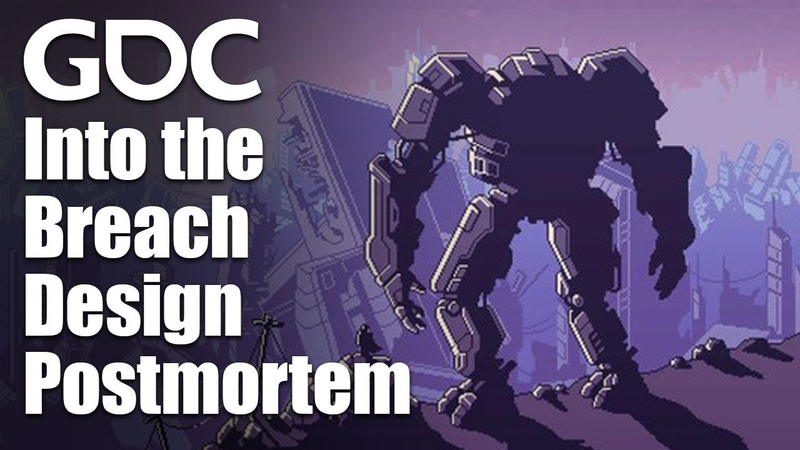
Into the Breach Design Postmortem
The development of Into the Breach demonstrates the efficacy of a minimalist design philosophy, where the prioritization of core gameplay mechanics over technical or narrative complexity leads to a more cohesive experience.
- The core design philosophy of Into the Breach centered on 'telegraphed attacks,' where all enemy intentions are visible to the player, removing hit/miss chance to create a deterministic, puzzle-like combat experience.
- Subset Games prioritized 'collateral damage' as a central theme, shifting the player's focus from unit survival to defending immovable buildings, which serve as the primary fail-state condition.
- To maintain player hope in a deterministic system, the developers included a 'grid defense' mechanic—a low-percentage chance for buildings to resist damage—which acts as a necessary 'ugly pillar' to prevent the game from feeling unsolvable.

Game Dev Reviews A STUPID HARD Rogue-lite | Enter The Gungeon NEW UPDATE!
The development and commercial success of the roguelite game Enter the Gungeon serve as a case study for modern game design, specifically focusing on the intersection of technical execution, player engagement, and marketing strategy.
- Long-term profitability in the modern indie market relies on prioritizing streamability and replayability to foster organic marketing through consistent, long-form content creator coverage.
- Game feel, defined by immediate and responsive feedback to player inputs, is a critical technical requirement for maintaining player engagement in high-difficulty roguelite titles.
- Technical optimization, specifically the use of sprite sheets and efficient lighting, was essential for overcoming Unity engine performance limitations on consoles like the PlayStation 4 during the 2016 development cycle.
How to Market Your Indie Game!
Successful indie game marketing relies on a foundational strategy centered on product design, audience engagement, and strategic distribution.
- Marketing success is primarily determined by product design; developers should prioritize creating unique, watchable concepts that offer a clear, relatable fantasy to ensure organic interest from content creators.
- Establishing a Steam store page as early as possible is essential for accumulating wishlists, which serve as the primary driver for platform visibility and algorithm placement.
- High-quality trailers and store thumbnails are the most critical assets for maximizing click-through rates and should be the focus of visual marketing efforts.
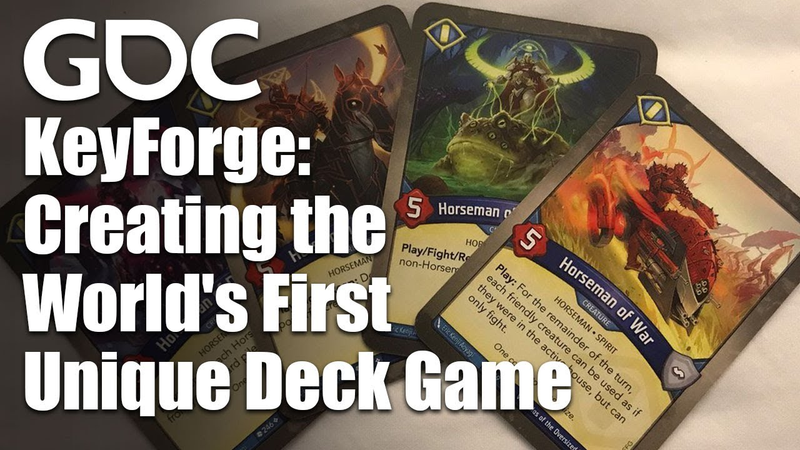
Board Game Design Day: KeyForge: Creating the World's First Unique Deck Game
KeyForge represents a paradigm shift in tabletop gaming by introducing the world’s first unique deck game, where procedural generation ensures that every deck is entirely distinct, non-customizable, and possesses a unique identity.
- KeyForge utilizes a complex algorithm to generate unique 37-card decks, ensuring that the probability of encountering a duplicate deck is statistically negligible until approximately 15 trillion decks are produced.
- Each deck is composed of three distinct houses, an Archon card, and a unique name, with a secondary uniqueness check comparing every generated deck code against the existing database to prevent duplicates.
- The game design prioritizes accessibility with a 10-15 minute learning curve, allowing players to start playing immediately after purchasing a single deck without the need for deck-building or extensive rulebook study.
Technical Debt - Improving the Production Pipeline - Extra Credits
Technical debt in game development refers to the accumulation of unresolved issues, disorganized assets, and suboptimal code early in a project that become exponentially more expensive or difficult to rectify during later production stages.
- Technical debt functions like financial debt, where unresolved early-stage issues compound over time to create exponentially higher labor costs and project risks in later production phases.
- Technical debt is not exclusive to programming; it includes inefficient asset management by artists, disorganized level design, and the structural strain of retrofitting features like multiplayer into single-player systems.
- While teams often ignore debt to maintain early momentum, this practice frequently forces developers to spend weeks troubleshooting or redoing work that could have been resolved in minutes during the initial phase.

Put Your Name on Your Game, a Talk by Bennett Foddy and Zach Gage
Independent game developers should prioritize personal branding over corporate identity to ensure long-term professional recognition and artistic growth.
- Independent developers should prioritize personal branding over corporate identity to ensure professional longevity, as most independent studios dissolve after releasing only a single title.
- Attaching a personal name to a project prevents the loss of individual credit that occurs when developers rely on transient, faceless corporate entities.
- Adopting personal attribution aligns game development with other creative industries where individual authorship is the standard for long-term career growth.
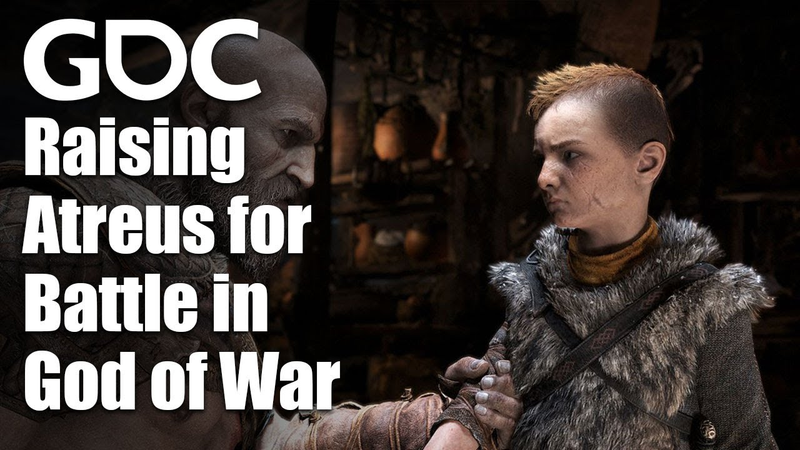
Raising Atreus for Battle in God of War
The design of Atreus as an AI companion in God of War centers on the core philosophy that a partner character must enhance the player’s experience without requiring constant management.
- To ensure Atreus functioned as a reliable teammate rather than a realistic one, the development team utilized 'warping' (teleportation) to position him near enemies instantly, ensuring his combat actions were always timely and responsive to the player.
- The design of Atreus was governed by four core pillars: he must support the player, never hinder the player, ensure all actions are helpful, and require zero babysitting to prevent player frustration.
- To maintain combat flow, the team transitioned Atreus from a traditional archer to a hybrid fighter who uses his bow as a melee weapon, which creates more fluid animations and clearer visual cues for the player.

So I got this email...
The provided text details the personal and professional struggles of an independent game developer navigating the financial and psychological pressures of the industry.
- Independent game developers should prioritize securing traditional, full-time employment to decouple creative output from immediate survival needs and financial desperation.
- Relying on viral success or influencer marketing is an unreliable business strategy, as even high-performing game launches often fail to generate sufficient revenue to cover living expenses and debt.
- The pressure to achieve commercial success to solve personal financial crises can stifle creativity, leading to the development of 'soulless' products that lack long-term engagement.
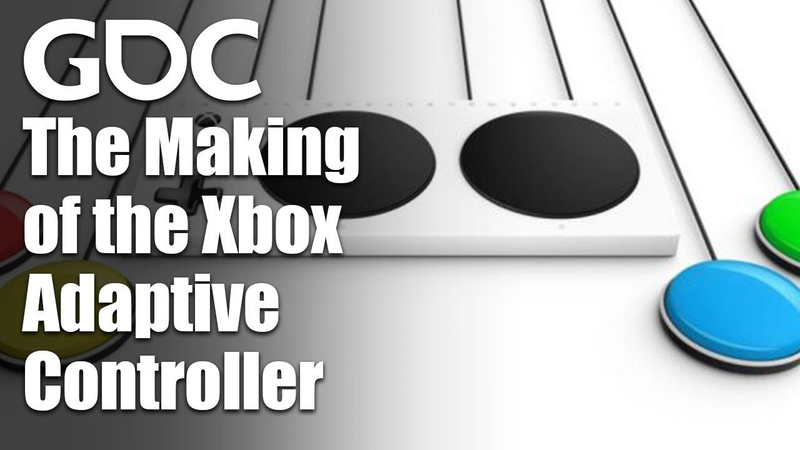
The Making of the Xbox Adaptive Controller
The Xbox Adaptive Controller represents a fundamental shift in gaming hardware, moving away from rigid, standardized interfaces toward a modular, inclusive design ecosystem.
- The Xbox Adaptive Controller functions as a modular hub designed to replace rigid, 17-button interfaces for users with restricted dexterity, spinal cord injuries, or repetitive stress conditions.
- Development was driven by deep collaboration with specialized organizations including AbleGamers, SpecialEffect, and Craig Hospital to ensure the hardware addresses specific user constraints.
- The device design prioritizes physical health and integration through ergonomic sloping to prevent skin breakdown and reinforced mounting options for wheelchair stability.

How to Sell Your Game on Steam!
Publishing a game on Steam has become significantly more accessible through the Steam Direct program, which allows developers to distribute titles by creating a Steam account, paying a $100 fee, and completing the necessary legal and administrative documentation via the Steamworks portal.
- Developers can access the Steam marketplace by paying a $100 fee and completing legal documentation through the Steam Direct program.
- Steam waives its revenue share on retail keys generated by developers for sale on third-party platforms or personal websites.
- Technical integration of Steam features like achievements and leaderboards is typically handled via the Steamworks API, often using wrappers such as Steamworks.NET for Unity.
Writers
Games and companies
Games