Game Development reports and market data
Documents

*The Most* Famous Mobile Gaming Blog - Deconstructor of Fun | Origin Story with Miska Katkoff
Deconstructor of Fun serves as a prominent industry platform dedicated to the analysis of mobile free-to-play gaming, focusing primarily on the mechanics of monetization and market performance.
- Deconstructor of Fun functions as a specialized analytical platform for the mobile free-to-play industry, prioritizing technical deep-dives into monetization mechanics and market performance over general news.
- The platform has scaled to include a network of over 115 contributors who produce content and host the 'This Week in Games' podcast.
- The blog serves as a professional portfolio for contributors, where public documentation of analytical processes and industry insights frequently leads to career advancement and recruitment opportunities.
Using Narrative as Context - Balancing Gameplay and Story Elements - Extra Credits
Effective game design does not require a choice between deep narrative and mechanical focus; rather, narrative serves as a vital tool for providing context, setting tone, and fostering player engagement.
- Narrative functions as a critical tool to provide context and meaning, transforming abstract mechanical obstacles into a cohesive player journey.
- Integrating narrative elements helps mask technical limitations by framing engine constraints as intentional, immersive world-building choices.
- Thematic storytelling acts as a necessary bridge to maintain player retention in repetitive genres, such as sports simulations or tile-matching games, by providing emotional stakes.
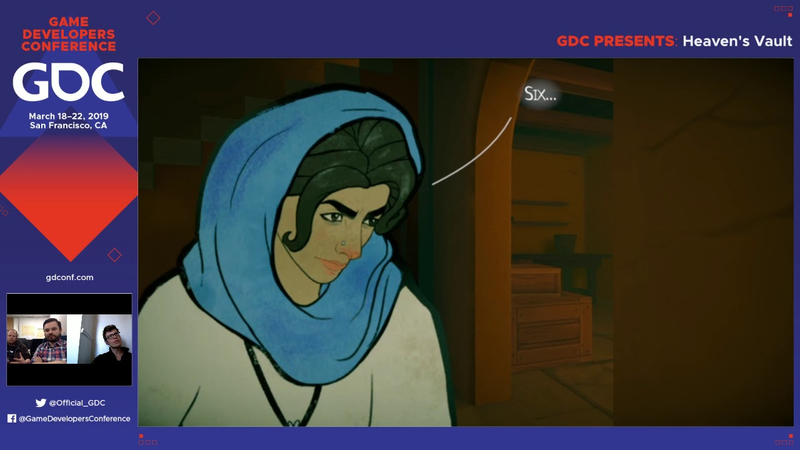
GDC Plays Heaven's Vault with Jon Ingold and Joseph Humfrey
Heaven’s Vault represents a significant evolution in narrative-driven game design, prioritizing a systemic approach to storytelling over traditional, rigid branching structures.
- Inkle developers prioritize narrative fluidity by avoiding formal planning processes like spreadsheets, instead opting for a reactive, scene-by-scene development approach that allows for constant refinement until launch.
- The studio uses their proprietary 'ink' engine to treat game scripts as interactive films, where each line of text functions as a command for camera shots, sound effects, or environmental triggers.
- To maintain high-quality writing, the developers intentionally avoid full voice acting, arguing that it forces players to read at an actor's pace and limits the team's ability to iterate on the script late in development.

Making New ISLANDERS Content Live
The development of ISLANDERS centers on a minimalist, iterative design philosophy that prioritizes intuitive gameplay and strategic depth over complex mechanical systems.
- The development team prioritizes a minimalist design philosophy, focusing on adding new building types like seaweed fields and monuments that integrate into existing scoring systems without increasing core complexity.
- Technical stability is maintained by shifting from procedural generation seeds to object-position-based save states, which mitigates compatibility issues and ensures consistent player experiences.
- Performance is optimized through efficient asset handling and mesh baking, while resource-intensive features like road systems and mobile ports are intentionally excluded to keep development costs manageable.

Procedurally Crafting Manhattan for Marvel's Spider-Man
The development of Marvel’s Spider-Man relied on a sophisticated procedural pipeline to construct a high-fidelity, open-world representation of Manhattan.
- The development team used a procedural pipeline to automate 80% of the city's environmental content, successfully generating 8,300 buildings and 544 roads.
- This procedural approach allowed a relatively small team of 250 people to construct a high-fidelity, open-world representation of Manhattan.
- The pipeline utilized a modular dependency system that enabled the entire game world to be regenerated overnight, significantly reducing the risk of widespread rework.
Game Discoverability Day: Building a Community for Your Game from Scratch
Community building has emerged as the primary driver for game sales, effectively superseding traditional reliance on press coverage and influencer marketing.
- Community building has replaced traditional press and influencer marketing as the primary driver for game sales, making it the most reliable method for ensuring launch momentum.
- Developers should aim to accumulate 8,000 to 10,000 Steam wishlists by initiating community efforts four to six months before the official game release.
- Establishing a dedicated, game-specific Discord server is more effective than using a centralized company hub, as players form stronger attachments to individual titles.

Game dev reacts to INSANE PHYSICS game | Totally Accurate Battle Simulator
Totally Accurate Battle Simulator (TABS) serves as a case study for successful indie game development, emphasizing the importance of physics-based mechanics, strategic art direction, and high streamability.
- Landfall prioritized long-term product viability over rapid release cycles by choosing to scrap and rebuild core game components to ensure evergreen engagement.
- The game’s high streamability and sandbox design facilitate organic, free marketing on platforms like Twitch, serving as a primary driver for profitability.
- Developers achieved an economical, trendy aesthetic by using stylized polygon art and a warm, yellow-tinted pastel palette, which avoids the need for high-end graphical assets.

Could Episode 9 SAVE Star Wars? — Trailer Reaction
The provided text captures a critical reaction to the trailer for Star Wars: The Rise of Skywalker, framed through the perspective of a narrative-focused game developer.
- The Rise of Skywalker trailer functions as a strategic course correction designed to address audience dissatisfaction with the narrative direction of The Last Jedi.
- The film attempts to restore franchise continuity by re-centering the plot on the Skywalker family legacy and addressing inconsistencies in character development.
- Production utilized existing b-roll footage of Carrie Fisher rather than CGI to maintain authenticity in the portrayal of her character.
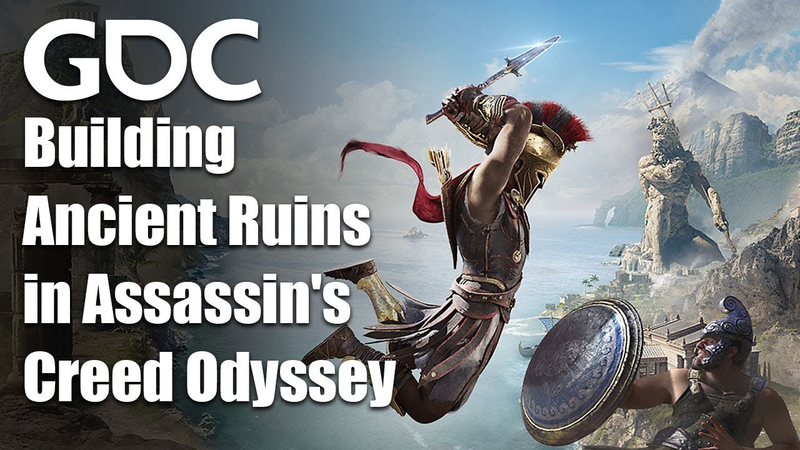
Building a Living World from Ancient Ruins in Assassin's Creed Odyssey
The creation of ancient Greece for Assassin’s Creed Odyssey centers on the synthesis of rigorous historical research and large-scale, modular production techniques.
- The development team managed the massive geographic scope of ancient Greece by coordinating nine global studios under a unified creative vision and a honeycomb design philosophy.
- Production efficiency was achieved through a robust pipeline featuring over 35 architecture kits and 4,000 unique props, supplemented by procedural tools for vegetation and cave systems.
- The project utilized agile two-week development sprints to maintain consistency and alignment across decentralized teams throughout the production cycle.

How to Randomly Generate Levels (and Islands)
Procedural level generation offers a scalable method for creating infinite game content, but successful implementation requires a structured, iterative approach.
- Prioritize handcrafted design during the prototyping phase to establish quality benchmarks and define core gameplay loops before automating content generation.
- Implement a hybrid generation approach by using predefined, handcrafted assets as building blocks rather than calculating individual geometric vertices.
- Utilize trial-and-error placement algorithms where objects are dropped into random positions and validated against specific constraints, discarding invalid placements until a suitable location is found.

It's Still Emulation: Saving Video Game History Before It's Too Late
The video game industry faces a critical juncture regarding the preservation of its cultural heritage, as the loss of source code, original assets, and technical documentation threatens to erase decades of creative history.
- The video game industry must shift from treating legacy software as protected trade secrets to viewing it as an essential educational resource to prevent the permanent loss of source code and original assets.
- Emulation is the most viable and cost-effective preservation tool, functioning as a digital equivalent to film codecs for maintaining access to historical software.
- Companies should move beyond low-effort re-releases by creating 'playable documentaries' that incorporate developer insights, historical context, and quality-of-life improvements.
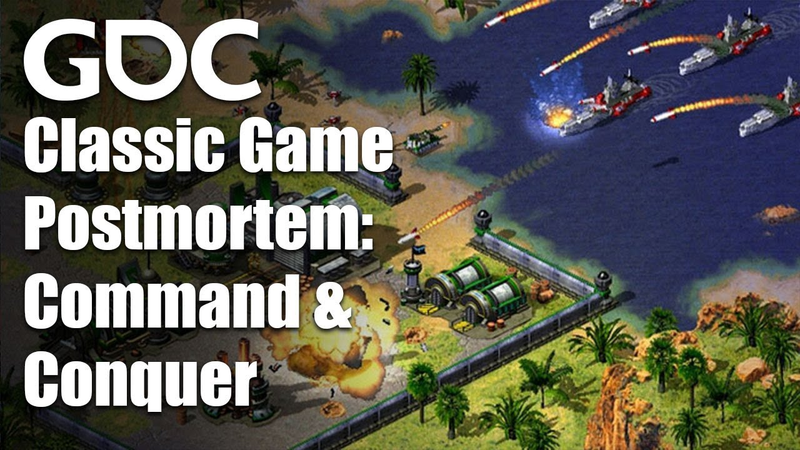
Classic Game Postmortem: Command & Conquer
The development of Command & Conquer at Westwood Studios during the mid-1990s represents a pivotal moment in the evolution of the real-time strategy genre.
- Command & Conquer was a pioneer in transitioning game audio from MIDI-based sound chip playback to streaming audio, allowing for the integration of synthesizers and live guitar.
- To overcome severe rendering bottlenecks for in-game cinematics, the team implemented a 'VQ slave mode' policy that utilized idle employee workstations overnight, effectively doubling their render farm capacity from 50 to 100 machines.
- The game's multiplayer functionality was designed to support local area networks via IPX, as well as modem and null-modem connections, though internet play was ultimately deferred to the sequel, Red Alert, due to technical constraints.
Writers
Games and companies
Games