Classic Game Postmortem: Paperboy
1 May 201961 min video
Transcript
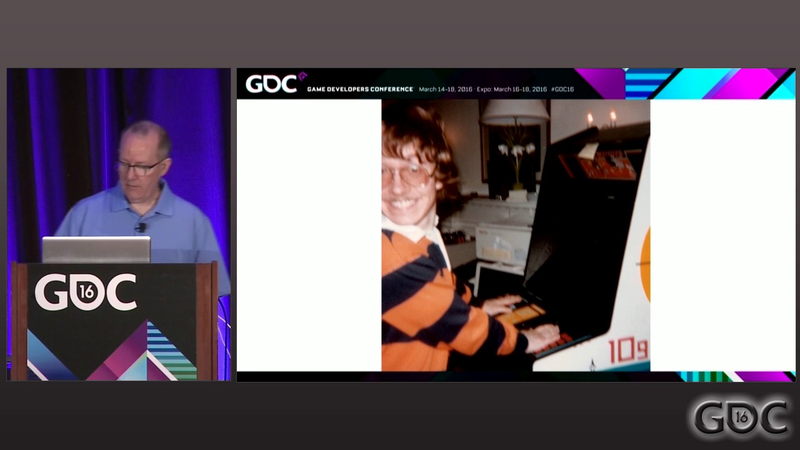
[Music] good afternoon and welcome to today's classic game post-mortem on paperboy my name is John Saul whatz I am a principal technical director at Electronic Arts but today you will not in fact be hearing anything about Paperboy frostbite or paperboy origin actually my credentials to do this presentation have very little to do with Electronic Arts I hope I am qualified to give this presentation because I was part of this really wonderful team the team that created the original arcade version of paperboy putting this presentation together I interviewed most of the members of the team and it is my goal today to share with you our our shared memories of making paperboy and just to be clear my talk today is mostly going
to be about the original version of paperboy the one hopefully you played somewhere in some dingy arcade somewhere one or two quarters at a time for the purposes of today I broke up my presentation into the seven parts of the seven days of the week each part representing a different phase of development of paperboy I I thought this was cute and somehow appropriate so without further ado the story of paperboy in seven days on Monday we go to ideation I started work at Atari games in October of 1981 as a microprocessor programmer I was actually rejected the Year previous by post card no less but I was a die-hard arcade game player and even more a die-hard Atari games player so I reapplied somehow got an interview and miraculously got through that interview
that was the start of my videogame career I ended up working at Atari for about ten years for my first assignment I was paired up with this guy a designer named Dave Ralston dave is actually a designer artist who started his life in the art in games as a pinball designer for Atari he started at Atari of almost exactly a year before I did turns out it was my great fortune and pleasure to work with Dave for the next 18 years it is rare indeed to find this kind of partnership I feel very blessed indeed Dave had been working on this new hybrid pinball video game called akka our akka are by the way took its name from rich Adam who is the engineer the the creator behind Gravatar rich had signed a creative document aka rich Adam akka our so we took the name a little time later Atari renamed the game Sentinel before
we took it on field test Dave and I worked on that game for around nine months really tried to get the pinball video thing working never really did so we went back to a conventional video game and awful to field tests we went the game did not last long the tests did not go well we were crushed by this other game perhaps you've heard of it Robotron thanks Eugene Jarvis this once again proved Toyo's law named after Dave toy he of Missile Command and Tempest Fame which states your first game will be a real dog and our shirley was shortly after the short-lived disaster of our field test I think we made around 70 bucks in a week or so I really felt my career was over and so we conducted a post-mortem which was typical at the time at Atari and so going into that
meeting I thought that was about it but Dan van ldren who was then vice president of engineering at Atari games and still instead told us amazingly great try for a bunch of rookies what are you going to do next this by the way is in my opinion is how you start to build a great game team I want to talk about it sorry coin off for just a second largely because as I interviewed the other people on our team a very common thing that they said that was working at it that was working at Atari was either the best job they ever had or one of the best jobs they ever had and so for me I'll tell you one of the real reasons it was for me we worked at one of the few centers of video game making on earth and the these games were all made within spitting distance of each other you could and would regularly walk out of your lab and
go into an adjacent lab and place somebody else's game and these were the games that were in development during paperboy this was an incredibly creative atmosphere and you could learn about what it would take for your game to be successful and frankly get a little intimidated in the process I loved it back to paperboy around the time of the Sun setting of a car they presented a few ideas at the Atari quad brainstorming this is February of 1983 the this brains particular brainstorming was at Pajaro dunes which is near Monterey California Dave showed us this idea for a kid riding down the street delivering papers on a single transparency for an overhead projector power point was years to come later and Oh at the end of his presentation he flipped the the transparency over and showed us what it would look like for paperboy to ride down the other side of the street ironically of course he never
did at the end of the presentation Dave was rewarded three Atta boys by Atari leadership and won the the the presentation of the the brainstorming I freely admit it took me a while to come around to a game about a paperboy a game about a kid delivering newspapers after all was into games like as asteroids battlezone Missile Command anything with a missile or maybe a football in it so the idea of working on a game about paper delivery was a little strange to me but Dave kept working on the idea and sooner or later I came around came to my senses and join the team at Atari to get a game started officially you had to survive what was known as an initiation meeting you would present a thin game description of the game you know in our case you know paperboy delivering newspapers avoiding characters a some idea of your hardware and maybe a schedule things like that because Dave had successfully won the
previous brainstorming us getting through the initiation meeting was that in fact pretty easy and so the day after we get through it we successfully got through our initiation meeting we began development so on Tuesday we go to pre-production let's talk about what the paperboy is made of first to do that I have to talk about the people that made the hardware for paperboy the first is Doug Snyder he was the hardware engineer on the paperboy hardware Doug was responsible for the design and the layout of the hardware that was to become paperboy it's interesting thing about working on new hardware's as a software engineer I am a programmer after all you never really know if the bug is hardware or software and I can remember many times trying to convince Doug Snyder to argue with Doug Snyder about that it was in the hardware let me just say I lost most of those arguments
dog ended up at designing most of the hardware that I would eventually use at Atari Linda Sigma vicked also joined our team at this time as our our technician Linda partnered with Doug to fabricate debug and improve the hardware throughout development basically to keep the hardware alive I take a technician back then was about as just as much of a part of your team as say a build engineer is now unfortunately and not to the credit of Atari Linda was laid off not once but twice during the development of paperboy she was however absolutely instrumental in the making of the game at the heart of the paperboys hardware leader renamed system 2 was the t11 or tiny 11 as this is a design focused presentation I will not gush on about how cool the peel the t11 was it was basically a
pdp-11 on the chip but I will say after working on a 6000 a 502 for a while this was awesome also for those who care the programming language in paperboy is bliss Nazi my guess is that I have personally written more hit games in bliss than anyone else on earth sadly that skill set is no longer in demand and frankly my knowledgeable is has long since gone Atari was moving away from vector based games when paperboy began so we went to a raster based game using a straight bitmap when to work for performance reasons so we went to a stamp based hardware the paperboy or system to Hardware is a very basic stamp based hardware on today's standards there is a scrolling play field and on top of that there are 32 what they used to call motion objects now people call column sprites and on top of that of course there was a to bet that alphanumeric
layer all an 8 by 8 pixels stamps so pretty conventional there but paperboy did have something new typical raster arcade games at that time were displayed in 320 by 240 pixel resolution what caught what was also known as standard resolution Doug Snyder our hardware engineer allowed one of the real big innovations of paperboy the use of medium resolution basically he increased the video circuit the speed of the video circuitry and in partnership with a company called Wells Gardner our monitor manufacturer created a new monitor that could display not 320 by 240 but instead 512 by 384 pixels I suppose compared to high-definition and certainly to 4k this is downright quaint but to us at the time it was awesome we knew pretty early on that we did not want to have a conventional controller Atari games actually want to
press the teams to do new and original controllers largely to differentiate differentiate the games in the arcades I mean after all what is the thing that you notice when you walk up to an arcade game cabinet you notice the controller in building our controller we had the very good luck and fortune to have a guy named Miller join the team as our mechanical engineer Milton Dave had previously worked together on pinball and so they knew each other Milt is a seriously creative designer engineer who was responsible for several of the Atari controllers although I think the joystick of the excuse me the handlebar controllers on Paperboy are his fine as finest work although of course he also invented the salad ball controller behind 7:20 and I think that's pretty cool too of course Atari had a rich history of controllers well before pay handle bar controllers on paperboy in fact the
paperboys controller has a rich ancestry it went kind of like this from battlezone in 1982 the Bradley trainer in also in 1980 the brand new Bradley trainer was a project that the atari games did with the do TI and so part of that was to take the battlezone controller and turn it into a more of a tank style controller that controller you can think of being as the stepdad of the Star Wars controller 1983 and the Star Wars controller think of the stepdad of being the paperboy controller 1985 in fact we used Milt used as a mock-up the Star Wars controller and on to that he bolted a set of red anodized bicycle handles that he handlebars that he got at a local bike shop probably a kid's bike shop but through this controller we were able to prove that you could in fact control the motion of a kid riding down the street so it
worked The Paperboy controller went through several iterations handlebars the biggest the biggest iteration was the ever shrinking width of the handlebars this was because you could apply an enormous amount of Torr on the handle on to the controller through those handlebars at Atari we had a thing called the Steuben test named after Dave Stuben who was the head of engineering at the time Dave is a big guy and if your controller could survive Dave you could manufacture it sadly several of the Paperboy prototype controllers died horrible deaths at the hands of Dave including one time where Dave actually removed the controller from the cabinet somehow Milt was able to through this process of destruction and reinforcement build a controller that could eventually survive and was manufactured the controller had one
other problem they it had a problem with buttons you can't see them if you were slightly shorter say the height of a kid so we would regularly have people coming up to our game and playing it without ever throwing newspapers this is kind of like temple run with bees and you get fired at the end this we finally fixed by putting the start buttons on the control on on the controller itself so that at least you had to find the button to start the game of course we needed to build a street Dave and I were both big fans of zaxxon which came out in 1982 zaxxon is an isometric game it's if you haven't seen it you basically fly a spaceship through essentially a maze it Scrolls from upper right of the screen to lower left in as I say an isometric perspective this was a very early
example maybe the early example of a scrolling isometric game but zaxxon presented us with a bit of a problem because it is in a sixty degree kind of natural isometric perspective 60 60 120 120 pretty standard drafting isometric perspective but this but this gave us a few problems first it made scrolling for us more complicated because we were scrolling at odd angle too the playfield hardware so that met just met drawing was a lot more complicated for us also it meant that we would be showing just about as much of the sides of the houses as we were going to be of the fronts of the houses and the sides of the houses are not playable surfaces so kind of a waste of a lot of real estate there finally the the big the other problem was that the handlebar controllers were going to be at a pretty strong odd angle to it the direction of motion of the kid so that meant if you push the handlebar controllers forward the kid was going at a 60 degree angle
to them which felt unnatural so this is what we did we crushed the x-axis and brought it down horizontal parallel to the bottom of the screen and also of course to the top of the screen this dis solved a few problems for us first the lots now were built parallel to the scrolling play field so we could draw we could draw this thing row by row secondly papers generally drew flew horizontally parallel with the bottom of the screen which meant aiming omitted aiming was a lot easier and at least now the controller itself was parallel to the Front's of the houses and and the kid was only 45 degrees off angle so that it felt a lot better it simplified some other systems too but those are the big reasons well the first things we did of course was to build a house actually the first house we built I think I saw for like three months mohassess dave was able to build houses extremely efficiently this is a a lower-cost house
here there are 73 total unique stamps in the base construction of that house houses range from around 70 to as expensive as about a hundred and thirty-five stamps of course windows doors shrubbery mailboxes signs trees lamps these were all areas that were placed on top of the base houses in the margin above the scrolling play field they of course were also reused through the neighborhood the grass itself was round up was randomized from around 8 stamps that meant that day was able to build houses in a about a 10 by 10 stamps eat of about 80 pixels to 80 pixels pretty efficient to our world we added characters we were also very lucky to have a phenomenal character artist animator join our team will noble was responsible for the development and creation of pretty much every character
in the game including the boy himself creating characters at that time out of motion objects was a painfully slow process you would go from concept sketch work to grid paper graph paper we color in pixels to will sitting over Dave's shoulder hand entering those pixels of those pixels pixel by pixel into a thing called the pixel processing system those would get transferred to our main VAX using a floppy disk well let's just say that for a wilt who have created the number of characters at the fidelity and richness that he did speaks to in that environment speaks to his his wonderful talent first thing that we'll focused on was of course the paperboy himself the paperboy was went through was not that it looked very much like this early in development he was iterated on a bunch of times to improve graphic fidelity add a bunch of
moves we did the did color cycling and the spokes but largely he looked that way it's a kid on a bike with a basket in front of him we saw the back of the paperboy for a very long time it was it was actually much later that we finally got to see his face and that was because we finally started doing things like title screens and side panel art for the game and so we always kind of wondered what he looked like in the end I'd like to think that the paperboy takes a bit of a likeness to Alberti Newman but that's just me our first set of characters in the game were well weird they remember that most games in those days were pretty damn abstract but our first vision was not conventional to say the least traffic in the streets included rolling pianos and boats we had ginormous snails in some of the driveways and in fact we also had ducks in business suits by the way if you want
proof of the kind of creative space the kind of creative license that leadership gave teams at Atari this is it so with a single street and a very weird set of characters and a very basic rule set we went to focus group it did not go well we had built a game that did not resonate with the players because the reality we created well was unreal we were of course mortified but then a couple very good things happen as two new people joined our team the first is a guy named Don trigger Don joined our team as our product marketing lead Don's first big task was on paper boy was in fact to run the aforementioned disastrous focus group and tell it instead of telling us how horribly we had done we all knew that because we had watched the whole damn thing from behind a one-way glass he told us about the
positive things that the players liked in the game they liked grading the bike down the street kind of and they really liked knocking that one lady that with the gut with a shopping cart over so those were good things he made us focus on the positive as a testament to how bad a focus group it was at the end of the focus group one of the focus group participants a kid walked up to Don and asked him where he might buy some acid I will talked about dawn a little bit more a little later second guy to join our team at that guy was brightened da Brighton had been the project leader on a few games up to that point he was the project lead and lead programmer and mine behind cloak and dagger Atari Management as you can imagine was not was having a hard time seeing the potential of our game including by the way the current project lead of the game
but Brighton liked our game and volunteered to take over as the lead of our project he was given that assignment and immediately injected positiveness organization brainstorming and just basically jolt of energy to our team that we very much needed Brighton stayed with our project for the rest of the development of paperboy and on Wednesday we go to pre-production we needed to rework our game we needed to rebuild the only Street that we had created but before we did that we had the characters had to change in response to the focus group we recast the game we did manage to keep a handful of characters death The Wolfman and the four mentioned lady with the basket they all stayed in the game but we caught all the other characters we knew that we did not want
to go with a purely conventional cast because after all the cabbage character you see in a neighborhood riding around is neither very exciting nor something that you probably want to throw a newspaper at but we did so we kept it a bit strange and in the end of development of paperboy we added about 18 more characters for a total of 21 characters in the game including the bees Dave was responsible in addition for to this to the creation and art of the six vehicles in the game their role of course is to keep you out of the streets and to run you over when you go there streets needed to be reworked our one Street needed to be worked as a response to this focus group up to this point we had built the street house buy a house but this was not going to scale we we needed a different solution Dave's answer to this was to construct
two five foot long foam core story boards and to transfer the line drawings of our inventory of houses at the time to that for those two foam core story boards he did it like kind of like this and then he put a plastic sheet on top of that so we could draw on them onto these two story boards we drew all the characters the obstacles the paper bundles the path of the objects 'as they wanted to moved in though into the world and triggers anything that you would interact with on that street and so it went from this to this and that that course became part of Easy Street we did this original layout on what on what would become Easy Street outside on a sunny Saturday in a marathon creative session in the atrium of the 1501 building 1501 McCarthy Boulevard Milpitas drinking beer this beer we came
from the previous night's beer bash at Atari both Dave and I remember this as being one of the great creative days of our careers in a sense the muse came to us with a keg this became our blueprint for construction for our first Street we did have a bit of a problem we wanted to take score away for the Platt from the player for breaking the windows F on his customers at the time you could not lose customers you can only tell you smash the windows but back then at the arcades and probably true now you just don't take score away from players so Lyle Raines who was the creative director of Atari who is one of the minds behind asteroids of course came up with the idea of separating out damage bonus breakage bonus from the core score so we could take score away from the player and get away with it I think so we'd with a newly cast first rode a
fully laid out first rode and a somewhat improved scoring system we went to our second focus group and it generally went well we got out of our focus group what we needed to get into production confidence that we were confident that we were building the right game and so on Thursday we go to production we went in production with key takeaways we needed more depth in our game we only had one road paper delivery needed to be a whole lot more interesting and more important and the sounds needed a lot of work so we use the same technical construction techniques we had on the first Street to build two streets but before that we gave our for a street it's named Easy Street it had been unnamed at this pub to that point and to that we added middle road and hard way but as with all games in those days we
had a problem roms were expensive and we were at running out of space I suppose that's true of games today - the good news is that paperboy is largely a patterned learning game so giving the players familiarity by seeing some of the same house designs in the game was really not a bad thing so we ended up leveraging our base house design significantly this house here which is of course the first house you see in the street of Easy Street is in the game six times this here house 116 Easy Street about halfway down the first block you see also about six times in fact in paperboy there are 60 total street addresses made of 11 base house designs and 9 cross streets made out of one base cross street so we were able to fit the thing in wrong a popular idea that the
focus groups was the idea of a training course now of course a the training course in paperboy is essentially a bonus round paperboy was not the game that invented bonus rounds but it was a break in the action for us and a way to bring in new game mechanics our first idea here by the way was to have a field covered in windows and mailboxes but we landed on a more pinball style theme with knockdown targets that sort of thing I don't think Dave was every heavy very very happy with the bonus round the training course he wanted much more dynamic elements moving targets that sort of thing and he wanted the the training course to progress day to day based on the actions of your previous actions from the previous day but I think it worked and I think and I think it changes the rhythm of the game and I think arriving at the end of the street to a grandstand gives a little bit of magical surprise paperboy is really of
course three games and run one the three streets are completely independent in fact we were even considering for a while a bit too late releasing paperboy and three independent episodes but because we released it all as a single game we needed to tie those three streets together and reward a high score for the player who did the best on the accumulated score of all three we call this our grand slam high score table the grand slam system and much more was written by a guy named Bob Flanagan Bob Flanagan was and is an outstanding game programmer Bob started at Atari on Paperboy but then is the only programmer to work on not only paperboy but Marble Madness gauntlet 1 and gauntlet 2 also I should say Bob and I are both employed currently employed at Electronic Arts and we count three more alumni of Atari
a tinea at EA for a total of five the map screen we needed to add because we had given the player at this time the ability to lose and then gain back customers I think the math scream has to be one of the earliest examples of a meta game certainly in in the the in the arcades you were on a very basic level managing an economy it gave you a bit of a break of inaction but here's what I really think real paper boys if you remember them would would start each day by getting a bundle of newspapers like you see in the game cutting them open and then rolling each newspaper newspaper by newspaper taking a rubber band putting it over those rolls and taking those papers and putting them in their bags as they go out on their day for me I think the map screen is a metaphor for this because it prepares you for your next day so it is our homage to real paper boys as a
byproduct of these game systems we gave the player a choice between good and well evil we didn't we never really did think of the boy as a hooligan but you did have a choice you could spend your game thrashing every house on the street and just save one or you could focus on being the best paper deliver or possible or but of course the get the best score you needed to do both but I think this player a choice this trade-off kind of works Junior my lovely younger boy I am so sorry to have to leave you but you must carry on my work boy you are
the paper boy you must have remembered to deliver only to customers not the non customers is there nothing your customers break at their window remember data comes on a deuced Thank You shadow cows pictures and freak films I have left for last of course the incredible soundtrack at paper boy after all didn't we always leave sounds to the end we had to keep people on audio both with the title sound designer on the left you will see a man named Hal cannon how can it was responsible for the excellent paper boy music the soundtrack the score how also composed the music for mobile madness gauntlet 720 and a bunch of other games at Atari Hal mysteriously left Atari somewhere in the
mid to late 80s and basically was never seen again he's the only person of the original team I did not interview for this presentation I hear rumors that he's in lake tahoe I just don't know roll Vickers joined our team as the lead sound designer and art and our main contact into the audio group he is responsible for the all the sounds and and the voice in the game he is not disappeared he is still active in the Atari community Earl Vickers was instrumental in the addition and usage of the Yamaha why AM 21:51 FM synthesis music chip wiki says it was the first Yamaha single chip FM they ever produced Earl just thought of it as freaking added to this was a very cool speech synthesiser from Texas Instruments speech was being added to pinball at the time so it was natural that it would come to video Earl Vickers can post most
of the lines of dialogue you hear in the game Earl also conducted the auditions within Atari for the voice talent we used for we of course not pay professional voice talent where the narrator he chose a fellow game programmer named Peter Thompson for the narrator we were thinking we wanted to cover the and dramatize the character over dramatize the character of the kid to give the the kid a gravitas not associated with paper delivery specialists to create a hero or perhaps an antihero the voice of the paperboy was done by none other than our our product marketing manager Don treeger by the way a bit later Don helped to start the whole Electronic Arts sports business among other things but I think him doing the voice of the paperboy was his finest finest work years later Don
was at a tradeshow working for Electronic Arts he walked up to him at undid a Bally Midway pyth and where they were demonstrating a sequel to paperboy the the booth guy straighting the game showed him the game and then at the end of the demonstration looked at Don and said sir are you familiar with paperboy 2 which Don said sir I am the paperboy and walked away the paperboys lines themselves are split into basically three categories the first of which was as a response to dying these were pretty much pretty easy hooks to put in because after all we knew and they were dying or get he was running into something you hear them clearly because that's a good moment of the game the second set of lines next category was as a reward for putting newspapers directly into a
mailbox again simple hooks for me to put in again a very nice moment in the game and easy and easy to recognize the third set of lines I think were well the most interesting they were basically the kids observations on the characters in the game these are this is basically a commentary as delivered from the paperboys perspective we were trying to anticipate what the player was thinking as they played the game and then give it a voice sadly mostly because these cues stepped on other audio and the complexity of just figuring out when a character was on the screen a lot of these cues never made it mostly because in the end we ran out of time not too surprisingly we crunched to get the boy ready for test I myself worked something like eight weeks of seven days a week in the lab I want to
take a moment now and pause and say and I'd like to thank my wife Donna for putting up with me during this time she was my girlfriend at the time I without her doing that I just would not have made it but in the end us putting this game together was a labor of love one thing happened as we got close to field-test people came into our lab lab and started playing our game at Atari you knew you had a good game when at lunch people would come in and play our game after all it was the only place that you could play this game in that lab and and so we spent the weeks and months getting ready for field test watching people play our game our game ourselves and iterating on it and in the end I think it prepared us pretty well for field tests and so on Friday we go to field test first field
test was conducted at Gulf land Sunnyvale Torre did a lot of this is on El Camino for those who you know it Atari did a lot of testing at field testing at Gulf land it was close to where we were it was a big arcade we knew our competition was there and frankly they knew we were there Linda's in Quebec our our technician was responsible for the care and feeding of our game of our game and the arcade so one of the core things she would do for example would be to change roms as we did eration x' she remembers quite fondly putting a bunch of credits in the game for the kids that were waiting in line behind her as she did that do the success of Marble Madness largely and of system 1 Atari rebranded the Paperboy hardware at this time to system to the lot of the change the biggest change to the hardware was the splitting off of a separate able ROM board which is you see right there it so you could do a Ron
change without changing the whole cabinet the other biggest change was taking our very cool three box cabinet and turning it into a more generic one box cabinet and removing our very cool side panel art oh well 720 accelerator APB super spread amongst among some of the games that got built on system 2 but I think largely they were all built as whole games and not as as Ron changes feel taste for the field test for paperboy lasted for about four months we spent that time watching people play and doing iterations we collected data gaming games even then recorded an aggregated player statistics and iterated we talked to players you could do that then as they played the game paperboy earned well and consistently didn't break any records but it held earnings over a four month period such that at the end of that period we were
able to convince or maybe the earnings were able to convince Atari leadership to build our game and then of course at that point it became Ataris game so on Saturday we go to manufacturing paperboy was first shown at the Museum machine operators Association show MOA in Chicago in the fall of 1984 he was shown alongside of Marble Madness but not sold then paper Marble Madness was paperboy was first sold at the amusement showcase International Show ASI show in the spring of 1985 and manufacturing would have begun right about then here are some pictures of paperboy on the manufacturing line in the upper left corner you will see Dave Ralston playing the game on the line in the lower right corner you will see a row of paper boys on the line I cannot tell you how
ridiculously wonderful and singular experience it is as a game maker to see your game on a manufacturing line in the upper right hand corner you will see a somewhat redacted picture of the paper boy launch party this was an all-day all-night affair Atari marketed the game as usual although there were a couple things that were a bit different they typically they would sell games through cell sheets and print ads and that was about the same but one thing that was different was that Dave and I were lucky enough to actually be featured in some of these print ads I'm not sure that Dave and I were the first featured in print ads but we were pretty early this you have to keep in mind that in a few years previous to this Atari did not even allow his credit screens in its games the games kind of made themselves so this was a pretty deal a big deal and and I think Dave and I enjoyed it thoroughly another thing was
that Atari the summer of 1985 conducted a world's greatest paperboy competition complete with a fake neighborhood summer 85 and in the end around 3000 units 3500 units were produced and sold for about 2,500 bucks each we were all hoping for maybe more than 5000 units but this was paperboy but the paperboy is expensive and well it was 1985 in the arcades and now about the Nintendo Entertainment System in every reasonable independent quantifiable measure the system - crushes the NES it has more bits it has more speed it has more pixels it has more RAM it has ROM hell we had a custom controller a beautiful medium resolution monitors speakers and everything every
single metric except one as I mentioned The Paperboy arcade sold about 3500 units in the spring of 1985 three years later in mindscape ported paperboy to the NES and to managed to sell oh well 2 million copies obviously we were all very glad of this we were very excited frankly it quite blown away it took me personally years and years though after this 2-foot to ever realize that the days of the arcades were numbered paperwork derivatives have been published on lots of platforms both as faithful ports and and true sequels but I think unless your game has been ported as an LCD video game you have not really made it
and so now we come to the true postmortem I'm not here to bury favourable a nice they say right so on Sunday the papers are heavier so in terms of a true post-mortem first we have to talk about what we wish we had had less of this was a less than wonderful day the day that we learned we were being sued I look at we learned this by the way first in the press I two kids claimed that they had sent to Atari the idea for paperboy now we knew that Dave had shown us the concept for paperboy well in advance of when they even claimed to have said it to us and and and and Atari was incredibly supportive in this but it's still hurt I myself learned about this waking up one morning and hearing a news anchor on my radio tell me about it this
was just kind of interesting in December of 1985 we were informed that folks at the CPSC were concerned that perhaps we are we teaching bad bicycle writing habits you know writing down the wrong side of the street into traffic actually if you're interested in this kind of thing almost exactly a year ago The Daily Show Trevor Noah did a thing about guns and games teaching guns and he actually used paper boy as a reference for how kids don't actually learn how to smash all the windows on the street through games so I recommend it if you're interested and in terms of what every programmer wants less of bugs so if you see the newspaper going behind the back of the paper boy you does not in fact a wraparound Steph Curry throw it is in fact an ordering problem between the papers and the paper boy similarly if you see the paper boy writing through solid objects this is in
fact a priority problem between the the paper boy and the planter that should be find him here's it this is a great bug I learned about this bug two weeks ago doing the present day for this presentation so you see on the screen two different houses with with this on the screen what's interesting about it is well they both have the same address the house on the left is properly numbered 111 Easy Street it is the last house on the first block of Easy Street that's on the right should be numbered 110 Easy Street it is the first house on the second block of Easy Street turns out if you get hit crossing the road between these two houses it screws up the addresses of every single house on the second block but days after manufacturing the day after manufacturing began and weeks and weeks
after the wrongs were burned we heard about this rather amazing bug for those of you who have not heard of this bug I will describe it to you at the end of each round of course there at the it right in front of Grand Slam grandstands there is a yellow line you ride your bike up to the line the game ends for that round but instead if you feel so inclined you may take a hard right turn at the end there and cut into that grass area it turns out if you do that well you ride forever and you get millions of points in this kind of surreal stamp play field as I mentioned I learned about this literally the day of manufacturing began I learned about this and those cabinets were on the manufacturing line I was of course somewhat panicked but it turns out this was a mode problem of course because you're skipping the trigger line that's under that line by doing that little cut and but what's really more interesting
and pretty pretty neat I think is that the fix to this bug was 2 bytes in fact it was really 4 bits this was an inmate this was basically changing a constant 77 to a 2 and a branch equal to a brand not equal that impacted one and only one wrong which saved my life in fact this was the only Ron change that Atari ever did for paperboy and and I think you can still see this bug if you'd like to in the arcades its I know it's it's available on YouTube and in terms of things that I I wish there were more of well first this David always wanted indirect shots he wanted the ability to kick things off of an obstacle and and brake a second when a story window in fact lots of the houses in our game had fully functional windows
that could have been broken if I could ever have gotten the newspaper there but unfortunately this really screwed up the collision system so we never really did it in fact lots of targets up there and never got reached this took this was this house was the poster child for that one we always wanted to knock over the the potted plant at the top of that house as you may have noticed in this presentation there are initials of several the team members hidden in the the the vehicles of the game Dave's initials are hidden in the construction sign in front of the dirt jump ring Dave may argue with me on this one but to me it is not a random fact that the hack color of player one is orange is orange and the second player is blue orange for player one blue for player two an Atari major-league
baseball was a really big thing I myself am a die-hard Giants fan Dave was a die-hard Dodger fan orange for player one blue for player two I'm just saying in terms of things that I really wish there was much more our team stayed together for a while Dave and I would not leave Atari for another six years and in that time we managed to build three other games in that but in terms of things that I wish they're much more the joy of writing paper a paperboy the incredible creative freedom and license that Atari games gave us in doing that the the the fact that I was the first person to ever see anything in paperboy I do remember that this was not my only time at the rodeo I I had launched unshipped plenty of a game since then but it was it was my
first over the years I've heard the stories of people who played paperboy I've heard people say hey I just played your game in the lab hey I played hey man this game is cool when will it come out hey I played paperboy in the bowling alley the other day I remember that I used to play paperboy as a kid my son and I play paperboy together he really likes it pretty cool really I hope you have had some joy in playing paperboy 2 and that's paperboy in seven days I hope I will be able to answer some questions in a second but I've wanted to leave you with this from random encounters I keep driving whoa-ho
it's a lovely Monday morning my ex is still asleep I'll take off all her tires and roll them down the street it sounds a bit intensive but I swear it's nothing new I've been doing it the weeks not rolling wheels is what I did hey mr. Johnson let's do it your girlfriend's wheels again you betcha we'll watch out she looks pretty mad I'm buzzed but junior like any other day babies rolled away last week too plus I'm just the babysitter losing children's what I do babies rolling down Easy Street all that baby get my pants on but they're freaking tight in the street I haven't got my [Music]
give me all your money and put it in this bag I need it for my wife cuz she's a Shopaholic AG hey come on make it snappy this ain't no deja vu I rock you will cause day me because robbers what I do I don't get all this fuss [Music] thank you [Music] [Applause] I think we have a few minutes for
questions if anybody's got any I have five minutes for questions if anybody's got any okay hello hi fantastic talk really loved your you know the whole process and hearing the story about it I was curious after the release of the original paper board did you have any like hand or worker influence on the derivatives or like paperboy two that came out leaders later not not Dave had some I had none Atari Atari you did not do sequels at all imagine a guy I work for Electronic Arts now so this is ed Atari they actually told you not I so Dave and I immediately started focusing on 7:20 and that became my life at that point and and then Atari added tengan to do that to do derivatives and at that point we got more involved but not not a
lot those games were really driven independently Thanks of course I just noticed when you were showing all the different vehicles with the associated people the one with the motorcycle the initials didn't seem to match so uh so that's Milt Loper that CR on there so I just talked to Milty about that for a while really trying to get it so he don't think I'm getting anyway so he he was pretty heavy-duty motorcycle gang kind of guy before he worked at Atari and the best he told me was C R stands for crazy rooster eye that's all I got thank you I don't think it stands for that by the way [Laughter] I was a paperboy when it came out and I
loved this game as a kid I could never get more than about halfway through though so my question is can you beat it can I beat the game I can get Fred these days hell no I look back then yeah I could get through most of the game hard way it's a little hard for me dave is awesome player yeah I've never been the greatest player on earth oh yeah oh good I did okay there's great videos of people who are really good at the game of course that's that's pretty pretty spectacular for me to watch alright so I'll throw two quick ones at you so I cracked me up with the comparison of hardware on the Nintendo but I'm probably in fact show hands who played the Nintendo version yeah that's probably most of us I never really played the arcade version my god alright so 50/50 hey that's pretty good but nevertheless did you guys have any hand in the Nintendo port at all did they at least consult you or anything or just kind of popped out to my recollection it
was magic in fact I look so the byline at Atari game so when I worked at was coin up the real Atari to say we were looking down on the home was that's an understatement so we were we were privileged kids working on these incredible hardware's so no I really didn't I I think I think they would be dishonest if I said I did no that's fine they did an incredible job on it yeah but honestly that's what I grew up liking and then the other one is literally on my Nintendo switch over there there's a game called the video kid are you familiar with this game not anybody in here familiar with the video kid so a couple people it's basically 80s nostalgia on paper boy okay so so the fact that you didn't even know it existed right so I'll to show to you things I got my switch but I mean how does that feel that you're still literally influencing games and styles and it's you know I'm sure there's mobile games and all these things yeah based on this design so is that story I told at the end and that very much is I don't I don't make it through you know I've been in the business a few years
now and I don't make it through year without walking at some meeting and some it's typically an executive who's been playing my game when they were a kid saying so let's yeah yes he's the technical director on this project but what he really did he worked on Paperboy Atari have any guidelines as far as like average gameplay per quarter yeah yeah you were trying so everything was about yeah you wanted about 30 to 90 seconds for for credit paper we actually came out at 50 cents a play somewhere in there and they were and was really interesting as some of the stuff that I actually cut from the presentation was one of the things was that you knew you had to hook the player in 30 seconds and the positive thing that that did for the team it focused the whole team on core gameplay I'm sure a lot of us have been on game teams where they don't focus on gameplay they focus on everything around gameplay but if you got to grab somebody
in 30 seconds it made it focused you and so the guiding light the idea was that if you didn't get the player within 30 seconds they'd walk away so in terms of earnings somewhere as I recall a couple other people probably friends know better so 30 to 90 seconds somewhere in there is what you kind of want to turnover rate oh god and franz von singer hello thank you so much for this trip down memory lane for me that was quite an experience i had the privilege of working with john at Atari for a couple years when you mentioned bliss I thought oh my god I totally forgotten about this so I used 6502 on Crystal Castles but then I worked on gremlins which never made it out the door in bliss so I call it from I think by successfully shipping I just wanted yeah so I do have a question but what other projects did you use bliss on 720 720 and then you moved on to see
probably or see yeah it's a bliss for those of you know I bet nobody knows what bliss is it was a high-level language sort of like see sort of looked like see you could actually do if-then-else is and loops and the processor underneath was something entirely new was 6:16 you know sixteen bits are not eight bits so that's right they're very exciting yes anyway thank you so much you
Key insights
6 takeaways · ~2 min read- 01The NES home console port of Paperboy achieved significant commercial success with 2 million copies sold, far outpacing the 3,500 units sold for the original 1985 arcade version.
- 02Development of the arcade title utilized Atari’s System 2 hardware, featuring a 16-bit processor programmed in BLISS and a custom medium-resolution monitor to surpass the fidelity of 8-bit competitors.
- 03Gameplay was engineered around tight 30-to-90-second loops to maximize arcade player turnover, a strategy refined after initial focus group failures led to a shift toward a parallel horizontal layout.
- 04The arcade experience featured a custom-engineered handlebar controller, which required rigorous stress testing to withstand the physical demands of high-traffic arcade environments.
- 05Engineers managed strict ROM constraints through modular asset design, allowing for the creation of three distinct, rhythm-based streets that balanced accessibility with challenge.
- 06The game’s distinct audio identity was achieved through the integration of advanced hardware components, specifically Yamaha FM synthesis and Texas Instruments speech chips.
Ask AI about this video
Summary
The development of the 1985 arcade title Paperboy represents a pivotal shift in Atari’s design philosophy, moving away from traditional vector-based graphics toward a sophisticated, isometric raster-based experience. Originally conceived as a failed pinball-video hybrid, the project evolved into a highly collaborative effort that leveraged Atari’s advanced System 2 hardware. By utilizing a custom medium-resolution monitor and a 16-bit processor architecture programmed in the high-level language BLISS, the team achieved a level of technical fidelity that distinguished the game from its 8-bit contemporaries. A defining feature of the arcade experience was the custom-engineered handlebar controller, which underwent rigorous stress testing to ensure durability under the intense physical demands of arcade play.
Gameplay design focused on creating tight, 30-to-90-second loops to maximize player turnover and engagement. After an initial focus group failure, the team refined the experience by shifting to a parallel horizontal layout, implementing a structured scoring system, and utilizing modular asset design to navigate strict ROM constraints. This approach allowed for the creation of three distinct, rhythm-based streets that balanced challenge with accessibility. The integration of early meta-game elements, such as the map screen, and a unique audio identity powered by Yamaha FM synthesis and Texas Instruments speech chips, further cemented the game’s distinct personality.
While the arcade version achieved a respectable commercial footprint with 3,500 units sold following a successful field test, the title’s broader legacy was solidified by its transition to home consoles. The NES port reached a significantly wider audience, selling 2 million copies and establishing the game as a lasting industry touchstone. Despite the developers having limited involvement in subsequent sequels and ports, the project’s emphasis on iterative mechanical design, efficient asset management, and high-engagement gameplay loops continues to influence modern game development practices.
Cite this video
Citation
Generating citation…




















Comments