Game Development reports and market data
Documents
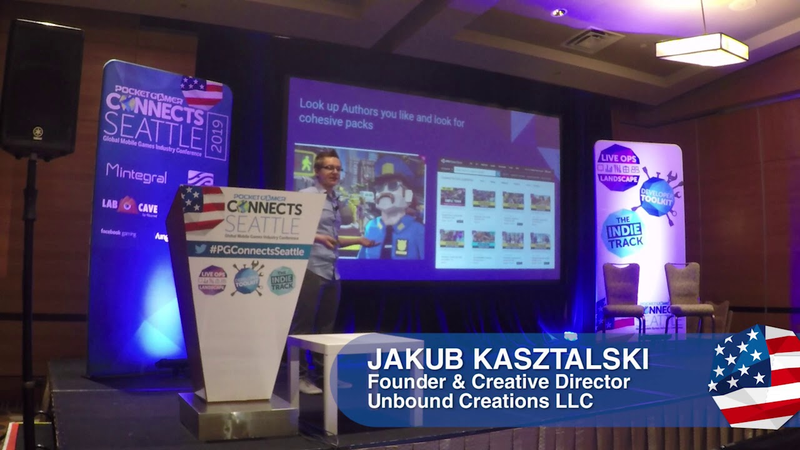
How to mix third-party assets without your game looking cheap
Jakub Kasztalski, founder of Unbound Creations, provides a strategic framework for independent developers to utilize third-party assets without compromising visual cohesion or quality.
- The perception of 'cheap' third-party assets is primarily caused by a lack of artistic direction and visual inconsistency rather than the quality of the assets themselves.
- Developers should establish a clear visual vision during pre-production by creating mood boards, conducting competitor research, and developing a style guide to filter asset selection.
- Disparate assets can be harmonized using post-processing techniques such as adjusting hue, saturation, lighting, and shaders to ensure they align with the game's unified aesthetic.
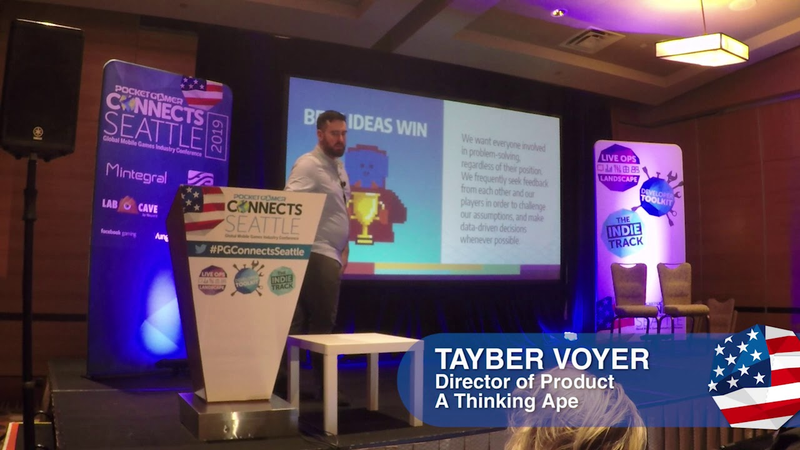
Using core values as the operating system for company culture
The primary thesis of this presentation is that a company’s core values should function as an operating system for its culture, providing employees with the necessary guidelines to make autonomous, high-quality decisions.
- Core values should function as an operational framework that empowers employees to make autonomous, high-quality decisions without relying on top-down management.
- The studio’s culture is built on four pillars: individual ownership of the end product, the principle that the best ideas win regardless of hierarchy, a commitment to continuous growth, and the practice of having 'wonderful arguments.'
- The 'radical candor' method is used to facilitate honest debate by balancing personal care with direct feedback, specifically avoiding the pitfalls of 'ruinous empathy' and 'obnoxious aggression.'

Watch This Before You Make Your First Game!
The primary purpose of this analysis is to outline the psychological and professional challenges inherent in developing a first video game.
- Completing a project is essential for building professional and mental resilience, regardless of the final commercial success of the game.
- Game development is a long-term exercise in endurance where initial project infatuation inevitably gives way to extended periods of monotony and doubt.
- Developers should anticipate five common psychological hurdles: imposter syndrome, loss of passion, the urge to quit, anxiety, and the social difficulty of explaining the development process to non-industry peers.
9 Takeaways from Duelyst: From Tabletop to Digital Game
The development of Duelyst demonstrates a strategic transition from physical tabletop prototyping to a refined digital tactical experience.
- To ensure high-frequency engagement, prioritize matchmaking quality by using real-time monitoring tools to track performance metrics, aiming for a quality score above 0.5 to identify and resolve balance or algorithm issues early.
- Design for short, high-intensity sessions by setting strict constraints on match duration; the Duelyst team successfully reduced average match times from 15 minutes to under 10 minutes through iterative card tuning.
- Launch digital games on web-based platforms initially to enable rapid deployment of balance updates and patches, which allows for faster iteration cycles without requiring players to download frequent client updates.
I PLAYED YOUR GAMES! | Let's Talk Game Design.
This analysis examines a series of design critiques provided for various indie game projects submitted by a community of developers.
- Prioritize gameplay-critical visual elements over decorative particles in top-down shooters to minimize visual clutter and improve player clarity.
- Design puzzle game levels with compact playing fields to ensure players can immediately grasp the full scope of a challenge.
- Combat mechanics in action titles should incorporate environmental hazards and varied enemy behaviors to prevent repetitive, close-range spamming and encourage strategic depth.
Prototyping Your Game With A Gamepad (Adobe XD Tutorial)!
Effective game development requires seamless collaboration between technical developers and creative designers to prevent miscommunication and wasted production time.
- Adobe XD allows developers to map physical controller inputs, such as D-pad directions and action buttons, directly to menu navigation triggers for real-world UX testing.
- Using 1920x1080 artboards in Adobe XD ensures prototypes align with the standard display resolutions of major gaming platforms, including Steam, Nintendo Switch, PlayStation, and Xbox.
- The software’s auto-animation feature creates fluid transitions by automatically interpolating changes in scaling, opacity, and position between identical object groups on different artboards.
Rules of the Game: Five Further Techniques from Rather Clever Designers
Successful game design relies on shifting away from rigid constraints toward flexible frameworks that prioritize systemic, goal-agnostic simulations.
- Prioritize systemic, goal-agnostic simulations over rigid constraints to foster emergent gameplay and long-term player engagement.
- Replace subjective metrics like 'fun' with precise, outcome-oriented objectives that measure specific emotional transformations or learning goals.
- Eliminate 'accidental design' by identifying and removing legacy mechanics that no longer serve the core vision, preventing the accumulation of unintuitive workarounds.

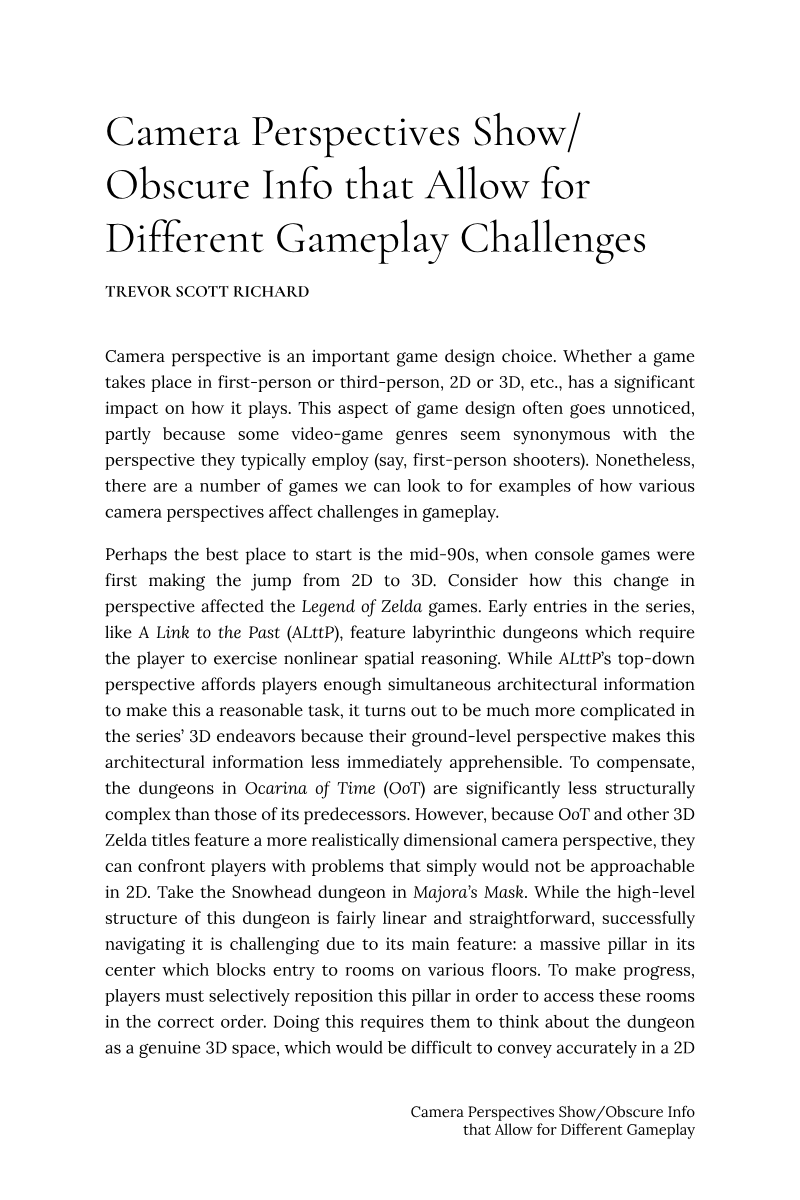
Game Design Snacks: Easily Digestible Game Design Wisdom
"Game Design Snacks" offers a comprehensive collection of concise insights into effective video game design principles, drawing inspiration from established industry commentary.
- Good game design shapes player understanding, engagement, and learning through deliberate design choices rather than explicit instruction or sheer content volume.
- Enemy intent should be visibly telegraphed through animation, and failure states should be fair and purposeful so players can learn from them.
- Shortcuts can double as checkpoints, and indirect navigation cues such as 'weenies' can guide players without explicit instruction.


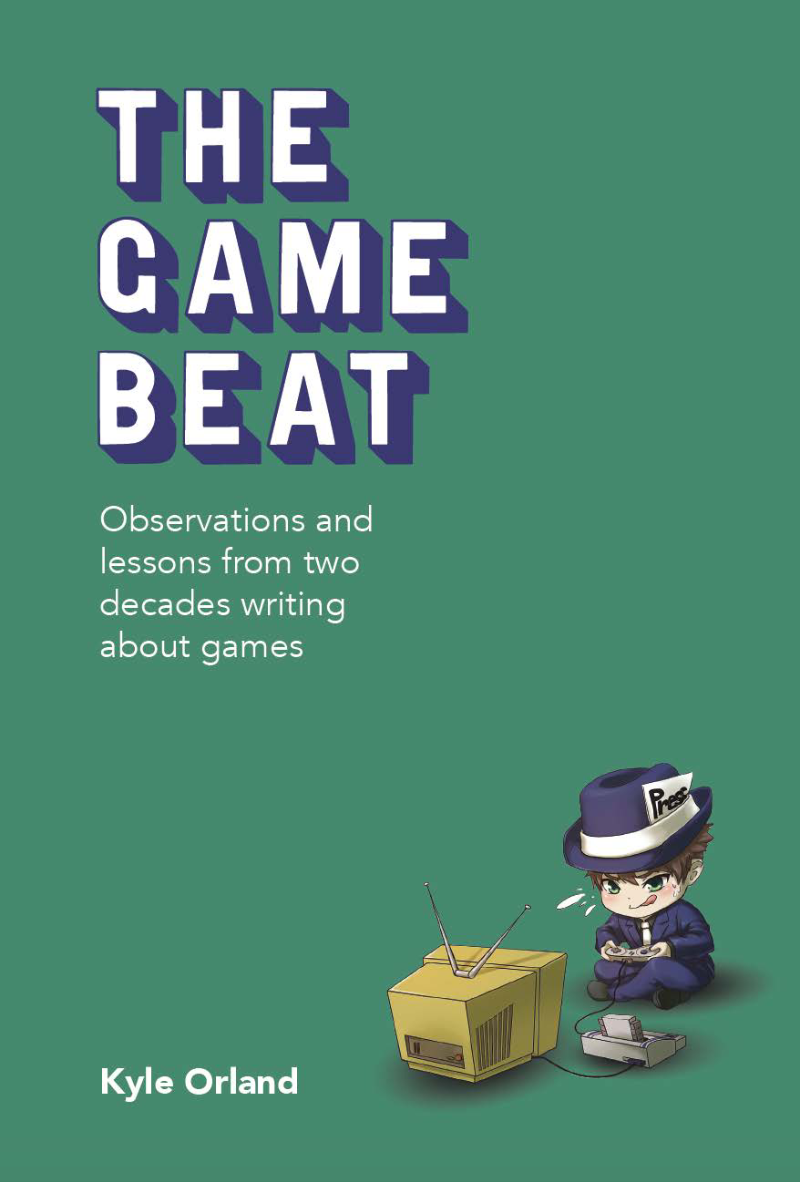
The Game Beat: Observations and Lessons from Two Decades Writing About Games
"The Game Beat: Observations and Lessons from Two Decades Writing About Games" offers a comprehensive analysis of game journalism's evolution, ethics, and practices over the past two decades.
- The 2003 EGM "Quartermann" rumor column averaged a truth rating of 3.03 on a five-point scale across 88 rumors, meaning its predictions were roughly as likely to be false as true.
- The book's central argument is that games journalists are disadvantaged by publisher control over access and marketing, which makes skepticism toward publisher access and hype essential.
- A 2007 analysis of "most anticipated" lists found sequels and licensed titles made up 64 percent of picks, and 31 percent of those picks were still unreleased by early 2008.
The History of Roguelike Deckbuilders - From Playing Cards to CCGs and Beyond - Extra Credits
The evolution of card-based gaming traces a path from traditional playing cards to the modern roguelike deckbuilder genre.
- Slay the Spire served as the critical inflection point for the roguelike deckbuilder genre, refining procedural dungeon exploration and strategic card progression into a commercially successful and highly accessible format.
- The 2014 title Dream Quest was the first to successfully integrate roguelike procedural generation with deck-building mechanics.
- The 2008 release of Dominion revolutionized card gaming by shifting deck-building from a pre-game meta activity into a core, real-time gameplay loop.
Dead Cells: What the F*n!?
Dead Cells functions as a definitive case study in the successful synthesis of roguelike permadeath and Metroidvania exploration, a hybrid genre the developers term rogue-vania.
- To mitigate the frustration of permadeath, Dead Cells implements a 'cells' currency system where players lose resources upon death but retain permanent progress toward weapon and skill unlocks.
- The game minimizes downtime by keeping the post-death loop to approximately 10 seconds, removing unnecessary stat screens and forcing an immediate return to action.
- To ensure combat and movement feel fair rather than punishing, the developers implemented 'coyote time' mechanics, such as auto-teleporting players to platforms if they are within a few pixels of success.
Theme Oriented Design: The Case of Phantom Doctrine
Structural integrity in system-heavy game development relies on modular design, where a clearly defined minimum viable product serves as the foundation for all subsequent features.
- Design systems and balance for the world map and tactical missions independently, as coupling them creates rigid dependencies that make it impossible to adjust one without breaking the other.
- Prioritize gameplay mechanics over thematic wrapping, as it is easy to convince a team to accept a poor mechanic simply because it is disguised by a compelling theme.
- To prevent content fatigue, define the exact number of times a feature should ideally appear in a game and plan the precise amount of content and player actions required to support that specific frequency.
Writers
Games and companies
Games