1 free read left. Create a free account for unlimited reading + AI research.
Create free account
Using core values as the operating system for company culture
Key insights
6 takeaways- 01The 'radical candor' method is used to facilitate honest debate by balancing personal care with direct feedback, specifically avoiding the pitfalls of 'ruinous empathy' and 'obnoxious aggression.'
- 02Hiring processes should prioritize the elimination of 'false positives' over speed, utilizing standardized, cross-disciplinary culture interviews to ensure alignment.
- 03The studio’s culture is built on four pillars: individual ownership of the end product, the principle that the best ideas win regardless of hierarchy, a commitment to continuous growth, and the practice of having 'wonderful arguments.'
- 04Organizations should define their unique values through interdisciplinary workshops that include staff from various levels of seniority.
- 05Core values should function as an operational framework that empowers employees to make autonomous, high-quality decisions without relying on top-down management.
- 06Company values must be treated as a transparent, public, and evolving framework that is subject to iteration as the organization scales.
Ask AI about this video
Transcript
overview of my presentation I'm going to talk introduce myself talk a little bit about and what we do I'm gonna go over some of our core values at our studio as well as how we use them and what we've learned some so far and why you should care and what you can do so this is the first time I've ever done a presentation about culture I usually do presentations about LiveOps that are you know very practical and hands-on so I'm gonna try to you know do as much of that as possible and bring some lessons to the presentation so about me I'm a director of product of the thinking ape and I've been making games on Facebook and mobile for about nine years and I've been through hit launches long grinds lots and lots of LiveOps epic failures I've kind of seen it all and I now AM responsible for all of the product at thinking ape and so
I'm also the lead designer on one of our new games that's currently in alpha our company is launched out of Y Combinator and in 2008 and we started as a chat company and rapidly moved into games and we've been making games for a very long time on mobile so we actually one of the first game companies to do in app purchases on the on the platform kaanchi era sake is our CEO and we're located in Vancouver and you can see we have a really high Glassdoor rating and we're hiring one of the oh wow that didn't export well one of the things that we've been really focused on is our company culture and as a result we've actually been able to win a bunch of company culture awards and so it's been really great for us over the last couple of years as we try to get our name out there a little bit to be recognized for some of the things that what we're doing around culture um our mission is that we build communities and what I mean by that is we build games that allow people to have an effect on the the world that
they're they're existing in was in our games and so all of our games have a highly social mechanics as well as chat and we group people up into social units where they can affect the world around them and build communities and we've had people you know getting married in our games for example we have two moderators from one of our games that got married in Las Vegas last year which was really really cool and so we've had marriages and we've had divorces and you know people have gone of our games we actually had one guy that named his daughter after one of the characters from kingdoms at war but he made us promise not to tell his wife that's where he came up with the name and so that's kind of our focus as we tried in everything that we do we try to build community so what our core values core values are the foundational beliefs of an organization which guide its members and how they should act internally and often how they act externally and our philosophy to thinking ape is that we believe our core values are the foundation of a well-functioning team so we hire smart people and get out of the way but that
actually only works if you give them some guidelines and guidelines on how they should operate so you kind of hear this thing this sort of saying touted a round of higher smart people and get out of the way but it's actually not enough you also have to give them this sort of operating system by which they can you know test their their decisions against so for for this talk I'm gonna frame it in the context of the score takes care of itself and this is a book that I first did not want to read because it is written by football coach and I do not watch football and I don't really watch a lot of sports so at first I kind of rejected the idea that I would read it but after I read it I found it to be one of the best leadership books that I've ever read and it's for a really simple reason the concept of the book is that this idea of being a coach is you know really difficult and the thing that a coach can't do is a coach can't can actually get on the field and throw the throw the ball for the player they can't actually you know you know kick the ball
for a player everything that a coach does for the team are things that they've done before the game actually starts and so as a good leader the things that you need to do are to give people the tools and the support and the resources and the ideas of how they should actually act in the things that they're doing and if you can do that then the score will essentially take care of itself so if you can build up people around you and you can give them a good idea of how they should act then they'll actually do a much better job than if you try to tell them exactly what to do in the moment that you know never works so core values really tell your team how to operate and they shouldn't shrine the foundational beliefs on what you think makes a successful team at thinking ape our core values are ownership so we take complete ownership of our work and act in the best interest of the company we're the type of people who care a lot it's never not my job and this manifests a lot of different ways and one of the ways that I think it is really interesting is that we don't have
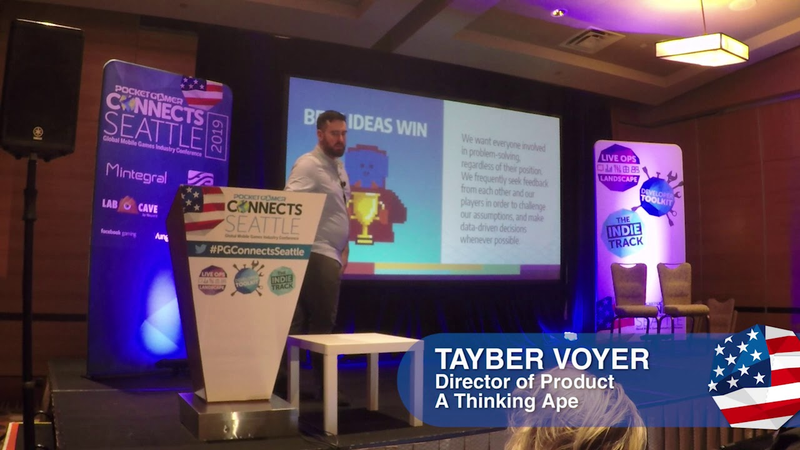
a QA department at our company and that's really challenging for people when they first joined because a lot of developers and designers are used to having a QA to check their work but what we believe is that everybody should be responsible for the end product and so engineers are responsible for their code they're responsible for getting sign-off from the designers and the designers are responsible for all the balance and the artists are responsible for making sure that the art looks good it means that sometimes we're a little bit slower to release but we've built into our roadmap and into our scope that we're going to test things a lot internally and what it ends up what ends up happening is that when after something launches everybody on the team is actively involved in making sure that there's as successful as possible so you know it's just one example of how ownership works that are at our studio but I think it's a really powerful one that ownership is kind of the the core value that everybody puts on their wall but it doesn't isn't something that actually always manifests into the culture that's the next one is best ideas win so we want everyone
involved in problem solving regardless of their position so we frequently seek feedback from each other and our players in order to challenge our assumptions and make data-driven decisions where possible and this is one of the core values that I think is really easy to talk about but not actually implement and so we do this in a lot of ways our structure is quite flat and meaning and that means that designers engineers and even artists have access to all data and they're you know challenge to try to come to the table with really good ideas that are supported with facts and it's something that you know I think we've all worked at Studios where maybe you have like the the hippo problem where the highest person highest person's paid opinion is the one that that people go with but we actually try to do the opposite where we foster a lot of good conversations and try to find the best ideas from from everybody keep growing so we're always building and improving our skills and process we understand that when we
learn we see exponential improvement in ourselves our products our company and we're never finished learning this one is really important it builds into our everything from you know how we approach making new games and even into the things like our our compensation and our career tracks and so everything in our studio is designed around this idea that you're going to keep keep growing even our bonus structures are actually based on your career track and how well that you're doing within the specific job function that you have and finally the most important one I think is have wonderful arguments and this one is super powerful and it's the one that people tend to be the most interested in so we're comfortable thinking deeply about important issues and care enough to respectfully challenge decisions when we disagree mutual respect and checked egos allow for productive debate and better outcomes than we would have achieved individually and for us this is an ongoing process and you know one great way that I see it manifest is that sometimes we are having you know
conversation and it gets you know a little bit more heated because of this core value because it's on the wall and everybody's internalized that I've actually witnessed people say like wait let's hold on a second this is not a wonderful argument let's talk about how we got here and why it's not wonderful and then we can go back to focusing on you know solving this problem but so just the fact of having this on the wall and even having everybody from the CEO you know to the customer support believing it it means that people have sort of the ability to you know stop a conversation say like hold on a second let's like figure out what we're actually talking about it also requires that you care a lot about the people around you and so in order to make this core value work we use a method called the radical candor method if you haven't seen the TED talk or read the book about radical candor highly highly recommend it the basic concept is that you need to care about somebody personally and
challenge them directly in order to have wonderful arguments in order to have good debate if you don't challenged people directly but you care about them personally you end up in this sort of ruinous empathy quadrant and we've all had that experience maybe where you're talking to somebody the the example I like to use is maybe of a friend that's dating somebody and you don't like that person but you don't say anything because you're trying to be nice and then after they break up the call I got I really hated that person why didn't anybody tell me why didn't you say I didn't want to hurt your feelings but it's like much worse outcome for them and many applet of insincerity is when you don't care about people you're not willing to challenge directly it's kind of we're passes behavior lives like I don't care sure do whatever you want and then obnoxious aggression is just basically jerks and those are people that will challenge you directly about everything but they don't actually care about you personally and so a lot of people think the obnoxious jerk is the worst person but actually the ruin is amputated empathy is the worst person is the worst type of behavior because you actually care a lot about people and it's not that difficult
to challenge people directly if you have the psychological safety to do so and so wherever possible we like to encourage people to have radical candor and it's something that is really easy for people to say and then not do the care personally part and so that's something that takes practice so you know we've had examples we've had leads in the team you know give somebody some feedback in a way that wasn't appropriate and we have to take it kind of take them aside and be like well you know you didn't demonstrate to that person that you actually care personally about them in the way that you deliver that feedback so you need to now go and fix that by having a conversation with them about you know what your outcome was from the feedback so it's really really important that you actually care personally and I think most people in most studios care about the people around them and then the next piece is being able to challenge directly and so any way that you can encourage that within your studio I think is going to be highly beneficial because you'd only get to the best ideas if actually people are willing to put them out there and people are willing to like have deep conversations if you're able to check
out the presentation earlier today that a couple of our content producers did it was about inclusive content and that's kind of the thing that they highlighted is if you're gonna do something that's challenging you have to be able to have conversations about things that are challenging and you can only do that if you're willing to you know have wonderful arguments so another you know tactical piece of advice that I can give you about culture and about creating that culture within your organization is that you have to start with the interview every candidate should get a culture interview and there's a couple things that you can do to make sure that that it works the most important thing that we've done is that we're willing to have false negatives in order to eliminate false positives so you know what that means is if we don't really if everybody can't agree on a candidate we'd rather miss out on a good candidate than hire somebody who isn't gonna be a fit and that means that hiring can be a little bit slower for us as well but we're really protective of our culture and we want to make sure that we know we're hiring the right people we're gonna fit in and in order to make that
more efficient you should make sure that all your interviews if possible are standardized across individuals and teams as well as there should be two interviewers for calibration and so we actually sometimes like to mix the technical with a culture so that you have somebody seen both sides and so we have two interviews there's a technical culture interview and then a second technical culture interview scoring can really help with consistency and so for culture if you can come up with a set of questions that you - that test for your core values you can then score them and that actually allows people to get rid of their biases a little bit more because you can't have people who say like yeah I don't think he's a really good culture fit and you'd be like but you scored him 20 out of 20 for the interview they kind of have to confront their own biases in that scenario so scoring can really help with consistency clear guidelines on how to probe in questions and follow up that's kind of a training thing if you've ever done an interview and you get a candidate that's really struggling to like answer a question it's kind of an art form to be able to like pull out of them the answers that you're looking for but it's something that you can train and you can
actually set out guidelines for each of your questions to make sure that that happens effectively everybody should be trained that's a really really important thing and trained in a standardized way and preferably it is cross discipline so you know you should have people who are not engineers doing culture interviews for your engineers you should have non designers doing culture interviews for your designers it really really helps to kind of make sure that you're hiring a diverse group of people and that you're not just hiring people that kind of are the same as the interviewers how do we come up with our core values the process that we used was a day-long workshop and from that workshop we came up with the first draft it was interdisciplinary there was also multiple levels of seniority we encourage debate throughout the entire process and it was really exhausting it was something where people were heavily emotionally invested into the entire process the things that I would really encourage you if you're going to embark on some kind of visioning process for your core values really make sure that it is intuitive
interdisciplinary and that you have multiple levels of seniority that's really really key to kind of capture what's going on within your organization if you are like a young company you're just starting out it's easy enough to sort of set what you think those core values are but once you start growing past like the 1520 person mark that's when you actually have to start you know asking people what they think the culture is and getting a lot of different opinions again we've won a bunch of culture Awards built around a lot of this stuff and I think that's a really a good way to look for companies that you want to admire if you want to like model off of is you can look at other companies that have one culture Awards and that's a great way to find people to talk to more you can and you can also like send me a LinkedIn message if you want some more information so what can you do don't use our core values you should think deeply about what matters to your own culture make it public and transparent within your organization and talk about it and don't be afraid to iterate that's something that I've seen some studios fail at is
that they have their core values and that's their core values and they're never changing but as your company grows you need to be proactive and making sure that you talk to a lot of different people on the team to make sure that they actually reflect what it is what it's like to work there use your values to try to guide all your decisions it can really help people to try to understand how they act within the organization so it's a it's a useful tool for people if you do the right work and making sure that everybody is bought in and then the final thing is like be authentic to what you actually think a good team should do and spend the time to really organize your thoughts and write it down and test your knowledge against other people so remember the score takes care of itself if you do all of these things really really well if you are interesting and getting in touch with me please reach out you there on Twitter at TV Tabor or LinkedIn you can find me a slash TV Taylor and once again we are hiring and for all roles so save some time for questions so yeah thank you very much
thank you very much I actually have a bit cheeky because they're running a bit behind so yeah we're gonna skip on the questions this time but I presume you're gonna be around for people until I will be around out there and you can come and grab me and that's great you have some questions well thank you very much [Applause]
Summary
The primary thesis of this presentation is that a company’s core values should function as an operating system for its culture, providing employees with the necessary guidelines to make autonomous, high-quality decisions. Rather than relying on top-down management, leaders should focus on establishing foundational beliefs that empower teams to perform effectively. By fostering an environment where individuals are aligned on how to operate, the overall success of the organization—the score—will naturally follow.
The core values identified for the studio include ownership, where every team member is responsible for the end product; the belief that the best ideas win, regardless of hierarchy; a commitment to continuous growth; and the practice of having wonderful arguments. To facilitate these debates, the organization utilizes the radical candor method, which requires balancing personal care with direct, honest feedback. This approach prevents both "ruinous empathy," where feedback is withheld to avoid discomfort, and "obnoxious aggression," where criticism is delivered without genuine concern for the individual.
The methodology for maintaining this culture begins with the hiring process. The studio employs standardized, cross-disciplinary culture interviews, prioritizing the elimination of "false positives" over rapid hiring. To ensure these values remain relevant, the organization recommends that companies conduct interdisciplinary workshops involving various levels of seniority to define their unique values. These values should be transparent, public, and subject to iteration as the company scales. By treating culture as a deliberate, evolving framework rather than a static set of rules, organizations can build resilient, high-performing teams capable of navigating complex challenges in the game industry.