1 free read left. Create a free account for unlimited reading + AI research.
Create free account
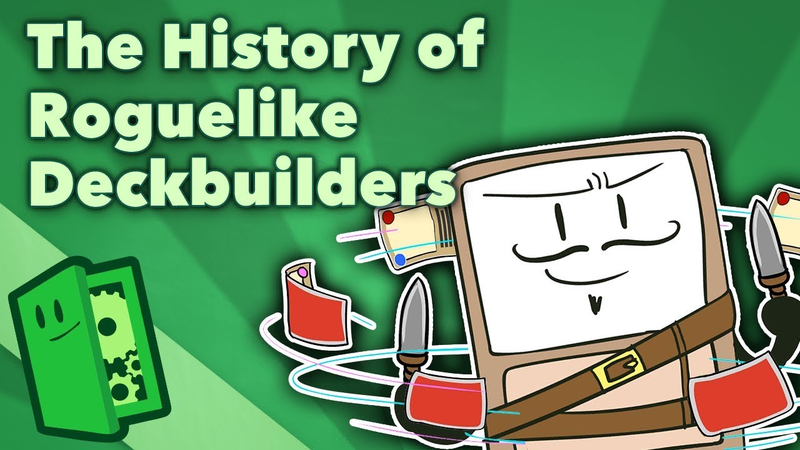
The History of Roguelike Deckbuilders - From Playing Cards to CCGs and Beyond - Extra Credits
Key insights
6 takeaways- 01The 1990s introduction of Magic: The Gathering established the collectible card game (CCG) as a dominant industry force by merging collectible scarcity with strategic gameplay.
- 02The 2008 release of Dominion revolutionized card gaming by shifting deck-building from a pre-game meta activity into a core, real-time gameplay loop.
- 03The evolution of the genre was enabled by the transition to digital platforms, which allowed developers to move beyond the physical constraints of traditional playing cards and early collectible card games.
- 04The 2014 title Dream Quest was the first to successfully integrate roguelike procedural generation with deck-building mechanics.
- 05Slay the Spire served as the critical inflection point for the roguelike deckbuilder genre, refining procedural dungeon exploration and strategic card progression into a commercially successful and highly accessible format.
- 06Modern industry trends are currently focused on iterating beyond the Slay the Spire template by introducing advanced features like dual-hero systems and enhanced card customization.
Ask AI about this video
Transcript
A few months ago, James got into a discussion with some of the Faeria folks about the evolution of digital card games, specifically how we ended up with modern roguelike deck builders. Fast forward to now, and the Faeria team has just launched a Kickstarter for their own roguelike deck builder, and asked if they could sponsor us for an episode to share that conversation with the world. Well, what do you think, Zoe? Can we shuffle this episode into the stack? Okay, 3 2 1 let's jam. Wow, we went full bebop there for a second. In the beginning, there was nothing. Then, there were dice. After that, it took humanity about 3,500 years to invent the next truly huge thing in games, cards. They originated in China, where woodblock printing had become all the rage, and spread to the Mamluk Empire, where European traders first encountered them. Soon, they were everywhere in Renaissance Europe, and as technology evolved, and both paper and printing became cheaper, playing cards
flourished. Gambling houses around Europe and around the globe were furnished with them, and even common folk had access to cards. And as these decks proliferated, so too did the games you could play with them. People invented new games left and right, either to find new ways to part folks from their money, or just to keep each other amused. And the great thing about these cards is that they were portable. Were you a soldier on a campaign who was going to have to spend most of your nights killing time around the campfire? Well, you could probably fit a deck of cards into your pack. Or how about an immigrant headed to the Americas? Well, a deck of cards was about all the spare room you had for amusement during your journey. Or maybe you were one of the leisure class, with endless free nights that had to be filled some way. When parlor games got old, someone was always ready with a deck of cards. And this portability made our standard deck of cards the most common gaming object in the world outside of dice. Then, at the dawn of the 20th century, tobacco and then gum companies realized further advances in printing and in the
creation of cheap pulp paper made a new type of card possible, collectible cards. At first, they were included with other products to help increase sales, but as the popularity of collectible cards, specifically sports cards, grew, companies started making these the main attraction and selling packs of them. Now people could acquire momentos of their favorite sports heroes and rather than just selling someone a single picture, companies had people on the hook to buy again and again and again trying to find their favorite players or just getting cards from the latest set. But to no one's surprise, humans will turn anything scarce into a currency from cowrie shells to giant rice stones. So these cards got traded back and forth. Now let's jump ahead to the early 90s. D&D is huge and gaming conventions are starting to grow. So a conversation starts between Peter Atkinson, the owner of a little known game company called Wizards of the Coast, and Richard Garfield, a math professor with a game about robots he wants to produce. Peter is thinking about the lines he saw at Gen Con, the convention Gary Gygax
founded and the one that to this day is one of the largest board and tabletop game conventions out there. The wait at Gen Con to get into a D&D game is getting ridiculous. So Peter tells Richard that his company will publish Richard's Robo Rally game if Richard will make him something that people can play while waiting in line to get into a D&D session. A few months later, Richard comes back with something he calls Magic. It takes the portability of a deck of playing cards and marries it with the collectibility of trading cards. It's a revolution. All of the sudden A whole new world of gaming options opens up. Don't you dare close your eyes. It's a runaway success and eventually Wizards buys D&D and 25 years on, they're still printing new cards. But Magic also did something else interesting. It created game types such as sealed and draft that used the very randomness of the packs to create indefinitely varied problems for its players to solve.
Cut to 1997. Magic dominates the tabletop space. It was only a matter of time until someone took a crack at a digital version, and that someone was MicroProse, creator of famed games such as X-COM, Masters of Orion, and Civilization. They create Shandalar, an open-world single-player Magic game with some roguelike elements where players would fight monsters for ante and buy cards from towns in order to craft better and better decks. It was incredible, and to this day it's still a blast, but it got left behind as PC gaming went in other directions. Then Wizards tried to jump into the emerging online space with Magic Online, the first major digital collectible card product that let you go head-to-head against real players around the world. But, it was clunky, obtuse, and didn't have any real onboarding for new players. So, it languished as a profitable, but niche, product for hardcore Magic fans. Jump to 2006 and a new challenger enters. A game called PoxNora starts
popping up in conventions between hardcore strategy players. It's a PC game that conceptualizes cards differently because after all, once you've digitized cards, why do they have to be cards at all? Huh? You don't need the portability of cards, so we can take all of the interesting aspects of them, such as the ability to shuffle them, the ability to put them in packs, and their ability to store information in a way that humans are really good at parsing, and use them to represent anything. In this case, creatures. PoxNora was a collectible card game that was also a hex-based strategy game where playing cards put creatures on the board. Two years later, a revolution begins in the tabletop world. A game called Dominion shows up at the Essen Game Fair. It It all the deck-building strategy of a collectible card game, but you build your deck as you play. Yeah, the deck building just became part of the game play rather than just the meta game. That's the sound of thousands of game
designers minds being blown. Meanwhile, on the digital side, things slowed down a bit. A number of lane based collectible card games have had some success on Facebook, but as that platform becomes less and less a hub for strategy gamers, many of these games user counts cratered. At the same time, Mojang tried to develop a similar product named Scrolls. Most notable for getting Bethesda to try to claim the right to the word Scrolls. But the pace of play and length of matches kept many players from picking it up. Then in 2014, a weird MS Paint looking game called Dream Quest shows up in the App Store, and it becomes the talk of designer circles everywhere. It takes rogue-like game play, and for the first time, really marries it to a deck building core. Why didn't we all think of this before? It's genius. But then Blizzard hires the designer behind it, and it never receives a more polished sequel. And then by total coincidence, EVERYONE GETS IN HERE! Hearthstone hits the scene like a meteorite, or the box from Gloomhaven,
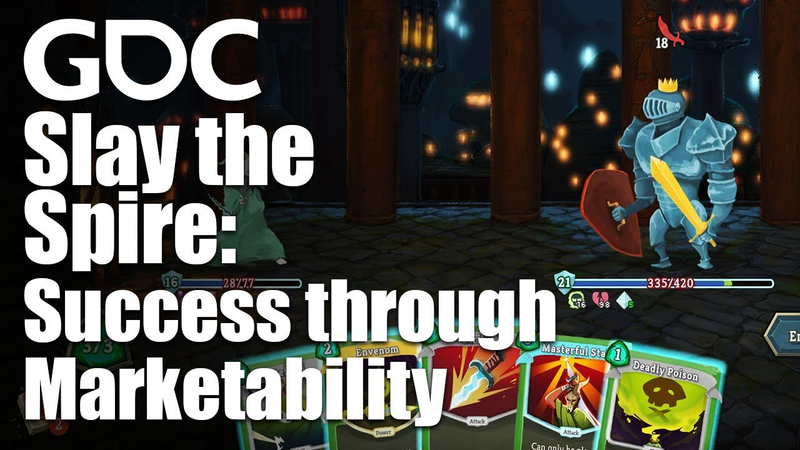
zing! And with it, Blizzard did what it always does. Takes whatever game people think is the most hardcore thing out there, and makes it accessible to everyone. And all of the sudden, CCGs are back. They're making money hand over fist, and now everyone wants into the game. At the same time, games like FTL are getting us to rethink rogue-likes and how they might be streamlined to be made more accessible. And a game with a different take on card games, one much closer to the old PoxNora approach of hex based strategy, hits the market. Faeria, a breath of fresh air in a world of Hearthstone clones. And then, it happens. A small studio in Seattle, a group of young friends, puts together a game called Slay the Spire. They bring a level of polish that Dream Quest never had and distill the whole experience to reducing full dungeons to the branching paths that they, at their core, are made of. It hits early access on Steam. Suddenly, it takes off in China. Streamers are going wild for it and it
rockets up the charts. All of the sudden, this little game has made rogue-like deck building a genre of its own. And like that, it was open season on rogue-like deck builders. Everyone and their mother was trying to build a Slay the Spire clone. But, you know what? And I'm just going to say it right here. No clone is ever going to topple the Spire. We need something new. A real step forward for the genre. A real improvement that we haven't seen before. Is Roguebook that next step? Well, it's most certainly what the Faeria folks are shooting for. They've said they're taking Slay the Spire as the first fully realized rogue-like deck builder and innovating from there. Kind of like how late FPS's took Doom or Wolfenstein as their starting points. So, let's hear from them on our way out. Take it away, me. Thanks, me. This episode was brought to you by Roguebook, the newest game from the team that brought you the amazing Faeria. With rich overworld environments, a unique gem system for increasing card customization, and innovative dual hero gameplay, Roguebook just may be the
freshest feeling rogue-like deck builder around. And in a recent interview linked below, even Richard Garfield says he's excited about their approach to the genre. So, if that sounds like something you'd be interested in and you want to snag some sweet perks for your efforts, go check out their Kickstarter at the link below.
Summary
The evolution of card-based gaming traces a path from traditional playing cards to the modern roguelike deckbuilder genre. Historically, playing cards gained global prominence due to their portability and versatility, serving as a foundational medium for diverse games. This utility expanded in the 20th century with the advent of collectible cards, which introduced scarcity and trading as core engagement mechanics. The 1990s marked a pivotal shift when the marriage of collectible card mechanics with strategic gameplay, exemplified by Magic: The Gathering, established the collectible card game (CCG) as a dominant industry force.
The transition to digital platforms allowed for further innovation, moving beyond physical constraints. Early experiments like Shandalar and PoxNora explored digital-only mechanics, while the 2008 release of Dominion revolutionized the genre by integrating deck-building directly into the gameplay loop rather than keeping it as a pre-game meta activity. This innovation paved the way for the 2014 title Dream Quest, which first successfully combined roguelike procedural generation with deck-building mechanics.
The genre reached a critical inflection point with the release of Slay the Spire, which refined these concepts into a highly polished, accessible, and commercially successful format. By distilling dungeon exploration into branching paths and focusing on strategic card progression, Slay the Spire established the roguelike deckbuilder as a distinct and popular genre. Current industry trends now focus on iterating upon this foundation, with developers introducing new mechanics—such as dual-hero systems and enhanced card customization—to push the boundaries of the genre beyond the established Slay the Spire template.


















Comments