1 free read left. Create a free account for unlimited reading + AI research.
Create free account
How to mix third-party assets without your game looking cheap
Key insights
7 takeaways- 01The perception of 'cheap' third-party assets is primarily caused by a lack of artistic direction and visual inconsistency rather than the quality of the assets themselves.
- 02Successful integration of third-party content requires developers to take active ownership of materials, ensuring every component contributes to a singular, cohesive atmosphere.
- 03Developers should establish a clear visual vision during pre-production by creating mood boards, conducting competitor research, and developing a style guide to filter asset selection.
- 04Developers must maintain ethical standards by strictly adhering to all third-party licensing agreements and providing proper attribution for all utilized assets.
- 05Disparate assets can be harmonized using post-processing techniques such as adjusting hue, saturation, lighting, and shaders to ensure they align with the game's unified aesthetic.
- 06Technical modifications like texture mapping, camera perspective shifts, and particle system adjustments can be used to alter 3D assets, while 2D assets can be unified through painting over images or applying color overlays.
- 07To ensure a bespoke final product, developers should allocate budget for a professional artist to perform a final 'art pass' on the last 10% of the project.
Ask AI about this video
Transcript
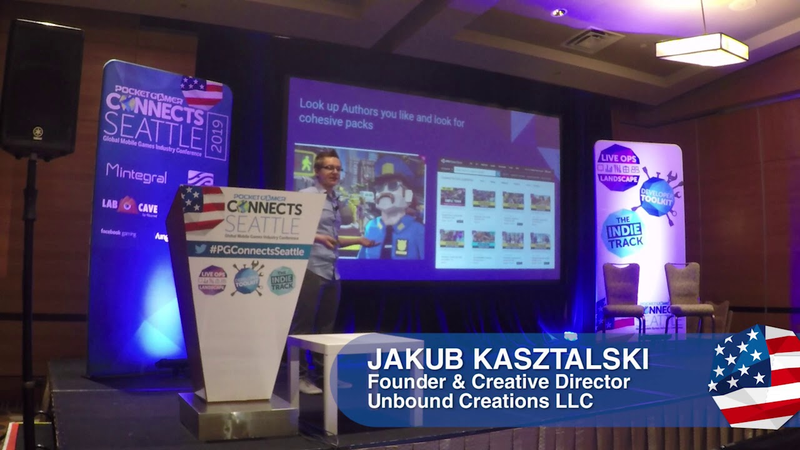
hi so as the title says help them express by assets without making your game look cheap or terrible so first of all this talk is mostly for either Indies or known artists but some of the artists have told me that they've taken away something from it so hopefully you do as well so first uh first of all like a little bit about me You Know Who am I and why should you care what I have to say so I'm a Jakob Castel ski that's me in the photo I'm half Polish I'm half anywhere I travel a lot I actually just got back from the East Coast and I founded my cine studio here and on creations we've released our four game headliner Nova news which you can see outside there that's the banner we've worn some awards we've been nominated we've been to any mm egga boof our games have also been at an Art Institute and
red month before and I've also worked on other titles before doing going nd so at this point you may be wondering like gee I could you do a lot of busy things thank you for coming to talk to us about art but your slide kind of looks like and it would be right because that's what happens when you just take random assets throw them together without thinking now if I was nice I might have come up with something like this which is you know cohesive yeah you know artistic stylish but nope apparently I'm just an so you get this so I've always relied on third-party assets for all of my games over for four years working on eight games from published titles to web games and I've always been told they look pretty good they have a style they have a atmosphere to them which was interesting consider I rely a lot on third-party assets so I figured hey maybe that's something that I'm good at maybe that's something I can talk about so I think that the work when using third party assets should really start in pre-production when you're trying to establish divisions you just start early you have a clear idea what you're going for so start off with you know mood
boards it's a term from design and art world basically collect references both kind of like a sense of feel and style maybe what I like to do is little tests just trying you know maybe vector art maybe like you know moody light maybe realistic this and that just so can I get a rough idea for what direction your game is gonna go in of course during the time you also want to collect a lot of references so here you can see an example from my game with two references you see the lighting you see kind of the furniture so again just collecting references even if especially if you're not artistic yourself it'll help you a lot to be like oh I wanted to look like this a lot of things in this stuff may be a little bit obvious but I don't know what people don't know so I'm giving a brother overview and also at this stage don't forget the everything else which is UI your banners your t-shirts your icons all of it is part of the user experience so all of this has to be cohesive so here's an example from a pixel art game so everything is kind of
pixel art II it's trying to match the same tone and style at that point it's also a good time to do a bit of a competition research so look what are your what your competitors are doing see what's working what it isn't so our game takes inspiration from oxen-free a lot of the lighting systems are inspired the mood also from games like night in the woods you see a little halo around the light we do something similar although we do a different shape to be more distinct but also consider that is your game too close to that so on our ownership initial headliner game we've wanted to do a pixel art style but it's very papers please II so we worried that oh if I did that people are gonna say I'm just ripping it off so look at that and I'm around the time when you're cracking references maybe do a quick look at like what kind of assets are available out there you know unity asset store or whatever and what is actually feasible just to kind of get a rough idea what what is out there I'm gonna talk about it a bit more later build up a list of clues accuse and guidelines
for yourself like oh maybe I want to do vector art but I wanted to be flat shaded and I wanted to be simplistic and maybe like a simple color palette because that'll come in handy later when you're looking for assets and you have a clear idea for what you're actually doing and for non artistic people like me having that kind of a checklist that can go by helps me make sure that everything is consistent an art set should definitely be something you should be prodded I've been from day one I think because it's part of the experience and you know both of these are the exact same game with different assets do you feel like completely different games so while you can prototype small little gameplay system if you actually want to protect the whole game as a feel as an experience I think art should definitely be prototyped as well with the gameplay so here's an example from my very first game what I shamelessly ripped off assets from Final Fantasy Tactics just this placeholder just establish a style and this is what the game looked like in the end so you can see that the color scheme the field the vibe is kind of similar and it also
helped to when I hired artists later to actually communicate with them what I was going for and don't worry about being perfect just establish a vision you know it's gonna have a guiding direction because a direction is better than no direction this also means you may have to learn some art you know pick up a book or two if you're not an artist it actually will help a lot but if one number takeaways consistency is key so when you're looking for a art you know something having something that's out of place is usually what going to make it look cheap or like something is off and don't forget music mostly I'm focusing on visual art but music music sound effects all of that applies to it as well as you can see comparing a screen shot with sound and screen shot without sound and ambience you can see the big difference it makes so the next question is finding right assets so how do you actually find this stuff and the answer is honestly it's just a really lot of busy work so look at all the asset sources here's a few websites that I go to that it'll provide you know stuff you can purchase or it's public
domain I always check the licenses because they different different sources will have different licenses and yeah honestly it's just a lot of busy work look at non-obvious work the sources I found my whole soundtrack to my game on reddit someone posted it like a thousand tracks they just wanted to give for free for games and it's amazing it's you know look at Facebook look at Twitter you know and the benefit of using non-obvious none of this sources is that other people will probably not have heard of them which makes your art look even more unique it doesn't sound like oh and other person living using Kevin MacLeod music when you find an outfit that you like look up what else they've done because that'll also help the consistency because usually their other assets will be in a similar style and you can also buy whole packs if you them and use your guide and guidelines and your references is kind of like a filter like if it doesn't fit what you've established no matter how amazing it looks you can't include it because it'll look off it'll look out of place and at this point you know you may also realize that hey what I want to do is
not feasible with everybody assets and I don't have the budget to hire an artist so you may need to tweak your vision for one of my prototypes I wanted something that's kind of pixel art like themed hospital I couldn't find it so I ended up going for like simplistic cartoon graphics that are 3d so let's say you found the stuff how do you make it how do you make the generic art feel unique you put it all together but it still feels like an asset slip so for 2d there's a lot of tricks you can use messing around of hue/saturation lighting that's the basic thing you can do in Photoshop or online programs like photo Pia so here are the three assets I use and even tweaking the hue/saturation and lighting I change it to more like desolate yellowish cue the dark one made it look like a knight so there's a lot you can do with 2d assets you can apply basic Photoshop filters they look kind of cheap but it can help you experiment with different styles and kind of just get a feel you can up feel pixel art there's a great you know image resizer program that would do it very nice and clean which has done a benefit that it
allows you to a degree to makes pixel art resolutions which normally you cannot do but if you kind of upscale it into more this cartoony feel and if you see greater flexibility you can also paint over it what I did in my first headliner game I took the scene and it literally just painted over it so in the game I just overlay the painted layer that I'll talk to you in a second you can downgrade art so if you have like detailed art you can just do color overlay flatten it out and you have basic very basic almost pixel artist style that's what I use for my loading screen so let's look at a case study of my first headliner game which is a precursor to the one I'm showing here that's much more simplistic and 2d so again I took a bunch of three assets that are all Pixar art I up scaled them which made them a little smoother and blend a bit better together then I did the post effects layer I just suggested I paint paint and lighting over it and did a little bloom just messed around of it to give it a bit of a mood and ambience and then I also added like via VFX for LA for a
rain I added like umbrellas I also did a little shader on the post effects layer to make it shimmer which make it seem like all the lights and the windows are kind of like shimmering very slightly so it makes it feel more alive and you know has much more of an atmosphere so moving on what about 3d 3d is also pretty versatile you can you know mess around with the perspective can do a lot just even changing camera do two screen shots are the same asset pack the bottom two screens are also the same asset pack just using the different camera angles gives it a completely different feel similar vein lighting and shaders can accomplish a lot so all of this is the same asset pack of the same scene different light different shaders and all of them feel a little bit different you can also you know recolor retexture or even edit models so we used generic models we have portraits of our characters on the right so we just edited the texture maps to make the models fit our our portraits it wasn't exactly a little bit off and we couldn't
edit the models fully but it was close enough to make them feel distinct and make them feel like they were actually custom-made for those characters particles are super versatile I've taken a generic leaves blowing particle I replaced all the sprites with papers like without cans and it may look like trash rolling through the city I took embers from a fire and I just instead of making the negative gravity going up I just set it to zero so it just moves in place and bam I have ladybugs over there you know a little LED light so again case study from the headliner that I am showing here today it's this is the asset-backed we started with it just like a full city with models we changed the perspective and moved it just straight on so it makes it look a bit like 2.5 d we then add a bit more climatic lighting we added like I mentioned earlier the light fluence flares around the lights to make them more distinct I didn't flattened out the buildings completely just the models to make them look almost like they're just 2d well still having a bit of a parallax and then I hired an artist to do an art
pass which brought it to a whole higher degree in make it look even more unique so this is kind of the final outcome when I added also blowing leaves well I added movement you know background with the moon and everything the moving lens flare and it all started with this so very different feel and a lot of people don't even realize it's a third-party asset again same with audio you can you know you can do I listen to a lot of tracks and I find this sound that just fits like I said I found a thousand tracks made by this one guy and it just will literally ascent to all through all of them to find ones that fit I do it while I code or run tests so I can just pick up the songs that fit the mood that I want in this particular scene when I'm testing it and tools like audacity which is free can be used to do some cheap processing you can make things look like it's coming from a phone or a megaphone or this and that and remove noise add reverb things like that and also maybe you found like 99% of your assets but there's still a few things that you didn't maybe you think
at this point hey I'm kind of getting an idea for art maybe I can fill that with my own so that's what I did as well so the number of fingers pick an art style you can work with so I picked a vector art for like the office scene in the first headliner game because I was like I can't do pixel I can do painted but I can put some shapes together so that worked out pretty well learned from your references so I actually lifted a lot of ideas from the amazing list commercial which is also like vector art so if you compare the scenes you'll see some similarities and it was interesting is that by doing so I was also kind understanding like oh so this is why they use that kind of a shading or that kind of scheme you kind of start to learn those kind of artistic ideas behind composition of those scenes you can also cheat I built the scenes in blender with boxes and I used that as a baseline and just painted over to make sure I got the perspective right and it's much easier to move boxes around in like 3d shape to like change your whole scene around you can modify existing assets so this is actually the asset
pack we started with just that one spreadsheet we didn't recolored it to make different color NPCs I didn't add at them a little picketing thing and I had protesters went step further I added like black shirts with a little bandana and now I have protesters I added giving them a little molotovs so it all started with this but just gradually iterating over it I expanded the whole cast of characters for my previous game and now you can look at our generating tools here's a few examples you'll find online for making text photo P is basically browser-based Photoshop you know color color palette generators and things like that how do you know it's actually working test and you trade everything constantly just again why I think you are should be prototype from the beginning it's put it in the game see if it feels right or make Photoshop you know mock-ups put it on Facebook put it on Twitter ask your friends ask your family ask your grandma you know get as much free difficut back as you can test everything your main menu your glow go I even tested my Dasher design whether the
text should be on top on the bottom what color contrasts best you know especially if you already have a communion discord or Twitter they're amazing resource for testing and getting feedback and also I think you should bring an artist on board even if you are using a third party assets for that last 10% you know what they help you unify this style they help you pick up the things that maybe you've forgotten so you can add suggest things that we haven't considered in our case those like the steam the birds the moon phases and this is what we started with when I put everything together and this is what it looked like after an art pass and it's an amazing cost for the bots because you already not ninety percent of the work you just bring an artist on board to just push it to the let that last 10% so we're saving a lot of money for a lot of benefit and remember again consistency is key if there's one takeaway make sure whatever you're putting together it fits because what I've learned is not like it's not about how good or bad the art necessarily is how quick he's if it is and like I said the one thing that
doesn't fit will really catch attention it'll make it look more like acid flipy and you end up with something like this so resources here's a quick screenshot of a lot of places that go to for different things if you guys want to take a photo for future reference and hopefully this goes without saying you know always check the licenses give credits to people you're taking it from even if they don't ask for credit do it it's the least you can do you know and you know always cite your sources you know don't ever ever steal and in that vein here are all the credits for the intro slide with all the clipart and shameless bug I'm the creative director behind headliner the fake news game out there if you want to ask me questions about this or my game I'll be right there after the talk and yeah that is me thank you know I have any questions I won't ask the assets yeah
and yeah I apologize this I'm moving here it's kind of quick originally this was a 50 minute talk I gave before so I was like just compressing to the key points I think it's a great job and actually one of the things that I think it's interesting because the amount of stuff that you see on things like the asset store that are just incredibly gorgeous looking and the ones who who you very rarely I see people actually using it well and it's often because they haven't taken it and then taken their own vision and applied that vision to those assets mhm I think your last pass was academic a perfect example of that and there's a really nice racing game kind of like micromachine style that took the assets from the tank unity training course but it did it so well because they built on those assets they didn't just take it piecemeal and I think that that's really for me the core difference is that you know the the classic joke about you know good artists copy and great artists
steal you know the point about stealing is you take ownership and I think that that's quite important piece
Summary
Jakub Kasztalski, founder of Unbound Creations, provides a strategic framework for independent developers to utilize third-party assets without compromising visual cohesion or quality. The primary thesis is that the perceived "cheapness" of asset-heavy games stems not from the assets themselves, but from a lack of artistic direction and consistency. By establishing a clear vision during pre-production and applying iterative modifications, developers can transform generic store-bought content into a unique, unified aesthetic.
The methodology emphasizes early prototyping, where developers create mood boards and test visual styles alongside gameplay mechanics. This process involves rigorous competition research and the creation of a style guide to filter potential assets. When assets do not perfectly align with the established vision, the talk suggests using post-processing techniques—such as adjusting hue, saturation, lighting, and shaders—to harmonize disparate elements. For 2D assets, techniques like painting over existing images or applying color overlays can unify styles, while 3D assets can be modified through camera perspective shifts, texture mapping, and particle system adjustments.
The scope of this approach covers both 2D and 3D indie game development, with a focus on cost-effective production. Kasztalski highlights that even when relying on third-party sources, developers should eventually bring in professional artists for a final "art pass" to refine the last 10% of the project. This strategy maximizes budget efficiency while ensuring the final product feels bespoke. Ultimately, the success of using third-party assets relies on the developer’s ability to take ownership of the materials, ensuring that every visual and audio component serves a singular, cohesive atmosphere. Ethical considerations, such as strictly adhering to licensing agreements and providing proper attribution, remain essential throughout the development process.





















Comments