Game Development reports and market data
Documents
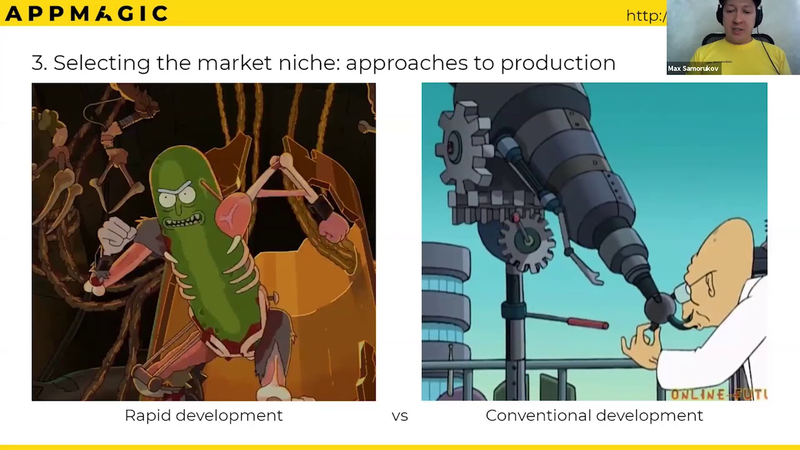
Superstar Session: Building Your Product Strategy Based on Market Research PG Connects Digital #2
Effective mobile game product strategy requires a continuous, data-driven approach that evolves alongside the market.
- Leverage core team expertise to reduce business risk, as this improves the accuracy of development cost estimates, resource allocation, and user acquisition performance.
- Align development methodology with product complexity: use rapid, feature-focused cycles for casual games and rigorous, long-term processes for mid-core and hardcore titles.
- Avoid entering monopolized segments like Match-3, where dominant publishers create a hostile environment for new entrants.
Knowledge is Power: An Overview of Knowledge Representation in Game AI
Effective game artificial intelligence depends less on the sophistication of underlying algorithms and more on the quality and structure of the data provided to agents.
- Effective game AI relies more on the quality and structure of data provided to agents than on the complexity of the underlying algorithms.
- Developers should categorize information into three distinct types: static environmental data, dynamic spatial data, and specific entity details to improve agent reactivity.
- Implementing spatial tools like smart objects, tactical maps, and influence maps allows agents to interpret their surroundings efficiently for complex decision-making.
Your Virtual Game Arts Studio PG Connects Digital #2
The presentation outlines the expansion of Creadits, a creative services firm, into the game art production sector.
- Creadits has expanded from performance marketing into a virtual game art studio, providing on-demand access to a global network of talent for concept art, 3D modeling, animation, rigging, texturing, and lighting.
- The service operates as a scalable extension of internal teams, utilizing centralized management hubs in the US, UK, Japan, and Singapore to maintain quality control while developers retain creative direction.
- Typical project-based outsourcing engagements range from $1,000 to $10,000, with $5,000 serving as the common baseline cost.
How to Use Machine Learning, Live Telemetry Analysis, and Computer Vision to Manage Communities
Modern game development requires a fundamental shift toward integrating community management as a core design pillar rather than a reactive support function.
- Integrating in-game social features like chat systems can double player retention by providing a space for social interaction and peer-to-peer assistance without leaving the game environment.
- Successful game communities rely on 'social loops'—mechanisms where social notifications, such as clan messages or shared tactics, trigger further gameplay and engagement, mirroring the core game loop.
- Developers should implement lightweight replay systems that record event data rather than raw video, allowing for easier analysis and the automated generation of highlight reels for player sharing.
Panel: Live Ops is not a Sprint! - How do You Plan a Recurring Series of Activities Indefinitely?
Live operations function as a permanent, data-driven business cycle essential for maintaining player engagement throughout a game's entire lifecycle.
- Treat live operations as a continuous, permanent business cycle rather than a series of isolated development sprints to ensure long-term game sustainability.
- Prioritize the development of flexible, server-side infrastructure early to enable content updates and configuration changes without requiring constant client-side patching.
- Implement a multi-layered event strategy that balances daily, weekly, and monthly activities to meet specific business objectives like retention, monetization, and onboarding.
Panel: When is the Right Time to Start Thinking, Testing & Delivering Live Ops? PGCD#2
The transition from traditional, static game development to a service-oriented model is essential for long-term commercial viability in the modern gaming industry.
- Live Ops should be integrated into the development process as early as possible, ideally during the pre-launch and soft-launch phases, to effectively balance game economies and validate lifetime value assumptions.
- Automation is essential for effective Live Ops, as it frees up team capacity to focus on new content and sophisticated, personalized player experiences rather than repetitive manual tasks.
- Game developers should treat their titles as 'nightclubs' that require constant management and engagement rather than one-off 'rockstar performances' that end at launch.
Superstar Session: The Live Ops Readiness Checklist PG Connects Digital #2
Long-term success in the modern gaming landscape depends on transitioning from a static product development mindset to a dynamic, service-oriented operational model.
- Live operations must be integrated as a foundational pillar of game design from the start rather than treated as a post-launch afterthought.
- Operational success requires building technical pipelines that support iterative updates, staging, and rollbacks without requiring constant client-side version pushes.
- Teams should shift organizational culture toward a 'never done' philosophy that prioritizes predictable, consistent content cadences over the pursuit of perfection.
Panel: Machine Takeover - Improving Your Game With Machine Learning & AI - PGCD#2
Machine learning is fundamentally transforming game development by shifting industry standards from static, rule-based state machines toward dynamic, data-driven systems.
- Machine learning is shifting game development from static, rule-based state machines to dynamic, data-driven systems that automate labor-intensive tasks like animation and lip-syncing.
- Advanced implementations, such as the Drivatar system in the Forza series, demonstrate how machine learning allows NPCs to evolve based on player interaction rather than relying on pre-programmed behaviors.
- The industry is democratizing access to AI through tools like the Unity ML-Agents Toolkit and open-source frameworks, allowing smaller studios to implement sophisticated agents without large-scale research infrastructure.
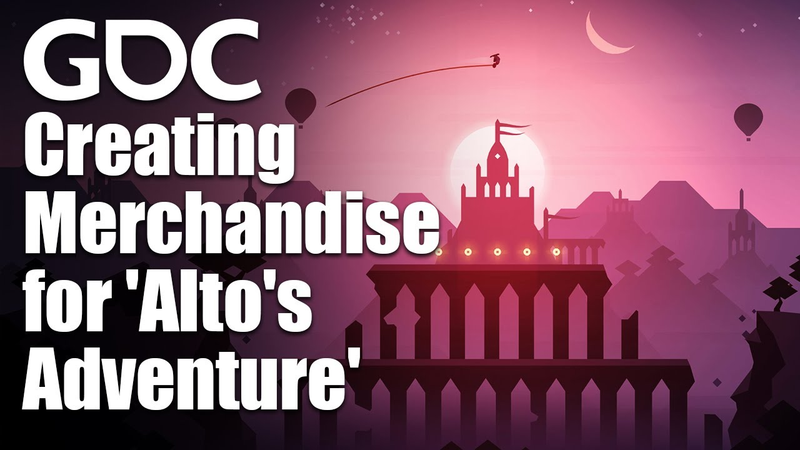
Indistinguishable from Magic: Lessons Learned from Creating Merchandise for Alto's Adventure
Developing merchandise for independent games functions most effectively as a long-term brand-building strategy rather than a primary revenue driver.
- Merchandise should be treated as an extension of the game's universe to build long-term brand value rather than a primary revenue stream, as profitability often takes years to achieve.
- Integrating a 'Gift Shop' directly into the game via SDKs can significantly drive sales, with 57% of Alto's Adventure merchandise sales originating from in-app purchases after the feature's launch.
- DIY e-commerce solutions like Shopify offer higher profit margins and brand ownership compared to third-party partners, though they require more upfront effort and management from the developer.
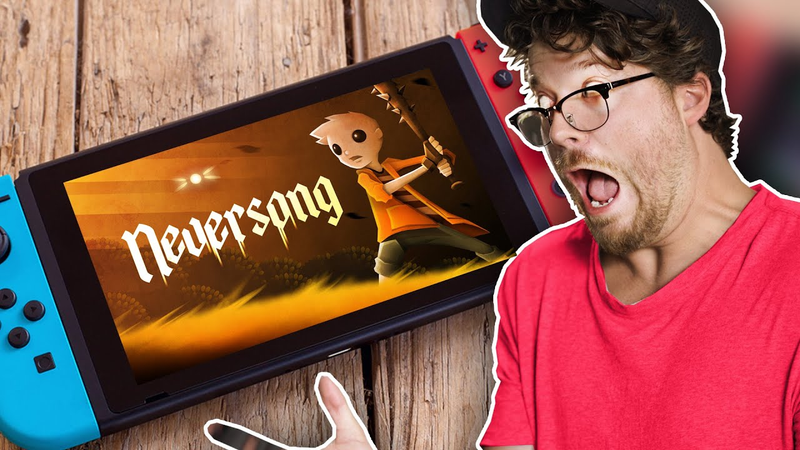
My 10 year dream project just launched on Nintendo Switch!!!
The launch of the game Neversong across Nintendo Switch, PlayStation 4, Xbox, and Apple Arcade serves as a case study for the viability of the solo developer model in the modern gaming industry.
- Solo developers can achieve multi-platform scale by outsourcing technical porting to specialized firms like Dū Games and leveraging the marketing infrastructure of publishers such as Serenity Forge.
- The 'solo developer' model is effectively a network-based business, as sustainable growth requires delegating administrative, technical, and promotional tasks to contractors rather than managing full-time employees.
- Strategic platform-led promotion is a critical driver of visibility, evidenced by the PlayStation 4 trailer for Neversong generating over 134,000 views and 5,600 likes.
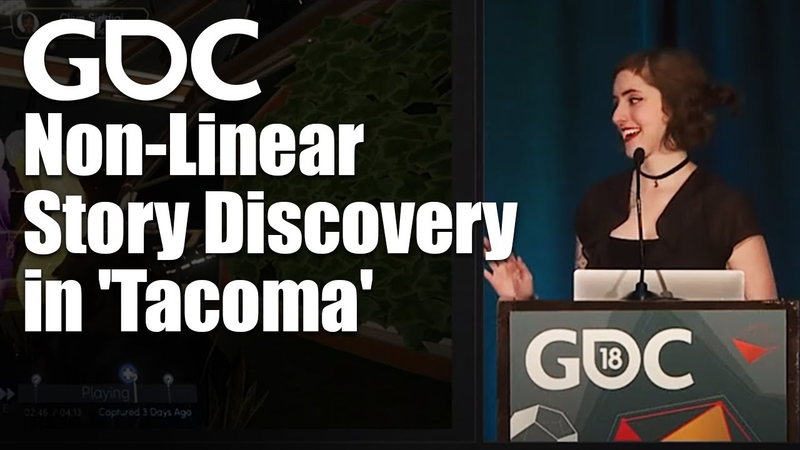
Designing for Non-Linear Story Discovery in Tacoma
The evolution of narrative design in Tacoma represents a significant departure from traditional linear storytelling, moving away from the static audio diaries popularized by earlier titles toward a dynamic, non-linear experience inspired by immersive theater.
- To support non-linear narrative discovery, the development team utilized a 'hub and spoke' level design, where a central room (like a dining area) allows players to observe multiple concurrent character interactions and choose which threads to follow.
- The team abandoned traditional 'key and lock' progression systems during playtesting because players prioritized finding keys in desktops, causing them to fast-forward through narrative content rather than engaging with the story.
- Level layouts were locked down in 'gray block' format before writing the script, as the physical placement of rooms and furniture dictated the characters' movements and interactions within the AR scenes.
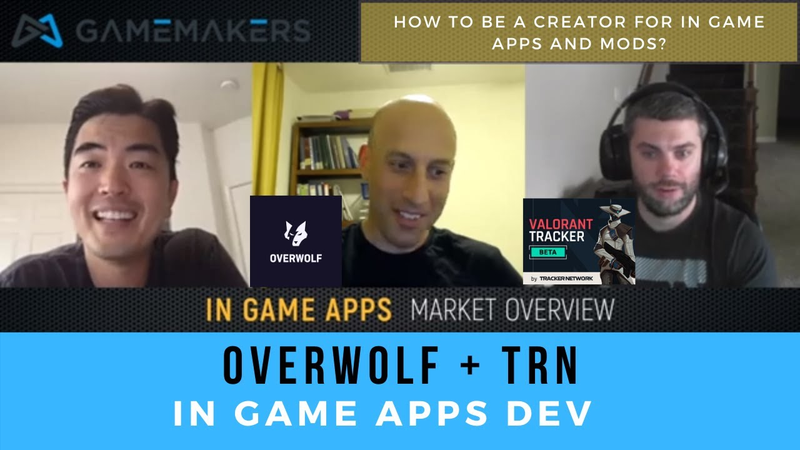
Overwolf + TRN | How to be an In Game Creator?
The modern gaming landscape is increasingly defined by a robust creator economy where third-party developers build essential in-game applications and mods.
- Top in-game creators are now generating annual revenues exceeding $1.2 million by leveraging integrated monetization models like programmatic advertising and subscriptions.
- The ecosystem for third-party in-game applications supports over 5.5 million monthly active users and sees billions of annual mod downloads.
- Developers can build compliant, high-engagement in-game tools using Chromium-based frameworks that support standard web technologies like HTML and JavaScript.
Writers
Games and companies
Games