Game Development reports and market data
Documents
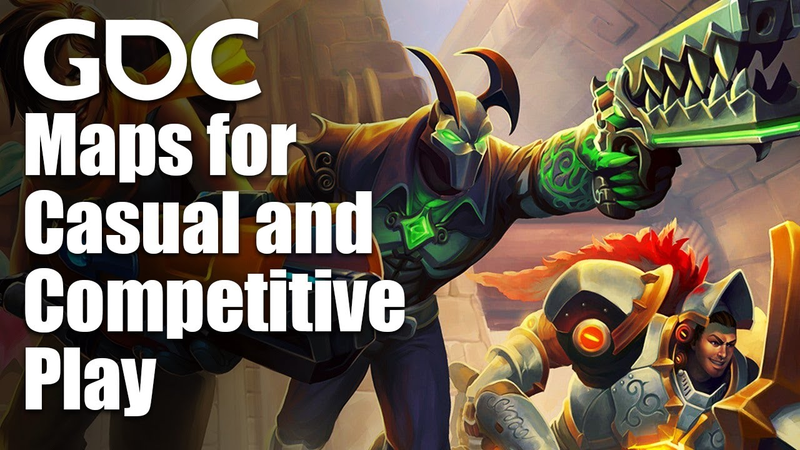
The Holy Grail of Multiplayer Level Design: Casual and Competitive Maps
The design of multiplayer maps requires balancing the distinct needs of casual and competitive players, a challenge often referred to as the pursuit of a "holy grail" map.
- Successful multiplayer map design requires balancing the needs of casual players, who seek recreational play, with competitive esports players who prioritize strategic depth and tournament viability.
- Designers should categorize player skill progression into layers: basic mechanical movement and shooting, map-specific tactical knowledge, and high-level meta-game strategy such as character bans and team compositions.
- Casual-friendly maps often rely on 'single-scan' layouts that allow players to process the entire environment quickly, whereas competitive maps require complex, multi-option layouts that prevent stale gameplay.
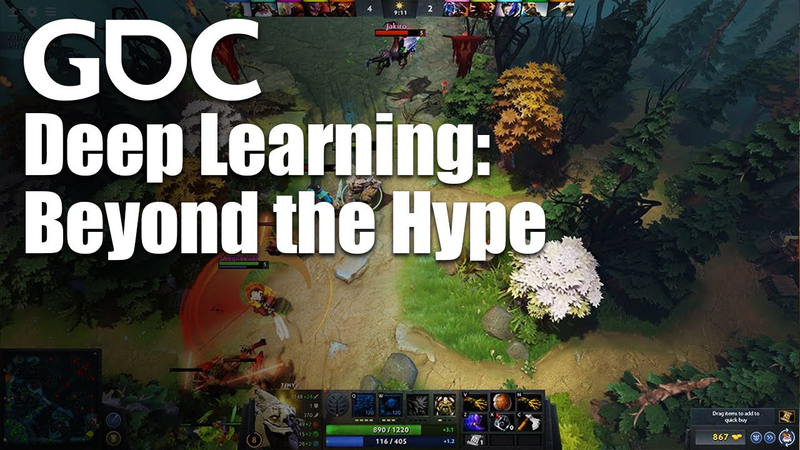
Deep Learning: Beyond the Hype
Deep learning and reinforcement learning are fundamentally transforming game development by functioning as trainable, high-performance function estimators.
- Deep learning and reinforcement learning are shifting game development from scripted mechanics to trainable function estimators, enabling advancements in automated motion capture, voice synthesis, and facial animation.
- The primary industry objective is to move beyond combat-centric gameplay toward immersive role-playing experiences featuring complex social interactions and emergent, human-like behaviors.
- Practical applications, such as those seen in Battlefield 1, demonstrate that neural agents can successfully navigate complex 3D environments and prioritize resources.

Economy of the Metaverse | Fortnite CEO Tim Sweeney (Exclusive)
The metaverse represents a critical evolution in digital interaction, transitioning from isolated, proprietary gaming environments toward a unified, participatory economy.
- The metaverse must transition from isolated, proprietary gaming environments to a unified, open architecture that supports technical interoperability for assets and code across diverse virtual spaces.
- Current mobile storefront commission models of 30 percent are significantly higher than the actual service provision costs, which are estimated to be between 5 and 7 percent.
- A sustainable and equitable economic framework for the metaverse requires platform fees to settle through market competition, ideally within the 7 to 12 percent range.
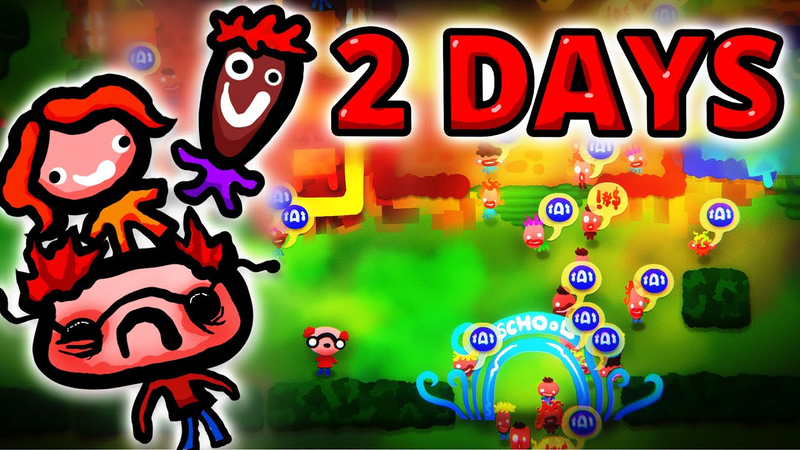
3 Out of Control Developers Making a Game (In 48 Hours)
The development of the game Nursery Curse, created for the 2020 Game Maker’s Toolkit (GMTK) game jam, serves as a case study in collaborative rapid prototyping and the challenges of scope management.
- The 'Nursery Curse' project, developed for the 2020 GMTK game jam, ranked 377th out of approximately 5,000 entries, demonstrating the viability of rapid prototyping under a 48-hour deadline.
- Effective scope management is critical in short-term development, as the team identified a lack of a refined core gameplay loop as their primary challenge due to feature creep.
- The team utilized Unity and the A Pathfinding Project to handle complex character movement, while Miro served as the central hub for brainstorming and feature prioritization.

Let's Play YOUR GAMES from a Dev's Perspective
This analysis evaluates the indie arcade title #Funtime from a professional game development perspective.
- The indie arcade title #Funtime received an 8/10 rating for its polished technical execution, specifically its effective use of Unity-based post-processing, particle systems, and grid-based movement.
- The game successfully employs an economical design strategy by extending a single color-matching mechanic into diverse, challenging scenarios to maximize depth with limited resources.
- A critical friction point exists in user onboarding, where the absence of persistent on-screen control prompts for movement and color-cycling leads to player frustration and potential abandonment.

Expanding Animation and Design Capabilities in Post-Launch Battlefield 1
The post-launch development of Battlefield 1 demonstrates how animation teams can significantly enhance gameplay depth and historical authenticity by leveraging flexible, data-driven tools.
- To overcome the limitations of rigid legacy animation systems in Battlefield 1, the DICE LA team developed flexible, logic-based reload systems that allowed for weapon-specific behaviors like ejecting partial magazines or reeling in cloth ammunition belts.
- By decoupling reload logic from fixed animation loops, the team enabled complex interactions such as the Perino M1908's ability to top off ammunition at various stages, which required managing 120 rounds through a hybrid of manual and additive animation layers.
- The team successfully scaled their post-launch content production by building reusable systems; initial development efforts for the first six weapons in the 'In the Name of the Tsar' expansion paved the way for an expanded list of 11 guns that utilized the same underlying animation logic.

Hutch: Fantastic Mistakes and How to Avoid Them
Hutch, a mobile-first game studio founded in 2011, transitioned from a console-focused development background to a profitable free-to-play business model by embracing lean development and iterative validation.
- Hutch transitioned from console development to a profitable free-to-play model by treating all design decisions as testable assumptions rather than fixed creative choices.
- The studio mitigates financial risk by prioritizing 'viable' products over 'minimum' ones, ensuring concepts are validated against live player data before full-scale production.
- Early titles like Smash Bandits failed due to a lack of market validation and a mismatch between skill-based gameplay and free-to-play monetization, whereas later titles like Top Drives succeeded by limiting innovation to specific, justified areas.
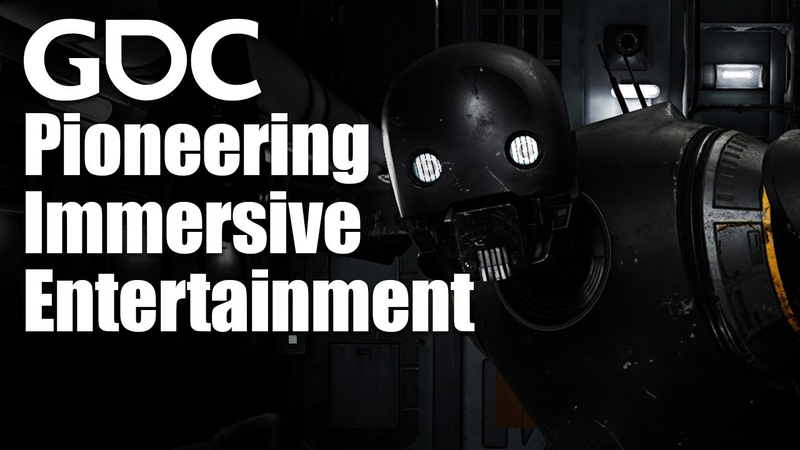
ILMxLAB: Pioneering Immersive Entertainment
Immersive entertainment is undergoing a fundamental transformation, moving away from isolated virtual reality experiences toward a model of persistent, interconnected digital worlds.
- Location-based VR experiences can serve as a primary retail anchor, as evidenced by a Westfield London location where 71.6% of visitors reported the VR attraction was their sole reason for visiting the mall.
- The future of immersive entertainment lies in a multi-platform ecosystem where a single identity and narrative persist across devices, ranging from mobile AR and tablet-based crafting to console gaming and full-immersion VR.
- Hyper-reality experiences like 'The Void' successfully leverage untethered headsets, motion capture, and multi-user networking to create social environments where strangers often leave feeling like close friends.
Superstar Session: How Company-wide Creativity Made us a Success PG Connects Digital #2
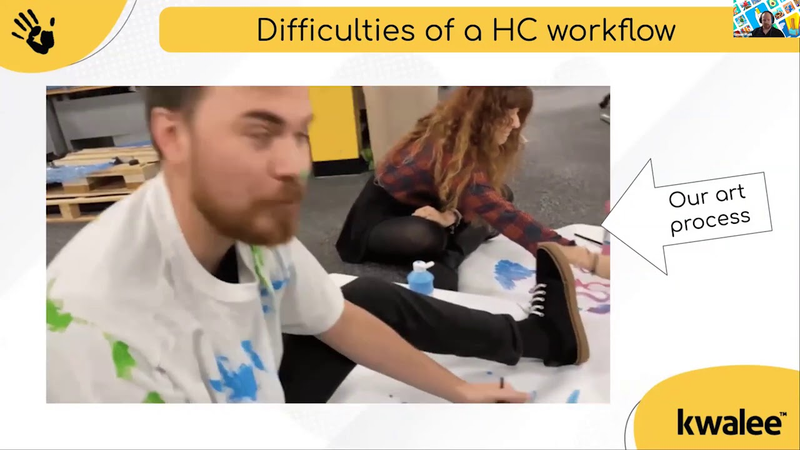
Kwalee has successfully navigated the transition from mid-core development to the hyper-casual mobile gaming sector by institutionalizing a culture of rapid experimentation and democratic innovation.
- Kwalee successfully transitioned from mid-core to hyper-casual gaming by institutionalizing a democratic, company-wide creative process that has generated over 100 million downloads.
- The studio utilizes 'Creative Wednesdays' to allow any employee to pitch game concepts, which are then vetted through rigorous, data-driven performance metrics.
- Operational strategy prioritizes 'failing fast' by distilling complex ideas into fundamental mechanics to enable rapid prototyping and testing within a few weeks.

Panel: Best Practices for Keeping Your PC Game Relevant PG Connects Digital #2
Sustaining relevance in the PC gaming market requires a fundamental shift toward treating live operations as a long-term commitment rather than a secondary post-launch consideration.
- Treat live operations as a core, long-term commitment integrated into the initial design phase rather than a secondary post-launch activity.
- Secure six to twelve months of dedicated post-launch funding to ensure operational stability and the ability to maintain consistent content updates.
- Implement data-driven monetization strategies that allow for flexible transitions between business models, such as free-to-play or tiered subscriptions, to match evolving player spending habits.

Panel: Making Your Craft a Science - How to Replicate the Success PG Connects Digital #2
Achieving consistent success in the mobile gaming industry requires transitioning from purely intuitive decision-making to a disciplined, scientific framework that balances creative vision with rigorous business analysis.
- Transition from intuitive decision-making to a scientific framework by balancing creative vision with rigorous business analysis to ensure repeatable success.
- Implement tiered objective setting to manage project expectations and mitigate the risks associated with potential failure.
- Prioritize the development of a minimum viable product (MVP) to maintain core engagement and prevent scope creep before adding secondary features.
Superstar Fireside Chat: A Virtual Fireside Chat with Agora & MPL PG Connects Digital #2
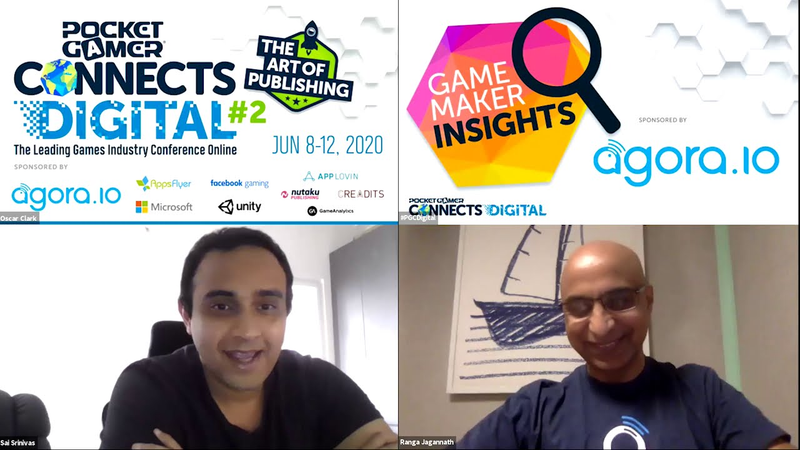
The mobile eSports sector in India is undergoing a period of rapid expansion, driven by the convergence of widespread mobile connectivity, sophisticated digital payment infrastructure, and a burgeoning young demographic.
- The Indian mobile eSports sector has evolved from a niche hobby into a professional career path since 2018, with game variety on platforms expanding from a few titles to over 60.
- Gaming video content has surpassed the combined viewership of major streaming services, establishing itself as the primary entertainment medium for younger generations.
- Market projections indicate that the capitalization of digital eSports is expected to eventually exceed that of traditional physical sports.
Writers
Games and companies
Games