Game Culture reports and market data
Documents
Gaming and the 'Parergodic' Work of Seriality in Interactive Digital Environments
Using the figure of Batman and his move from comics and film to videogames, interactive TV-style episodes, and virtual reality, the author proposes a shift from a 'parergonal' to a 'parergodic' logic of seriality, building on Derrida's concept of the parergon and Espen Aarseth's notion of ergodics.
- The author proposes a shift from a 'parergonal' to a 'parergodic' logic of seriality, linking Derrida's parergon with Aarseth's ergodics.
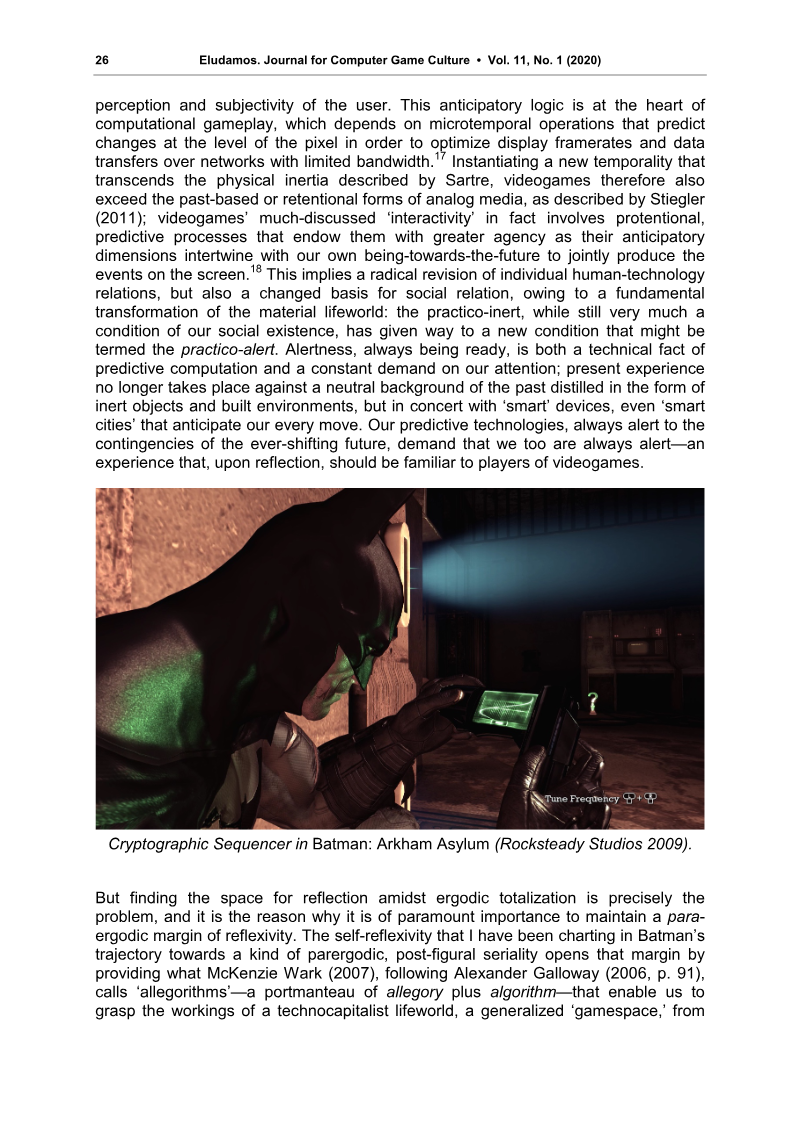
- Batman: Arkham Asylum's simulated glitch led players to believe their hardware had broken, and the author notes many YouTube comments expressing this reaction.
- The author argues that in Telltale's Batman, player choices are registered automatically by algorithm rather than by human interlocutors, as the branching narrative was mapped out in advance.
#StayHome Playing LoL: Analyzing Players’ Activity and Social Bonds in League of Legends During Covid-19 Lockdowns
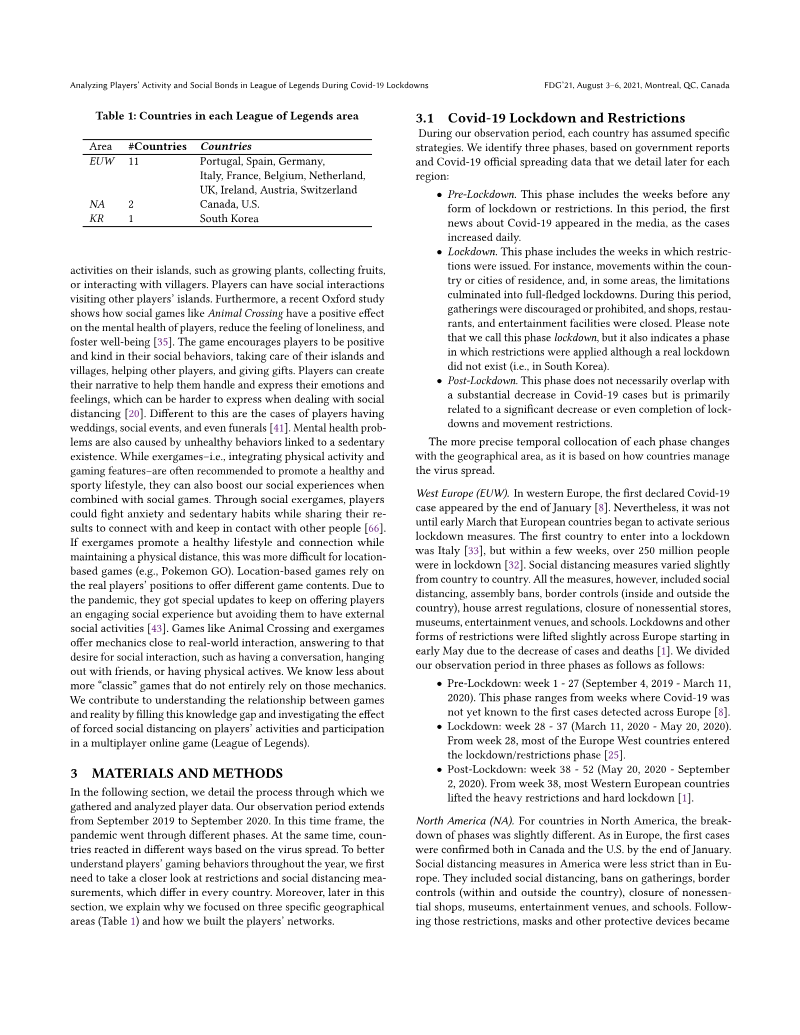
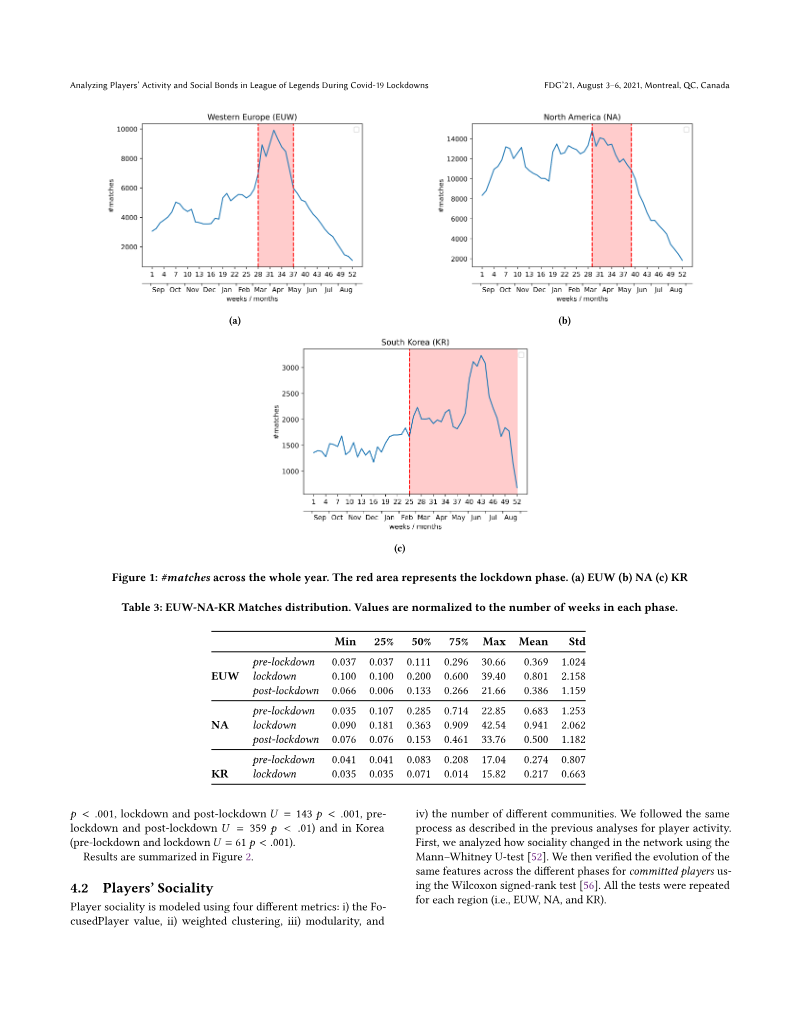
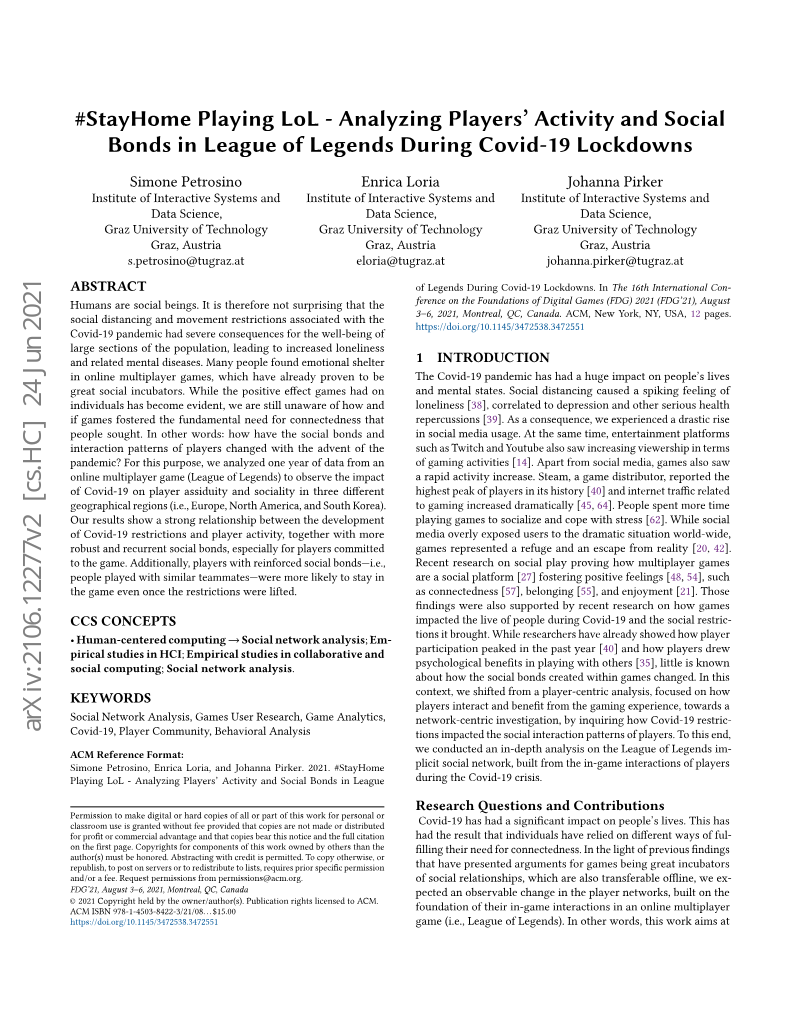
This paper by Petrosino, Loria and Pirker from Graz University of Technology examines how social distancing and lockdowns during Covid-19 affected player activity and social bonds in League of Legends.
- Match counts rose significantly during the lockdown phase in all three regions, and in North America the increase in matches was almost solely due to the increase in activity of committed players rather than from a rise in player numbers.
- In Western Europe, the dropout rate among players who started playing during lockdown was 54.43%, compared with 35.02% in North America.
- Lockdown starters who were retained into the post-lockdown phase had stronger recurrent bonds than those who dropped out.

Well Played: A Special Issue on Playable Theatre
This is a special issue (Vol. 10, No. 2) of the journal Well Played, edited by Celia Pearce and Nick Fortugno, on playable theatre: live performance that integrates meaningful audience agency.
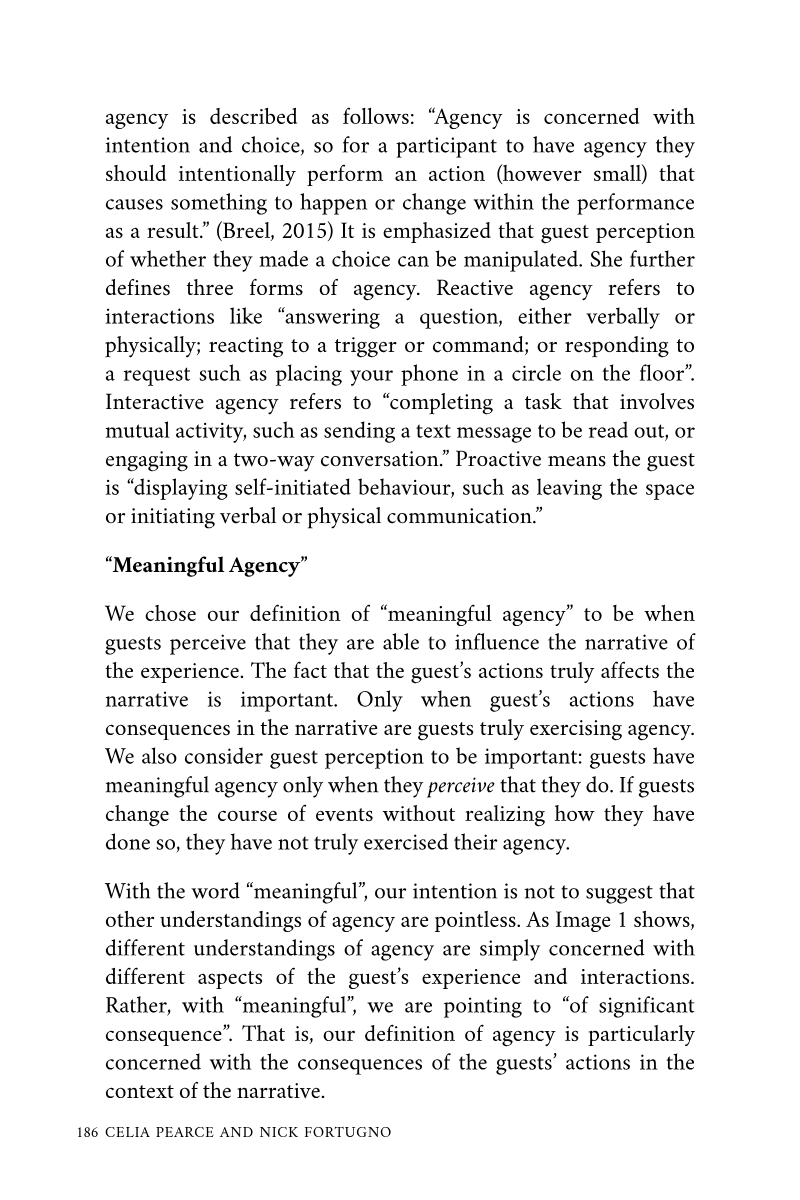
- Celia Pearce defines playable theatre as live performance that integrates meaningful audience agency, where participants have a perceivable and transformative impact on the experience.
- Bakk's survey of 201 audience members after a Signa performance found that 128 claimed to have put themselves totally into the fictional world, and 137 marked themselves as active participants.
- Aquanesia's post-game survey found that the share of participants with more than moderate local watershed knowledge rose from 15% before playing to 30% afterward, with knowledge increasing 33% overall.

Heroes and Hooligans: The Heterogeneity of Video Game Modders
This peer-reviewed study by Joanna Curtis, Gavin Oxburgh and Pam Briggs, published in Games and Culture in 2022, examines how video game players and modders perceive modding, using insider perspectives rather than outsider views.
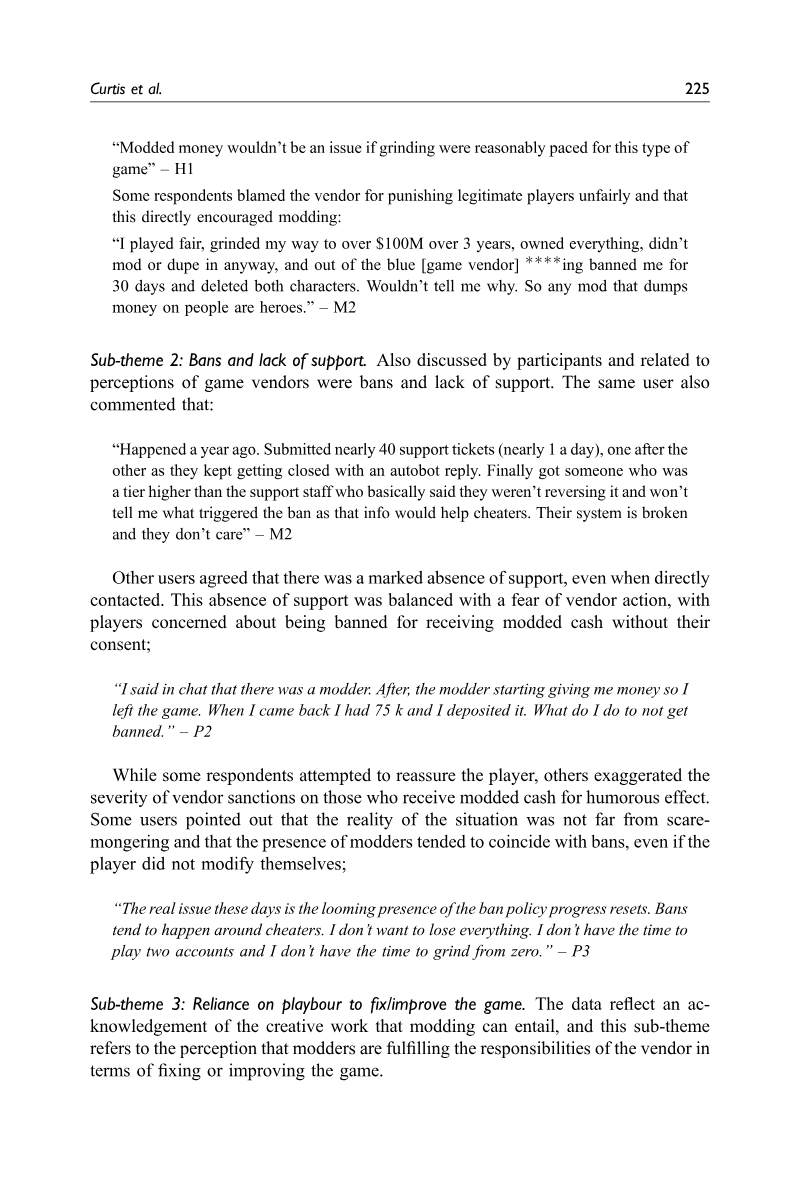
- Participants frequently described the vendor as unfair, particularly through grind-heavy progression and bans without explanation. One user reported a 30-day ban and deleted characters with no stated reason.
- Most blame in the data fell on modders, with the terms 'cheaters' and 'hackers' often used interchangeably to describe them.
- The authors found that some participants described differences between modders, while others described modders as homogeneous.
Indies de province: Two Independent Game Developers in Pre-Internet Quebec
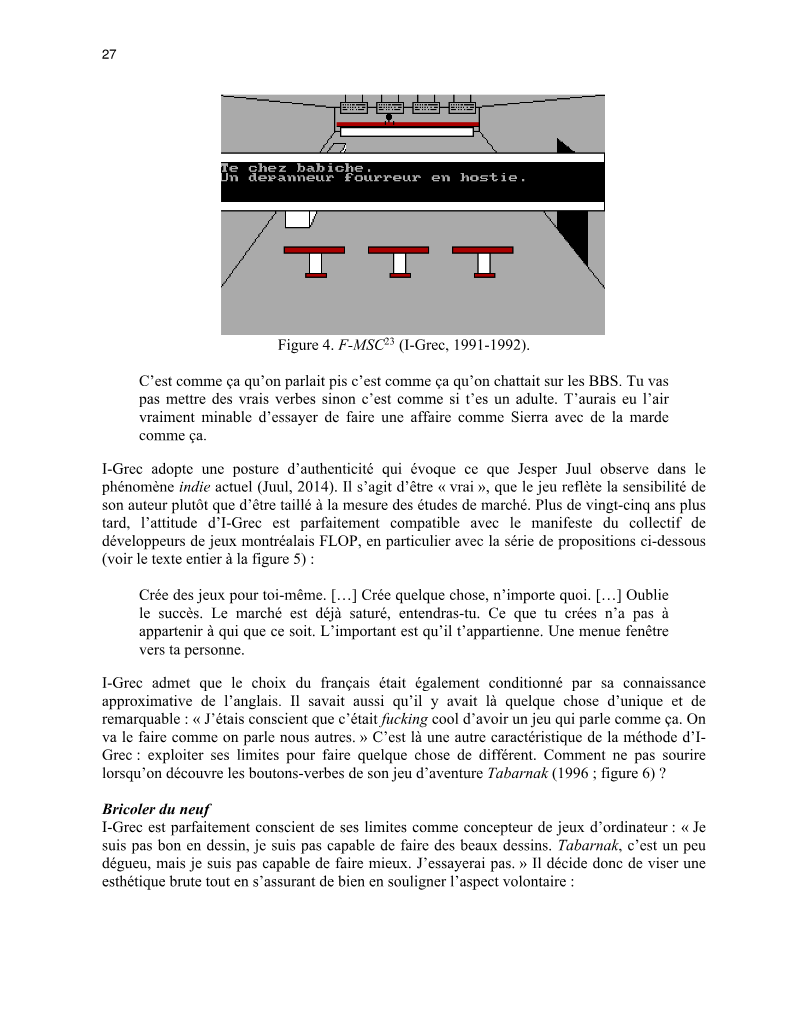
This article, published in the Journal of the Canadian Game Studies Association (Vol 14), by Jonathan Lessard and Carl Therrien, profiles two self-taught video game developers from Quebec who worked in the 1990s, before the Internet was widespread: Christian Boutin, who ran Oracle Software, and I-Grec.
- Christian Boutin's first serious title, The Tournament of Zulula, was published in 1989 when he was fifteen, and distributed as shareware.
- Oracle reached its commercial peak around 1993, when sales of its two biggest hits overlapped.
- Boutin said he chose English because his reference games were in English and he saw the United States as his only real target market.
Looking at Fear Right in the Eye: The Outlast Series in the Revival of the Horror Videoludic
Jean-Charles Ray, writing in the Journal of the Canadian Game Studies Association (Vol 14(23): 100-114), examines...
- The author states that at the end of the 2000s the horror video game was moribund, and that the genre's revival came from independent developers, with Amnesia: The Dark Descent published in 2010.
- The article identifies the first-person avoider as a sub-genre that emerged from Amnesia, in which the player has no means of defence and survives through stealth and flight.
- Outlast equips its protagonist with a camera that provides night vision, and the author describes the battery-limited camera as creating a constant economy of the gaze in which the player must weigh risk.


Integrative Complexity, Horror, and Gender: A Linguistic Case Study of Until Dawn
Hayley McCullough's study, published in Press Start (2021, Volume 7, Issue 1), uses integrative complexity, a linguistic measure of cognitive structure, to compare the playable female and male characters in the 2015 horror video game Until Dawn by Supermassive Games.
- Female characters scored significantly lower than male characters on integrative complexity, with female mean 1.06 versus male mean 1.18.
- Dialectical complexity also differed significantly by gender, with female mean 1.02 versus male mean 1.10.
- Elaborative complexity did not reach statistical significance (p = .052), though female characters descriptively scored lower.
The Reliquaries of Hyrule: A Semiotic and Iconographic Analysis of Sacred Architecture Within Ocarina of Time
Jared Hansen, a University of Oregon researcher, presents a semiotic and iconographic analysis of the sacred architecture in The Legend of Zelda: Ocarina of Time (Nintendo, 1998), published in Press Start in 2021.
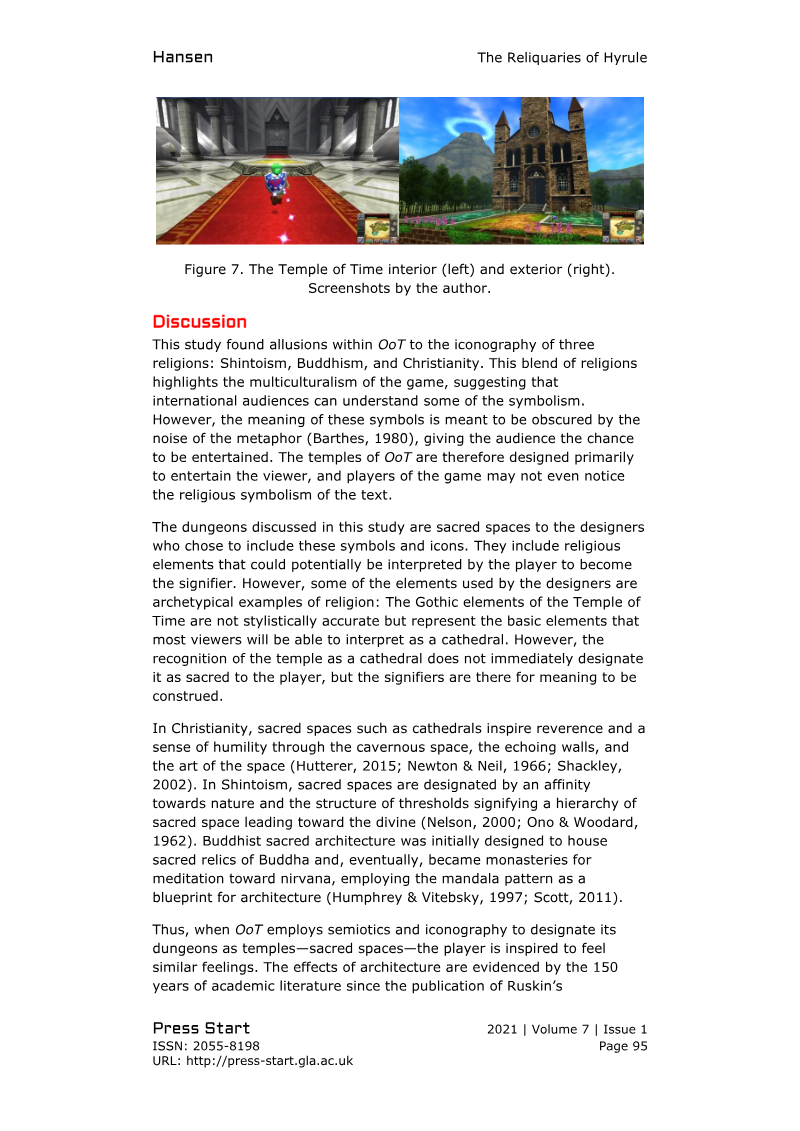
- The author finds that the Spirit Temple blends Shintoism and Buddhism, the Temple of Time is coded as Christian, and the Forest Temple blends Shintoism with Christianity.
- The author argues that the dungeons' layout of gates and keys leading to a boss room mirrors the progression of sacred architecture from entrance to altar.
- The author states that the Forest Temple appears to be the temple that aligns the most with Shinto symbolism, reflecting the religion's reverence for nature through rooms that are outdoor gardens.
A Cross-Game Look at Transgender Representation in Video Games
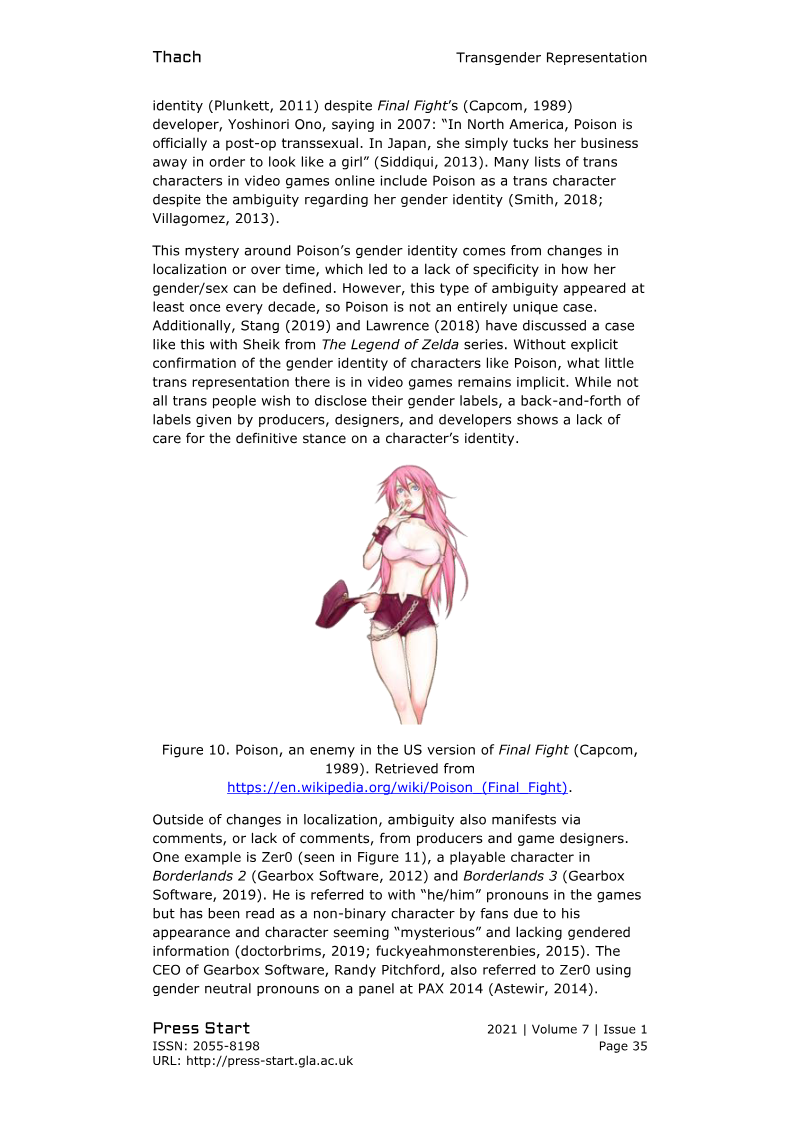
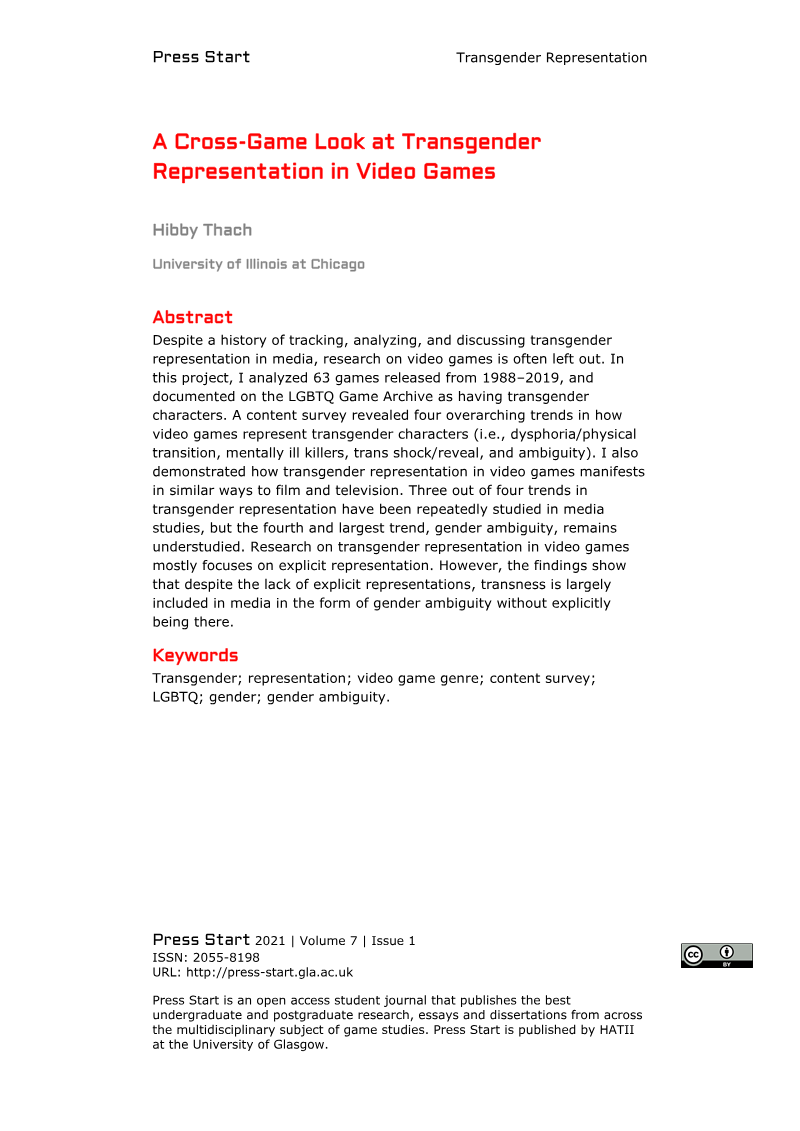
Hibby Thach, of the University of Illinois at Chicago, presents a content survey of 63 video games released between 1988 and 2019 that are documented as having transgender characters on the LGBTQ Game Archive.
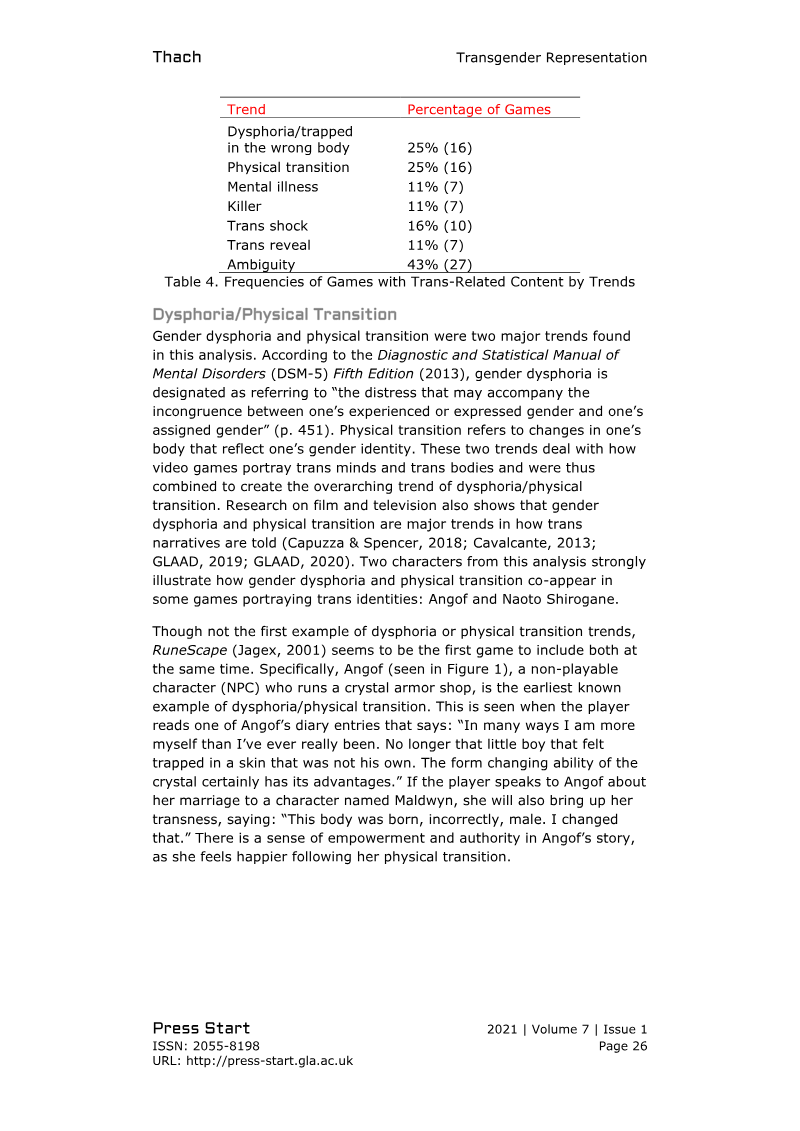
- Ambiguity was the most frequent trend, appearing in 43% (27) of the 63 games analysed.
- Japan and the United States together accounted for most of the games with trans-related content in the study.
- Games with trans-related content released in the 1980s accounted for 3% of the sample, rising to 40% in each of the 2000s and 2010s.


Was bisher geschah: TYRANNYS 'Conquest Mode' als Beispiel für metaleptisch-narrative Einflussmöglichkeiten
The analysis explores the concept of narrative metalepsis—the transgression between distinct narrative levels—within the context of digital role-playing games, specifically focusing on the 2016 title Tyranny by Obsidian Entertainment.
- The 2016 RPG 'Tyranny' by Obsidian Entertainment introduces a 'Conquest Mode' that allows players to define their avatar's actions during a three-year military campaign preceding the main game, fundamentally shaping the world's political state and the protagonist's reputation.
- In narratological terms, player interaction in video games functions as a 'metalepsis,' a transgression between the extradiegetical level (the player) and the diegetical level (the game world).
- The 'Conquest Mode' serves as a sophisticated form of 'descending metalepsis,' where player decisions made before the game starts create a flexible narrative foundation that dictates how NPCs react and how specific locations are controlled.
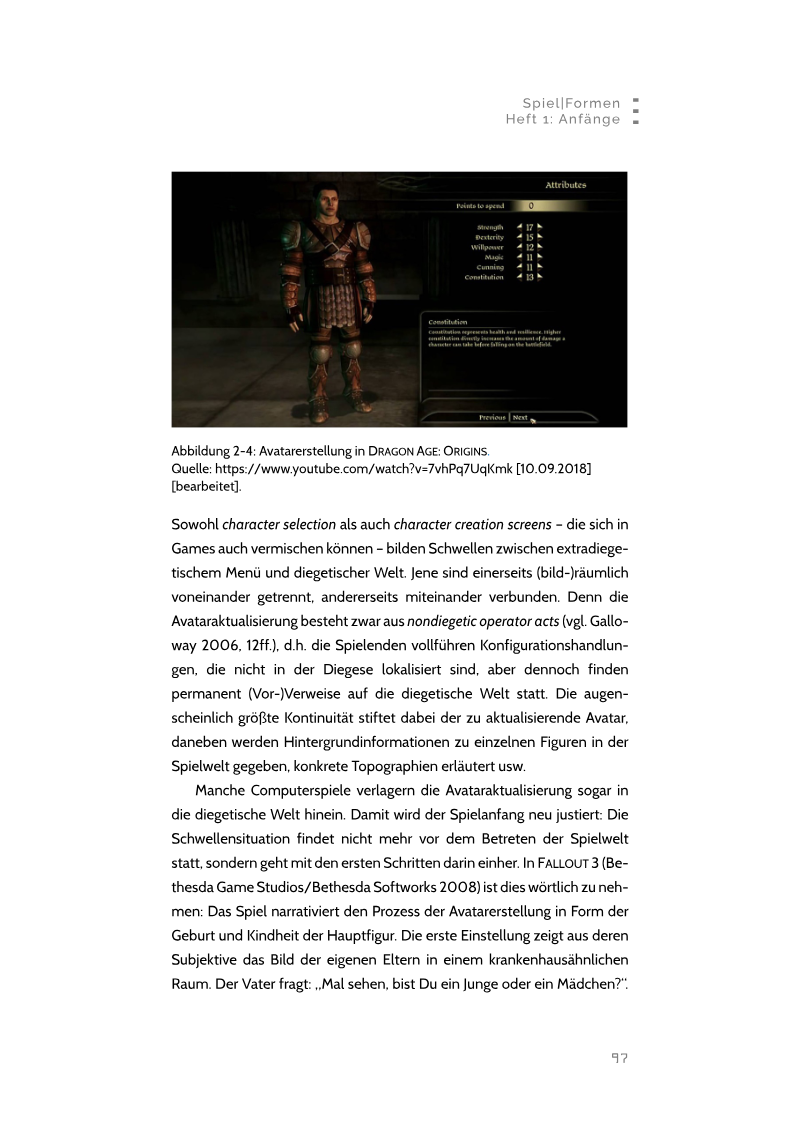
Auswählen, Gestalten, Individualisieren: Avataraktualisierungen als Anfänge des Computerspiels
The article by Peter Podrez, published in the journal Spiel|Formen (Heft 1: Anfänge), examines avatars in computer games as dynamic concepts, specifically as actualizations made by players from a virtual range of options.
- The author argues that avatar creation acts as a configurative involvement strategy at the start of games, with the configuration itself treated as gameplay.
- In Tekken 5: Dark Resurrection, the document counts 25 male avatars against 7 female avatars in the character selection.
- The author notes that the final confirmation of an avatar choice is usually irreversible, and that a redesign is often costly or only possible at certain points.
The Evolution of the Introductory Section: An Analysis Based on Three Long-Standing Video Game Series
The evolution of introductory sections in video games serves as a critical lens for understanding the shifting relationship between ludic mechanics, narrative structure, and designer assumptions regarding player expertise.
- Modern game design is shifting away from rigid, tutorial-heavy introductions toward flexible, player-driven experiences that prioritize agency and exploration.
- The evolution of introductory sequences has moved from 1980s arcade-style immediate gameplay loops to the cinematic, scripted sequences that dominated the late 1990s and early 2000s.
- Technological advancements, specifically the transition to 3D hardware and the influence of titles like Half-Life, were primary drivers for the historical move toward scripted, tutorial-focused game openings.
Writers
Games and companies
Games