More from Canadian Game Studies Association
View all
Article
The Cybiko Computer: Precursor to Today's Mobile Devices?
Canadian Game Studies Association · 2025
Whitepaper
“The Ending Has Not Yet Been Written”: How Myst, S., and Other Transmedia Creations Pay Tribute to the Analog in a Digital World
Canadian Game Studies Association · 2025
Whitepaper
Maximizing Efficiency in Game Development Through Art Styles, AI Integration, and Creative Expression
Canadian Game Studies Association · 2025
Whitepaper
Moloch's Gauntlet: New Undergraduate Pedagogical Perspectives in Minecraft
Canadian Game Studies Association · 2025
Article
(Re)Creating Disney: Converging Game World Architecture in Kingdom Hearts
Canadian Game Studies Association · 2022
Whitepaper
Mental Health in 3D: A Dimensional Model of Mental Illness Representation in Digital Games
Canadian Game Studies Association · 2021
Whitepaper
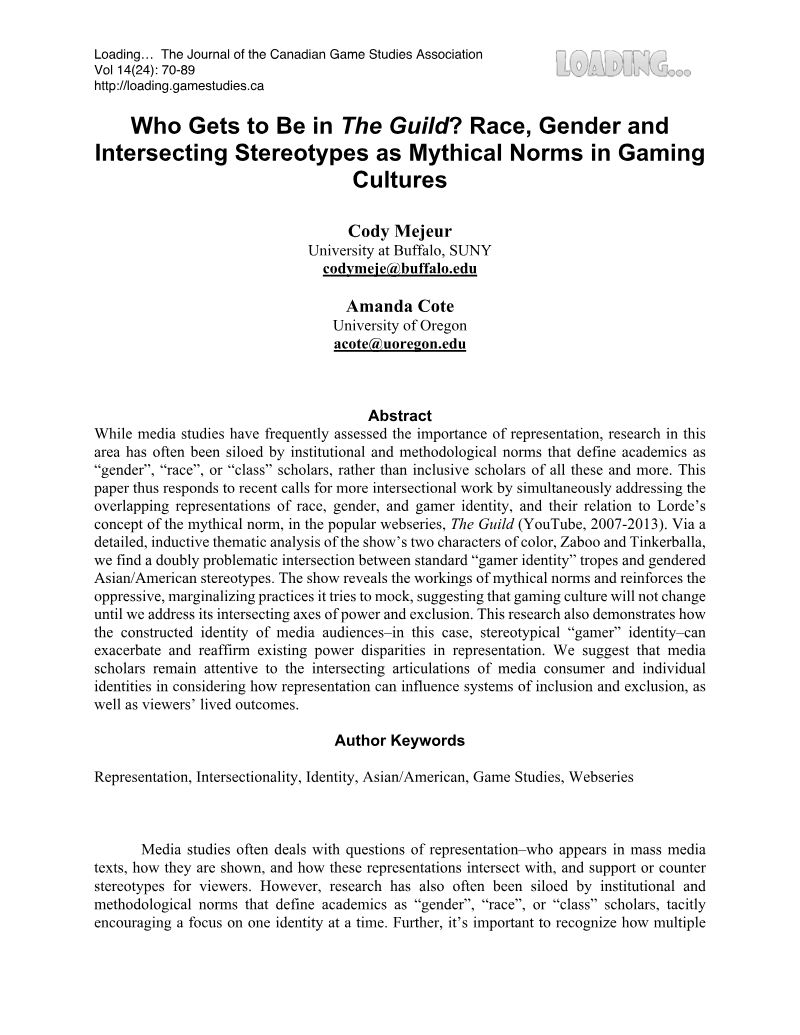
Who Gets to Be in The Guild? Race, Gender and Intersecting Stereotypes in Gaming Cultures
Canadian Game Studies Association · 2021
Article
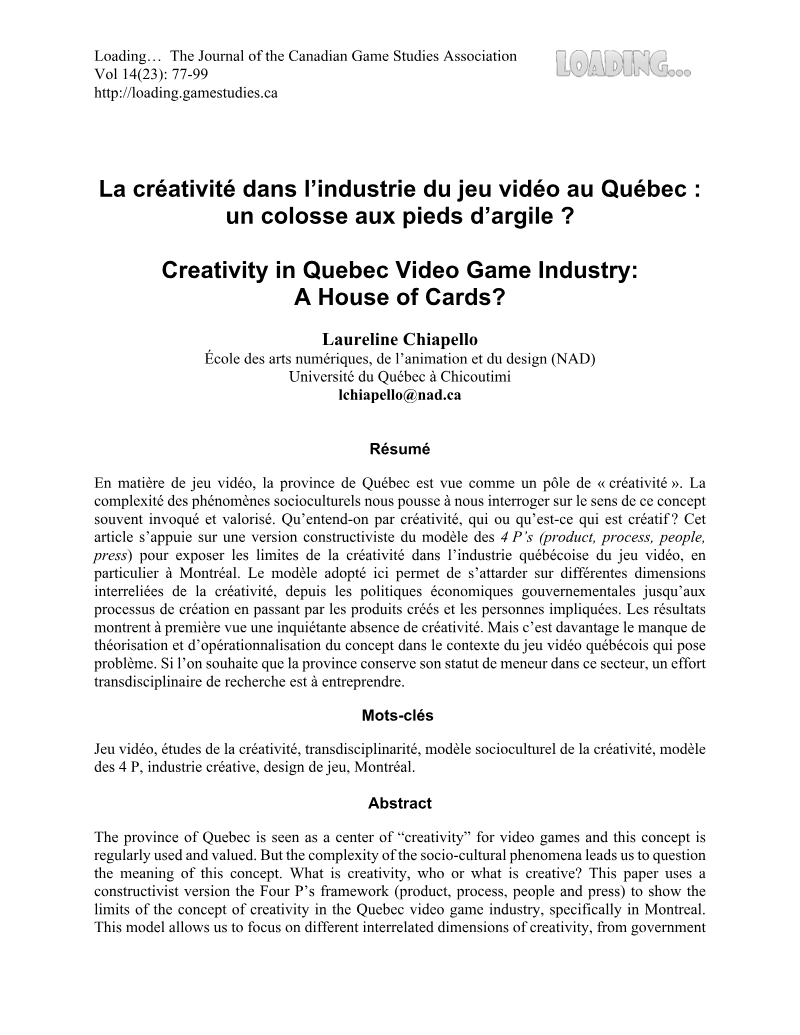
Creativity in Quebec Video Game Industry: A House of Cards?
Canadian Game Studies Association · 2021
Article
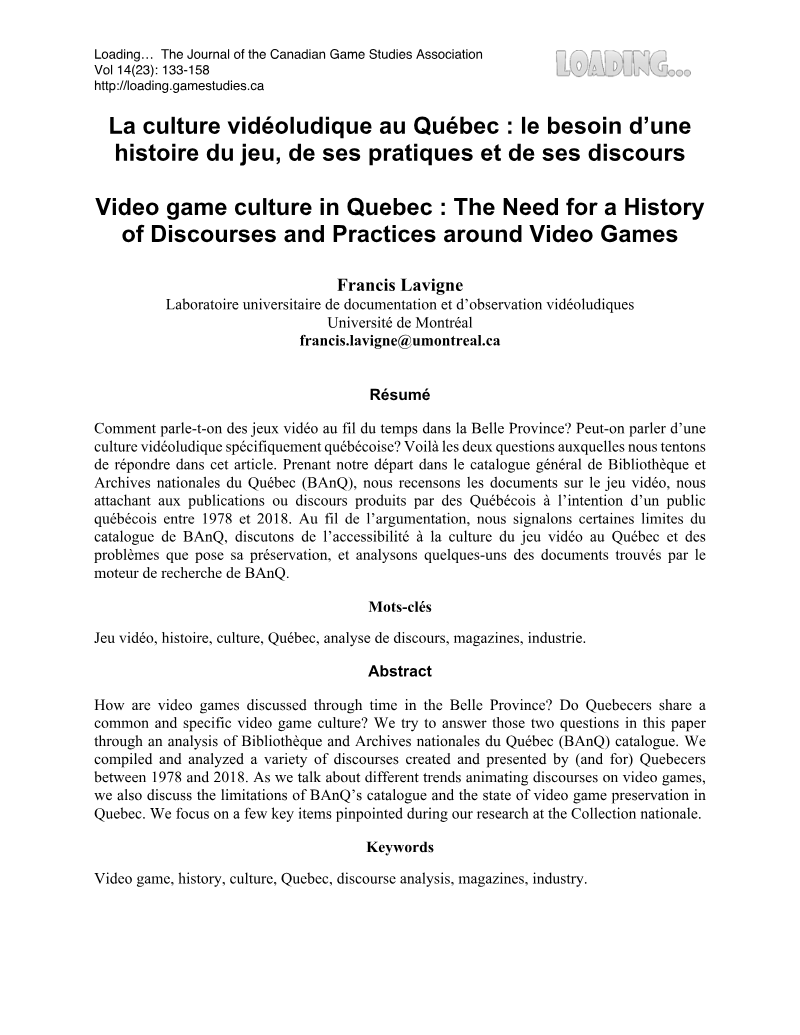
Video Game Culture in Quebec: The Need for a History of Discourses and Practices
Canadian Game Studies Association · 2021
Article
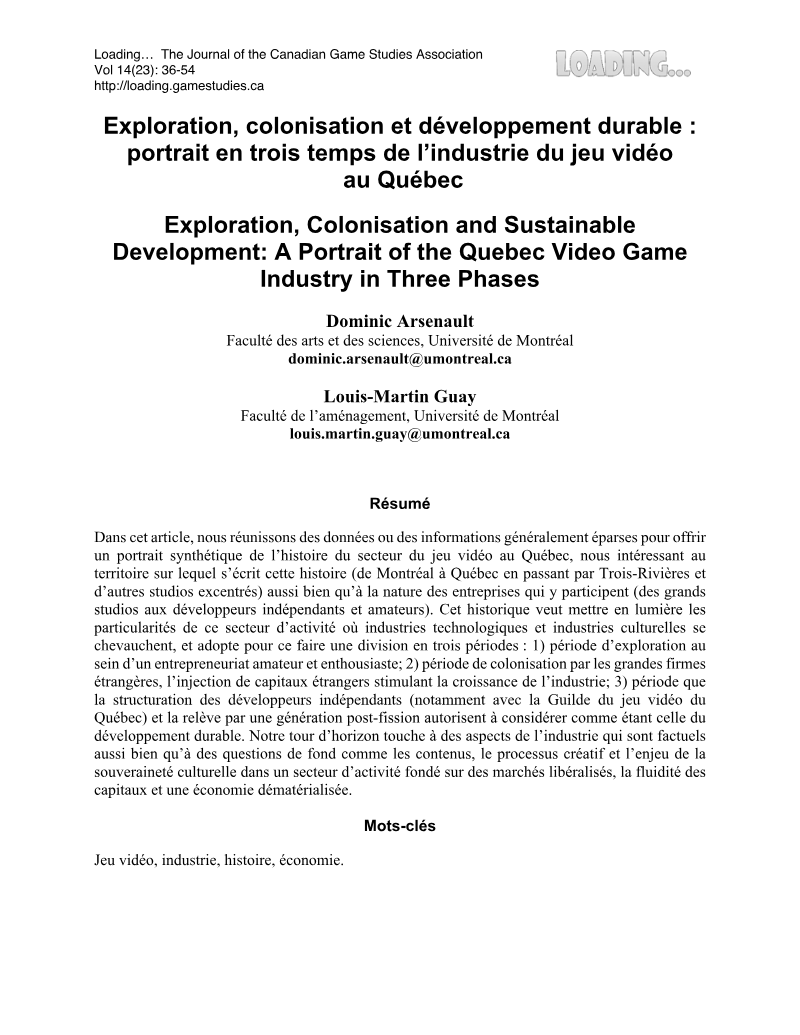
Exploration, Colonisation and Sustainable Development: A Portrait of the Quebec Video Game Industry
Canadian Game Studies Association · 2021
Whitepaper
Tom Nook, Capitalist or Comrade? On Nook Discourse and the Millennial Housing Crisis
Canadian Game Studies Association · 2020
Whitepaper
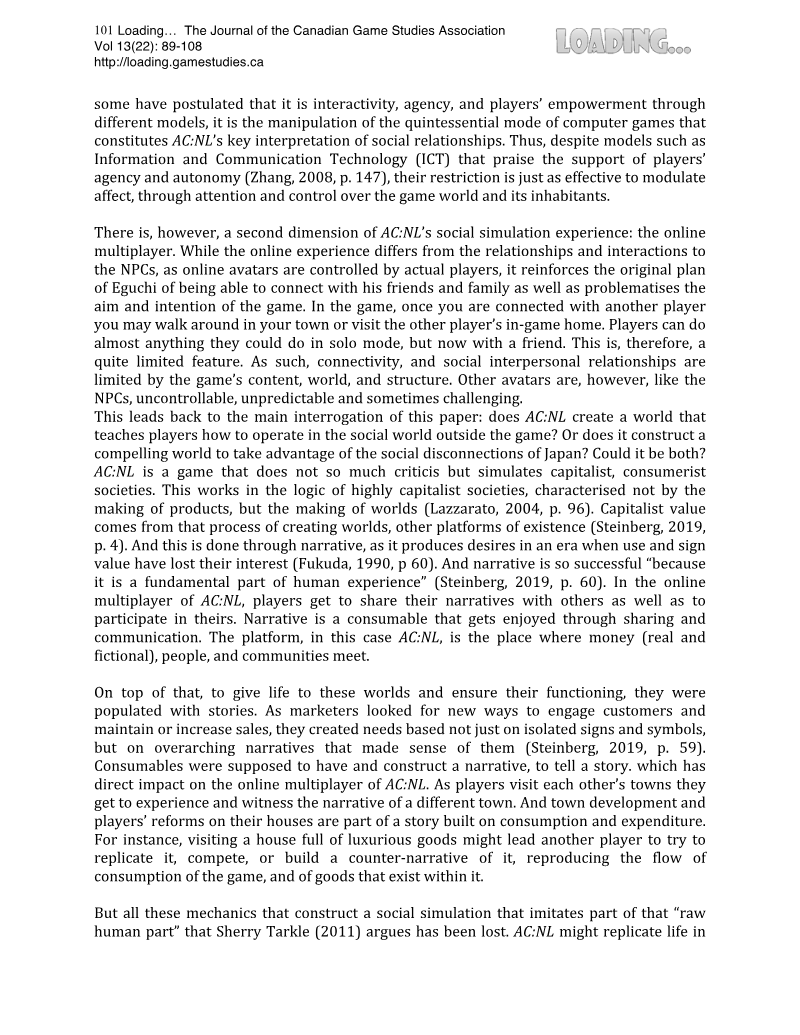
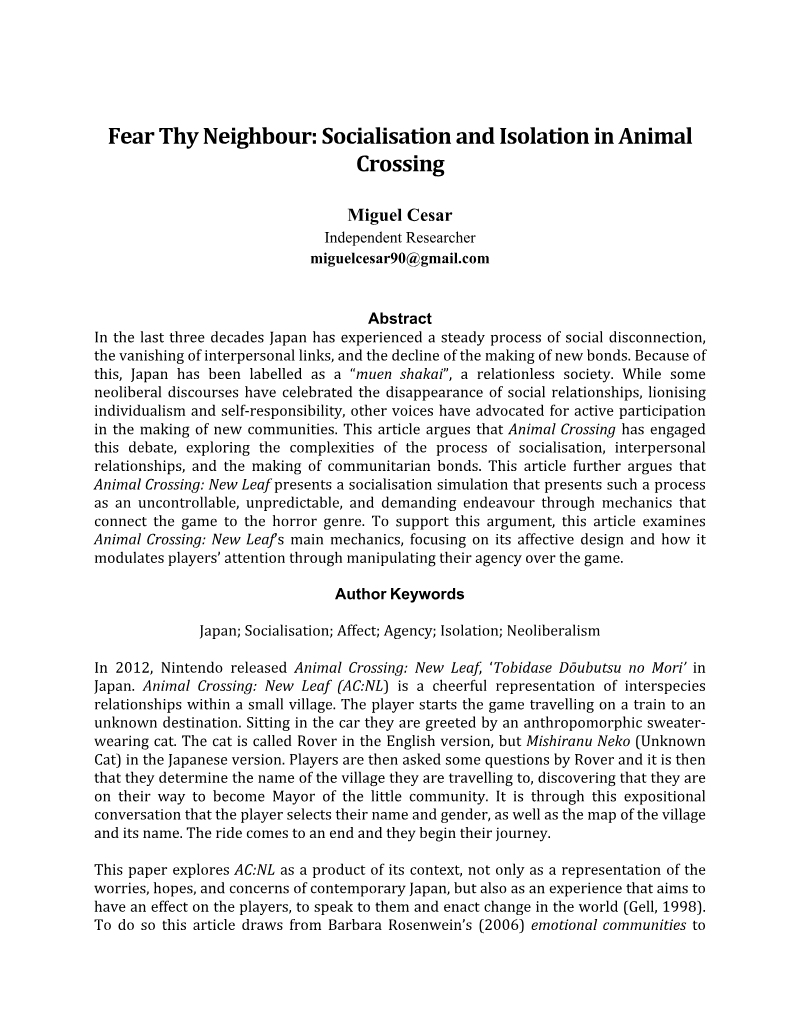
Fear Thy Neighbour: Socialisation and Isolation in Animal Crossing
Canadian Game Studies Association · 2020
More on Game Studies
View all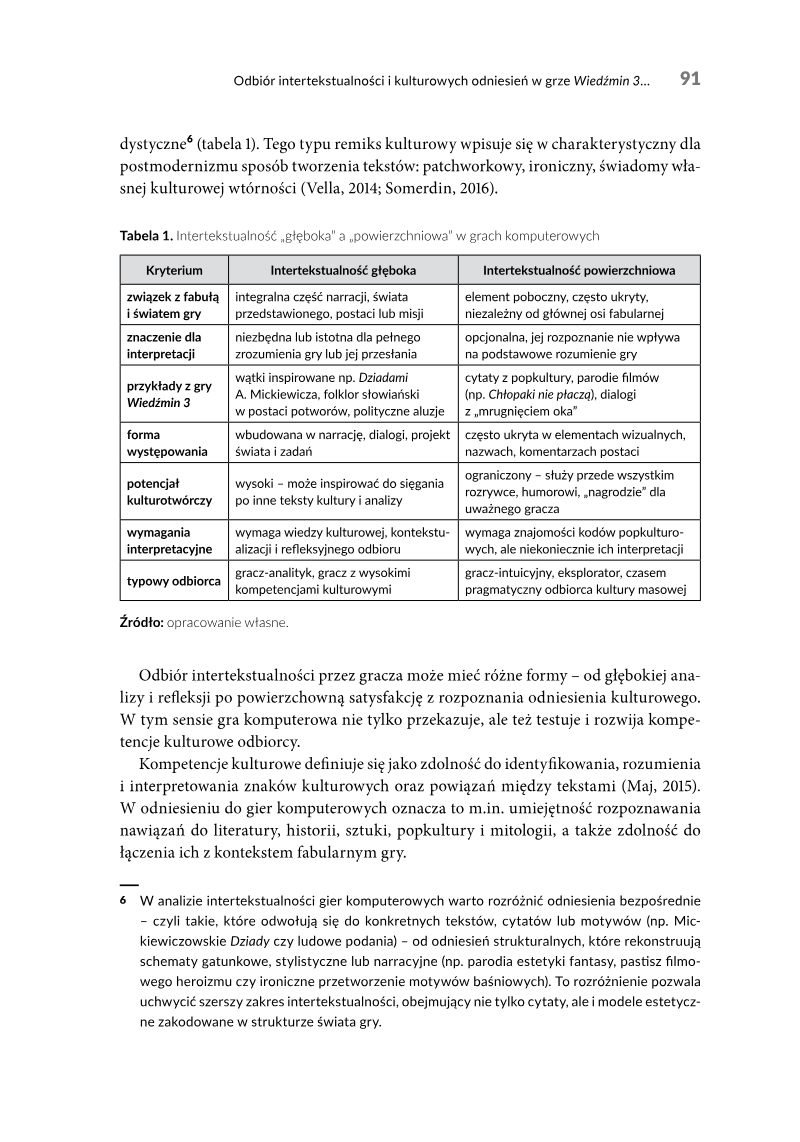
Whitepaper
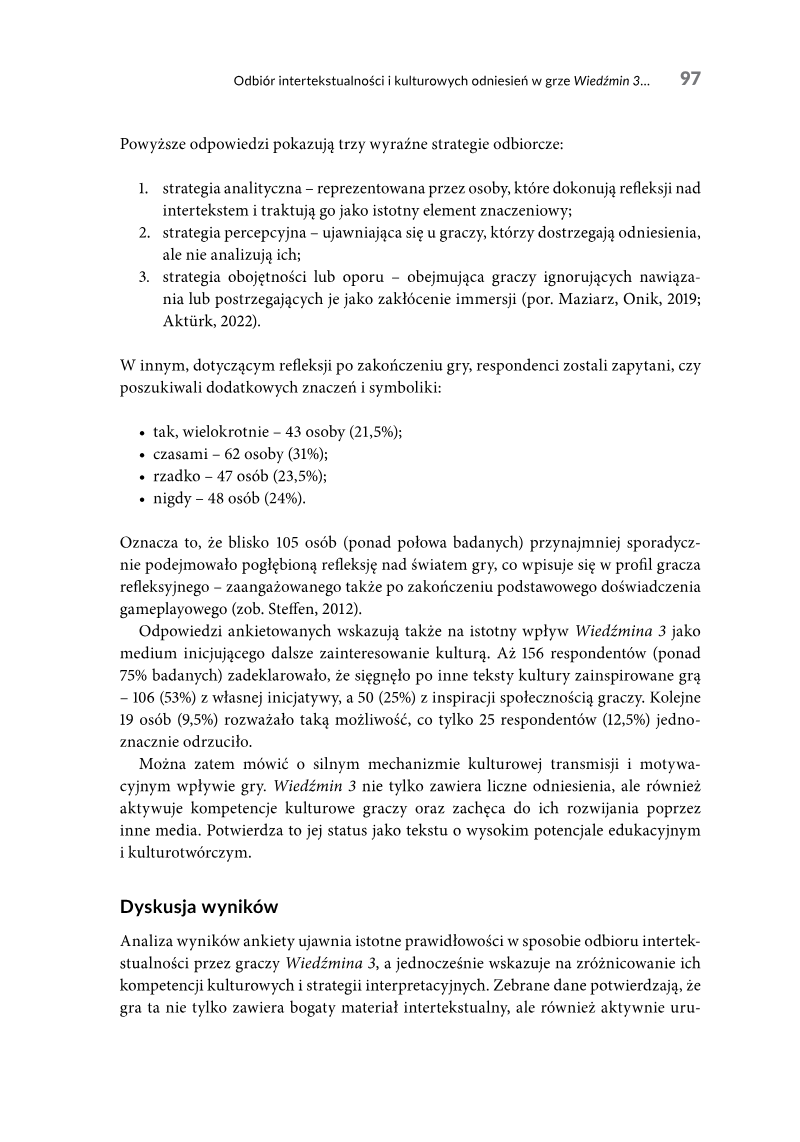
Reception of Intertextuality and Cultural References in The Witcher 3: Analysis of Player Typologies
Replay. The Polish Journal of Game Studies · 2026
Whitepaper
A Contemporary Take on Victorian Lunacy: Representations of the Asylum in the Neo-Victorian Video Game Alice: Madness Returns
Journal of Games Criticism · 2025