Game Culture reports and market data
Documents
Video Games as a Supportive Tool in the Therapeutic Process
This study, by Marcin Mateusz Granat, examines whether video games can support the treatment of diseases with rising morbidity rates.
- Video games were evaluated as an adjunct therapy across six conditions (stroke, cerebral palsy, childhood amblyopia, pediatric brain tumor, PTSD, and depression) using literature from MEDLINE, Cochrane Library, Embase, Ovid MEDLINE and IEEE Xplore covering 1988–2020, restricted to studies with control groups.
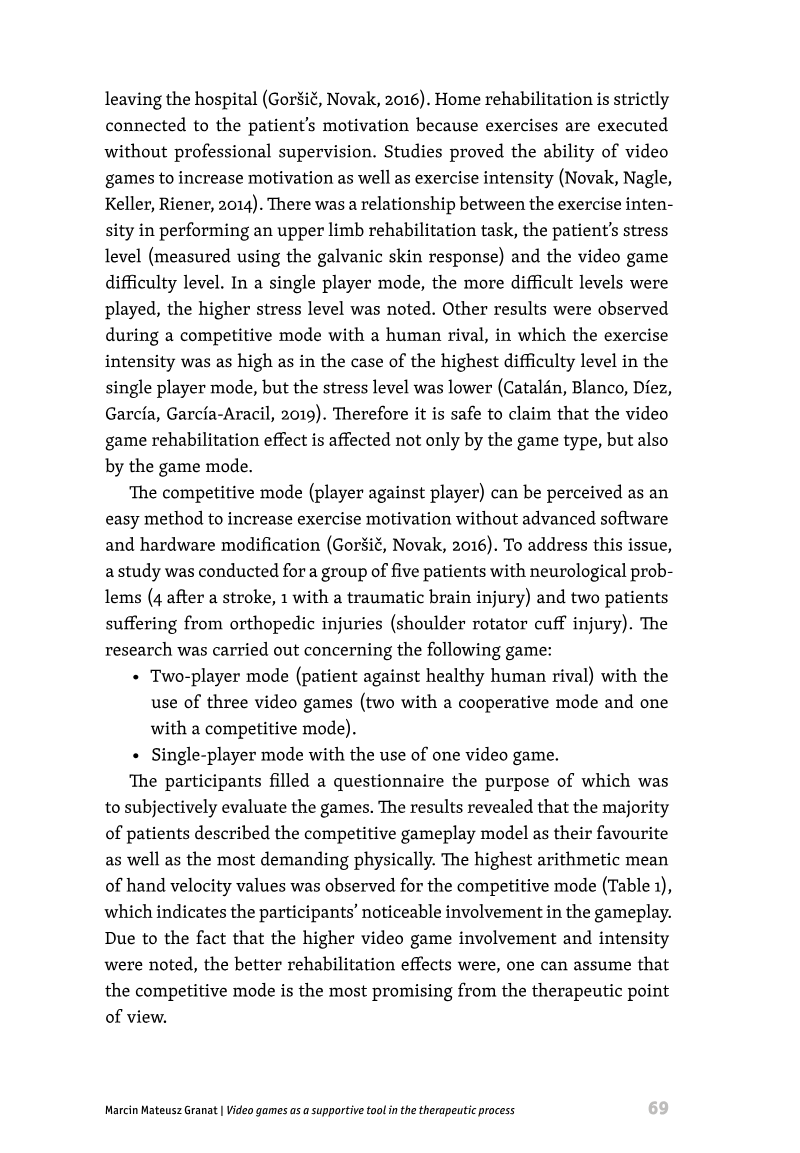
- In post-stroke rehabilitation, a study of 20 patients using Xbox Kinect found statistically significant mobility gains compared with standard therapy, and competitive two-player modes were linked to higher exercise intensity and lower stress than single-player play.
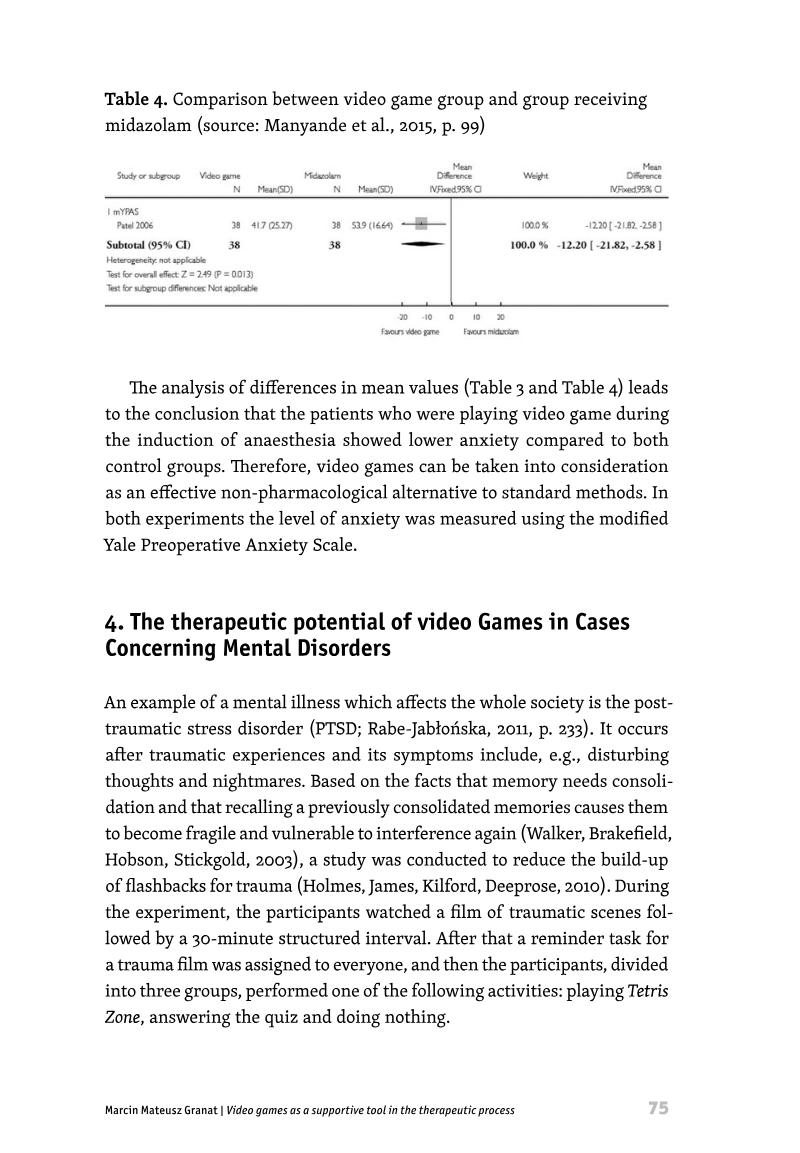
- In pediatric care, a trial of 20 children with cerebral palsy showed significant gains on the Quality of Upper Extremity Skills Test, and children with amblyopia gained visual acuity over 20 hours of play, faster than the reference patching approach.


New Deixis? New Anaphora? New Semantics: Language Game and the Obviousness of Sex Marking
Arkadiusz Jabłoński of Adam Mickiewicz University in Poznań examines in the journal Homo Ludens (2021) how Polish texts from the contemporary communicative domain use deictic and anaphoric elements to mark the sex of a referent, which does not always match grammatical gender.
- The author argues that Polish grammatical gender is not rigidly linked to the sex of a referent, so the masculine form człowiek can denote women as well.
- The paper finds that job-title nouns with masculine grammatical gender are neutral toward sex in categorical use, and that 'kandydatka na rektorkę' is judged redundantly marked.
- The author states that anaphoric hypernymisation, such as replacing a proper name with 'Kobieta' or '23-latka', is usually unnecessary in Polish, and links its spread to English influence.
Beyond the Character Sheet: Character Keepers as Digital Play Aids in the Contemporary Indie TRPG Community
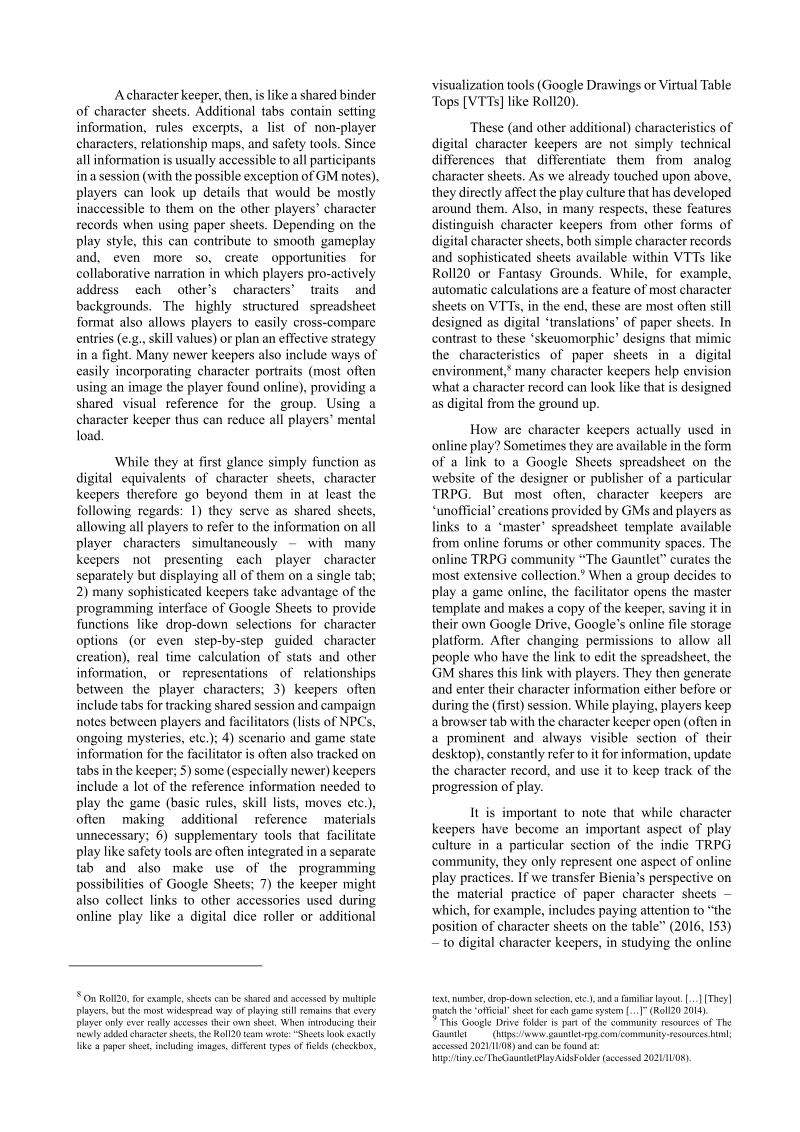
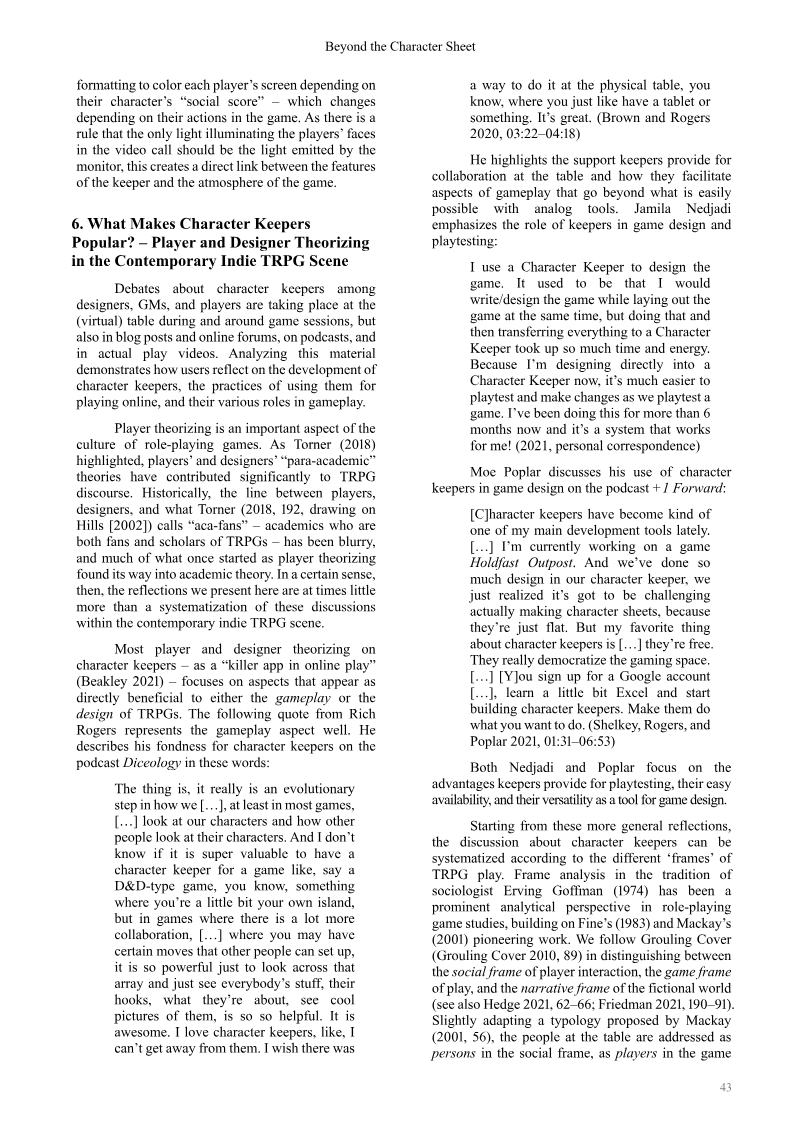
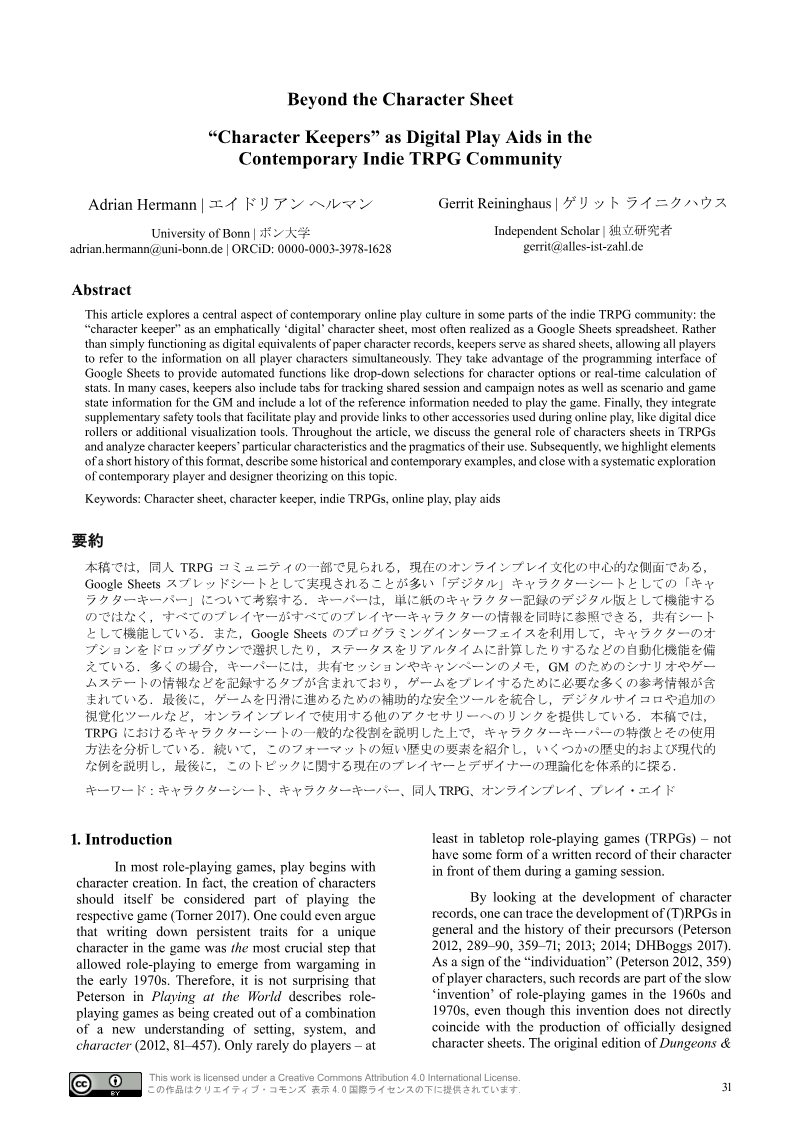
This article, by Adrian Hermann (University of Bonn) and Gerrit Reininghaus (independent scholar), examines the "character keeper" in parts of the indie tabletop role-playing game (TRPG) community.
- Character keepers differ from simple digital copies of paper sheets in multiple respects, including by giving all players simultaneous access to information on all player characters.
- The format's name was coined by Jason Cordova, and the Gauntlet Play Aids folder he created in December 2015 grew to over 400 games by June 2021.
- Shawn McCarthy seems to have created what the authors describe as the first keeper on June 11, 2013, for Dungeon World, putting all characters on a single tab.
The Golden Cobra's Online Pivot
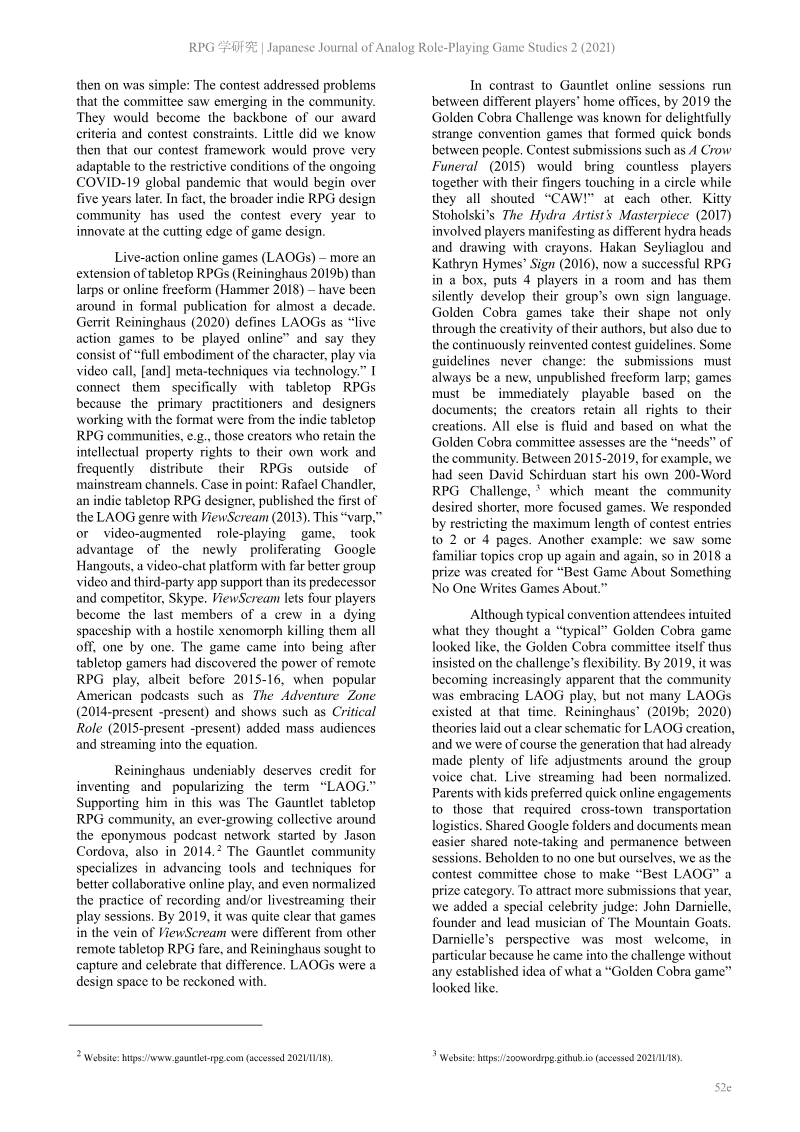
The Golden Cobra Challenge serves as a prominent international competition for freeform live-action role-play (larp) design.
- The Golden Cobra Challenge’s proactive integration of live-action online games (LAOGs) into its prize categories in 2019 allowed the competition to seamlessly transition to remote play during the 2020 pandemic.
- In 2020, the contest received over 50 entries specifically designed for digital platforms like Discord and video-conferencing software.
- Designers successfully leveraged the constraints of remote communication, such as digital disembodiment and Zoom fatigue, by incorporating them directly into the core mechanics of their games.
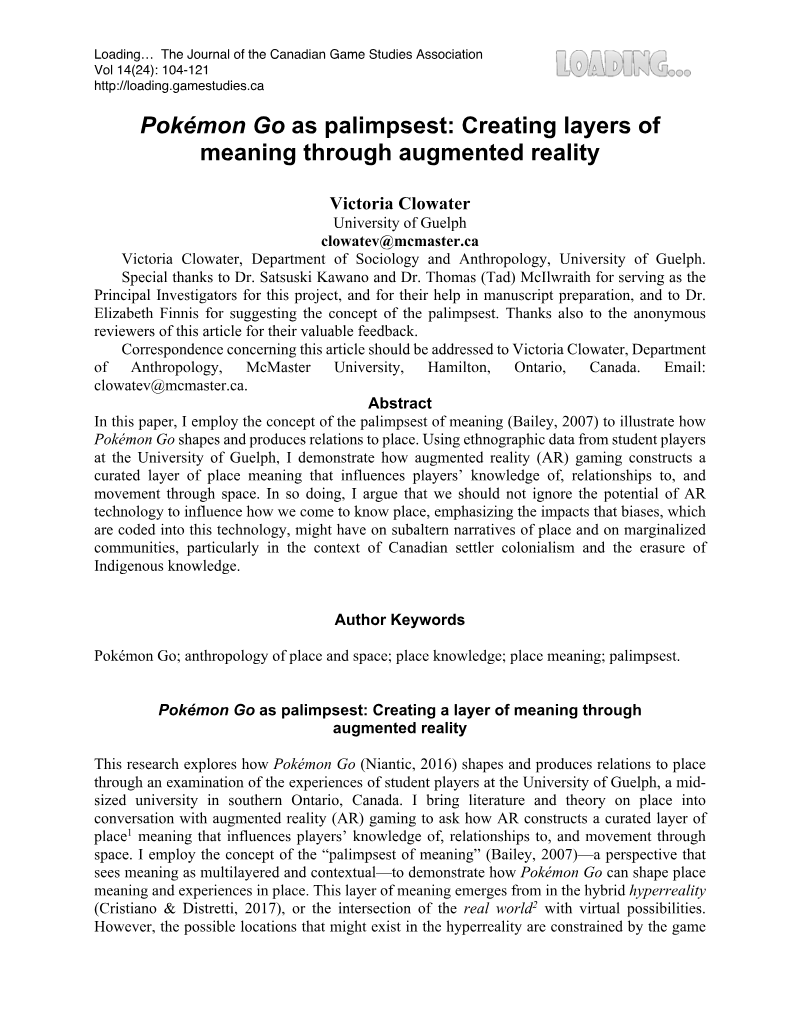
Pokémon Go as Palimpsest: Creating Layers of Meaning Through Augmented Reality
Victoria Clowater, writing in the Journal of the Canadian Game Studies Association (Vol 14), examines how Pokémon Go shapes relations to place, using ethnographic data from five 40-minute semi-structured interviews with student players at the University of Guelph, Ontario.
- Participants reported that the game led them to visit places they had not previously visited. The author states that Pokémon Go curates a layer of meaning that influences how players move through space.
- The author reports that Niantic does not allow natural features to become Wayspots, so the game rewards players for visiting built features in outdoor settings rather than wilderness.
- Only one participant had submitted a Wayspot, and no participants reported approving submissions on the review platform, so the author could not discuss players' experiences of creating and enforcing Niantic's criteria.
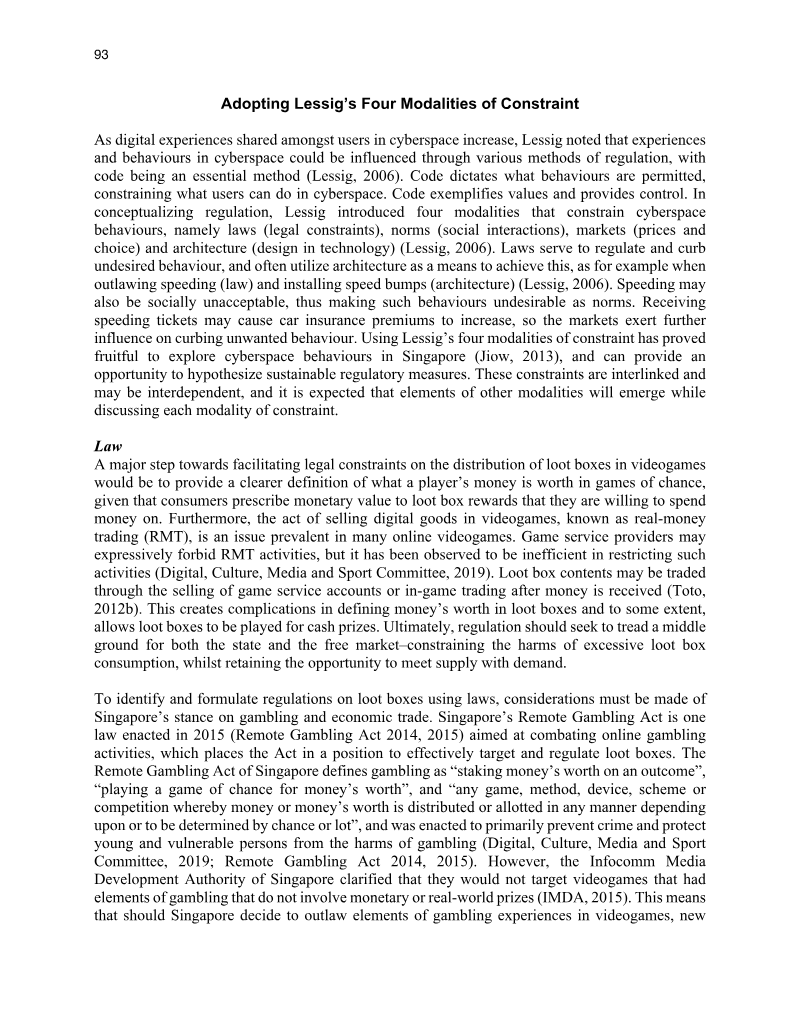
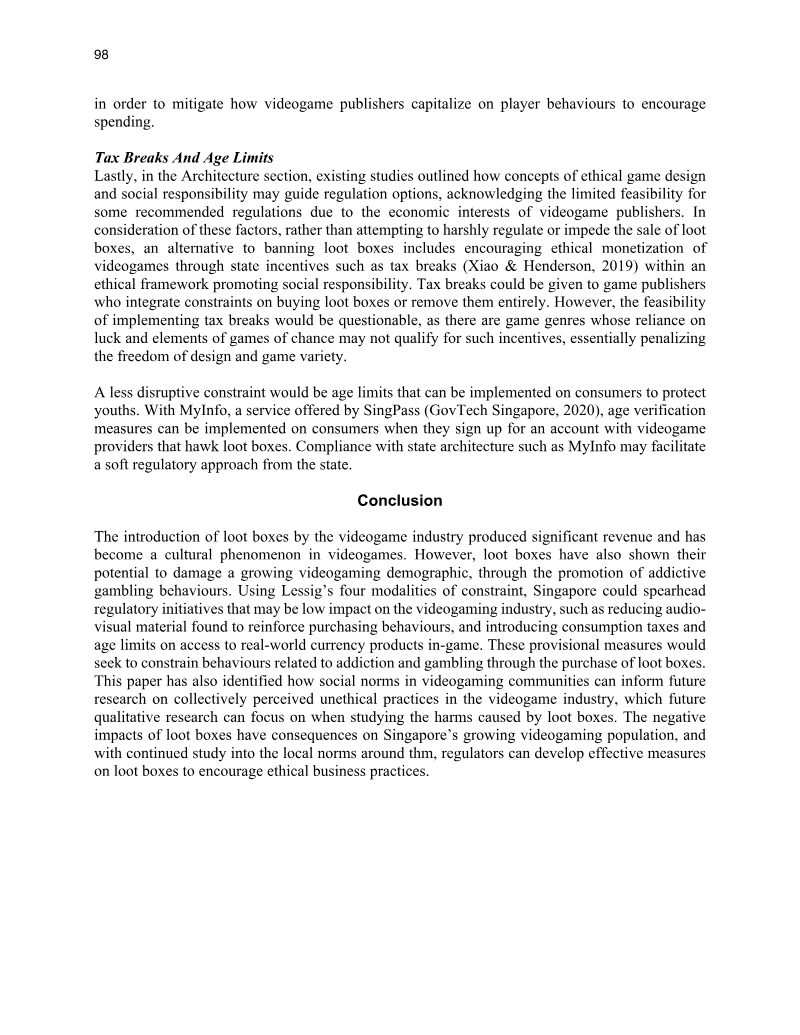
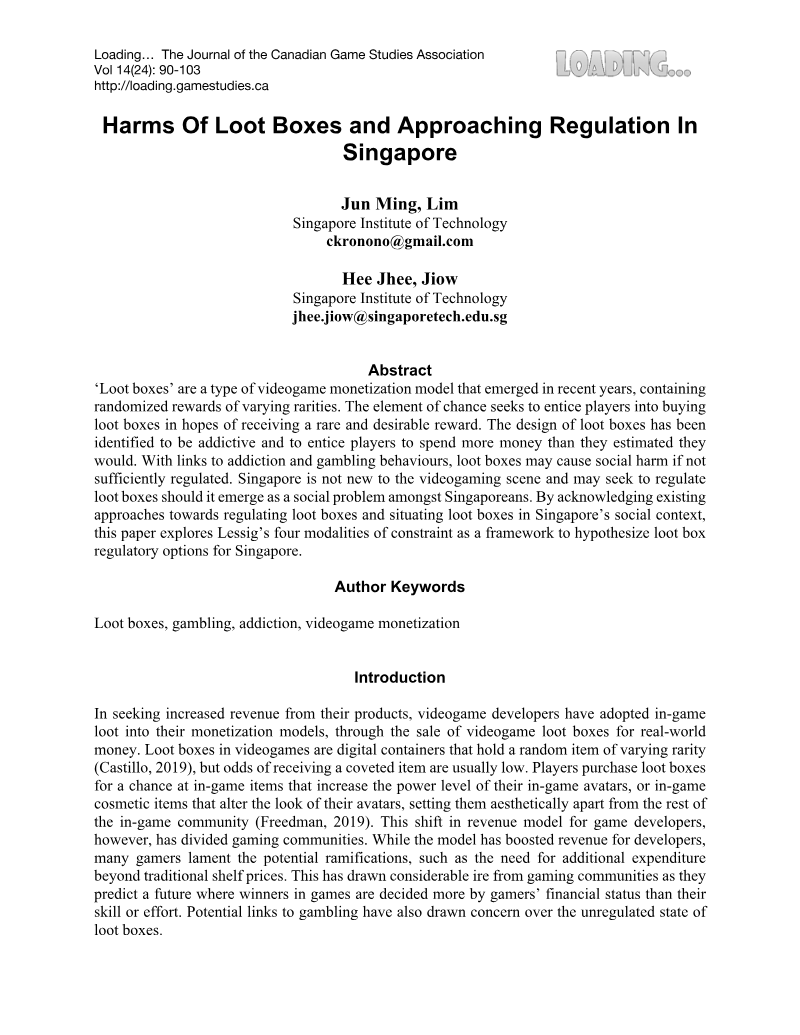
Harms of Loot Boxes and Approaching Regulation in Singapore
This paper by Jun Ming Lim and Hee Jhee Jiow of the Singapore Institute of Technology, published in the Journal of the Canadian Game Studies Association, examines loot boxes, randomized in-game reward containers sold for real money.
- The authors cite a study finding that 98% of respondents felt pay to win was unacceptable, as respondents felt that it contributes to unfair play conditions.
- Citing Kain (2017), the authors report that the Star Wars Battlefront II backlash led to an 8.5% drop in EA's share price, a loss valued at USD$3.1 billion.
- The authors argue that the Markets modality is not an effective regulator of loot boxes because digital items have an infinite supply.
Mental Health in 3D: A Dimensional Model of Mental Illness Representation in Digital Games
This paper, by Kelli Dunlap and Rachel Kowert and published in the Journal of the Canadian Game Studies Association (Loading..., Vol 14(24), pp.
- Shapiro and Rotter (2016) found that in top-selling games from 2011 to 2013, 24% depicted one or more mentally ill characters, and that of the 42 individual characters identified as portraying mental illness, 29 (69%) acted violently and in line with the homicidal maniac trope.
- The authors argue that adopting television and film frames for games has yielded a near-universal finding of negative and stereotyped portrayals.
- The proposed model classifies representations on a three-level spectrum: one-dimensional decorative references, two-dimensional defining but shallow portrayals, and three-dimensional fully realized portrayals.
Who Gets to Be in The Guild? Race, Gender and Intersecting Stereotypes in Gaming Cultures
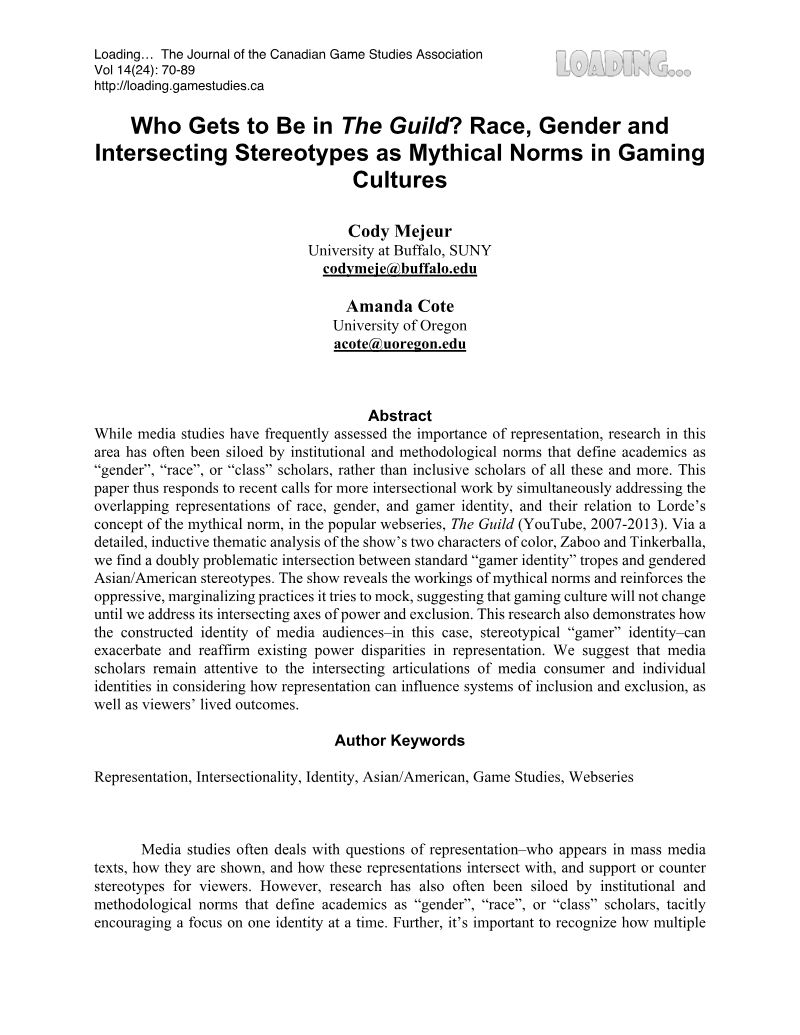
This article by Cody Mejeur and Amanda Cote was published in Loading… The Journal of the Canadian Game Studies Association (Vol 14(24), pp. 70-89).
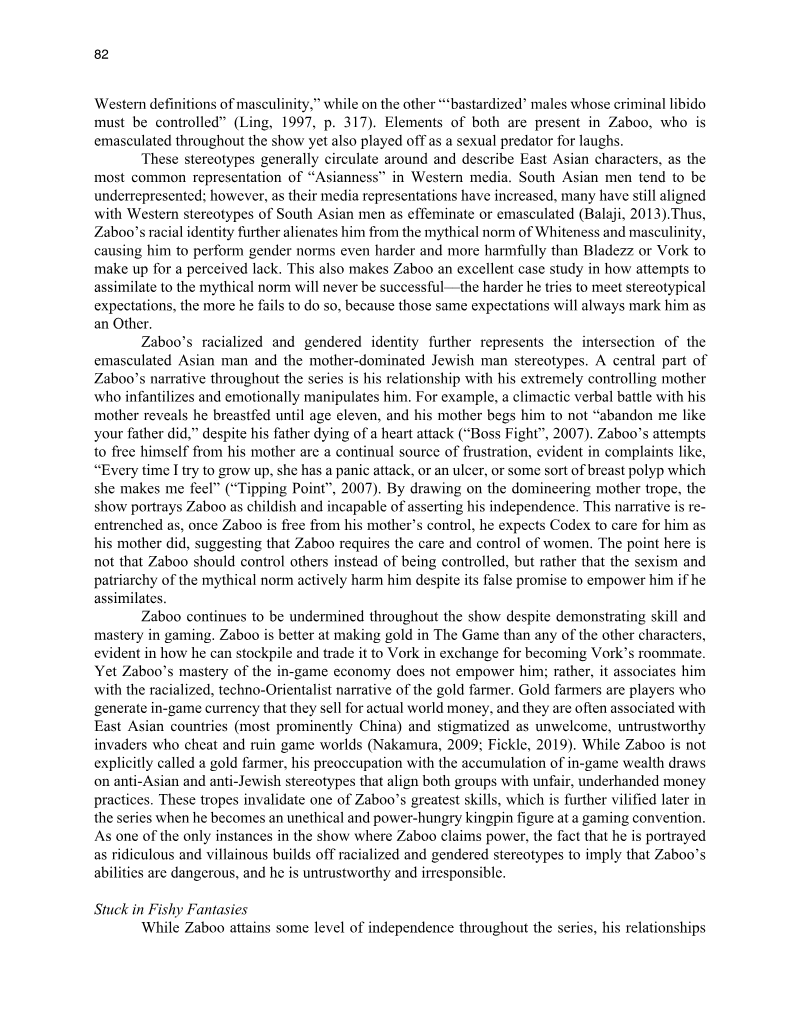
- The authors argue that Tink's gamer aggression links her to the Dragon Lady stereotype and to female gamer stereotypes, presenting Asian/American women and female gamers as potentially deviant.
- The authors contend that Zaboo's attempts to assimilate to the mythical norm make him fail further, because those expectations always mark him as an Other.
- The authors argue that the show's comedic and authenticity framing makes its stereotypes harder for viewers to read critically.
The Elusive “Indieness”: Measuring the Defining Characteristics of Indie Games
This article by Leônidas Soares Pereira was published in Loading...
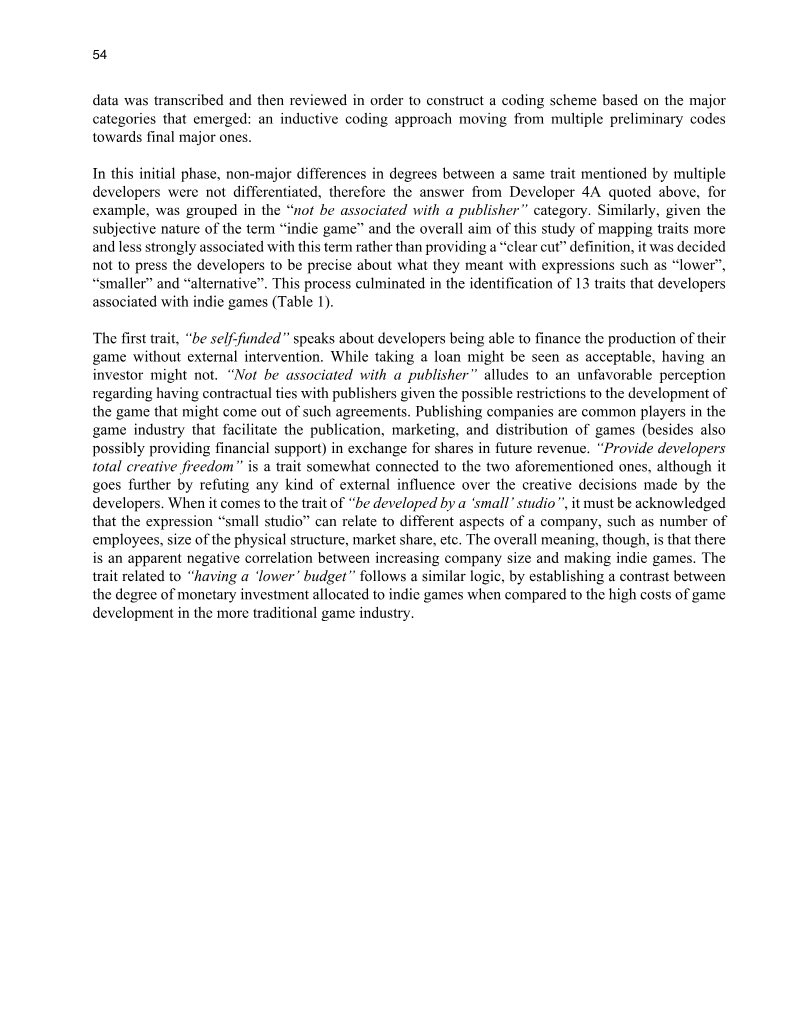
- Creative freedom was the highest-rated indie trait by a clear margin in the survey, while retro style and reliance on specific tools or engines were the lowest.
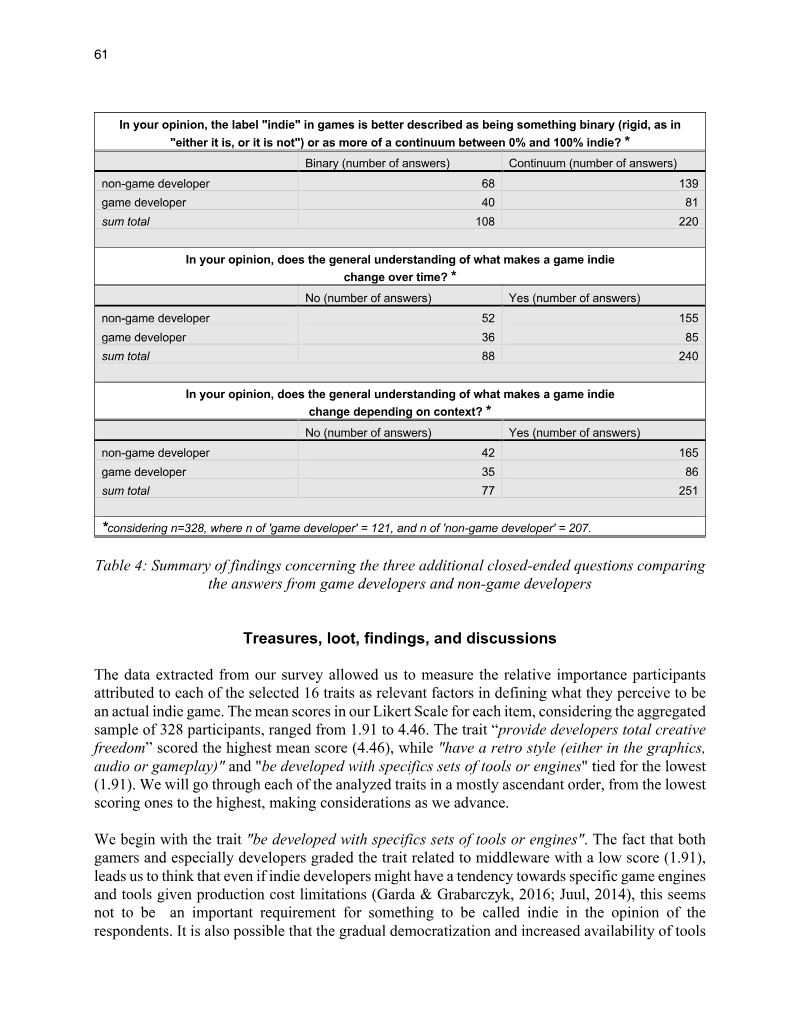
- Most respondents viewed the indie label as a matter of degree rather than a binary category.
- A large majority of respondents said the understanding of what makes a game indie changes over time.
Europa Universalis IV and Deep Learning: Historical Accuracy, Counterfactuals and Historical Themes
Rhett Loban, of Macquarie University, examines Europa Universalis IV (EUIV) as a tool for teaching history in adult and higher education, published in the Journal of the Canadian Game Studies Association.
- Of 331 forum survey respondents, 53.17% (176) said EUIV simulates history 'somewhat accurately' because gameplay did not produce a fully accurate reflection of history.
- Most respondents said the game encouraged them to seek historical information outside the game, which the author suggests reduces the risk of learning falsehoods from play.
- One survey participant reported that EUIV produces a surprising amount of historical trends, but conceded that outside of Europe the game tends to be very inaccurate.

Towards a “Filipino” Video Game: Teaching Filipino Culture and Identity for Video Game Development
Christoffer Mitch C. Cerda, writing in the Transactions of the Digital Games Research Association (November 2021), reflects on teaching the Filipino module of CS179.15A, an interdisciplinary game design course at his university, during the first semesters of AY 2015-2016 and AY 2017-2018.
- Filipino players mostly play foreign-made games, which the author links partly to limited market access, since video games are expensive and accessible mainly to middle and upper classes.
- Filipinos reportedly spent $572 million on video games in 2019, citing Newzoo, with mobile free-to-play games growing in popularity due to low cost.
- The author reports that a Filipino player may read the paring pugot in Nightfall: Escape as representing the Spanish friars, while a non-Filipino player may wrongly conclude it represents the Gomburza.
Infrastructures of Play: Labor, Materiality, and Videogame Education
Videogame education must evolve beyond a focus on design and career preparation to include a critical examination of the industry’s broader material and ethical impacts.
- Videogame education must move beyond a focus on expressive artifacts to teach students about the industry's role as an extractivist system with significant environmental and human costs.
- The 'illusion of immateriality' surrounding digital devices masks the reality that hardware—such as iPads, consoles, and GPUs—relies on finite, non-renewable resources extracted over geological time.
- Downstream e-waste management is hazardous, as evidenced by the Agbogbloshie slum in Ghana, where toxic dioxins and PCBs from discarded electronics contaminate the local food chain, with eggs exceeding European food safety limits by 220 times.
Writers
Games and companies
Games