Finland reports and market data
Documents

Superstar Panel: Walk of Game
The mobile gaming industry is currently undergoing a fundamental transformation in user acquisition strategies necessitated by Apple’s App Tracking Transparency framework and broader privacy regulations.
- Apple’s App Tracking Transparency framework and global privacy regulations have forced a shift from granular, data-driven user acquisition to broader audience strategies and creative-led marketing.
- Developers are mitigating rising acquisition costs by utilizing predictive modeling based on early-session user behavior and diversifying into channels like connected television and influencer campaigns.
- Live-ops and customer relationship management have become primary operational pillars to improve player retention as the cost of acquiring new users continues to increase.

State of Play-to-Earn: Finland
The play-to-earn business model represents a transformative shift in the gaming industry, leveraging blockchain technology and non-fungible tokens to facilitate decentralized ownership and new revenue streams.
- The long-term viability of play-to-earn models depends on shifting focus from speculative financial mechanics to high-quality artistic content and engaging gameplay.
- Developers are mitigating environmental and operational concerns by adopting greener consensus mechanisms and layer-two blockchain solutions.
- The sector faces significant regulatory risks, including potential reclassification as gambling and strict compliance requirements for anti-money laundering and data protection.
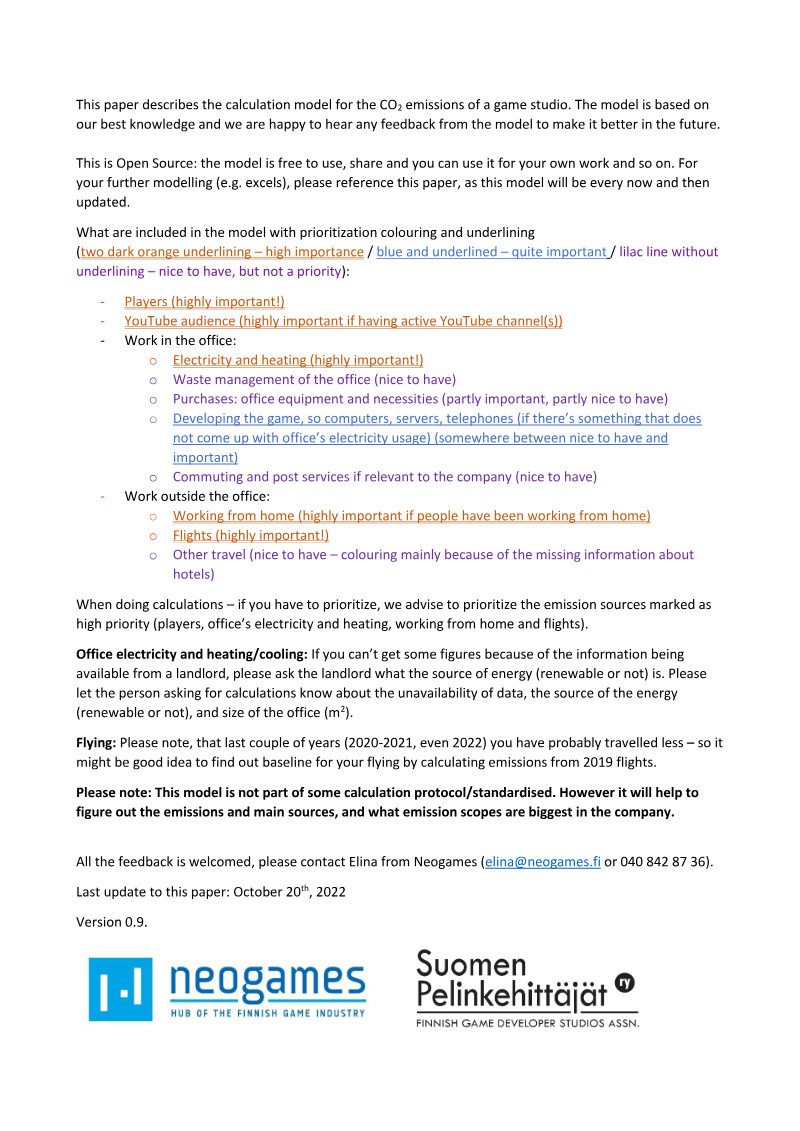
A Finnish Game Industry Model for Calculating Your Game Developer Studios' CO2 Emissions
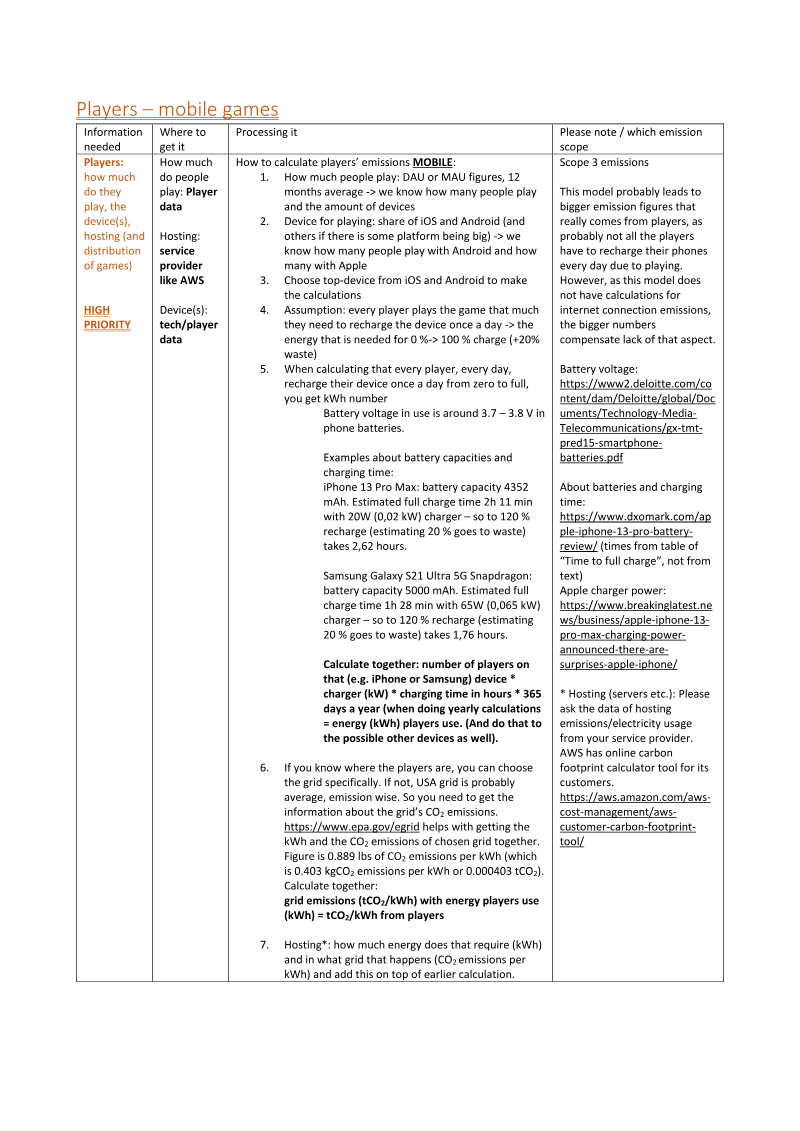
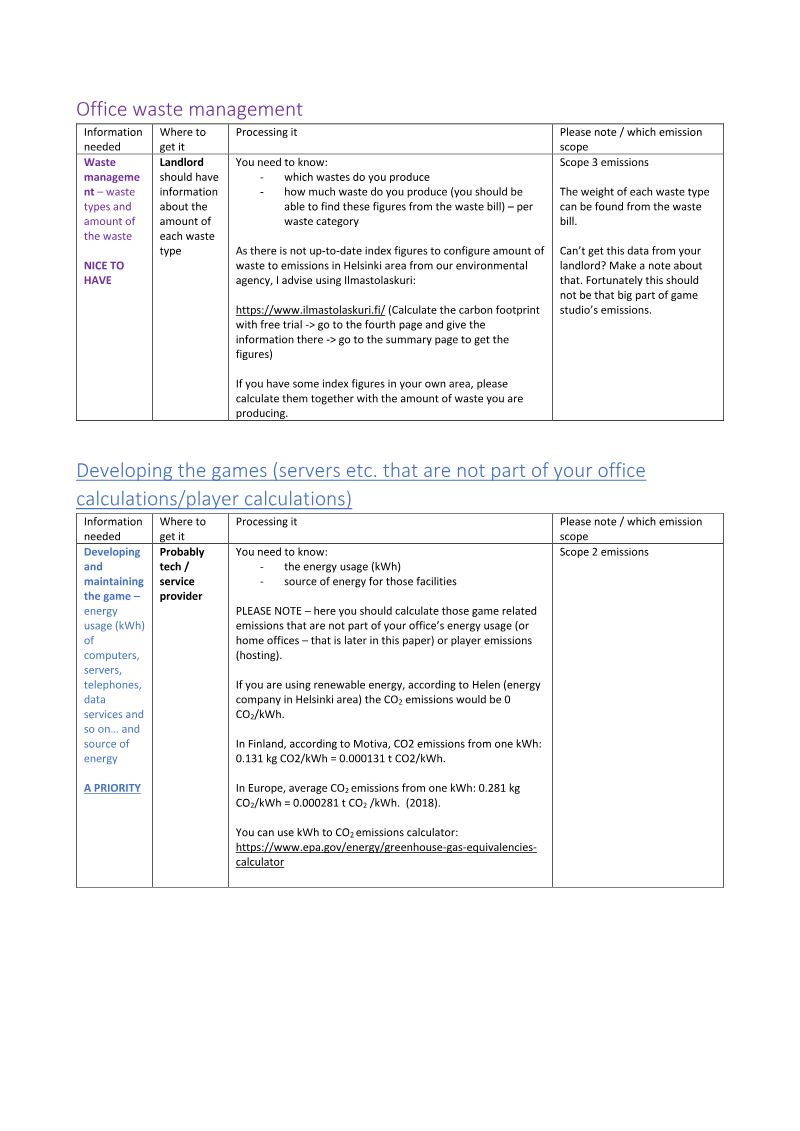
This framework provides a standardized, open-source methodology for Finnish game development studios to calculate and assess their carbon dioxide emissions.
- The framework identifies player activity, office electricity and heating, remote work, and business flights as the primary sources of carbon emissions for game studios.
- Secondary emission factors include office equipment procurement, waste management, employee commuting, and audience engagement on platforms like YouTube.
- Studios are advised to use 2019 data as a baseline for travel calculations to avoid the data distortions caused by pandemic-era travel fluctuations.

Superstar Session: A Hot Nordic? How they Succeed & What’s to Come
The Swedish and Finnish games industries have evolved into global powerhouses, with the Nordic region now generating 3.3 billion euros in annual revenue.
- The Nordic games industry now generates 3.3 billion euros in annual revenue, officially surpassing traditional regional export sectors like iron ore, pulp, and heavy vehicle manufacturing.
- Success is driven by a diverse portfolio that spans mobile casual hits like Candy Crush to major AAA and indie titles such as Minecraft and Valheim.
- The Nordic 'born global' mindset is reinforced by a lack of television dubbing, which facilitates early English proficiency and an immediate international market orientation.

Take 'Control' of Animation
The development of the animation system for Control centered on the necessity of replacing discontinued middleware with a custom, high-performance engine capable of supporting fluid, gameplay-driven movement.
- The development team replaced discontinued middleware with a custom, data-driven animation engine based on motion matching to support fluid, gameplay-responsive movement.
- Implementing an 'ignore tags' system optimized performance by reducing the animation frame search space by 80 percent.
- The team mitigated common motion-matching artifacts like foot sliding by using a curated data approach featuring precise acceleration curves and a strategic category-tagging system.

Scaling Up a Merge Game with Antti Hattara, CEO Starberry Games
The merge genre has evolved from a simple casual category into a highly competitive landscape where long-term retention is the primary determinant of success.
- Long-term retention beyond 90 days is now the primary metric for success in the highly competitive merge game market.
- Developers can differentiate their titles by pivoting from simple idle mechanics toward complex city-building simulations.
- Scaling requires a dual strategy of consistent content updates and advanced performance marketing, leveraging automated tools to overcome IDFA deprecation challenges.

TWIG 145: Why Rovio, the makers of Angry Birds, acquired a hyper-casual game studio Ruby Games
Rovio’s acquisition of the hyper-casual studio Ruby Games represents a strategic effort to bolster user acquisition, expand audience reach, and increase daily active users (DAU) in a post-IDFA landscape.
- Rovio acquired hyper-casual studio Ruby Games to bolster user acquisition and increase daily active users (DAU) in the post-IDFA landscape.
- The deal uses a conservative, multi-tranche payment structure spanning five years, tying final share acquisition to Ruby Games' future financial performance.
- Rovio intends to use shared device identification (IDFV) to improve cross-promotion efficiency, funneling players from hyper-casual titles into their core game portfolio.

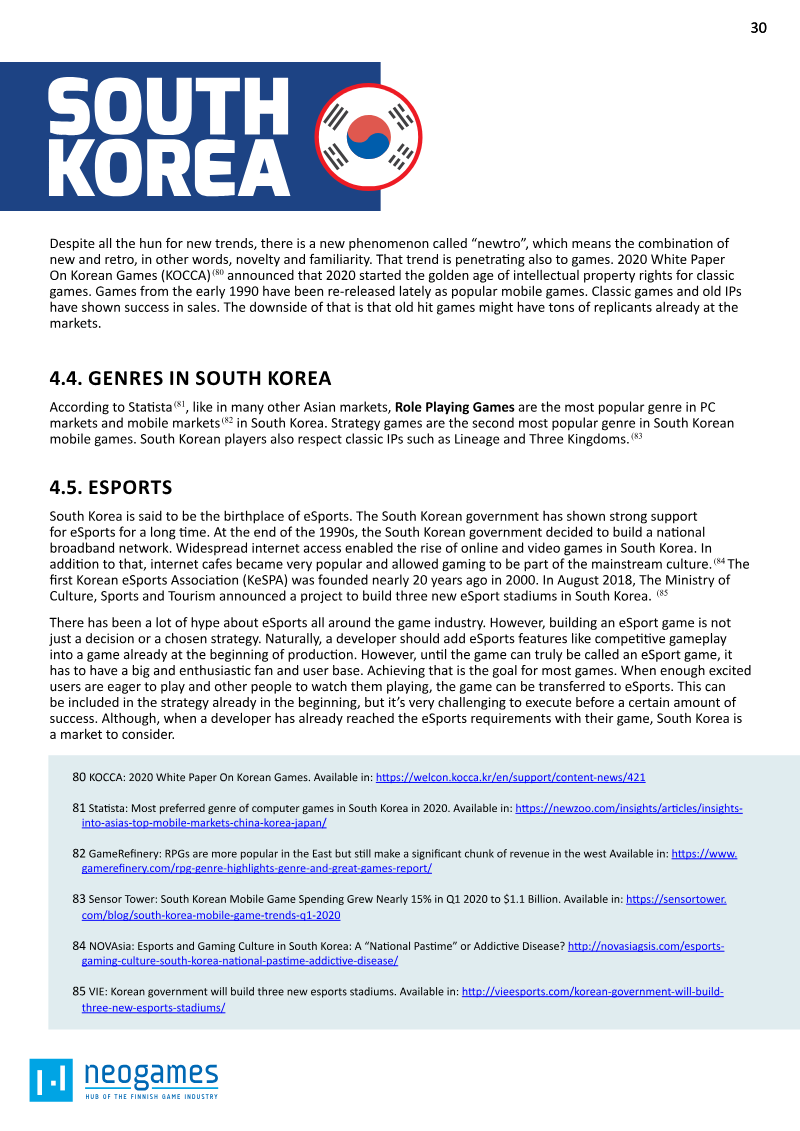

Market Study: China, Japan and South Korea
The Asia-Pacific region stands as the global leader in the gaming industry, generating 49 percent of total worldwide revenue.
- The Asia-Pacific region generates 49 percent of total worldwide gaming revenue, driven primarily by China, Japan, and South Korea.
- Entering the Chinese market requires collaboration with local publishers to navigate mandatory ISBN licensing, strict government censorship, and a fragmented Android ecosystem.
- Japan’s mature market is dominated by mobile revenue and console hardware, where success depends on high-quality RPGs, gacha mechanics, and established brand trust.
The Game Industry of Finland 2020
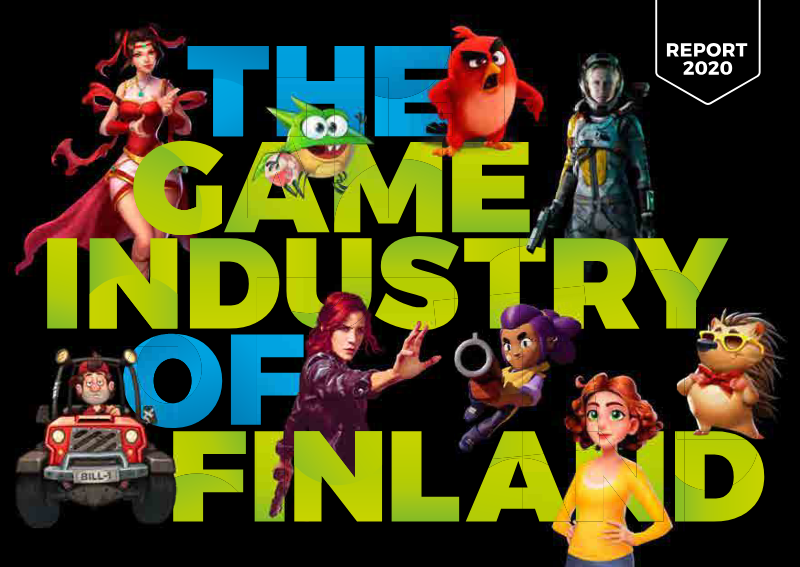
The Finnish game industry has transitioned from a hobbyist niche into the nation’s largest cultural export, maintaining an annual turnover exceeding €2 billion for six consecutive years.
- The Finnish game industry generated €2.4 billion in turnover in 2020, marking six consecutive years of exceeding the €2 billion threshold.
- Industry stability has improved as Supercell’s share of total turnover declined to 54%, supported by a maturing 'middle class' of 46 studios each generating over €1 million annually.
- Despite a consolidation in the number of active studios to approximately 200, the sector reached a record high of 3,600 professional employees.



Creative Vision for Our Games: Remedy Capital Markets Day 2020
Remedy Entertainment’s 2020 Capital Markets Day presentation establishes a creative framework centered on the development of immersive, atmospheric game worlds.
- Remedy Entertainment’s 2020 strategy centers on developing immersive, atmospheric game worlds where environmental storytelling is integrated directly with specialized mechanical systems.
- The studio prioritizes high-concept fiction by creating cohesive, surreal settings like the Oldest House and the Astral Plane that function as both narrative backdrops and interactive playgrounds.
- Technical design philosophy emphasizes functional depth, exemplified by the Service Weapon’s architecture, which integrates specific components like barrels, triggers, and power sources into the broader world-building.

Remedy Capital Markets Day 2020: A Highly Attractive Home to World-Class Talent
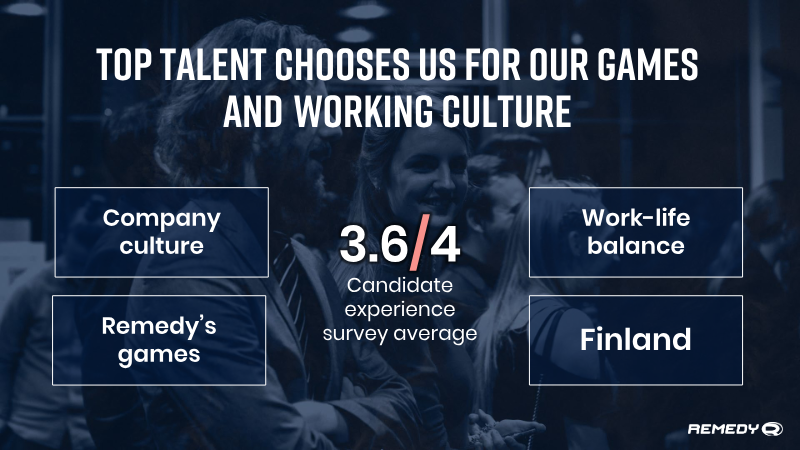
Remedy Entertainment positions itself as a premier destination for global gaming talent by fostering a creative, high-performance culture that prioritizes employee engagement and professional development.
- Remedy Entertainment successfully reduced its annual employee turnover rate from 14.3% in 2017 to 7.1% by late 2020.
- The studio maintains a highly selective recruitment process, hiring only 42 individuals out of 2,620 applicants between January and November 2020.
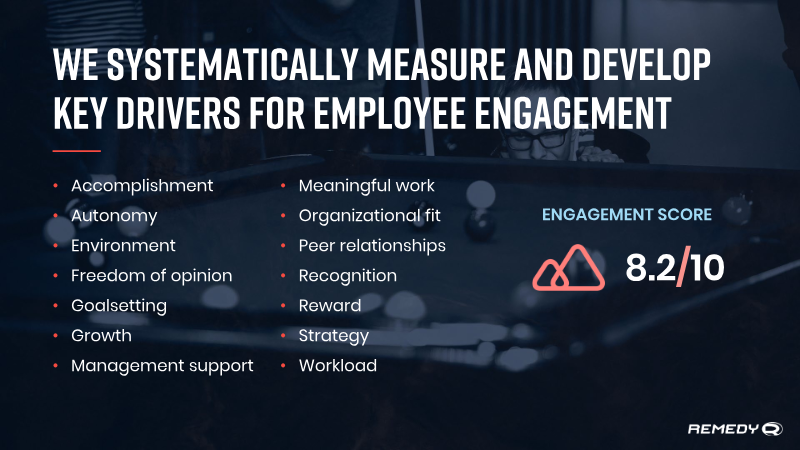
- Internal organizational health is strong, with employees reporting an engagement score of 8.2 out of 10, driven primarily by autonomy and clear goal setting.
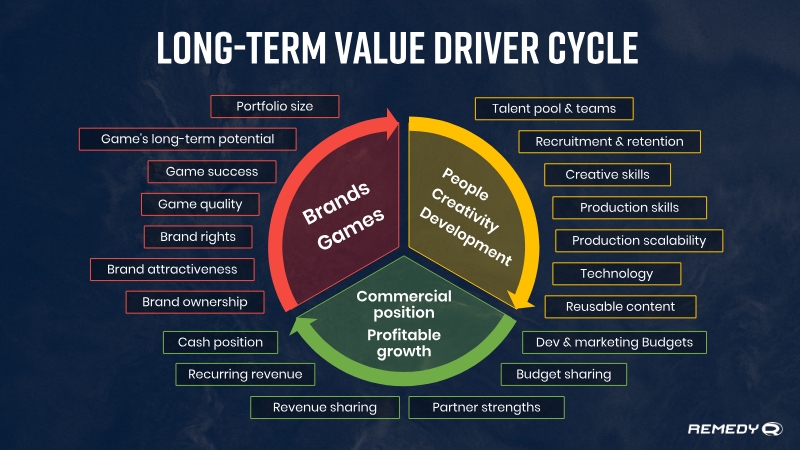

Remedy Capital Markets Day 2020: Profitable Growth Company with Managed Risks
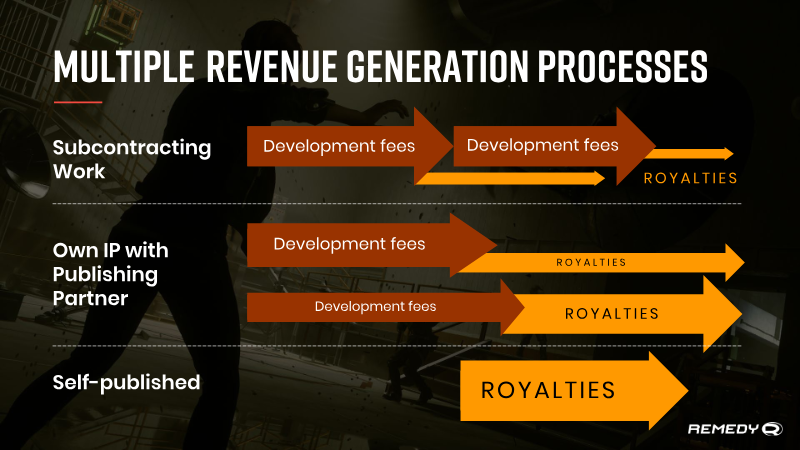
Remedy Entertainment’s strategic outlook centers on transitioning toward a multi-project business model designed to balance risk while driving profitable growth.
- Remedy is transitioning to a multi-project business model that balances risk and revenue through a mix of subcontracting, partner-published titles, and self-published intellectual property.
- The company projected 2020 revenue between 39 million and 41 million euros, with expected EBIT margins of 27% to 30.5%.
- Financial stability is maintained through favorable contract terms, including strategic budget sharing, effective recoupment structures, and tiered revenue-sharing agreements.