Europe reports and market data
Documents
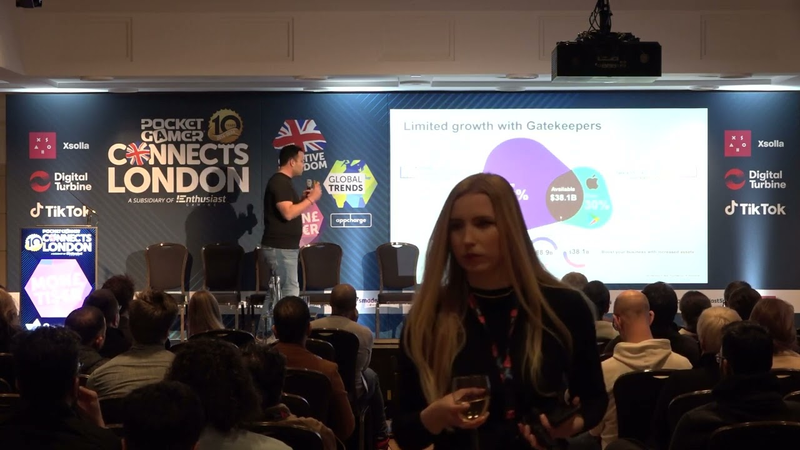
Unveiling the Future of In-App Payments in Europe: The Evolution of app Stores, Andrew Christodoulou
The European mobile gaming landscape is undergoing a significant transformation driven by the European Union’s Digital Markets Act (DMA).
- The European Union's Digital Markets Act (DMA), which became fully applicable on March 6, 2024, is mandating a shift in app store payment models by forcing gatekeeper platforms to allow alternative in-app payment methods.
- Mobile game revenue streams are currently dominated by in-app purchases (48.2%), followed by paid app downloads (37.8%) and ad-based revenue (14%).
- Google Play has already introduced 'User Choice Billing,' which allows developers to offer alternative payment options, a feature already utilized by companies like Spotify.

Between the Lines: Eastern Europe’s Gaming Market
The Eastern European gaming market represents a significant global force, projected to reach $3 billion in revenue by 2024.
- The Eastern European gaming market is projected to reach $3 billion in revenue by 2024, with Poland serving as a primary hub that accounts for 15% of the top 200 games on Steam wishlists.
- Geopolitical instability has forced a massive migration of studios to hubs including Cyprus, Poland, Portugal, and the UAE to maintain access to essential banking services and venture capital.
- The region’s success is driven by a highly skilled talent pool that produces both casual mobile games and high-fidelity titles, frequently utilizing unique cultural lore to create globally successful franchises like The Witcher and S.T.A.L.K.E.R.

State of the Icelandic Game Industry 2019
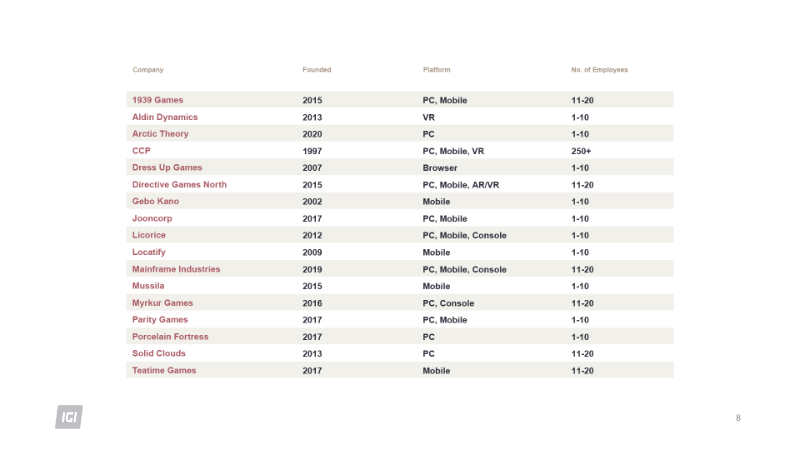
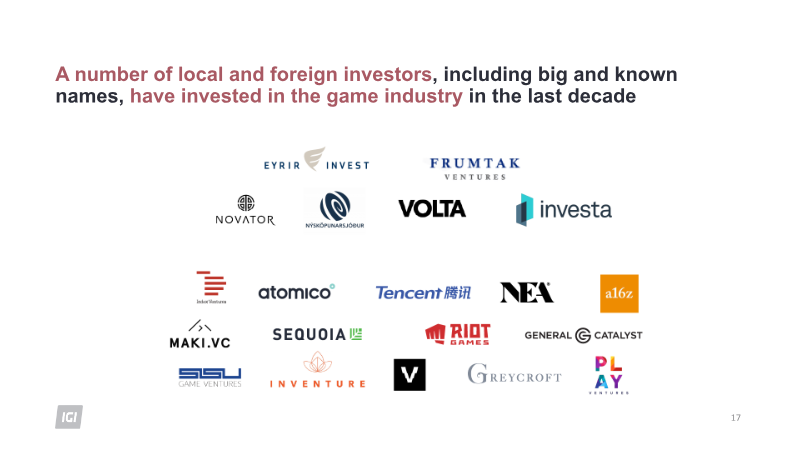
The 2019 State of the Icelandic Game Industry report provides a comprehensive overview of the nation’s gaming sector, highlighting its economic significance, growth trajectory, and future potential.
- The Icelandic game industry is highly export-oriented, with over 95% of its total revenue generated from international markets.
- As of 2019, the sector consisted of 17 active companies employing 345 people and generating approximately 8.3 billion ISK (61 million USD) in annual revenue.
- The industry's growth potential by 2030 ranges from a status quo of 9.6 billion ISK in revenue to an optimistic scenario of 72 billion ISK and 1,200 employees.
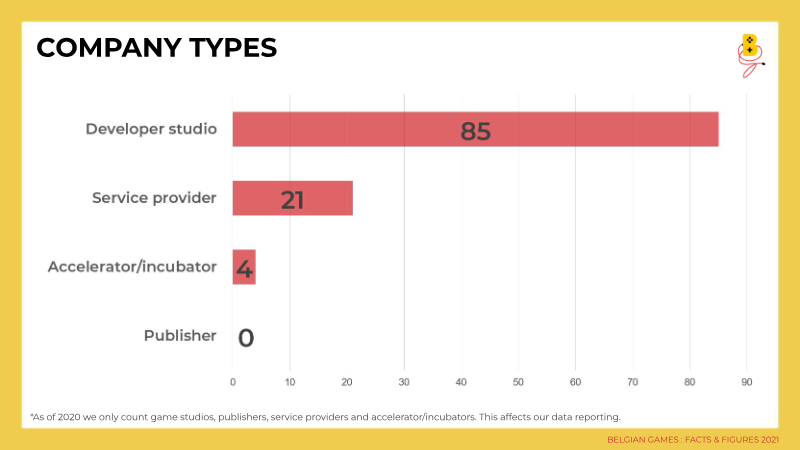
Belgian Games Industry: Facts & Figures 2021
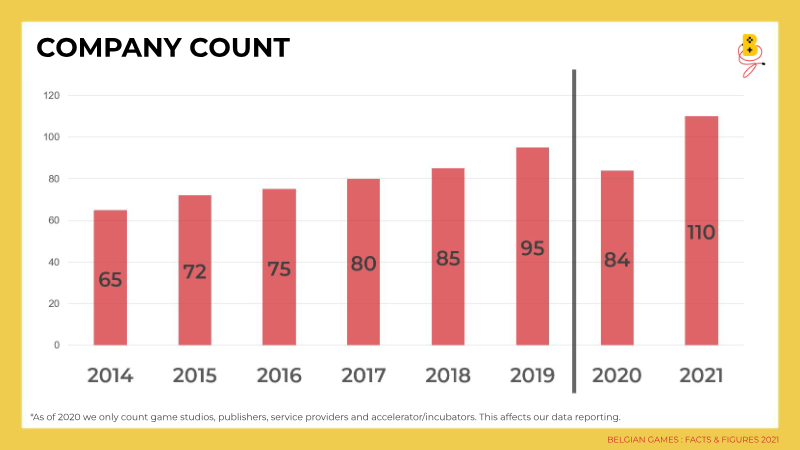
The Belgian games industry experienced significant expansion throughout 2021, characterized by robust growth in both infrastructure and economic output.
- The Belgian games industry generated €88 million in turnover in 2021, representing an 8% year-over-year increase.
- The number of active industry entities grew to 110 in 2021, up from 84 in 2020.
- Full-time equivalent employment in the sector rose to 935 positions, an increase from 825 in the previous year.
A Study on Global Game Policies and Laws: 2023
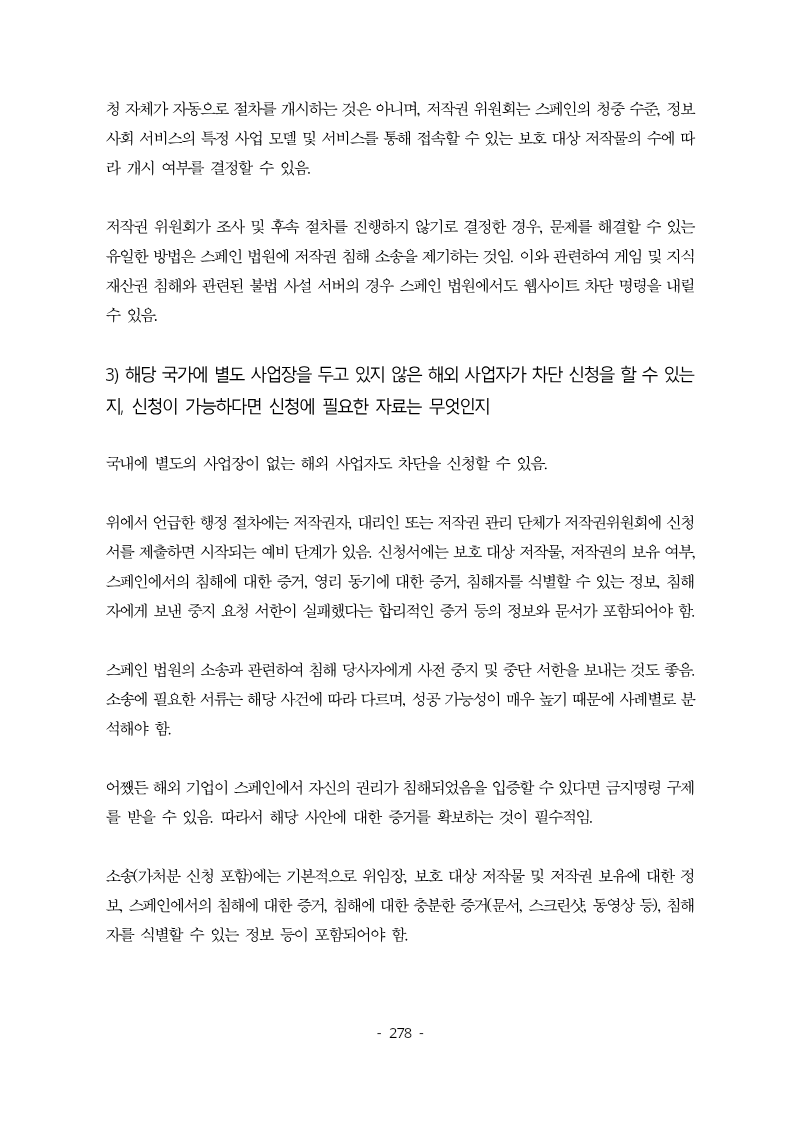
The 2023 Study on Global Game Policies and Laws provides a comprehensive analysis of the regulatory environments governing the video game industry across six key Western European markets: the United Kingdom, Germany, Belgium, the Netherlands, Spain, and France.
- Belgium maintains a strict legal prohibition on paid loot boxes, while other surveyed European nations only apply gambling regulations if in-game items possess real-world economic value or are tradable.
- All surveyed jurisdictions strictly enforce the EU’s General Data Protection Regulation (GDPR), which requires rigorous data processing protocols and a mandatory 72-hour notification window for data breaches.
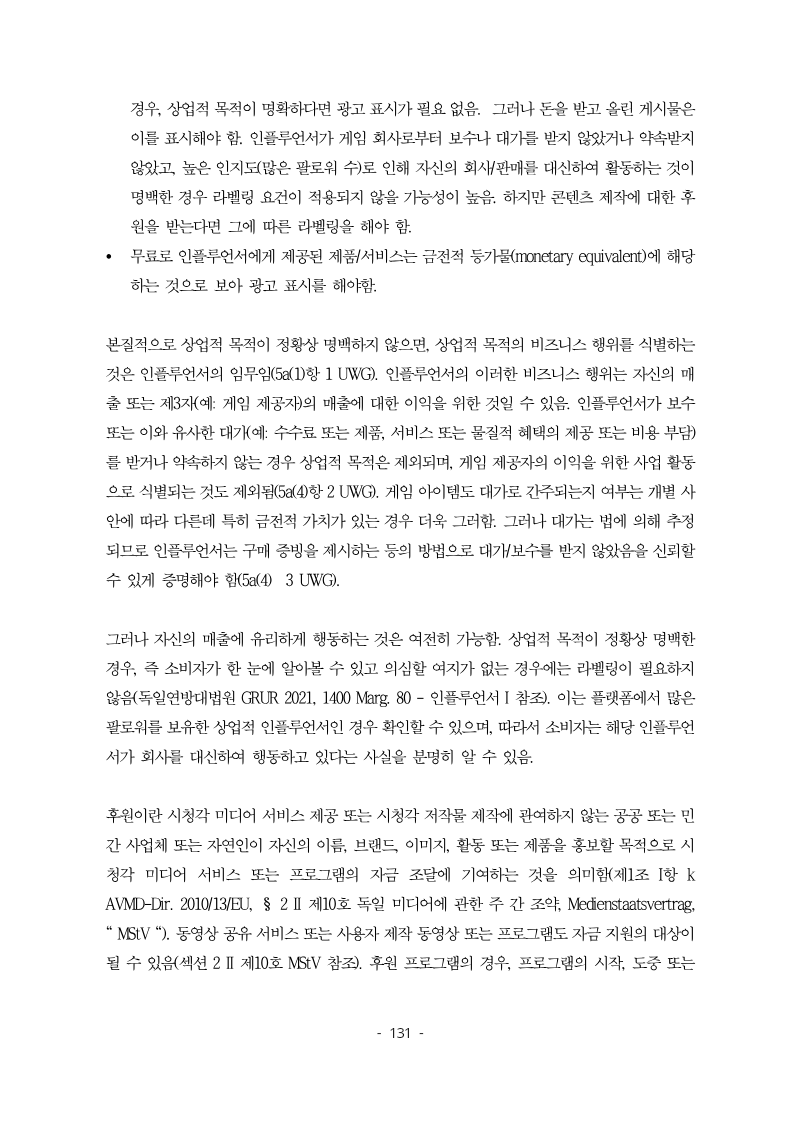
- Consumer protection laws across these markets generally mandate a 14-day right of withdrawal for digital purchases and require transparent disclosure of pricing, contract terms, and influencer marketing.
White Paper on Spanish Video Game Development 2024: Executive Summary
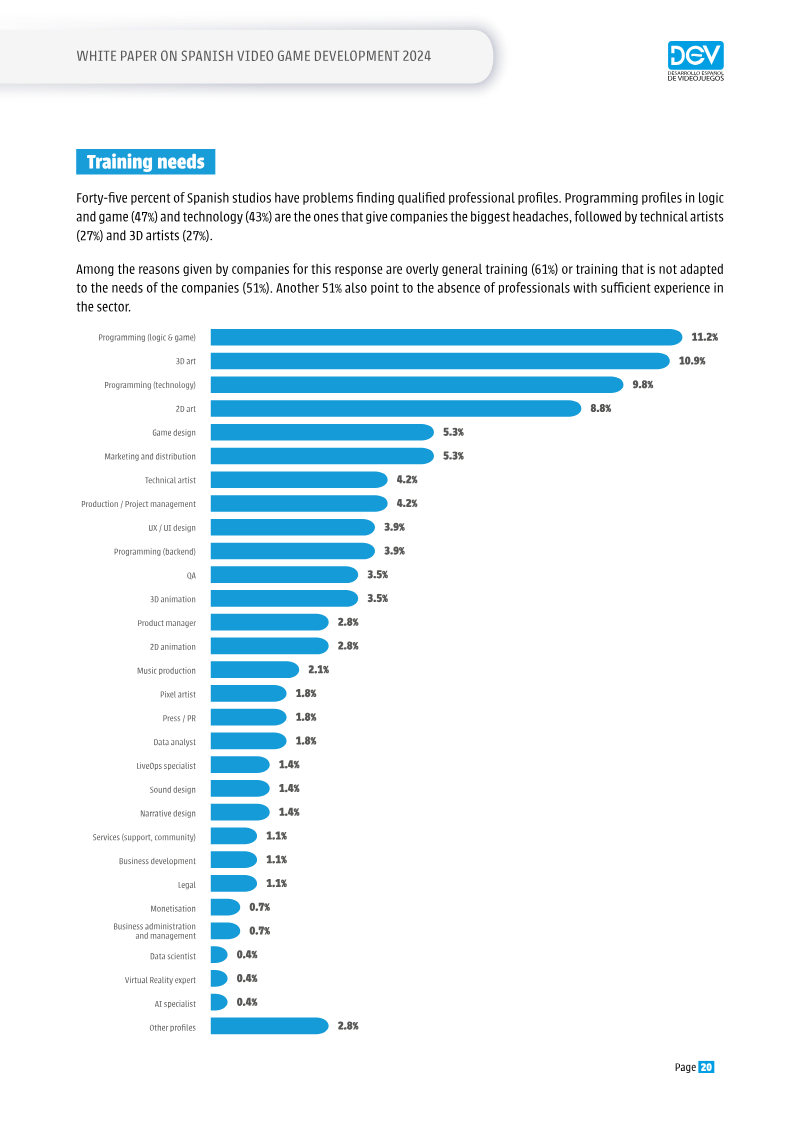
The Spanish video game industry represents a significant economic force, characterized by 815 active studios primarily clustered in the hubs of Catalonia and Madrid.
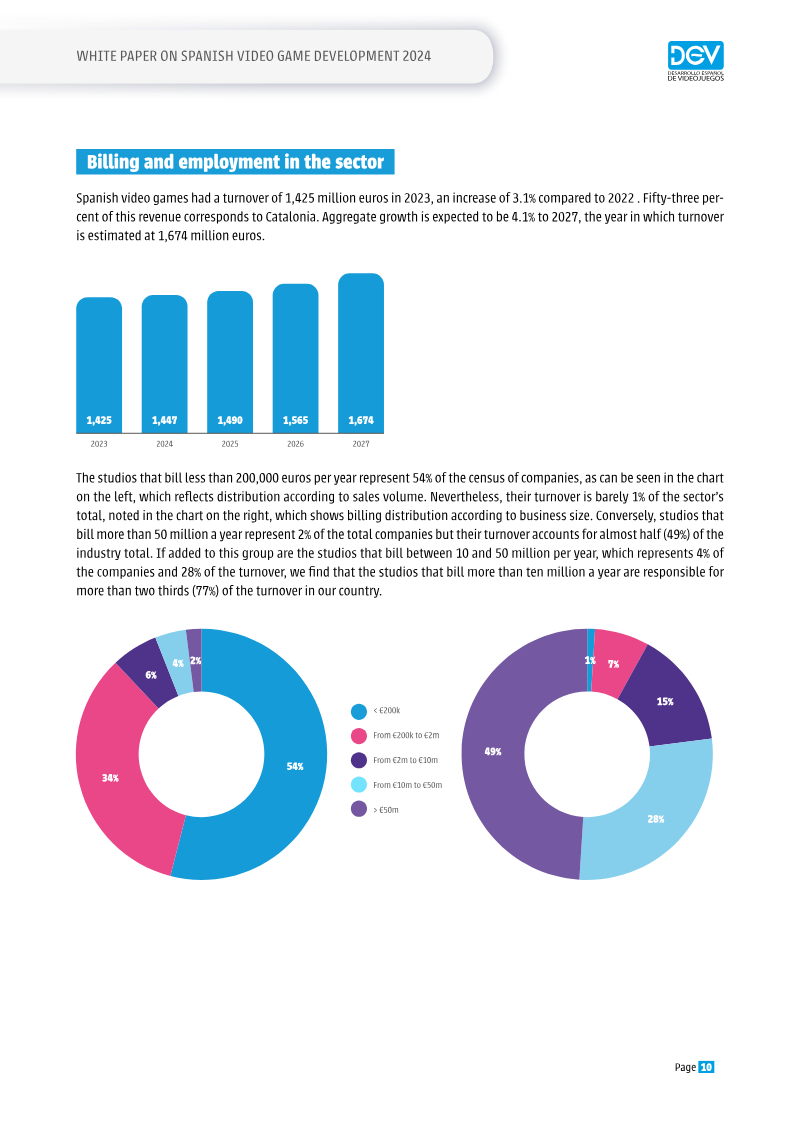
- The Spanish video game industry comprises 815 active studios, generating €1.425 billion in turnover and employing 10,259 people as of 2023.
- Industry growth is heavily concentrated in a few large-scale companies, with over 50% of studios reporting negative economic impacts and concerns regarding long-term viability.
- Public funding for the sector reached a five-year low in 2023, forcing developers to rely on internal resources and project-specific grants rather than tax incentives.
Netherlands Games Monitor 2024
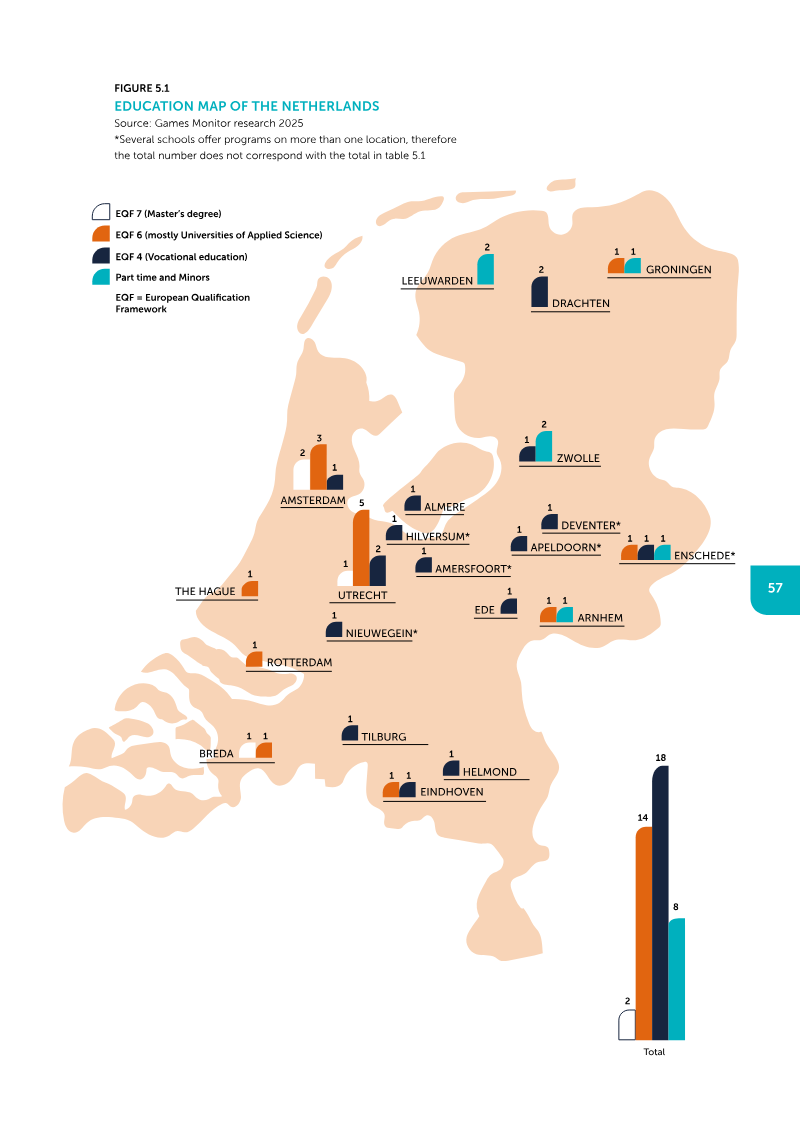
The Dutch games industry is currently navigating a period of maturation and consolidation, characterized by moderate financial growth despite a challenging global economic climate.
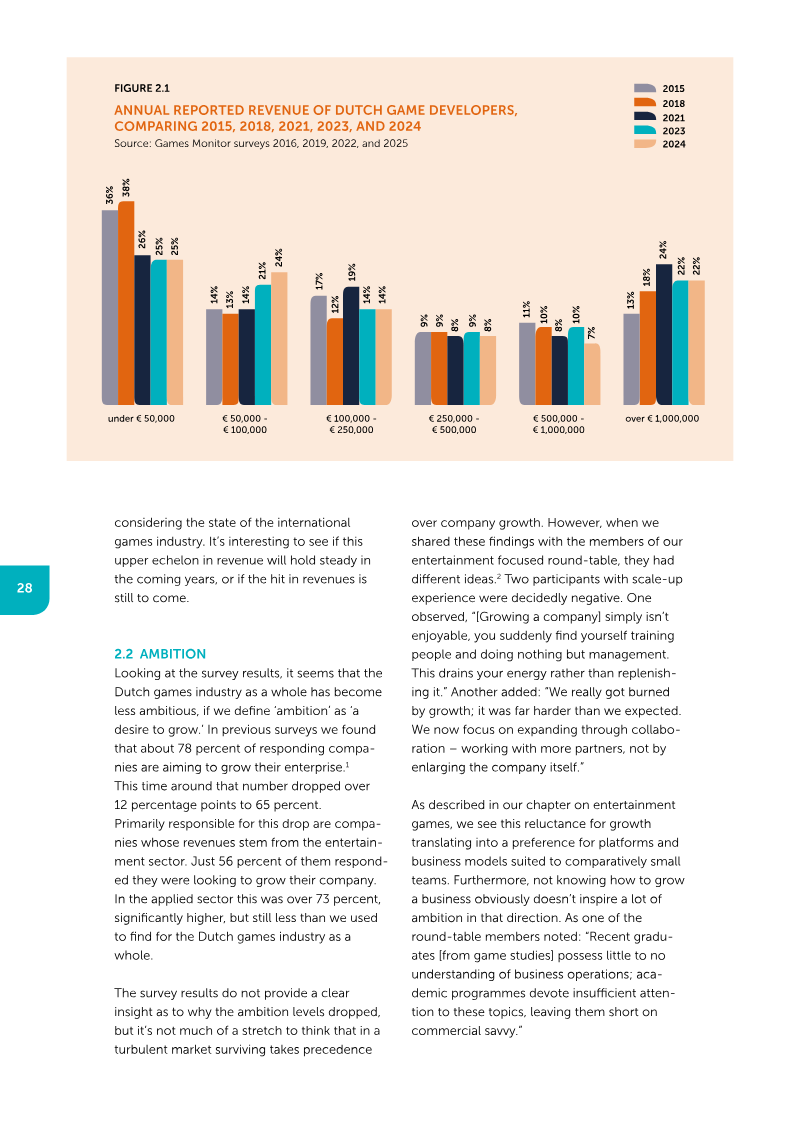
- The Dutch games industry employed 4,291 people by the end of 2023, a decline of 269 persons compared to 2021, with employment decreasing by 3% per year between 2021 and 2023, though revenue increased by an average annual rate of 10.5% to €763 million.
- The percentage of female workers in the Dutch games industry is rising, reaching 23.2% currently, aligning with broader European and North American industry averages.
- Applied games studios are adopting generative AI faster than entertainment studios, using or testing it for localization, dialogue, training content, and audio, with clients open to custom AI-enabled solutions, while entertainment studios are more hesitant due to potential player backlash.
The Power of Play: España
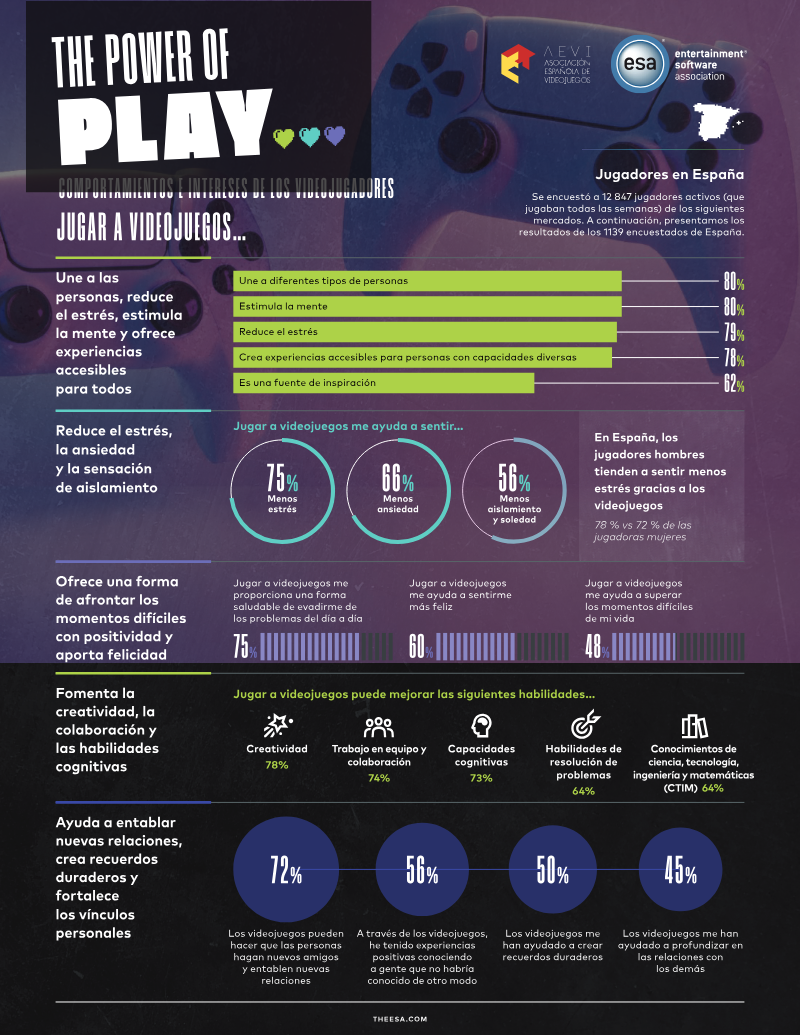
Gaming serves as a vital tool for emotional regulation and social connection among Spanish players, functioning as a primary mechanism for stress reduction, cognitive stimulation, and the development of interpersonal relationships.
- Gaming is primarily used for emotional regulation in Spain, with 78% of men and 75% of women reporting that it effectively reduces stress and anxiety.
- Social connection is a major driver for the Spanish gaming population, with 62% of men and 55% of women citing it as a primary motivation for play.
- Online multiplayer engagement is significantly higher among men, with approximately 80% reporting they play with others online, whereas women show a stronger preference for solo play.
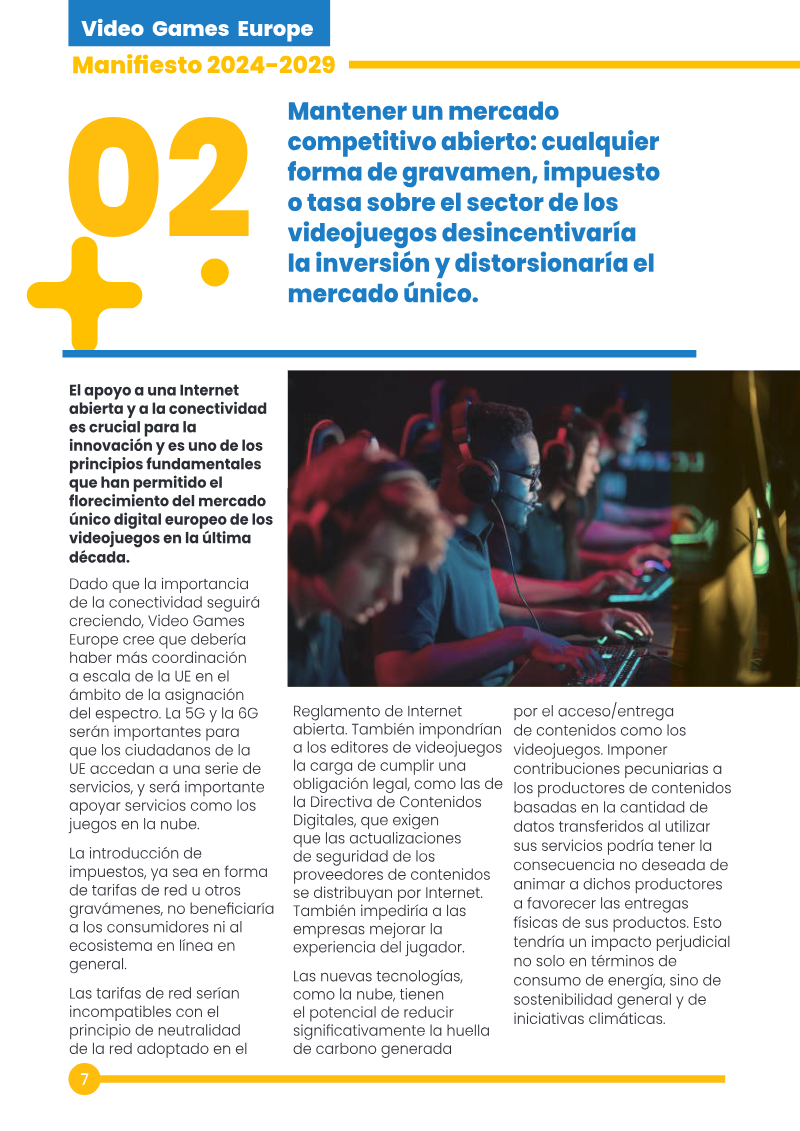
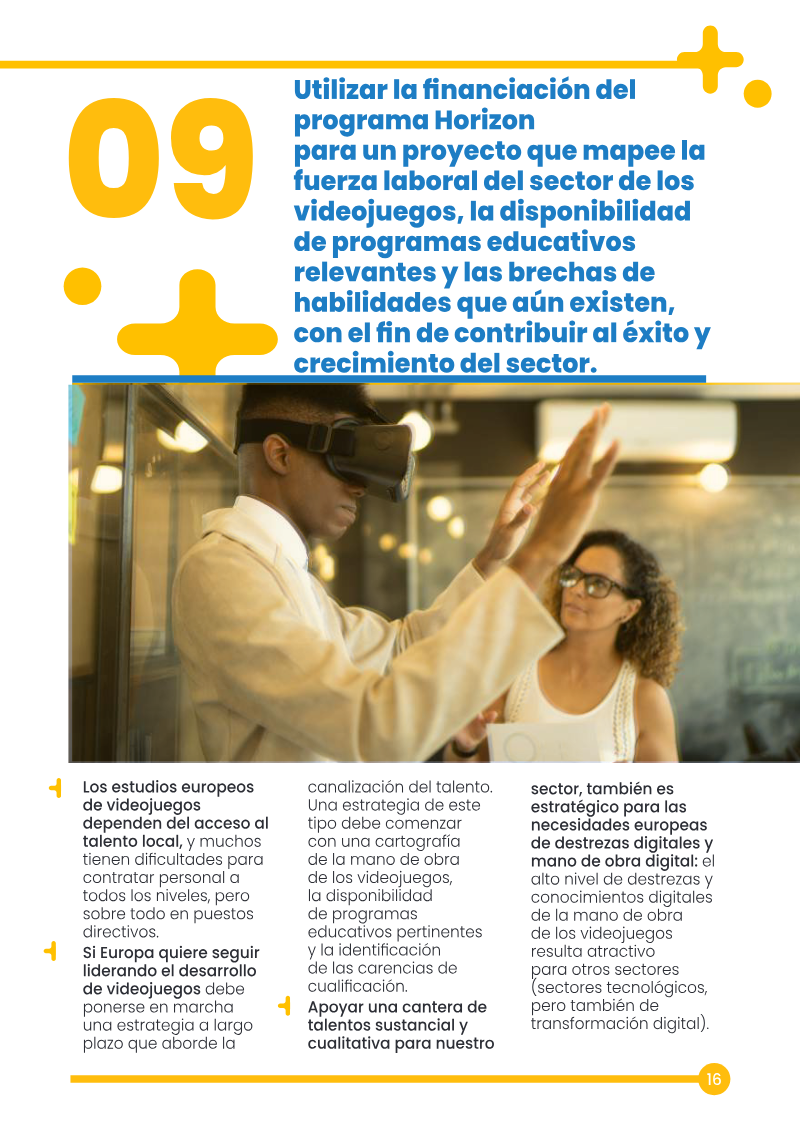

Manifiesto de Video Games Europe 2024-2029
The European video-game sector seeks recognition as a distinct blend of technology and creative culture and urges policymakers to embed this identity in the EU’s 2024-2029 strategic framework.
- The European video game sector generated €24 billion in revenue between 2019 and 2024, representing a 16% growth rate and supporting 110,000 highly-skilled jobs.
- The industry faces a significant regulatory burden, having been subjected to 850 new obligations and over 5,000 pages of legislation between 2017 and 2022.
- Current EU financing tools are insufficient to compete with global hubs like Canada and the UK, prompting calls for a dedicated funding framework and improved tax incentives.

Video Games Europe Manifesto 2024-2029
Europe’s video-game sector has expanded by 16% between 2019 and 2024, now delivering €24 billion in revenue and employing roughly 110 000 highly-skilled workers.
- The European video game sector grew by 16% between 2019 and 2024, reaching €24 billion in annual revenue and employing approximately 110,000 highly-skilled workers.
- Between 2017 and 2022, the industry faced a significant regulatory burden consisting of 850 new EU obligations spanning over 5,000 pages of rules.
- The PEGI age-rating system has successfully classified 40,000 titles across 40 countries, contributing to a 50% reduction in non-compliance penalties and a 20% decrease in energy-consumption violations.



The Austrian Game Industry 2024
The Austrian game sector is portrayed as a youthful, fast-growing cluster of predominantly small and micro enterprises whose economic relevance has expanded dramatically over the past six years.
- The Austrian game industry generated €92.8 million in revenue in 2023, marking a 285% nominal increase since 2017.
- Direct employment in the sector grew 128% over seven years, rising from 474 jobs in 2017 to 1,080 in 2024, with a total economic multiplier effect supporting 2,260 jobs.
- Projections for 2029 estimate industry revenue will reach €149 million and the workforce will exceed 1,500 employees, even assuming a significant slowdown in growth.


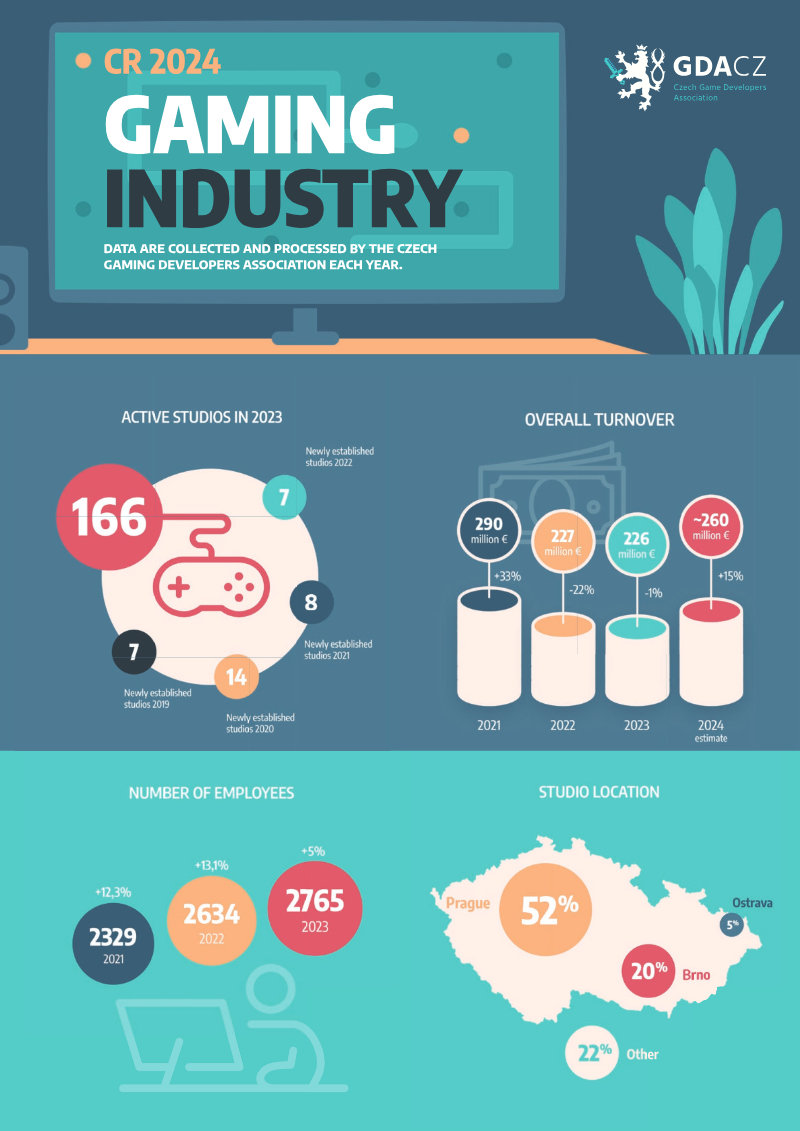
Czech Gaming Industry Report 2024
The Czech Gaming Developers Association compiled an annual industry overview to map the sector’s economic performance, workforce composition and structural trends for 2023 and early 2024.
- The Czech gaming industry reached a total turnover of €226 million in 2023, representing a 33% year-over-year growth.
- Total employment in the sector grew by 12.3% to 4,165 staff, with over 430 new positions created throughout 2023.
- The industry released 39 total projects in 2023, consisting of 29 new titles, 10 early-access projects, and 10 DLCs.